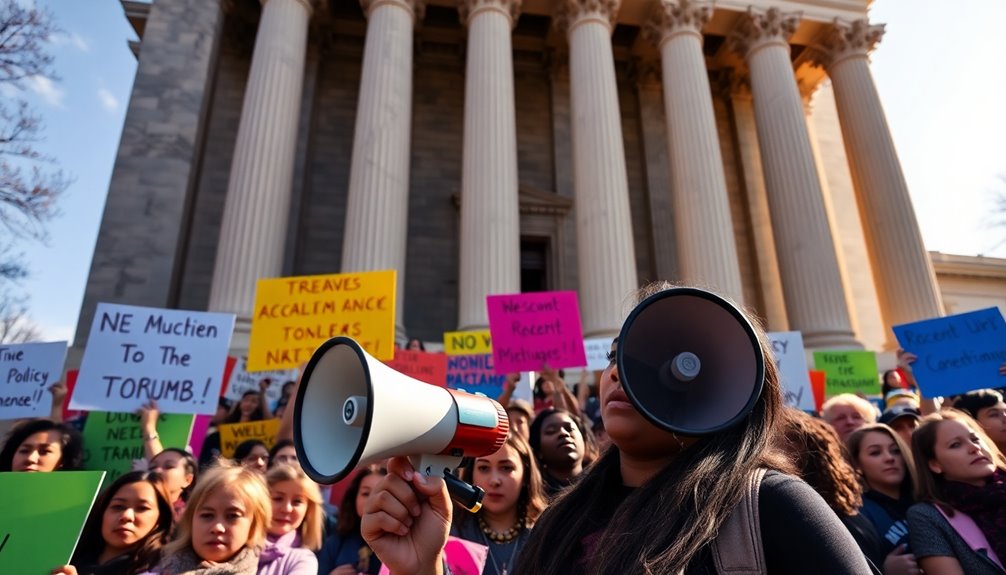

As the nation grapples with evolving discussions around diversity, equity, and inclusion, Trump's recent executive orders aimed at dismantling DEI programs in the federal government and private sector have sparked significant controversy.

Get privacy and security gear delivered free — and shop member deals
- Fast, free delivery on millions of items
- Access to Prime Big Deal Days deals on October 6–7
- Prime Video, Amazon Music and more included
These orders seek to terminate DEI initiatives within federal agencies and require contractors to certify their compliance with existing anti-discrimination laws. The administration argues that this move enforces federal civil rights laws while promoting merit-based opportunities, yet many see it as a direct attack on the progress made in diversity efforts.
The administration's orders aim to dismantle DEI initiatives, sparking debate over merit versus diversity in federal programs.
The impact of these orders stretches beyond the federal sphere. Contractors are now faced with the challenge of certifying that they don't operate any unlawful DEI programs. This shift could have far-reaching implications for how businesses approach diversity and inclusion.
The orders also strongly encourage private sector companies to abandon DEI practices that could be deemed discriminatory, pushing a narrative that prioritizes individual merit over collective diversity efforts.
Legal challenges to these executive orders are already underway. An appeals court recently lifted a lower court's injunction, allowing the orders to be enforced while litigation continues. Judges have raised concerns about potential First Amendment violations if the orders are enforced too aggressively, reflecting the contentious nature of this policy shift.
Multiple lawsuits are currently challenging the orders across the country, with plaintiffs including groups like the National Association of Diversity Officers in Higher Education.
The policy implications are profound. Federal agencies are directed to abolish DEI programs, and hiring practices will now focus solely on individual skills and performance, leaving behind any DEI considerations. This could significantly alter the federal workforce landscape and influence private sector dynamics as well. Critics argue that this approach risks reversing the progress made since the Civil Rights Act of 1964, undermining efforts to address systemic racism and the need for racial justice.
Economically, the effects of rolling back DEI programs could be detrimental. Reducing workforce diversity may hinder talent acquisition and weaken the economy. Moreover, the EOs could create barriers to federal employment and services, limiting equitable opportunities for many individuals.
There are concerns that national security could also be compromised due to a less effective federal workforce. With billions spent annually on DEI initiatives, the orders could redirect or reduce this spending, altering market dynamics and corporate priorities.
As you navigate this evolving landscape, it's crucial to stay informed about how these changes could impact not only federal policies but also the broader societal commitment to diversity, equity, and inclusion.
diversity and inclusion training materials
As an affiliate, we earn on qualifying purchases.
As an affiliate, we earn on qualifying purchases.
Fall Picks
fall essentials
As an affiliate, we earn on qualifying purchases.