
AI in CCTV uses computer vision to analyze footage instantly. It detects threats by recognizing abnormal behaviors, unattended objects, or restricted zone breaches, all in real time. Facial recognition quickly identifies individuals of interest, while anomaly detection spots suspicious activities automatically. These systems continuously improve, reducing false alarms and adapting to new scenarios. If you keep exploring, you’ll discover how these advanced methods create smarter, more proactive security solutions.
Key Takeaways
- Computer vision enables CCTV systems to analyze live footage instantly, identifying potential threats through pattern recognition.
- AI algorithms detect anomalies, such as suspicious movements or unattended objects, in real time for immediate alerts.
- Facial recognition matches faces against databases to quickly identify persons of interest or authorized individuals.
- Integration of multiple AI modules allows for proactive threat assessment and faster security responses.
- Continuous learning improves detection accuracy over time, reducing false alarms and adapting to evolving security threats.

Have you ever wondered how artificial intelligence is transforming CCTV surveillance? Today, AI-powered systems are revolutionizing the way we monitor and secure public spaces, private properties, and critical infrastructure. At the core of this transformation is computer vision, which allows CCTV cameras to analyze footage in real time with remarkable accuracy. One of the most impressive applications is facial recognition. This technology enables cameras to identify individuals instantly, matching faces against databases to detect persons of interest or verify identities. Whether it’s spotting a known suspect in a crowded area or ensuring authorized personnel are present, facial recognition streamlines security processes and accelerates response times. It’s not just about identifying people; AI systems also learn to recognize patterns and behaviors that might indicate a threat or suspicious activity.
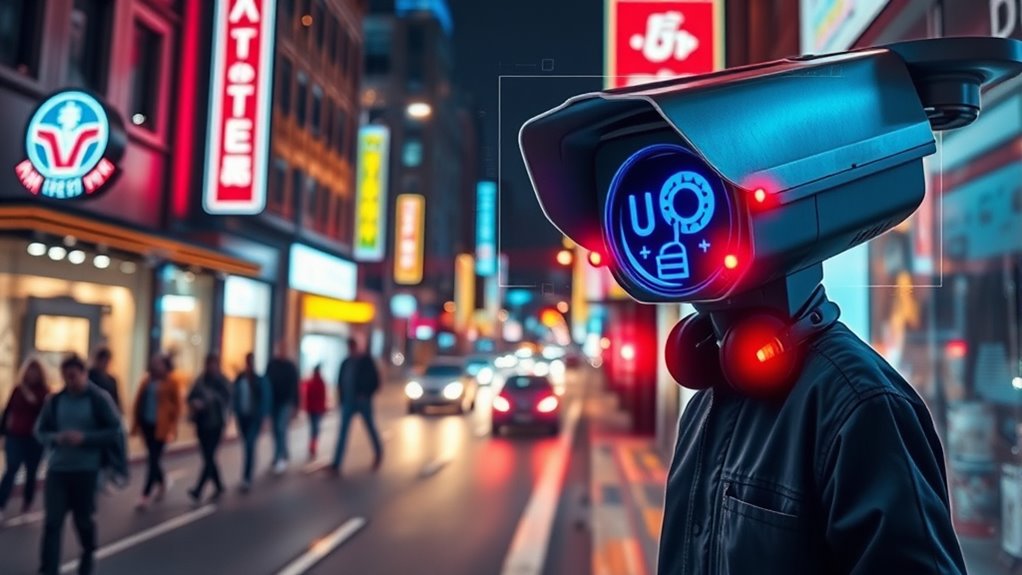
AI enhances CCTV with real-time facial recognition and pattern detection, transforming security and threat response capabilities.
Alongside facial recognition, anomaly detection plays a essential role in enhancing surveillance capabilities. Instead of relying solely on human operators to watch screens, AI continuously scans footage for unusual movements or behaviors that deviate from the norm. For example, if someone suddenly runs into a restricted zone or if a bag is left unattended in a crowded space, the system alerts security personnel immediately. Anomaly detection reduces human error and fatigue, ensuring that potential threats are flagged promptly. It’s especially valuable in high-traffic locations or large environments where manual monitoring becomes impractical. Additionally, these AI systems are often integrated with offensive security measures, enabling proactive responses to detected threats.
These AI features work together seamlessly, creating a proactive surveillance system that doesn’t just record events but actively interprets them. Facial recognition helps in identifying individuals quickly, while anomaly detection provides a broader scope for threat detection by focusing on suspicious behaviors. Together, they enable security teams to respond faster and more accurately, often before a situation escalates. This integration also helps in crowd management, access control, and law enforcement efforts, making public spaces safer and more secure.
Furthermore, these technologies continuously improve over time. As AI systems process more footage, they become better at recognizing faces and detecting anomalies, reducing false positives and increasing reliability. This ongoing learning process means CCTV systems can adapt to new threats and changing environments, keeping security measures advanced and effective. So, when you consider the impact of AI in CCTV, it’s clear that these innovations aren’t just making surveillance smarter—they’re fundamentally changing how we protect people and assets in a complex, fast-paced world.
FM225 Facial Recognition Module 3D Facial Recognition Camera Live Detection AI Intelligent Offline for Smart Homes (Kit A)

Advanced 3D facial recognition camera with high accuracy and live detection for smart home security and access control.
As an affiliate, we earn on qualifying purchases.
As an affiliate, we earn on qualifying purchases.
Frequently Asked Questions
How Does AI Handle Privacy Concerns in CCTV Surveillance?
You can trust AI in CCTV to handle privacy concerns by implementing data encryption and access controls. Encryption protects footage from unauthorized access, ensuring sensitive information remains secure. Access controls restrict who can view or manage the footage, maintaining user privacy. These measures help balance security with privacy, allowing you to use AI-powered surveillance effectively while respecting individual rights and complying with privacy regulations.
Can AI Detect Subtle Behavioral Cues Indicating Potential Threats?
Yes, AI can detect subtle behavioral cues like shifts in body language or unusual movements, acting like a detective reading between the lines. Through behavioral analysis, it predicts potential threats by spotting these small signs early. You might not notice these cues, but AI’s keen eye helps security teams intervene before situations escalate, making threat prediction smarter and more proactive.
What Are the Limitations of AI in Low-Light or Poor-Quality Footage?
In low-light or poor-quality footage, AI faces lighting challenges and struggles with limited image resolution. You might notice it missing threats or misinterpreting actions because the footage isn’t clear enough for accurate analysis. Poor lighting can obscure details, and low resolution reduces the system’s ability to detect subtle cues. To improve performance, you need better lighting conditions or higher-quality cameras, as AI relies heavily on clear visual data.
How Does AI Differentiate Between False Alarms and Real Threats?
Imagine a vigilant eye scanning a crowded street at dusk, distinguishing a suspicious bag from a lost umbrella. You see AI using contextual analysis, considering movement patterns, object types, and environment. This helps it differentiate a false positive from a real threat, reducing unnecessary alarms. By understanding the scene’s context, AI sharpens its judgment, ensuring alerts are meaningful and accurate, much like a keen observer noticing subtle cues others might miss.
What Are the Ethical Considerations of Using AI for Surveillance?
You should consider privacy concerns and bias mitigation when using AI for surveillance. While AI can enhance security, it risks infringing on individuals’ privacy if not properly managed. Additionally, biases in algorithms can lead to unfair targeting or false positives. To address these issues, implement strict data privacy policies and continuously evaluate your AI systems for fairness, ensuring respectful and equitable surveillance practices.
Conclusion
As you watch this technology evolve, it’s like having a vigilant eye that never blinks, tirelessly scanning every shadow and movement. AI-powered CCTV acts as your digital guardian, transforming static footage into a live, breathing alert system. With each pixel, it paints a clearer picture of potential threats, turning chaos into clarity. Embrace this symphony of sensors and algorithms, because in the dance of security, AI is the steady beat that keeps us safe.