
To fool fingerprint and face scanners, hackers often create fake fingerprints using materials like gelatin or silicone, then present them to sensors. For face recognition, they craft detailed masks or use high-resolution photos or videos to deceive the system. These attacks exploit vulnerabilities like poor liveness detection and weak anti-spoofing measures. If you want to know how these tricks work and how to protect yourself, keep exploring these techniques further.
Key Takeaways
- Attackers can create fake fingerprints using materials like gelatin or silicone to bypass fingerprint scanners.
- High-resolution photos or videos can deceive facial recognition systems with replay or presentation attacks.
- Crafting realistic 3D masks through 3D printing can fool facial biometric sensors.
- Lifting fingerprints from surfaces and reproducing them allows unauthorized access using fabricated prints.
- Weak anti-spoofing measures and poor liveness detection increase system vulnerability to biometric deception.
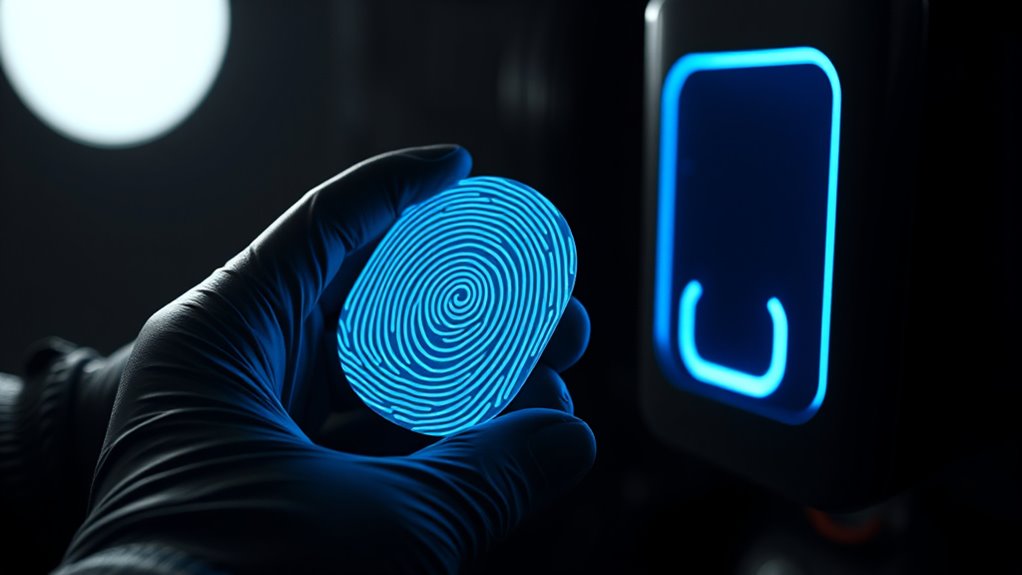
Have you ever wondered how secure your biometric data really is? Biometric systems like fingerprint scanners and face recognition are often seen as foolproof security measures, but they’re not invulnerable. In fact, biometric vulnerabilities are actively exploited by hackers who employ various security bypass techniques to crack these systems. Understanding these weaknesses can help you grasp just how fragile biometric protections can be if not properly secured.
Biometric data can be vulnerable; hackers employ various bypass techniques to exploit system weaknesses.
One of the main issues with biometric security lies in the fact that fingerprints and facial features can be replicated or manipulated. Hackers have developed methods to create fake fingerprints using materials like gelatin, silicone, or even lifted fingerprint residues. These replicas can be used to fool fingerprint scanners, especially if the device isn’t equipped with advanced anti-spoofing technology. Similarly, facial recognition systems, which analyze unique facial features, can be deceived through simple tricks like high-resolution photos, masks, or 3D models. Attackers often utilize security bypass techniques that exploit the system’s weaknesses, such as replay attacks or presentation attacks, where they present a counterfeit biometric to gain unauthorized access.
The tools and techniques used to bypass biometric systems are becoming increasingly sophisticated. For example, some hackers utilize 3D printing to create detailed facial masks that can fool face scanners. Others use high-quality images or videos to trick facial recognition algorithms into granting access. In the case of fingerprint scanners, hackers can lift fingerprints from surfaces like glass or metal and then reproduce them with molds. These methods highlight the importance of understanding that biometric vulnerabilities aren’t just theoretical—they are practical threats that can be executed with readily available tools.
Security bypass techniques often depend on exploiting specific weaknesses in the biometric system’s design, such as inadequate liveness detection or poor anti-spoofing measures. If a scanner doesn’t verify whether the fingerprint or face is from a live person, a static replica can easily deceive it. Hackers may also target the communication channels between biometric sensors and security servers, intercepting or manipulating data to gain unauthorized access. That’s why many security experts emphasize the importance of multi-factor authentication and robust anti-spoofing technologies to mitigate these risks. Additionally, the implementation of biometric data encryption can greatly reduce the chances of interception and misuse.
Ultimately, while biometrics offer convenience and a degree of security, they are not infallible. Recognizing the potential biometric vulnerabilities and understanding the security bypass techniques used by hackers can help you stay alert and advocate for stronger protections. No security system is entirely foolproof, but awareness is your first line of defense against those who seek to exploit these weaknesses.
Frequently Asked Questions
Can Biometric Hacking Be Detected by Security Systems?
Security systems can detect biometric hacking through methods like sensor spoofing and biometric encryption. When you try to bypass fingerprint or face scanners, advanced sensors analyze patterns to spot anomalies, making spoofing difficult. Biometric encryption adds an extra layer of security by encrypting biometric data, which helps identify tampering or unauthorized access. So, with these protections, your system can often recognize and prevent attempts to fool biometric authentication.
What Are the Legal Risks of Hacking Biometric Systems?
If you hack biometric systems, you risk serious legal implications, including criminal charges and hefty fines. You could also face privacy violations that harm individuals’ rights and trust. Like a hacker in a spy movie, your actions can lead to lawsuits, penalties, and a damaged reputation. Always remember, tampering with biometric data isn’t just unethical; it’s illegal and can have lifelong consequences.
How Vulnerable Are Biometric Systems to Remote Hacking?
Biometric systems can be vulnerable to remote hacking, especially through biometric spoofing techniques. Hackers often attempt remote intrusion by replicating fingerprints or face data to trick scanners. While advanced systems have defenses, no technology is completely secure. You should be aware that skilled attackers might exploit vulnerabilities in transmission or storage, so it’s crucial to keep biometric data protected and stay updated on security measures.
Are There Any Hardware Tools Used in Biometric Hacking?
Yes, hardware tools are used in biometric hacking. You might come across toolkits designed to exploit hardware vulnerabilities in fingerprint or face scanners. These toolkits often include specialized devices or software that bypass security measures by mimicking biometric data or manipulating hardware signals. By understanding these tools, you can better protect your system from such attacks and recognize potential vulnerabilities in biometric hardware.
How Often Do Biometric Systems Get Compromised in Real-World Scenarios?
In the world of biometric security, occasional lapses happen more often than you’d think. You might find instances of biometric spoofing or fingerprint forgery where systems are subtly bypassed, though these cases are relatively rare and usually targeted. While no system is infallible, organizations continuously improve defenses. So, in everyday scenarios, your biometric data remains secure, but staying cautious about potential vulnerabilities is always wise.
Conclusion
Remember, even the most advanced security methods aren’t foolproof—someone always finds a way to outsmart them. As the saying goes, “A chain is only as strong as its weakest link.” By understanding how hackers manipulate biometric systems like fingerprints and face scanners, you can stay one step ahead. Stay informed, be cautious, and don’t assume technology is invincible. Vigilance is your best defense in keeping your personal data safe.