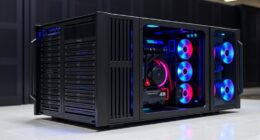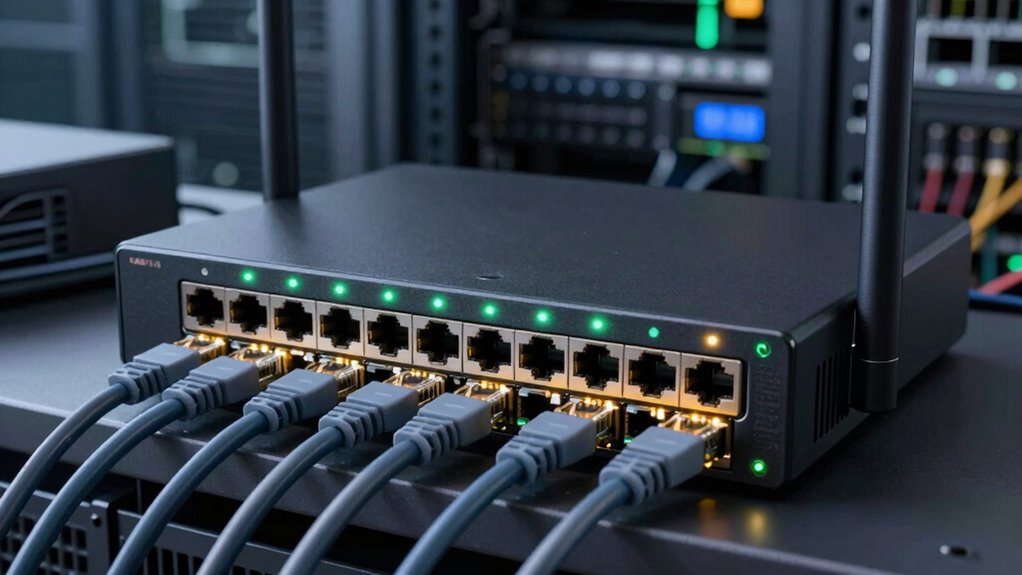

Enterprise routers differ from consumer routers by handling large-scale networks with high data throughput and advanced security features. They support many devices and provide centralized management for easier control and troubleshooting. Designed for growth, they include redundant power supplies and failover mechanisms to guarantee continuous operation. These routers focus on security, scalability, and performance to meet complex business needs. If you want to understand how these features can benefit your network, discover more about their capabilities.

Get privacy and security gear delivered free — and shop member deals
- Fast, free delivery on millions of items
- Access to Prime Big Deal Days deals on October 6–7
- Prime Video, Amazon Music and more included
Key Takeaways
- Enterprise routers support large-scale, complex networks with high data throughput, unlike consumer routers designed for small home networks.
- They feature advanced security protocols, encryption, and intrusion detection to protect sensitive business data.
- Centralized management and remote troubleshooting capabilities streamline network administration and maintenance.
- Designed for high reliability with redundant power supplies and failover mechanisms to ensure minimal downtime.
- Prioritize scalability and growth, supporting a vast number of devices and expanding network infrastructure seamlessly.
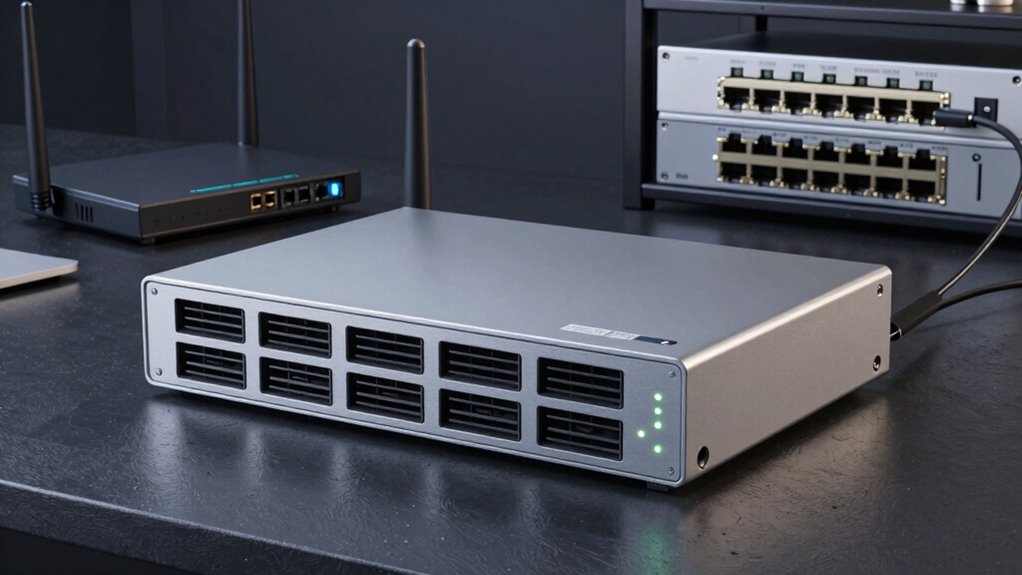
When it comes to choosing a router, understanding the differences between enterprise and consumer models is vital. You’ll find that enterprise routers are built to handle complex network environments, providing features that support large-scale operations. Unlike consumer routers, which are designed for home use and smaller networks, enterprise routers prioritize network scalability. This means they can support a vast number of devices and high data throughput without sacrificing performance. If your needs involve expanding your network or managing numerous connections efficiently, enterprise routers are equipped to grow alongside your business without bottlenecks.
Enterprise routers support large-scale networks and high data throughput for seamless business growth.
Security protocols are another key distinction. You might notice that enterprise routers come with advanced security features that protect your network from sophisticated threats. They often include extensive encryption, intrusion detection systems, and access controls that guarantee only authorized users can connect. Consumer routers, on the other hand, typically offer basic security, like WPA2 encryption and simple firewalls, which are sufficient for home use but may fall short in a corporate setting. If safeguarding sensitive data and maintaining a secure environment matter to you, enterprise routers provide the layered security protocols necessary to prevent breaches and unauthorized access. Additionally, security features in enterprise-grade equipment are designed to address increasingly complex cybersecurity challenges, ensuring your network remains protected against evolving threats.
Another major difference lies in their management capabilities. Enterprise routers usually feature centralized management options, allowing IT professionals to oversee multiple devices remotely. This setup simplifies network administration, troubleshooting, and updates, making sure your network remains reliable and secure. Additionally, remote management capabilities are often integrated into enterprise-grade equipment, enabling efficient oversight from anywhere. This centralized control facilitates quick responses to network issues, which is essential for minimizing downtime. Consumer routers, however, are generally managed through user-friendly interfaces meant for non-technical users. While this makes setup straightforward, it limits the ability to fine-tune or scale the network as your needs evolve. Furthermore, enterprise routers often support advanced network analytics, providing detailed insights to optimize performance and security.
Performance and reliability are also essential factors that set enterprise routers apart. They are designed to operate continuously under high loads, with redundant power supplies and failover mechanisms that prevent downtime. This dependability is vital for business environments where network interruptions can cause significant disruptions. Consumer routers, although capable of providing decent performance for everyday activities, aren’t built to handle the same level of traffic or to maintain uptime during peak usage. Additionally, high refresh rates in enterprise-grade equipment ensure smoother data processing and responsiveness, which are crucial for seamless network performance.
enterprise router with high data throughput
As an affiliate, we earn on qualifying purchases.
As an affiliate, we earn on qualifying purchases.
Frequently Asked Questions
Can Enterprise Routers Be Used for Home Networks?
Yes, you can use enterprise routers for your home network, but you should consider router compatibility first. Enterprise routers are designed for larger, more complex networks, so they might be overkill and harder to set up. While they offer advanced features, they may lack user-friendly interfaces for home use. If you’re comfortable with networking, they can provide robust performance, but for most homes, consumer routers are simpler and more suitable.
What Is the Average Lifespan of an Enterprise Router?
Enterprise routers typically last around 3 to 5 years, but their lifespan can extend longer with proper maintenance. You should prioritize network security by regularly applying firmware updates, which patch vulnerabilities and enhance performance. Unlike consumer routers, enterprise models are built for durability and scalability, but neglecting firmware updates can reduce their effectiveness over time. Investing in routine maintenance helps guarantee your enterprise router remains reliable and secure throughout its lifespan.
Do Enterprise Routers Support Wi-Fi Connectivity?
Yes, enterprise routers support Wi-Fi connectivity, but they do more than just connect devices wirelessly. Unlike consumer routers, they prioritize Wi-Fi security to protect sensitive data and guarantee network integrity. They also facilitate network scalability, allowing your infrastructure to grow seamlessly with your business needs. This combination of robust Wi-Fi support, enhanced security, and scalability makes enterprise routers essential for maintaining reliable, secure, and expanding networks.
Are Enterprise Routers Easier to Set up Than Consumer Routers?
Enterprise routers are generally more complex to set up than consumer routers because they support advanced features like network scalability and security features. You might find the initial configuration challenging, especially if you’re unfamiliar with enterprise-grade systems. However, once configured properly, they offer robust security and scalability that suit business needs. While setup can be more involved, the long-term benefits in performance and security make the effort worthwhile.
What Is the Typical Cost Difference Between the Two?
You’ll find enterprise routers typically cost several thousand dollars, considerably more than consumer models. This price difference reflects their enhanced network security features, higher technical complexity, and ability to handle larger traffic volumes. While consumer routers focus on simple setups and basic security, enterprise routers offer advanced management, robust security protocols, and scalability. Your investment in enterprise routers guarantees stronger network security, better performance, and future-proofing, making them ideal for demanding business environments.
Conclusion
So, when you look at enterprise and consumer routers, it’s clear that enterprise routers aren’t just bigger—they’re built for reliability, security, and scalability. Imagine a busy highway designed to handle thousands of cars smoothly; that’s what enterprise routers do for your network. While consumer routers suit homes, enterprise models ensure your business stays connected without hiccups. It’s not just a difference in size, but in purpose—making certain your network runs seamlessly, no matter the demand.
Fall Picks
fall essentials
As an affiliate, we earn on qualifying purchases.