
TL;DR

Get privacy and security gear delivered free — and shop member deals
- Fast, free delivery on millions of items
- Access to Prime Big Deal Days deals on October 6–7
- Prime Video, Amazon Music and more included
SPAN announced a plan to install small, liquid-cooled AI data nodes in newly built homes, leveraging excess household power. This aims to expand AI compute capacity cost-effectively while providing residents with subsidized utilities. The project is in pilot testing with a large-scale rollout planned for 2027.
SPAN, a San Francisco startup, announced a plan to install mini AI data centers in residential homes across the US, aiming to expand AI compute capacity while offering residents subsidized electricity and internet services. This approach could reshape how AI workloads are supported and address community opposition to traditional data centers.
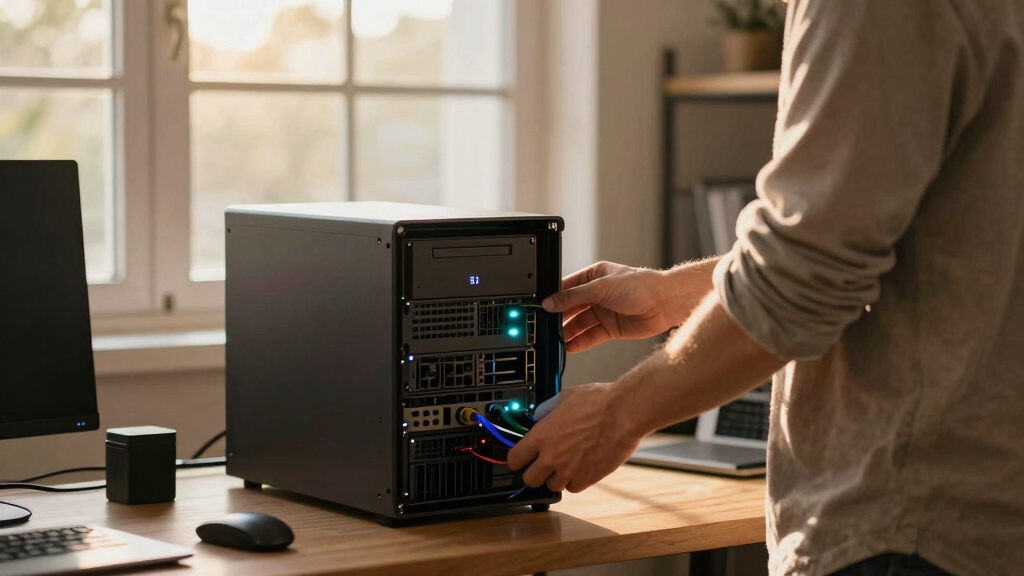
SPAN’s distributed data center solution involves deploying thousands of XFRA nodes in new homes, each equipped with liquid-cooled Nvidia RTX Pro 6000 GPUs, AMD CPUs, and backed by a home battery system. The nodes are designed to operate quietly and utilize excess household power, primarily in homes with 200-amp electrical service, which is standard in modern US residences.
The company plans to pilot this concept in a 100-home trial this year, with a goal to scale to 80,000 nodes nationwide by 2027, providing over 1 gigawatt of distributed compute capacity. The nodes will support AI inference, cloud gaming, and content streaming—functions that do not require the massive infrastructure of hyperscale data centers.
Homeowners involved in the program would have their electricity and internet bills paid by SPAN, with options for flat fees or no fee at all. The system includes a wall-mounted smart panel, a 16 kWh battery, and proprietary software to manage energy use, including temporary load reductions during peak demand or outages. Home backup power would be provided at no cost, enhancing energy resilience.
Why It Matters
This initiative could significantly alter the landscape of AI infrastructure by decentralizing data processing, reducing land use and water consumption associated with traditional data centers, and potentially lowering costs. It also offers a way for utility companies to meet rising electricity demands from AI workloads without costly infrastructure upgrades, which could ease community opposition to large data center projects.
However, the approach raises questions about energy management, regulatory oversight, and the long-term viability of integrating high-performance computing into residential settings. The success of pilot programs will determine whether this model can be scaled effectively across the country.
liquid-cooled Nvidia RTX Pro 6000 GPU
As an affiliate, we earn on qualifying purchases.
As an affiliate, we earn on qualifying purchases.
Background
Traditional data centers are large, land-intensive facilities that consume significant water and electricity, often facing local opposition. Recent efforts by hyperscalers like Google and Microsoft focus on building massive centralized infrastructure for AI training. SPAN’s approach seeks to complement these efforts by creating a distributed network of smaller, home-based nodes that support less intensive AI tasks such as inference and content delivery.
The company has begun pilot testing in anticipation of a broader rollout in 2027, aiming to utilize excess household power capacity and avoid the environmental and community issues associated with large-scale data centers.
“This is quiet, discreet, and makes energy more affordable for the host and community.”
— Chris Lander, VP of XFRA at SPAN
“The scheme for subsidizing homeowners’ utility bills is fascinating, but there are questions about its long-term sustainability and regulatory implications.”
— Ari Peskoe, Harvard Law School
What Remains Unclear
Details remain unclear regarding the long-term operational costs, regulatory approval processes, and how widespread adoption will be managed. It is also uncertain how residents will perceive hosting high-performance computing equipment in their homes and the potential impact on household energy use during peak times.
What’s Next
Next steps include completing pilot testing in the current year, refining the hardware and software systems, and preparing for the planned large-scale deployment starting in 2027. Monitoring the pilot’s outcomes will be critical to assess feasibility and scalability.
Key Questions
How will these home data centers impact household energy bills?
SPAN plans to cover electricity and internet costs, offering residents a flat fee or no fee at all, with the system managing energy use to minimize impact during peak demand. The goal is to make energy more affordable while supporting AI workloads.
What kind of AI workloads will these nodes support?
The nodes are intended for AI inference, cloud gaming, and content streaming—functions that require less intensive compute than AI training, which is typically handled by hyperscale data centers.
Are there environmental benefits to this approach?
Yes, by decentralizing data processing and utilizing excess household power, this model could reduce land use, water consumption, and the environmental footprint of traditional data centers.
Will this require significant home modifications?
No major modifications are expected; the system involves installing a smart panel, a backup battery, and the data node hardware, all designed to operate with standard home electrical systems.
When will residents start seeing these data nodes in their homes?
Pilot programs are underway in 2023, with a broader rollout planned for 2027, starting with newly constructed homes in select regions.
Fall Picks
fall essentials
As an affiliate, we earn on qualifying purchases.