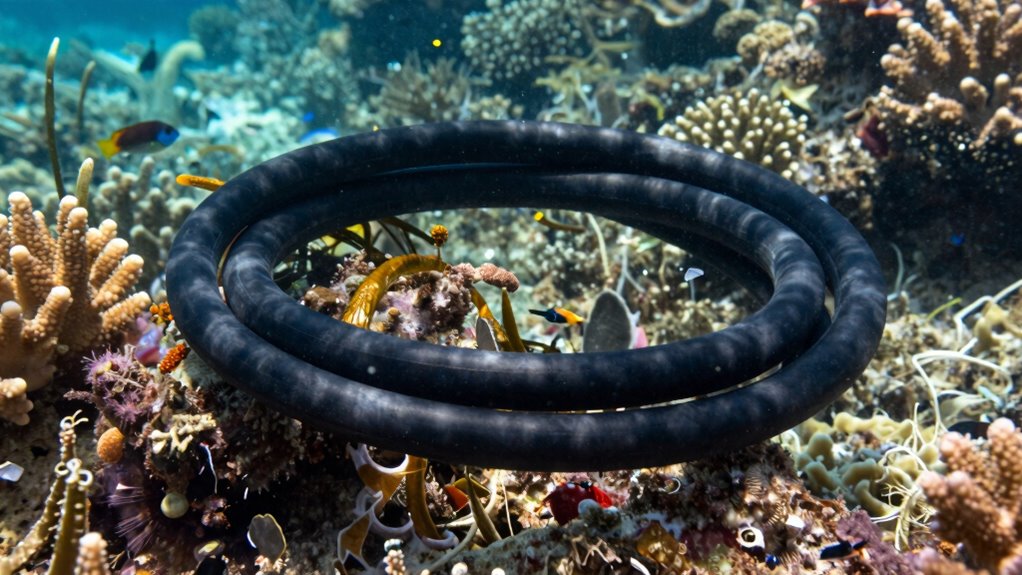

In 2025, undersea cable surveillance is essential because these cables carry nearly all international data, serving as the backbone of global communication and commerce. You need to know they face ongoing threats like cyberattacks, sabotage, and espionage, which could disrupt crucial services and impact economies. Advanced monitoring helps you detect interference early and protect national security. Staying informed about these efforts ensures you’re aware of how critical and vulnerable these underwater links really are.

Get privacy and security gear delivered free — and shop member deals
- Fast, free delivery on millions of items
- Access to Prime Big Deal Days deals on October 6–7
- Prime Video, Amazon Music and more included
Key Takeaways
- Undersea cables remain vital for 99% of international data, requiring ongoing surveillance to ensure network resilience.
- Evolving cyber threats from nation-states and cybercriminals demand advanced monitoring for early threat detection.
- Surveillance technology, like fiber optic monitoring, helps identify physical tampering and interference in real time.
- Strategic risks from espionage, sabotage, and geopolitical tensions make continuous undersea cable monitoring essential.
- Adapting to emerging threats, such as quantum computing and AI, sustains cybersecurity and global communication integrity.

As undersea cables become even more essential to global communication and commerce, surveillance technology has advanced to monitor these critical links more effectively. You might think that with the rise of encryption and cybersecurity measures, these cables are well-protected, but the reality is more complex. Cybersecurity threats continue to evolve, and malicious actors, including nation-states and cybercriminal groups, target undersea cables to intercept data, cause disruptions, or sabotage international networks. Surveillance tools are indispensable in detecting such threats early, allowing you to respond swiftly before damage spreads. These cables carry around 99% of international data traffic, making them a prime target for espionage and cyberattacks. Without effective surveillance, you risk not only data breaches but also significant economic and political repercussions. Emerging technologies like fiber optic monitoring are enhancing our ability to detect physical threats more precisely. This advanced monitoring can also help identify submarine cable tampering, which is crucial for maintaining the integrity of these vital connections. Geopolitical risks also make undersea cable surveillance indispensable in 2025. Countries are increasingly aware of the strategic importance of these underwater links. Some nations might attempt to tap or sabotage cables to gain intelligence or weaken competitor economies. You need to stay ahead of such risks by deploying advanced monitoring systems that can identify tampering or unauthorized access. Surveillance technology enables you to track the physical integrity of cables, monitor for signs of interference, and verify if any foreign entities are attempting to manipulate or damage the infrastructure. This vigilance is essential because conflicts or diplomatic tensions can escalate if disputes over undersea cable control or security arise. Additionally, cyber-physical threats pose an evolving challenge that surveillance systems must be capable of detecting and mitigating to prevent physical and digital vulnerabilities. By continuously surveilling these cables, you help guarantee the resilience of global communication networks and protect national interests. Furthermore, as the digital landscape shifts, new threats emerge, making surveillance even more necessary. Quantum computing and AI advancements could someday crack traditional encryption, exposing sensitive data transmitted through undersea cables. You must consequently adopt surveillance tools capable of adapting to these evolving challenges. They help you identify vulnerabilities, detect unusual activity, and respond in real time. This proactive approach minimizes downtime, prevents data leaks, and preserves trust in international communication channels. In essence, undersea cable surveillance isn’t just about technical monitoring; it’s a strategic safeguard against multifaceted threats. You rely on these systems to maintain the flow of international data, protect against cyberattacks, and mitigate geopolitical risks. As the importance of these cables grows, so does your responsibility to guarantee their security. Surveillance technology enables you to stay vigilant, respond swiftly, and uphold the integrity of the global digital infrastructure. In 2025, it’s clear that undersea cable surveillance remains a cornerstone of cybersecurity and national security strategies worldwide.
fiber optic cable monitoring system
As an affiliate, we earn on qualifying purchases.
As an affiliate, we earn on qualifying purchases.
Frequently Asked Questions
How Are Undersea Cables Monitored for Security Threats in Real Time?
You monitor undersea cables for security threats in real time by deploying underwater drones and seismic sensors. Drones patrol and inspect the cables, capturing live footage and detecting physical tampering. Seismic sensors pick up vibrations caused by cutting or drilling, alerting you to potential threats. Together, these tools enable continuous, proactive surveillance, helping you identify and respond to risks quickly, ensuring the cables’ security and your data’s safety.
What Technologies Are Emerging to Enhance Undersea Cable Surveillance?
Emerging technologies like deep sea sensors and autonomous drones are revolutionizing undersea cable surveillance. Deep sea sensors detect vibrations and anomalies along cables, providing real-time threat alerts. Autonomous drones, equipped with advanced imaging and communication tools, patrol vast underwater areas efficiently. Together, these innovations enhance security, allowing quicker responses to potential threats, and guarantee the integrity of global communications networks in 2025 and beyond.
Who Are the Primary Stakeholders Involved in Undersea Cable Protection?
Think of undersea cables as essential arteries beneath the ocean, protected by a diverse team. You’re involved with governments, telecom companies, and maritime security agencies—primary stakeholders safeguarding marine biodiversity and resolving territorial disputes. These groups work together, like a vigilant crew, to monitor and defend these cables from threats like piracy or environmental harm. Your role is critical in ensuring seamless communication while preserving ocean health and resolving disputes peacefully.
How Does Undersea Cable Surveillance Impact Global Internet Infrastructure?
You see, undersea cable surveillance directly impacts global internet infrastructure by protecting against satellite espionage and addressing cable vulnerability. When you monitor these cables, you help prevent disruptions caused by sabotage or interception, ensuring stable connectivity worldwide. Surveillance also allows for early detection of threats, reducing the risk of significant outages. Ultimately, your vigilance safeguards the backbone of global communications, maintaining reliable internet access for billions of users.
What Legal Challenges Exist in Undersea Cable Monitoring and Surveillance?
Legal challenges in undersea cable monitoring are like steering through a tangled web—complex and delicate. You face jurisdiction issues because cables often cross multiple countries, each with its own laws. Privacy regulations further complicate matters, limiting surveillance scope to protect user data. Balancing security needs with respecting legal jurisdictions and privacy rules requires careful coordination, making undersea cable surveillance a legal tightrope walk in 2025.
Conclusion
So, stay sharp and stay secure by supporting undersea cable surveillance. As cyber threats multiply and geopolitical tensions escalate, safeguarding these silent strands becomes even more essential. Don’t dismiss the danger—diligent detection and diligent defense deliver data’s safety, stability, and sovereignty. Remember, surveillance safeguards our sensitive signals, securing our shared cyberspace. Stay vigilant, stay vigilant, stay vigilant—because in this underwater world, every cable counts, and every second matters.
Fall Picks
fall essentials
As an affiliate, we earn on qualifying purchases.