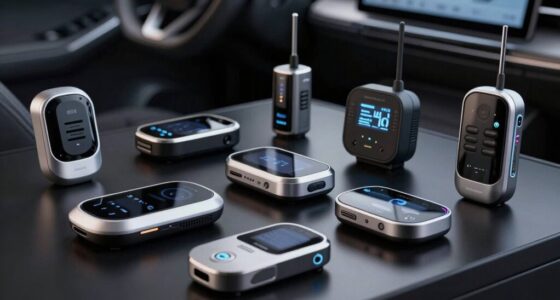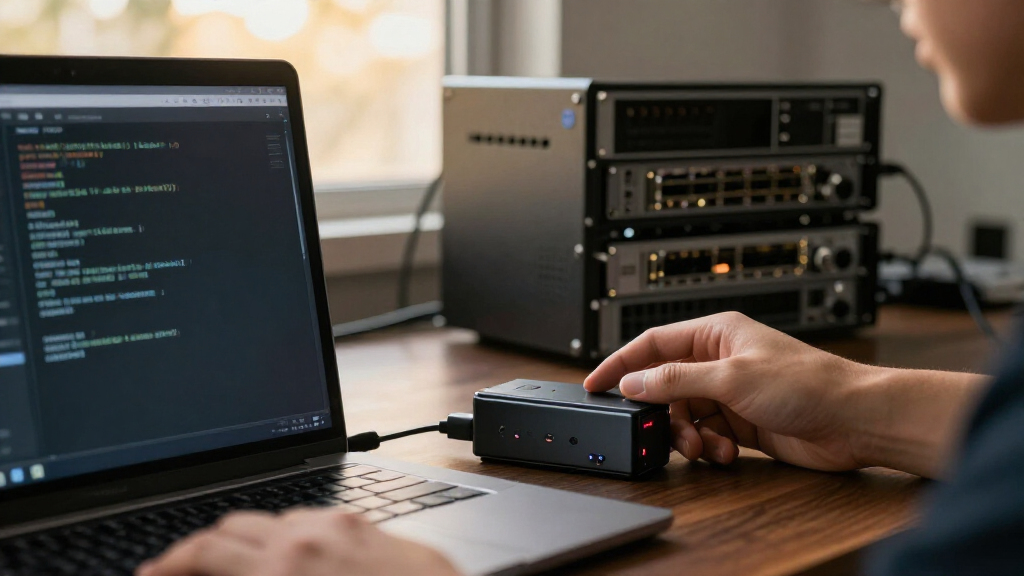
I ranked these five gadgets by how directly they support authorized security work, how much setup and host equipment they demand, and how distinct their roles are. The Hak5 WiFi Pineapple Mark VII is my specialist pick for wireless assessments, while the USB-C Kali Linux boot drive is the most flexible starting point for running a familiar security environment across compatible computers. For hardware experimentation beyond conventional laptop-based testing, Flipper Zero brings radio, NFC, infrared, and GPIO functions into one portable device.

Get privacy and security gear delivered free with Prime
- Fast, free delivery on millions of items
- Prime Video, Amazon Music and more included
- Member-only deals all year
These picks are not interchangeable. A Kali drive supplies an operating environment and software tools; it does not act as a dedicated wireless auditing appliance. The Pineapple focuses on Wi-Fi work and needs a separate device for management. Flipper Zero covers several kinds of compatible signals and electronics projects, but its usefulness depends on the hardware and protocols involved. I also include a second Kali drive and a second Flipper Zero listing, whose stated features overlap with the first. My ranking gives weight to clear practical distinctions, connector flexibility, and the range of authorized work each item supports.
Key Takeaways
- Choose the Hak5 WiFi Pineapple Mark VII for a purpose-built dual-band Wi-Fi auditing workflow with a recon dashboard and Cloud C2 remote access.
- Pick the USB-A/USB-C Kali Linux drive if you want one boot medium that can connect to either common port type and offers stated amd64 and arm64 support.
- Flipper Zero serves a different job from Kali Linux: its Sub-GHz, NFC, infrared, and GPIO tools suit compatible-device learning and electronics prototyping rather than replacing a laptop toolkit.
- The Kali Linux 2026.2 drive is a simple live-boot option, but its listed 8 GB capacity and 12 MB/s read speed make storage and transfer limits part of the decision.
- The two Flipper Zero listings describe very similar hardware; compare their included details and listing terms rather than treating them as distinct capabilities.
| Hak5 WiFi Pineapple Mark VII |  | Best Overall for Dedicated Wi-Fi Auditing | Model: Pineapple Mark VII | Wireless bands: 2.4 GHz and 5 GHz | Wi-Fi standards: 802.11a/b/g/n/ac | VIEW LATEST PRICE | See Our Full Breakdown |
| Kali Linux Bootable USB for Ethical Hacking and Cybersecurity |  | Best Kali Linux Drive for Port Flexibility | Storage capacity: 8 GB | Connectors: USB-A and USB-C | Read speed: 450 MB/s | VIEW LATEST PRICE | See Our Full Breakdown |
| Flipper Zero Portable Cybersecurity Multitool |  | Best for Portable Hardware Learning | Power source: Battery powered | Connectivity: Wireless | Listed maximum range: 1 km | VIEW LATEST PRICE | See Our Full Breakdown |
| Kali Linux 2026.2 Bootable USB Drive for Penetration Testing |  | Best for Simple Live Booting | Operating system: Kali Linux 2026.2 | Kernel: 6.19 | Desktop environments: GNOME 50 and KDE Plasma 6.6 | VIEW LATEST PRICE | See Our Full Breakdown |
| Flipper Zero Portable Cybersecurity and Electronics Multitool | | Best Flipper Listing for Rechargeable-Battery Detail | Power source: Battery powered | Battery: Rechargeable battery listed | Connectivity: Wireless | VIEW LATEST PRICE | See Our Full Breakdown |
| penetration testing gadget | Dimensions |
|---|---|
| Hak5 WiFi Pineapple Mark VII | — |
| Kali Linux Bootable USB for Et | 2.5 x 0.5 x 0.5 inches |
| Flipper Zero Portable Cybersec | 6 x 4 x 3 inches |
| Kali Linux 2026.2 Bootable USB | — |
| Flipper Zero Portable Cybersec | 6 x 4 x 3 inches |
More Details on Our Top Picks
Hak5 WiFi Pineapple Mark VII
The WiFi Pineapple Mark VII takes my top spot because it is the only product here designed specifically around wireless assessments. Its support for both 2.4 GHz and 5 GHz Wi-Fi, plus a web-based recon dashboard and automated auditing campaigns, gives it a more focused workflow than either Kali boot drive. A Kali system can host wireless tools, but it is a general environment whose capabilities depend on the computer and adapters paired with it. The Pineapple is the more direct choice when Wi-Fi is the main subject of an authorized assessment.
Cloud C2 remote access adds a management option that the other products do not list. That can help when a tester wants to manage the appliance from a compatible computer or mobile device, though the device does not remove the need for a separate management screen. Its Linux operating system and three included antennas round out a purpose-built setup; the listed Wi-Fi standards reach 802.11ac, rather than newer standards such as Wi-Fi 6 or 7.
The tradeoff is specialization. This is not a general computer, a portable electronics learning tool, or a substitute for a full security workstation. Buyers focused on NFC, infrared, GPIO, or running broad software toolsets will get a closer fit from Flipper Zero or Kali Linux. I would choose the Pineapple when wireless auditing is the priority and skip it if I need one gadget to cover many different testing categories.
Pros:- Dual-band support covers 2.4 GHz and 5 GHz wireless assessments.
- Recon dashboard and automated campaigns focus its workflow on Wi-Fi auditing.
- Cloud C2 provides a listed remote-access management option.
- Three antennas and a gigabit LAN port support a dedicated setup.
Cons:- Its specialized Wi-Fi role is narrower than Kali Linux or Flipper Zero.
- A compatible computer or mobile device is needed for management.
- The listed Wi-Fi standards stop at 802.11ac.
Best for: Authorized security practitioners who want a dedicated dual-band Wi-Fi auditing device with dashboard-based management.
Not ideal for: Buyers who need a general-purpose Linux workstation, a standalone device without a management host, or tools for NFC, infrared, and GPIO experiments.
- Model:Pineapple Mark VII
- Wireless bands:2.4 GHz and 5 GHz
- Wi-Fi standards:802.11a/b/g/n/ac
- Operating system:Linux
- LAN port bandwidth:1000 Mbps
- Maximum upstream data transfer rate:1300 Mbps
- Security protocols:WPA2-PSK, WPA-Enterprise, WPA3
- Included components:1 main unit and 3 antennas
Our verdict“I recommend the Mark VII first for buyers whose authorized penetration-testing work centers on Wi-Fi rather than general system testing.”
Kali Linux Bootable USB for Ethical Hacking and Cybersecurity
This Kali USB is my preferred general-purpose boot drive because its USB-A and USB-C connectors address a common practical snag: computers do not all have the same ports. It also lists support for amd64 and arm64 builds, live use or installation, and more than 600 security and penetration-testing tools. Compared with the Kali 2026.2 drive in this roundup, it provides more explicit compatibility details and a much higher listed read speed, making it the stronger choice when the buyer has a mix of machines and wants a clear starting point.
The drive’s value is in putting a familiar security-focused Linux environment on compatible hardware without requiring a permanent installation. That can suit lab work, training, and authorized testing where a buyer wants to keep the host computer’s installed operating system separate. It is still a boot medium, not a complete testing kit: the computer, target environment, and any specialized wireless hardware remain separate parts of the setup. The listed tool count is broad, but the count alone does not tell a beginner which tool fits a task.
Eight gigabytes is the main limitation. It can constrain room for added tools, data, and customization, particularly if the drive is used beyond a basic boot environment. ARM support also applies only to compatible devices, so the architecture listing should not be read as universal support for every ARM computer. Compared with the Pineapple, this drive is much broader in software scope but lacks a dedicated wireless appliance workflow; compared with the other Kali drive, its connector options make it the more adaptable buy.
Pros:- USB-A and USB-C connectors suit a wider variety of compatible computers.
- Supports live booting or installation on listed compatible systems.
- Lists amd64 and arm64 support for supported devices.
- Includes a stated collection of more than 600 security tools.
Cons:- Eight gigabytes leaves limited room for added files and customization.
- ARM support depends on whether the particular device is supported.
- The tool count does not replace the knowledge needed to select and use tools.
Best for: Learners and practitioners who want a Kali live or install medium with both USB-A and USB-C connectors for compatible amd64 or arm64 systems.
Not ideal for: Anyone needing ample persistent storage, confirmed compatibility with a specific unsupported device, or a purpose-built wireless auditing appliance.
- Storage capacity:8 GB
- Connectors:USB-A and USB-C
- Read speed:450 MB/s
- Write speed:25 MB/s
- Supported architectures:amd64 and arm64
- Dimensions:2.5 x 0.5 x 0.5 inches
- Warranty:1 year
- Included tools:Over 600 security and penetration-testing tools
Our verdict“I would choose this Kali drive over the other USB listing when port flexibility and clearly stated architecture support matter most.”
Flipper Zero Portable Cybersecurity Multitool
Flipper Zero stands apart from the two Kali drives because it is a battery-powered hardware multitool, not a way to boot Linux on a laptop. Its Sub-GHz radio, NFC, infrared, and GPIO functions create a compact platform for learning how compatible devices and electronics behave. That mix makes it more suited to hands-on exploration than the software-centered Kali options, while the Pineapple remains the clearer pick for structured Wi-Fi auditing.
For learners, the appeal is that several interfaces are available in one device with a color display and backlit keyboard. GPIO adds a route into electronics prototyping, so its use is not limited to security labs. The listing describes compatibility with a range of devices, but compatibility depends on the signals, protocols, and hardware involved; buyers should not assume that it can interact with every remote, card, or electronic product. The stated maximum range is not a guarantee for every signal or environment.
Its breadth brings a learning curve. A buyer needs enough technical context to choose appropriate experiments and understand what the device can and cannot do. It also does not provide the broad operating-system toolset of Kali or the dedicated dual-band Wi-Fi auditing workflow of the Pineapple. The second Flipper listing in this roundup shares nearly all the same core functions, so I would compare its exact listing details rather than expect a different capability set. This version makes the most sense for portable, multi-interface learning.
Pros:- Combines Sub-GHz radio, NFC, infrared, and GPIO in one handheld device.
- Battery-powered format supports portable learning and experiments.
- Color display and backlit keyboard provide an onboard interface.
- Can serve electronics prototyping as well as cybersecurity education.
Cons:- Useful operation requires technical knowledge and suitable experiments.
- Compatibility varies by device, signal, and protocol.
- It does not replace the software range of Kali or the Pineapple’s Wi-Fi focus.
Best for: Curious security learners and electronics hobbyists who want a portable device for authorized experiments with compatible radio, NFC, infrared, and GPIO hardware.
Not ideal for: Buyers who want a full Kali workstation, a focused Wi-Fi auditing appliance, or a tool that works with every signal and device without technical setup.
- Power source:Battery powered
- Connectivity:Wireless
- Listed maximum range:1 km
- Dimensions:6 x 4 x 3 inches
- Weight:10.4 ounces
- Radio:Sub-GHz transceiver
- Other interfaces:NFC reader and writer, infrared transceiver, GPIO pins
- Display and controls:Color display and backlit keyboard
Our verdict“I recommend this Flipper Zero for portable hardware exploration, not as a substitute for a laptop-based testing environment.”
Kali Linux 2026.2 Bootable USB Drive for Penetration Testing
This Kali Linux 2026.2 USB is the straightforward live-boot pick for someone who wants a prepared environment without installing an operating system onto a computer. The supplied description emphasizes booting into Kali and access to security tools, with GNOME 50 and KDE Plasma 6.6 listed as desktop options. That is a useful alternative to the USB-A/USB-C Kali drive for buyers who are mainly seeking a simple way to start a live session on a compatible computer.
Compared with the other Kali listing, however, its compatibility claims are less specific. It is described as working with most modern computers and laptops, but it does not state supported architectures or offer a USB-C connector. The listed USB-A connection may suit many systems, while newer port-limited laptops could require an adapter. Its stated 12 MB/s read speed is also far below the other Kali drive’s listed read speed, a difference buyers should weigh if they expect repeated booting or file transfers.
The 8 GB capacity is a shared constraint across both Kali options. This drive’s clear benefit is its current stated Kali release and live-use focus, not a larger tool library or unusually broad hardware support. Compared with the Pineapple, it offers a general Linux software environment rather than a dedicated wireless workflow; compared with Flipper Zero, it depends on a host computer instead of bringing its own handheld interface. I would skip it if I need confirmed support for a particular system or want more storage headroom.
Pros:- Boots Kali Linux in a live environment without requiring installation.
- Lists GNOME 50 and KDE Plasma 6.6 desktop environments.
- Provides access to penetration-testing and security tools.
- USB 3.0 Type-A connection suits compatible modern computers.
Cons:- Eight gigabytes limits available storage space.
- The broad compatibility statement does not identify supported devices or architectures.
- Its listed 12 MB/s read speed is lower than the other Kali drive’s stated speed.
Best for: Buyers who want a ready-to-boot Kali Linux environment for a compatible computer and do not need a dual-connector drive.
Not ideal for: People who need USB-C without an adapter, documented architecture support, faster stated read performance, or more than 8 GB of storage.
- Operating system:Kali Linux 2026.2
- Kernel:6.19
- Desktop environments:GNOME 50 and KDE Plasma 6.6
- Storage capacity:8 GB
- Interface:USB 3.0
- Connector:USB Type-A
- Read speed:12 MB/s
- Bootable:Yes
Our verdict“I see this as a simple live-boot option, but the USB-A/USB-C Kali drive is the safer pick when compatibility detail and transfer speed matter.”
Flipper Zero Portable Cybersecurity and Electronics Multitool
This second Flipper Zero listing is a close alternative, not a different class of gadget. It repeats the core combination of Sub-GHz radio, NFC, infrared, GPIO, a color display, and backlit keyboard found in the other Flipper entry. I give it a separate place only because its supplied specifications explicitly list a rechargeable battery. For a buyer comparing listings, that detail is useful to check, but it does not establish a different radio capability or a broader testing role.
Like the first Flipper, it is more focused on portable learning and electronics experimentation than network-wide testing. Its multiple interfaces can help a learner explore compatible hardware without carrying separate devices, while GPIO can support prototyping. By contrast, the Kali drives provide a much broader software environment when paired with a computer, and the Pineapple is a more targeted choice for Wi-Fi assessments. This Flipper is the better match when a self-contained handheld format is the deciding factor.
The limitations remain the same: technical knowledge and signal compatibility shape what it can do. The listed one-kilometer maximum range should not be taken as a universal operating distance, and compatibility with external devices may vary. The product description also leaves custom software as a possible requirement for some uses. Because the two Flipper listings overlap so heavily, I would compare the listing’s exact included details and support information; buyers who want a clearly different capability should choose a Kali drive or the Pineapple instead.
Pros:- Combines Sub-GHz, NFC, infrared, and GPIO functions in a compact device.
- Rechargeable battery is explicitly listed in the supplied specifications.
- Includes a color display and backlit keyboard.
- Supports learning and electronics prototyping with compatible hardware.
Cons:- Its core feature set closely overlaps the other Flipper Zero listing.
- Some experiments may need technical knowledge or custom software.
- External-device compatibility varies by signal and hardware.
Best for: Buyers who want the Flipper Zero feature set and prefer a listing that explicitly identifies a rechargeable battery.
Not ideal for: Anyone expecting this listing to offer materially different capabilities from the other Flipper Zero, or seeking a complete computer-based testing setup.
- Power source:Battery powered
- Battery:Rechargeable battery listed
- Connectivity:Wireless
- Listed maximum range:1 km
- Dimensions:6 x 4 x 3 inches
- Weight:10.4 ounces
- Features:Sub-GHz radio, NFC, infrared, GPIO, color display, backlit keyboard
- Unit count:1
Our verdict“I would choose this listing only when its explicitly stated rechargeable-battery detail fits the buyer’s preference; otherwise, the other Flipper role and this one are largely alike.”
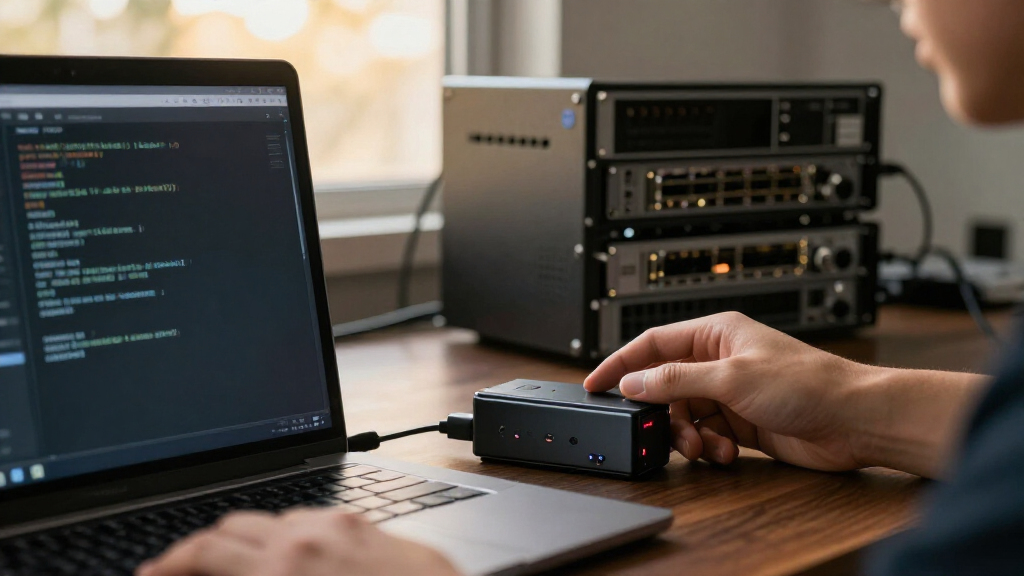
How We Picked
I ranked these products around the practical question behind a penetration-testing gadget: what kind of authorized assessment or learning task does it make easier, and what must a buyer supply to use it? That makes a general-purpose Kali Linux boot drive different from a dedicated Wi-Fi appliance or a portable radio-and-electronics multitool. I gave higher placement to products with a clear role, useful compatibility details, and a distinct advantage over the other options in this lineup.
Capability and role separation mattered more than a long feature list. The Pineapple earns its specialist position through dual-band wireless auditing, its web-based recon dashboard, and remote access through Cloud C2. The Kali USB drives offer software access in a portable format, but buyers still need a compatible host computer and the skill to work with the included tools. Flipper Zero’s value lies in bringing several hardware interfaces together; that does not make it a substitute for either a Linux workstation or a dedicated Wi-Fi audit platform.
I also compared the practical constraints stated for each product: connectors, supported architectures, storage capacity, transfer speeds, and management requirements. The dual-connector Kali drive ranks ahead of the other Kali listing because USB-A and USB-C broaden the range of computers it can connect to, and the listing gives more detail about architectures and tools. The 2026.2 drive remains a straightforward live-boot choice, but its stated read speed and broad compatibility claim limit how confidently I can compare its fit across systems.
Finally, I treated duplicate-style listings carefully. The two Flipper Zero products have substantially overlapping functions and the same stated dimensions, weight, and range. I separated their editorial roles only where the supplied listing details support a distinction: one emphasizes learning and broad compatibility, while the other explicitly lists a rechargeable battery. I do not assume that overlapping listings have different hardware performance. All recommendations are for authorized testing, education, and experimentation on equipment or networks the buyer owns or has permission to assess.
Factors to Consider When Choosing Best Penetration Testing Gadgets
I would start by choosing the kind of target or system I plan to assess, not by counting the features in each listing. These products cover three different layers of work: a general Linux software environment, a dedicated wireless auditing appliance, and a portable interface for compatible signals and electronics. The right purchase depends on which layer is missing from an existing authorized lab setup.
Match the gadget to the assessment
For Wi-Fi-focused work, start with the Pineapple Mark VII. Its dual-band support, recon dashboard, automated campaigns, and Cloud C2 management make its role clearer than a general Kali boot drive. Kali can still be the stronger foundation when a buyer needs a wider software environment and already knows how to select tools. Flipper Zero is a different choice again: its listed interfaces suit experimentation with compatible radios, NFC, infrared, and GPIO hardware, rather than broad network assessment.
For a beginner, the product that looks most specialized is not automatically the easiest. A bootable Kali drive may be a practical way to learn in a lab, but it still requires a compatible computer and familiarity with Linux tools. The Pineapple is purpose-built, yet its wireless workflows and remote management still call for technical understanding. Flipper Zero is portable and has onboard controls, but its capabilities depend on compatible devices and signals.
Check ports, architecture, and storage before choosing a Kali drive
The USB-A/USB-C Kali drive is the more adaptable of the two USB options when computers in a lab have different connectors. Its listing also names amd64 and arm64 support, with the caveat that ARM devices must be supported. The Kali Linux 2026.2 listing states USB Type-A and broad compatibility with modern computers, but does not name architectures or specific systems. If a target host is essential to the purchase, verify that it can boot the chosen drive before relying on either one.
Both drives list 8 GB of storage, so neither is a roomy place for extensive additions, saved data, or many customizations. Their stated read speeds differ sharply: 450 MB/s for the USB-A/USB-C listing versus 12 MB/s for the 2026.2 drive. Those are listing specifications, not a promise of real-world performance on every host. I would treat them as a comparison point and keep the limited capacity in view whichever drive I choose.
Decide whether you need a tool or a whole environment
A Kali boot drive supplies a software environment that runs on a separate computer. It can make lab access more portable, but it does not include a dedicated Wi-Fi auditing appliance or the Flipper’s range of handheld hardware interfaces. The Pineapple serves a more defined wireless function and needs a computer or mobile device to manage it. Flipper Zero carries its own display and controls, but it does not replace a laptop when the job needs desktop software.
That distinction can prevent buying overlapping equipment. Someone who already has a capable computer may value Kali’s software scope; someone whose lab work is specifically wireless may prefer the Pineapple as an addition. A hardware hobbyist may get more use from Flipper Zero. I would choose the smallest missing piece in the existing kit rather than treating all three product types as competing versions of the same thing.
Treat compatibility and range claims as bounded
Compatibility depends on the exact computer, protocol, signal, and device. The Kali 2026.2 drive’s “most modern computers” description is broad, while the other Kali listing names architectures but still limits ARM support to compatible devices. The Flipper listings say that compatible devices can include phones, cards, televisions, and electronics, but that does not mean every item in those categories will respond. Check the supported technology for the specific learning task before buying.
The Flipper listings give a maximum range of 1 km. I would not treat that figure as a guaranteed range across every signal, antenna, or environment. The Pineapple’s listed transfer figures and standards also describe its stated capabilities, not a promise that every wireless assessment will produce the same result. For all five products, use them only in an authorized lab or on systems and signals you have permission to assess.
Account for setup effort and learning curve
None of these gadgets removes the need for technical judgment. Kali includes security tools, but a tool collection does not explain which test is appropriate or how to interpret a result. The Pineapple streamlines a wireless workflow with a dashboard, yet buyers still need to understand the assessment and manage the device from another screen. Flipper Zero is accessible as a handheld object, but meaningful experiments still depend on knowing the relevant signal or interface.
For a first lab, I would pair the gadget with documented, controlled practice rather than testing against networks or devices without permission. A Kali USB can make a flexible learning environment, the Pineapple can support a more focused Wi-Fi lab, and Flipper Zero can anchor electronics experiments. The best fit is the one whose setup effort matches the buyer’s current skills and learning goal.
Read the two similar listings carefully
The two Flipper Zero entries in this roundup have nearly identical core features, dimensions, weight, and stated range. The second explicitly calls out a rechargeable battery; the first describes the device as battery powered. I would not assume that this difference creates a distinct capability tier. Compare the exact listing contents and support details, and choose between them only if the written specification or package information resolves a real preference.
The two Kali drives are more meaningfully differentiated by their connector options, stated read speeds, and compatibility detail. If those differences matter, the USB-A/USB-C listing has clearer information for comparing host systems. If the priority is simply a live Kali environment on a compatible USB-A computer, the 2026.2 drive remains a possible fit, subject to its limited capacity and broad support description.
Frequently Asked Questions
Which gadget is the best starting point for authorized penetration testing?
I would choose based on the first skill area the buyer wants to practice. The USB-A/USB-C Kali drive is the broadest starting point here for someone with a compatible computer who wants a Linux security environment. The Pineapple is a more focused choice for a learner whose authorized lab centers on Wi-Fi. Flipper Zero fits hands-on experiments with compatible signals and electronics, but it does not replace either a computer-based toolset or a dedicated wireless appliance.
Can a Kali Linux bootable USB replace installing Kali on a computer?
A bootable drive can start a live Kali environment without requiring a permanent installation, and the listed USB-A/USB-C model also supports installation on compatible systems. The live-use approach can be convenient for a separate lab environment, but performance and persistence depend on the drive, host, and setup. Both Kali drives in this roundup list 8 GB of storage, so buyers who want substantial additional files or customization should check whether that capacity suits their planned use.
Should I buy the WiFi Pineapple or a Kali Linux USB for wireless testing?
I would choose the WiFi Pineapple Mark VII when I want a dedicated dual-band wireless auditing device with a recon dashboard, automated campaigns, and Cloud C2 remote access. A Kali USB offers a broader operating environment on a compatible computer, but it is not the same purpose-built appliance and may require additional hardware for a particular wireless task. The Pineapple also needs a compatible computer or mobile device for management, so it is not an entirely standalone setup.
Are the two Flipper Zero products different devices?
The supplied descriptions show substantial overlap: both list Sub-GHz radio, NFC, infrared, GPIO, a color display, a backlit keyboard, and similar dimensions, weight, and maximum range. One listing explicitly includes a rechargeable battery in its specifications, but the information provided does not establish a different core capability set. I would compare the exact listing contents and choose based on documented package details rather than expecting a distinct testing role.
Are these gadgets suitable for testing networks or devices I do not own?
These recommendations are for authorized security assessments, controlled labs, education, and experiments on equipment the buyer owns or has explicit permission to assess. A device’s technical ability does not grant permission to test a network, card, remote, or other hardware. I would keep practice within a lab or written scope, and check applicable laws and organizational rules before conducting any assessment.
Conclusion
For wireless specialists, I recommend the Hak5 WiFi Pineapple Mark VII because it has the clearest dedicated Wi-Fi role in this group. For a flexible Kali environment, I would pick the USB-A/USB-C boot drive for its broader connector options and more explicit architecture details. The 2026.2 USB makes sense for buyers who want a straightforward live-boot setup on a compatible USB-A computer and can accept the listed capacity and read-speed limits.
For portable hardware learning, choose either Flipper Zero listing only if the Sub-GHz, NFC, infrared, and GPIO functions match the experiments you intend to run. The two listings overlap heavily, so I would look for the one with the package details that best match your needs rather than buying both. If you need one product to cover every category, none of these does: the best choice comes from matching the gadget to an authorized lab’s actual work.