
AI car alarms range from simple vibration-triggered sirens to connected trackers that send phone alerts, so the right choice depends on how you want to detect and respond to trouble. I rank the CARLOCK 4G OBD Car Tracker and Anti-Theft Alarm first for pairing alerts with vehicle tracking, while the Ring Car Tracker and Alarm is a standout for buyers focused on location and notifications. For a simpler, siren-first setup, the Electop 120 dB Car Alarm System offers a different path without the same connected tracking approach. The main tradeoffs are installation, ongoing connectivity needs, alert detail, and whether you want a loud deterrent or information on your phone. Read on for how the 14 options compare and which type of system fits your needs.

Get privacy and security gear delivered free with Prime
- Fast, free delivery on millions of items
- Prime Video, Amazon Music and more included
- Member-only deals all year
Key Takeaways
Connected alerts and location tracking set the CARLOCK and Ring options apart from the lineup’s many vibration-triggered sirens; choose them when knowing what is happening remotely matters more than a loud local warning.
Siren volume is not the same as detection quality. The 108 dB to 120 dB models emphasize audible deterrence, but their vibration or motion triggers may not provide the event detail that a tracker can.
Installation style changes the ownership experience. OBD-based tracking and 12V systems may involve vehicle compatibility or wiring decisions, while wireless alarm units generally keep setup simpler.
Remote controls and simulated lights serve different needs. They make local operation or visible deterrence more convenient, but do not replace phone alerts or location history when the vehicle is unattended elsewhere.
The 2-pack and bundle options solve specific coverage gaps. WSDCAM’s two alarms may suit more than one vehicle, while CARLOCK Ultimate combines tracking and alarm components for buyers wanting a broader setup.
| Electop 120 dB Car Alarm System with Vibration Sensor and Strobe Lights |  | Best for Adjustable Alerts | Maximum siren volume: 120 dB | Volume levels: 100 dB, 110 dB, and 120 dB | Sensor: 3D motion sensor | VIEW ON AMAZON | See Our Full Breakdown |
| CARLOCK 4G OBD Car Tracker and Anti-Theft Alarm | 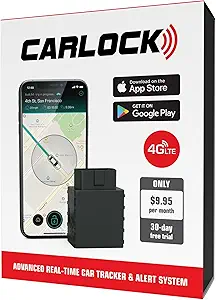 | Best for App-Based Monitoring | Model: OBD | Part number: OBD100 | Connectivity: 4G | VIEW ON AMAZON | See Our Full Breakdown |
| ELECTOP 108 dB Wireless Car Vibration Alarm |  | Best for Quick, Wire-Free Installation | Alarm volume: Up to 108 dB | Volume levels: 3 adjustable levels | Remote range: Up to 66 feet | VIEW ON AMAZON | See Our Full Breakdown |
| ELECTOP 115 dB Vehicle Alarm with Vibration Sensor, LED Strobe, and Wireless Remote |  | Best for Multi-Vehicle Use | Model: WL03C | Alarm volume: 115 dB | Sensor: 3D acceleration sensor with AI algorithm | VIEW ON AMAZON | See Our Full Breakdown |
| LNKERCO 110 dB Vibration Car Alarm with Remote |  | Best for Sensitivity Tuning | Model: SF04R | Alarm volume: 110 dB | Sensitivity levels: 10 | VIEW ON AMAZON | See Our Full Breakdown |
| Viper 350 Plus 1-Way Car Alarm with Keyless Entry |  | Best for Integrated Keyless Entry | Channels: 3 | System type: 1-way car security system | Keyless entry: Yes | VIEW ON AMAZON | See Our Full Breakdown |
| WSDCAM 113 dB Vibration Sensor Anti-Theft Alarm with Remote, 2-Pack |  | Best Two-Pack for Multi-Vehicle Use | Pack count: 2 | Alarm volume: Up to 113 dB | Remote range: Up to 328 ft | VIEW ON AMAZON | See Our Full Breakdown |
| LNKERCO Wireless Car Alarm System with Motion Sensor, 108 dB Siren, and Remote |  | Best Magnetic Two-Location Setup | Alarm units: 2 | Wireless remotes: 1 | Maximum siren volume: 108 dB | VIEW ON AMAZON | See Our Full Breakdown |
| Ring Car Tracker and Alarm with Vehicle Location Tracking |  | Best for App-Based Location and Disturbance Alerts | Dimensions: 2.44 x 0.94 x 1.89 inches | Power: Vehicle OBD-II port with backup battery | Backup battery life: Up to 7 days | VIEW ON AMAZON | See Our Full Breakdown |
| LNKERCO Wireless Car Alarm with Motion Sensor, 120 dB Siren, Red Flashing Light, and Remote |  | Best Rechargeable High-Volume Alarm | Model: KS-SF33RS | Alarm volume: 100, 110, or 120 dB | Remote range: Up to 165 ft (50 m) | VIEW ON AMAZON | See Our Full Breakdown |
| Wireless Car Alarm with Motion Sensor and Remote |  | Best for Flexible Placement | Brand: LNKERCO | Model: KS-SF18R | Alarm volume: 108 / 102 / 96 dB | VIEW ON AMAZON | See Our Full Breakdown |
| LNKERCO 110 dB Vibration Car Alarm with Simulated Blue LED and Wireless Remote |  | Best for Adjustable Setup | Brand: LNKERCO | Alarm volume: 110 dB | Sensor sensitivity: 7 levels | VIEW ON AMAZON | See Our Full Breakdown |
| Mulcort 12V Universal Car Alarm Security System with 2 Remotes |  | Best for Wired Installation | Brand: Mulcort | Voltage: 12V | Remote controls: 2 | VIEW ON AMAZON | See Our Full Breakdown |
| CARLOCK Ultimate Security Bundle 2.0 with Real-Time Tracker, Alarm, Vibration Sensor, and TAG |  | Best for Connected Monitoring | Included components: CARLOCK anti-theft device and alarm, Bluetooth vibration sensor, CARLOCK TAG 2.0 | Tracking: GPS with real-time alerts | Vehicle activity alerts: Movement and engine starts | VIEW ON AMAZON | See Our Full Breakdown |
| ai car alarm | Warranty | Alarm volume |
|---|---|---|
| Electop 120 dB Car Alarm Syste | — | — |
| CARLOCK 4G OBD Car Tracker and | 2 years | — |
| ELECTOP 108 dB Wireless Car Vi | — | Up to 108 dB |
| ELECTOP 115 dB Vehicle Alarm w | 1 year | 115 dB |
| LNKERCO 110 dB Vibration Car A | 1 year | 110 dB |
| Viper 350 Plus 1-Way Car Alarm | — | — |
| WSDCAM 113 dB Vibration Sensor | 1 year | Up to 113 dB |
| LNKERCO Wireless Car Alarm Sys | — | — |
| Ring Car Tracker and Alarm wit | One-year limited warranty | — |
| LNKERCO Wireless Car Alarm wit | 365 days | 100, 110, or 120 dB |
| Wireless Car Alarm with Motion | 365 days | 108 / 102 / 96 dB |
| LNKERCO 110 dB Vibration Car A | 1 year | 110 dB |
| Mulcort 12V Universal Car Alar | — | — |
| CARLOCK Ultimate Security Bund | — | — |
More Details on Our Top Picks
Electop 120 dB Car Alarm System with Vibration Sensor and Strobe Lights
The Electop pairs a 3D motion sensor and AI algorithm with two kinds of warning: a siren and flashing red lights. Its three volume settings let owners choose a less intrusive alert for light disturbances or a louder response to a suspected break-in. Compared with the ELECTOP 115 dB Vehicle Alarm, this model offers a higher stated maximum volume and explicitly lists longer operating and standby times. That makes it a better fit for someone who wants flexible alerts and fewer charging interruptions, based on the stated battery figures. The tradeoff is that a siren inside a soundproofed vehicle may be muffled, and the product description does not independently verify its battery-life claims. It is a standalone deterrent, not a phone-based tracker.
Pros:- Combines a siren with flashing red strobe lights
- Three volume settings: 100, 110, and 120 dB
- 3D motion sensing uses an AI algorithm intended to reduce false alarms
- Lists more than three months of operation and up to six months of standby
Cons:- Vehicle soundproofing may muffle the siren
- Battery-life figures come from the product description
- Does not list GPS tracking or phone activity alerts
Best for: Drivers who want adjustable siren volume, a visible strobe, and a battery-powered alarm without wiring
Not ideal for: Owners who need remote phone alerts or location tracking, since this alarm’s listed features focus on local siren and strobe warnings
- Maximum siren volume:120 dB
- Volume levels:100 dB, 110 dB, and 120 dB
- Sensor:3D motion sensor
- Alerts:Siren and red strobe lights
- Main unit operation:Over 3 months
- Standby time:Up to 6 months
- Remote control battery life:Up to 2 years
Our verdict“Choose this Electop if adjustable siren volume and a strobe matter more to you than app alerts or vehicle tracking.”
CARLOCK 4G OBD Car Tracker and Anti-Theft Alarm
CARLOCK takes a different approach from siren-first devices such as the ELECTOP 108 dB Wireless Car Vibration Alarm: it plugs into the OBD port and sends 4G app alerts about movement, engine starts, unusual vibration, or disconnection. Trip tracking, driving behavior information, and battery-health monitoring make it useful for owners who want a continuing view of a vehicle, not just a noise when it is disturbed. Android and iOS compatibility also makes the alerts accessible through a phone. The main tradeoff is ongoing service: after the first free month, the listing specifies a subscription. It also depends on a compatible OBD port and 4G connectivity, while the ELECTOP can be mounted without wiring and acts as a local alarm. CARLOCK is better for monitoring than for a loud physical deterrent.
Pros:- App alerts cover vehicle movement, engine starts, vibration, and device disconnection
- Tracks trips and driving behavior
- Monitors vehicle battery health
- Works with Android and iOS
Cons:- Requires a subscription after the first free month
- Needs an available OBD port and 4G connectivity
- The listed feature set emphasizes tracking and alerts rather than a loud siren
Best for: Owners who want phone alerts, trip history, and vehicle activity monitoring through an OBD-connected device
Not ideal for: Drivers who want a standalone siren or cannot use an OBD port or 4G service
- Model:OBD
- Part number:OBD100
- Connectivity:4G
- Installation:OBD plug-and-play
- App compatibility:Android and iOS
- Warranty:2 years
- Subscription:First month free; subscription required after
Our verdict“Pick CARLOCK if ongoing app-based tracking and activity alerts matter more than an audible local alarm.”
ELECTOP 108 dB Wireless Car Vibration Alarm
For a driver who wants a simple add-on without vehicle wiring, the ELECTOP 108 dB uses magnetic mounting and a wireless remote with a stated range of up to 66 feet. Its adjustable alarm, six tones, and LED warnings give more control over the alert than a basic fixed-tone unit. Compared with the LNKERCO 110 dB Vibration Car Alarm, it has a slightly lower stated maximum volume but does not require adhesive mounting, which may suit someone who wants to reposition or remove the device. The tradeoff is that vibration-triggered alarms can still sound unnecessarily, and the listing does not specify the required power source. It also lacks the GPS and phone notifications offered by CARLOCK, so its role is local deterrence rather than remote monitoring.
Pros:- Magnetic mounting allows quick installation without wiring
- Three adjustable volume levels up to 108 dB
- Remote range is listed at up to 66 feet and includes a vehicle search function
- Designed to operate from -40°C to +70°C
Cons:- Vibration triggers may cause unnecessary alarms
- The required batteries or other power source are not specified
- Does not list phone alerts or GPS tracking
Best for: Drivers seeking a removable, wire-free vibration alarm with a remote for a car, motorcycle, or scooter
Not ideal for: Owners who need specified power requirements, phone alerts, or tracking, or who want to avoid possible vibration-triggered false alarms
- Alarm volume:Up to 108 dB
- Volume levels:3 adjustable levels
- Remote range:Up to 66 feet
- Alarm tones:6
- Mounting:Magnetic
- Operating temperature:-40°C to +70°C
Our verdict“Choose this ELECTOP if easy repositioning and a remote-controlled local alarm matter more than app monitoring.”
ELECTOP 115 dB Vehicle Alarm with Vibration Sensor, LED Strobe, and Wireless Remote
The WL03C is designed to cover more than a car: its listed compatibility includes motorcycles, scooters, and trucks, and adhesive installation keeps setup tool-free. A 3D acceleration sensor with an AI algorithm detects abnormal vibration, while the 115 dB alarm, LED strobe, and four-key remote provide local warnings and straightforward control. Compared with the Electop 120 dB Car Alarm System, it has a lower stated maximum volume and does not list extended operating or standby figures, but its broad vehicle compatibility makes it a more flexible choice for owners with different types of transport. The rechargeable lithium battery avoids the unspecified power setup of the ELECTOP 108 dB model. Its main fit limitation is the double-sided adhesive: repositioning may be less convenient once mounted.
Pros:- Listed for cars, motorcycles, scooters, trucks, and most vehicles
- Pairs a 115 dB alarm with an LED strobe
- Rechargeable lithium battery
- Tool-free installation and four-key wireless remote
Cons:- Adhesive mounting may make repositioning difficult
- The listing does not provide a battery runtime
- No phone alerts or GPS tracking are listed
Best for: Owners who want one rechargeable, remotely controlled alarm for a car, motorcycle, scooter, or truck
Not ideal for: Drivers who need frequent repositioning or want a documented operating-time figure before choosing a battery-powered alarm
- Model:WL03C
- Alarm volume:115 dB
- Sensor:3D acceleration sensor with AI algorithm
- Power:Rechargeable lithium battery
- Controls:4-key wireless remote
- Installation:Double-sided adhesive tape; no wiring or tools required
- Compatibility:Cars, motorcycles, scooters, trucks, and most vehicles
- Warranty:1 year
Our verdict“Pick the WL03C if you want a rechargeable local alarm that can move between different vehicle types.”
LNKERCO 110 dB Vibration Car Alarm with Remote
The LNKERCO SF04R gives owners 10 sensitivity levels, so they can tune how readily vibration triggers its 110 dB siren. That adjustment is its clearest advantage over the ELECTOP 108 dB Wireless Car Vibration Alarm, which lists three volume levels but does not specify multiple sensitivity settings. Doorbell and vehicle-finding modes add practical uses for a remote-controlled device, and adhesive mounting avoids wiring. It is a straightforward pick for someone who wants to tailor a local alert to where the vehicle is parked. The tradeoffs are its two AAA batteries, which are not included, and adhesive mounting that may complicate repositioning. Unlike CARLOCK, it does not list app alerts, trip tracking, or GPS location, so it cannot notify an owner remotely about activity.
Pros:- Ten sensitivity levels allow trigger adjustment
- 110 dB siren with wireless remote
- Includes doorbell and vehicle-finding modes
- Adhesive installation requires no tools
Cons:- Two AAA batteries are not included
- Adhesive mounting may limit repositioning
- No phone alerts or GPS tracking are listed
Best for: Drivers who want to tune vibration sensitivity and use remote-controlled doorbell or vehicle-finding modes
Not ideal for: Owners who need app notifications or tracking, or who prefer a rechargeable alarm with power included
- Model:SF04R
- Alarm volume:110 dB
- Sensitivity levels:10
- Control:Wireless remote
- Power:Two AAA batteries, not included
- Compatible vehicles:Cars, trucks, motorcycles, electric cars, and scooters
- Installation:Double-sided adhesive
- Warranty:1 year
Our verdict“Choose the SF04R if sensitivity adjustment and local remote features matter more than rechargeable power or app tracking.”
Viper 350 Plus 1-Way Car Alarm with Keyless Entry
Viper 350 Plus combines an alarm with keyless entry, making it a better fit for owners who want controls built into their vehicle security system than the standalone sensor alarms in this roundup. Its starter kill and anti-carjacking functions add vehicle-focused protection, while the six-tone siren and panic alarm provide audible alerts. Compared with the Mulcort 12V Universal Car Alarm Security System, this model is also a 1-way system, so the remote does not confirm that a command reached the car. Remote start and GPS tracking are available only as additional options, which limits what comes in the base system. Choose it for conventional alarm functions and keyless entry; skip it if you want app-based location tracking or two-way feedback.
Pros:- Keyless entry is integrated with the alarm system
- Starter kill and anti-carjacking functions add vehicle-specific security features
- Six-tone siren and panic alarm provide audible alert options
- Four-button remotes offer several control inputs
Cons:- The 1-way remote provides no confirmation that commands reached the vehicle
- Remote start and GPS tracking require additional options
Best for: Drivers seeking a conventional installed car alarm with keyless entry, starter kill, and a remote-operated panic function
Not ideal for: Drivers who want phone-based location tracking, remote start included, or confirmation that the alarm received a remote command
- Channels:3
- System type:1-way car security system
- Keyless entry:Yes
- Remote buttons:4
- Starter kill:FailSafe
- Siren:Six-tone
- Status LED:Blue
Our verdict“Choose the Viper 350 Plus if you want keyless entry and conventional car alarm functions in one system, and can do without two-way feedback or built-in tracking.”
WSDCAM 113 dB Vibration Sensor Anti-Theft Alarm with Remote, 2-Pack
The WSDCAM two-pack gives buyers a way to add vibration alerts to two vehicles or separate areas without installing a wired alarm. Its seven sensitivity settings let owners tune how readily it reacts, while three volume levels help adapt the sound to different parking environments. Compared with the single rechargeable LNKERCO Wireless Car Alarm with Motion Sensor, 120 dB Siren, this set covers two locations and offers a stated longer remote range of up to 328 feet. The tradeoff is attachment: adhesive tape or cable ties secure each unit, so placement and removal may take more effort than the magnetic LNKERCO KS-SF18R. Its 113 dB maximum may also be excessive in some settings. This suits buyers who value flexible placement across multiple vehicles over a built-in installation.
Pros:- Two alarms can cover separate vehicles or locations
- Seven sensitivity and three volume settings allow adjustment
- IP65 rating supports outdoor use
- Remote includes vehicle search and optional SOS functions
Cons:- Mounting relies on adhesive tape or cable ties rather than an integrated vehicle installation
- The maximum 113 dB alarm may be too loud for some locations
Best for: Owners of two cars, motorcycles, trailers, or other outdoor equipment who want adjustable vibration alerts without wiring
Not ideal for: Drivers who need a discreet, permanently integrated vehicle alarm or do not want to mount units with tape or cable ties
- Pack count:2
- Alarm volume:Up to 113 dB
- Remote range:Up to 328 ft
- Volume settings:3 levels
- Sensitivity settings:7 levels
- Water resistance:IP65
- Warranty:1 year
Our verdict“Pick the WSDCAM set if adjustable, portable alerts for two vehicles matter more than a wired or discreet factory-style installation.”
LNKERCO Wireless Car Alarm System with Motion Sensor, 108 dB Siren, and Remote
Two magnetic alarm units make this LNKERCO set easy to move between vehicles or position in separate areas of one vehicle, with no wiring or drilling. Its motion sensor gives a warning beep before a 30-second siren and flashing red light, so an alert has both sound and a visual cue. Against the WSDCAM 113 dB Vibration Sensor Anti-Theft Alarm, the KS-SF18R offers simpler magnetic mounting and three fixed volume choices, while WSDCAM provides more sensitivity adjustments and a longer stated remote range. Here, the remote range is up to 66 feet, and each alarm uses two AAA batteries. The sound may also be less audible outside a well-insulated car. I’d choose it for flexible, tool-free placement, but not as a substitute for an integrated alarm or tracking system.
Pros:- Two alarm units can protect two vehicles or separate areas
- Magnetic mounting avoids wiring and drilling
- Three siren volume settings and a flashing light offer adjustable alerts
- Remote can arm, disarm, or locate the vehicle
Cons:- Each alarm requires two AAA batteries
- The remote range is limited to a stated 66 feet
- Sound may be less audible outside a well-insulated car
Best for: Drivers who want to move a pair of wireless motion alarms between vehicles or use them in different interior locations
Not ideal for: Buyers seeking long-range remote control, location tracking, or an alarm wired into the vehicle
- Alarm units:2
- Wireless remotes:1
- Maximum siren volume:108 dB
- Volume levels:108, 102, and 96 dB
- Siren duration:30 seconds
- Remote range:Up to 66 ft (20 m)
- Alarm power:2 AAA batteries
- Mounting:Magnetic
Our verdict“Choose the KS-SF18R for movable, magnetic alarms in two locations, provided its short remote range and battery-powered design fit your needs.”
Ring Car Tracker and Alarm with Vehicle Location Tracking
The Ring Car Tracker and Alarm takes a different approach from siren-focused options such as the LNKERCO Wireless Car Alarm with Motion Sensor, 120 dB Siren: it connects through the OBD-II port and reports location and disturbance alerts in the Ring app. Alerts for impacts and door openings help owners check on a vehicle remotely, while the backup battery can power the device for up to seven days when parked. Tool-free installation is convenient, and the product states that Amazon Sidewalk connectivity works without a monthly subscription. The main limitation is coverage: Sidewalk availability varies by location and can change or be interrupted, so tracking may not be dependable everywhere. It also does not offer the loud standalone siren listed for the LNKERCO. This is the stronger match for app alerts than for an audible deterrent.
Pros:- Provides vehicle location and disturbance alerts through the Ring app
- Tool-free installation connects through the OBD-II port
- No monthly subscription is stated
- Backup battery supports up to seven days of parked operation
Cons:- Amazon Sidewalk coverage varies and may be interrupted
- The backup battery lasts up to seven days when parked
- Does not list a standalone high-volume siren like the LNKERCO alarm
Best for: Ring app users who want vehicle location and disturbance notifications without a monthly subscription
Not ideal for: Drivers who need a loud local siren or live in an area with limited Amazon Sidewalk coverage
- Dimensions:2.44 x 0.94 x 1.89 inches
- Power:Vehicle OBD-II port with backup battery
- Backup battery life:Up to 7 days
- Connectivity:Amazon Sidewalk
- Operating temperature:-4°F to 176°F (-20°C to 80°C)
- Installation:Tool-free; connects to OBD-II port
- Compatibility:Most vehicles
- Warranty:One-year limited warranty
Our verdict“Choose Ring if app-based location and disturbance alerts matter more than a loud local siren and Sidewalk coverage is available where you park.”
LNKERCO Wireless Car Alarm with Motion Sensor, 120 dB Siren, Red Flashing Light, and Remote
This rechargeable LNKERCO alarm pairs a vibration-triggered siren with a flashing red light, giving passersby a visible cue as well as an audible alert. Its selectable 100, 110, or 120 dB levels let owners choose between a less forceful warning and the maximum setting, while the remote works at a stated range of up to 165 feet. Compared with the two-unit LNKERCO KS-SF18R, this model provides a louder listed maximum, a longer remote range, and USB-C charging, but it protects one location and requires periodic recharging. The stated battery life of up to three months depends on use, so it is less hands-off than a wired alarm. Vehicle soundproofing can also reduce how much of the siren is heard outside. It suits buyers who want a removable alarm with no disposable AAA batteries.
Pros:- Combines a siren with a flashing red warning light
- Three selectable alarm volume levels up to 120 dB
- Remote range is stated at up to 165 feet
- USB-C charging supports removable installation without disposable AAA batteries
Cons:- Requires recharging, with battery life varying by use
- Vehicle soundproofing may reduce the audible alert outside the car
- The package includes one alarm unit
Best for: Drivers seeking a removable, rechargeable vibration alarm with adjustable siren levels and a longer-range remote
Not ideal for: Owners who want two alarm units, a wired system, or an alert that needs no battery charging
- Model:KS-SF33RS
- Alarm volume:100, 110, or 120 dB
- Remote range:Up to 165 ft (50 m)
- Battery capacity:700 mAh
- Charging:USB-C, 5 V/0.3 A
- Full charge time:About 3 hours
- Claimed battery life:Up to 3 months
- Warranty:365 days
Our verdict“Pick this LNKERCO if you want a removable, rechargeable alarm with a high-volume setting and accept regular charging.”
Wireless Car Alarm with Motion Sensor and Remote
The LNKERCO KS-SF18R suits drivers who want an alarm they can attach without wiring or drilling. Its magnetic mount makes it easier to move between compatible metal surfaces, and the motion sensor responds to vibration, prying, and forced entry. A warning beep and flashing light come before the 30-second siren, giving nearby people a chance to notice activity. Compared with the adhesive-mounted LNKERCO 110 dB Vibration Car Alarm with Simulated Blue LED, this model is easier to reposition but has fewer stated sensitivity and volume controls. It also works for bikes and luggage, which adds flexibility beyond vehicle use. The tradeoff is battery dependence: it takes two AAA batteries, and its alarm and remote need separate power management.
Pros:- Magnetic mounting avoids drilling and wiring
- Warning beep and flashing light precede the siren
- Three volume levels let owners adjust the alarm for their setting
- Remote range is stated as up to 66 feet
Cons:- Requires two AAA batteries for the alarm
- Does not provide GPS tracking or remote phone alerts
- Magnetic mounting may not suit surfaces without a compatible metal attachment point
Best for: Drivers who want a portable, wire-free alarm they can move between a car and other metal-secured items
Not ideal for: Owners seeking a permanently installed system with vehicle wiring integration or app-based alerts
- Brand:LNKERCO
- Model:KS-SF18R
- Alarm volume:108 / 102 / 96 dB
- Alarm duration:30 seconds
- Remote range:66 ft (20 m)
- Power:2 AAA batteries
- Mounting:Magnetic
- Item weight:4 ounces
- Warranty:365 days
Our verdict“Choose this LNKERCO if you want a movable, battery-powered alarm with staged alerts and can accommodate its magnetic mount.”
LNKERCO 110 dB Vibration Car Alarm with Simulated Blue LED and Wireless Remote
Among the compact alarms in this group, this LNKERCO vibration alarm offers unusually fine control over how readily it reacts: seven sensitivity levels can help owners tune it to a vehicle’s parking environment, while four volume settings give more choice than the three on the LNKERCO KS-SF18R. Adhesive pads and a 52-inch cable support tool-free placement, and the pulsing blue LED is intended to suggest an installed alarm system. That light is a visual deterrent, though it does not confirm factory integration. It can suit cars, RVs, trailers, and even doors or windows, but it is still a vibration alarm rather than a tracker with movement alerts like the CARLOCK Ultimate Security Bundle 2.0. The stated remote range conflicts—66 feet in the description and 100 feet in the specifications—so I would not base a choice on the longer figure.
Pros:- Seven sensitivity levels provide more adjustment than the LNKERCO KS-SF18R
- Four volume settings let owners tune the audible alert
- Adhesive pads and a 52-inch cable support tool-free installation
- Designed for several vehicle types as well as doors and windows
Cons:- Remote range is inconsistent across the product information
- Blue LED simulates an alarm but does not establish factory-installed security
- No GPS tracking or real-time phone alerts are specified
Best for: Drivers who want to tune vibration sensitivity and siren volume for different parking conditions without wiring the alarm
Not ideal for: Buyers who need GPS location, phone alerts, or a dependable published remote-range figure
- Brand:LNKERCO
- Alarm volume:110 dB
- Sensor sensitivity:7 levels
- Volume settings:4
- Remote range:66 ft in description; 100 ft in specifications
- Installation:Double-sided adhesive pads and 52-inch cable
- Included items:Blue LED light, user manual, vibration alarm unit, wireless remote, adhesive pads
- Warranty:1 year
Our verdict“Pick this model for adjustable vibration detection and adhesive installation, provided its disputed remote range is not central to your decision.”
Mulcort 12V Universal Car Alarm Security System with 2 Remotes
The Mulcort 12V system is the fit here for owners who prefer a vehicle-connected alarm over a portable add-on. Its wiring harness, sensors, motion detection, and built-in siren form a more installation-oriented package than the battery-powered LNKERCO KS-SF18R, whose magnetic mount is simpler to reposition. Two remotes are useful when a vehicle has more than one regular driver, while multi-level arming gives the owner different security states. The listing, however, does not spell out the arming modes or vehicle compatibility details, so buyers will need to check whether the system suits their particular vehicle and wiring setup. Unlike the CARLOCK Ultimate Security Bundle 2.0, it does not specify GPS tracking or phone alerts. Its main tradeoff is the installation work and uncertainty around fit.
Pros:- Wired 12V design suits a vehicle-installed security setup
- Includes two remote controls for shared access
- Motion sensors and a built-in siren are included
- Package includes a wiring harness and sensors
Cons:- Installation may require wiring work
- Compatibility may vary by vehicle and is not specified in detail
- GPS tracking and phone alerts are not listed
Best for: Owners comfortable arranging a wired 12V installation who want two remotes for a shared vehicle
Not ideal for: Drivers who need a tool-free portable alarm, verified vehicle-specific fit, or GPS and phone notifications
- Brand:Mulcort
- Voltage:12V
- Remote controls:2
- Arming:Multi-level
- Detection:Motion sensors
- Siren:Built-in
- Included components:Wiring harness and sensors
- Manufacturer part number:DNA0374705334025WX
Our verdict“Choose the Mulcort if you want a wired 12V alarm with two remotes and can confirm compatibility and installation needs for your vehicle.”
CARLOCK Ultimate Security Bundle 2.0 with Real-Time Tracker, Alarm, Vibration Sensor, and TAG
For buyers who want information about vehicle activity beyond a local siren, the CARLOCK Ultimate Security Bundle 2.0 is the standout connected option in this batch. GPS tracking and alerts for movement, engine starts, unusual vibrations, and battery issues give it a wider role than the Mulcort 12V Universal Car Alarm, which focuses on a wired alarm and motion sensors. Its Bluetooth vibration sensor can extend monitoring to doors or valuables, while the TAG accessory supports hands-free alert management. That broader coverage comes with dependencies: automatic TAG management requires Bluetooth proximity, and the product data does not clarify subscription requirements or device compatibility. Compared with the simpler LNKERCO 110 dB Vibration Car Alarm, this bundle offers tracking and remote activity information, but it is a more connected setup to investigate before buying.
Pros:- GPS tracking adds vehicle location to alarm monitoring
- Real-time alerts cover movement, engine starts, unusual vibration, and battery conditions
- Bluetooth vibration sensor can monitor doors and valuables
- TAG accessory supports hands-free alert management
Cons:- TAG’s automatic alert management depends on Bluetooth proximity
- Subscription requirements are not specified in the provided product data
- Compatibility details are not specified
Best for: Drivers who want GPS location and alerts for vehicle activity, vibrations, and battery changes in one connected bundle
Not ideal for: Owners who want a simple standalone siren or need confirmed subscription terms and compatibility before setup
- Included components:CARLOCK anti-theft device and alarm, Bluetooth vibration sensor, CARLOCK TAG 2.0
- Tracking:GPS with real-time alerts
- Vehicle activity alerts:Movement and engine starts
- Vibration alerts:Unusual vibrations
- Battery alerts:Low battery and high battery drain
- Additional sensor:Bluetooth vibration sensor for doors and valuables
- Alert management:TAG accessory for hands-free management; automatic management requires Bluetooth proximity
- Sensor installation:Described as easy to install
Our verdict“Choose CARLOCK if location and connected activity alerts matter more to you than a simple standalone vibration siren.”

How We Picked
I compared these options by the kind of protection they offer: local siren response, vibration or motion detection, remote operation, vehicle tracking, and phone-based alerts. I also weighed setup demands, vehicle compatibility, and how much useful information each system can give an owner after a trigger. A louder siren can draw attention nearby, but it does not by itself tell a remote owner where the vehicle is or what set off the alarm.
The ranking favors products that combine useful detection with a practical way to respond, which puts connected tracking systems ahead for broad security coverage. Among siren-focused models, I distinguish them by trigger type, controls, and visible deterrence rather than treating decibel claims as a complete measure of protection. Bundle and multi-unit picks have narrower roles, while the wired 12V option suits buyers willing to trade easier setup for a more integrated installation. Product names and descriptions alone do not establish the accuracy of detection, service requirements, compatibility, or long-term reliability, so buyers should confirm those details before choosing.
Factors to Consider When Choosing Ai Car Alarms
Before choosing an alarm, decide what you need to know when something happens to the car. A nearby siren, a phone notification, and a live location solve different problems, and combining them can add setup or service requirements. These factors help match the type of protection to where the vehicle is parked and how you use it.
Choose the alert you can act on
A siren is most useful when someone is close enough to hear it and respond. A phone alert matters more when the car is parked away from home, but only if the system can communicate from that location and your phone can receive notifications. Tracking adds a way to locate the vehicle after it moves, which a sound alarm cannot do. A common mistake is choosing a louder siren while overlooking whether you will learn about an event in time to act. Think through where the car spends nights and workdays, then match the alert channel to that setting. If you need both nearby deterrence and remote awareness, look for complementary functions rather than assuming one feature covers both.
Understand what triggers the alarm
Vibration sensors respond to movement or impact, while motion sensors detect changes within their sensing area; neither description alone tells you how well a particular unit separates a threat from routine bumps. A vehicle parked on a busy street may experience more incidental movement than one in a private garage. Sensitivity controls can help, but excessive sensitivity may produce nuisance alerts and lead owners to ignore or disable the system. Ask whether the alarm gives you a way to adjust its response and whether the alert identifies the event type. Test placement and settings in the vehicle’s normal parking environment after installation. Detection that fits your surroundings is more useful than a high sensitivity setting that creates constant interruptions.
Check connectivity and ongoing requirements
Connected tracking depends on more than the hardware: coverage, an active service plan if required, app support, and phone permissions can all affect alerts. Confirm these requirements for your intended country and parking locations before relying on remote notifications. Ask what happens if mobile service drops, the vehicle battery is disconnected, or the phone app is unavailable. A local alarm can still make noise without a data connection, while a tracker may lose its remote advantage until it reconnects. Buyers sometimes compare devices by their advertised features and only later discover limits on service or coverage. Treat connectivity as part of the system you are choosing, not a background detail.
Match installation to the vehicle
Wireless units can reduce installation work, but placement, attachment, and battery upkeep still affect day-to-day use. An OBD device depends on having an accessible port and may be easier to remove than a concealed installation. A 12V system may call for wiring and a more involved fit, which can suit an owner comfortable with vehicle electronics or a professional installer. Before buying, check whether the product works with your vehicle and whether installation could interfere with existing equipment or warranties. Avoid assuming that a universal label means every function fits every car. A system you can install correctly and keep powered is more dependable in practice than a feature-rich unit left improperly fitted.
Decide whether visible deterrence matters
Flashing lights and visible alarm components can signal that a vehicle has a security device, while a concealed tracker prioritizes information gathering. The right balance depends on whether your main concern is discouraging an attempt or locating the car if it is taken. Visible devices may be easier to notice and potentially remove, so they should not be treated as a substitute for tracking or secure parking. Simulated lights can add a deterrent cue without providing an actual event alert. Consider where the car is parked and whether visibility could attract attention to the device itself. If recovery is a priority, prioritize a dependable location feature alongside any visible warning.
Compare the whole ownership burden
Look beyond the alarm unit to batteries, subscriptions, app access, remote-control replacements, and installation needs. A bundled system may cover more security tasks but bring more components to maintain and configure. A two-unit pack is useful only if you have two vehicles or a reason to cover separate areas; extra hardware otherwise adds little value. Verify what is included and what must be purchased or activated separately. Consider who will manage alerts and keep the system powered when the vehicle changes hands or sits unused. The simpler option may be the better choice if its limits match your actual routine.
Frequently Asked Questions
Do I need an AI car alarm, or will a basic vibration siren do?
A basic vibration siren can fit a car that is usually parked within earshot and where a nearby warning is the main goal. It will not necessarily tell you remotely that the alarm went off or help locate the car if it is moved. Connected trackers add remote awareness and location functions, but bring compatibility and connectivity questions. Decide first whether you need to respond from nearby or from somewhere else. That answer matters more than the AI label, which does not by itself describe a system’s detection accuracy.
Will a connected car alarm keep working if mobile coverage is weak?
Remote notifications and location updates can be limited when the device cannot reach a mobile network. A local siren may still sound if its alarm hardware and power remain available, but that does not restore remote visibility. Check coverage where the car is commonly parked, including garages and underground lots, and ask what data the device stores during a connection gap. Also confirm whether it sends delayed updates once service returns. If your parking areas have poor reception, weigh local deterrence more heavily and avoid relying on live alerts alone.
Should I choose an OBD tracker or a wireless alarm?
An OBD tracker may be appealing if you want location and alerts with a straightforward plug-in setup, but it depends on an accessible, compatible port and may be easier to spot or remove. A wireless alarm can be simpler to place and operate as a local deterrent, though it may not provide tracking. Neither format is automatically right for every vehicle. Check port access, device visibility, power behavior, and any vehicle-specific restrictions before choosing. If concealment or recovery support is central to your decision, ask the manufacturer how the device is meant to be installed.
Can a 120 dB alarm prevent theft better than a quieter model?
A higher advertised siren level may make a warning more noticeable nearby, but it does not establish how reliably the device detects an attempt or whether anyone will respond. Siren placement, trigger behavior, and the surrounding environment all affect its usefulness. A quieter alarm paired with remote alerts or tracking may give an owner more actionable information when the car is unattended. Compare trigger type and notification options alongside the decibel figure. Treat loudness as one part of deterrence, not a complete measure of security.
What should I check before using a car alarm with my vehicle?
Confirm compatibility with your model, the required power source, and whether installation involves the OBD port or 12V wiring. Check for service activation, network coverage, app permissions, and battery maintenance if the system uses them. Consider how alerts behave around routine bumps and whether sensitivity can be adjusted to avoid repeated false alarms. For wired or vehicle-integrated equipment, review installation guidance and consult a qualified installer if the work is outside your comfort level. These checks help prevent a mismatch between the advertised setup and your actual car.
Conclusion
For the broadest mix of remote awareness and vehicle location, I would start with the CARLOCK 4G OBD Car Tracker and Anti-Theft Alarm as the best overall fit, provided its OBD and connectivity requirements suit your car. The Electop 120 dB Car Alarm System is the best value-style choice for buyers whose priority is a direct local warning, while the CARLOCK Ultimate Security Bundle 2.0 is the best premium direction for someone seeking a more complete tracking and alarm setup. Beginners who want a simpler path can look at a wireless remote siren such as the ELECTOP 108 dB Wireless Car Vibration Alarm, after checking power and placement. Choose Ring Car Tracker and Alarm when vehicle location is the specific need, or WSDCAM’s 2-pack when covering two vehicles matters more than connected tracking. My final choice would hinge on whether you need a nearby deterrent, remote alerts, or recovery support, since these products do not solve the same security problem.
Columbus Day / Indigenous Peoples' Day Picks
long weekend sales
As an affiliate, we earn on qualifying purchases.