
Among espionage strategy books, The Moscow Rules is my best overall pick for readers who want practical clandestine principles grounded in Cold War history. To Catch a Spy is the sharper choice for counterintelligence, while Spies, Lies, and Algorithms connects intelligence work to technology and current practice. The main tradeoff is between books that explain spycraft through historical cases and those that focus on methods, ethics, or modern systems. Some titles offer a focused view of one service or topic, while others give a broader introduction. Read on for the full breakdown and help matching a book to your interests.

Get privacy and security gear delivered free — and shop member deals
- Fast, free delivery on millions of items
- Access to Prime Big Deal Days deals on October 6–7
- Prime Video, Amazon Music and more included
Key Takeaways
- The Moscow Rules stands out as the best overall balance of tradecraft lessons and historical context; it is less of a step-by-step training text than its practical framing may suggest.
- To Catch a Spy focuses the most directly on counterintelligence, while Spy Tradecraft Training Manual is aimed at readers seeking a methods-first format.
- Spies, Lies, and Algorithms and Chinese Espionage Operations and Tactics point toward contemporary intelligence challenges, but each narrows the lens to a particular context.
- The lineup ranges from broad introductions such as Espionage and Intelligence: Core Concepts Series to memoir-informed perspectives such as The Art of Intelligence; readers should choose by depth and viewpoint, not title alone.
- Books marketed around elite methods, including The Israeli Mossad Training Manual and MI6 Spy Skills for Civilians, may appeal for their tradecraft framing, but readers seeking reliable context should weigh them against historically grounded works.
| The Moscow Rules: The Secret CIA Tactics That Helped America Win the Cold War |  | Best Overall for Cold War Tradecraft | Format: Book | Subject: CIA tactics | Historical focus: Cold War | VIEW ON AMAZON | See Our Full Breakdown |
| Spy Tradecraft Training Manual: How Intelligence Services Recruit and Run Spies |  | Best for Recruitment and Agent-Handling Methods | Format: Book | Subject: Spy tradecraft | Primary topics: Recruiting and managing spies | VIEW ON AMAZON | See Our Full Breakdown |
| Fair Play: The Moral Dilemmas of Spying |  | Best for Ethics and Strategic Judgment | Format: Book | Subject: Moral dilemmas of spying | Stated focus: Ethics of espionage | VIEW ON AMAZON | See Our Full Breakdown |
| Chinese Espionage Operations and Tactics | 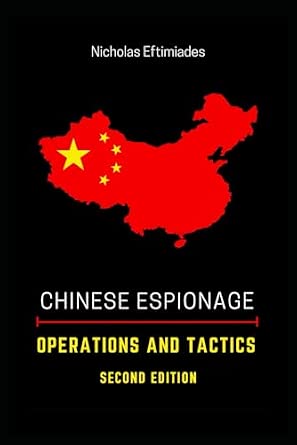 | Best for China-Focused Intelligence Analysis | Format: Book | Subject: Chinese espionage | Primary focus: Operations and tactics | VIEW ON AMAZON | See Our Full Breakdown |
| To Catch a Spy: The Art of Counterintelligence |  | Best for Counterintelligence Strategy | Format: Book | Subject: Counterintelligence | Stated focus: The art of counterintelligence | VIEW ON AMAZON | See Our Full Breakdown |
| Espionage and Intelligence: Core Concepts Series |  | Best for Broad Foundations | Series: Core Concepts Series | Subject: Espionage and intelligence | Coverage: Tradecraft, counterintelligence, covert operations, and related technologies | VIEW ON AMAZON | See Our Full Breakdown |
| A Spy’s Guide To Thinking + Strategy |  | Best for Strategic Thinking | Subject: Intelligence tradecraft and strategy | Focus: Decision-making and problem-solving | Approach: Strategic thinking frameworks informed by espionage methodologies | VIEW ON AMAZON | See Our Full Breakdown |
| MI6 Spy Skills for Civilians: How to Live Like a Spy |  | Best for Everyday Applications | Subject: Spy-inspired skills for civilians | Perspective: Shared by a former British agent | Stated aims: Greater observation, resourcefulness, and preparedness | VIEW ON AMAZON | See Our Full Breakdown |
| The Art of Intelligence: Lessons from a Life in the CIA’s Clandestine Service | 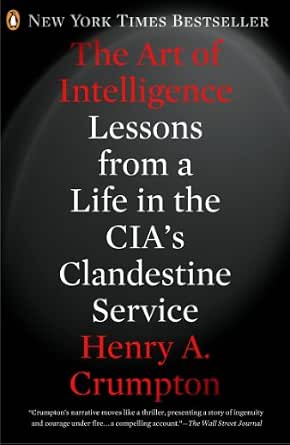 | Best Firsthand Service Perspective | Subject: Intelligence and clandestine service | Perspective: Firsthand account | Service referenced: CIA clandestine service | VIEW ON AMAZON | See Our Full Breakdown |
| Spies: The Epic Intelligence War Between East and West |  | Best for East-West Intelligence History | Subject: Intelligence conflict between East and West | Approach: Historical and geopolitical framing | Format: Book | VIEW ON AMAZON | See Our Full Breakdown |
| The Israeli Mossad Training Manual: Elite Spy Methods and Intelligence Tradecraft |  | Best for Broad Tradecraft Coverage | ASIN: B0GMX49842 | Subject: Intelligence tradecraft and elite spy methods | Topic: Deep cover operations | VIEW ON AMAZON | See Our Full Breakdown |
| Spies, Lies, and Algorithms: The History and Future of American Intelligence |  | Best for Intelligence in the Digital Age | ASIN: 0691223076 | Format: Book | Subject: American intelligence | VIEW ON AMAZON | See Our Full Breakdown |
| The Great Game: The Myths and Reality of Espionage |  | Best for Separating Espionage Myth from Reality | ASIN: 0375726381 | Format: Book | Publisher: Vintage | VIEW ON AMAZON | See Our Full Breakdown |
| espionage strategy book | Subject | ASIN | Format |
|---|---|---|---|
| The Moscow Rules: The Secret C | CIA tactics | B07QXTQ3GW | Book |
| Spy Tradecraft Training Manual | Spy tradecraft | B0GQSSXMQN | Book |
| Fair Play: The Moral Dilemmas | Moral dilemmas of spying | 1597971537 | Book |
| Chinese Espionage Operations a | Chinese espionage | 0997618833 | Book |
| To Catch a Spy: The Art of Cou | Counterintelligence | 1647121485 | Book |
| Espionage and Intelligence: Co | Espionage and intelligence | B0FYX1XWLZ | Book |
| A Spy’s Guide To Thinking + St | Intelligence tradecraft and strategy | 1982917016 | Book |
| MI6 Spy Skills for Civilians: | Spy-inspired skills for civilians | 1948174405 | Book |
| The Art of Intelligence: Lesso | Intelligence and clandestine service | B0064W5SGY | Book |
| Spies: The Epic Intelligence W | Intelligence conflict between East and West | 1668000709 | Book |
| The Israeli Mossad Training Ma | Intelligence tradecraft and elite spy methods | B0GMX49842 | — |
| Spies | American intelligence | 0691223076 | Book |
| The Great Game: The Myths and | Espionage | 0375726381 | Book |
More Details on Our Top Picks
The Moscow Rules: The Secret CIA Tactics That Helped America Win the Cold War
I’d put The Moscow Rules first for readers who want espionage strategy grounded in a historical setting rather than a broad manual of techniques. Its focus on CIA tactics during the Cold War offers a way to think about how operational choices fit a sustained intelligence contest. That makes it a more accessible starting point than Chinese Espionage Operations and Tactics, which centers on a specific national subject, and less narrowly procedural than Spy Tradecraft Training Manual, whose stated focus is recruitment and agent management. The tradeoff is that the supplied description gives no detail about the book’s structure or how much practical instruction it contains. I’d choose it for historical context and strategic framing, not as a step-by-step guide or a survey of every intelligence service.
Pros:- Focuses on secret CIA tactics used during the Cold War.
- Connects espionage methods to a larger strategic contest.
- Offers a historical alternative to the procedural focus of Spy Tradecraft Training Manual.
Cons:- The available description does not specify the depth or organization of its tactical coverage.
- Its Cold War focus may leave readers seeking current operations or other national services wanting more.
Best for: Readers seeking Cold War case-based context on CIA tactics and how intelligence strategy operates over time.
Not ideal for: Readers who want a clearly outlined practical manual, contemporary regional analysis, or a broad comparison of intelligence services.
- Format:Book
- Subject:CIA tactics
- Historical focus:Cold War
- Stated context:Tactics that helped America win the Cold War
- ASIN:B07QXTQ3GW
- Detailed contents supplied:No
Our verdict“Choose this for a historically framed introduction to CIA espionage tactics rather than a hands-on tradecraft manual.”
Spy Tradecraft Training Manual: How Intelligence Services Recruit and Run Spies
Spy Tradecraft Training Manual has the clearest procedural focus in this group: its description centers on how intelligence services recruit and manage spies. I’d rank it as the choice for readers who want tradecraft organized around the agent relationship, rather than the Cold War history in The Moscow Rules or the focused country lens of Chinese Espionage Operations and Tactics. The series framing also signals a dedicated treatment of spy tradecraft, though the supplied information does not establish its exact chapter structure or level of technical detail. Its main tradeoff is that a training-manual approach may feel less engaging to readers who prefer narrative history or ethical debate. I’d also avoid treating the word “comprehensive” in the description as proof of practical completeness; the available product data is limited.
Pros:- Directly addresses recruitment and running spies.
- Presents itself as an educational resource on intelligence tradecraft.
- Belongs to a series devoted to spy tradecraft topics.
Cons:- The supplied data does not describe the book’s organization, examples, or depth.
- Its procedural emphasis may offer less historical narrative than The Moscow Rules.
- The available information provides no basis for judging readability or instructional quality.
Best for: Readers specifically interested in recruitment and agent management as core elements of intelligence tradecraft.
Not ideal for: Readers who prefer espionage history, moral analysis, or a confirmed account of a particular country’s operations.
- Format:Book
- Subject:Spy tradecraft
- Primary topics:Recruiting and managing spies
- Scope described:Methods used by intelligence services
- Series:The Spy Tradecraft Training Manual series
- ASIN:B0GQSSXMQN
Our verdict“Pick this when recruitment and agent management matter more to you than historical storytelling or regional analysis.”
Fair Play: The Moral Dilemmas of Spying
Fair Play: The Moral Dilemmas of Spying takes a different route through espionage strategy: its title frames the subject around the moral choices behind intelligence work. I’d give it a distinct place for readers who want to question the costs and limits of spycraft, rather than focus on operational methods as in Spy Tradecraft Training Manual or Cold War tactics as in The Moscow Rules. That ethical lens can help readers think beyond whether an operation succeeds and ask what its methods mean. However, the supplied product data includes no description, so I can’t confirm the book’s arguments, examples, or balance of theory and case studies. This is a more uncertain pick for buyers seeking tactical instruction, but a promising thematic choice for readers who want moral analysis to shape their understanding of intelligence strategy.
Pros:- Its stated subject foregrounds the moral dilemmas of spying.
- Adds an ethical perspective distinct from the lineup’s tradecraft and historical titles.
- Can suit readers interested in the consequences and limits of intelligence methods.
Cons:- No product description was supplied to establish its argument or coverage.
- The available data does not confirm whether it offers practical strategic guidance.
- Readers seeking concrete operations or case studies cannot assess that fit from the supplied details.
Best for: Readers who want to examine the ethical choices and competing obligations that shape espionage decisions.
Not ideal for: Buyers looking for verified operational instruction, a defined historical case focus, or detailed information about the book’s contents before choosing.
- Format:Book
- Subject:Moral dilemmas of spying
- Stated focus:Ethics of espionage
- Operational details supplied:None
- Historical scope supplied:Not specified
- ASIN:1597971537
Our verdict“Choose this for an ethics-centered perspective on espionage, while recognizing that the available details do not confirm its specific approach.”
Chinese Espionage Operations and Tactics
Chinese Espionage Operations and Tactics is the most clearly regional choice among these five. Its stated focus on Chinese operations and methods suits readers studying intelligence gathering through a particular geopolitical lens, rather than the CIA and Cold War emphasis of The Moscow Rules. The description also points toward covert activities, giving the book a more operations-centered angle than the ethical framing of Fair Play. That specialization is its advantage and its limit: readers with a focused interest can spend their attention on one subject, while general readers may find the scope too narrow. The available data does not identify particular operations, sources, or the book’s level of accessibility, so I’d treat it as a targeted study rather than a general primer or a verified guide to current tradecraft.
Pros:- Concentrates on Chinese espionage operations and tactics.
- Addresses intelligence gathering and covert activities.
- Offers a regional focus distinct from The Moscow Rules’ Cold War CIA subject.
Cons:- Its specialized national focus may not suit readers seeking a broad survey.
- The supplied data does not identify case studies or explain the depth of its analysis.
- Readability and the currency of its discussion cannot be judged from the available description.
Best for: Readers researching Chinese espionage methods or geopolitical security through a focused intelligence-study lens.
Not ideal for: General readers seeking a broad introduction to espionage across countries, eras, or intelligence agencies.
- Format:Book
- Subject:Chinese espionage
- Primary focus:Operations and tactics
- Topics described:Intelligence gathering and covert activities
- Geographic focus:China
- ASIN:0997618833
Our verdict“Choose this if Chinese espionage is your main research interest; skip it for a general-purpose strategy overview.”
To Catch a Spy: The Art of Counterintelligence
To Catch a Spy: The Art of Counterintelligence earns a distinct role by turning attention from conducting espionage to detecting and countering it. That makes it a natural choice for readers interested in the defensive side of intelligence strategy, unlike Spy Tradecraft Training Manual, whose description centers on recruiting and running agents. It also gives this roundup a counterpoint to Chinese Espionage Operations and Tactics, which focuses on operations and tactics rather than identifying hostile activity. The title signals a clear topic, but no description or specifications were supplied, so I can’t confirm which services, cases, or methods the book covers. I’d select it for its counterintelligence focus, not on the assumption that it functions as a complete field manual. Buyers who need verified scope or practical detail may prefer a better-documented option.
Pros:- Centers on counterintelligence rather than the conduct of espionage alone.
- Provides a defensive strategic counterpart to Spy Tradecraft Training Manual.
- Its stated subject is directly relevant to readers studying how spies are caught.
Cons:- No product description was supplied to clarify its examples or methods.
- The available data does not establish whether the book is historical, practical, or analytical.
- Readers cannot verify its breadth or level of detail from the supplied specifications.
Best for: Readers interested in how counterintelligence detects, disrupts, or responds to espionage activity.
Not ideal for: Buyers seeking a documented account of particular cases, a broad history of spying, or confirmed step-by-step instruction.
- Format:Book
- Subject:Counterintelligence
- Stated focus:The art of counterintelligence
- Product description supplied:No
- Operational scope:Not specified
- ASIN:1647121485
Our verdict“Choose this for a counterintelligence-centered perspective, but seek more content details if you need a confirmed practical manual.”
Espionage and Intelligence: Core Concepts Series
Espionage and Intelligence: Core Concepts Series suits readers who want a wide-angle introduction before specializing in a particular service, era, or technique. Its stated coverage spans tradecraft, counterintelligence, covert operations, and related technology, giving it broader subject range than the practical everyday skills focus of MI6 Spy Skills for Civilians. That breadth makes it a useful starting point for readers building a map of the field, rather than a book centered on one historical conflict such as Spies: The Epic Intelligence War Between East and West.
The tradeoff is that the available description does not identify specific case studies, depth, or a hands-on strategy framework. Readers seeking operational lessons or a detailed personal account may find The Art of Intelligence a better fit. I’d choose this for orientation across core topics, while treating its breadth—not documented depth—as its main advantage.
Pros:- Covers core espionage and intelligence concepts across several areas.
- Includes both tradecraft and counterintelligence.
- Addresses covert operations and related technologies.
- Offers broader introductory scope than a book focused on one spy’s everyday skills.
Cons:- The available description does not specify the depth given to each topic.
- No particular historical cases, author perspective, or practical exercises are identified.
- Its broad scope may be less useful to readers already seeking advanced or specialized material.
Best for: New readers who want an introductory survey spanning intelligence tradecraft, counterintelligence, covert operations, and technology.
Not ideal for: Readers seeking a detailed memoir, a single-theater history, or clearly specified exercises and case studies.
- Series:Core Concepts Series
- Subject:Espionage and intelligence
- Coverage:Tradecraft, counterintelligence, covert operations, and related technologies
- Approach:Introductory overview
- Format:Book
- ASIN:B0FYX1XWLZ
Our verdict“Choose this as a broad first orientation to espionage topics, but pick a focused account if you want detailed cases or practical instruction.”
A Spy’s Guide To Thinking + Strategy
A Spy’s Guide To Thinking + Strategy is the most directly strategy-oriented pick in this group: its premise connects intelligence tradecraft with decision-making and problem-solving frameworks. That makes it a closer match for readers who want ideas to apply to strategic thought than Spies: The Epic Intelligence War Between East and West, which is presented as a history of an intelligence conflict. It also differs from Espionage and Intelligence: Core Concepts Series, whose stated strength is breadth across core subjects rather than an explicit focus on planning.
The limitation is that the available information says little about the frameworks, examples, or level of detail inside. I would not choose it on the assumption that it provides a formal manual or extensive operational instruction. It makes the most sense for readers drawn to spy-derived thinking tools, provided they are comfortable with uncertainty about how thoroughly those tools are developed.
Pros:- Puts strategic thinking and planning at the center.
- Connects problem-solving frameworks with intelligence tradecraft.
- Offers a different emphasis from historical accounts such as Spies: The Epic Intelligence War Between East and West.
Cons:- Available information does not explain the specific frameworks in detail.
- The depth and number of practical examples are not established.
- Readers looking for a documented operational history may prefer a firsthand account.
Best for: Readers interested in applying intelligence-inspired decision-making and problem-solving ideas to strategy.
Not ideal for: Buyers who need a clearly documented syllabus, detailed case studies, or a verified level of practical instruction.
- Subject:Intelligence tradecraft and strategy
- Focus:Decision-making and problem-solving
- Approach:Strategic thinking frameworks informed by espionage methodologies
- Format:Book
- ASIN:1982917016
- Specific framework details:Not provided in the available product information
Our verdict“Pick it for a strategy-first take on spy thinking, while recognizing that the available details leave its depth unclear.”
MI6 Spy Skills for Civilians: How to Live Like a Spy
MI6 Spy Skills for Civilians takes espionage strategy out of the history book and points it toward ordinary life. A former British agent shares spy-inspired ways to become more observant, resourceful, and prepared, giving this pick a practical personal-development angle that differs from the broad subject survey in Espionage and Intelligence: Core Concepts Series. It is also less focused on strategic frameworks than A Spy’s Guide To Thinking + Strategy; the appeal here is everyday use, not an explicitly described method for planning intelligence operations.
That civilian focus is both its distinction and its limit. Readers wanting clandestine-service history, detailed counterintelligence, or a sustained account of East-West intelligence competition should look to The Art of Intelligence or Spies: The Epic Intelligence War Between East and West. The description does not list specific exercises or techniques, so I’d choose it for its accessible premise rather than assume a technical manual.
Pros:- Translates spy-inspired skills into an everyday civilian context.
- Offers a former British agent’s perspective.
- Emphasizes observation, resourcefulness, and preparedness.
- Has a more accessible personal-skills focus than broad intelligence surveys.
Cons:- The available description does not specify the techniques or exercises included.
- Its everyday-life angle may not satisfy readers seeking operational strategy.
- The description does not establish how much historical context the book provides.
Best for: Curious civilian readers who want spy-inspired prompts for improving observation, resourcefulness, and preparedness in daily situations.
Not ideal for: Readers seeking a detailed intelligence history, specialist tradecraft instruction, or a documented set of operational exercises.
- Subject:Spy-inspired skills for civilians
- Perspective:Shared by a former British agent
- Stated aims:Greater observation, resourcefulness, and preparedness
- Audience:General civilian readers
- Format:Book
- ASIN:1948174405
Our verdict“Choose this for civilian-friendly spy-inspired skills, not for a detailed account of intelligence operations or history.”
The Art of Intelligence: Lessons from a Life in the CIA’s Clandestine Service
The Art of Intelligence stands apart through its firsthand CIA clandestine-service perspective. Rather than presenting spy skills for civilian life like MI6 Spy Skills for Civilians, it is framed around lessons from a career inside an intelligence service. For readers trying to understand how a professional intelligence perspective shapes strategic judgment, that personal lens offers a different route into the subject than the broad introductory coverage of Espionage and Intelligence: Core Concepts Series.
The supplied description gives no further detail about specific operations, themes, or the balance between memoir and instruction, so I would not assume a step-by-step strategy guide. Its strongest fit is readers who value an insider account and lessons drawn from service; those who want an explicit thinking framework may prefer A Spy’s Guide To Thinking + Strategy. The tradeoff is that the scope and practical detail cannot be judged from the available information.
Pros:- Offers a firsthand perspective linked to the CIA clandestine service.
- Frames the subject around lessons from a life in intelligence.
- Provides a personal-service counterpoint to general introductory surveys.
Cons:- The available description does not identify specific cases or lessons.
- It is unclear how much of the book is memoir versus strategic analysis.
- Readers seeking an explicit set of practical frameworks may find A Spy’s Guide To Thinking + Strategy more aligned.
Best for: Readers who want a firsthand account and professional lessons from a life in the CIA’s clandestine service.
Not ideal for: Readers looking specifically for a structured strategy workbook, civilian skill exercises, or a clearly described topical survey.
- Subject:Intelligence and clandestine service
- Perspective:Firsthand account
- Service referenced:CIA clandestine service
- Stated focus:Lessons from a life in service
- Format:Book
- ASIN:B0064W5SGY
Our verdict“Choose this for a CIA service perspective and personal lessons, rather than for a clearly outlined strategy manual.”
Spies: The Epic Intelligence War Between East and West
Spies: The Epic Intelligence War Between East and West is the history-led choice in this set, with its stated subject centered on the intelligence conflict between East and West. That makes it a clearer fit for readers who want espionage understood through geopolitical rivalry than MI6 Spy Skills for Civilians, which turns spy-inspired ideas toward daily life. It also provides a different lens from The Art of Intelligence: the latter is described as a firsthand CIA service account, while this title is framed around a broader conflict.
The tradeoff is limited information about the period covered, the sources used, and the balance between narrative history and strategic analysis. Readers looking for direct decision-making frameworks may find A Spy’s Guide To Thinking + Strategy more relevant, though its contents are also not specified in detail. I’d select this for the East-West historical angle, not on the assumption that it teaches operational tradecraft.
Pros:- Has a defined geopolitical focus on intelligence competition between East and West.
- Offers a historical alternative to personal-skills and tradecraft-oriented titles.
- Can suit readers interested in espionage as part of broader international rivalry.
Cons:- The available description does not specify the time period or events covered.
- The balance between historical narrative and strategic analysis is not described.
- No operational exercises or practical tradecraft instruction are identified.
Best for: Readers who want to explore espionage through the intelligence rivalry between East and West.
Not ideal for: Readers seeking a personal CIA memoir, civilian spy skills, or a clearly specified hands-on strategy guide.
- Subject:Intelligence conflict between East and West
- Approach:Historical and geopolitical framing
- Format:Book
- ASIN:1668000709
- Specific period covered:Not provided in the available product information
- Specific events covered:Not provided in the available product information
Our verdict“Choose this for a history-centered view of East-West intelligence rivalry, not as a practical spy-skills manual.”
The Israeli Mossad Training Manual: Elite Spy Methods and Intelligence Tradecraft
This pick spans operational and technical intelligence topics, making it a fit for readers who want a wide-ranging view of spy methods rather than a single historical case. Its stated subjects include deep cover operations, cyber warfare, Arabic immersion, and technical intelligence. That breadth sets it apart from The Moscow Rules, which focuses on CIA tactics during the Cold War, and Spies, Lies, and Algorithms, which centers on American intelligence history and its future.
The tradeoff is that the available description gives no chapter details or evidence of how deeply each topic is treated. Readers seeking a documented historical narrative may prefer The Great Game; readers seeking a focused account of Mossad operations may also want more detail before choosing. I’d place this here for its unusually broad stated scope, while treating the title’s training-manual framing as a promise, not proof of practical instruction.
Pros:- Covers several distinct intelligence topics in one volume.
- Pairs operational subjects such as deep cover with technical intelligence.
- Includes cyber warfare and Arabic immersion among its stated topics.
Cons:- The supplied product information does not explain the depth or organization of its coverage.
- No source, author, or chapter details are provided to help judge its reliability.
- Its broad scope may offer less focus than a book devoted to one intelligence service or period.
Best for: Readers seeking one book whose stated topics span human operations, language immersion, cyber warfare, and technical intelligence.
Not ideal for: Readers who need a well-documented historical account or detailed information about the book’s sources and chapter-by-chapter coverage.
- ASIN:B0GMX49842
- Subject:Intelligence tradecraft and elite spy methods
- Topic:Deep cover operations
- Topic:Cyber warfare
- Topic:Arabic immersion
- Topic:Technical intelligence
Our verdict“Choose this for a broad stated survey of spy tradecraft topics, but look elsewhere if documented depth is your priority.”
Spies, Lies, and Algorithms: The History and Future of American Intelligence
Spies, Lies, and Algorithms is the most clearly future-facing choice in this group: its stated scope joins the history and future of American intelligence. That makes it a useful counterpoint to The Moscow Rules, which is framed around Cold War tactics, and to The Great Game, whose focus is the myths and realities of espionage. For readers interested in how intelligence changes alongside technology, the title’s combination of historical and forward-looking perspectives gives it a distinct place in an espionage strategy reading list.
The limitation is that the supplied description does not specify which technologies, agencies, or operational questions it covers. It is not presented as a step-by-step tradecraft manual, so readers seeking practical methods may find The Israeli Mossad Training Manual closer to that aim. I’d choose this for strategic context on American intelligence, not as a guide to conducting espionage.
Pros:- Explicitly connects intelligence history with its future.
- Keeps American intelligence as a defined subject.
- Offers a strategic-context alternative to tradecraft-focused titles.
Cons:- The supplied description does not identify specific technologies or intelligence operations.
- No details are provided about its structure, evidence, or intended level of depth.
- Its broad historical and future-facing scope may not satisfy readers seeking practical espionage methods.
Best for: Readers who want to connect the history of American intelligence with questions about its future and technology’s role.
Not ideal for: Readers seeking hands-on spycraft instruction, a Mossad-focused account, or a detailed topic list before buying.
- ASIN:0691223076
- Format:Book
- Subject:American intelligence
- Coverage:History of American intelligence
- Coverage:Future of American intelligence
- Title emphasis:Algorithms
Our verdict“Pick this for a broad view of American intelligence past and future, not for a practical tradecraft manual.”
The Great Game: The Myths and Reality of Espionage
The Great Game is the clearest choice for readers who want to examine how espionage is understood, rather than focus on a single service’s methods. Its stated interest in the myths and reality of espionage gives it a different role from The Israeli Mossad Training Manual, which presents a broad set of tradecraft topics, and Spies, Lies, and Algorithms, which is specifically about American intelligence across time. That framing may appeal to readers who want perspective on espionage as a subject, not just accounts of operations.
There is a real information gap: the supplied description does not name its examples, historical range, or approach to correcting common misconceptions. I would not choose it expecting procedural instruction or a technology-focused account. Compared with The Moscow Rules, it appears less tied to one period and tactic set, but buyers should check whether its level of detail matches their interest before committing.
Pros:- Directly addresses the distinction between espionage myths and realities.
- Offers a conceptual angle that differs from tradecraft-centered books.
- Published by Vintage, as listed in the supplied product data.
Cons:- The supplied description does not identify its examples or historical coverage.
- No details are provided about its method or level of operational detail.
- Its broad framing may be less useful to readers seeking specific tactics or technical subjects.
Best for: Readers interested in how espionage is portrayed and understood, especially those who prefer perspective over a tactics manual.
Not ideal for: Readers looking for specific operational procedures, named case studies, or a clearly defined technology and intelligence focus.
- ASIN:0375726381
- Format:Book
- Publisher:Vintage
- Subject:Espionage
- Focus:Myths of espionage
- Focus:Reality of espionage
Our verdict“Choose this for a perspective-led examination of espionage, and skip it if you want clearly specified tradecraft instruction.”

How We Picked
I ranked these espionage strategy books by how clearly each title serves a distinct reader need: practical tradecraft, counterintelligence, intelligence history, ethical analysis, or modern intelligence systems. I also weighed the usefulness of the stated scope, the balance between explanation and historical context, and whether a book appears suited to newcomers or readers already familiar with intelligence topics. A focused book can be a stronger pick than a broad survey when it gives readers a clear reason to choose it.
The order reflects reader fit and subject coverage, not a claim that every title provides operational instruction or the same level of authority. Books with a clear strategic lens and wider relevance rank ahead of narrower or more specialized options. I also accounted for tradeoffs: a training-manual format may be direct but limited in context, while a historical narrative may explain the stakes better than the methods. This helps distinguish useful starting points from books best chosen for a particular interest.
Factors to Consider When Choosing Espionage Strategy Books
Before choosing among espionage strategy books, decide what kind of strategy you want to understand. The same term can mean operational tradecraft, catching hostile intelligence activity, making ethical judgments, or studying how intelligence organizations shape policy. These distinctions matter more than dramatic cover language: the right book should match the questions you want answered.
Choose a lens before choosing a title
Start by naming the subject you actually want: clandestine operations, counterintelligence, intelligence history, ethics, or technology. Those fields overlap, but one book rarely treats all of them well. A common mistake is to buy a title promising general spy strategy and expect a practical manual, when the book may mainly tell a historical story. If you are unsure, a broad concepts or history book can help you identify which specialty interests you. Choose a narrow title only when its specific focus is the reason you want to read it.
Separate historical lessons from instruction
Historical accounts can show how deception, secrecy, and human judgment played out under real constraints. They do not automatically provide a repeatable guide to modern intelligence work. Manuals and civilian skill guides may feel more actionable, but their presentation does not by itself establish how current, representative, or authoritative their methods are. Read claims of elite training as a signal of the book’s framing, not proof that it offers complete professional instruction. If you want both context and methods, pair a tradecraft-focused title with a well-scoped history.
Match depth to your background
New readers often benefit from clear definitions and a broad account of how intelligence services operate before tackling specialized subjects. Readers who already know the basic vocabulary may prefer a focused study of counterintelligence, a particular national service, or intelligence technology. A highly specific book can be rewarding but may assume background knowledge or leave other parts of espionage unexplained. Conversely, an introductory survey may feel too general if you want sustained analysis of one problem. Check the stated scope and contents when available rather than judging difficulty by a dramatic title.
Decide how much perspective you want
Espionage books often reflect a particular national, institutional, or personal point of view. A memoir-informed account can illuminate decisions and working culture, while a comparative history may better reveal competing interests and changing tactics. A book centered on one country or agency can provide depth but should not stand in for the whole intelligence landscape. Readers seeking balanced understanding can compare works with different perspectives instead of treating one account as definitive. This approach takes more than one book, but it can reduce the risk of mistaking a single viewpoint for a universal model.
Consider whether you want ethics and consequences
Strategy is not only about whether an operation succeeds; it also involves legality, risk, trust, and harm to people. Ethics-focused books can complicate accounts that otherwise present spycraft as a set of clever techniques. If you are studying intelligence for policy, history, or discussion, that perspective may be as useful as operational detail. If your main interest is methods, an ethics title may feel less direct, but it can clarify the constraints that shape decisions. A strong reading plan pairs strategic claims with questions about who bears the consequences.
Build a small reading sequence instead of chasing one complete guide
No single book in this group covers every dimension of espionage strategy. A useful sequence might start with an accessible overview, move to one focused topic such as counterintelligence, then add a work on ethics or modern intelligence technology. Buying several books with similar Cold War or service-specific coverage can leave major gaps elsewhere. Choose each additional title to answer a different question, not simply to repeat an appealing subject. This makes a compact reading list more useful than expecting one volume to serve as history, manual, and contemporary analysis at once.
Frequently Asked Questions
Which book should I start with if I have never read about intelligence work?
I would start with Espionage and Intelligence: Core Concepts Series if your priority is learning the basic vocabulary and broad functions of intelligence. If you prefer a story-led introduction, The Moscow Rules offers historical context alongside strategic ideas. The better starting point depends on whether you learn more easily from a structured overview or a narrative. You can then move to a narrower book on counterintelligence, ethics, or technology. Avoid beginning with a specialist title unless its subject is already your main interest.
Are these books practical manuals for learning spy techniques?
Some titles are framed around tradecraft or civilian spy skills, but readers should not assume that a manual-style presentation provides complete, current, or professionally validated instruction. Historical works are usually strongest at explaining context and decisions rather than teaching procedures. For practical learning, check the book’s scope and distinguish general discussion from claims of operational training. The books are best approached as nonfiction reading about intelligence methods, institutions, and strategy. They are not substitutes for authorized professional training or legal guidance.
Should I choose a history book or a tradecraft-focused book first?
Choose history first if you want to understand why intelligence methods developed and how political conditions shaped their use. Choose a tradecraft-focused book if you already know the basic setting and want attention on methods or operational concepts. The tradeoff is that methods can be harder to interpret without historical context, while broad history may give less detail on how a particular technique works. A good sequence is to read one accessible historical account, then select a focused methods book based on questions that remain. That approach makes it easier to judge sweeping claims in specialized books.
How can I compare books about different intelligence services fairly?
First compare what each book is trying to explain: an agency’s history, its operational methods, a particular conflict, or the author’s personal perspective. A book focused on one country should not be judged as though it were a global survey. Look for differences in time period, evidence, and scope, and note when a title offers one institutional viewpoint. Reading two contrasting accounts can reveal which ideas apply broadly and which depend on local conditions. This is especially useful when comparing books on the CIA, MI6, Mossad, or Chinese intelligence.
What should I read if I care more about modern intelligence than Cold War history?
Spies, Lies, and Algorithms is the clearest fit here because its stated scope connects intelligence history with technology and future challenges. Chinese Espionage Operations and Tactics offers a more focused country-specific angle, while older historical titles can still explain enduring strategic problems. The tradeoff is breadth versus specialization: one book may link technology to wider intelligence systems, while another concentrates on a particular actor. Check how much of a title addresses current issues rather than relying on a modern-sounding label. For a rounded view, pair a contemporary-focused book with a broader history or counterintelligence account.
Conclusion
For most readers, The Moscow Rules is my best overall choice because it joins strategic ideas with a substantial historical frame. Espionage and Intelligence: Core Concepts Series is my best value in reading scope for someone who wants a broad foundation, while The Art of Intelligence is my premium-leaning pick for readers drawn to a CIA career perspective and memoir-informed lessons. Beginners should start with the concepts series or the narrative approach of The Moscow Rules. For specific needs, pick To Catch a Spy for counterintelligence, Fair Play for moral questions, or Spies, Lies, and Algorithms for technology and contemporary intelligence. Choose the lens you want first; the strongest reading list combines distinct perspectives instead of asking one book to cover everything.
Halloween Picks
halloween
As an affiliate, we earn on qualifying purchases.