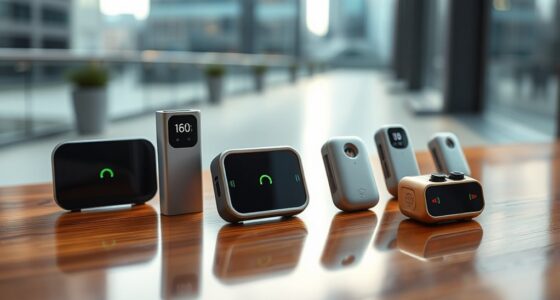

AI home monitors can track indoor air quality or household electricity, but the right choice depends on which signals you need and how much setup you can manage. My best overall pick is the Amazon Smart Air Quality Monitor for a straightforward way to follow indoor conditions in an Alexa home. For broader readings, the bonoch AirSentry 16-in-1 stands out with its large display, while the Meross 18-Circuit Energy Monitor is better suited to buyers who want circuit-level power data. The main tradeoff is between easy, focused monitoring and broader measurement that may require more setup or interpretation. Read on for how the 12 options compare and which one fits your home.

Get privacy and security gear delivered free with Prime
- Fast, free delivery on millions of items
- Prime Video, Amazon Music and more included
- Member-only deals all year
Key Takeaways
- The roundup splits into two jobs: air monitors measure room conditions, while energy monitors track household or circuit electricity; neither group substitutes for the other.
- Amazon’s single air monitor favors simple Alexa use; its two-pack is the more relevant choice when comparing conditions across rooms.
- Large-screen amazon.com/dp/B0H1LR5FBF?tag=aiespionage-20&ascsubtag=dc-551449″ target=”_blank” rel=”nofollow sponsored noopener”>16-in-1 monitors prioritize at-a-glance readings, while the compact Amazon and GoveeLife displays suit buyers who want a smaller, more focused view.
- Energy-monitor choices hinge on electrical coverage: the Meross model names 18 circuits, while other listed options specify 10 channels or two 120A CTs.
- More readings do not automatically mean better decisions; sensor clarity, placement, smart-home compatibility, and understandable alerts matter as much as a long feature list.
| Amazon Smart Air Quality Monitor |  | Best for Alexa Homes | Monitored factors: PM2.5, VOCs, carbon monoxide, humidity, temperature | Connectivity: Works with Alexa | Alerts: Phone notifications and announcements on Echo devices | VIEW ON AMAZON | See Our Full Breakdown |
| Smart Home Energy Monitor with 10 Circuit Channels |  | Best for Detailed Circuit Tracking | Circuit channels: Up to 10 | Scalable monitoring: Up to 30 circuits with 2–3 units | Connectivity: Wi-Fi and Ethernet | VIEW ON AMAZON | See Our Full Breakdown |
| 16-in-1 Indoor Air Quality Monitor with HD Color Screen |  | Best Portable Air Monitor | Air quality measurements: PM1.0, PM2.5, PM10, TVOC, HCHO, carbon dioxide, temperature, humidity | Update interval: 1.5 seconds | Battery life: 4–5 hours | VIEW ON AMAZON | See Our Full Breakdown |
| WiFi Home Energy Monitor with 2 × 120A CTs |  | Best for Solar Export Tracking | Power source: Battery powered | Connectivity: 2.4 GHz Wi-Fi | Current transformers: 2 × 120A split-core CTs | VIEW ON AMAZON | See Our Full Breakdown |
| Lecoolife AK27 10-in-1 Indoor Air Quality Monitor |  | Best Simple Room Display | Brand: Lecoolife | Model: AK27 | Monitored readings: PM1.0, PM2.5, PM10, HCHO, TVOC, temperature, humidity, AQI, time | VIEW ON AMAZON | See Our Full Breakdown |
| 16-in-1 Indoor Air Quality Monitor with 7-Inch Display |  | Best for At-a-Glance Readings | Display: 7-inch LED | Monitored parameters: CO2, PM2.5, PM1.0, PM10, HCHO, TVOC, temperature, humidity, and AQI | AQI alert functions: 7 | VIEW ON AMAZON | See Our Full Breakdown |
| Meross Smart Home Energy Monitor with 18-Circuit Monitoring |  | Best for Whole-Home Energy Tracking | Model: EM16 | Circuit monitoring: 2 main circuits (200A) and 16 branch circuits (60A) | Accuracy: ±2% | VIEW ON AMAZON | See Our Full Breakdown |
| GoveeLife Smart Air Quality Monitor with PM2.5 Sensor, LED Display, and Wired Power |  | Best for App-Based PM2.5 Monitoring | Measurements: PM2.5, temperature, and humidity | PM2.5 accuracy: ±15 µg/m³ from 0 to 100 µg/m³; ±15% from 100 to 1000 µg/m³ | Temperature accuracy: ±0.54°F | VIEW ON AMAZON | See Our Full Breakdown |
| bonoch AirSentry 16-in-1 Indoor Air Quality Monitor with 7-Inch HD Display |  | Best for Flexible Display Preferences | Display: 7-inch HD | Parameters monitored: CO2, PM2.5, PM1.0, PM10, HCHO, TVOC, temperature, humidity, AQI, and time | Sensors: External high-precision sensors | VIEW ON AMAZON | See Our Full Breakdown |
| 16-in-1 Indoor Air Quality Monitor with CO2 Detector |  | Best for Portable Room Checks | Measurements: CO2, PM1.0, PM2.5, PM10, HCHO, TVOC, temperature, and humidity | AQI indicator: Seven color-coded levels | Display: Large screen | VIEW ON AMAZON | See Our Full Breakdown |
| AprilAire ZAWTHCPV Smart Indoor Air Quality Monitor |  | Best for AprilAire System Owners | Measurements: PM2.5, VOCs/TVOC, CO2, humidity, and temperature | Connectivity: Wi-Fi | App: AprilAire Healthy Air App required | VIEW ON AMAZON | See Our Full Breakdown |
| Amazon Smart Air Quality Monitor, 2-Pack |  | Best for Alexa-Based Multi-Room Monitoring | Monitored factors: PM2.5, VOCs, carbon monoxide, humidity, and temperature | Connectivity: Works with Alexa | Notifications: Phone alerts and Echo announcements | VIEW ON AMAZON | See Our Full Breakdown |
| ai home monitor | Connectivity |
|---|---|
| Amazon Smart Air Quality Monit | Works with Alexa |
| Smart Home Energy Monitor with | Wi-Fi and Ethernet |
| 16-in-1 Indoor Air Quality Mon | — |
| WiFi Home Energy Monitor with | 2.4 GHz Wi-Fi |
| Lecoolife AK27 10-in-1 Indoor | — |
| 16-in-1 Indoor Air Quality Mon | — |
| Meross Smart Home Energy Monit | Home Assistant, Open API, and web control |
| GoveeLife Smart Air Quality Mo | Bluetooth and 2.4 GHz Wi-Fi |
| bonoch AirSentry 16-in-1 Indoo | — |
| 16-in-1 Indoor Air Quality Mon | — |
| AprilAire ZAWTHCPV Smart Indoo | Wi-Fi |
| Amazon Smart Air Quality Monit | Works with Alexa |
More Details on Our Top Picks
Amazon Smart Air Quality Monitor
For households already using Alexa, this monitor links air quality readings to alerts and routines, making it more useful as part of a connected home than as a standalone display. It tracks PM2.5, VOCs, carbon monoxide, humidity, and temperature; a color-coded LED gives a quick signal, while the Alexa app provides more detail. Compared with the Lecoolife AK27 10-in-1, it measures fewer air factors and depends more on an app, but its Alexa alerts can prompt compatible devices to respond automatically. That integration is its clearest advantage. The tradeoff is ecosystem dependence: detailed readings and setup require the Alexa app, and routines need compatible Alexa devices. Buyers seeking a portable screen with frequent visible readings may prefer the 16-in-1 Indoor Air Quality Monitor with HD Color Screen.
Pros:- Tracks PM2.5, VOCs, carbon monoxide, humidity, and temperature
- Color-coded LED makes a quick air quality check possible
- Can send phone notifications and Echo announcements
- Can trigger routines on compatible Alexa devices
Cons:- Detailed readings and setup require the Alexa app
- Automation depends on compatible Alexa devices
- Tracks fewer listed air factors than the 16-in-1 indoor monitors
Best for: Alexa households that want indoor air alerts tied to compatible device routines
Not ideal for: Buyers who want a self-contained display, broad pollutant coverage, or monitoring without the Alexa app
- Monitored factors:PM2.5, VOCs, carbon monoxide, humidity, temperature
- Connectivity:Works with Alexa
- Alerts:Phone notifications and announcements on Echo devices
- Setup:Plug in and connect through the Alexa app
- Indicator:Color-coded LED
- Automation:Routines on compatible Alexa devices
Our verdict“Choose this monitor if Alexa alerts and routines matter more to you than a broad on-device display.”
Smart Home Energy Monitor with 10 Circuit Channels
For homeowners who want to see where electricity goes, this monitor covers up to 10 circuits and supports bidirectional metering on compatible systems. Wi-Fi or Ethernet connectivity, data export, and Home Assistant and Modbus TCP integration make it more suited to analysis and custom smart home setups than app-first monitors. Compared with the WiFi Home Energy Monitor with 2 × 120A CTs, it can track several individual circuits and scale to 30 circuits with additional units; that gives it more room to grow, though it also asks more of the installer. Minute-level cloud data stays available for 45 days, with monthly and yearly summaries retained longer. Buyers should account for configuration needs, especially with three-phase systems, and decide whether this deeper circuit view is worth more setup work than a simpler whole-home monitor.
Pros:- Monitors up to 10 circuits, with expansion to 30 using additional units
- Bidirectional metering supports compatible residential power systems
- Offers Wi-Fi, Ethernet, Home Assistant, and Modbus TCP
- Provides real-time readings, reports, and exportable data
Cons:- Minute-level cloud data is retained for 45 days
- Some power configurations require software setup
- Circuit monitoring involves more installation and configuration than a basic whole-home monitor
Best for: Homeowners and energy-conscious smart home users who want circuit-level data, exports, and integration options
Not ideal for: Buyers seeking a simple plug-in monitor or unwilling to configure electrical system settings
- Circuit channels:Up to 10
- Scalable monitoring:Up to 30 circuits with 2–3 units
- Connectivity:Wi-Fi and Ethernet
- Integration:Home Assistant and Modbus TCP
- Data retention:Minute data for 45 days; monthly and yearly summaries for 36 months
- Power systems:North American residential split-phase; configurable single-phase and three-phase TN/TT
- Dimensions:4.73 × 3.15 × 1.22 inches
- Model:eMonHub-HNA0A
Our verdict“Pick this model when circuit-by-circuit insight and integration flexibility outweigh a simpler setup.”
16-in-1 Indoor Air Quality Monitor with HD Color Screen
For people who want readings they can carry between rooms, this monitor combines a screen, one-button controls, and battery operation in a single unit. Its listed measurements include PM1.0, PM2.5, PM10, TVOC, HCHO, carbon dioxide, temperature, and humidity, with updates every 1.5 seconds. That gives it broader listed coverage than the Amazon Smart Air Quality Monitor, while avoiding dependence on an Alexa app for the on-device readings. The tradeoff is runtime: 4–5 hours per charge makes it portable for spot checks, but not a strong fit for continuous monitoring away from an outlet. Audio prompts can be turned off, a practical touch in quiet rooms. The product description does not provide measurement accuracy, so buyers who need verified sensor performance should weigh that gap before relying on its readings.
Pros:- Lists eight air quality measurements, including carbon dioxide and formaldehyde
- Color screen shows readings on the device
- Updates readings every 1.5 seconds
- Portable design includes USB-C charging cable and AC adapter
Cons:- Battery life is limited to 4–5 hours
- Measurement accuracy is not specified
- No app connectivity or data logging is listed
Best for: People who want to move a broad-measurement air monitor among rooms, offices, or vehicles
Not ideal for: Buyers needing continuous battery-powered monitoring or documented measurement accuracy
- Air quality measurements:PM1.0, PM2.5, PM10, TVOC, HCHO, carbon dioxide, temperature, humidity
- Update interval:1.5 seconds
- Battery life:4–5 hours
- Charging port:USB Type-C
- Display:HD color screen
- Controls:One-button power and °C/°F switching; double tap to turn audio prompt off
- Included accessories:Type-C charging cable, AC power adapter, user manual
- Warranty support:12 months
Our verdict“Choose it for portable, on-screen air readings across several spaces, provided short battery life suits your routine.”
WiFi Home Energy Monitor with 2 × 120A CTs
Solar households focused on energy flowing both ways get the clearest reason to choose this monitor: it tracks household consumption and electricity exported to the grid. The Smart Life app adds alerts and automation, while dynamic load balancing and zero grid export mode target systems where managing power flow matters. Compared with the Smart Home Energy Monitor with 10 Circuit Channels, this unit is described for a single-phase, 3-wire setup and uses two 120A split-core CTs; the 10-channel model is better suited to tracing use across multiple circuits. Here, Class 1 accuracy and bidirectional readings serve a more focused whole-home role. Its constraints are equally clear: it needs 2.4 GHz Wi-Fi and is designed for one electrical configuration. Buyers should confirm that configuration fits their home before selecting it.
Pros:- Tracks household consumption and grid export
- Smart Life app supports alerts and automation
- Includes dynamic load balancing and zero grid export mode
- Uses two 120A split-core current transformers
Cons:- Requires a 2.4 GHz Wi-Fi network
- Designed for single-phase, 3-wire systems
- Does not list the multi-circuit coverage offered by the 10-channel monitor
Best for: Solar or grid-connected households with single-phase, 3-wire power that want to track consumption and export
Not ideal for: Homes with other electrical configurations or buyers who need circuit-by-circuit monitoring
- Power source:Battery powered
- Connectivity:2.4 GHz Wi-Fi
- Current transformers:2 × 120A split-core CTs
- Monitoring:Live, bidirectional energy tracking
- Electrical configuration:Single-phase, 3-wire
- Accuracy:Class 1
- Control method:App
- Compatible devices:Smartphone
Our verdict“Choose this monitor for bidirectional energy tracking in a compatible single-phase home, especially with solar export to manage.”
Lecoolife AK27 10-in-1 Indoor Air Quality Monitor
For a quick read from across a room, the AK27 puts a large color display and color-coded AQI indicator at the center of its design. It lists particles from PM1.0 through PM10 alongside HCHO, TVOC, temperature, humidity, AQI, and time, making its readout broader than the Amazon Smart Air Quality Monitor on the listed pollutant measures. That wider display-first approach may suit someone who wants to glance at local conditions without opening an app. The tradeoff is that its product data lists no connectivity or data logging, so it cannot match Alexa’s notifications and routines. Sensor accuracy and calibration details are also absent. Compared with the portable 16-in-1 monitor, the AK27 description does not list battery life or portability; it makes more sense as a visible room reference than a monitor to carry around.
Pros:- Lists PM1.0, PM2.5, PM10, HCHO, and TVOC readings
- Also displays temperature, humidity, AQI, and time
- Large color display is designed for easy viewing
- Color-coded AQI indicator helps make changes easier to spot
Cons:- Measurement accuracy and sensor calibration details are not provided
- No connectivity or data logging features are listed
- The product data does not specify battery operation or portability
Best for: Households wanting a large, glanceable indoor air quality display with particle and pollutant readings
Not ideal for: Buyers who need app alerts, saved readings, documented accuracy, or a portable battery-powered monitor
- Brand:Lecoolife
- Model:AK27
- Monitored readings:PM1.0, PM2.5, PM10, HCHO, TVOC, temperature, humidity, AQI, time
- Display:Large color display
- AQI indicator:Color-coded
- Recommended use:Indoor spaces
Our verdict“Pick the AK27 for a broad, glanceable room display if app alerts and documented sensor accuracy are not priorities.”
16-in-1 Indoor Air Quality Monitor with 7-Inch Display
I’d pick this model when the main job is keeping a broad set of air readings visible in a shared room. Its 7-inch LED display gives CO2, particles, gases, temperature, humidity, and AQI more room than the smaller-screen GoveeLife Smart Air Quality Monitor, which focuses on PM2.5, temperature, and humidity. That breadth helps when you want to check several indicators without opening an app. Three brightness settings and muteable alerts make it easier to live with in a bedroom or living area. The tradeoff is that the listing does not specify a power source or battery life, so I can’t judge how flexible its placement will be. Its sensors also need distance from strong odors and handling.
Pros:- Tracks CO2, several particle sizes, HCHO, TVOC, temperature, humidity, and AQI
- Large 7-inch display makes readings easier to see across a room
- Three brightness settings help adapt the display to different rooms
- Audible alerts can be muted
Cons:- Power source and battery life are not identified in the product details
- Sensors require care around strong odors and direct handling
Best for: Households that want a large, always-visible display covering several air quality indicators
Not ideal for: Buyers who need a clearly specified battery-powered monitor or want remote app monitoring
- Display:7-inch LED
- Monitored parameters:CO2, PM2.5, PM1.0, PM10, HCHO, TVOC, temperature, humidity, and AQI
- AQI alert functions:7
- Display brightness settings:3
- Time format:12-hour or 24-hour
- Alert controls:Audible alerts can be muted
Our verdict“Choose this if a large screen and broad set of live air readings matter more than app connectivity or known portable power.”
Meross Smart Home Energy Monitor with 18-Circuit Monitoring
This Meross is the lineup’s choice for buyers who mean home monitoring in the energy sense: it tracks two main circuits and 16 branch circuits, while the Smart Home Energy Monitor with 10 Circuit Channels covers fewer circuits by its title. Home Assistant support, Open API access, and local storage give technically confident owners more ways to connect readings to their own dashboards and automations. Solar surplus detection adds a specific use for homes with solar generation. The tradeoff is fit: this device must match the home’s electrical configuration, and it does not support Delta systems. Installation also involves the electrical panel, so it is a less straightforward choice than a plug-in air monitor such as GoveeLife. I’d rank it for breadth and open integrations, not for shoppers seeking a simple room sensor.
Pros:- Tracks two main circuits and up to 16 branch circuits
- Supports Home Assistant, Open API, and web control
- Stores data locally for up to five years without a subscription
- Includes solar surplus detection and custom alerts
Cons:- Does not support Delta electrical systems
- Panel compatibility and installation depend on the home’s electrical setup
- Its energy focus does not provide indoor air quality readings
Best for: Homeowners with a compatible electrical panel who want circuit-level energy data and Home Assistant or API access
Not ideal for: Renters, buyers seeking air quality monitoring, or homes with Delta electrical systems
- Model:EM16
- Circuit monitoring:2 main circuits (200A) and 16 branch circuits (60A)
- Accuracy:±2%
- Supported systems:Single-phase 2-wire, split-phase 3-wire, and 3-phase 4-wire Wye with earthed neutral; no Delta
- Connectivity:Home Assistant, Open API, and web control
- Data storage:Up to 5 years
- Certification:ETL-certified; compliant with UL 61010 testing standard
- Warranty:2 years
Our verdict“Choose the Meross if your panel is compatible and you want detailed, locally stored energy data across many circuits.”
GoveeLife Smart Air Quality Monitor with PM2.5 Sensor, LED Display, and Wired Power
I’d choose the GoveeLife when PM2.5 trends and remote access matter more than measuring every pollutant. It refreshes readings every two seconds and can export historical data, giving it a connected role that the 7-inch 16-in-1 monitor does not claim. Bluetooth and 2.4 GHz Wi-Fi also let it trigger compatible GoveeLife appliances based on air quality, which can turn a reading into an action. Its scope is narrower, though: it measures PM2.5, temperature, and humidity rather than CO2, HCHO, and TVOC. The USB-C wired power requirement keeps it near an outlet, and Wi-Fi is limited to 2.4 GHz. I’d favor it for data and automation, not for a broad, standalone pollutant dashboard.
Pros:- Refreshes PM2.5, temperature, and humidity readings every two seconds
- Supports remote monitoring and data export
- Can automate compatible GoveeLife appliances based on air quality
- Compact, lightweight design
Cons:- Requires constant USB-C power and has no built-in battery
- Wi-Fi support is limited to 2.4 GHz
- Measures fewer air indicators than the 16-in-1 display monitors
Best for: GoveeLife households that want remote PM2.5 tracking, exported data, and compatible appliance automation
Not ideal for: Buyers who need CO2, formaldehyde, or TVOC readings, or who need a battery-powered monitor
- Measurements:PM2.5, temperature, and humidity
- PM2.5 accuracy:±15 µg/m³ from 0 to 100 µg/m³; ±15% from 100 to 1000 µg/m³
- Temperature accuracy:±0.54°F
- Humidity accuracy:±3% RH
- Response time:2 seconds
- Connectivity:Bluetooth and 2.4 GHz Wi-Fi
- Data storage:13-day online graphs; export up to 2 years of data
- Power:USB-C wired; no built-in battery
- Dimensions and weight:5.31 x 1.57 x 2.47 inches; 5.44 ounces
Our verdict“Choose this if connected PM2.5 tracking and GoveeLife automation suit you better than broader pollutant coverage or portable placement.”
bonoch AirSentry 16-in-1 Indoor Air Quality Monitor with 7-Inch HD Display
The bonoch AirSentry suits buyers who want the broad readings and large display of the 16-in-1 Indoor Air Quality Monitor with 7-Inch Display, with extra flexibility for Fahrenheit or Celsius and external sensors. Like that other 7-inch option, it covers CO2, multiple particle sizes, HCHO, TVOC, temperature, humidity, and AQI, so the distinction is more about display details and controls than measurement breadth. Its seven warning modes and mute button give alerts a clear role in the room. The listing’s claim of 0.001-level precision does not name a measurement unit, so I would not use it to compare accuracy against GoveeLife’s stated tolerances. Strong odors can also affect the sensors. I’d pick it for unit and alert flexibility, while buyers focused on documented accuracy should look elsewhere.
Pros:- Tracks CO2, PM2.5, PM1.0, PM10, HCHO, TVOC, temperature, humidity, and AQI
- 7-inch HD display presents readings and time together
- Seven warning modes include a mute option
- Supports Fahrenheit/Celsius and 12/24-hour time formats
Cons:- The listed 0.001-level precision is not tied to a measurement unit
- Sensors should be kept away from perfumes and strong odors
- The product details do not specify a power source or battery life
Best for: Households that want broad air quality coverage, a large HD display, and selectable temperature units
Not ideal for: Buyers comparing monitors by clearly documented sensor accuracy or needing verified portability details
- Display:7-inch HD
- Parameters monitored:CO2, PM2.5, PM1.0, PM10, HCHO, TVOC, temperature, humidity, AQI, and time
- Sensors:External high-precision sensors
- Alerts:7 warning alarm modes; mute button
- Temperature units:Fahrenheit and Celsius
- Time format:12-hour or 24-hour
Our verdict“Choose AirSentry if display controls and unit flexibility matter, but avoid relying on its unspecified precision claim to compare accuracy.”
16-in-1 Indoor Air Quality Monitor with CO2 Detector
Among the air monitors here, this model has the clearest case for moving between rooms: its built-in rechargeable battery supports portable use, unlike the USB-C-powered GoveeLife. It also measures CO2, several particle sizes, HCHO, TVOC, temperature, and humidity, then groups air quality into seven color-coded AQI levels. That makes it a flexible choice for a quick reading in different parts of the home, though the listed details do not give battery life or sensor accuracy. The main caveat affects temperature: battery warmth may skew readings, especially during charging. The 7-inch models from bonoch and the other 16-in-1 monitor emphasize a large fixed display, while this one prioritizes mobility. I’d avoid charging it during temperature checks.
Pros:- Rechargeable battery supports portable use
- Tracks CO2, particle sizes, HCHO, TVOC, temperature, and humidity
- Seven color-coded AQI levels make status easier to scan
- Large screen presents readings at a glance
Cons:- Battery warmth may affect temperature readings, particularly while charging
- Battery life and measurement accuracy are not specified in the product details
- No remote monitoring or connectivity features are listed
Best for: People who want to carry one broad-coverage air monitor between rooms
Not ideal for: Buyers who need dependable temperature readings while the device charges or need stated battery life and accuracy
- Measurements:CO2, PM1.0, PM2.5, PM10, HCHO, TVOC, temperature, and humidity
- AQI indicator:Seven color-coded levels
- Display:Large screen
- Power:Built-in rechargeable battery
- Temperature reading note:Battery warmth may affect readings, particularly during charging
Our verdict“Choose this for portable, multi-room air checks if you can take temperature readings away from the charger.”
AprilAire ZAWTHCPV Smart Indoor Air Quality Monitor
Five air and comfort readings give this monitor broader coverage than a simple temperature or particle sensor: it tracks PM2.5, VOCs, CO2, humidity, and temperature, then sends app notifications with trends and guidance. That makes it a useful fit for buyers who want to spot changes over time and connect readings to indoor air habits. Compared with the Amazon Smart Air Quality Monitor, 2-Pack, AprilAire is the more natural choice for households already using compatible AprilAire equipment, while Amazon offers two units and Alexa routines. The tradeoff is that AprilAire system integration requires a separately sold compatible thermostat, and the Healthy Air app is required. Its adjustable, color-coded status light adds a quick room-level signal, though buyers seeking a screen with detailed readings at a glance may prefer a display-focused monitor such as the 16-in-1 Indoor Air Quality Monitor with HD Color Screen.
Pros:- Tracks PM2.5, VOCs, CO2, humidity, and temperature
- Healthy Air app provides notifications, trends, and guidance
- Color-coded status light has three adjustable light options
- Can integrate with compatible AprilAire systems when paired with a supported thermostat
Cons:- Requires the AprilAire Healthy Air app
- Compatible thermostat needed for AprilAire system integration is sold separately
- No on-device display for reading detailed measurements
Best for: Households with a compatible AprilAire thermostat that want app-based trends across air quality and comfort readings
Not ideal for: Shoppers who want a standalone screen or thermostat integration without buying additional AprilAire equipment
- Measurements:PM2.5, VOCs/TVOC, CO2, humidity, and temperature
- Connectivity:Wi-Fi
- App:AprilAire Healthy Air App required
- Notifications and guidance:App notifications, measurement trends, and guidance
- Status indicators:Color-coded status with three light options
- System integration:Requires AprilAire S86WMUPR or 8920W Wi-Fi Thermostat, sold separately
Our verdict“Choose this monitor if you want five types of indoor readings in the AprilAire app and already have, or plan to add, a compatible thermostat.”
Amazon Smart Air Quality Monitor, 2-Pack
Two monitors in one package make this a practical pick for Alexa households that want readings in more than one room. Each unit tracks PM2.5, VOCs, carbon monoxide, humidity, and temperature; the Alexa app adds a color-coded LED status, an air quality score, and alerts. Alexa Routines can also use sensor readings to control compatible devices, giving this pair an automation role the AprilAire ZAWTHCPV does not emphasize. The tradeoff is that these smart features depend on the Alexa app and compatible devices, so the pair makes less sense outside that setup. Compared with screen-based options such as the bonoch AirSentry 16-in-1 Indoor Air Quality Monitor, the Amazon units prioritize app alerts and routines over a detailed on-device display. Plug-in setup is straightforward, but buyers should be comfortable checking readings on a phone or through Echo announcements.
Pros:- Two monitors allow coverage in separate rooms
- Tracks PM2.5, VOCs, carbon monoxide, humidity, and temperature
- Alexa app provides alerts, a color-coded indicator, and an air quality score
- Alexa Routines can control compatible devices in response to readings
Cons:- Smart features require the Alexa app and compatible devices
- Detailed readings are app-based rather than shown on a built-in display
- Automation depends on the Alexa ecosystem
Best for: Alexa households that want to monitor two rooms and trigger compatible devices from air quality readings
Not ideal for: Buyers outside the Alexa ecosystem or anyone who wants detailed readings on a built-in display
- Monitored factors:PM2.5, VOCs, carbon monoxide, humidity, and temperature
- Connectivity:Works with Alexa
- Notifications:Phone alerts and Echo announcements
- Indicators:Color-coded LED and air quality score in the Alexa app
- Automation:Alexa Routines for compatible devices
- Setup:Plug in and configure with the Alexa app
- Package quantity:2 monitors
Our verdict“Pick this pair if you use Alexa and want air readings from two rooms to feed alerts and compatible-device routines.”

How We Picked
I ranked these products by how directly they help a buyer answer a practical home question: what is happening in the air, or where is electricity being used? For air monitors, I weighed the stated sensor scope, display readability, power and placement needs, and smart-home integration. For energy monitors, I focused on the stated circuit coverage and current-transformer setup, since these affect what a household can track and how installation fits its electrical panel.
The order favors products with a clear role and a useful balance of coverage, usability, and setup demands. A screen-heavy 16-in-1 model can make more readings visible, but that does not automatically make it easier to act on them; a simpler connected monitor may suit a buyer who mainly wants alerts or app access. I treated each product’s named features as the basis for comparison and did not assume unlisted capabilities. The energy monitors are judged within their own use case, rather than ranked as substitutes for indoor-air devices.
Factors to Consider When Choosing Ai Home Monitors
Before choosing an AI home monitor, decide what you want to know and what you plan to do with the information. The sections below focus on choices that can change what a monitor tells you, where it belongs, and whether its readings will be useful day to day.
Start With the Problem You Want to Solve
Air quality and energy use are separate monitoring jobs, even when both products connect to a smart home. An air monitor may help you notice changes in a room, while an electrical-panel device can show household or circuit consumption. Buying based on the word “AI” alone can lead to a device that collects data unrelated to your concern. Write down the decision you want to make, such as whether to ventilate a room or identify a high-use circuit. Then check that the device measures the relevant signals and gives you a way to view them. If you need both kinds of insight, expect to use two different devices or systems.
Match Sensor Scope to How You Will Use Readings
A long sensor list can sound reassuring, but each extra reading is useful only if you understand what it represents and how it affects your next step. Focus first on the specific conditions you care about rather than counting advertised measurements. A broad monitor may help someone comparing several aspects of one room, yet a simpler device can be easier to interpret when the goal is one clear alert. Look for descriptions of measurement units, thresholds, and app explanations before treating a number as a diagnosis or a safety verdict. Avoid assuming that a monitor detects every pollutant or hazard just because its product name says “16-in-1.” The product documentation should define each sensor’s scope.
Think About Placement and Room Coverage
One monitor reports conditions at its location, so placement affects whether its readings represent the space you care about. A bedroom, kitchen, and basement may have different patterns, which can make a single reading a poor stand-in for the whole home. A two-pack or several units can help with room-to-room comparisons, but only if you have sensible locations and a plan to check each device. Avoid placing an air monitor right beside a vent, window, or cooking source unless you specifically want to observe that local effect. For panel-based energy monitors, room placement is not the issue; panel compatibility and the circuits covered are. Decide whether you need a snapshot of one area or ongoing coverage across several points.
Check Setup Demands Before You Buy
Air monitors with a screen and ordinary power connection generally ask less of a buyer than equipment installed at an electrical panel. Energy-monitor listings that specify CTs or multiple circuit channels signal that panel fit and installation are part of the decision. Before selecting one, confirm the supported electrical system, number and type of circuits you need to track, and whether installation calls for a qualified electrician. Do not treat a stated circuit count as proof that every panel or wiring layout is supported. For room devices, check whether they need wired power, WiFi, or a particular smart-home platform. A device that fits your setup is more useful than one with broader listed coverage that you cannot deploy.
Choose a Display and App You Will Actually Use
A large display makes readings easy to scan from across a room, which suits buyers who want information visible without opening an app. A compact display takes up less space, but it may offer less at-a-glance context. App access can help when checking readings away from home or reviewing changes over time, though its value depends on clear charts and useful alerts. Check whether the product relies on a particular ecosystem before assuming it will work with your existing devices. Also think about who else in the household needs to understand the readings. A monitor that presents a few meaningful signals clearly may be easier to share than one that fills its screen with measurements no one knows how to use.
Judge Value by Coverage and Ongoing Use
Value depends on how much useful coverage a product adds, not simply how many features its name lists. A two-pack can make sense when comparing distinct rooms, while an extra unit may sit unused if the home has no clear need for a second measurement point. For energy devices, broader circuit coverage can be useful only when those circuits match the questions you want to answer. Consider the effort of keeping devices powered, connected, and checked alongside their initial setup. If several household members will rely on the data, prioritize easy-to-read summaries and alerts. Spend more attention on fit and everyday usability than on a feature count that does not change your decisions.
Frequently Asked Questions
Should I buy an air quality monitor or a home energy monitor first?
Choose based on the question you want answered now. If you want to observe conditions in a room, an air monitor is the relevant type; if you want to understand electricity use across a home or its circuits, look at an energy monitor. Their measurements are different, so one cannot stand in for the other. Consider where a reading would prompt an action you can take. If both questions matter, start with the one that is harder to answer from information you already have.
Is a 16-in-1 air monitor necessarily better than a simpler model?
Not necessarily: a larger sensor list can provide broader context, but it can also create more readings to interpret. Check which measurements matter to your household and whether the product explains its readings and alerts. A simpler connected monitor may fit someone who wants a focused view, while a display-heavy multi-sensor unit may suit someone who will regularly review several readings. Do not infer the presence or accuracy of a particular sensor from the “16-in-1” label alone. Read the model’s detailed specifications before choosing.
Will one air monitor tell me what the air is like throughout my home?
One device reports conditions where it is placed, so it may not reflect rooms with different ventilation, activities, or layouts. If you want to compare a bedroom with a living area, consider whether multiple units would provide useful coverage. Place each monitor with its purpose in mind and avoid treating a single room’s reading as a whole-home result. A multi-unit setup also means managing more devices and readings. Start with the rooms where the information would affect your routine.
Can I install a circuit-level energy monitor myself?
That depends on the product’s installation instructions, your electrical panel, and your qualifications. A model that uses current transformers still needs to fit the panel and wiring layout it is intended for, and the listing alone may not establish compatibility with yours. Check the manufacturer’s installation guidance and local requirements before buying. If you are unsure about working around a panel, have a qualified electrician assess the setup. The number of channels or circuits advertised does not remove the need to confirm fit.
Do these monitors work with any smart-home system?
No single compatibility assumption applies across this lineup. The Amazon air monitor is positioned around Alexa use, while other products may depend on their own app, WiFi setup, or named ecosystem support. Check the specific model’s supported platforms and required account or hub before buying. A monitor can still be useful as a standalone display if that suits your needs, but its alerts and integrations may differ. Match the device to the system you already use rather than expecting every monitor to share data with it.
Conclusion
For a balanced starting point, I recommend the Amazon Smart Air Quality Monitor as the best overall choice for buyers who want connected room monitoring in an Alexa home. The Amazon two-pack is the better fit when room-to-room coverage matters, while the GoveeLife monitor suits someone who wants a focused PM2.5 reading with an LED display. For a broad on-device view, choose a 16-in-1 model such as the bonoch AirSentry; its large display is the standout feature, though buyers should verify the exact sensor list. The Meross 18-Circuit Energy Monitor is my pick for circuit-level energy tracking, while the 10-channel and dual-CT options suit different panel coverage needs. For beginners, I would start with a straightforward room monitor; for premium needs, prioritize the broadest verified sensor or circuit coverage that fits your setup. The best choice is the one that answers a specific household question with readings you will use.
Halloween Picks
halloween
As an affiliate, we earn on qualifying purchases.