

For readers seeking cryptography books that connect modern practice with clear explanations, my best overall pick is Serious Cryptography, 2nd Edition, which focuses on contemporary encryption and its real-world use. Understanding Cryptography is a stronger fit for structured study, while The Code Book offers a more historical, story-led introduction. The main choice is between hands-on technical learning, accessible explanations, and entertainment such as puzzles or codebreaking activities. Some books also presume more mathematical or programming knowledge than their titles suggest. Continue reading for the full breakdown and guidance on choosing the right level and style.

Get privacy and security gear delivered free with Prime
- Fast, free delivery on millions of items
- Prime Video, Amazon Music and more included
- Member-only deals all year
Key Takeaways
- Modern applied encryption leads the technical group: Serious Cryptography, 2nd Edition stands out for readers who want current practical concepts rather than a mainly historical survey.
- Textbook structure and real-world orientation are different strengths: Understanding Cryptography suits guided study, while the Serious Cryptography titles are aimed more directly at practitioners.
- Beginner-friendly does not always mean technical preparation is unnecessary: visual, manga, and introductory titles offer gentler entry points, but readers should check whether a book expects algebra, programming, or prior security knowledge.
- Some entries teach through history or play rather than formal cryptography: The Code Book, Codes, Ciphers and Secret Writing, and the cryptogram puzzle book can build interest but are not substitutes for a modern technical text.
- Specialized titles reward a specific goal: the algorithms, mathematics, codebreaking, and C source-code books are better matches for targeted interests than for readers seeking one all-purpose introduction.
| Serious Cryptography, 2nd Edition: A Practical Introduction to Modern Encryption | 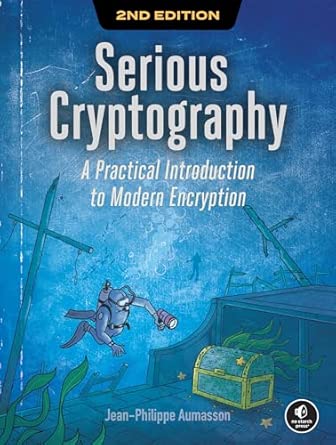 | Best Overall for Modern Encryption | Edition: 2nd Edition | Subject: Cryptography and encryption | Focus: Modern encryption | VIEW ON AMAZON | See Our Full Breakdown |
| Cryptography Algorithms Workbook: A Visual Problem-Solving Workbook |  | Best for Guided Practice | Format: Visual problem-solving workbook | Topics: Encryption, hashing, message authentication codes, key exchange, digital signatures, password hashing, TLS, key management, and post-quantum cryptography | Subject: Cryptography algorithms | VIEW ON AMAZON | See Our Full Breakdown |
| Codebreaking: A Practical Guide |  | Best for Codebreaking Practice | Subject: Codebreaking | Approach: Practical guide | Format: Book | VIEW ON AMAZON | See Our Full Breakdown |
| Cryptography Algorithms: Explore New Algorithms in Zero-Knowledge, Homomorphic Encryption, and Quantum Cryptography |  | Best for Emerging Cryptography Topics | Format: Book | Subject: Cryptography algorithms | Named topics: Zero-knowledge cryptography, homomorphic encryption, and quantum cryptography | VIEW ON AMAZON | See Our Full Breakdown |
| Understanding Cryptography: A Textbook for Students and Practitioners | 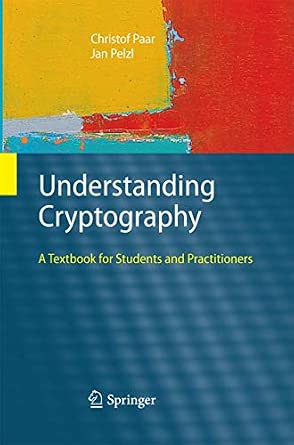 | Best Textbook for Students and Practitioners | Subject: Cryptography | Format: Textbook | Intended audience: Students and practitioners | VIEW ON AMAZON | See Our Full Breakdown |
| Codes, Ciphers and Secret Writing |  | Best for Casual Code Puzzling | Series: Dover Brain Games & Puzzles | Subject: Codes, ciphers, and secret writing | Format: Book | VIEW ON AMAZON | See Our Full Breakdown |
| Break the Code: Cryptography for Beginners |  | Best for Children Learning Through Activities | Series: Dover Kids Activity Books | Subject: Cryptography, codes, and ciphers | Format: Activity book | VIEW ON AMAZON | See Our Full Breakdown |
| Cryptograms Puzzle Book for Adults: 400 Large Print Cryptoquotes and Cryptoquips |  | Best for Large-Print Puzzle Practice | Puzzle count: 400 | Print size: Large print | Puzzle types: Cryptoquotes and cryptoquips | VIEW ON AMAZON | See Our Full Breakdown |
| Serious Cryptography: A Practical Introduction to Modern Encryption |  | Best for Practical Modern Encryption | Subject: Modern encryption and cryptography | Approach: Practical introduction | Format: Book | VIEW ON AMAZON | See Our Full Breakdown |
| The Manga Guide to Cryptography |  | Best for Visual, Story-Led Learning | Subject: Cryptography | Presentation style: Manga-style guide | Format: Book | VIEW ON AMAZON | See Our Full Breakdown |
| The Code Book: The Science of Secrecy from Ancient Egypt to Quantum Cryptography |  | Best for Cryptography History | Format: Book | Subject: History and science of codes and cryptography | Historical scope: Ancient Egypt to quantum cryptography | VIEW ON AMAZON | See Our Full Breakdown |
| Applied Cryptography: Protocols, Algorithms, and Source Code in C |  | Best for C Programmers | Subject: Applied cryptography | Coverage: Protocols | Coverage: Algorithms | VIEW ON AMAZON | See Our Full Breakdown |
| Cryptography: A Very Short Introduction |  | Best for a Concise First Overview | Subject: Cryptography | Series format: Very Short Introduction | Intended scope: Introduction to cryptography | VIEW ON AMAZON | See Our Full Breakdown |
| The Mathematics of Secrets: Cryptography from Caesar Ciphers to Digital Encryption |  | Best for Math-Minded Readers | Subject: Mathematics of cryptography | Historical starting point: Caesar ciphers | Modern topic: Digital encryption | VIEW ON AMAZON | See Our Full Breakdown |
| Cryptography |  | Best for a Series-Based Essentials Overview | Title: Cryptography | Series: The MIT Press Essential Knowledge series | Subject: Cryptography | VIEW ON AMAZON | See Our Full Breakdown |
| cryptography book | Format | Subject | ASIN |
|---|---|---|---|
| Serious Cryptography | Book | Cryptography and encryption | 1718503849 |
| Cryptography Algorithms Workbo | Visual problem-solving workbook | Cryptography algorithms | B0H5BHBVN3 |
| Codebreaking: A Practical Guid | Book | Codebreaking | 1718502729 |
| Cryptography Algorithms: Explo | Book | Cryptography algorithms | 1835080030 |
| Understanding Cryptography: A | Textbook | Cryptography | 3642446493 |
| Codes | Book | Codes, ciphers, and secret writing | — |
| Break the Code: Cryptography f | Activity book | Cryptography, codes, and ciphers | — |
| Cryptograms Puzzle Book for Ad | Puzzle book | — | — |
| Serious Cryptography: A Practi | Book | Modern encryption and cryptography | — |
| The Manga Guide to Cryptograph | Book | Cryptography | — |
| The Code Book: The Science of | Book | History and science of codes and cryptography | 0385495323 |
| Applied Cryptography: Protocol | Book | Applied cryptography | 1119096723 |
| Cryptography: A Very Short Int | Book | Cryptography | 0192803158 |
| The Mathematics of Secrets: Cr | Book | Mathematics of cryptography | 0691183317 |
| Cryptography | Book | Cryptography | 0262549026 |
More Details on Our Top Picks
Serious Cryptography, 2nd Edition: A Practical Introduction to Modern Encryption
I’d put Serious Cryptography, 2nd Edition first for readers who want a practical introduction centered on modern encryption. Its stated scope makes it a more direct fit for understanding contemporary cryptographic methods than Codebreaking: A Practical Guide, which points toward codebreaking rather than modern encryption. The second edition also gives buyers a clear edition identifier when choosing among copies. The main limitation is that the available description supplies no chapter list, prerequisites, examples, or exercises, so I can’t judge how much mathematical detail or hands-on practice it provides. Readers seeking guided problem sets may prefer the Cryptography Algorithms Workbook; those wanting a textbook-style course may find Understanding Cryptography a closer match. This is my broadest recommendation here, but not the most clearly documented one.
Pros:- Focused on modern encryption rather than historical codebreaking alone
- Presented as a practical introduction to cryptography
- Second edition is clearly identified
- A more direct fit for modern encryption than Codebreaking: A Practical Guide
Cons:- The supplied description does not identify prerequisites or mathematical depth
- No chapter outline, exercise details, or coverage breakdown is provided
Best for: Readers who want a practical starting point focused on modern encryption and prefer a conventional book over a dedicated problem-solving workbook.
Not ideal for: Learners who need confirmed exercise counts, a stated difficulty level, or a detailed syllabus before choosing a study text.
- Edition:2nd Edition
- Subject:Cryptography and encryption
- Focus:Modern encryption
- Approach:Practical introduction
- Format:Book
- ASIN:1718503849
Our verdict“Choose this edition for a practical introduction focused on modern encryption, but pick the workbook if structured exercises matter more than an unspecified book format.”
Cryptography Algorithms Workbook: A Visual Problem-Solving Workbook
The Cryptography Algorithms Workbook earns a distinct place for readers who learn by working through problems rather than following a conventional introduction. Its listed topics range from encryption, hashing, and key exchange to TLS, key management, and post-quantum cryptography, giving it broader named coverage than the brief description for Serious Cryptography, 2nd Edition. The visual workbook format suggests an exercise-led approach, though the available details don’t say how many problems it contains or how difficult they are. That uncertainty matters for instructors and self-study learners who need a predictable sequence. Compared with Understanding Cryptography, this is the more explicitly practice-oriented pick; it is less clearly described as a textbook for systematic study. I’d choose it for topic variety and active learning, not for a guaranteed depth of instruction.
Pros:- Names a wide range of topics, including encryption, hashing, MACs, and key exchange
- Includes applied areas such as TLS, key management, and password hashing
- Visual problem-solving format supports active practice
- Lists post-quantum cryptography alongside established topics
Cons:- The supplied details do not state the number of exercises
- Exercise difficulty and progression are unspecified
- The description does not clarify how much explanation accompanies the problems
Best for: Self-study learners and instructors seeking visual, problem-solving material that spans practical cryptography topics from hashing to post-quantum methods.
Not ideal for: Readers who need a confirmed exercise count, difficulty progression, or a clearly specified textbook syllabus.
- Format:Visual problem-solving workbook
- Topics:Encryption, hashing, message authentication codes, key exchange, digital signatures, password hashing, TLS, key management, and post-quantum cryptography
- Subject:Cryptography algorithms
- Approach:Problem-solving exercises
- Presentation:Visual
- ASIN:B0H5BHBVN3
Our verdict“Pick this workbook if visual exercises and wide topic coverage matter more to you than a documented syllabus or known difficulty progression.”
Codebreaking: A Practical Guide
Codebreaking: A Practical Guide is the narrowest choice in this group, and that focus is its main appeal. Buyers drawn to the work of deciphering codes may find its practical framing more relevant than Serious Cryptography, 2nd Edition, which is explicitly about modern encryption. The distinction matters: codebreaking and contemporary cryptographic system design are related interests, but the supplied information does not establish that this book teaches modern algorithms or digital security. Its description gives no topic list, sample exercises, intended audience, or difficulty level, so I can’t tell how much hands-on guidance the practical label represents. Compared with the broad topic map of the Cryptography Algorithms Workbook, this title offers less confirmed coverage but a clearer codebreaking identity. I’d select it for that specific interest, not as a complete modern cryptography course.
Pros:- Clearly centers on codebreaking
- Described as a practical guide
- Offers a different focus from modern-encryption introductions
- May suit readers more interested in deciphering than studying cryptographic systems
Cons:- No topic list is supplied to clarify the methods covered
- The available description does not state the audience or difficulty
- No exercise details are provided to support the practical positioning
Best for: Readers specifically interested in practical codebreaking and deciphering, rather than a broad textbook on modern cryptography.
Not ideal for: Students seeking confirmed coverage of encryption algorithms, digital signatures, TLS, or other contemporary security topics.
- Subject:Codebreaking
- Approach:Practical guide
- Format:Book
- Edition:Not specified
- Topics:Not specified
- ASIN:1718502729
Our verdict“Choose this guide for a focused interest in codebreaking, but select Serious Cryptography or the workbook for documented modern-cryptography coverage.”
Cryptography Algorithms: Explore New Algorithms in Zero-Knowledge, Homomorphic Encryption, and Quantum Cryptography
This title is the most specialized pick here: it names zero-knowledge, homomorphic encryption, and quantum cryptography directly. That makes it a better match for readers already curious about these areas than Serious Cryptography, 2nd Edition, whose stated focus is modern encryption in general. The named subjects also give prospective readers a more concrete sense of its scope than Codebreaking: A Practical Guide. The tradeoff is that the supplied description offers no prerequisites, chapter outline, mathematical level, or examples, so the title alone can’t establish whether it serves as an accessible introduction or a technical treatment. It may also be too narrowly focused for someone seeking a broad foundation. I’d rank it as a targeted exploration of emerging algorithm families, not as a substitute for a general textbook.
Pros:- Explicitly names zero-knowledge cryptography
- Covers homomorphic encryption as a stated focus
- Includes quantum cryptography in its stated scope
- Its specialized focus differentiates it from general modern-encryption introductions
Cons:- No prerequisites or technical level are provided
- The supplied description gives no chapter outline or examples
- Its named focus may not meet the needs of readers seeking broad foundational coverage
Best for: Readers who already have an interest in cryptography and want a book explicitly centered on zero-knowledge, homomorphic encryption, and quantum cryptography.
Not ideal for: Beginners looking for a confirmed foundational sequence or readers who want a broad survey of established cryptography topics.
- Format:Book
- Subject:Cryptography algorithms
- Named topics:Zero-knowledge cryptography, homomorphic encryption, and quantum cryptography
- Focus:New cryptographic algorithms
- Edition:Not specified
- ASIN:1835080030
Our verdict“Choose this book for its specifically named advanced topics, not as your first or only guide to cryptography.”
Understanding Cryptography: A Textbook for Students and Practitioners
Understanding Cryptography stands out by identifying its audience as students and practitioners and presenting itself as a textbook. That makes it the clearest course-oriented option in this batch, while the Cryptography Algorithms Workbook is more explicitly built around visual problem-solving. The two serve different study habits: this title signals structured instruction, whereas the workbook foregrounds exercises and a list of specific topics. Compared with Serious Cryptography, 2nd Edition, its title suggests a broader instructional role, but the supplied description does not confirm its coverage, prerequisites, or mathematical demands. Buyers who need a textbook for a course may value that positioning; independent learners seeking a practical modern-encryption introduction may prefer the more explicitly focused Serious Cryptography. The missing syllabus details prevent a firmer judgment about depth or suitability for beginners.
Pros:- Explicitly positioned as a textbook
- Names both students and practitioners as its intended audience
- Offers a course-oriented alternative to the visual workbook
- May suit readers seeking a structured study resource
Cons:- The supplied description does not list covered topics
- Prerequisites and mathematical level are unspecified
- No exercise or practical-example details are provided
Best for: University students and working practitioners looking for a textbook-style resource and comfortable checking the syllabus before choosing.
Not ideal for: Readers who need a confirmed topic list, beginner-friendly prerequisites, or a clearly stated focus on modern encryption.
- Subject:Cryptography
- Format:Textbook
- Intended audience:Students and practitioners
- Topics:Not specified in the supplied description
- Edition:Not specified
- ASIN:3642446493
Our verdict“Choose this textbook for a student- or practitioner-oriented study format, but verify its syllabus if you need a specific topic or difficulty level.”
Codes, Ciphers and Secret Writing
Codes, Ciphers and Secret Writing is the most puzzle-oriented choice in this group: its placement in Dover’s Brain Games & Puzzles series signals a focus on engaging with secret writing rather than a detailed treatment of modern encryption. That makes it a different starting point from Serious Cryptography: A Practical Introduction to Modern Encryption, which is the more suitable direction for readers seeking practical modern cryptography. The tradeoff is that the available product information does not specify the book’s difficulty, puzzle count, or how much explanatory material accompanies its activities. I’d choose it for a reader drawn to codes as a pastime, but not as a stand-alone technical reference or a reliably scoped course in cryptography.
Pros:- Focuses directly on codes, ciphers, and secret writing
- Belongs to Dover’s Brain Games & Puzzles series
- Offers a recreational alternative to technically oriented books such as Serious Cryptography
- Its subject can appeal to readers interested in code puzzles
Cons:- Available product data does not specify its topics or level of technical depth
- Puzzle count and activity format are not provided
- The description does not establish that it covers modern encryption
Best for: Readers who want a puzzle-series introduction to codes and secret writing rather than a technical study of modern encryption.
Not ideal for: Students or practitioners who need documented coverage of modern encryption, algorithms, or a defined set of exercises.
- Series:Dover Brain Games & Puzzles
- Subject:Codes, ciphers, and secret writing
- Format:Book
- Audience:Not specified
- Puzzle count:Not specified
- Publication details:Not provided
Our verdict“Choose this for recreational exploration of codes and secret writing, not for a structured guide to modern cryptography.”
Break the Code: Cryptography for Beginners
Break the Code: Cryptography for Beginners is the clearest fit here for children who learn by trying codes and ciphers, since the book is described as an activity-based introduction. That gives it a different purpose from Codes, Ciphers and Secret Writing, which is framed as a puzzle-series book but has no supplied details about its intended age group or specific activities. The child-focused format is its main advantage; it also sets a limit. The available description does not identify the puzzles, explain how concepts are taught, or indicate a path into modern encryption. I’d pick it as an approachable first encounter with cryptography, not as a reference for older learners seeking technical explanations or a detailed syllabus.
Pros:- Introduces cryptography for beginners
- Uses puzzles and activities rather than relying only on exposition
- Designed for children
- Its audience and format are more clearly defined than those of Codes, Ciphers and Secret Writing
Cons:- The supplied description does not name or explain the activities
- No details establish the depth or progression of the lessons
- The product information does not indicate coverage of modern encryption
Best for: Children beginning to explore codes and ciphers through puzzles and hands-on activities.
Not ideal for: Adult learners or students looking for technical instruction in modern encryption, or parents who need details about specific activities before choosing.
- Series:Dover Kids Activity Books
- Subject:Cryptography, codes, and ciphers
- Format:Activity book
- Intended audience:Children
- Learning approach:Puzzles and activities
- Specific activities:Not provided
Our verdict“Pick this for a child’s activity-led first exposure to codes, while choosing a technical text for deeper study.”
Cryptograms Puzzle Book for Adults: 400 Large Print Cryptoquotes and Cryptoquips
For adults who want repeated practice solving substitution-style word puzzles, this book makes its purpose unusually clear: it contains 400 large-print cryptoquotes and cryptoquips. The large type may make extended puzzle sessions more comfortable, while the two stated puzzle types offer variety within a focused format. Compared with Break the Code: Cryptography for Beginners, this is aimed at adult puzzle solving rather than a child’s introductory learning activities. That distinction also marks the limitation: the available details describe a puzzle collection, not instruction in cryptographic principles or modern encryption. I’d choose it for quantity and readability, but skip it if the goal is to understand how contemporary cryptographic systems work.
Pros:- Includes 400 puzzles
- Uses large print
- Offers both cryptoquotes and cryptoquips
- Its adult puzzle focus differs clearly from the children’s activity format of Break the Code
Cons:- The described content is limited to two types of cryptogram puzzles
- No instructional depth or explanations are specified
- The available product details provide no information beyond the puzzle format
Best for: Adults who want a large-print collection of quote-based cryptogram puzzles for ongoing recreational solving.
Not ideal for: Readers seeking lessons in cryptography, children needing beginner activities, or anyone who prefers puzzles beyond cryptoquotes and cryptoquips.
- Puzzle count:400
- Print size:Large print
- Puzzle types:Cryptoquotes and cryptoquips
- Intended audience:Adults
- Format:Puzzle book
- Instructional content:Not specified
Our verdict“Choose this for a substantial, readable set of adult cryptogram puzzles, not for learning modern cryptography.”
Serious Cryptography: A Practical Introduction to Modern Encryption
Serious Cryptography is the strongest match in this batch for readers who want to move beyond historical codes and recreational puzzles into modern encryption. Its description frames it as a practical introduction, which sets it apart from Codes, Ciphers and Secret Writing and the cryptoquote collection: those titles focus on secret writing or puzzle solving, while this one is positioned around contemporary cryptography. That practical focus makes it a more relevant pick for technically curious readers, but the supplied details do not state its prerequisites, chapter coverage, or how much mathematics it uses. I would not assume it suits a complete beginner just because it is called an introduction. Choose it for a modern, applied direction; choose a puzzle-led title for a lighter start.
Pros:- Explicitly focuses on modern encryption and cryptography
- Described as a practical introduction
- Offers a more technical direction than the puzzle-led titles in this batch
- Its subject focus is clearly stated in the title and description
Cons:- The supplied details do not specify prerequisites or mathematical demands
- No chapter list or particular algorithms are provided
- Less suited to readers seeking puzzles or an activity-led introduction
Best for: Technically curious readers who want an applied introduction to modern encryption rather than recreational code puzzles.
Not ideal for: Children, casual puzzle solvers, or readers who need confirmed information about prerequisites and mathematical level before buying.
- Subject:Modern encryption and cryptography
- Approach:Practical introduction
- Format:Book
- Prerequisites:Not provided
- Mathematical level:Not provided
- Specific topics:Not provided
Our verdict“Choose this if your goal is practical study of modern encryption rather than solving recreational codes.”
The Manga Guide to Cryptography
The Manga Guide to Cryptography offers a visual, story-led route into the subject, making it the most distinct presentation style among these five books. Readers who find conventional technical prose hard to approach may prefer that format to Serious Cryptography, whose description emphasizes a practical introduction to modern encryption. The tradeoff is uncertainty: the product information confirms a manga-style guide but gives no detail about the concepts covered, technical depth, or balance between narrative and explanation. I’d select it for someone more likely to engage with illustrated storytelling than a conventional text, while treating the exact scope as unconfirmed. Readers who need a clearly described practical curriculum should favor a book with more specific content information.
Pros:- Uses a manga-style presentation
- Provides a distinct alternative to conventional prose-led texts
- May suit readers who prefer visual storytelling
- Focuses on cryptography
Cons:- The supplied description does not identify the cryptographic topics covered
- Technical depth and prerequisites are not specified
- The balance between narrative and instruction is not described
Best for: Visual learners and readers who are more likely to engage with cryptography through manga-style storytelling than conventional technical prose.
Not ideal for: Readers who need documented topic coverage, a specified technical level, or a clearly outlined practical course in modern encryption.
- Subject:Cryptography
- Presentation style:Manga-style guide
- Format:Book
- Technical level:Not provided
- Prerequisites:Not provided
- Specific topics:Not provided
Our verdict“Choose this for a visual, story-led approach, but pick a more fully documented text when specific technical coverage matters.”
The Code Book: The Science of Secrecy from Ancient Egypt to Quantum Cryptography
Historical breadth is the main reason I’d choose this book: its scope runs from ancient secret writing to quantum cryptography, making cryptography’s changing purposes and methods the central story. Compared with Applied Cryptography, which focuses on protocols, algorithms, and C source code, this is a better fit for readers who want context rather than implementation guidance. Its wide time span also gives it a different emphasis from The Mathematics of Secrets, whose title signals a stronger focus on mathematical ideas. The tradeoff is that a history-led account is not a substitute for a technical textbook or hands-on programming reference. Readers seeking detailed exercises, code, or systematic modern cryptographic instruction should choose another book in this group.
Pros:- Covers cryptography across a broad historical span, from ancient Egypt to quantum cryptography.
- Connects secrecy and codebreaking to the development of cryptographic methods.
- Provides historical context that complements technically focused books such as Applied Cryptography.
Cons:- The history-led scope does not make it a practical programming guide.
- The supplied information does not establish the depth of mathematical explanations or exercises.
- Readers focused only on current encryption practice may find the historical range less directly useful.
Best for: Readers who want an accessible historical account of how codes and cryptography developed, including the path toward modern and quantum-era ideas.
Not ideal for: Programmers seeking source code, protocol implementation guidance, or a structured mathematical course in modern cryptography.
- Format:Book
- Subject:History and science of codes and cryptography
- Historical scope:Ancient Egypt to quantum cryptography
- Key focus:Secrecy and cryptography
- Product type:Book
- ASIN:0385495323
Our verdict“Choose this for a broad history of cryptography, not for code-level instruction or a math-first course.”
Applied Cryptography: Protocols, Algorithms, and Source Code in C
Practical implementation sets this title apart from the history- and overview-oriented choices in this group. Its stated coverage of protocols, algorithms, and source code in C gives technically minded readers a route from cryptographic concepts toward software, while The Code Book is better suited to understanding how codes and secrecy developed over time. That specificity is also the main tradeoff: readers who want a short, approachable introduction may find a C-centered reference too demanding or too focused on implementation. The supplied description does not specify edition details or how its examples relate to current best practices, so I would not treat it as a standalone authority for deploying security-sensitive systems. It makes most sense as a technical study resource alongside current documentation.
Pros:- Explicitly covers cryptographic protocols as well as algorithms.
- Includes source code in C, connecting concepts to implementation.
- Offers a more hands-on technical emphasis than The Code Book.
- Can serve as a reference for readers studying applied rather than historical cryptography.
Cons:- C-focused examples may be less accessible to readers without programming experience.
- The available product data does not establish edition or update details.
- Its technical scope may be excessive for readers seeking only a concise conceptual introduction.
Best for: Programmers with C experience who want to study cryptographic algorithms and protocols through implementation-oriented material.
Not ideal for: Newcomers seeking a brief conceptual overview, or developers looking for a verified guide to current production security practices.
- Subject:Applied cryptography
- Coverage:Protocols
- Coverage:Algorithms
- Code language:C
- Includes:Source code
- Format:Book
- ASIN:1119096723
Our verdict“Pick this if you can read C and want an implementation-focused study of cryptographic protocols and algorithms.”
Cryptography: A Very Short Introduction
Compact orientation is the clearest reason to pick this title: it is explicitly presented as a very short introduction, a useful distinction for readers who want a starting point rather than a full course. Compared with Applied Cryptography, it is the more suitable choice for someone who does not need C source code or detailed protocol coverage. It also promises less historical breadth than The Code Book, whose scope reaches from ancient Egypt to quantum cryptography. The tradeoff follows from its stated brevity: readers should not expect the same room for technical depth, extended examples, or programming practice as a larger specialist text. Since no further description or specifications were supplied, I would choose it for orientation, then move to a more focused book once a particular interest emerges.
Pros:- Its very short introduction format suits readers who want a concise starting point.
- Offers a lighter entry point than the implementation focus of Applied Cryptography.
- Can help readers decide which area of cryptography to study in more depth.
Cons:- A short format is unlikely to provide the depth of a specialist technical text.
- The supplied data does not specify particular topics, examples, or exercises.
- It is not described as including source code or practical implementation guidance.
Best for: Curious newcomers who want a compact introduction to cryptography before choosing a history, mathematics, or implementation-focused book.
Not ideal for: Students seeking detailed proofs, extensive exercises, historical storytelling, or code they can study and adapt.
- Subject:Cryptography
- Series format:Very Short Introduction
- Intended scope:Introduction to cryptography
- Format:Book
- Technical detail:Not specified in the supplied product data
- Publication details:Not specified in the supplied product data
- ASIN:0192803158
Our verdict“Choose this for a compact first orientation, then use a more detailed book for technical study.”
The Mathematics of Secrets: Cryptography from Caesar Ciphers to Digital Encryption
Mathematics across eras gives this book a distinct place among the options: its stated range connects Caesar ciphers with digital encryption while putting mathematical ideas at the center. That makes it a stronger match for readers who want to understand the principles behind cryptography than The Code Book, which foregrounds the history and science of secrecy. It is also less clearly a programming resource than Applied Cryptography, whose title promises C source code and protocol coverage. The tradeoff is that a math-centered approach may not suit readers who mainly want historical narrative or ready-to-follow implementation examples. The supplied description does not give a prerequisite level or exercise details, so readers should not assume a particular amount of formal mathematics from the title alone.
Pros:- Explicitly foregrounds the mathematics of cryptography.
- Links classical Caesar ciphers with digital encryption.
- Provides a different emphasis from the history-led The Code Book.
- Appeals to readers interested in the principles behind encryption rather than only its applications.
Cons:- A mathematics-centered treatment may be a poor fit for readers seeking a narrative history.
- The supplied description does not identify prerequisites or the level of mathematical detail.
- No programming language or source-code component is specified.
Best for: Readers interested in the mathematical ideas behind cryptography, from classical ciphers through digital encryption.
Not ideal for: Readers who want a primarily historical narrative, a concise nontechnical overview, or source-code-based instruction.
- Subject:Mathematics of cryptography
- Historical starting point:Caesar ciphers
- Modern topic:Digital encryption
- Coverage:Classical and digital cryptography
- Format:Book
- Technical level:Not specified in the supplied product data
- ASIN:0691183317
Our verdict“Choose this if mathematical ideas matter more to you than cryptography’s history or implementation details.”
Cryptography
Essential Knowledge series framing makes this title a plausible choice for readers seeking a focused introduction without the clearly specialized angle of a programming or mathematics text. Compared with Cryptography: A Very Short Introduction, it is another introductory option, but the supplied information does not establish which is shorter or more detailed. Its clearest distinction is its place in the MIT Press Essential Knowledge series; the title and series alone, however, do not support claims about specific algorithms, examples, or technical depth. That lack of detail is the tradeoff: buyers looking for explicit C code should prefer Applied Cryptography, while readers wanting a known historical span have a clearer signal from The Code Book. I’d choose this when the series-based introduction is the appeal and verify topic coverage before relying on it for a particular study goal.
Pros:- Belongs to the MIT Press Essential Knowledge series.
- Has a broad cryptography title that may suit readers seeking an introduction.
- Offers an alternative to the explicitly brief framing of Cryptography: A Very Short Introduction.
- Does not signal a narrow focus on C programming or mathematical history in the supplied title and data.
Cons:- The supplied product data gives no specific topics, examples, or level of technical detail.
- Readers cannot compare its depth with other introductory books from the provided information alone.
- It is not described as including source code or practical exercises.
Best for: Readers who want an introductory cryptography title from the MIT Press Essential Knowledge series and do not require a clearly specified technical focus.
Not ideal for: Buyers choosing by detailed topic coverage, programming examples, or a stated mathematical level, since those details are not provided here.
- Title:Cryptography
- Series:The MIT Press Essential Knowledge series
- Subject:Cryptography
- Format:Book
- Specific topics:Not specified in the supplied product data
- Technical level:Not specified in the supplied product data
- ASIN:0262549026
Our verdict“Choose this for a series-based introductory treatment, but look elsewhere if you need confirmed coverage of a specific topic.”

How We Picked
I compared these 15 cryptography books by the kind of learning they support: practical modern encryption, textbook study, mathematical foundations, historical context, codebreaking, beginner activities, or puzzle-solving. I also weighed clarity, assumed background, opportunities to practice, and how directly each book serves a reader’s stated goal. A title’s subject matter matters as much as its accessibility: a puzzle collection can be enjoyable, but it cannot replace a book that teaches cryptographic design.
The ranking gives more weight to books that offer a useful balance of clear instruction, relevant coverage, and sustained learning value for readers interested in cryptography itself. Specialized or recreational books remain worthwhile when they match a particular need, but sit lower as general recommendations. The two editions of Serious Cryptography are listed separately because the newer second edition is the more current choice; readers should compare editions before buying rather than assume they cover identical material.
| cryptography book | Format |
|---|---|
| Serious Cryptography | Book |
| Cryptography Algorithms Workbo | Visual problem-solving workbook |
| Codebreaking: A Practical Guid | Book |
| Cryptography Algorithms: Explo | Book |
| Understanding Cryptography: A | Textbook |
| Codes | Book |
| Break the Code: Cryptography f | Activity book |
| Cryptograms Puzzle Book for Ad | Puzzle book |
| Serious Cryptography: A Practi | Book |
| The Manga Guide to Cryptograph | Book |
| The Code Book: The Science of | Book |
| Applied Cryptography: Protocol | Book |
| Cryptography: A Very Short Int | Book |
| The Mathematics of Secrets: Cr | Book |
| Cryptography | Book |
Factors to Consider When Choosing Cryptography Books
Before choosing among these titles, I’d match the book to what you want to do with cryptography, not just to how inviting its title sounds. These options range from narrative introductions and activities to technical references, so the best fit depends on your background, appetite for exercises, and interest in modern systems.
Choose Your Goal Before Choosing a Difficulty Level
Start by deciding whether you want to understand how encryption works, study its mathematics, learn practical security concepts, or solve codes for fun. Those aims overlap, but they call for different teaching styles and levels of detail. A historical narrative may make ideas memorable without preparing you to evaluate a modern protocol. A practitioner-focused book can explain current tools while moving quickly past basic concepts. A common mistake is buying the most technical-sounding title when your real goal is an accessible overview. I’d choose the book whose main purpose matches what you plan to do after reading it.
Check the Mathematics and Programming Assumptions
Cryptography books can range from informal explanations to formal treatments that rely on algebra, probability, or programming. Look for a stated audience, prerequisite list, sample chapter, and the kinds of exercises included. If a book uses code, check the language and whether the examples are meant for learning or implementation. Do not assume that a beginner label means every chapter avoids technical notation. Readers with limited background may gain more from a gentle introduction before moving to a textbook or source-code reference. Matching prerequisites to your current skills can prevent a promising book from becoming a frustrating one.
Separate Historical Interest From Modern Security Knowledge
Classical ciphers and the history of secrecy provide useful context, but they do not represent how secure digital systems are built today. Books centered on codes, historical episodes, or secret writing can be engaging entry points and may help explain why cryptography developed. For current practice, readers also need coverage of modern encryption, authentication, key handling, and security assumptions. A frequent buying mistake is treating an entertaining history as a practical guide to protecting data. If you want both perspectives, pair a narrative book with a modern technical introduction rather than expecting one title to cover everything.
Decide How Much Practice You Need
Exercises help turn abstract ideas into skills, but not every kind of practice teaches the same thing. A workbook can encourage step-by-step problem solving, codebreaking activities can develop pattern recognition, and a cryptogram collection is primarily a leisure challenge. Technical readers may want worked examples or exercises that connect concepts to algorithms and protocols. Check whether answers or explanations are provided if you plan to study independently. A book filled with puzzles may be a poor fit if your goal is to understand secure system design. Choose practice that resembles the kind of work or learning you actually want.
Treat Advanced Topics as a Specialization, Not a Shortcut
Zero-knowledge proofs, homomorphic encryption, and quantum cryptography can be compelling subjects, but specialized coverage may make more sense after learning basic cryptographic concepts. Advanced terminology alone does not guarantee that a book will provide a usable foundation. Check whether the chapters explain prerequisites and connect new techniques to their practical limits. Readers who are exploring a focused research or professional interest may welcome a narrow scope. Those seeking a first book may be better served by a text that builds concepts in sequence. Paying for depth is worthwhile when the subject matches a clear learning goal.
Compare Editions and Formats for Long-Term Use
Technical books can age as standards, recommended practices, and examples change, so edition details matter more here than in many general-interest categories. Compare publication and edition information, especially when two listings share a title or cover similar ground. A newer edition may update examples or coverage, while an older reference may still be useful for foundational ideas or historical context. Also think about how you will use the book: a reference you consult while studying has different needs from a narrative you read once. Check contents and sample pages before choosing a format or edition. This small comparison can help you avoid buying a duplicate or a text that misses your intended level.
Frequently Asked Questions
Which of these books is the strongest first choice for learning modern encryption?
For a practical introduction to current encryption, I’d start with Serious Cryptography, 2nd Edition. It is a closer match for readers who want modern cryptographic ideas than a puzzle collection or history-led overview. If you prefer a more structured textbook approach, compare it with Understanding Cryptography and check which teaching style suits you. Readers who mainly want an engaging introduction to the history of secrecy may prefer The Code Book, but it serves a different purpose. Your comfort with technical material should guide the final choice.
Do I need advanced math before buying a cryptography textbook?
Not every cryptography book expects advanced mathematics, but technical texts can use algebra, probability, and formal notation. Check the book’s audience description and sample pages rather than relying on the word “introduction” alone. A beginner-oriented narrative or activity book can build familiarity before you move to a more formal text. If your goal is practical literacy rather than solving proofs, a practitioner-focused book may be a better start than a mathematically dense reference. Choosing a suitable first step is more useful than trying to skip straight to the most advanced material.
Can a codebreaking or cryptogram book teach me cybersecurity?
It can introduce patterns, substitution, and the basic idea of hiding information, but those skills are not the same as modern cybersecurity. Classical codebreaking activities are useful for engagement and historical context, while digital security involves algorithms, protocols, keys, and implementation risks. The cryptogram puzzle collection is best treated as entertainment and mental practice, not as a guide to secure systems. If you want to understand encryption used today, pair recreational material with a modern technical introduction. That combination can keep learning approachable without confusing puzzles with security training.
Should I choose a textbook or a narrative book if I am self-studying?
Choose a textbook if you want organized instruction, technical detail, and a path through concepts; choose a narrative if your priority is context and an inviting first look. Self-study often benefits from exercises and explanations that let you check your understanding, so inspect the contents and sample pages before buying. A story-led book may hold your interest but leave gaps in mathematical or practical coverage. A textbook may be more demanding, yet provide a stronger structure for sustained study. If you are unsure, start with the style you are most likely to finish, then add a complementary book.
Is the second edition of Serious Cryptography worth choosing over the original?
The second edition is the more current pick in this lineup for readers who want a modern practical introduction. Edition changes can affect examples, coverage, and how well a book reflects current practice, so compare the contents rather than assuming the two listings are interchangeable. The original may still suit a reader who already owns it or wants its particular presentation. If you are buying one copy for a new study plan, the newer edition is the more straightforward choice. Neither title replaces a specialized book if your focus is mathematics, codebreaking, or a narrow advanced topic.
Conclusion
For the best overall balance of modern relevance and practical focus, I recommend Serious Cryptography, 2nd Edition. Readers who want a best value in learning coverage should compare Understanding Cryptography for its textbook approach, while the best premium-style study choice is the more specialized reference that fits their technical goal, such as Applied Cryptography for readers prepared for protocol and source-code detail. For beginners, The Manga Guide to Cryptography or Break the Code offers a gentler entry than a dense technical text; for history, choose The Code Book, and for casual puzzles, pick the cryptogram collection. I’d skip a narrow advanced title unless its subject is the reason you’re shopping, and choose based on the kind of cryptography you want to learn.