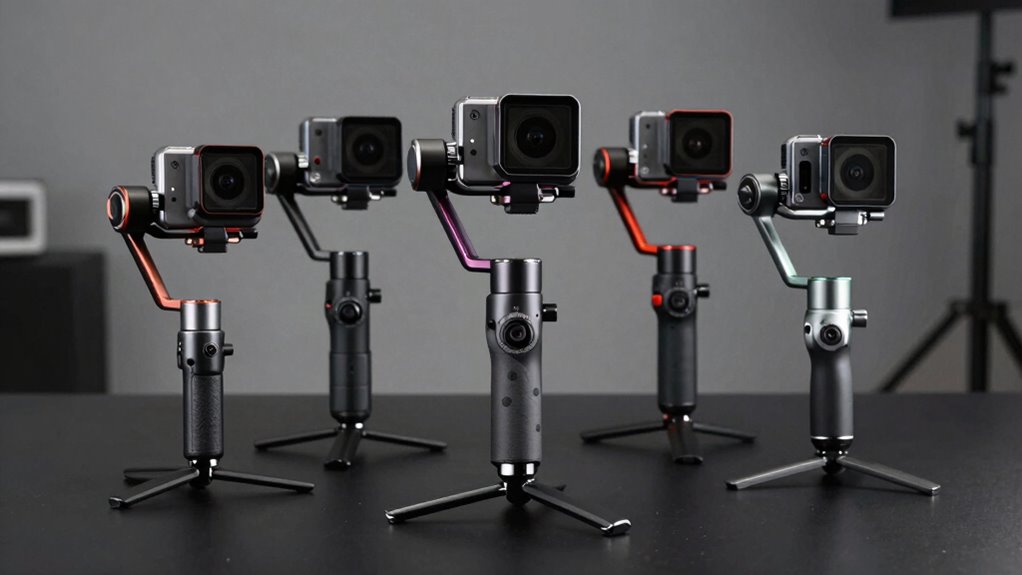
Choosing a gimbal camera stabilizer starts with matching the gimbal to your camera, not chasing the longest feature list. My shortlist includes the DJI RS 4 for heavier mirrorless setups, the DJI RS 4 Mini Combo for a compact camera-and-phone kit with tracking accessories, and the Hohem iSteady X3 SE for smartphone creators who want a foldable stabilizer and remote. Each fills a different role, so those picks are not interchangeable.

Get privacy and security gear delivered free with Prime
- Fast, free delivery on millions of items
- Prime Video, Amazon Music and more included
- Member-only deals all year
The main tradeoff is payload versus portability. Full-size camera gimbals carry larger camera-and-lens combinations but take more effort to balance and pack. Mini camera gimbals reduce bulk, while smartphone models are lighter and simpler but cannot support interchangeable-lens cameras. I rank these five by how well each matches its intended user, with setup, control, vertical shooting, and compatibility shaping the comparison.
Key Takeaways
- The DJI RS 4 has the lineup’s highest stated payload at 3 kg, making it the strongest fit for heavier camera-and-lens combinations.
- The DJI RS 4 Mini Combo adds an included tracking module and briefcase handle, while keeping support for compatible camera and smartphone setups up to 2 kg.
- The DJI RS 3 Mini offers a lighter camera-gimbal route with a touchscreen and native vertical shooting, but buyers need to check camera-and-lens compatibility.
- The Hohem iSteady X3 SE is the smartphone-only pick, with a detachable remote, foldable body, and stated battery life of up to 11 hours.
- The FeiyuTech SCORP 2 offers built-in AI tracking and a 2.5 kg payload, but its wireless controls and features depend on camera compatibility.
| DJI RS 4 Camera Gimbal Stabilizer |  | Best Overall for Heavier Camera Rigs | Model: DJI RS 4 (P14C) | Payload capacity: Up to 3 kg (6.6 lbs) | Battery runtime: Up to 12 hours with included BG21 grip | VIEW ON AMAZON | See Our Full Breakdown |
| DJI RS 4 Mini Combo Gimbal Stabilizer |  | Best Compact Camera Gimbal Combo | Model: DJI RS 4 Mini | Maximum payload: 2 kg (4.4 lbs) | Compatible devices: Mirrorless cameras, vlog cameras, smartphones | VIEW ON AMAZON | See Our Full Breakdown |
| FeiyuTech SCORP 2 3-Axis Gimbal Stabilizer for DSLR and Mirrorless Cameras |  | Best for Built-In Tracking on Camera Rigs | Stabilization: 3-axis | Payload: 2.5 kg | Screen: 1.3-inch touchscreen | VIEW ON AMAZON | See Our Full Breakdown |
| DJI RS 3 Mini Camera Gimbal Stabilizer |  | Best Lightweight Camera Gimbal | Model: DJI RS 3 Mini | Weight: 795 g in portrait mode; 850 g with horizontal arm | Payload capacity: 0.4–2 kg (0.8–4.4 lbs) | VIEW ON AMAZON | See Our Full Breakdown |
| Hohem iSteady X3 SE 3-Axis Gimbal Stabilizer for iPhone and Android |  | Best Value-Style Pick for Smartphone Creators | Model: Hohem iSteady X3 SE | Stabilization: 3-axis, iSteady 8.0 | Weight: 0.79 lbs | VIEW ON AMAZON | See Our Full Breakdown |
| gimbal camera stabilizer | Model | Payload capacity | Stabilization |
|---|---|---|---|
| DJI RS 4 Camera Gimbal Stabili | DJI RS 4 (P14C) | Up to 3 kg (6.6 lbs) | — |
| DJI RS 4 Mini Combo Gimbal Sta | DJI RS 4 Mini | — | — |
| FeiyuTech SCORP 2 3-Axis Gimba | — | — | 3-axis |
| DJI RS 3 Mini Camera Gimbal St | DJI RS 3 Mini | 0.4–2 kg (0.8–4.4 lbs) | Third-generation RS algorithm |
| Hohem iSteady X3 SE 3-Axis Gim | Hohem iSteady X3 SE | 0.66 lbs | 3-axis, iSteady 8.0 |
More Details on Our Top Picks
DJI RS 4 Camera Gimbal Stabilizer
I rank the DJI RS 4 first for buyers whose priority is carrying a substantial mirrorless or DSLR setup. Its 3 kg payload is the highest stated capacity in this group, giving it more headroom than the RS 4 Mini Combo and RS 3 Mini at 2 kg, and the FeiyuTech SCORP 2 at 2.5 kg. That makes it the clearest choice here for a compatible camera-and-lens combination that would push a smaller stabilizer too close to its limit.
For vertical content, the RS 4 supports native vertical shooting without an extra accessory. Its switchable stabilization modes and Teflon-coated axes also speak to a more involved camera workflow: reducing friction during balancing can make setup adjustments smoother, while joystick mode changes give the operator direct control. The included BG21 battery grip is stated to provide up to 12 hours of runtime, and the kit also includes an extended grip/tripod, quick-release plate, cables, and fastening support.
That capacity comes with a real handling tradeoff. This is a full-size camera gimbal, not a compact travel-first alternative like the RS 3 Mini, and the provided information does not give a complete weight figure for the RS 4. Switching from horizontal to vertical requires rebalancing, which is less convenient than a quick orientation change. The extended battery grip is sold separately, and Android users must download the DJI Ronin app from DJI’s website rather than Google Play. I would choose it for heavier compatible rigs, not simply because its payload number is largest.
Pros:- Highest stated payload in this roundup at 3 kg
- Native vertical shooting without an added accessory
- Three stabilization modes can be switched using the joystick
- Included BG21 grip is rated for up to 12 hours of runtime
Cons:- Requires rebalancing when switching between horizontal and vertical shooting
- Extended battery grip is sold separately
- Android users must download the DJI Ronin app from DJI’s website
Best for: Creators with a compatible DSLR or mirrorless camera and lens that need more payload headroom, plus regular horizontal and vertical shooting.
Not ideal for: Travel-first creators with small camera kits, or anyone who wants to switch orientations without stopping to rebalance.
- Model:DJI RS 4 (P14C)
- Payload capacity:Up to 3 kg (6.6 lbs)
- Battery runtime:Up to 12 hours with included BG21 grip
- Vertical shooting:Native vertical shooting
- Stabilization controls:Three modes; joystick switching
- Axis design:Teflon-coated axes
- Compatible camera brands:Canon, Sony, Nikon, Fujifilm
- Included components:Gimbal, BG21 grip, quick-release plate, extended grip/tripod, lens support, cables, screw kit
Our verdict“I recommend the RS 4 for compatible heavier camera rigs that need payload headroom and native vertical mounting more than compact size.”
DJI RS 4 Mini Combo Gimbal Stabilizer
The DJI RS 4 Mini Combo earns its place near the top by pairing a compact 2 kg gimbal with accessories that change how easily a creator can use it. The combo includes an intelligent tracking module, briefcase handle, tripod, quick-release plate, and control accessories. That makes it more ready for varied shooting than the RS 3 Mini package described here, which has a touchscreen and tripod but does not list an included tracking module or briefcase handle.
Its standout workflow features are automatic axis locks and a stated 10-second switch to vertical shooting. Locks can reduce the fuss of handling and packing the gimbal, while fast orientation changes suit creators who alternate between standard video and social-first framing. Teflon-enhanced balancing is intended to make fine adjustments smoother. The 2 kg limit supports compatible mirrorless cameras, vlog cameras, and smartphones, giving this model broader device flexibility than a phone-only stabilizer.
The compact format is not a substitute for the full-size RS 4: the Mini’s payload is one kilogram lower, so a heavier lens or accessory setup may rule it out. Buyers should check the combined weight and balance of their exact camera configuration before choosing it. Android app access is another practical caveat, since DJI’s Ronin app is unavailable on Google Play and must be downloaded from DJI’s website. I see this as the most appealing kit for mobile creators who value the included tracking and fast vertical workflow over maximum payload.
Pros:- Supports compatible cameras and smartphones up to 2 kg
- Automatic axis locks help speed handling and setup
- Switches to vertical shooting in a stated 10 seconds
- Combo includes a tracking module, tripod, and briefcase handle
Cons:- Lower payload than the full-size DJI RS 4
- Android app must be downloaded from DJI’s website
- Camera and lens balance still need to fit the 2 kg limit
Best for: Hybrid creators who want one compact stabilizer for compatible mirrorless cameras, vlog cameras, or smartphones, with tracking and a briefcase handle included.
Not ideal for: Operators using camera-and-lens rigs above 2 kg, or Android users who do not want to install DJI’s app outside Google Play.
- Model:DJI RS 4 Mini
- Maximum payload:2 kg (4.4 lbs)
- Compatible devices:Mirrorless cameras, vlog cameras, smartphones
- Vertical switching:10 seconds
- Balancing:Teflon-enhanced balancing
- Setup feature:Automatic axis locks
- Included accessories:Tripod, tracking module, briefcase handle, quick-release plate, cables, screw kit
Our verdict“I would choose the RS 4 Mini Combo for a compact, versatile kit where included tracking and quick vertical switching matter more than full-size payload.”
FeiyuTech SCORP 2 3-Axis Gimbal Stabilizer for DSLR and Mirrorless Cameras
The FeiyuTech SCORP 2 stands apart from the two DJI Minis by combining a 2.5 kg payload with built-in AI subject tracking. It carries more stated weight than the RS 4 Mini Combo and RS 3 Mini, though less than the RS 4. For creators who want to track a moving subject on a compatible DSLR or mirrorless camera without adding a separate tracking module, that mix may be more valuable than the Mini Combo’s lower weight and included accessory bundle.
Its control layout is aimed at hands-on shooting: a 1.3-inch touchscreen, multifunction knob, gesture controls, and wired or Bluetooth camera control. The quick-release vertical setup is useful for social video, and the Feiyu SCORP app opens additional settings and motion-based remote control. Compared with the RS 4, the SCORP 2 offers a more tracking-centered feature set and a lower payload; compared with the RS 4 Mini Combo, it gives more capacity but does not list the same bundle of a briefcase handle and separate tracking module.
There is a compatibility price to the feature set—not a monetary one, but a planning cost. Wireless camera controls and some functions can vary by camera, so I would verify the exact model and connection options before relying on them during a shoot. Some app settings also require connecting a phone. Its 2.5 kg ceiling leaves less room than the RS 4 for heavier camera-and-lens combinations. This is a strong match for compatible camera operators who value tracking and physical controls, but less suitable for buyers seeking the broadest payload margin or the simplest phone-only setup.
Pros:- Built-in AI tracking with gesture controls
- 2.5 kg payload exceeds the two DJI Mini models
- Quick-release vertical mounting
- Touchscreen, multifunction knob, and wired or Bluetooth camera control
Cons:- Payload is below the DJI RS 4’s 3 kg limit
- Wireless features vary with camera compatibility
- Additional app settings require a connected phone
Best for: Camera operators who want built-in AI tracking, gesture control, and a quick vertical setup on a compatible DSLR or mirrorless rig.
Not ideal for: Owners of heavier setups near or above 2.5 kg, or buyers who need wireless control features to work without checking camera-specific support.
- Stabilization:3-axis
- Payload:2.5 kg
- Screen:1.3-inch touchscreen
- Tracking:Built-in AI tracking module
- Camera compatibility:Sony, Canon, Panasonic, and Nikon DSLR and mirrorless cameras
- Camera connection:Wired control cable or Bluetooth
- Vertical shooting:Quick-release vertical mounting
- App:Feiyu SCORP
Our verdict“I recommend the SCORP 2 when built-in tracking and direct controls matter more than the RS 4’s higher payload or the Mini Combo’s bundled accessories.”
DJI RS 3 Mini Camera Gimbal Stabilizer
The DJI RS 3 Mini is my pick for camera users who want to keep their rig compact without stepping down to a smartphone-only stabilizer. At 795 g in portrait mode and 850 g with the horizontal arm, it is the most clearly specified lightweight camera option here. Its 2 kg payload matches the RS 4 Mini Combo, but it has a more straightforward feature pitch: third-generation RS stabilization, native vertical shooting, a 1.4-inch color touchscreen, and Bluetooth shutter control.
Compared with the RS 4 Mini Combo, the RS 3 Mini does not list automatic axis locks or an included tracking module, but it does provide a built-in screen and Bluetooth shutter control. That screen can make basic adjustments easier without depending on a phone, while native vertical mounting supports portrait video without requiring an additional accessory. It is also lighter than the full-size RS 4, which matters for a travel kit or a shoot involving long handheld periods.
The limit is that 2 kg includes the complete camera setup, and the gimbal needs a compatible camera-and-lens combination that can balance correctly. Its feature set is less focused on subject tracking than the RS 4 Mini Combo or SCORP 2, so creators who frequently need automated subject framing may prefer one of those. DJI’s Ronin app must be downloaded from DJI’s website on Android, and compatibility should be checked before purchase. I would pick this model for a light mirrorless kit, not as a general-purpose answer for heavier cinema-style rigs.
Pros:- Lightweight design with stated weights of 795 g or 850 g depending on setup
- Supports compatible camera setups up to 2 kg
- Native vertical shooting
- Touchscreen and Bluetooth shutter control
Cons:- Camera and lens compatibility must be checked before use
- No tracking module is listed among the included items
- Android users must download the Ronin app from DJI’s website
Best for: Traveling mirrorless-camera users with a compatible lightweight setup who want native vertical shooting, a touchscreen, and a compact gimbal.
Not ideal for: Creators with heavier camera-and-lens combinations, or those who put built-in subject tracking ahead of lower carrying weight.
- Model:DJI RS 3 Mini
- Weight:795 g in portrait mode; 850 g with horizontal arm
- Payload capacity:0.4–2 kg (0.8–4.4 lbs)
- Screen:1.4-inch full-color touchscreen
- Stabilization:Third-generation RS algorithm
- Connectivity:Bluetooth shutter control
- Mounting:1/4-inch-20 screw
- Included items:Quick-release plate, tripod, USB-C charging cable, control cable, mounting screw
Our verdict“I would choose the RS 3 Mini for a compatible, lightweight mirrorless kit when portability and direct on-gimbal controls outrank included tracking.”
Hohem iSteady X3 SE 3-Axis Gimbal Stabilizer for iPhone and Android
The Hohem iSteady X3 SE is the only smartphone-specific pick in this roundup, so it should be compared with the others by phone workflow rather than camera payload. Its foldable body weighs 0.79 lb and supports phones up to 0.66 lb. The detachable magnetic remote can control the gimbal from up to 32.81 feet away, a useful distinction for solo creators who want to frame themselves from a distance. The camera gimbals here offer much higher payloads, but they are designed for a different type of equipment and carry setup.
Hohem’s 3-axis iSteady 8.0 stabilization, Hohem Joy app, AI tracking, gesture control, and creative templates target quick smartphone production. Up to 11 hours of stated battery life may suit a long day of filming, while the included tripod and storage pouch add practical support for stationary shots and transport. Against the DJI RS 4 Mini Combo, it gives up interchangeable-camera support and that model’s broader device flexibility, but it avoids asking phone-first creators to manage a camera gimbal.
The 0.66 lb payload ceiling is the defining limitation. Buyers should account for the phone and any attached accessories rather than assuming every large phone setup will fit. It cannot replace a mirrorless-camera stabilizer, and users who do not want to rely on an app may not use its tracking and creative tools fully. For iPhone and Android users filming themselves, however, the remote and foldable design offer a more suitable tool than any of the heavier camera-focused picks.
Pros:- Foldable, 0.79 lb design for smartphone filming on the go
- Detachable remote works up to 32.81 feet away
- Hohem Joy app offers AI tracking and gesture control
- Battery life is stated at up to 11 hours
Cons:- Payload is limited to 0.66 lb
- Designed for iPhone and Android smartphones, not interchangeable-lens cameras
- Tracking and creative features rely on the Hohem Joy app
Best for: Phone-first vloggers and solo creators who want foldable 3-axis stabilization, app-based tracking, and a detachable remote for framing themselves.
Not ideal for: Anyone using a DSLR or mirrorless camera, or phone owners whose device and accessories exceed the 0.66 lb payload limit.
- Model:Hohem iSteady X3 SE
- Stabilization:3-axis, iSteady 8.0
- Weight:0.79 lbs
- Payload capacity:0.66 lbs
- Remote range:Up to 32.81 feet
- Battery life:Up to 11 hours
- Charging time:2 hours
- Compatible devices:iPhone and Android smartphones
- App:Hohem Joy
Our verdict“I recommend the iSteady X3 SE for phone-only creators who value a remote and foldable form more than the camera support of the other four picks.”

How We Picked
I ranked these options by the job each can realistically do as a gimbal camera stabilizer: support a compatible camera or phone, steady movement, and make framing practical for the intended creator. Payload matters because a gimbal must carry the full camera-and-lens setup, not just the camera body. A higher stated limit can open the door to heavier rigs, but it does not replace checking the camera, lens, balance, and accessory combination.
I also compared the setup and shooting workflow. Native vertical mounting, quick-release systems, automatic axis locks, screens, tracking tools, and remote controls can reduce friction during real shoots. I gave each model a distinct role rather than treating smartphone gimbals and mirrorless-camera gimbals as direct substitutes. The RS 4 leads for payload, the RS 4 Mini Combo for included tracking and flexibility, the RS 3 Mini for lightweight camera use, the Hohem for phone creators, and the SCORP 2 for feature-rich tracking on compatible camera rigs.
Finally, I weighed practical limitations alongside headline features. App availability on Android, camera-specific compatibility, payload ceilings, and the need to rebalance for a change in orientation can affect whether a stabilizer fits a buyer’s routine. The supplied specifications and product details form the basis of this comparison; I do not treat a feature as useful unless its likely benefit and its limits are clear.
| gimbal camera stabilizer | Model |
|---|---|
| DJI RS 4 Camera Gimbal Stabili | DJI RS 4 (P14C) |
| DJI RS 4 Mini Combo Gimbal Sta | DJI RS 4 Mini |
| FeiyuTech SCORP 2 3-Axis Gimba | — |
| DJI RS 3 Mini Camera Gimbal St | DJI RS 3 Mini |
| Hohem iSteady X3 SE 3-Axis Gim | Hohem iSteady X3 SE |
Factors to Consider When Choosing Gimbal Camera Stabilizer
I would start by matching the stabilizer to the complete device setup and the way you shoot. These five products split into full-size camera support, compact camera gimbals, and a phone-only option; choosing within the right group matters more than comparing every feature as though the products were substitutes.Start with payload and compatibility
Check the weight of the camera, lens, and any attached accessories against the gimbal’s payload limit. For this lineup, the DJI RS 4 supports up to 3 kg, the FeiyuTech SCORP 2 supports 2.5 kg, and both DJI Mini models support up to 2 kg. The Hohem’s 0.66 lb capacity is for smartphones, not a smaller alternative for a mirrorless camera. Payload alone does not confirm a good fit: the camera and lens must also balance on the arms, and the maker’s compatibility guidance should match your exact combination.
Choose between travel weight and more headroom
A lighter gimbal can be easier to carry and hold, but compactness usually comes with a narrower operating range or fewer included controls. The RS 3 Mini gives a stated weight of 795 g in portrait mode or 850 g with its horizontal arm, while the RS 4 has the higher 3 kg capacity. The RS 4 Mini Combo occupies a middle ground, retaining support for compatible cameras and phones up to 2 kg while including a tracking module and briefcase handle. I would favor the lightest suitable model, rather than buying extra payload that your routine never uses.
Think through vertical video and balancing
Creators who post in portrait orientation should check how a gimbal changes shooting modes. The RS 4 Mini Combo lists a 10-second vertical switch, and the RS 4 and RS 3 Mini support native vertical shooting. The SCORP 2 uses quick-release vertical mounting. By contrast, the RS 4 requires rebalancing between horizontal and vertical orientations, which adds a pause when changing formats. A quick mounting option can help, but it does not remove the need to follow the correct balancing procedure for your camera setup.
Decide whether tracking is a core need
Tracking features differ in how they enter the workflow. The RS 4 Mini Combo includes a tracking module, the SCORP 2 lists built-in AI tracking with gesture controls, and the Hohem uses its app for phone tracking. The RS 3 Mini’s listed strengths center on stabilization, vertical shooting, and direct controls rather than an included tracking module. If you film moving people or work alone, tracking may save repeated framing adjustments. If you mostly capture planned camera moves, a screen, controls, and reliable balance may matter more.
Check controls, apps, and battery expectations
A touchscreen can simplify adjustments at the gimbal, while wired or Bluetooth controls can help operate compatible camera functions. The RS 3 Mini has a 1.4-inch touchscreen and Bluetooth shutter control; the SCORP 2 has a 1.3-inch screen, knob, and wired or Bluetooth camera control. The Hohem remote gives phone creators control from a distance. DJI Android users should account for the Ronin app’s download process outside Google Play, and SCORP 2 owners should verify camera-specific wireless features. Treat stated battery figures as planning information, and check the full operating conditions for your intended shoot.
Frequently Asked Questions
Which gimbal in this roundup supports the heaviest camera setup?
The DJI RS 4 has the highest stated payload at 3 kg (6.6 lbs), ahead of the FeiyuTech SCORP 2 at 2.5 kg and the two DJI Mini models at 2 kg. That makes it the strongest starting point for a heavier compatible camera-and-lens combination. I would still check the exact camera and lens balance before choosing it, since payload capacity by itself does not confirm compatibility.
Can I use the Hohem iSteady X3 SE with a mirrorless camera?
No. The Hohem iSteady X3 SE is specified for iPhone and Android smartphones, with a 0.66 lb payload limit. It is not the right choice for a mirrorless camera or DSLR. For camera support, compare the DJI RS 3 Mini, DJI RS 4 Mini Combo, FeiyuTech SCORP 2, and DJI RS 4 against your complete camera-and-lens setup.
Which pick is most suited to vertical video?
All five can serve different vertical-video workflows, but their methods differ. The RS 4 Mini Combo lists a 10-second switch to vertical shooting; the RS 4 and RS 3 Mini support native vertical shooting; the SCORP 2 offers quick-release vertical mounting; and the Hohem is a phone-focused stabilizer. If frequent changes between landscape and portrait are part of your routine, pay attention to the RS 4’s need for rebalancing when changing orientation.
Do I need a tracking feature on my gimbal?
Tracking is most useful when you want the frame to follow a moving subject without manually adjusting the camera throughout the shot. The RS 4 Mini Combo includes a tracking module, the SCORP 2 lists built-in AI tracking, and the Hohem offers app-based AI tracking for phones. If your footage consists mainly of planned camera moves or stationary shots, you may get more value from a suitable payload, manageable weight, and straightforward controls than from automated tracking.
What should Android users know about the DJI gimbals?
The product details state that the DJI Ronin app is unavailable on Google Play and Android users must download it from DJI’s website. That applies to the DJI RS 4, RS 4 Mini Combo, and RS 3 Mini information provided here. If app access is central to your setup, check DJI’s current installation guidance and your phone compatibility before relying on the app for a shoot.
Conclusion
I would match the final choice to the equipment and shooting style first. For a heavier compatible camera rig, the DJI RS 4 is my pick because its 3 kg payload leads this group, though orientation changes require rebalancing. For a compact mixed-device kit with included tracking and a briefcase handle, I would choose the DJI RS 4 Mini Combo. Travelers using a lighter mirrorless setup may prefer the RS 3 Mini for its stated weight, touchscreen, and native vertical shooting.
If you want built-in tracking and hands-on controls for a compatible DSLR or mirrorless camera, the FeiyuTech SCORP 2 offers a useful balance of tracking and payload, with camera-specific wireless compatibility to verify. For phone-first vlogging and solo framing, the Hohem iSteady X3 SE is the purpose-built option; its small payload rules out interchangeable-lens cameras. My practical recommendation is to confirm your device, lens, accessories, balance, and app needs before settling on a gimbal.