

For most video editors, I’d choose the 16-inch MacBook Pro with M5 Pro, 24GB memory, and 2TB SSD as the best overall balance of editing power and practical storage. The M5 Max with 64GB memory suits heavier effects and higher-resolution timelines, while the 14-inch MacBook Pro with M5 is a more portable starting point. The main tradeoffs are portability, memory headroom, graphics capacity, and how much footage you can keep on the internal drive. Older Intel and renewed configurations may appeal for lighter work, but they have less room for demanding editing workflows. Read on for the full comparison and guidance on matching a configuration to your projects.

Get privacy and security gear delivered free with Prime
- Fast, free delivery on millions of items
- Prime Video, Amazon Music and more included
- Member-only deals all year
Key Takeaways
- The 16-inch M5 Pro with 24GB memory and 2TB SSD is the most balanced pick here for editors who want a capable system without stepping up to an M5 Max configuration.
- M5 Max with 64GB memory offers a strong middle ground for demanding effects and larger timelines; 128GB configurations make more sense when projects regularly push memory limits.
- Several listings describe nearly identical M5 Max configurations, so the meaningful differences are memory and storage rather than color or small naming variations.
- The 14-inch M5 model favors portability and lighter editing workloads, while the 16-inch models provide a larger workspace and more capable chip options.
- The 2019 Intel MacBook Pro is the outlier: its 16GB memory and 512GB SSD leave less headroom for current high-resolution projects than the newer Apple silicon options.


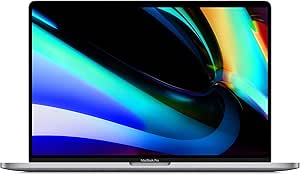


| macbook pro for video editing | Display | Storage | Chip | CPU |
|---|---|---|---|---|
| Apple MacBook Pro 16.2-inch wi | 16.2-inch Liquid Retina XDR with Nano-Texture Glass | 2TB SSD | Apple M5 Max | 18-core |
| Apple 16-inch MacBook Pro with | 16.2-inch Liquid Retina XDR | 2TB SSD | — | — |
| Apple MacBook Pro 16-inch | 16-inch Retina, 3072 × 1920 | 512GB SSD | — | — |
| Apple 2026 MacBook Pro 16.2-in | 16.2-inch Liquid Retina XDR, 1600 nits peak brightness | 2TB SSD | Apple M5 Max | 18-core |
| Apple 16-inch MacBook Pro with | 16.2-inch Liquid Retina XDR | 4TB SSD | Apple M5 Max | 18-core |
| Apple 16-inch MacBook Pro | 16.2-inch Liquid Retina XDR; up to 1600 nits peak brightness | 2TB SSD | Apple M5 Pro | 18-core |
| Apple MacBook Pro 16.2-inch wi | 16.2-inch Liquid Retina XDR; up to 1600 nits peak brightness | 2TB SSD | Apple M5 Max | 18-core |
| Apple MacBook Pro 16.2-inch La | 16.2-inch Liquid Retina XDR; 1600 nits peak and up to 1000 nits sustained brightness | 4TB SSD | Apple M5 Max | 18-core |
| Apple MacBook Pro 16.2" Laptop | 16.2-inch Liquid Retina XDR; up to 1600 nits peak brightness | 2TB SSD | Apple M5 Max | 18-core |
| Apple 14.2-inch MacBook Pro wi | 14.2-inch Liquid Retina XDR; up to 1600 nits peak brightness | 1TB SSD | Apple M5 | 10-core |
More Details on Our Top Picks
Apple MacBook Pro 16.2-inch with M5 Max, 18-core CPU, 40-core GPU, 64GB Memory, 2TB SSD, Nano-Texture Glass, Space Black
For editors who want a high-performance 16-inch workstation without moving to the largest memory configuration, this M5 Max with 64GB unified memory is my strongest all-around pick. Its 40-core GPU and 2TB SSD suit demanding timelines, effects work, and sizable project libraries, while the Nano-Texture Liquid Retina XDR display can help cut distracting reflections when working in bright spaces. Compared with the M5 Pro 16-inch model, this configuration gives GPU-heavy workflows more headroom and supports up to four external displays. The tradeoff is its 4.73-pound class of size and the fact that the 128GB M5 Max models offer more room for unusually memory-hungry projects. I’d choose it for serious editing across varied projects, rather than paying for capacity most solo editors may not use.
Pros:- M5 Max 40-core GPU is suited to demanding effects and rendering workloads
- 64GB unified memory and 2TB SSD provide substantial working and project space
- Nano-Texture XDR display can reduce distracting reflections
- Three Thunderbolt 5 ports, SDXC, HDMI, and support for up to four external displays
Cons:- Large 16.2-inch chassis is less convenient to carry than a smaller laptop
- 128GB M5 Max configurations provide more memory headroom for unusually large projects
Best for: Editors handling 4K and effects-heavy projects who want a large, reflection-reducing display and strong GPU capacity without stepping up to 128GB memory.
Not ideal for: Traveling editors who prioritize a lighter editing laptop, or teams whose massive, memory-intensive timelines justify a 128GB configuration.
- Chip:Apple M5 Max
- CPU:18-core
- GPU:40-core
- Display:16.2-inch Liquid Retina XDR with Nano-Texture Glass
- Memory:64GB unified memory
- Storage:2TB SSD
- Ports:Three Thunderbolt 5, MagSafe 3, SDXC card slot, HDMI, headphone jack
- External displays:Up to four
Our verdict“Choose this M5 Max configuration for a capable, well-rounded editing workstation with a reflection-reducing display and room for demanding projects.”
Apple 16-inch MacBook Pro with M5 Pro, 18-core CPU, 20-core GPU, 24GB memory, and 2TB SSD
This M5 Pro MacBook Pro makes a practical case for editors whose projects benefit more from a roomy internal drive than from a Max-tier GPU. Its 2TB SSD leaves space for active footage, proxies, and exports, while the 24GB memory and 20-core GPU target demanding creative work without reaching the higher-memory M5 Max configurations. The large 16.2-inch Liquid Retina XDR display also gives a comfortable workspace for timelines and preview windows. Compared with the M5 Max 64GB model, this one has less GPU and memory headroom for intensive effects or complex multitasking, but the storage capacity is the same. It suits editors with a mix of standard and moderately demanding projects who prefer keeping more work local; those routinely pushing heavy effects pipelines should look higher in the lineup.
Pros:- 2TB SSD provides ample room for active projects and media
- 18-core M5 Pro CPU and 20-core GPU support professional creative work
- Large 16.2-inch Liquid Retina XDR display with up to 1600 nits peak brightness
- 140W USB-C power adapter is included
Cons:- 24GB memory offers less headroom than the 64GB and 128GB M5 Max models
- 20-core GPU is a less suitable fit for especially effects-heavy editing
Best for: Video editors who keep several active projects and footage libraries on the laptop, and whose workloads fit the M5 Pro’s 24GB memory and 20-core GPU.
Not ideal for: Editors routinely working with effects-heavy timelines, large multicam projects, or other GPU-intensive workloads that call for an M5 Max configuration.
- Processor:Apple M5 Pro, 18-core CPU
- Graphics:20-core GPU
- Memory:24GB
- Storage:2TB SSD
- Display:16.2-inch Liquid Retina XDR
- Peak brightness:1600 nits
- Power adapter:140W USB-C
- Color:Space Black
Our verdict“Pick this M5 Pro when local storage for several active projects matters more than the extra GPU and memory headroom of an M5 Max.”
Apple MacBook Pro 16-inch (Late 2019), 2.6GHz Intel Core i7, 16GB RAM, 512GB SSD, Space Gray (Renewed)
This renewed 2019 MacBook Pro is the entry point for buyers who need a large-screen Mac for lighter editing and are willing to accept older hardware. Its 16-inch Retina display with P3 color gives footage a spacious preview area, and the dedicated Radeon Pro 5300M graphics are a step beyond relying on integrated graphics alone. Still, its six-core Intel processor, 16GB of RAM, and 512GB SSD leave much less capacity for demanding timelines and local media than the newer M5 Pro and M5 Max models. Compared with the M5 Pro 16-inch, it also lacks the newer chip generation and the listed Thunderbolt 5 connectivity. Renewed condition can vary, so this choice is best for basic edits, learning, or occasional work—not a dependable primary machine for a busy professional pipeline.
Pros:- 16-inch Retina display has 3072 × 1920 resolution and P3 color gamut
- Dedicated AMD Radeon Pro 5300M graphics with 4GB GDDR6
- 16GB RAM and a 512GB SSD are specified
- Listed battery life is up to 11 hours
Cons:- Older 2019 Intel platform has less performance headroom than the M5 Pro and M5 Max options
- 512GB SSD can fill quickly with video footage and project files
- Renewed condition may vary
Best for: Students and occasional editors working on straightforward footage who want a 16-inch Mac display and can accept renewed, older hardware.
Not ideal for: Professional editors handling demanding 4K, effects-heavy, or multicam projects, especially those who need substantial onboard storage and newer connectivity.
- Model:MacBook Pro (Late 2019)
- Processor:2.6GHz 6-core Intel Core i7 (9th Gen)
- Memory:16GB 2666MHz DDR4 RAM
- Storage:512GB SSD
- Display:16-inch Retina, 3072 × 1920
- Graphics:AMD Radeon Pro 5300M, 4GB GDDR6
- Weight:4 pounds
- Connectivity:Wi-Fi 802.11ac
Our verdict“Consider this renewed model for basic or occasional editing when its older platform and limited storage fit your workflow.”
Apple 2026 MacBook Pro 16.2-inch with M5 Max, 18-core CPU, 32-core GPU, 36GB Unified Memory, 2TB SSD, Space Black
This 2026 configuration brings the M5 Max platform to editors who want more GPU capacity than the M5 Pro offers without selecting a 40-core GPU and 64GB memory setup. Its 32-core GPU, 36GB unified memory, and 2TB SSD form a strong base for advanced editing, while the Liquid Retina XDR display and SDXC, HDMI, and Thunderbolt 5 ports simplify a desk or card-based workflow. Against the 64GB M5 Max model, it trades some graphics and memory headroom for a less extreme configuration; against the 128GB models, the gap is most relevant for unusually large, complex projects. The up-to-four-display support can help editors build a multi-screen setup. At 4.73 pounds, this is still a large machine, and its fixed memory makes careful workload matching worthwhile.
Pros:- M5 Max chip with 32-core GPU offers a step up from the M5 Pro 20-core GPU
- 36GB unified memory and 2TB SSD support substantial editing projects
- 16.2-inch Liquid Retina XDR display with 1600 nits peak brightness
- Thunderbolt 5, HDMI, SDXC, and support for up to four external displays
Cons:- Less GPU and memory capacity than the 40-core, 64GB M5 Max option
- At 4.73 pounds, the 16.2-inch model is not a light travel companion
- Memory configuration is fixed
Best for: Editors moving beyond an M5 Pro who want M5 Max graphics, 2TB local storage, and a 16-inch screen for advanced but not exceptionally memory-hungry projects.
Not ideal for: Editors whose workflows regularly exhaust 36GB of memory or who need the maximum listed GPU configuration for intensive effects work.
- Chip:Apple M5 Max
- CPU:18-core
- GPU:32-core
- Memory:36GB unified memory
- Storage:2TB SSD
- Display:16.2-inch Liquid Retina XDR, 1600 nits peak brightness
- Ports:Three Thunderbolt 5, MagSafe 3, HDMI, SDXC card slot, headphone jack
- Weight:4.73 pounds
Our verdict“Choose this M5 Max configuration for advanced editing that benefits from a stronger GPU while stopping short of the higher-memory models.”
Apple 16-inch MacBook Pro with M5 Max, 18-core CPU, 40-core GPU, 128GB Memory, 4TB SSD, Space Black
For editors whose projects push memory and storage limits, this M5 Max configuration has the broadest listed capacity in this batch: 128GB unified memory paired with a 4TB SSD. That combination can keep more media and demanding applications close at hand, with the 40-core GPU aimed at workloads that benefit from strong graphics capacity. Compared with the 64GB M5 Max, it doubles the memory and storage while retaining the same stated CPU and GPU core counts; compared with the M5 Pro model, it is built for a heavier editing workload. The added capacity pays off only if projects use it, though: editors with moderate timelines may find the 64GB, 2TB model a more sensible fit. This is a specialist pick for large libraries, layered timelines, and multitasking across demanding creative tools.
Pros:- 128GB unified memory supports memory-intensive creative workloads
- 4TB SSD provides extensive internal space for active projects and media
- M5 Max chip pairs an 18-core CPU with a 40-core GPU
- 16.2-inch Liquid Retina XDR display is specified
Cons:- Capacity may go unused for editors with moderate projects
- The listed configuration does not specify port details or display brightness
Best for: Professional editors managing large media libraries, complex timelines, and multiple memory-intensive creative applications at once.
Not ideal for: Solo editors with modest footage needs or straightforward timelines who will not use the extra memory and storage over the 64GB, 2TB M5 Max.
- Chip:Apple M5 Max
- CPU:18-core
- GPU:40-core
- Unified memory:128GB
- Storage:4TB SSD
- Display:16.2-inch Liquid Retina XDR
- Color:Space Black
- Power adapter:140W USB-C
Our verdict“Choose this M5 Max when large projects and simultaneous creative workloads can make direct use of its 128GB memory and 4TB SSD.”
Apple 16-inch MacBook Pro (2026, CTO) – M5 Pro chip, 18-core CPU, 20-core GPU, 48GB RAM, 2TB SSD, Space Black, 140W Adapter
The 48GB of unified memory gives this M5 Pro configuration room for demanding timelines, multiple creative apps, and larger projects, while its 2TB SSD can keep more active footage close at hand. For video editing, that balance makes it a more practical mobile workstation than the 14.2-inch MacBook Pro with M5, especially when working on a large XDR screen. The tradeoff is its 20-core GPU: it has less graphics capacity than the 40-core M5 Max models, so effects-heavy work and GPU-intensive exports may benefit from stepping up. I’d choose this configuration for sustained professional editing where memory and local storage matter more than maximum GPU throughput. Its 16.2-inch size also means less room in a lightweight travel setup.
Pros:- 48GB unified memory supports demanding timelines and multitasking
- 2TB SSD provides space for active footage and project files
- 16.2-inch Liquid Retina XDR display offers a large editing workspace
- 140W USB-C adapter is included
Cons:- 20-core GPU has less capacity for graphics-heavy editing than the M5 Max options
- 16.2-inch chassis is less convenient for frequent travel than the 14.2-inch M5 model
Best for: Editors handling multi-app workflows and sizeable projects who want ample memory and storage without stepping up to an M5 Max configuration.
Not ideal for: Editors who rely on GPU-heavy effects, advanced grading, or frequent large exports and would benefit from an M5 Max model’s 40-core GPU.
- Chip:Apple M5 Pro
- CPU:18-core
- GPU:20-core
- Unified memory:48GB
- Storage:2TB SSD
- Display:16.2-inch Liquid Retina XDR; up to 1600 nits peak brightness
- Color:Space Black
- Power adapter:140W USB-C
Our verdict“Choose this M5 Pro if your editing work benefits more from 48GB of memory and 2TB of local storage than from an M5 Max GPU.”
Apple MacBook Pro 16.2-inch with M5 Max, 18-Core CPU, 40-Core GPU, 128GB Memory, 2TB SSD, Space Black
For editors whose timelines lean on effects, compositing, or demanding graphics work, the M5 Max with a 40-core GPU is the defining advantage here. Its 128GB of unified memory also leaves considerable room for large projects and simultaneous creative applications. Compared with the M5 Pro 16-inch MacBook Pro, this model puts far more capacity toward GPU work, making it the stronger fit when graphics throughput is a priority. The 2TB SSD is useful for active projects, though the M5 Max model with 4TB offers more space for footage kept onboard. I’d favor this configuration for a fixed editing setup that also needs substantial memory and broad connectivity; its 16.2-inch size is a compromise for editors carrying their workstation every day.
Pros:- 40-core GPU is suited to demanding graphics and effects workloads
- 128GB unified memory accommodates large projects and concurrent apps
- 2TB SSD provides local space for active media
- Thunderbolt 5, SDXC, and HDMI support varied editing setups
Cons:- 16.2-inch size is less convenient to carry than a 14.2-inch MacBook Pro
- 2TB SSD provides less onboard footage capacity than the 4TB M5 Max option
Best for: Video professionals working with GPU-intensive effects and large timelines who need substantial memory and plan to use external displays.
Not ideal for: Editors who prioritize portability or need to keep large footage libraries on the laptop’s internal drive; the 4TB M5 Max configuration offers more storage.
- Chip:Apple M5 Max
- CPU:18-core
- GPU:40-core
- Unified memory:128GB
- Storage:2TB SSD
- Display:16.2-inch Liquid Retina XDR; up to 1600 nits peak brightness
- Ports:Three Thunderbolt 5, MagSafe 3, SDXC, HDMI, headphone jack
- External displays:Up to four
Our verdict“Pick this model for GPU-heavy editing and memory-intensive projects when 2TB of internal storage is sufficient.”
Apple MacBook Pro 16.2-inch Laptop with M5 Max, 18-core CPU, 40-core GPU, 128GB Unified Memory, 4TB SSD – Space Black
This M5 Max configuration pairs the same 40-core GPU and 128GB of memory as the 2TB version with a 4TB SSD. That extra internal capacity matters when current footage, proxies, and project files need to travel together, reducing dependence on external drives during location work. Compared with the 2TB M5 Max MacBook Pro, it offers more room rather than more processing power; editors whose media already lives on a fast external array may prefer that other configuration. The 16.2-inch XDR display and support for up to four external displays suit a workstation-style setup. I’d pick it for projects with large local media needs, while recognizing that the 16-inch footprint is a substantial carry for mobile shoots.
Pros:- 4TB SSD holds more active footage and project files locally
- 40-core GPU supports graphics-intensive editing workloads
- 128GB unified memory suits large projects and heavy multitasking
- Thunderbolt 5, SDXC, and HDMI offer flexible editing connectivity
Cons:- Larger internal storage does not add processing capacity over the 2TB M5 Max configuration
- 16.2-inch size is less portable than a compact editing laptop
Best for: Editors managing large footage libraries or several active projects who need substantial internal storage while working away from a studio.
Not ideal for: Editors who store footage on external drives or shared media storage and would rather choose the 2TB M5 Max model with the same CPU, GPU, and memory.
- Chip:Apple M5 Max
- CPU:18-core
- GPU:40-core
- Unified memory:128GB
- Storage:4TB SSD
- Display:16.2-inch Liquid Retina XDR; 1600 nits peak and up to 1000 nits sustained brightness
- Ports:Three Thunderbolt 5, MagSafe 3, SDXC, HDMI, headphone jack
- External displays:Up to four
Our verdict“Choose this M5 Max configuration if keeping a large amount of footage on the laptop matters as much as its high-end editing capacity.”
Apple MacBook Pro 16.2″ Laptop – M5 Max, 18-Core CPU, 40-Core GPU, 64GB Unified Memory, 2TB SSD, Space Black
The 40-core M5 Max GPU gives this configuration the same graphics tier as the 128GB M5 Max models, while its 64GB of unified memory leaves room for substantial editing projects without aiming at the largest memory workloads. That distinction makes it a focused choice for demanding video work: compared with the M5 Pro 16-inch model, it has twice the listed GPU core count; compared with the 128GB M5 Max, it has less memory but the same 2TB SSD capacity. The 16.2-inch XDR display and built-in SDXC and HDMI ports fit a desktop-style editing setup. I’d choose it for GPU-heavy timelines that don’t call for 128GB of memory. Editors with exceptionally large projects may prefer that higher-memory option.
Pros:- 40-core GPU supports demanding effects and graphics workloads
- 64GB unified memory provides capacity for substantial editing projects
- 2TB SSD holds active media and project files
- Three Thunderbolt 5 ports plus SDXC and HDMI suit studio setups
Cons:- Less unified memory than the 128GB M5 Max alternatives
- 16.2-inch form factor is less portable than the 14.2-inch M5 MacBook Pro
Best for: Editors who need M5 Max graphics performance for demanding timelines but do not expect to benefit from 128GB of memory.
Not ideal for: Editors working with exceptionally large projects or memory-heavy multitasking who need the 128GB offered by the other M5 Max configurations.
- Chip:Apple M5 Max
- CPU:18-core
- GPU:40-core
- Unified memory:64GB
- Storage:2TB SSD
- Display:16.2-inch Liquid Retina XDR; up to 1600 nits peak brightness
- Ports:Three Thunderbolt 5, MagSafe 3, SDXC, HDMI, headphone jack
- External displays:Up to four
Our verdict“Choose this model for M5 Max graphics performance if 64GB of memory fits your projects better than the 128GB alternatives.”
Apple 14.2-inch MacBook Pro with M5, 10-Core CPU and GPU, 24GB Memory, 1TB SSD, Space Black
At 14.2 inches and 3.41 pounds, this is the portable pick in a group dominated by 16-inch systems. Its M5 chip, 24GB of memory, and 1TB SSD suit lighter editing projects and everyday cuts, while the Liquid Retina XDR screen and built-in SDXC slot make field work more practical. Compared with the 16-inch M5 Pro MacBook Pro, it gives up CPU and GPU cores, memory, storage, and screen area; that is a meaningful limit for complex timelines or long projects. In return, it is easier to pack and supports up to two external displays. I’d choose it for creators who edit on the move and value a smaller workstation over the headroom of an M5 Max.
Pros:- 14.2-inch size and 3.41-pound weight make it the most portable pick in this batch
- 24GB unified memory and 1TB SSD support everyday editing workflows
- Liquid Retina XDR display reaches up to 1600 nits peak brightness
- SDXC, HDMI, and three Thunderbolt 4 ports provide useful connections
Cons:- 10-core CPU and GPU offer less capacity for demanding work than the M5 Pro and M5 Max models
- 1TB SSD and 24GB memory provide less room for large projects than the 16-inch configurations
Best for: Traveling creators and solo editors cutting shorter projects who want a capable MacBook Pro in a smaller, lighter form.
Not ideal for: Editors working with complex effects, large timelines, or multiple high-resolution external displays who need the extra GPU, memory, or display support of a 16-inch Pro or Max model.
- Chip:Apple M5
- CPU:10-core
- GPU:10-core
- Unified memory:24GB
- Storage:1TB SSD
- Display:14.2-inch Liquid Retina XDR; up to 1600 nits peak brightness
- Weight:3.41 pounds
- External displays:Up to two
Our verdict“Pick this 14.2-inch M5 MacBook Pro for mobile editing and manageable projects, and choose a 16-inch Pro or Max model for heavier timelines.”

How We Picked
I compared the listed configurations through the demands of video editing: processor and graphics capacity for exports and effects, unified memory for complex timelines, internal storage for active footage, and screen size for working in an editing interface. I also weighed how each setup fits a different workflow, from portable cuts and beginner projects to memory-intensive production work. The roundup includes repeated or closely matched listings, so I treated those as configuration comparisons rather than assuming each represents a distinct performance tier.
The ranking favors a useful balance of editing capability and everyday practicality. The 16-inch M5 Pro leads for editors who do not need the highest graphics or memory ceiling; M5 Max models rank higher for demanding projects, with larger memory and storage configurations suited to heavier workloads. The 14-inch M5 earns a place for portability and lighter work, while the older Intel model ranks lower because its listed memory and storage provide less room for current editing demands. These are configuration-based recommendations; the best fit depends on footage formats, effects, and project size.
| macbook pro for video editing | Chip | Ports | External displays |
|---|---|---|---|
| Apple MacBook Pro 16.2-inch wi | Apple M5 Max | Three Thunderbolt 5, MagSafe 3, SDXC card slot, HDMI, headphone jack | Up to four |
| Apple 16-inch MacBook Pro with | — | — | — |
| Apple MacBook Pro 16-inch | — | — | — |
| Apple 2026 MacBook Pro 16.2-in | Apple M5 Max | Three Thunderbolt 5, MagSafe 3, HDMI, SDXC card slot, headphone jack | — |
| Apple 16-inch MacBook Pro with | Apple M5 Max | — | — |
| Apple 16-inch MacBook Pro | Apple M5 Pro | — | — |
| Apple MacBook Pro 16.2-inch wi | Apple M5 Max | Three Thunderbolt 5, MagSafe 3, SDXC, HDMI, headphone jack | Up to four |
| Apple MacBook Pro 16.2-inch La | Apple M5 Max | Three Thunderbolt 5, MagSafe 3, SDXC, HDMI, headphone jack | Up to four |
| Apple MacBook Pro 16.2" Laptop | Apple M5 Max | Three Thunderbolt 5, MagSafe 3, SDXC, HDMI, headphone jack | Up to four |
| Apple 14.2-inch MacBook Pro wi | Apple M5 | — | Up to two |
Factors to Consider When Choosing Macbook Pro For Video Editing
I’d start by mapping the computer to the work you actually do. A project’s footage, effects, timeline length, and storage habits can matter more than choosing the largest chip in the lineup.
Match the chip to your timeline and effects
Editing short clips with modest color work places different demands on a laptop than compositing, stabilization, noise reduction, and layered effects. For lighter projects, the M5 configuration may be enough, especially if portability matters. Editors who render complex effects or work with demanding footage may benefit from the stronger graphics capacity in M5 Max models. M5 Pro sits between those use cases, making it a sensible fit when you want substantial editing capability without selecting the highest tier. A common mistake is choosing by chip name alone instead of identifying which tasks slow down your current workflow. If your editor’s own playback or export tests show graphics as the bottleneck, prioritize that headroom.
Choose memory for project complexity
Unified memory is shared across the system, so editing applications, footage, effects, and background tasks all draw from the same pool. More memory can help when you keep large projects open, use multiple demanding applications, or work with high-resolution media and many layers. The 24GB and 36GB configurations can suit less memory-intensive workflows, while 48GB or 64GB offers more room for demanding work. A 128GB configuration is aimed at projects that can make use of extensive memory headroom; it is not automatically a better editing experience for every buyer. Base your choice on the complexity you routinely handle, not the most ambitious project you might someday attempt. Memory is fixed at purchase, so it deserves more planning than accessories you can add later.
Plan storage around footage, not just applications
Video files, proxies, cache files, and exports can fill an internal drive far faster than editing software. The 1TB and 2TB options in this roundup offer different amounts of local working space, while 4TB configurations suit editors who keep more active media on the laptop. External storage can expand capacity, but it adds another device to carry and manage and may change how easily you can work away from your desk. Think about whether you archive completed projects elsewhere or keep several jobs available at once. Buyers sometimes spend heavily on processing power but leave too little space for the media that feeds it. Estimate the size of a typical project plus room for cache and exports before choosing.
Decide whether a 14-inch or 16-inch display fits your routine
A 14-inch MacBook Pro is easier to carry between locations and can make sense when the laptop is often used on the move. The 16-inch models provide more screen area for timelines, preview windows, and editing panels, reducing the need to rearrange the interface as often. A larger screen does not replace a calibrated external display when color-critical decisions matter, but it can make mobile editing less cramped. Consider where you usually work: a compact setup may be more valuable on trains or at client locations, while a larger workspace may suit a desk-based editor. Also account for the charger and external drives you carry with either size. The better fit is the one that supports your actual working location and screen needs.
Treat refurbished older models as a workflow-specific choice
The 2019 Intel model is a different proposition from the Apple silicon systems in this roundup. Its listed 16GB memory and 512GB SSD may be adequate for basic cuts, older software workflows, or a secondary editing machine, but they give less room for large current projects. Check that the applications and media formats you rely on remain compatible with the operating system and hardware before buying an older system. Renewed condition also makes the seller’s return terms, battery condition, and warranty especially relevant to the decision. A lower specification can create friction if you expect smooth work with high-resolution footage and layered effects. Choose an older machine only when its limits fit a clearly defined role.
Spend on headroom you can use
Stepping up to a higher configuration pays off when it removes a real constraint, such as slow effects processing, memory pressure, or frequent shuffling of media files. It is less useful when your projects are short, your effects are light, and your current workflow rarely strains the system. Think about the next few years of work, but avoid buying capacity solely for hypothetical needs. A 64GB M5 Max can be a strong middle ground for demanding production, while 128GB and 4TB make the clearest case for editors with especially large projects and extensive local media. The M5 Pro configuration offers a more balanced route when that extra headroom would go unused. Compare the cost of extra internal capacity with your willingness to manage external storage and project archives.
Frequently Asked Questions
Is the M5 Pro enough for editing 4K video?
The 16-inch M5 Pro configuration listed here is a sensible starting point for many 4K editing workflows, especially when timelines and effects are moderate. The codec, number of video layers, and effects can change how demanding a 4K project feels. Complex color work, noise reduction, or heavy compositing can benefit from the added graphics and memory capacity of an M5 Max model. Storage also matters because 4K footage and cache files accumulate quickly. I’d choose based on the complexity of your regular projects rather than resolution alone.
Should I choose 64GB or 128GB of memory for video editing?
For many demanding editing workflows, 64GB provides substantial room for large timelines, effects, and other applications running alongside the editor. The 128GB options are better matched to projects that routinely use extensive memory, such as complex compositing or unusually large media workflows. More memory does not automatically make every export faster if the workload is limited by another part of the process. Check memory use on your current system during a representative project if possible. If your work rarely approaches its available memory, a lower configuration may be the more balanced choice.
Is a 14-inch MacBook Pro a good main computer for video editing?
It can be a good main computer when portability is a priority and your projects are not consistently demanding. The 14-inch M5 option in this roundup has 24GB memory and 1TB SSD, which makes it more suited to lighter workflows than the higher-memory M5 Max systems. Its smaller display also leaves less room for a timeline and preview at once, though an external monitor can address that at a desk. Consider how often you edit away from a larger screen. If long sessions and complex timelines are routine, a 16-inch model is likely a more comfortable fit.
Is the renewed 2019 Intel MacBook Pro suitable for current editing software?
It may work for basic editing if the software and media formats you use remain compatible with its hardware and operating system. The listed configuration has 16GB memory and a 512GB SSD, which leaves less capacity for high-resolution media, cache, and complex projects than the newer models here. Before buying, check current software requirements and confirm the renewed unit’s battery condition, warranty, and return terms. It is more convincing as a secondary or narrowly defined editing machine than as a long-term workstation for demanding production. For a primary system handling current projects, I’d favor one of the Apple silicon configurations.
Do I need 4TB of internal storage, or can I edit from an external drive?
An external drive can hold footage and archives, making it practical to keep the laptop’s internal storage smaller. Internal capacity is more convenient for active projects, cache, and work that needs to travel without extra equipment. The 4TB configurations are a stronger fit if you routinely keep several large jobs on hand or prefer fewer storage devices. If projects are archived promptly and your workflow already uses external media, 2TB may be sufficient. Include backups in your storage plan, since an external working drive alone does not protect project files.
Conclusion
For the best overall balance, I’d pick the 16-inch M5 Pro with 24GB memory and 2TB SSD. Editors who want a value-minded option for lighter projects should look at the 14-inch M5, while beginners who prioritize a portable setup can also start there if their footage and effects are modest. For a premium editing workstation, the M5 Max with 128GB memory and 4TB SSD provides the most headroom in this group. If your work needs substantial graphics capacity without the largest memory and storage setup, choose an M5 Max with 64GB memory. I’d reserve the renewed 2019 Intel model for a defined secondary role or a compatible basic workflow.