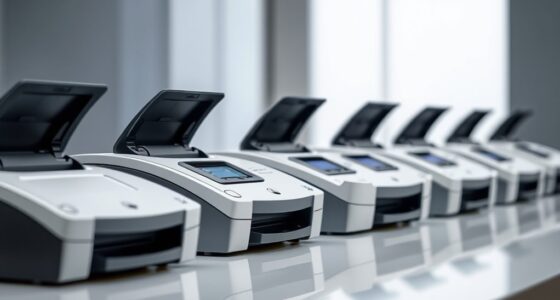
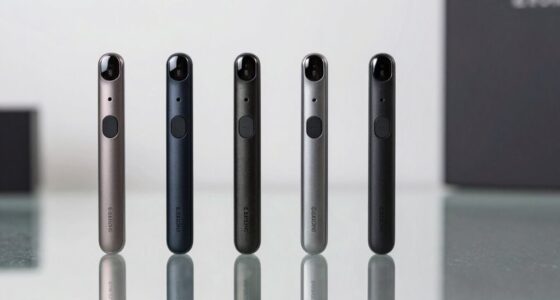
For most outdoor trips, I’d start with the ELECOM NESTOUT 10,000mAh: its IP67-rated rugged design and USB-C charging make it a strong all-around fit for keeping personal devices powered outdoors. The Jackery Explorer 300 is a better match when you need to run more than phones, while the MARBERO 88Wh power station offers a smaller step up from a pocket-size charger. The main tradeoff is portability versus capacity: compact banks are easier to carry, but power stations can support a wider range of gear. Solar charging and built-in lights add convenience, but they don’t replace checking capacity, output, and recharge needs. Read on for the full breakdown of all 15 outdoor battery packs and which type of trip each one suits.

Get privacy and security gear delivered free with Prime
- Fast, free delivery on millions of items
- Prime Video, Amazon Music and more included
- Member-only deals all year
Key Takeaways
- The ELECOM NESTOUT 10,000mAh is the strongest everyday outdoor pick here because it pairs a carry-friendly capacity with IP67 water and dust protection and USB-C PD charging.
- The NESTOUT lineup spans three distinct carry needs: 5,000mAh for a light backup, 10,000mAh for a practical balance, and 15,000mAh for more phone-charging capacity without moving to a power station.
- Power stations change what you can run: the 88Wh MARBERO and 97.6Wh ZeroKor favor compact emergency and small-device use, while the 292Wh Jackery, 519.48Wh station, and 2,048Wh DJI serve progressively larger loads.
- The solar banks offer high stated capacities and convenience features, but their panels are best treated as supplemental charging rather than a dependable primary recharge source.
- Capacity alone does not tell the whole story: USB-C output, AC outlets, battery chemistry, protection from the elements, and how the unit recharges all affect whether a pack fits a specific trip.
| ELECOM NESTOUT 10,000mAh Rugged Power Bank, 20W USB-C PD, IP67 Waterproof and Shockproof, Black |  | Best Overall for Rugged Day Trips | Capacity: 10,000mAh | USB-C output: 20W USB Power Delivery | Water and dust resistance: IP67 | VIEW ON AMAZON | See Our Full Breakdown |
| BLAVOR 20,000mAh Solar Power Bank with Wireless Charging |  | Best for Cable-Free, Multi-Device Camps | Battery capacity: 20,000mAh | USB-C output: 20W | USB ports: 3 | VIEW ON AMAZON | See Our Full Breakdown |
| MINRISE 40,000mAh Solar Power Bank with 20W PD Fast Charging |  | Best High-Capacity Phone Bank | Battery capacity: 40,000mAh | USB-C PD output: 20W | Solar panel: 1.8W | VIEW ON AMAZON | See Our Full Breakdown |
| 500W Portable Power Station, 519.48Wh Lithium Battery Solar Generator |  | Best for Small Appliances at Camp | Battery capacity: 519.48Wh (140,400mAh) | AC output: 2 × 120V pure sine wave outlets; 500W | USB-C output: Up to 60W | VIEW ON AMAZON | See Our Full Breakdown |
| NESTOUT Rugged Portable Charger, 5000mAh, Beige |  | Best Compact Rugged Pick | Battery capacity: 5,000mAh | Ports: 2: USB Type-A and USB Type-C | USB-C charging: 15W fast charging | VIEW ON AMAZON | See Our Full Breakdown |
| SinKeu 300W Portable Power Station, 256Wh LiFePO4 Battery |  | Best Lightweight Power Station for Camping | Battery capacity: 256Wh | Battery type: LiFePO4 | AC output: 300W, 120V pure sine wave | VIEW ON AMAZON | See Our Full Breakdown |
| NESTOUT Rugged 15,000mAh Outdoor Power Bank, Beige |  | Best Rugged Pocket Power Bank | Battery capacity: 15,000mAh | USB-C Power Delivery: Up to 32W | Ports: 3 | VIEW ON AMAZON | See Our Full Breakdown |
| DJI Power 2000 Portable Power Station, 2048Wh LFP Battery |  | Best Premium High-Capacity Station | Battery capacity: 2048Wh | Battery type: LFP | Output: 3000W | VIEW ON AMAZON | See Our Full Breakdown |
| ASWAYKE 20,000mAh Rugged Power Bank with USB-C PD and 420-Lumen Camping Light |  | Best Power Bank with an Integrated Camp Light | Battery capacity: 20,000mAh | Battery type: Lithium-ion | Ports: 2: USB Type-A and USB Type-C | VIEW ON AMAZON | See Our Full Breakdown |
| SOARAISE 48,000mAh Solar Power Bank with Wireless Charging and 4 Built-In Cables |  | Best for Charging a Tangle of Devices | Battery capacity: 48,000mAh | Battery type: Lithium-polymer | Ports: 3: 2 USB-A outputs and 1 USB-C input/output | VIEW ON AMAZON | See Our Full Breakdown |
| FEELLE 50,000mAh Solar Power Bank with Magnetic Wireless Charging and Hand Crank |  | Best for Emergency Features | Battery capacity: 50,000mAh | Battery cell type: Lithium polymer | Wireless charging: Magnetic, up to 15W | VIEW ON AMAZON | See Our Full Breakdown |
| SOXONO 40000mAh Solar Power Bank with 20W PD Fast Charging |  | Best Value for Multi-Device Camping | Battery capacity: 40,000mAh | Fast charging: 20W PD | Solar panel: 1.8W | VIEW ON AMAZON | See Our Full Breakdown |
| MARBERO Portable Power Station, 88Wh, 120W Surge |  | Best Compact Power Station for Small Loads | Capacity: 88Wh | Surge power: 120W | Ports: 8, including AC, USB, USB-C PD, and car DC | VIEW ON AMAZON | See Our Full Breakdown |
| Jackery Explorer 300 Portable Power Station, 292Wh |  | Best for Longer Camping Trips | Capacity: 292Wh | Battery chemistry: LiFePO4 | Peak output: 600W | VIEW ON AMAZON | See Our Full Breakdown |
| ZeroKor 120W Portable Power Station, 97.6Wh |  | Best Lightweight Power Station | Battery capacity: 97.6Wh / 26,400mAh | AC outlets: 2 | Maximum output: 120W | VIEW ON AMAZON | See Our Full Breakdown |
| outdoor battery pack | Battery capacity | Weight | Dimensions | Ports |
|---|---|---|---|---|
| ELECOM NESTOUT 10,000mAh Rugge | — | — | — | — |
| BLAVOR 20,000mAh Solar Power B | 20,000mAh | — | — | — |
| MINRISE 40,000mAh Solar Power | 40,000mAh | 1.1 lb | 6.67 × 3.35 × 1.22 in | — |
| 500W Portable Power Station | 519.48Wh (140,400mAh) | 14.1 lbs | — | — |
| NESTOUT Rugged Portable Charge | 5,000mAh | 4.9 oz | 5.31 × 1.42 × 1.42 inches | 2: USB Type-A and USB Type-C |
| SinKeu 300W Portable Power Sta | 256Wh | 6.5 lb | 7.48 x 5.51 x 9.05 in | 8 |
| NESTOUT Rugged 15,000mAh Outdo | 15,000mAh | 364g | 5 x 2.4 x 3 in | 3 |
| DJI Power 2000 Portable Power | 2048Wh | — | — | 15 |
| ASWAYKE 20,000mAh Rugged Power | 20,000mAh | 1 lb | — | 2: USB Type-A and USB Type-C |
| SOARAISE 48,000mAh Solar Power | 48,000mAh | — | 6.38 x 3.43 x 1.57 in | 3: 2 USB-A outputs and 1 USB-C input/output |
| FEELLE 50,000mAh Solar Power B | 50,000mAh | — | — | 3 |
| SOXONO 40000mAh Solar Power Ba | 40,000mAh | 1.2 lbs | 6.77 × 3.46 × 1.42 in | — |
| MARBERO Portable Power Station | — | 3.2 lbs | 6.5 × 4.6 × 3.1 in | 8, including AC, USB, USB-C PD, and car DC |
| Jackery Explorer 300 Portable | — | 7.1–7.5 lbs, as listed | — | — |
| ZeroKor 120W Portable Power St | 97.6Wh / 26,400mAh | 2.2 lbs | 5.7 × 4.4 × 4.1 in | — |
More Details on Our Top Picks
ELECOM NESTOUT 10,000mAh Rugged Power Bank, 20W USB-C PD, IP67 Waterproof and Shockproof, Black
The ELECOM NESTOUT 10,000mAh is the strongest fit here for hikers and campers who want a weather-ready phone charger without carrying a power station. Its IP67 protection and shock-cushioned, drop-tested body offer a more clearly specified durability story than the BLAVOR 20,000mAh, whose protection is described more generally. At 20W USB-C PD, it can also recharge compatible devices faster than the smaller NESTOUT 5,000mAh, while doubling that model’s capacity. The tradeoff is still a phone-bank scale: 10,000mAh is not the choice for extended group trips or running appliances. The tripod mount adds flexibility for compatible accessories, but those accessories are sold separately, and the bank itself is best recharged with an 18W-or-higher adapter.
Pros:- IP67-rated waterproof and dustproof construction
- 20W USB-C Power Delivery supports fast charging for compatible devices
- Silicone cushioning and MIL-STD 810G 516.7 drop-test qualification
- Tripod mount supports compatible accessories
Cons:- 10,000mAh capacity may not cover repeated charging on longer trips
- Tripod and lights are sold separately
- An 18W-or-higher adapter is recommended to recharge the bank
Best for: Day hikers and weekend campers who prioritize specified water and drop protection alongside fast USB-C charging for phones.
Not ideal for: Multi-day groups or travelers who need to charge many devices repeatedly; its 10,000mAh capacity is smaller than the BLAVOR and MINRISE banks.
- Capacity:10,000mAh
- USB-C output:20W USB Power Delivery
- Water and dust resistance:IP67
- Shock testing:MIL-STD 810G 516.7 Drop Test
- Tripod mount:1/4-20 in
- Included:Power bank, charging cable, product manual
- Warranty:1 year
- Color:Black
Our verdict“Choose this for a well-protected, fast-charging day-trip bank; pick the MINRISE for much greater capacity or the 500W station for AC-powered gear.”
BLAVOR 20,000mAh Solar Power Bank with Wireless Charging
The BLAVOR 20,000mAh suits campsites where several people bring different devices and nobody wants to pack a tangle of leads. Four built-in cables, three USB ports, and Qi wireless charging give it more connection options than the simpler ELECOM NESTOUT 10,000mAh. A flashlight, camping light, compass, and thermometer add useful campsite functions, though they also make this a busier device than a straightforward rugged bank. Its 20W USB-C output keeps phone charging practical, while the larger capacity supports more charging between outlets. The solar feature needs cautious expectations: the supplied details do not state its charging rate or performance, so I would treat it as an emergency supplement rather than a dependable way to refill the battery. Its protection is described as water-, shock-, and dust-resistant, without a specific rating here.
Pros:- 20,000mAh capacity with 20W USB-C output
- Four built-in cables plus USB ports and Qi wireless charging
- Includes a flashlight, camping light, compass, and thermometer
- Protection features include overcharge, over-discharge, over-current, and short-circuit safeguards
Cons:- Solar charging performance is not specified, making it hard to plan around
- Multiple built-in features may be unnecessary for buyers seeking a simple power bank
- No specific IP rating is provided in the product details
Best for: Campers or travel groups carrying a mix of USB-C, iOS, USB-A, and Qi-compatible devices who value built-in cables and campsite lights.
Not ideal for: Buyers who want a precisely rated waterproof bank or rely on solar to recharge their pack on a set schedule; the listed information gives no solar performance figure.
- Battery capacity:20,000mAh
- USB-C output:20W
- USB ports:3
- Built-in cables:4: 2 USB-C, 1 iOS, 1 USB-A
- Wireless charging:Qi; compatible with phones and Apple Watch
- Power sources:Corded electric and solar
- Protection:Overcharge, over-discharge, over-current, and short-circuit protection
- Durability:Described as waterproof, shockproof, and dustproof
Our verdict“Pick the BLAVOR for shared camps and mixed-device charging; choose the ELECOM NESTOUT 10,000mAh if a stated IP67 rating matters more than extra cables and accessories.”
MINRISE 40,000mAh Solar Power Bank with 20W PD Fast Charging
For trips where a phone bank needs to last beyond a single day, the MINRISE 40,000mAh offers four times the listed capacity of the ELECOM NESTOUT 10,000mAh and twice that of the BLAVOR. Built-in cables and up to 10 ports make it easier to share power across a group, while 20W USB-C PD handles compatible phones and tablets. Two LED flashlights add practical backup lighting. This is still a large battery pack, not a substitute for the 500W Portable Power Station: it does not list AC outlets for appliances. Solar charging is only described as emergency backup, and the 1.1 lb weight is a meaningful carry cost compared with compact phone banks. I would plan routine recharging around an adapter, not the small solar panel.
Pros:- 40,000mAh capacity for extended phone and tablet charging
- 20W USB-C PD output
- Built-in cables and up to 10 ports offer flexible device connections
- Two LED flashlights with listed illumination distance up to 165 ft
Cons:- Solar charging is slow and intended for emergency backup
- At 1.1 lb, it is heavier than compact banks such as the ELECOM NESTOUT 5,000mAh
- Does not provide the listed AC outlets found on the 500W Portable Power Station
Best for: Backpackers, road-trippers, and small groups who need a high-capacity source for phones and tablets and can accept a heavier pack.
Not ideal for: Ultralight hikers or anyone planning to power AC appliances; the unit weighs 1.1 lb and provides USB/DC-style charging rather than listed AC outlets.
- Battery capacity:40,000mAh
- USB-C PD output:20W
- Solar panel:1.8W
- Built-in cables:USB-C, iOS, and Micro USB output; USB-A input
- Number of ports:10
- Weight:1.1 lb
- Dimensions:6.67 × 3.35 × 1.22 in
- Flashlights:2 LED lights; up to 165 ft illumination distance and up to 25 hours duration
- Protection:Overcharge and short-circuit protection; described as dustproof, waterproof, and drop-proof
Our verdict“Choose the MINRISE when long-lasting USB charging matters more than low carry weight or appliance power.”
500W Portable Power Station, 519.48Wh Lithium Battery Solar Generator
This 519.48Wh power station belongs in a different class from the phone-focused ELECOM and BLAVOR banks: its two 120V pure sine wave outlets can run compatible AC devices, and its 500W rating suits some small appliances. Ten total output ports, including USB-C up to 60W, let it serve several devices at once. That makes it the better camp or car-camping choice when laptops and other gear need more than USB charging. The tradeoff is portability: at 14.1 lb, it is far heavier than a pack you would carry on a hike, and the 500W ceiling rules out more demanding appliances. Solar recharging is supported with a compatible panel, but the panel is not included; wall charging is the straightforward option.
Pros:- 519.48Wh capacity and two 120V pure sine wave AC outlets
- Ten output ports support several connected devices
- USB-C output reaches up to 60W
- Can recharge from a wall outlet, car charger, or compatible solar panel
Cons:- 14.1 lb weight makes it unsuitable for carrying on hikes
- 500W output limits the appliances it can run
- Solar panel is not included
Best for: Car campers and travelers who need AC power for compatible small appliances, laptops, and several devices at a base camp.
Not ideal for: Backpackers or buyers seeking a pocketable phone charger; its 14.1 lb weight and appliance-focused outputs are excessive for that job.
- Battery capacity:519.48Wh (140,400mAh)
- AC output:2 × 120V pure sine wave outlets; 500W
- USB-C output:Up to 60W
- USB-A outputs:3 × QC3.0, up to 18W
- Total output ports:10
- Weight:14.1 lbs
- Recharging methods:Wall outlet, car charger, or compatible 100W/200W solar panel
- Wall recharge time:6–7 hours
- Safety features:Battery management system with temperature, overvoltage, overcurrent, and short-circuit protection
Our verdict“Choose this station for car-camping power and compatible small appliances; stick with the ELECOM NESTOUT or BLAVOR for lighter phone-charging duty.”
NESTOUT Rugged Portable Charger, 5000mAh, Beige
The NESTOUT 5,000mAh is the lightest, simplest choice here for short outings where keeping a phone alive matters more than carrying backup capacity. At 4.9 oz, it is easier to tuck into a small hiking kit than the ELECOM NESTOUT 10,000mAh, and its IP67-rated body gives it a defined level of water and dust protection. The silicone cushion and drop-test qualification also make it a more rugged option than a basic pocket charger. The compromise is capacity: 5,000mAh is limited for charging multiple devices or covering repeated phone top-ups, especially beside the BLAVOR or MINRISE. Its 15W USB-C charging is useful, though the larger ELECOM model offers 20W output. The tripod mount is a bonus only if compatible accessories are part of your setup.
Pros:- Compact 4.9 oz design
- IP67-rated dust and water resistance, including stated submersion up to 1 meter for up to 30 minutes
- Silicone shock cushion and MIL-STD 810G 516.7 drop-test qualification
- USB-A and USB-C ports with smart power allocation
Cons:- 5,000mAh capacity limits repeat charging and multi-device use
- 15W USB-C output is lower than the 20W ELECOM NESTOUT 10,000mAh
- An 18W-or-higher adapter is recommended to recharge the bank
Best for: Day hikers and cyclists who want a light, water-resistant backup for one phone and value a compact carry over extra capacity.
Not ideal for: Campers sharing power across several devices or travelers needing repeated full charges; its 5,000mAh capacity is the smallest in this group.
- Battery capacity:5,000mAh
- Ports:2: USB Type-A and USB Type-C
- USB-C charging:15W fast charging
- Water and dust resistance:IP67; up to 1 meter for up to 30 minutes
- Shock protection:Silicone cushion; tested to MIL-STD 810G 516.7 drop test
- Dimensions:5.31 × 1.42 × 1.42 inches
- Weight:4.9 oz
- Tripod mount:1/4-20 inch
- Warranty:1 year
Our verdict“Pick this compact NESTOUT for rugged, occasional phone backup; choose its 10,000mAh sibling for longer outings or the BLAVOR for shared charging.”
SinKeu 300W Portable Power Station, 256Wh LiFePO4 Battery
At 6.5 pounds, the SinKeu is the easiest option here to carry when you want AC power without bringing a large station. Its 256Wh LiFePO4 battery, 300W pure sine wave output, and eight ports suit phones, lights, cameras, and other modest loads; the built-in camping light also saves space in a kit. Unlike the DJI Power 2000, it is not meant to run high-draw appliances or support an extended camp setup, but it is far more portable. Wall, car, and solar recharging give it useful flexibility, and the listed recharge times are three hours by AC or five hours with a compatible 60–100W panel. That panel is not included, and the 300W ceiling rules out many larger appliances.
Pros:- Lightweight 6.5-pound design is easier to pack than the larger DJI Power 2000.
- LiFePO4 battery with a built-in battery management system.
- Eight ports plus an integrated camping light support a compact camp setup.
- Can recharge from an AC outlet, car outlet, or compatible solar panel.
Cons:- 300W output cannot handle many high-power appliances.
- Solar panel is not included, adding a separate item to buy for solar recharging.
Best for: Campers and road trippers who want a lightweight station for small electronics, lighting, and occasional low-wattage AC devices.
Not ideal for: RV users or outdoor workers who need to power high-draw appliances or run several devices for long periods; its 300W output and 256Wh capacity are limited for those jobs.
- Battery capacity:256Wh
- Battery type:LiFePO4
- AC output:300W, 120V pure sine wave
- Ports:8
- Weight:6.5 lb
- Dimensions:7.48 x 5.51 x 9.05 in
- Recharge methods:AC wall outlet, solar panel, or car outlet
- Recharge times:AC: 3 hours; solar: 5 hours with a 60–100W panel; car: 6 hours at 12V
Our verdict“Choose the SinKeu for portable, small-device camp power, but pick a larger station if you need to run appliances.”
NESTOUT Rugged 15,000mAh Outdoor Power Bank, Beige
The NESTOUT is a strong fit for outdoor trips where a phone-sized power bank needs more protection than a typical everyday model. Its IP67-rated shell resists dust and water, while the silicone cushioning and stated drop testing add reassurance around rough campsites. With 15,000mAh capacity and USB-C Power Delivery up to 32W, it is better suited to recharging phones and tablets than the SinKeu, which is a heavier station designed to provide AC power. Three ports add flexibility, and a 1/4-20 tripod mount works with separately sold NESTOUT accessories. The tradeoff is that this remains a USB power bank, not a source for AC appliances. The tripod and lights are also separate, and a suitable USB PD wall adapter may need to be purchased separately.
Pros:- IP67 rating protects against dust and short submersion in water.
- Cushioned body has stated MIL-STD 810G 516.7 drop testing.
- USB-C Power Delivery and three ports support several small-device charging needs.
- Built-in tripod mount works with compatible NESTOUT accessories.
Cons:- No AC output for appliances or other wall-plug devices.
- Tripod and compatible lighting accessories are sold separately.
- A suitable USB Power Delivery wall adapter may not be included.
Best for: Hikers, paddlers, and campers who need a water- and dust-resistant USB power bank for phones, tablets, and compatible accessories.
Not ideal for: Buyers who need AC outlets, a built-in camping light, or an all-in-one tripod setup; this pack supplies USB power and its tripod and lights are sold separately.
- Battery capacity:15,000mAh
- USB-C Power Delivery:Up to 32W
- Ports:3
- Water and dust resistance:IP67; submersible up to 30 minutes at 1 meter
- Drop resistance:Tested to MIL-STD 810G 516.7
- Weight:364g
- Dimensions:5 x 2.4 x 3 in
- Charge time:3.58 hours
Our verdict“Pick the NESTOUT for rugged USB charging in wet or dusty outdoor settings, not for powering AC gear.”
DJI Power 2000 Portable Power Station, 2048Wh LFP Battery
The DJI Power 2000 is the clear choice in this group for buyers who need a station to support an RV, outdoor worksite, or home backup plan. Its 2048Wh LFP battery and 3000W output are in a different class from the SinKeu’s 256Wh and 300W, making a wider range of appliances practical. Fast AC charging reaches 80% in 55 minutes, while 15 ports, app control, and a 10ms UPS switch time add flexibility beyond basic camping use. It can also expand to 22.5kWh with separate batteries. That scale comes with a portability cost: this is a substantial power station, not a pack to carry on a hike. Solar and car charging also require separately purchased compatible adapters, and expansion batteries are extra components.
Pros:- 2048Wh capacity and 3000W output support substantially larger loads than the SinKeu.
- Reaches 80% charge in 55 minutes.
- 15 ports, app control, and a 10ms UPS switch time serve varied power needs.
- Can expand to 22.5kWh with separately sold batteries.
Cons:- Solar and car charging require separately purchased compatible adapters.
- Expansion batteries are sold separately.
- Its high-capacity station format is less practical for trips where low weight and easy carrying matter.
Best for: RV owners, outdoor crews, and households seeking high-output portable power with fast recharging, backup switching, and optional capacity expansion.
Not ideal for: Backpackers or casual campers who only need phone and light charging; the station’s large capacity and expansion system are more than they need to carry or manage.
- Battery capacity:2048Wh
- Battery type:LFP
- Output:3000W
- AC voltage:110V
- Ports:15
- AC recharge time:80% in 55 minutes
- Expansion capacity:Up to 22.5kWh with separately sold expansion batteries
- UPS switch time:10 ms
- Noise level:As low as 30 dB
Our verdict“Choose the DJI Power 2000 when high output, fast recharge, and expandable backup capacity matter more than packability.”
ASWAYKE 20,000mAh Rugged Power Bank with USB-C PD and 420-Lumen Camping Light
ASWAYKE pairs a 20,000mAh battery with a genuinely useful camping feature: a built-in 420-lumen light with five modes. That makes it a better match than the NESTOUT for buyers who want illumination included rather than relying on separately sold lighting accessories, though its two USB ports offer less connection flexibility than the NESTOUT’s three. IP68 protection, stated drop resistance up to 2m, and a digital display showing battery percentage and current suit campsite use where a quick status check helps. The USB-C PD charging handles compatible devices, but this is still a USB-only pack, not a replacement for the SinKeu’s AC output. At one pound, it is heavier than many compact power banks, and its six-month warranty is shorter than the NESTOUT’s one-year coverage.
Pros:- Built-in 420-lumen light offers five modes for camp illumination.
- IP68 rating and stated 2m drop resistance suit rough outdoor use.
- Digital display shows battery percentage and input/output current.
- USB-C supports PD fast charging and bidirectional charging.
Cons:- One-pound weight is substantial for a power bank carried on foot.
- Only two USB ports are listed.
- Six-month warranty is shorter than the NESTOUT’s one-year warranty.
Best for: Car campers and day-trippers who want a rugged USB power bank with a bright built-in light and clear battery-status information.
Not ideal for: Hikers minimizing pack weight or users who need AC outlets, multiple USB connections, or longer stated warranty coverage.
- Battery capacity:20,000mAh
- Battery type:Lithium-ion
- Ports:2: USB Type-A and USB Type-C
- USB-C charging:PD fast charging; bidirectional USB-C
- Built-in light:420 lumens; 5 modes
- Water and dust resistance:IP68
- Drop resistance:Up to 2m
- Weight:1 lb
- Warranty:6 months
Our verdict“Choose ASWAYKE if a bright integrated camp light and rugged USB charging are worth the extra weight.”
SOARAISE 48,000mAh Solar Power Bank with Wireless Charging and 4 Built-In Cables
The SOARAISE focuses on convenience for groups and mixed-device kits: its four built-in cables, three output ports, and wireless charging reduce the adapters and loose leads you need to pack. Its listed 48,000mAh capacity is the largest among these three USB power banks, while four solar panels offer a way to replenish power outdoors when sunlight is available. That solar feature is best treated as a supplement rather than a dependable primary charging plan, since the product data gives no solar recharge time. Compared with the NESTOUT Rugged 15,000mAh, the SOARAISE emphasizes capacity and connection options over a stated IP67 rating and drop-test standard. Its 5V/3A maximum output is modest, and the listing’s 50g battery weight appears inconsistent with the unit’s overall size, so it does not clarify carry weight.
Pros:- Four built-in cables reduce the need to pack separate charging leads.
- Wireless charging adds another way to power compatible devices.
- Four solar panels provide an outdoor recharging option.
- LED camping flashlights add practical camp utility.
Cons:- Maximum listed output is 5V/3A, which limits charging speed for devices that support higher power.
- Solar charging speed and effectiveness depend on sunlight, and no recharge time is provided.
- The listed 50g battery weight does not clarify the complete unit’s carry weight.
Best for: Car campers and families carrying several cable types who value built-in charging leads, wireless charging, and a large stated battery capacity.
Not ideal for: Backpackers who need verified low carry weight, users who need fast high-wattage charging, or anyone relying on solar panels as a predictable primary recharge source.
- Battery capacity:48,000mAh
- Battery type:Lithium-polymer
- Ports:3: 2 USB-A outputs and 1 USB-C input/output
- Built-in cables:USB-C, Phone, USB-A, Micro
- Maximum output:5V/3A
- Solar panels:4
- Wireless charging:Yes
- Dimensions:6.38 x 3.43 x 1.57 in
- Additional features:LED camping flashlights, auto shut-off, waterproof, shockproof, and dustproof
Our verdict“Pick the SOARAISE for convenient multi-device charging at camp, but do not count on its solar panels for predictable recharging.”
FEELLE 50,000mAh Solar Power Bank with Magnetic Wireless Charging and Hand Crank
I’d choose the FEELLE for trips where backup options matter as much as charging speed. Its 50,000mAh capacity, four built-in cables, three ports, and magnetic wireless charging can serve a group without requiring everyone to bring a separate cable. Compared with the SOXONO 40000mAh, FEELLE adds a hand-crank generator and magnetic charging, giving it more emergency-oriented features; the SOXONO instead specifies 20W PD fast charging and an IP67 rating. FEELLE’s four solar panels may help replenish it when left in strong sun, but solar input is weather-dependent and should not be treated as a dependable primary recharge method. The hand crank is a backup, not a substitute for regular charging, and thick phone cases can weaken the magnetic connection. Its bulky, feature-packed design suits preparedness better than lightweight hiking.
Pros:- 50,000mAh capacity and support for up to six devices at once suit group use.
- Four built-in cable types reduce the need to pack separate charging leads.
- Magnetic wireless charging adds a cable-free option for compatible phones.
- Hand-crank backup, compass, flashlight, and ruggedized body add outdoor utility.
Cons:- Solar charging depends heavily on sunlight and is not a reliable primary recharge method.
- Thick phone cases can reduce magnetic charging strength and efficiency.
- Its high-capacity, feature-heavy design is less suited to weight-conscious trips.
Best for: Group campers and emergency-kit builders who want built-in cables, wireless charging, and multiple backup features in one pack.
Not ideal for: Ultralight hikers or buyers who need predictable fast recharging; its large capacity adds bulk, and its solar and hand-crank charging are best treated as backup options.
- Battery capacity:50,000mAh
- Battery cell type:Lithium polymer
- Wireless charging:Magnetic, up to 15W
- Ports:3
- Built-in cables:USB-C, Phone Cable, Micro-USB, USB-A
- Maximum simultaneous devices:6
- Charging backup:Solar powered; hand-crank backup
- Outdoor features:Compass, three-mode LED flashlight; shockproof, dustproof, and water-resistant design
Our verdict“Choose FEELLE if you want a high-capacity group pack with emergency extras, but skip it if low weight or dependable solar recharging is your priority.”
SOXONO 40000mAh Solar Power Bank with 20W PD Fast Charging
The SOXONO 40000mAh makes sense for campers who want substantial phone-and-device capacity without stepping up to a power station. Its built-in cables and ports support up to five devices, while 20W PD charging gives compatible phones a faster wired option than the FEELLE’s listed 3A USB-C output. The dual flashlights, including SOS and strobe modes, and IP67-rated body also make it better suited to rough weather than a basic battery bank. The tradeoff is weight: at 1.2 pounds, it is a noticeable addition to a daypack. Its 1.8W solar panel is intended for emergency backup, not quick replenishment, so I’d plan to charge it from a wall source before leaving. Compared with the FEELLE, it offers a clearer fast-charge specification, but lacks the hand crank and magnetic wireless charging.
Pros:- 40,000mAh capacity supports extended use and charging several devices.
- 20W PD provides a specified fast-charging option for compatible devices.
- Built-in cables and ports support up to five devices at once.
- IP67-rated body and dual four-mode flashlights suit outdoor and emergency use.
Cons:- At 1.2 pounds, it is heavy for a compact power bank carried on foot.
- The 1.8W solar panel is slow and intended for emergency backup.
- Its capacity and flashlight features make it bulkier than a basic phone-only bank.
Best for: Car campers and group day-trippers who need a large-capacity bank, several charging connections, and a weather-resistant flashlight.
Not ideal for: Hikers counting every ounce or buyers expecting solar to recharge the bank quickly during a short outing.
- Battery capacity:40,000mAh
- Fast charging:20W PD
- Solar panel:1.8W
- Built-in cables:USB-C, iOS, Micro USB, USB-A input
- Simultaneous charging:Up to 5 devices
- Flashlight modes:Steady, SOS, strobe, low brightness
- Weight:1.2 lbs
- Dimensions:6.77 × 3.46 × 1.42 in
Our verdict“Pick SOXONO for multi-device camping and specified 20W charging, but not for ultralight travel or fast solar recharging.”
MARBERO Portable Power Station, 88Wh, 120W Surge
The MARBERO 88Wh stands apart from the FEELLE and SOXONO, which are mainly high-capacity USB charging banks: MARBERO adds an AC outlet alongside USB, USB-C PD, and car DC outputs. That flexibility can help at a campsite when you need to run or recharge a small compatible device, while its eight output ports let a group connect several items. Its 80W rated output is the key limit; the 120W surge figure does not make it suitable for appliances that draw more than its continuous rating. At 3.2 pounds, it is still a compact power station, though heavier than a pocketable power bank. The built-in light has an SOS mode, and the listed protections add reassurance, but solar use requires a separately purchased compatible panel. I’d pick it over the ZeroKor when a broader mix of outputs matters more than lower carry weight.
Pros:- AC, USB, USB-C PD, and car DC outputs cover more device types than a standard USB power bank.
- Eight output ports allow several compatible devices to connect at once.
- Compact 3.2-pound body includes a carry handle and built-in SOS light.
- Battery management and short-circuit and overload protection are specified.
Cons:- 80W rated output limits it to small loads despite its 120W surge rating.
- Compatible MARBERO solar panels are sold separately.
- At 88Wh, it has less stored energy than the Jackery Explorer 300.
Best for: Car campers who need AC, USB, and car DC connections for small electronics and devices within an 80W continuous load.
Not ideal for: Backpackers prioritizing the lightest possible setup or anyone planning to power appliances above the 80W output rating.
- Capacity:88Wh
- Surge power:120W
- Ports:8, including AC, USB, USB-C PD, and car DC
- Dimensions:6.5 × 4.6 × 3.1 in
- Weight:3.2 lbs
- Charging time:0–80% in 2 hours with included adapter
- Solar compatibility:MARBERO 30W or 60W solar panels; panels not included
- Safety features:Battery management system, short-circuit and overload protection, automatic shutdown
Our verdict“Choose MARBERO for a small, multi-output power station for modest campsite loads, not for high-draw appliances or extended power needs.”
Jackery Explorer 300 Portable Power Station, 292Wh
The Jackery Explorer 300 is the stronger fit when a weekend campsite needs more stored power than compact 88–97.6Wh units such as the MARBERO 88Wh or ZeroKor can provide. Its 292Wh capacity, two AC outlets, and 300W rated output open up more options for small appliances and multiple devices, while the 100W USB-C PD port can serve compatible electronics directly. The LiFePO4 chemistry and stated rating of over 4,000 charge cycles to 70% capacity suit buyers who expect to recharge it repeatedly. That added capacity comes with a 7.1–7.5-pound carry weight, so it is better for car camping than long hikes. Solar charging is supported, but the panel is separate; even with a compatible 100W panel, the supplied estimate is for an 80% charge, not a quick top-up.
Pros:- 292Wh capacity provides substantially more stored energy than the MARBERO 88Wh and ZeroKor 97.6Wh.
- Two AC outlets and a 300W rated output support a wider range of small devices.
- 100W USB-C PD and multiple other ports allow direct charging of varied electronics.
- LiFePO4 battery is rated for over 4,000 charge cycles to 70% capacity.
Cons:- At roughly 7.1–7.5 pounds, it is more appropriate for car camping than backpacking.
- Solar panel is not included.
- The 300W rated output rules out appliances with higher power demands.
Best for: Car campers and frequent outdoor users who need several hundred watt-hours, AC outlets, and USB-C charging for a multi-day setup.
Not ideal for: Backpackers seeking a lightweight phone charger or buyers who need to run loads above 300W.
- Capacity:292Wh
- Battery chemistry:LiFePO4
- Peak output:600W
- AC outlets:2
- Other ports:1 USB-C PD (100W), 2 USB-A, 1 car port (120W)
- Weight:7.1–7.5 lbs, as listed
- Solar charging:Compatible with solar; approximately 80% in 2.8 hours with a 100W panel; panel not included
Our verdict“Choose the Jackery for longer car-camping trips and broader device support, but skip it if low weight or high-wattage appliance power is essential.”
ZeroKor 120W Portable Power Station, 97.6Wh
At 2.2 pounds, the ZeroKor is easier to carry than the MARBERO 88Wh power station, which weighs 3.2 pounds, while offering a similar small-load role. Its 97.6Wh lithium-ion battery feeds two AC outlets as well as USB-A, USB-C, and DC connections, making it a flexible option for camping electronics or backup for devices that stay within its 120W limit. That limit matters: two AC outlets do not mean it can handle two demanding appliances at once. The Jackery Explorer 300 offers much greater capacity and a 300W rated output, but it is far heavier and better suited to car camping. ZeroKor’s multiple recharge methods add flexibility, though its solar panel is not included, and the listed five-hour runtime should not be treated as universal across different devices and loads.
Pros:- 2.2-pound weight makes it easier to carry than the MARBERO 88Wh.
- AC, DC, USB-A, and USB-C outputs support a broad mix of small devices.
- Wall, car USB, and solar charging options provide several ways to recharge.
- Built-in flashlight includes reading and SOS modes.
Cons:- 120W output limits the appliances and combined loads it can handle.
- Solar panel is not included.
- Its 97.6Wh capacity is far below the Jackery Explorer 300’s 292Wh.
Best for: Campers who want a light, handle-equipped power station for phones, lights, and other small devices under 120W.
Not ideal for: Buyers powering higher-draw appliances or needing multi-day capacity; its 97.6Wh battery and 120W output set clear limits.
- Battery capacity:97.6Wh / 26,400mAh
- AC outlets:2
- Maximum output:120W
- Other outputs:DC 12–16.8V, 6A max; USB-A; QC USB-A; USB-C
- Total power outlets:6
- Charging methods:Wall adapter, car USB port, or solar panel
- Weight:2.2 lbs
- Dimensions:5.7 × 4.4 × 4.1 in
- Safety features:Short-circuit, over-current, over-voltage, overload, and overheating protection
Our verdict“Pick ZeroKor for a lighter, versatile power station for small camping loads, but choose the Jackery if you need more capacity or higher output.”

How We Picked
I compared these outdoor battery packs by the jobs they can realistically serve, rather than treating a phone power bank and a portable power station as interchangeable. The main factors were stated capacity, charging outputs, portability, outdoor protection or rugged design, charging options, and features that affect daily use, such as built-in lights, wireless charging, and integrated cables. I also looked at how clearly each product fits a buyer need, from topping up a phone on a day hike to powering several devices at a campsite.
The order favors useful performance for the intended role, not the largest capacity number. Rugged USB banks rank highly for ordinary outdoor carry because they are compact and purpose-built for personal electronics; larger stations rank higher for buyers who need outlets and more energy, but their size and narrower use case keep them from being the default choice. Solar and hand-crank features do not automatically earn a higher place: I treat them as conveniences, not substitutes for a dependable recharge plan. Product details supplied for this comparison do not establish run time for every device or real-world solar yield, so buyers should check those against their own equipment.
Factors to Consider When Choosing Outdoor Battery Packs
Before choosing, I’d match the pack to the devices and trip length rather than starting with the biggest capacity figure. These factors help separate a pocketable phone backup from a unit meant to support campsite equipment or short-term home backup.
Match Capacity to Devices and Trip Length
Capacity labels help compare products, but they don’t directly tell you how many charges or hours of use you’ll get. Device battery size, conversion losses, charging speed, and whether equipment runs while charging all affect usable energy. For phones and small electronics, a compact bank may be easier to carry than a large reserve you rarely use. For laptops, lights, or several devices across multiple days, look beyond milliamp-hours and compare watt-hours when available. A common mistake is buying extra capacity without checking whether the pack can deliver the required output. I’d list each device, its power draw, and how often you expect to recharge it before choosing a size.
Check Output Types and Power Limits
USB-A, USB-C PD, wireless charging, and AC outlets serve different needs, and having more ports does not mean every port can deliver high power at once. Check the maximum output against your device’s charging requirements, especially for tablets, laptops, and equipment with motors or heating elements. A phone-focused bank can be a good fit for personal electronics but may not support an appliance that needs an AC outlet. Power stations add that flexibility, though their size makes less sense if all you charge is a phone. Buyers can also confuse a surge rating with continuous output; surge capacity usually applies briefly during startup. Match the continuous output to the device’s actual draw and leave headroom where practical.
Treat Solar as a Recharging Aid, Not a Guarantee
Small panels built into power banks can help top up a battery when sunlight is available, but panel size, weather, shade, and the angle of the sun affect how much energy they collect. A solar label does not promise that a bank will refill quickly while you camp. For multi-day trips, plan around a wall or vehicle recharge, a larger separate solar panel, or enough stored capacity for your expected use. Integrated panels are most useful when they can collect light during downtime without adding much to your pack. Hand-crank features are better viewed as an emergency reserve than a routine charging method. I would choose a solar model for its battery, ports, and size first, then treat its solar feature as a bonus.
Set Your Portability and Durability Priorities
A rugged phone bank and a power station solve different transport problems: one is carried with personal gear, while the other usually travels by car or sits at a campsite. Water and dust protection can matter more on exposed trails than a collection of extra ports, but rugged claims should be checked against the exact protection rating. A tough exterior also does not make a product suitable for immersion, impact, or every weather condition. Larger capacity tends to mean more weight and bulk, so consider where the unit will sit during use and how far you must carry it. If your trip involves hiking, a small protected bank may be more useful than a high-capacity station left behind at the vehicle. Choose durability for the conditions you expect, not as a substitute for safe storage.
Consider Battery Chemistry and Long-Term Use
Portable power stations can use different battery chemistries, which may affect lifespan, weight, and how the product suits frequent use. A LiFePO4 unit, such as the SinKeu or DJI listed here, may appeal to buyers who expect regular cycling, but chemistry is only one part of the decision. Compare capacity, output, charging options, size, and the manufacturer’s stated cycle-life and safety information before paying more for a particular battery type. For occasional trips, a simpler unit may cover the need without the extra capacity or features of a larger station. For frequent camping or backup use, check how the pack handles storage and what care the maker recommends. Avoid leaving any battery unused or stored in extreme temperatures without consulting its instructions.
Plan How You’ll Recharge Before You Need Power
A battery pack is only as useful as your plan for filling it again. Check whether it recharges through USB-C, a wall adapter, a vehicle outlet, solar input, or another method, and whether the needed cable or adapter is included. Larger stations can take longer to recharge than small banks, so a high capacity may be inconvenient between short trips if charging time is limited. For vehicle-based camping, car charging can add flexibility; for remote travel, stored capacity and a compatible external solar setup may matter more. Don’t assume an advertised solar feature accepts every panel or charges at the same rate in all conditions. I’d confirm input limits and recharge times in the product documentation before building a trip plan around them.
Frequently Asked Questions
Should I choose a rugged power bank or a portable power station for camping?
I’d choose a rugged power bank if your main needs are phones, earbuds, and other USB devices that you’ll carry on the trail. A power station makes more sense at a vehicle campsite or base camp when you need more capacity, several output types, or AC power. The Jackery Explorer 300 is a middle ground for buyers who want more than a pocket bank without moving to the largest units in this roundup. Consider the distance you’ll carry the battery as well as the devices you plan to run. If you mainly need to recharge a phone, a station’s extra size and outlets may go unused.
Can a solar power bank keep my devices charged on a multi-day trip?
It may contribute power in good sunlight, but I would not rely on a small built-in panel as the only way to recharge for several days. Shade, cloud cover, panel orientation, and limited surface area can all slow collection. Treat the panel as supplemental and start with enough stored capacity for your planned use. For a trip that depends on solar, check whether the unit supports a larger external panel and what input limits apply. A charging plan that includes a vehicle, wall outlet before departure, or compatible larger panel is more dependable than assuming sunlight will refill the bank.
What capacity do I need to run a laptop or small appliance?
Start with the device’s power draw and the number of hours you expect to use it, then compare that energy need with the battery’s watt-hours and output limits. A high-capacity rating does not help if the pack lacks the right outlet or cannot supply enough continuous power. Some laptops charge through USB-C, while others may need an AC adapter; small appliances can have startup demands above their normal running draw. Check both continuous and surge output where applicable, and allow for energy lost during conversion. If you can’t find a clear match between the device requirements and the battery specifications, choose a pack with documented output headroom or ask the manufacturer.
Is a larger outdoor battery pack always the better choice?
No. Extra capacity adds weight, bulk, and often longer recharge times, so it can be a poor trade for a short hike or a trip where you only need occasional phone charging. A compact model may be easier to carry and faster to recharge between outings. Larger units become useful when you need to support multiple devices, longer stays, or equipment that draws more power. Compare usable output and recharge options alongside capacity rather than buying based on the biggest number. The right size is the one that covers your actual load without making transport needlessly difficult.
What should I check before taking a battery pack into wet or cold conditions?
Check the product’s exact water and dust protection rating, temperature guidance, and any restrictions on charging or use in wet conditions. A rugged description by itself does not mean a unit can be submerged, left in heavy rain, or operated safely in every environment. Cold conditions can reduce battery performance, so keep the pack insulated and follow the maker’s storage and operating instructions. Protect ports from moisture and avoid charging a wet device unless its instructions allow it. For exposed trips, prioritize a clearly stated protection rating and pack the battery so it stays dry when not in use.
Conclusion
For most people seeking a personal outdoor charger, I’d choose the ELECOM NESTOUT 10,000mAh as the best overall balance of practical capacity, USB-C PD, and stated rugged protection. For a best-value role focused on a small, simple backup, the NESTOUT 5,000mAh keeps carry weight down, while buyers who need more phone capacity can step up to the NESTOUT 15,000mAh. Beginners who want to run more than USB devices should look at the MARBERO 88Wh as a compact introduction to power stations; the Jackery Explorer 300 is a stronger fit for broader campsite use. For a premium, high-capacity station, the DJI Power 2000 is aimed at buyers with substantial power needs and room to transport it. Choose a solar bank if its ports and stored capacity suit you, but keep a separate recharge plan for trips that cannot depend on sunlight.