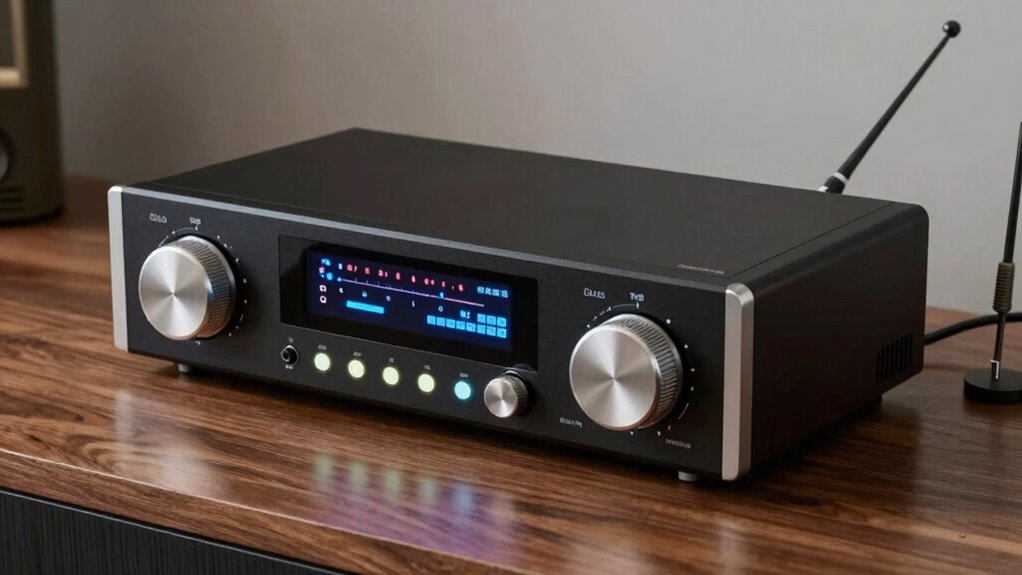

A shortwave radio receiver can bring international broadcasts and other distant signals within reach, but models differ sharply in tuning control, portability, and reception features. I’d name the Tecsun PL-990 the best overall pick for listeners who want shortwave, longwave, single-sideband reception, and audio playback in one radio. The Tecsun PL-880 is a strong alternative for dedicated listening, while the C. Crane CC Skywave SSB 2 makes more sense for travelers who value a compact multiband radio. The main tradeoff is between advanced reception features and simpler, smaller radios that are easier to carry and operate. Read on for how all 15 options compare and which one fits your listening habits.

Get privacy and security gear delivered free with Prime
- Fast, free delivery on millions of items
- Prime Video, Amazon Music and more included
- Member-only deals all year
Key Takeaways
- The Tecsun PL-990 leads for all-round capability: its mix of shortwave, longwave, SSB, and MP3 playback covers more listening needs than the simpler portable models.
- SSB support separates specialist picks from basic radios: the PL-990, PL-880, PL-330, CC Skywave SSB 2, D-808, RF919, and other SSB-equipped models suit listeners who want more than ordinary broadcasts.
- Small size comes with a clearer feature tradeoff: compact choices such as the PL-330 and CC Skywave models favor portability, while larger or more feature-rich radios offer more controls and listening options.
- Not every shortwave receiver serves the same purpose: the MLite-880 adds an aviation band, while the NOAA emergency radio and DreamSky prioritize practical everyday or preparedness use.
- The lineup spans a wide complexity range: simple AM/FM/SW sets can suit casual listening, but buyers seeking fine tuning and advanced reception should focus on radios with SSB and more detailed controls.
| Tecsun PL990 Digital AM/FM Shortwave and Longwave Radio with Single Sideband Reception and MP3 Player |  | Best Feature-Rich Shortwave Receiver | Radio bands: AM, FM, longwave, shortwave, single sideband | Model: PL990 | Speaker output: 3 watts | VIEW ON AMAZON | See Our Full Breakdown |
| Tecsun PL880 Portable AM/FM, Longwave and Shortwave Radio with SSB |  | Best for Fine-Tuning Shortwave | Radio bands: AM/FM, longwave, shortwave, SSB | Tuning step: 10 Hz | Station storage: 3,050 stations across 25 memory pages | VIEW ON AMAZON | See Our Full Breakdown |
| Tecsun PL-330 AM/FM/LW/SW Worldband Radio with Single Sideband Receiver |  | Best Compact Rechargeable SSB Radio | Frequency bands: AM, FM, longwave, shortwave, single sideband | Longwave range: 153–513 kHz | Shortwave range: 1711–29999 kHz | VIEW ON AMAZON | See Our Full Breakdown |
| Retekess V115 AM/FM/SW Shortwave Radio |  | Best Simple Shortwave Radio with Recording | Radio bands: AM, FM, SW | AM tuning step: Adjustable between 9 and 10 kHz | Battery: 1000 mAh rechargeable BL-5C lithium battery | VIEW ON AMAZON | See Our Full Breakdown |
| C. Crane CC Skywave SSB 2 Portable Multiband Radio |  | Best for Travel and Emergency Listening | Bands: AM, FM, shortwave, NOAA Weather, VHF aviation | Shortwave range: 1711–29999 kHz | Single sideband: Supported | VIEW ON AMAZON | See Our Full Breakdown |
| ATS MINI V4 SI4732 Portable Shortwave Radio |  | Best Compact SSB Receiver | Reception: AM, FM, LSB, USB | Frequency range: 10 kHz–180 MHz | Display: 1.9-inch digital display | VIEW ON AMAZON | See Our Full Breakdown |
| C. Crane CC Skywave 2 Portable Multiband Radio |  | Best for Travel and Emergency Updates | Radio bands: AM, FM, NOAA Weather, shortwave, VHF aviation | Shortwave range: 2300–26100 kHz | Power source: 2 AA batteries, not included | VIEW ON AMAZON | See Our Full Breakdown |
| Raddy MLite-880 SDR Shortwave Radio Receiver with Aviation Band |  | Best for Advanced Signal Tuning | Frequency coverage: FM, MW, LW, SW, AIR (118–136 MHz) | Supported modes: SSB (LSB/USB), AM, CW, SAM, NFM, WFM | Display: 2.3-inch spectrum and waterfall display | VIEW ON AMAZON | See Our Full Breakdown |
| XHDATA D220 Portable AM/FM/SW Shortwave Radio |  | Best Simple Pocket Shortwave | FM1 range: 87–108 MHz | FM2 range: 64–108 MHz | AM range: 520–1730 kHz | VIEW ON AMAZON | See Our Full Breakdown |
| DreamSky Portable AM/FM/SW Radio with LCD Clock |  | Best for Simple Home Listening | Connectivity: AM, FM, SW | Power source: Included AC adapter or 4 AA batteries, not included | Display: Backlit LCD with 12/24-hour clock | VIEW ON AMAZON | See Our Full Breakdown |
| Raddy RF919 SSB Shortwave Radio Receiver, Black |  | Best for Maximum Band Coverage | Supported bands: FM, AM, SW, SSB, VHF, UHF, AIR, CB, WB | Channel storage: 1,600 channels | Battery: Rechargeable, 5,000mAh | VIEW ON AMAZON | See Our Full Breakdown |
| XHDATA D-808 Portable Multiband Radio with SSB and LCD Display |  | Best Compact Shortwave and Airband Pick | Radio bands: FM, AM, SW, LW, Air Band | Frequency range: FM 64–108 MHz; AM 520–1710 kHz; LW 153–513 kHz; SW 1711–29999 kHz; Air Band 118–137 MHz | Tuning features: SSB, RDS | VIEW ON AMAZON | See Our Full Breakdown |
| Portable NOAA, Shortwave, AM/FM Emergency Radio |  | Best for Emergency Readiness | Radio bands: NOAA, AM, FM, SW | Battery capacity: 4,000mAh | Playback time: Up to 32 hours | VIEW ON AMAZON | See Our Full Breakdown |
| ZHIWHIS A330 Portable Wide-Frequency Radio Receiver with SSB |  | Best Lightweight Feature-Rich Receiver | Frequency bands: FM, MW, SW, AIR, CB, WB, VHF, UHF | Shortwave demodulation: AM, LSB, USB with BFO adjustment | Presets: Up to 200 per band; 1,400 total | VIEW ON AMAZON | See Our Full Breakdown |
| Sangean ATS-909X2 Multi-Band Radio |  | Best Premium Listening and Preset Control | Tuner bands: FM, SW, MW, LW, Air | Airband frequency: 118–137 MHz | Station presets: 1,674 across 3 memory banks | VIEW ON AMAZON | See Our Full Breakdown |
More Details on Our Top Picks
Tecsun PL990 Digital AM/FM Shortwave and Longwave Radio with Single Sideband Reception and MP3 Player
The PL990 suits listeners who want a capable shortwave receiver and a portable audio player in one unit. Its AM, FM, longwave, and single-sideband reception, supported by DSP and synchronized detection, give it broader listening options than the simpler Retekess V115. The included 16GB microSD card and support for several audio formats make it useful for recorded listening away from broadcasts, while 3,150 station memories leave room for a large, organized station list. A 3-watt speaker and external antenna input add flexibility at home or on the move. The tradeoff is extra complexity and a plastic body; the smaller Tecsun PL-330 is easier to carry, though its speaker output is far lower. Choose the PL990 for its combination of radio features and media playback, not for the lightest travel setup.
Pros:- Receives AM, FM, longwave, shortwave, and single-sideband broadcasts
- DSP and synchronized detection support more controlled shortwave listening
- Includes a 16GB microSD card and plays multiple audio formats
- Stores up to 3,150 stations and has alarm and sleep-timer functions
Cons:- More features and controls may be unnecessary for listeners seeking a simple radio
- Plastic enclosure offers less of a rugged feel than a purpose-built field receiver
Best for: Shortwave listeners who also want built-in microSD music playback, extensive station storage, and SSB reception in one portable radio.
Not ideal for: Buyers who prioritize a small, lightweight receiver or want a straightforward radio without extra media features.
- Radio bands:AM, FM, longwave, shortwave, single sideband
- Model:PL990
- Speaker output:3 watts
- Station memories:3,150
- Audio formats:FLAC, WAV, APE, WMA, MP3
- Included storage:16GB microSD card
- Power:Battery powered; one lithium-ion battery included
- Dimensions:7.5 × 1.25 × 4.5 inches
Our verdict“Choose the PL990 if you want SSB-capable shortwave reception plus extensive presets and microSD audio playback in one device.”
Tecsun PL880 Portable AM/FM, Longwave and Shortwave Radio with SSB
The PL880 is a strong match for listeners who want direct control over shortwave tuning rather than a long list of extra playback functions. Its 10 Hz tuning steps and selectable bandwidth filters give experienced listeners more control when separating closely spaced signals or adjusting reception to changing conditions. It covers AM/FM, longwave, shortwave, and SSB, with 3,050 station memories for saving frequently heard broadcasts. Compared with the PL990, it gives up the included microSD music player and card, so it is less of an all-in-one entertainment device. Its 3-watt speaker, alarm, and sleep timer still make it practical for everyday listening. The main compromise is its listed AA battery requirement, which may be less convenient than a rechargeable setup such as the PL-330’s. This is the more focused pick for hands-on tuning.
Pros:- 10 Hz tuning steps provide fine frequency adjustment
- Selectable bandwidth filters offer control over reception
- Covers AM/FM, longwave, shortwave, and SSB
- Stores up to 3,050 stations and includes alarm and sleep timers
Cons:- Does not include the PL990’s microSD audio player and supplied memory card
- Specified battery requirement may be less convenient than a rechargeable receiver
Best for: Shortwave hobbyists who want fine tuning, selectable bandwidth filters, SSB, and a large memory bank.
Not ideal for: Listeners who want included music storage or a rechargeable battery setup rather than managing the specified AA battery requirement.
- Radio bands:AM/FM, longwave, shortwave, SSB
- Tuning step:10 Hz
- Station storage:3,050 stations across 25 memory pages
- Speaker output:3 watts
- Battery requirement:1 AA battery
- Connectivity:3.5 mm audio, USB
- Weight:520 g
- Dimensions:7.5 × 1.25 × 4.5 inches
Our verdict“Pick the PL880 if precise tuning and adjustable filters matter more to you than the PL990’s built-in media playback.”
Tecsun PL-330 AM/FM/LW/SW Worldband Radio with Single Sideband Receiver
At 210 g, the PL-330 is the portability pick for buyers who still want shortwave and SSB rather than settling for basic AM/FM. Its DSP demodulation, synchronous detection, and external antenna input give it reception tools that the more straightforward Retekess V115 does not list, while its rechargeable BL-5C battery avoids the PL880’s specified AA-battery requirement. The small size has a clear cost: its 0.25-watt speaker is much less powerful than the 3-watt speakers in the PL990 and PL880, making earphone listening a better fit for many situations. It also has 850 memories, fewer than either larger Tecsun model, but enough for a more selective station list. I would favor it for travel and compact carry, not as the strongest room-filling radio in this group.
Pros:- Compact 210 g design is easier to carry than the larger PL990 and PL880
- Receives AM, FM, longwave, shortwave, and single-sideband broadcasts
- Rechargeable BL-5C battery is included as the power source
- DSP, synchronous detection, and external antenna input support flexible reception
Cons:- 0.25-watt speaker output is far below the 3-watt output listed for the PL990 and PL880
- 850 station memories are fewer than those offered by the two larger Tecsun models
Best for: Travelers and shortwave listeners who want a lightweight, rechargeable radio with SSB and an external antenna connection.
Not ideal for: Buyers who need louder speaker audio or extensive station storage comparable to the PL990 or PL880.
- Frequency bands:AM, FM, longwave, shortwave, single sideband
- Longwave range:153–513 kHz
- Shortwave range:1711–29999 kHz
- Station memories:850
- Speaker output:0.25 W
- Power:Rechargeable BL-5C lithium-ion battery
- Connectivity:Micro USB, 3.5 mm earphone jack, external antenna input
- Weight:210 g (7.4 oz)
Our verdict“Choose the PL-330 if low carry weight and rechargeable SSB reception matter more than speaker volume or a very large preset bank.”
Retekess V115 AM/FM/SW Shortwave Radio
The V115 is the straightforward choice here for listeners who want AM, FM, and shortwave alongside basic audio recording, without paying for SSB features they may never use. Automatic station search, presets, and manual frequency entry cover the core tuning tasks, while TF-card playback and recording add a useful utility the Tecsun PL-330 does not list. Its 2-watt speaker is more powerful on paper than the PL-330’s 0.25-watt speaker, though the V115 lacks that model’s longwave and single-sideband reception. A rechargeable 1000 mAh battery is rated for about 6–8 hours at medium volume, but charging takes around 4–5 hours. The TF-card dependence also means its recording and card playback features require extra storage. This fits casual broadcast listeners better than signal-focused shortwave hobbyists.
Pros:- Receives AM, FM, and shortwave broadcasts
- Offers automatic search, presets, and manual frequency entry
- Supports TF-card playback and recording of radio or external audio
- Rechargeable battery is rated for approximately 6–8 hours at medium volume
Cons:- Does not list SSB or longwave reception, unlike the Tecsun PL-330
- TF card is required for card-based playback and recording
- Charging takes approximately 4–5 hours
Best for: Casual listeners who want a rechargeable AM/FM/SW radio with station search and TF-card audio recording.
Not ideal for: Shortwave hobbyists who need SSB, longwave reception, or the DSP and synchronous-detection features listed for the Tecsun PL-330.
- Radio bands:AM, FM, SW
- AM tuning step:Adjustable between 9 and 10 kHz
- Battery:1000 mAh rechargeable BL-5C lithium battery
- Battery life:Approximately 6–8 hours at medium volume
- Charging time:Approximately 4–5 hours
- Speaker output:2 W
- Playback features:TF card, AUX, repeat modes, random play
- Recording:Radio and external audio recording with three quality settings
Our verdict“Pick the V115 for simple AM/FM/SW listening and TF-card recording, but choose the PL-330 if SSB or longwave matters.”
C. Crane CC Skywave SSB 2 Portable Multiband Radio
The CC Skywave SSB 2 puts a different priority ahead of the Tecsun models: compact travel coverage. Along with AM, FM, and shortwave SSB, it receives NOAA Weather and VHF aviation broadcasts, making it the broadest fit here for travelers who want more than international broadcast listening. At 6.0 oz. without batteries and with a listed runtime of about 70 hours on earphones, it is easier to pack than the PL990, though it requires two AA batteries that are not included. Its 400 memory presets are modest beside the PL990’s 3,150 and PL880’s 3,050, so station-heavy listeners may prefer those Tecsun options. The supplied carrying case, earphones, and 23-foot shortwave reel antenna give it a ready-to-pack advantage. I’d choose it for varied travel reception, not maximum memory capacity.
Pros:- Adds NOAA Weather and VHF aviation reception to AM, FM, and shortwave SSB
- Compact 6.0 oz. body is easy to pack
- Includes earphones, carrying case, and a 23-foot shortwave reel antenna
- Rated for approximately 70 hours with earphones or 60 hours with the speaker
Cons:- Requires two AA batteries, which are not included
- 400 presets are far fewer than the PL990’s 3,150 or PL880’s 3,050
- AC power adapter is optional
Best for: Travelers and preparedness-minded listeners who want shortwave SSB plus weather and aviation bands in a compact radio.
Not ideal for: Listeners who want a rechargeable battery included, a large preset bank, or a higher-powered speaker for room listening.
- Bands:AM, FM, shortwave, NOAA Weather, VHF aviation
- Shortwave range:1711–29999 kHz
- Single sideband:Supported
- Memory presets:400
- Battery requirements:2 AA batteries, not included
- Battery runtime:Approximately 70 hours with earphones; 60 hours with speaker
- Weight:6.0 oz. without batteries
- Dimensions:4.75 × 3 × 1.1 inches
Our verdict“Choose the CC Skywave SSB 2 if travel-ready weather and aviation reception matter more than rechargeable power or extensive station storage.”
ATS MINI V4 SI4732 Portable Shortwave Radio
The ATS MINI V4 is the compact pick for listeners who want LSB and USB reception without carrying a larger portable set. Its stated 10 kHz–180 MHz coverage spans far beyond ordinary AM, FM, and shortwave, while the included loop and telescopic antennas give buyers two starting points for reception. Compared with the Raddy MLite-880, it offers a smaller, more straightforward package, but lacks that model’s spectrum display, waterfall view, and listed CW and SAM modes. A metal shell, stand, and EVA case add practical protection for travel; the 800mAh battery and 0.5-watt mono speaker point to a more modest listening setup. I’d choose it for portable SSB listening with headphones, not room-filling sound or long untethered sessions.
Pros:- Receives AM, FM, LSB, and USB
- Compact metal-shell design with stand and EVA carry case
- Includes loop and telescopic antennas
- Built-in headphone amplifier supports headphone listening
Cons:- Mono audio and 0.5-watt speaker output limit speaker listening
- 800mAh battery is modest compared with the Raddy MLite-880’s 5000mAh battery
Best for: Travelers and shortwave hobbyists who want a compact receiver with LSB/USB support, included antennas, and a protective case.
Not ideal for: Listeners who need loud, room-filling audio or a large battery for extended trips; its speaker is rated at 0.5 watts and the battery is 800mAh.
- Reception:AM, FM, LSB, USB
- Frequency range:10 kHz–180 MHz
- Display:1.9-inch digital display
- Battery:800mAh rechargeable lithium-ion
- Speaker output:0.5 watts
- Audio:Mono
- Included accessories:Loop antenna, telescopic antenna, stand, EVA carry case
Our verdict“Choose the ATS MINI V4 for a highly portable receiver with SSB modes and useful included accessories, but not for powerful speaker sound or extended battery life.”
C. Crane CC Skywave 2 Portable Multiband Radio
The CC Skywave 2 makes more sense as a travel and information receiver than as a shortwave-tuning workbench. Alongside shortwave, it covers NOAA Weather and VHF aviation, so it can serve people who want weather alerts and aviation listening in the same small radio. Its 400 memories, including 10 aviation presets, help keep frequent stations close at hand. Compared with the ATS MINI V4, this model adds dedicated weather and aviation reception, but the listed band options do not include LSB or USB for single-sideband listening. Its standout practical advantage is power flexibility on the go: the stated runtime reaches up to 70 hours with earbuds, though two AA batteries are not included and an AC adapter is optional. I’d pick it over a basic AM/FM/SW set for travelers who value band variety over advanced shortwave controls.
Pros:- Receives shortwave, NOAA Weather, and VHF aviation bands
- 400 station memories, including 10 aviation memories
- Lightweight 6.0-ounce body without batteries
- Includes earphones and a carry case
Cons:- Requires two AA batteries, which are not included
- AC power adapter is optional
- No LSB or USB reception is listed
Best for: Frequent travelers and emergency-preparedness buyers who want shortwave, NOAA Weather, and aviation reception in a lightweight radio.
Not ideal for: Shortwave hobbyists who need LSB/USB tuning or buyers who want included rechargeable power or an AC adapter.
- Radio bands:AM, FM, NOAA Weather, shortwave, VHF aviation
- Shortwave range:2300–26100 kHz
- Power source:2 AA batteries, not included
- Battery runtime:Up to 70 hours with earbuds; up to 60 hours with built-in speaker
- Weight:6.0 oz without batteries
- Dimensions:4.75 × 3 × 1.1 in
- Station memory:400 presets, including 10 aviation memories
- Included accessories:Earphones and faux leather carry case
Our verdict“Pick the CC Skywave 2 if travel-friendly weather and aviation coverage matter as much as shortwave, but choose an SSB-capable model for more specialized shortwave listening.”
Raddy MLite-880 SDR Shortwave Radio Receiver with Aviation Band
The MLite-880 is the most feature-led option in this group for listeners who want to inspect and shape what they’re tuning. Its spectrum and waterfall display, direct frequency entry, DSP noise reduction, and notch filtering offer more control than the simpler XHDATA D220 or the analog-tuned DreamSky. Support for SSB, CW, SAM, and multiple other modes also makes it the broadest listed choice for experimenting with different signal types. That control brings a learning curve: buyers seeking quick, basic AM/FM/SW listening may prefer the C. Crane CC Skywave 2, which is more focused on portable band coverage and stored stations. The replaceable 5000mAh battery and USB-C charging suit travel, though the radio’s stated 3.9 × 2 × 7.9-inch dimensions make it less pocket-friendly than the smallest sets. I’d select it for tuning tools, not bare-bones simplicity.
Pros:- Supports SSB, CW, SAM, AM, NFM, and WFM modes
- Spectrum and waterfall display help visualize signals while tuning
- DSP noise reduction and notch filtering provide added signal controls
- Replaceable 5000mAh battery with USB-C charging
Cons:- Advanced tuning features may be more involved than a casual listener needs
- Larger listed dimensions make it less compact than the XHDATA D220
Best for: Shortwave hobbyists who want SSB and CW modes, visual tuning aids, noise controls, and a replaceable rechargeable battery.
Not ideal for: Casual listeners seeking a simple, pocketable radio with minimal controls; its SDR features add complexity and its listed dimensions exceed those of compact sets such as the XHDATA D220.
- Frequency coverage:FM, MW, LW, SW, AIR (118–136 MHz)
- Supported modes:SSB (LSB/USB), AM, CW, SAM, NFM, WFM
- Display:2.3-inch spectrum and waterfall display
- Battery:5000mAh 21700 lithium-ion, replaceable
- Charging:USB-C
- Connectivity:Bluetooth
- Dimensions:3.9 × 2 × 7.9 inches
- Warranty:18 months
Our verdict“Choose the MLite-880 for hands-on signal exploration and extensive tuning tools, rather than for the simplest or smallest everyday receiver.”
XHDATA D220 Portable AM/FM/SW Shortwave Radio
The D220 is the no-frills choice for someone who wants to carry a basic shortwave receiver without learning a more involved tuning system. It covers FM, AM, and shortwave, with straightforward band, tuning, and volume controls, a built-in speaker, and a headphone jack. At 125 g without batteries and 125 × 74 × 30 mm, it is easier to pack than the larger DreamSky, whose appeal is a bigger speaker and AC operation. The tradeoff is capability: unlike the ATS MINI V4 or Raddy MLite-880, the D220 does not list SSB modes, and its product details focus on simple broadcast listening rather than advanced signal work. Two AA batteries are required but not included. I’d choose it for compact everyday AM/FM/SW listening, not for all-weather use or specialist shortwave tuning.
Pros:- Compact body weighs 125 g without batteries
- Receives FM, AM, and shortwave broadcasts
- Simple tuning, band, and volume controls
- Built-in speaker and 3.5 mm headphone jack
Cons:- No SSB reception is listed, unlike the ATS MINI V4 and Raddy MLite-880
- Two AA batteries are not included
- Not water resistant
Best for: Beginners and light-pack travelers who want a small, straightforward radio for broadcast AM, FM, and shortwave listening.
Not ideal for: Shortwave enthusiasts who need SSB reception, or outdoor users who need water resistance; neither is listed for this model.
- FM1 range:87–108 MHz
- FM2 range:64–108 MHz
- AM range:520–1730 kHz
- Shortwave range:5.6–22.0 MHz
- Power source:2 AA batteries, not included
- Audio output:Built-in speaker and 3.5 mm headphone jack
- Dimensions:125 × 74 × 30 mm
- Weight:125 g without batteries
Our verdict“Choose the D220 for uncomplicated, lightweight broadcast listening, but look to an SSB-capable receiver for more advanced shortwave work.”
DreamSky Portable AM/FM/SW Radio with LCD Clock
The DreamSky suits listeners who expect a radio to sit on a counter or bedside table, where large analog controls and a bigger speaker matter more than advanced shortwave tuning. It receives AM, FM, and shortwave through a telescopic antenna, with tone selection and a headphone jack for quieter listening. The included AC adapter allows plug-in use, while four AA batteries offer a battery-powered alternative. That makes it a more home-oriented option than the XHDATA D220, which is smaller and lighter for carrying; neither model lists SSB modes, so enthusiasts looking for single-sideband reception should consider the ATS MINI V4 or Raddy MLite-880 instead. The backlit clock adds bedside utility, but its 110 V specification and lack of water resistance narrow where it fits. I’d choose it for accessible everyday listening, not travel-focused tuning.
Pros:- Receives AM, FM, and shortwave broadcasts
- Includes an AC adapter and can also run on four AA batteries
- Large analog controls and speaker suit simple home listening
- Backlit LCD clock and 3.5 mm headphone jack
Cons:- Four AA batteries are not included
- Not water resistant
- No SSB reception is listed, unlike the ATS MINI V4 and Raddy MLite-880
Best for: Home listeners who want a straightforward AM/FM/SW radio with a larger speaker, plug-in power, and a backlit clock.
Not ideal for: Travelers prioritizing a small, light receiver or shortwave hobbyists who need SSB modes; the radio is not water resistant.
- Connectivity:AM, FM, SW
- Power source:Included AC adapter or 4 AA batteries, not included
- Display:Backlit LCD with 12/24-hour clock
- Audio:Large speaker, high/low tone selection, 3.5 mm headphone jack
- Voltage:110 V
- Water resistance:Not water resistant
- Color:Black
Our verdict“Choose the DreamSky for simple, speaker-led listening at home with plug-in power, not for compact travel or advanced shortwave reception.”
Raddy RF919 SSB Shortwave Radio Receiver, Black
The Raddy RF919 is the broadest-coverage choice here: alongside shortwave and SSB, it tunes FM, AM, VHF, UHF, air, CB, and weather bands. That range makes it more of an all-band monitoring hub than a focused travel shortwave set. Its three external antenna connections and antenna tuner give listeners options for adapting reception, while storage for 1,600 channels suits people who want to organize many frequencies. Compared with the XHDATA D-808, it adds CB, weather, VHF, and UHF coverage and Bluetooth, but the D-808 is a simpler, more compact portable with stated frequency ranges. The RF919’s 5,000mAh rechargeable battery is generous, though conflicting speaker-power claims in the description make audio output harder to judge, and phone-based control requires an app.
Pros:- Receives an unusually broad set of bands, including shortwave SSB, air, CB, and weather
- Three external antenna connections and an antenna tuner support flexible antenna setups
- Stores up to 1,600 channels
- Rechargeable 5,000mAh battery, Bluetooth, and microSD playback
Cons:- Description gives conflicting speaker power figures, so maximum audio output is unclear
- Phone-based control requires an app
- Its extensive band coverage and controls may be more than a shortwave-only listener needs
Best for: Radio hobbyists who want one receiver for shortwave, SSB, airband, CB, weather, and other monitored bands, plus extensive channel storage.
Not ideal for: Listeners seeking a simple, lightweight shortwave travel radio or those who do not want app-dependent phone control.
- Supported bands:FM, AM, SW, SSB, VHF, UHF, AIR, CB, WB
- Channel storage:1,600 channels
- Battery:Rechargeable, 5,000mAh
- External antenna connections:VHF/UHF SMA Male, AM, 3.5mm SW
- Display:LCD; 3.54-inch main screen
- Audio:Stereo; speaker maximum output listed as 10 watts
- Connectivity:Bluetooth
- Headphone jack:3.5mm
Our verdict“Choose the RF919 if you want broad-band monitoring and antenna flexibility more than a straightforward, compact shortwave receiver.”
XHDATA D-808 Portable Multiband Radio with SSB and LCD Display
The XHDATA D-808 makes a strong case for listeners who want a portable receiver with shortwave SSB and airband without stepping up to the much broader Raddy RF919. It also covers longwave, and its listed shortwave range reaches 29,999 kHz, giving buyers a clear picture of its tuning coverage. 500 station memories, an LCD, clock, and alarm make it practical for regular listening, while the roughly 5.9-inch body and carry bag suit trips. Unlike the emergency-focused NOAA model in this roundup, the D-808 prioritizes broadcast and airband reception rather than crank or solar charging. Its tradeoffs are limited weather readiness: it is not water resistant, and battery life is not specified. USB-C power is available, but the included lithium-ion battery is the only battery listed.
Pros:- Combines shortwave SSB with airband, longwave, AM, and FM reception
- Specified shortwave tuning range extends from 1,711 to 29,999 kHz
- Stores 500 stations and includes an LCD, clock, and alarm
- Compact dimensions, carry bag, external antenna, and USB-C power option
Cons:- Not water resistant
- Battery life is not specified
- No hand-crank or solar charging option is listed
Best for: Travelers and aviation-radio listeners who want a compact receiver with SSB, airband, longwave, and shortwave coverage.
Not ideal for: Outdoor emergency users who need water resistance, hand-crank or solar power, or a stated battery runtime.
- Radio bands:FM, AM, SW, LW, Air Band
- Frequency range:FM 64–108 MHz; AM 520–1710 kHz; LW 153–513 kHz; SW 1711–29999 kHz; Air Band 118–137 MHz
- Tuning features:SSB, RDS
- Station memory:500 stations
- Power:Included lithium-ion battery or USB Type-C DC 5 V
- Display:LCD
- Dimensions:5.9 × 2 × 3.4 inches
- Included accessories:Carry bag, external antenna, USB charging cable, English manual
Our verdict“Pick the D-808 for a compact, clearly specified shortwave-and-airband receiver, but look elsewhere for rugged emergency power features.”
Portable NOAA, Shortwave, AM/FM Emergency Radio
This emergency radio is the practical choice for buyers who want shortwave reception alongside weather alerts and backup power, rather than a receiver built mainly for fine-tuning distant broadcasts. Its NOAA, AM, FM, and SW coverage is paired with USB-C, hand-crank, and solar charging, plus a flashlight and SOS alarm. Those features give it a clear purpose the XHDATA D-808 does not share: preparing for outages and weather events. The tradeoff is that shortwave listening is only one part of a utility-focused package, and the listing does not describe SSB support. Channel scanning also depends on local signal conditions. The stated up to 32 hours refers to playback on a full battery charge, not a guarantee of runtime under every radio, alert, or charging use.
Pros:- Receives NOAA weather, AM, FM, and shortwave broadcasts
- USB-C, hand-crank, and solar charging provide multiple power routes
- Flashlight, SOS alarm, compass, and device charging add emergency utility
- Bluetooth and USB or TF/Micro SD playback support non-radio audio
Cons:- SSB support is not listed
- Channel scanning effectiveness depends on local signal conditions
- The up-to-32-hour playback figure applies to a full battery charge and may not reflect every use
Best for: Campers and household emergency planners who want shortwave and NOAA reception with several ways to recharge and basic signaling tools.
Not ideal for: Shortwave hobbyists who need SSB, detailed tuning specifications, or a receiver focused on weak-signal listening.
- Radio bands:NOAA, AM, FM, SW
- Battery capacity:4,000mAh
- Playback time:Up to 32 hours
- Charging methods:USB-C, hand crank, solar
- Speaker:5 watts
- Bluetooth:Version 5.0
- Flashlight:120 lumens
- Channel storage:Up to 70 channels per band; 210 total
- Dimensions and weight:3.15 × 2 × 5.02 inches; 0.53 kg
Our verdict“Choose this model for emergency features and flexible charging, not for advanced shortwave tuning or SSB listening.”
ZHIWHIS A330 Portable Wide-Frequency Radio Receiver with SSB
The ZHIWHIS A330 packs unusually broad coverage and shortwave SSB into a 160-gram body, making it a more portable all-band option than the larger Raddy RF919. Its AM, LSB, and USB reception with BFO adjustment gives shortwave listeners useful tuning control, while presets reach 1,400 across its bands. Bluetooth 5.2, TF-card playback and recording, and app control add media features that the more narrowly equipped XHDATA D-808 does not match. The key compromise is power: its 1,000mAh battery is modest beside the RF919’s 5,000mAh capacity, so buyers should not expect the same reserve between charges. The 3-watt speaker also favors personal or nearby listening over filling a larger space. Its wireless signal repeater accessory is sold separately.
Pros:- Receives shortwave AM, LSB, and USB with BFO adjustment
- Covers FM, MW, SW, air, CB, weather, VHF, and UHF bands
- Stores up to 1,400 presets and supports multiple tuning methods
- Lightweight design with Bluetooth, TF-card playback, and recording
Cons:- 1,000mAh battery is smaller than the Raddy RF919’s 5,000mAh battery
- 3-watt speaker output is modest for listening across a room
- Wireless signal repeater accessory is sold separately
Best for: Mobile radio hobbyists who want SSB tuning, broad band coverage, extensive presets, and recording or playback features in a lightweight receiver.
Not ideal for: Listeners who need long battery reserves, stronger room-filling speaker output, or a complete setup without optional accessories.
- Frequency bands:FM, MW, SW, AIR, CB, WB, VHF, UHF
- Shortwave demodulation:AM, LSB, USB with BFO adjustment
- Presets:Up to 200 per band; 1,400 total
- Battery:BL5C lithium, 3.7 V, 1,000mAh
- Speaker:4 Ω, 3 W
- Bluetooth:Version 5.2; reception distance up to 20 m
- TF card support:MP3, WMA, WAV, APE, FLAC; up to 256 GB
- Dimensions and weight:2.4 × 1.4 × 5.4 inches; 0.35 lb (160 g)
- Ports:3.5 mm external antenna port; USB-C charging port
Our verdict“Choose the A330 if compact size and SSB features matter more than long battery life or a louder speaker.”
Sangean ATS-909X2 Multi-Band Radio
The Sangean ATS-909X2 is the most established-feeling pick in this group for listeners who value organized tuning and a full set of listening controls over a tiny footprint. Its 1,674 presets across three memory banks, multiple tuning methods, backlit display, and three alarm timers make it well suited to regular listening across FM, shortwave, mediumwave, longwave, and airband. Compared with the XHDATA D-808, it offers far more memory capacity and bundled accessories, including a portable shortwave antenna and carrying pouch; the D-808 is much smaller and lists USB-C power. The Sangean weighs 1.6 pounds, takes four AA batteries that are not included, and has a feature-rich control set that can take time to learn. It makes more sense as a capable home or planned-travel receiver than a pocket radio.
Pros:- Stores 1,674 presets across three memory banks
- Receives FM, shortwave, mediumwave, longwave, and airband
- Three alarm timers, sleep timer, and backlit LCD support scheduled listening
- Includes an AC adapter, portable shortwave antenna, carrying pouch, and stereo earbuds
Cons:- Four AA batteries are not included
- At 1.6 pounds, it is less suited to pocket carry than the XHDATA D-808
- Advanced controls and feature set may take time to learn
Best for: Dedicated listeners who switch among many stored stations and want a full-size portable with airband, alarms, and included shortwave antenna accessories.
Not ideal for: Buyers seeking a lightweight pocket receiver, a rechargeable battery included in the box, or the simplest possible controls.
- Tuner bands:FM, SW, MW, LW, Air
- Airband frequency:118–137 MHz
- Station presets:1,674 across 3 memory banks
- Display:3.33 × 1.95-inch LCD with LED backlight
- Alarms:3 timers with radio or HWS buzzer
- Power:AC or 4 AA batteries (not included)
- Dimensions and weight:8.14 × 5.27 × 1.61 inches; 1.6 lb
- Connectivity:Aux-in, line output, headphone output, timer activation output
- Included accessories:AC adapter, ANT-60 portable shortwave antenna, carrying pouch, stereo earbuds
Our verdict“Choose the ATS-909X2 for extensive preset organization and supplied listening accessories, provided you are comfortable with its size and learning curve.”

How We Picked
I compared these receivers around the decisions that matter to shortwave listeners: band coverage, SSB availability, tuning usability, portability, and added functions. A radio’s feature list only helps if the controls make sense for the intended listener, so I weighed straightforward operation differently from the finer control sought by hobbyists. I also considered whether extra functions, such as aviation reception, a clock, or audio playback, add useful flexibility or make a model a better fit for a specific job.
The ranking gives priority to shortwave listening versatility and practical usability, then accounts for size, ease of use, and specialization. That puts the Tecsun PL-990 first as the most balanced advanced option, with the PL-880 and PL-330 close behind for listeners with different portability and control priorities. Models focused on basic listening or emergency use rank lower for general shortwave versatility, but they may be the better fit when simplicity or a particular extra band matters more than advanced reception features.
Factors to Consider When Choosing Shortwave Radio Receiver
Choosing a shortwave receiver is less about collecting the longest feature list and more about matching the radio to the signals and settings you care about. I’d sort out these factors before comparing individual models.
Decide Whether You Need SSB
Single-sideband reception matters when you want to listen to amateur radio transmissions and other signals that ordinary AM reception cannot reproduce correctly. It can add flexibility, but it also asks more of the listener: fine tuning and a little patience may be needed to make voices sound clear. If you mainly want scheduled international broadcasts, an AM-only shortwave radio may be simpler to operate. A common mistake is paying for SSB without any interest in the listening it enables. I’d treat it as a worthwhile feature for curious hobbyists, not a requirement for every casual listener.
Match the Controls to Your Listening Style
Shortwave signals can shift in strength and clarity, so the ease of tuning can affect how much time you spend listening rather than adjusting. Direct frequency entry can help when you already know where you want to tune, while simpler controls may feel more approachable for browsing. Advanced radios can offer greater control, but extra menus and adjustments may frustrate someone who just wants to switch on a station. Before choosing, ask whether you prefer exploring frequencies or returning to a small set of familiar broadcasts. The best interface is the one that suits that habit, not necessarily the one with the most settings.
Think About Where You Will Listen
Portability matters differently for a radio used at a desk, on a trip, or outdoors. A smaller receiver is easier to pack and keep nearby, while a larger unit can leave more room for controls and features. Neither size guarantees better reception: antennas, interference, and the listening environment also shape results. If you plan to listen indoors, think about where you can place or extend the antenna rather than judging a radio by its dimensions alone. For travel, consider whether the controls remain comfortable to use when the radio is held in one hand.
Separate Extra Bands From Shortwave Priorities
Multiband radios can add longwave, aviation, weather, or other reception alongside shortwave. Those additions are useful only when they match a real listening need; an aviation band, for example, serves a different purpose from a weather alert function. Extra features can also make controls more involved, so a buyer focused on broadcasts may be better served by a simpler receiver. Check which bands are explicitly supported rather than assuming that the word “multiband” means every band you want. I’d choose additional coverage for a specific use, not as a proxy for shortwave performance.
Choose Between a Basic Set and an Advanced Receiver
Basic AM/FM/SW radios are usually the more direct choice for casual listening, while advanced receivers tend to add SSB, more tuning options, or wider coverage. The tradeoff is not simply fewer or more features: a complicated radio can be less enjoyable if you will rarely use its controls. On the other hand, replacing a simple set later may be frustrating if your interest grows toward SSB or more precise tuning. Consider how often you listen and whether you want to learn the hobby as you go. Choose a basic set for occasional broadcasts, and move up when the added control has a clear purpose.
Plan for Reception Conditions, Not Just the Radio
A capable receiver cannot make every shortwave signal clear in every room or at every hour. Location, electrical interference, antenna placement, and changing signal conditions all affect what you hear. Buyers sometimes expect a more advanced model to solve problems caused by a noisy indoor environment, which can lead to disappointment. Think about whether you can listen near a window or use an appropriate external antenna if reception is weak. A sensible setup and realistic expectations can matter as much as selecting a feature-rich radio.
Frequently Asked Questions
Do I need SSB for listening to international shortwave broadcasts?
No. Many scheduled international broadcasts use ordinary AM, so SSB is not required for that kind of listening. SSB becomes useful if you want to hear amateur radio or other single-sideband transmissions. It also brings a tuning learning curve that may not be worthwhile for a casual listener. I’d choose a radio with SSB when those signals are part of your plan, rather than treating it as a must-have on every receiver.
Is a compact shortwave receiver a poor choice for home listening?
Not automatically; compact models can work well at home if their controls and coverage suit your needs. The more relevant question is whether the radio is comfortable to tune and whether you can position its antenna effectively. A smaller body may favor portability over a roomier control layout, which can matter during longer listening sessions. If home use is your main goal, compare the interface and antenna options as well as size. A portable receiver can be a sensible home radio, but portability alone does not predict reception quality.
Should I choose a radio with aviation or weather reception if shortwave is my main interest?
Only if those bands serve a separate purpose for you. The Raddy MLite-880’s aviation band points toward listeners who want coverage beyond broadcasts, while an emergency radio’s weather features suit preparedness more than hobby listening. Added bands do not automatically improve shortwave reception. They can also make a receiver less focused or add controls you may not use. I’d prioritize shortwave tuning and SSB first, then treat extra bands as a bonus tied to a specific need.
Can a shortwave radio receive well indoors without an external antenna?
It may receive stations indoors, but results can vary with building materials, nearby electronics, location, and signal conditions. A built-in or supplied antenna can be enough for some listening, yet a noisy room or weak signal may call for a different placement or an external antenna. Try moving the radio near a window and away from electronic interference before deciding the receiver is inadequate. Check the specific radio’s antenna connections and guidance before buying accessories. No model can guarantee clear reception in every indoor setting.
Which kind of shortwave receiver makes sense if I am not sure how serious I will get?
I’d start with a straightforward portable receiver if your goal is to explore broadcasts without learning advanced tuning right away. If you already expect to try amateur or other SSB signals, choosing an SSB-capable model from the start may save you from wanting an upgrade soon. The Tecsun PL-330 offers a more compact route into feature-rich listening, while basic AM/FM/SW options keep the experience simpler. Consider which features you will use in your first few months, not just what might sound appealing later. That approach keeps the choice aligned with your actual interest level.
Conclusion
For the broadest mix of shortwave capability and extra functions, I’d choose the Tecsun PL-990 as best overall. The Retekess V115 is my best value-style pick for buyers who want a simpler AM/FM/SW radio, while the Sangean ATS-909X2 is the best premium direction for listeners seeking a more substantial multiband receiver. Beginners who prefer a compact step up from basic sets should look at the Tecsun PL-330; travelers wanting SSB in a portable format should compare it with the C. Crane CC Skywave SSB 2. For specific needs, the Raddy MLite-880 stands out for aviation-band coverage, and the NOAA emergency radio better fits preparedness than dedicated shortwave listening. Pick according to the signals you want and how much control you will use, rather than choosing by feature count alone.
Columbus Day / Indigenous Peoples' Day Picks
long weekend sales
As an affiliate, we earn on qualifying purchases.