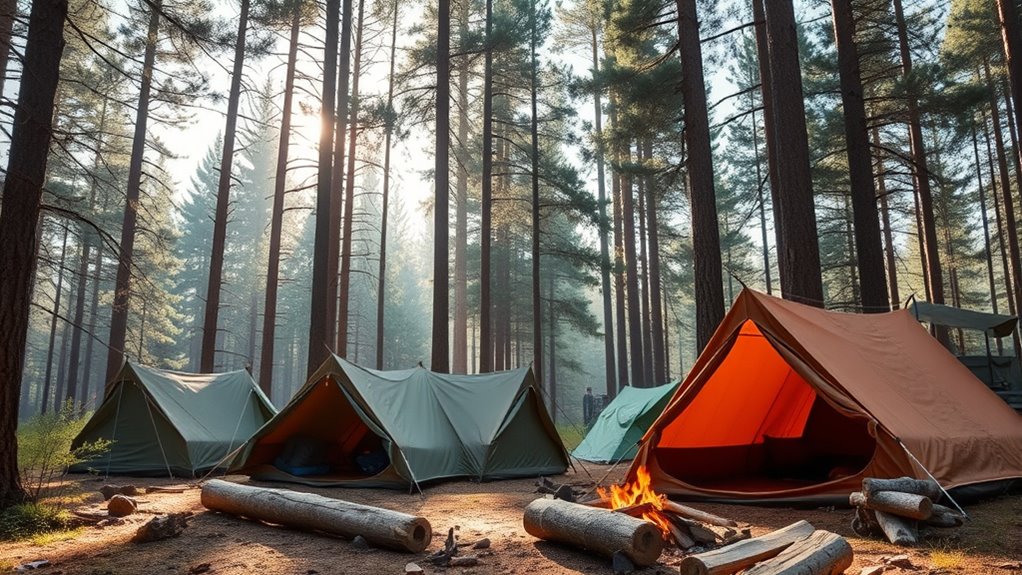
Survival tents split into two camps: ultralight Mylar emergency shelters that weigh ounces and live forgotten in a pack until disaster strikes, and sturdier backup tents that trade weight for real weather resistance. After comparing 14 options, the Go Time Gear Survival Life Tent stands out as the best overall pick for its balance of heat retention, tear resistance, and foolproof setup, while the SURVIVE 2-Person Mylar Tent with Doors earns the premium slot with actual door closures and a more durable build. For families or group kits, the Woanger 10-Pack makes the most sense per-shelter value. The main tradeoff you’ll face is single-use fragility versus reusable weight, plus whether you want a bare thermal shell or a tent you can actually weather a multi-day storm in. Keep reading for the full breakdown of who each tent suits and who should skip it.

Get privacy and security gear delivered free with Prime
- Fast, free delivery on millions of items
- Prime Video, Amazon Music and more included
- Member-only deals all year
Key Takeaways
- Nearly every tent in this lineup is a 2-person Mylar tube design, so the real differentiators came down to door closures, paracord quality, and whether the shelter could survive more than one deployment — not raw thermal performance.
- The Go Time Gear single-pack and its 2-Pack sibling are essentially the same shelter; the 2-Pack only makes sense if you’re building kits for two people or want a spare, so I ranked them separately for different buyers.
- Multi-packs (the Woanger 10-Pack and 5-Pack Portable Orange Shelter) dominated on per-unit cost but consistently used thinner Mylar — a fair trade for vehicle gloveboxes, but a poor choice for a primary bug-out shelter.
- Only two options broke the disposable mold: the Lyn Extra Large Zipper Shelter with genuine waterproof, fireproof fabric and the Night Cat Backpacking Tent, which is the sole pick you could comfortably sleep in for multiple nights.
- Whistles and paracord were universal, but stakes were not — only the Lyn and the All-Weather Tube Tent Kit include anchoring hardware, which matters enormously in wind.


| survival tent | Capacity | Material | Weight |
|---|---|---|---|
| SURVIVE 2-Person Mylar Emergen | 2 Person | Polyethylene (Mylar) | 11.0 oz |
| Go Time Gear Survival Life Ten | 2 Person | 100% Polyester / Mylar | 8.7 ounces |
| Night Cat Lightweight Backpack | 1 adult, or 1 adult and 1 child | — | 2 kg (4.4 lb) |
| SURVIVE 2-Person Mylar Emergen | — | Polyethylene | 11 oz |
| Emergency Tent with Paracord | 2 adults | HeatFlex Mylar with reinforced tape seams | 8.5 oz |
| Woanger 10-Pack Emergency Surv | 2 Persons per Tent | Polyester Film with Foil Thermal Lining | — |
| Go Time Gear Survival Life Ten | 2 Person | PET Mylar (military-grade) | 8.7 ounces |
| 5-Pack Emergency Survival Tent | 2 Person | PET Polyester Film | — |
| Go Time Gear Survival Life Ten | 2 Persons | PET Mylar | 8.7 ounces |
| IMODOMIO 2-Person Mylar Emerge | 2 Person | 28µm Coated Polyethylene (PET Mylar) | 10 ounces |
| Lyn Extra Large Zipper Reusabl | Up to 3 adults | Multi-layer waterproof, windproof, fire-resistant fabric (CPAI-84) | 2.8 lbs |
| All-Weather Survival Tube Tent | Up to 2 people | Mylar / polyester | — |
| Go Time Gear 2-Person Mylar Em | 2 people | 28 μm coated polyethylene | 8.64 ounces |
| Emergency 2-Person Orange & Gr | 2 people | — | — |
More Details on Our Top Picks
SURVIVE 2-Person Mylar Emergency Survival Tent with Doors, Paracord, and Whistle
This option earns the top spot because it solves the biggest weakness of tube-style emergency shelters: the open ends. The doors on both sides let you block wind-driven rain and snow without improvising, which the Go Time Gear Survival Life Tent leaves entirely to paracord rigging and luck. Add the bundled 22 feet of military-grade paracord and a whistle, and you have a complete kit rather than a bare tube. At 11 ounces it’s heavier than the lightest Mylar options here, but that modest weight buys genuine four-season weather sealing. The tradeoff is durability — Mylar tears far more easily than the Night Cat backpacking tent’s polyester fabric, so this is a shelter you carry for emergencies, not one you pitch every weekend.
Pros:- Dual doors block wind, rain, and snow from both ends
- Complete 3-in-1 kit with 22 ft paracord and emergency whistle
- Packs down to a tiny 3 x 6 inch bundle that fits any pack
- Effective Mylar thermal reflection for four-season emergencies
Cons:- Mylar is less durable than standard tent fabrics and tears if mishandled
- Doors need rocks or gear to stay closed securely
Best for: Hikers and preppers who want a grab-and-go emergency kit with real wind and snow protection, not just a bare reflective tube
Not ideal for: Anyone planning repeated overnight trips — Mylar construction won’t survive the wear that a proper polyester tent handles
- Capacity:2 Person
- Weight:11.0 oz
- Packed Size:3 x 6 inches
- Material:Polyethylene (Mylar)
- Water Resistance:Water Resistant
- Seasons:4 Season
- Included Accessories:22 ft Paracord, Whistle
Our verdict“The most complete single-purchase emergency shelter for anyone who wants weather-sealed protection and survival tools in one pocket-size kit.”
Go Time Gear Survival Life Tent – 2 Person Mylar Emergency Shelter with Paracord and Whistle
When every ounce counts, this is the shelter to reach for. At 8.7 ounces, it undercuts the SURVIVE door-equipped tent by more than two ounces while still including paracord and a high-decibel whistle. What sets it apart from cheaper single-use tube tents is its versatile setup — you can pitch it as an A-frame, lay it flat as a ground tarp, or use it as an emergency blanket, which gives you options the fixed-shape alternatives don’t. The compromise is interior room: squeeze two adults inside and there’s no space left for packs, and the Mylar shell tears easily if you’re careless around boots, trekking poles, or rocky ground. Compared with the Night Cat, you give up durability and bug mesh in exchange for a fraction of the weight.
Pros:- Featherweight 8.7 oz carry that disappears in a pack
- Multiple setup configurations: tent, tarp, or blanket
- Whistle and paracord included for signaling and rigging
- Reliable all-weather reflective protection
Cons:- Mylar material is prone to tearing without careful handling
- Cramped for two people once gear is factored in
Best for: Ultralight backpackers and trail runners who want emergency redundancy weighing less than a water bottle
Not ideal for: Two adults with full packs — space is genuinely tight once two bodies are inside
- Capacity:2 Person
- Material:100% Polyester / Mylar
- Weight:8.7 ounces
- Included Accessories:Paracord, Emergency Whistle
- Origin:Imported
Our verdict“The lightest full-featured emergency shelter in this lineup — ideal when weight savings matter more than interior comfort.”
Night Cat Lightweight Backpacking Tent for 1–2 People
Every other pick here is a disposable-emergency Mylar tube; this one is an actual tent you can sleep in night after night. The 3000 mm waterproof polyester fly, fiberglass poles, and mesh ventilation make it a legitimate backpacking shelter rather than a last-resort wrap, and the 1–2 minute setup means you’re not fumbling with paracord in a storm the way you would with the DDITW emergency tent. That said, the comparison cuts both ways: at 4.4 pounds it weighs roughly seven times the Go Time Gear shelter, so it only makes sense when an overnight stay is planned rather than feared. Capacity is also honest-but-tight — one adult with gear fits well, while two adults will be cozy at 7 feet long.
Pros:- Durable polyester fabric and seams far outlast Mylar tubes
- 3000 mm waterproof fly handles sustained rain
- Mesh door and roof window provide airflow and bug protection
- Quick 1–2 minute manual setup
Cons:- Comfortably fits one adult; two is a squeeze
- Poles must be manually threaded through sleeves
Best for: Solo hikers who want one shelter for both planned overnights and unexpected situations, with real fabric and bug mesh
Not ideal for: Bug-out bag builders counting grams — at 4.4 lb it’s far too heavy for a pocket emergency kit
- Capacity:1 adult, or 1 adult and 1 child
- Inner Dimensions:7.0 x 3.8 x 3.6 ft
- Weight:2 kg (4.4 lb)
- Packed Size:16.5 x 4.7 x 4.7 in
- Poles:Fiberglass with protective sleeves
- Setup Time:1-2 minutes
- Ventilation:Mesh door and roof window
Our verdict“Choose this if you want a reusable, breathable tent rather than a single-emergency Mylar wrap — and can accept the extra weight.”
SURVIVE 2-Person Mylar Emergency Survival Tent with Doors, Paracord and Whistle
Sharing DNA with the SURVIVE door-equipped tent above, this version distinguishes itself with convertible functionality: zip it up as a tent, or fold it flat into a sleeping bag or emergency blanket. That flexibility matters in real emergencies, where hypothermic shock calls for wrapping a person, not pitching a structure. Like its sibling, the dual doors give it a weather-sealing advantage over open-ended tubes like the IMODOMIO shelter. The frustrations are familiar — doors need rocks to stay shut, and the published specs omit set-up dimensions, so you’re trusting the two-person rating sight unseen. At 11 ounces in a 3 x 6 inch pack size, it’s easy to stash in a car glovebox or winter kit, but it’s still a single-emergency Mylar product, not a repeat-use shelter.
Pros:- Converts between tent, sleeping bag, and blanket roles
- Dual doors improve wind and precipitation blocking
- Ships with 22 ft paracord and emergency whistle
- Four-season reflective Mylar construction
Cons:- Doors must be weighted with rocks or gear to close
- No stated set-up dimensions leave capacity unclear
Best for: Vehicle emergency kits and winter car bags where one item needs to work as tent, sleeping bag, or blanket
Not ideal for: Buyers who need exact dimensions — no set-up size is listed, making capacity planning a guess
- Occupancy:2 people
- Season:4-season
- Packed Size:3 x 6 inches
- Weight:11 oz
- Material:Polyethylene
- Included Items:22 ft paracord, emergency whistle
- Assembly:No assembly required
Our verdict“A smart pick when you want one Mylar shelter that adapts to different emergency scenarios rather than doing a single job.”
Emergency Tent with Paracord – Ultralight Thermal Mylar Survival Shelter
Where this shelter pulls ahead of the field is thermal engineering: its NASA-grade HeatFlex Mylar reflects up to 90% of body heat, and the reinforced tape seams address the tearing problem that plagues cheaper tubes like the Woanger 10-pack shelters. The included 20 ft of 425-lb paracord is also a step up in strength, and the stated 8 x 5 ft set-up dimensions give you real numbers where the SURVIVE multi-use tent offers none. At 8.5 ounces it’s the lightest full-size option here, edging out even the Go Time Gear. The catch is rigging: you need two solid anchor points, ideally trees, and in open terrain that’s not always available. Two adults fit, but snugly — this is a life-support wrap, not living space.
Pros:- HeatFlex Mylar reflects up to 90% of body heat
- Reinforced tape seams improve tear resistance
- 425-lb paracord is stronger than typical included cordage
- Published 8 x 5 ft dimensions and triple use as tent, bivy, or blanket
Cons:- Requires two anchor points such as trees for setup
- Snug for two adults with little interior space
Best for: Cold-climate hikers prioritizing maximum body-heat retention and known dimensions in an ultralight package
Not ideal for: Above-treeline or open-desert travelers — with no anchor points available, setup becomes a genuine problem
- Weight:8.5 oz
- Dimensions (Set Up):8 ft x 5 ft
- Paracord Length:20 ft
- Paracord Strength:425 lb
- Material:HeatFlex Mylar with reinforced tape seams
- Capacity:2 adults
Our verdict“The strongest choice for cold-weather survival where heat retention, seam durability, and light weight are the deciding factors.”
Woanger 10-Pack Emergency Survival Tents – 2-Person Waterproof Mylar Shelters
This is the pick that makes sense when one tent isn’t enough. A 10-pack of 2-person shelters covers a family, a scout troop, or a fleet of vehicles, and doing it at bulk scale costs less per unit than buying single tents like the Go Time Gear Survival Life Tent one at a time. Each shelter reflects 90% of body heat and uses a puncture-resistant polyester film that holds up better to rough handling than bare Mylar. The catch: there’s no paracord, no whistle, and no stuff sack here, so unlike the Go Time Gear options, buyers need to supply their own cordage and anchoring. The silver exterior also lacks the rescue visibility of the orange 5-pack shelter further down this list.
Pros:- Bulk pack of 10 shelters covers groups or multiple emergency kits at low per-unit cost
- Puncture-resistant film is more durable than standard Mylar emergency tents
- Reflects 90% of body heat for genuine hypothermia protection
- Lightweight and packable enough for backpacking and hiking
Cons:- No paracord, whistle, or stakes included — setup gear must be sourced separately
- Silver exterior offers poor visibility to rescuers compared to orange alternatives
- Mylar is loud in wind and the single door limits ventilation
Best for: Preppers, scout leaders, and large families stocking multiple vehicles, go-bags, or group emergency caches
Not ideal for: Solo hikers or anyone who wants a turnkey kit — no cordage, whistles, or rigging accessories are included
- Brand:Woanger
- Quantity:10 Pieces
- Material:Polyester Film with Foil Thermal Lining
- Capacity:2 Persons per Tent
- Dimensions:8 x 5 x 3 ft (240 x 150 x 90 cm)
- Heat Reflection:90% of body heat
- Features:Waterproof, windproof, free-standing rectangular design
- Color:Silver
Our verdict“Buy this if you’re equipping many people at once; skip it if you want a single, fully accessorized survival kit.”
Go Time Gear Survival Life Tent (2-Pack) – Ultralight Mylar Emergency Shelter
This option stands out for pairing a proven shelter with the accessories that actually matter in an emergency: a 120-decibel whistle and 550-pound paracord built into the package. At 8.7 ounces, it’s among the lightest full setups here, and getting two tents in one box lets buyers stage one in a car and one in a pack. Compared with the Woanger 10-pack, the value math favors Go Time Gear for individuals rather than groups, and the included cordage means it works out of the box. The tradeoff is raw fragility — Mylar tears if abused, and this is a survival tool, not a camping tent you’d pitch repeatedly like the Night Cat backpacking tent.
Pros:- Complete kit includes whistle and 550 lb paracord, ready to deploy without extra purchases
- 8.7 oz weight disappears in a daypack or bug-out bag
- Retains up to 90% of body heat in cold conditions
- Two tents per pack allow staging in separate locations
Cons:- Mylar is fragile and effectively single-use once torn or punctured
- Noisy in wind and offers minimal ventilation
Best for: Hikers and drivers who want a complete, ready-to-deploy emergency shelter with signaling and cordage included
Not ideal for: Campers seeking a repeat-use shelter — Mylar construction won’t survive regular pitching and packing
- Brand:Go Time Gear
- Material:PET Mylar (military-grade)
- Weight:8.7 ounces
- Capacity:2 Person
- Pack Size:2 tents
- Heat Retention:90%
- Whistle Volume:120 decibels
- Paracord Strength:550 pounds
Our verdict“The most balanced grab-and-go survival kit on this list for anyone who wants cordage and signaling built in.”
5-Pack Emergency Survival Tent for 2 People – Portable Orange Shelter
Where the Woanger 10-pack goes silver, this 5-pack bets everything on being found: bright orange walls with reflective elements make it far easier for search teams to spot from the air or a ridge line. For hunters, snow-country travelers, and anyone whose emergency plan is ‘wait for rescue’ rather than ‘shelter in place,’ that color choice is the whole decision. The tear-resistant PET film is sturdy for the category, and five shelters still cover a small group. The five-count quantity sits awkwardly between solo buyers — who’d do better with the Go Time Gear 2-pack and its included whistle — and large groups who may want the bigger Woanger set. Setup also demands care: without included stakes or cord, high winds are a real problem.
Pros:- High-visibility orange with reflective elements dramatically improves rescue odds
- Tear- and puncture-resistant PET film for a more durable emergency shell
- 5-pack balances group coverage without overbuying
- Compact enough for gloveboxes, packs, and emergency kits
Cons:- No cordage, stakes, or whistle included
- Hard to anchor in strong wind without bringing your own rigging
- Strictly 2-person capacity feels tight
Best for: Backcountry travelers in open terrain or snow country who prioritize being spotted by rescuers
Not ideal for: Buyers in dense forest or urban settings where orange adds little value and included accessories matter more
- Quantity:5 Pack
- Capacity:2 Person
- Dimensions:59 x 94.5 inches
- Material:PET Polyester Film
- Color:Bright Orange
- Features:Rainproof, windproof, reflective, tear-resistant
Our verdict“The visibility-first choice for anyone whose survival plan depends on being found fast.”
Go Time Gear Survival Life Tent – 2-Person Mylar Emergency Shelter
This is the solo-buyer version of the Go Time Gear 2-pack: same 8.7-ounce shelter, same 120 dB whistle and paracord drawstring, but packaged as a single unit for one bag instead of two. That makes it the cleaner buy for someone building one bug-out bag rather than duplicating kits. Its real strength is setup versatility — strung between trees or weighted with rocks, it adapts to terrain where staked tents struggle. Compared with the IMODOMIO tube tent, the interior is similarly snug for two adults, and neither offers real protection in sustained storms; the Mylar shell is a heat reflector first and a weather barrier second. Buyers wanting livable space should look at the Night Cat backpacking tent instead.
Pros:- Featherweight 8.7 oz payload suits daypacks and go-bags
- Whistle and paracord included for signaling and rigging
- Flexible setup between trees or rock-anchored on varied terrain
- Reflective Mylar retains body heat in cold emergencies
Cons:- Cramped interior for two occupants
- Minimal protection against sustained heavy rain and strong winds
- Single-tent packaging costs more per shelter than multi-packs
Best for: Anyone building a single bug-out bag or daypack kit who wants shelter plus survival accessories in one purchase
Not ideal for: Two adults expecting comfort — the space is tight and weather protection is minimal in heavy rain or wind
- Brand:Go Time Gear
- Weight:8.7 ounces
- Capacity:2 Persons
- Material:PET Mylar
- Included Items:120 dB emergency whistle, paracord drawstring
- Heat Reflection:Retains body heat in cold conditions
Our verdict“The right single-kit shelter if you’re equipping one bag, not a household.”
IMODOMIO 2-Person Mylar Emergency Shelter Tube Tent with Paracord & Whistle
Compared with the Go Time Gear single tent, this kit doubles down on hardware: two shelters, two whistles, two stuff sacks, and two 20-foot paracords rated at 650 pounds — stronger than Go Time Gear’s 550 lb line. The 28µm coated polyethylene is also thicker than typical emergency Mylar, which translates to better tear resistance when pitched in brushy terrain. What sets it apart most is versatility: it converts to an emergency sleeping bag or bivy sack, so it pulls double duty in a kit. The tradeoff is weight and shape — at 10 ounces it’s slightly heavier than Go Time Gear’s shelter, and the tube silhouette is cramped for two adults compared with domed designs like the Night Cat tent. A 2-year warranty rounds out a strong package.
Pros:- Full kit includes 2 tents, 2 whistles, 2 stuff sacks, and 2x 20 ft paracords rated to 650 lb
- Thicker 28µm coated PET Mylar resists tearing better than standard emergency film
- Converts to emergency sleeping bag or bivy sack for multi-use value
- Backed by a 2-year manufacturer warranty
Cons:- Tube shape feels cramped for two adults
- Mylar is noisy and tears if handled roughly
- Slightly heavier than the lightest single-tent competitors
Best for: Value-focused buyers who want a complete two-person kit with stronger cordage and multi-use flexibility
Not ideal for: Campers wanting livable interior space — the tube shape is snug and better suited to emergencies than comfort
- Brand:IMODOMIO
- Material:28µm Coated Polyethylene (PET Mylar)
- Weight:10 ounces
- Capacity:2 Person
- Dimensions:93 x 57 x 57 inches
- Included Components:2 tents, 2 whistles, 2 stuff sacks, 2x 20 ft paracord
- Paracord Strength:650 lb breaking strength
- Whistle Volume:120 dB
- Warranty:2 Year Manufacturer
Our verdict“The most complete hardware package per dollar for buyers who want cordage, whistles, and a backup shelter all in one box.”
Lyn Extra Large Zipper Reusable Survival Emergency Shelter Tent
Most tube-style emergency shelters, like the Go Time Gear 2-Person Mylar Tent, are designed to save one or two people. The Lyn takes a different approach: its 95-inch footprint fits up to three adults, making this the pick when you can’t split your group across multiple shelters. The fire-resistant CPAI-84 fabric is a genuine step up from thin Mylar, and the dual zipper adds privacy and venting options that open-ended tube tents simply don’t have. The tradeoff is weight and skill. At 2.8 lbs, it’s roughly five times heavier than the Go Time Gear option, and setup with stakes and paracord demands more practice than throwing a Mylar tube between two trees. For a vehicle kit or base camp rather than an ultralight bug-out bag, those compromises make sense.
Pros:- Fits up to three adults, rare among emergency shelters
- Fire-resistant, waterproof, windproof multi-layer fabric built to CPAI-84 standard
- Reflective coating retains body heat and doubles as a rescue signal
- Dual zipper adds privacy and ventilation control
Cons:- Heavier and bulkier than Mylar tube tents
- Setup with stakes and paracord requires practice that casual users may lack
Best for: Small groups or families of three who shelter together and store the tent in a car kit or bug-out bin
Not ideal for: Ultralight backpackers counting ounces — at 2.8 lbs it’s far heavier than single-use Mylar alternatives
- Dimensions:95″ x 56″ x 49″
- Capacity:Up to 3 adults
- Weight:2.8 lbs
- Packed Size:6.3″ Ø x 14.6″
- Material:Multi-layer waterproof, windproof, fire-resistant fabric (CPAI-84)
- Accessories:4 reinforced stakes, 1 paracord rope
- Features:100% reflective coating, dual firm zipper
Our verdict“Buy this if you’re outfitting a small group that needs durable, repeat-use shelter from a vehicle or base kit rather than an ultralight pack.”
All-Weather Survival Tube Tent Kit
Where most competitors sell a tent alone, this kit bundles a Mylar tube tent, emergency blanket, paracord, and whistle in one package — the kind of all-in-one approach that makes it a smart first purchase for someone building a kit from scratch. Compared with the Go Time Gear 2-Person Tent, you lose the brand-name consistency and precise specs, but you gain a blanket that extends warmth beyond the shelter itself. The dual-mode design is its strongest feature: string it between trees as a tent, or climb inside it as an improvised sleeping bag when anchors aren’t available. Be aware that the listed dimensions are clearly erroneous, so sizing information is unreliable, and like the Orange & Gray Survival Tent, it depends on trees for a proper pitch.
Pros:- Complete kit includes tent, blanket, paracord, and whistle
- Shelters up to two people
- Works as a tent or an emergency sleeping bag
- Wind- and water-resistant Mylar construction
Cons:- Requires trees for tent setup; without them it’s just a sleeping bag
- Listed product dimensions are inaccurate, making pre-purchase sizing difficult
Best for: First-time preppers assembling a complete budget emergency kit in one purchase
Not ideal for: Buyers who need trustworthy spec sheets — the listing dimensions are unreliable and branding is generic
- Capacity:Up to 2 people
- Material:Mylar / polyester
- Weather Resistance:Wind- and water-resistant
- Included Components:Tent, emergency whistle, paracord, blanket
- Configuration:Tube tent or emergency sleeping bag
- Use Cases:Camping, hiking, emergency preparedness
Our verdict“A sensible pick for newcomers who want shelter plus accessories in a single cheap bundle, provided they accept vague specs.”
Go Time Gear 2-Person Mylar Emergency Survival Tent
At 8.64 ounces, this is the shelter to grab when pack weight dictates everything. It’s less than a third the weight of the Lyn Extra Large shelter, and unlike the generic All-Weather Survival Tube Tent Kit, it comes from an established brand with a two-year warranty — a real differentiator in a category flooded with anonymous listings. The 28 μm coated polyethylene is tear- and puncture-resistant where cheaper Mylar shreds, and the 120-decibel whistle plus 550 lb paracord are genuinely useful add-ons rather than filler. The honest limitation: it still must be anchored to rocks or trees, so in open terrain it becomes body wrap rather than a tent. Capacity is strictly two people, and there’s no zipper or door — this is a survival tool, not a camping tent like the Night Cat backpacking tent.
Pros:- Featherweight at 8.64 ounces with a tiny packed footprint
- Tear- and puncture-resistant coated polyethylene outlasts thin Mylar
- 120-decibel whistle and 550 lb paracord included
- Bright orange color aids rescue visibility
Cons:- Requires trees or rocks for setup — no freestanding capability
- Strictly two-person capacity with no door or ventilation control
Best for: Ultralight backpackers and day hikers who need a trusted shelter that disappears into a pack
Not ideal for: Anyone expecting a stand-alone tent — it requires trees or rocks for anchoring and offers no door or structure of its own
- Capacity:2 people
- Weight:8.64 ounces
- Material:28 μm coated polyethylene
- Color:Orange
- Included Items:120-decibel whistle, 550 lb paracord
- Warranty:2 years
Our verdict“The lightest, most trustworthy option here for weight-conscious hikers who accept that anchoring points are mandatory.”
Emergency 2-Person Orange & Gray Survival Tent with Whistle & Paracord
This option is framed specifically around storm and tornado scenarios, which sets it apart from hiking-first alternatives like the Go Time Gear 2-Person Tent. The orange and gray two-tone design is easier to spot than all-silver Mylar, and the familiar tent-or-sleeping-bag versatility means it still works when you’re caught in the open without anchor points. Included whistle and paracord round out a kit suited to earthquake bags and bug-out builds. The caveats are real, though. Like every tube tent here, its stability depends on trees or improvised weights, and the listing itself shows signs of sloppy quality control — the description contains unrelated toiletry-bag text, which doesn’t inspire confidence in what arrives. If you want the cheapest storm-focused backup and can verify the product on arrival, it fills the role; if you want certainty, the Go Time Gear option is the safer buy.
Pros:- Specifically positioned for storm and tornado shelter use
- Converts between tent and emergency sleeping bag depending on terrain
- Includes whistle and paracord accessories
- Lightweight with quick deployment for sudden weather events
Cons:- Listing contains unrelated product text, suggesting quality-control issues
- Stability depends entirely on external anchors like trees or weights
Best for: Households building storm, tornado, or earthquake kits on a tight budget
Not ideal for: Buyers who prioritize listing accuracy and brand accountability — quality control red flags exist
- Capacity:2 people
- Color:Orange & Gray
- Features:Wind-resistant, water-resistant, whistle and paracord included
- Configuration:Tent between trees or wrapped as sleeping bag
- Use Cases:Camping, survival, storm shelter, earthquake kit
- Type:Reusable emergency storm shelter
Our verdict“A reasonable budget backup for home disaster kits, but the sloppy listing makes the Go Time Gear tent the safer choice for reliability-minded buyers.”

How We Picked
Because most of these products look nearly identical in photos, I judged them on the factors that actually determine whether a survival tent works when you need it: thermal retention, material thickness and tear resistance, setup speed under stress, weatherproofing, packed size, and included survival extras like paracord, whistles, and stakes. A shelter that shreds during a windy deployment fails its one job, so build quality outweighed accessories. I also weighed reusability, since a single-use tube tent and a repeatable shelter serve very different preparedness plans.
The ranking logic follows buyer outcomes rather than spec sheets. Single shelters that balance durability and low weight sit at the top; multi-packs earn their positions on value-per-unit for group kits; and the two non-Mylar options (the Lyn and the Night Cat) were ranked as purpose-built picks for buyers who need multi-night capability, not ranked against disposable emergency tubes on the same scale.
Factors to Consider When Choosing Survival Tents
Before choosing a survival tent, it helps to understand what separates a shelter that saves your life from one that fails in the first storm. These are the factors that shaped my ranking and should shape your purchase.Single-Use Mylar vs. Reusable Shelter
The biggest mistake buyers make is treating all survival tents as interchangeable. Standard Mylar tube tents are designed for one to three deployments — the material creases, delaminates, and loses reflectivity after repeated folding and use. If your plan involves a genuine multi-day emergency or repeated practice sessions, a reusable option like a fabric-based shelter or a proper backpacking tent makes far more sense. If the tent exists purely as a buried glovebox insurance policy, disposable Mylar is the right call and paying more buys little. Match the durability tier to how you actually expect to use the shelter, not to worst-case fantasies.
Heat Retention and Weather Rating
Reflective Mylar works by bouncing up to 90% of body heat back toward you, but this only functions if the shelter seals well and stays intact. Door closures, tube geometry, and seam quality matter more than brand names — an open-ended tube in wind sheds heat almost as fast as having no shelter at all. Consider whether your climate demands more: in sustained rain or snow, Mylar alone is marginal, and a waterproof fabric shelter with stakes becomes worth the extra weight. Also remember that condensation inside Mylar is severe, so venting options, however primitive, affect real-world comfort on longer waits.
Weight, Packed Size, and Where It Lives
Where the tent will be stored should drive your choice more than most buyers realize. A Mylar tube folded to the size of a deck of cards fits in a jacket pocket, a first-aid kit, or a car console — which is exactly why they’re popular as everyday-carry insurance. Heavier reusable shelters belong in bug-out bags and vehicle kits where a pound or two won’t be noticed. A common error is buying one big, heavy shelter when three pocket-sized ones distributed across locations would provide far better redundancy. Think in terms of shelter placement, not just shelter count.
Setup Speed and Anchoring Hardware
In a real emergency you may be setting up in darkness, rain, or with cold-numbed hands, so setup simplicity is a genuine safety feature. Tube tents that string between two anchor points using included paracord can be pitched in minutes, but only if you have something to string between — trees, trekking poles, or improvised anchors. Few products in this category include stakes, which is a hidden failure point in open terrain or high wind. If your local landscape is grassland, desert, or coastal, prioritize options with stakes or plan to add your own. Practice pitching whatever you buy; a shelter you can’t deploy quickly is dead weight.
Multi-Packs and Group Preparedness
Buying shelters in bulk changes the math entirely. A 10-pack of thin Mylar tubes distributed across vehicles, backpacks, and family members provides layered redundancy that a single premium shelter cannot match. The tradeoff is that multi-packs almost always use lighter-gauge material to hit their per-unit cost, so each individual shelter is less durable. My guidance: multi-packs for distributed insurance, single premium shelters for your primary bug-out plan. Households should do both — one robust shelter per person in the go-bag, plus cheap spares scattered everywhere else.
Visibility and Signaling Considerations
Color choice is a genuine tactical decision, not a style preference. Bright orange shelters double as rescue signals, making them visible to search aircraft and ground teams from surprising distances, while silver or gray blends into the landscape — valuable if your concern is staying unseen rather than being found. Several options in this lineup use orange-and-gray two-tone designs as a compromise. Whistles are nearly universal in this category, but check the decibel claim and lanyard attachment, since a whistle buried at the bottom of a stuff sack is useless. Decide before buying whether your emergency scenario prioritizes rescue or discretion.
Frequently Asked Questions
Can a Mylar survival tent actually keep me warm in winter conditions?
Mylar shelters are surprisingly effective at slowing heat loss because the reflective surface bounces body heat back toward you rather than absorbing it, often keeping the interior noticeably warmer than the outside air. The catch is that performance depends heavily on a tight seal and intact material — an open-ended tube in wind loses most of that advantage. In genuine winter conditions, a Mylar tent is a survivable emergency measure, not comfortable lodging, and pairing it with an emergency blanket or sleeping pad dramatically improves results. If you expect sustained sub-freezing exposure, a fabric shelter or insulated sleep system is the better foundation.
Should I buy a single premium survival tent or a multi-pack of cheaper ones?
That depends on what you’re protecting against. A single durable shelter with better material, doors, and anchoring hardware makes sense as your primary bug-out shelter — the one you’d actually bet on in a multi-day emergency. Multi-packs win when your strategy is redundancy: shelters stashed in every vehicle, backpack, and family member’s kit, where each one only needs to work once. Many well-prepared households do both, treating cheap Mylar tubes as distributed insurance and one robust shelter as the core plan. If you can only choose one, ask yourself whether you’re preparing for a single person’s evacuation or a household’s coverage.
How many times can I reuse a Mylar emergency tent before replacing it?
Realistically, expect one to three careful deployments from standard-gauge Mylar before the material shows creasing, delamination, or torn seams that compromise heat retention. Each fold cycle weakens the reflective coating, and any puncture from stakes, branches, or rough ground spreads quickly in wind. Some heavier-duty options with zipper closures and reinforced fabric survive considerably longer, which is part of why they cost more and weigh more. A sound practice is to deploy your shelter once in calm conditions to learn its quirks, then replace it and store the fresh one — the practice session costs you a tent but buys competence.
Is a survival tent a replacement for a regular camping tent?
No, and conflating the two is one of the most common preparedness mistakes. Survival tents prioritize minimal weight and heat reflection over livability — most lack floors, real ventilation, and space to sit up, making them miserable for planned camping. A proper backpacking tent like the Night Cat in this lineup handles multi-night trips with real weather protection, but it weighs and costs far more than any Mylar tube and reflects almost no body heat. The right framing is that a survival tent is emergency life support you hope to never use, while a camping tent is shelter you choose for comfort. Serious outdoors people carry both for different scenarios.
What extras actually matter when comparing nearly identical Mylar tents?
Since the core material is similar across brands, the differences that matter are the details. Included paracord should be genuine 550-grade and long enough to rig between anchor points at least ten feet apart, since short cord is a frequent corner-cut. A loud whistle on a lanyard is genuinely useful for signaling, but only if it’s attached where you can reach it. Door closures, which only a few options offer, dramatically improve heat retention over open tube ends. Stakes are the rarest inclusion and the most overlooked — without them, you need trees, trekking poles, or improvised anchors just to pitch the thing.
Conclusion
The right survival tent comes down to what you’re actually preparing for. For best overall, the Go Time Gear Survival Life Tent hits the sweet spot of durability, heat retention, and pocketable weight. For best value, the Woanger 10-Pack covers an entire household in vehicles and packs for what a single premium shelter costs. The SURVIVE 2-Person Tent with Doors takes best premium honors thanks to its sealed doors and tougher build, while the IMODOMIO Tube Tent and the All-Weather Tube Tent Kit serve as straightforward beginner-friendly picks with simple rigging and included hardware. For specific needs: choose the Lyn Extra Large Zipper Shelter if you want a genuinely reusable bug-out shelter, the Night Cat Backpacking Tent if your emergency plan involves multi-night sheltering in real weather, and the Go Time Gear 2-Pack if you’re kitting out a partner at the same time. Whatever you choose, pitch it once before you need it — the best survival tent is the one you can deploy cold, tired, and in the dark.
Fall Picks
fall essentials
As an affiliate, we earn on qualifying purchases.