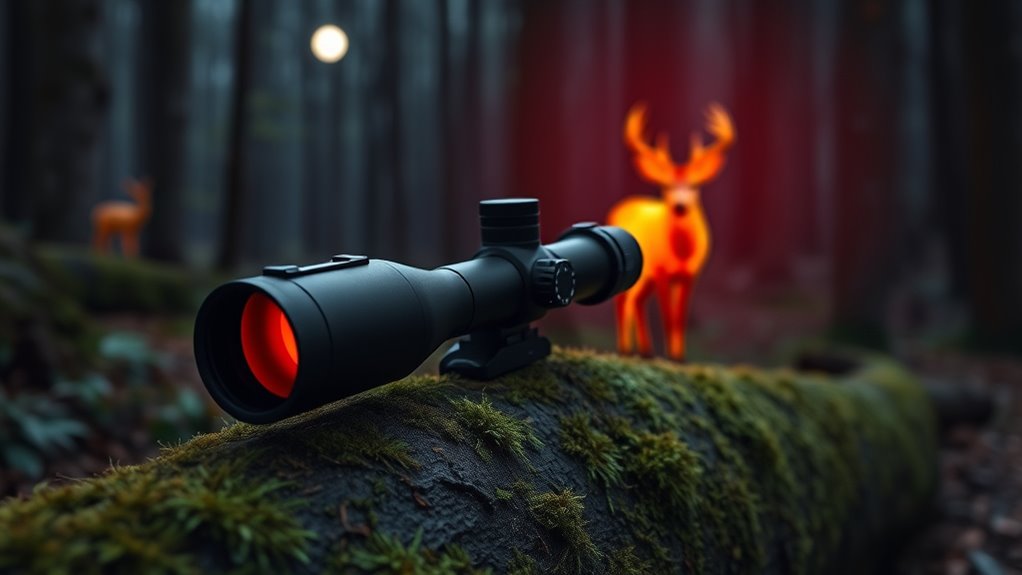

Thermal scopes turn heat differences into an image, but sensor detail, lens choice, controls, and rangefinding separate a practical hunting optic from an awkward fit. I put the RIX Storm S6R 640 first for its 640-class sensor and integrated laser rangefinder, while the AGM Rattler V3 adds rangefinding in a familiar Rattler format and the Pulsar Thermion 2 Pro stands out as a premium-focused option. The main tradeoff is between finer image detail and added cost, size, or complexity; a larger sensor alone does not settle which scope suits your distances and rifle. This roundup also compares lower-resolution Rattler models and more compact choices for buyers with simpler needs. Read on for the full breakdown and a guide to matching features to your use.

Get privacy and security gear delivered free — and shop member deals
- Fast, free delivery on millions of items
- Access to Prime Big Deal Days deals on October 6–7
- Prime Video, Amazon Music and more included
Key Takeaways
- RIX Storm S6R 640 leads this lineup on paper with a high-resolution sensor and built-in laser rangefinder, a useful combination for buyers who need image detail and distance readings in one optic.
- AGM Rattler V3 also pairs thermal imaging with laser rangefinding, while the Rattler V2 variants trade that feature set for a spread of sensor and lens configurations.
- The Rattler V2 25-320 sits between the 640-class models and the 256-resolution options, making sensor resolution and lens choice a more meaningful comparison than the shared family name.
- Compact or simpler options such as the RIX Storm S2 and CVLIFE 19-256 may suit buyers prioritizing a less complex setup, but their 256-class sensors provide less image information than 320- or 640-class alternatives.
- Several models advertise added functions such as recording, night vision, or rangefinding; these features do not replace checking controls, compatibility, operating limits, and the image performance needed at your actual distances.
| RIX Storm S6R 640 Thermal Scope with Laser Rangefinder |  | Best Lightweight Rangefinding Pick | Sensor resolution: 640×512 | Pixel pitch: 12 μm | Thermal sensitivity: NETD <20 mK | VIEW ON AMAZON | See Our Full Breakdown |
| AGM Global Vision Rattler V3 Thermal Imaging Scope with Laser Rangefinder |  | Best for Long-Range Detail | Sensor resolution: 640×512 | Sensor pixel size: 12 μm | Thermal sensitivity: Sub-15 mK | VIEW ON AMAZON | See Our Full Breakdown |
| AGM Global Vision Rattler V2 Thermal Imaging Riflescope, 25mm |  | Best Lightweight Entry into AGM’s Rattler Line | Thermal sensor: 384×288, 12 μm VOx | Lens: 25 mm Germanium | Magnification: 3.5× base; up to 16× | VIEW ON AMAZON | See Our Full Breakdown |
| Pulsar Thermion 2 Pro Thermal Riflescope |  | Best for Wet-Weather Use | Sensor resolution: 384×288 | Detection range: Up to 2,000 yards | Magnification: 2×–10× | VIEW ON AMAZON | See Our Full Breakdown |
| CVLIFE 19-256 Thermal Imaging Rifle Scope |  | Best for Long Runtime and Rugged Protection | Sensor resolution: 256×192 | Pixel pitch: 12 μm | Thermal sensitivity: NETD <50 mK | VIEW ON AMAZON | See Our Full Breakdown |
| AGM Global Vision Rattler V2 25-320 Thermal Imaging Scope |  | Best for Sensor Detail | Sensor resolution: 320×256 | Sensor pixel size: 12μm | Thermal sensitivity: Sub-20mK | VIEW ON AMAZON | See Our Full Breakdown |
| AGM Global Vision Rattler V2 19-256 Thermal Imaging Scope |  | Best for Close-Range Scanning | Model: 19-256 | Sensor resolution: 256×192 | Objective lens diameter: 19 mm | VIEW ON AMAZON | See Our Full Breakdown |
| AGM Global Vision Rattler V2 25-256 Thermal Imaging Scope |  | Best for Built-In Rangefinding | Model: 25-256 | Sensor resolution: 256×192 | Objective lens diameter: 25 mm | VIEW ON AMAZON | See Our Full Breakdown |
| INFITAC IOP13 3+1 Multi-Purpose Thermal Rifle Scope |  | Best for Multi-Role Flexibility | Sensor resolution: 256×192 | NETD sensitivity: ≤25mK | Magnification: 1.5× minimum; 6× maximum | VIEW ON AMAZON | See Our Full Breakdown |
| Oneleaf.ai Mars MT1000LRF Thermal Imaging Riflescope, 35mm Lens, 640 × 512 Sensor |  | Best Premium Sensor and Ballistics Package | Sensor resolution: 640 × 512 | Pixel pitch: 12 μm | Lens: 35 mm included; 50 mm sold separately | VIEW ON AMAZON | See Our Full Breakdown |
| RIX Storm S2 Thermal Scope, 256×192 Sensor, 25mm Lens |  | Best Compact Pick | Thermal sensor: 256×192 | Lens: 25 mm | Magnification: 3.5× to 14× | VIEW ON AMAZON | See Our Full Breakdown |
| GOYOJO GRS225 Thermal Riflescope, 256×192 Resolution, 25mm Lens, 50Hz, Rangefinding and Recoil-Activated Recording |  | Best for Feature-Rich Recording | Thermal sensor: 256×192 | Pixel size: 12 μm | Thermal sensitivity: <35 mK | VIEW ON AMAZON | See Our Full Breakdown |
| Bansainong 384×288 Thermal Scope with Night Vision |  | Best Dual-Mode Pick | Thermal resolution: 384×288 | Sensor pixel size: 12 μm | Thermal sensitivity: 25 mK | VIEW ON AMAZON | See Our Full Breakdown |
| thermal scope | Sensor resolution | Weight | Detection range | Magnification |
|---|---|---|---|---|
| RIX Storm S6R 640 Thermal Scop | 640×512 | Approximately 1 lb | — | — |
| AGM Global Vision Rattler V3 T | 640×512 | — | Up to 2.2 miles | 3.5× base; up to 28× digital |
| AGM Global Vision Rattler V2 T | — | 6.34 ounces | Up to 880 yards | 3.5× base; up to 16× |
| Pulsar Thermion 2 Pro Thermal | 384×288 | 2 pounds | Up to 2,000 yards | 2×–10× |
| CVLIFE 19-256 Thermal Imaging | 256×192 | — | — | 2.4× base; 1–4× electronic zoom |
| AGM Global Vision Rattler V2 2 | 320×256 | — | Up to 1,200 meters | — |
| AGM Global Vision Rattler V2 1 | 256×192 | — | — | — |
| AGM Global Vision Rattler V2 2 | 256×192 | — | Up to 1,250 yards | — |
| INFITAC IOP13 3+1 Multi-Purpos | 256×192 | 1.1 lbs | — | 1.5× minimum; 6× maximum |
| Oneleaf.ai Mars MT1000LRF Ther | 640 × 512 | — | Up to 1,969 yards | — |
| RIX Storm S2 Thermal Scope | — | Approximately 440 g (0.9 lb) | Up to 1,422 yards | 3.5× to 14× |
| GOYOJO GRS225 Thermal Riflesco | — | 1.6 pounds | — | 1×–8× |
| Bansainong 384×288 Thermal Sco | — | 1 kg | — | — |
More Details on Our Top Picks
RIX Storm S6R 640 Thermal Scope with Laser Rangefinder
The Storm S6R 640 pairs a 640×512 sensor with sensitivity below 20 mK, giving it more image detail and heat contrast on paper than the lower-resolution CVLIFE 19-256. Its built-in laser rangefinder and ballistic calculator also make distance estimation and shot planning part of the same setup. At about 1 lb, it is lighter than the two-pound Pulsar Thermion 2 Pro, a useful difference for a rifle carried over long outings. A quick-detach mount and onboard recording add flexibility, while Wi-Fi connects it to the RIX+ app. The tradeoff is incomplete operating information: battery life and weather resistance are not specified, and the description gives different detection ranges for the scope and rangefinder. I would favor it for a feature-rich, lighter rig where those unknowns can be checked before purchase.
Pros:- 640×512 sensor with NETD below 20 mK
- Built-in laser rangefinder and ballistic calculator
- Approximately 1 lb with quick-detach mount included
- Onboard recording and RIX+ app connectivity
Cons:- Battery life and weather-resistance rating are not provided
- The listed scope and rangefinder detection ranges are inconsistent
Best for: Hunters seeking a lightweight 640-class scope with an integrated rangefinder and ballistic tools.
Not ideal for: Buyers who need a stated battery runtime or weather-resistance rating before choosing a scope.
- Sensor resolution:640×512
- Pixel pitch:12 μm
- Thermal sensitivity:NETD <20 mK
- Display:1024 OLED
- Rangefinder:Up to 1,312 yards; accuracy ±1.09 yards
- Storage:32 GB built-in eMMC
- Weight:Approximately 1 lb
- Connectivity:Wi-Fi; RIX+ app integration
- Included accessory:Quick-detach mount
Our verdict“Choose the Storm S6R 640 if you want high-resolution imaging and integrated ranging in a comparatively light package, and can accept gaps in the published operating details.”
AGM Global Vision Rattler V3 Thermal Imaging Scope with Laser Rangefinder
The Rattler V3 stands out in this group for combining a 640×512 sensor with sub-15 mK sensitivity, a 2560×2560 OLED display, and a stated detection range of up to 2.2 miles. Its 3.5× base magnification and up-to-28× digital zoom suit users who want substantial reach, while the picture-in-picture view can keep a broader scene visible as the center is magnified. Compared with the RIX Storm S6R 640, it offers a sharper stated display and lower thermal-sensitivity threshold; both include ranging and ballistic calculation. The V3’s laser rangefinder is specified to 1,000 meters, so buyers should distinguish that figure from the scope’s thermal detection claim. High digital magnification can also make image detail less useful, and the product data gives no battery runtime.
Pros:- 640×512 sensor with sub-15 mK sensitivity
- 2560×2560 OLED display
- Integrated rangefinder and ballistic calculator
- Records video with sound and captures snapshots
Cons:- Battery life information is not provided
- Up to 28× digital zoom may magnify without adding scene detail
Best for: Experienced users prioritizing a high-resolution display, sensitive sensor, and long-distance thermal detection.
Not ideal for: Buyers who want a lightweight, simple scope or need confirmed battery runtime and practical image detail at maximum digital zoom.
- Sensor resolution:640×512
- Sensor pixel size:12 μm
- Thermal sensitivity:Sub-15 mK
- Detection range:Up to 2.2 miles
- Laser rangefinder:Up to 1,000 meters; precision ±1 m
- Display:2560×2560 OLED
- Magnification:3.5× base; up to 28× digital
- Recording:Video with sound and snapshots
- Additional features:Ballistic calculator, Image Boost 2.0, picture-in-picture
Our verdict“Pick the Rattler V3 for its detailed sensor and display package when long-range viewing matters more than simplicity or clearly stated endurance.”
AGM Global Vision Rattler V2 Thermal Imaging Riflescope, 25mm
At 6.34 ounces, this Rattler V2 is the lightest of the five products here by a wide margin, making it a sensible fit for buyers who want thermal capability without adding much weight to a rifle. Its 384×288 VOx sensor, 25 mm Germanium lens, and 3.5× base magnification give it a more modest imaging package than the 640×512 Rattler V3, but the stated 880-yard detection range covers a different, less reach-focused use case. It also includes Wi-Fi, recording, a mount, two batteries, and a five-year manufacturer warranty. Digital zoom takes over above the base magnification, so distant subjects may not retain the detail offered by the V3. Its compact, weather-resistant build favors a straightforward field setup over premium display and ranging features.
Pros:- Very light at 6.34 ounces
- 384×288 VOx sensor with 50 Hz refresh rate
- Weather-resistant housing with Wi-Fi and recording
- Includes mount, two batteries, charger, and carrying case
Cons:- Digital zoom is needed above 3.5× base magnification
- Lower sensor resolution and stated detection range than the Rattler V3
Best for: Rifle users who want a notably light thermal scope, included accessories, and a compact 25 mm lens setup.
Not ideal for: Buyers who need an integrated rangefinder, high-resolution sensor, or strong detail at heavy digital zoom.
- Thermal sensor:384×288, 12 μm VOx
- Lens:25 mm Germanium
- Magnification:3.5× base; up to 16×
- Detection range:Up to 880 yards
- Display:OLED
- Refresh rate:50 Hz
- Weight:6.34 ounces
- Connectivity:Wi-Fi
- Warranty:5-year manufacturer warranty
Our verdict“Choose this Rattler V2 for a lightweight, accessory-rich setup, but look to the Rattler V3 if image detail and long-range capability lead your priorities.”
Pulsar Thermion 2 Pro Thermal Riflescope
The Thermion 2 Pro makes a strong case for field use in wet conditions with its IPX7 water resistance, magnesium-alloy construction, and stated detection range of up to 2,000 yards. Its 2×–10× magnification range is more restrained than the Rattler V3’s 3.5× base and 28× digital ceiling, which may suit users who prefer a broader starting view over extreme zoom. Picture-in-picture keeps the wider scene visible while magnifying the aiming area, and Stream Vision 2 adds Wi-Fi app access. The tradeoff is weight: at two pounds, it adds more to a rifle than the roughly one-pound RIX Storm S6R 640, and it lacks that model’s built-in rangefinder. The listed export and in-country transfer controls may also limit availability or use depending on the buyer’s location.
Pros:- IPX7 water resistance for wet field conditions
- Stated detection range up to 2,000 yards
- Picture-in-picture combines magnified aiming with a wider view
- Wi-Fi connectivity through the Stream Vision 2 app
Cons:- Two-pound weight adds substantial load compared with the RIX Storm S6R 640
- No built-in rangefinder is listed
- Export and in-country transfer are controlled under ITAR
Best for: Hunters who need a water-resistant thermal scope and value a wide-to-moderate magnification range with picture-in-picture.
Not ideal for: Buyers building a lightweight rifle setup or seeking an integrated laser rangefinder in the scope.
- Sensor resolution:384×288
- Detection range:Up to 2,000 yards
- Magnification:2×–10×
- Water resistance:IPX7
- Eye relief:50
- Field of view:7.5
- Mounting type:Picatinny
- Weight:2 pounds
- Material:Magnesium alloy
Our verdict“Choose the Thermion 2 Pro if water resistance and picture-in-picture matter more than low weight or integrated ranging.”
CVLIFE 19-256 Thermal Imaging Rifle Scope
The CVLIFE 19-256 takes a practical route: its 256×192 sensor and 2.4× base magnification are less ambitious than the 384×288 Rattler V2 or either 640×512 model, but the listed runtime of up to 10 hours and IP66 protection are useful strengths for extended outings. A 50 Hz refresh rate and 1024×768 OLED display support smooth viewing, while One-Shot Zero, hot-spot tracking, and Wi-Fi recording add useful functions. Its 1–4× electronic zoom is limited, so this is not the pick for users who need detailed identification at distance. At 18.7 ounces, it is also much heavier than the Rattler V2’s 6.34 ounces. I would choose it for endurance and rugged protection, with the understanding that its lower sensor resolution narrows its reach.
Pros:- Up to 10 hours of stated runtime
- IP66 waterproofing and 1000G shock resistance
- 50 Hz refresh rate with 1024×768 OLED display
- Wi-Fi photo and video sharing with 16 GB storage
Cons:- 256×192 sensor offers less image detail than the Rattler V2 and 640×512 options
- Electronic zoom is limited to 1–4×
- Battery and charging details are not specified
Best for: Buyers who prioritize a stated long runtime, water and shock protection, and onboard recording over long-range image detail.
Not ideal for: Users who need higher-resolution thermal imagery, strong magnification, or a very light rifle setup.
- Sensor resolution:256×192
- Pixel pitch:12 μm
- Thermal sensitivity:NETD <50 mK
- Display and refresh rate:1024×768 OLED; 50 Hz
- Magnification:2.4× base; 1–4× electronic zoom
- Runtime:Up to 10 hours
- Protection:IP66 waterproofing; 1000G shock resistance
- Weight and length:18.7 oz; 8 inches
- Storage:16 GB
Our verdict“Pick the CVLIFE 19-256 if runtime and rugged protection matter more to you than sensor resolution and magnification.”
AGM Global Vision Rattler V2 25-320 Thermal Imaging Scope
The 320×256 sensor and sub-20mK thermal sensitivity give this Rattler V2 a detail advantage over the 19-256 and 25-256 models in this batch. Its 3.5× base magnification favors identifying heat signatures farther out over scanning a broad nearby area, so buyers focused on close-range tracking may prefer the 19-256’s wider field of view. Recoil-activated recording saves clips to 16GB onboard storage, while Wi-Fi adds a way to share them. The IP67 housing and stated 1000g shock resistance suit demanding field conditions. The tradeoffs are its relatively narrow starting view and a battery listing that does not specify the included batteries’ type or capacity.
Pros:- 320×256 sensor with sub-20mK thermal sensitivity
- Recoil-activated recording, 16GB storage, and Wi-Fi
- IP67 rating and stated resistance to 1000g shock
- Mounting and charging accessories plus a carrying case are included
Cons:- 3.5× base magnification gives a narrower starting view than the Rattler V2 19-256
- Included rechargeable batteries are listed without type or capacity
Best for: Hunters who prioritize a higher-resolution thermal sensor, onboard shot recording, and a rugged Picatinny-mounted optic.
Not ideal for: Close-range users who want a wide scanning view or buyers who need clearly specified battery capacity before choosing a setup.
- Sensor resolution:320×256
- Sensor pixel size:12μm
- Thermal sensitivity:Sub-20mK
- Base magnification:3.5×
- Detection range:Up to 1,200 meters
- Refresh rate:50Hz
- Display:1024×768 OLED
- Internal storage:16GB
Our verdict“Choose this Rattler V2 if sensor detail and rugged recording matter more than a wide close-range view.”
AGM Global Vision Rattler V2 19-256 Thermal Imaging Scope
With 2.5× base magnification and a 9.3-degree field of view, this Rattler V2 is the lineup’s more natural fit for scanning and following movement at close to mid range. The 25-256 starts at 3.5×, which can help frame distant targets but gives up some of that broad starting view. This 19-256 pairs its lower magnification with shot-activated video and audio, plus two rechargeable batteries rated for up to 11.5 hours of operation. IP67 waterproofing, recoil resistance, and a wide operating-temperature range support outdoor use. Its 256× sensor resolution is lower than the 25-320’s, and its 8× maximum magnification does not make it a long-range detail specialist. Picatinny mounting also limits fit to compatible setups.
Pros:- 2.5× base magnification and 9.3-degree field of view suit scanning
- Two rechargeable batteries with up to 11.5 hours of stated operation
- Shot-activated video recording includes audio
- IP67 waterproofing and recoil resistance
Cons:- 256×192 sensor resolution is below the Rattler V2 25-320’s 320×256
- Maximum magnification is 8×
- Picatinny mounting is required
Best for: Hunters who scan wooded or brushy areas and want a lower starting magnification with spare-battery runtime.
Not ideal for: Buyers prioritizing higher sensor resolution or long-range identification, or anyone whose firearm lacks a Picatinny rail.
- Model:19-256
- Sensor resolution:256×192
- Objective lens diameter:19 mm
- Base magnification:2.5×
- Maximum magnification:8×
- Field of view:9.3 degrees
- Battery life:Up to 11.5 hours
- Operating temperature:-22°F to 131°F
Our verdict“Pick the 19-256 for a wider close-to-mid-range scanning view, and look elsewhere if higher sensor resolution is the priority.”
AGM Global Vision Rattler V2 25-256 Thermal Imaging Scope
This 25 mm lens and 3.5× base magnification favor a more focused view than the Rattler V2 19-256, while its listed detection range reaches 1,250 yards. A built-in rangefinder and ten reticle options make it a practical pick for buyers who want aiming tools in the scope; the 25-320 offers a higher-resolution sensor, but its supplied data does not list this model’s yard-based range figure. Shot-activated video and audio can capture activity without a manual recording step. The removable battery system is rated for up to 11.5 hours, so longer outings may call for battery changes. Its 3.5× starting magnification can also feel restrictive when scanning nearby terrain, where the 19-256’s 2.5× base is better suited.
Pros:- 25 mm lens with listed detection range up to 1,250 yards
- Built-in rangefinder and ten reticle options
- Shot-activated recording captures video and audio
- IP67 waterproofing and stated shock resistance
Cons:- 3.5× base magnification is less suited to wide close-range scanning than the 19-256
- Up to 11.5 hours of runtime may require battery changes on longer outings
Best for: Picatinny-equipped hunters who want a 25 mm thermal scope with a rangefinder, multiple reticles, and shot-activated recording.
Not ideal for: Close-range scanners who value a wider starting view, or users who need longer operation without managing spare batteries.
- Model:25-256
- Sensor resolution:256×192
- Objective lens diameter:25 mm
- Base magnification:3.5×
- Digital zoom:Up to 8×
- Detection range:Up to 1,250 yards
- Battery runtime:Up to 11.5 hours
- Mounting type:Picatinny
Our verdict“Choose this 25-256 if its rangefinder and focused 25 mm setup fit your needs better than the 19-256’s wider view.”
INFITAC IOP13 3+1 Multi-Purpose Thermal Rifle Scope
The IOP13 earns its place through four usage modes: riflescope, clip-on, handheld monocular, or use alongside a 45-degree offset red dot. Its 1.5× base magnification and 13.5° × 10.1° field of view make it more oriented toward nearby observation than the 3.5× AGM Rattler V2 25-256. That broad view and focus-free design can help when tracking across close terrain, but they do not make this the better choice for distant target detail. The IoT system can stream thermal images to a compatible DNVS-14 Pro, which is sold separately. At 1.1 pounds, it is heavier than the listed Rattler V2 19-256. Its flexibility may suit a user with multiple setups, while a dedicated scope buyer may prefer a simpler, lighter optic.
Pros:- Four supported configurations, including riflescope, clip-on, and handheld monocular
- 1.5× minimum magnification and wide field of view for close-range viewing
- Focus-free design
- IoT image streaming supports a compatible DNVS-14 Pro display
Cons:- Close-range orientation is less suited to distant target identification than the AGM Rattler V2 25-320
- Compatible DNVS-14 Pro display is sold separately
- Listed weight of 1.1 pounds is heavier than the Rattler V2 19-256
Best for: Close-range users who want one thermal device for rifle, clip-on, and handheld roles and already have or plan to acquire the compatible display.
Not ideal for: Long-range users seeking a higher-resolution sensor, or buyers wanting a lightweight dedicated riflescope with no separately sold display dependency.
- Sensor resolution:256×192
- NETD sensitivity:≤25mK
- Magnification:1.5× minimum; 6× maximum
- Objective lens diameter:13 mm
- Field of view:13.5° × 10.1°
- Eye relief:5.2 cm
- Weight:1.1 lbs
- Warranty:3 years
Our verdict“Pick the IOP13 if flexible close-range use across several setups matters more than long-range detail or low weight.”
Oneleaf.ai Mars MT1000LRF Thermal Imaging Riflescope, 35mm Lens, 640 × 512 Sensor
The Mars MT1000LRF stands apart from the AGM Rattler V2 models with a 640×512 sensor, 35 mm lens, and a built-in rangefinder and ballistic calculator. Its 2× base magnification keeps the initial view less tight than the Rattler V2 25-320’s 3.5× starting point, while the higher-resolution sensor gives this model a stronger specification for buyers focused on image detail. Adjustable 30, 50, or 60Hz refresh rates and eleven thermal palettes let users tailor the display to the conditions. The tradeoff is a 1.2-pound aluminum unit, heavier than the listed Rattler V2 19-256. Its lens system can accept an optional 50 mm lens, but that lens is sold separately, so the supplied 35 mm setup defines the included configuration.
Pros:- 640×512 sensor with 12 μm pixel pitch
- Built-in rangefinder and ballistic calculator
- Adjustable refresh rates and eleven thermal palettes
- Interchangeable lens design supports an optional 50 mm lens
Cons:- At 1.2 pounds, it is heavier than the listed Rattler V2 19-256
- The 50 mm lens is sold separately
- Supplied specifications list detection range up to 1,969 yards but do not give a corresponding identification range
Best for: Experienced hunters who want a high-resolution thermal sensor, integrated range and ballistic tools, and adjustable display settings.
Not ideal for: Buyers seeking a lightweight optic or anyone who expects the optional 50 mm lens to be included.
- Sensor resolution:640 × 512
- Pixel pitch:12 μm
- Lens:35 mm included; 50 mm sold separately
- Base magnification:2×
- Maximum magnification:8×
- Detection range:Up to 1,969 yards
- Rangefinder distance:Up to 1,300 yards
- Refresh rate:30/50/60 Hz adjustable
Our verdict“Choose the Mars MT1000LRF if sensor resolution and integrated ranging tools outweigh the added weight and optional lens cost.”
RIX Storm S2 Thermal Scope, 256×192 Sensor, 25mm Lens
The RIX Storm S2 suits buyers who want a lightweight thermal scope with built-in recording. At about 440 g, it is much lighter than the 1.6-pound GOYOJO GRS225, making it easier to keep a rifle setup compact. Its 32 GB storage, Wi-Fi connection, and five image modes add practical flexibility for saving clips and adjusting the view. The tradeoff is its 256×192 sensor, which offers less native detail than the 384×288 Bansainong scope. The Storm S2 also starts at 3.5× magnification, so its view may feel too narrow for close-range scanning. I’d shortlist it for weight-conscious buyers who value simple onboard capture, but skip it if finer image detail or low magnification matters most.
Pros:- Approximately 440 g aluminum construction keeps the rifle setup light.
- 32 GB built-in storage supports video and snapshot capture.
- Five image modes provide viewing options for different conditions.
- Controls and cover are designed for darkness and gloved use.
Cons:- The 256×192 sensor provides less native detail than higher-resolution scopes such as the Bansainong 384×288.
- The 3.5× starting magnification may constrain close-range scanning.
Best for: Hunters seeking a lightweight thermal riflescope with onboard video and snapshots for field use.
Not ideal for: Buyers who need higher native thermal resolution or a low base magnification for close-range viewing.
- Thermal sensor:256×192
- Lens:25 mm
- Magnification:3.5× to 14×
- Horizontal field of view:7°
- Detection range:Up to 1,422 yards
- Weight:Approximately 440 g (0.9 lb)
- Storage:32 GB built-in eMMC
- Connectivity:Wi-Fi with RIX+ app
Our verdict“Choose the Storm S2 if low weight and onboard recording matter more to you than higher resolution or a broad close-range view.”
GOYOJO GRS225 Thermal Riflescope, 256×192 Resolution, 25mm Lens, 50Hz, Rangefinding and Recoil-Activated Recording
The GOYOJO GRS225 is the more feature-packed recording option in this group, with 50Hz imaging, recoil-activated video, and 32 GB storage. Those features can help capture a shot without requiring manual recording at the moment. Its stated 1×–8× range also reaches lower magnification than the RIX Storm S2’s 3.5× base, though the listed optical magnification is 3.5×, so buyers should distinguish the digital range from the optical view. The 256×192 sensor matches the RIX in resolution and trails the Bansainong’s 384×288 sensor for native detail. At 1.6 pounds, it is also considerably heavier than the Storm S2. I’d favor it for buyers who want automated capture and environmental protection, provided the weight and model-specific rangefinding details fit their setup.
Pros:- 50Hz refresh rate supports smooth viewing of moving heat sources.
- Recoil-activated recording and 32 GB storage can capture footage automatically.
- IP67-rated construction is designed for harsh outdoor conditions.
- Offers multiple imaging modes and reticle options.
Cons:- At 1.6 pounds, it adds substantially more weight than the RIX Storm S2.
- Rangefinding availability may vary by model, so verify the specific configuration.
Best for: Rifle users who prioritize recoil-triggered recording, a 50Hz image, and a rugged IP67-rated build.
Not ideal for: Weight-conscious users or buyers who need clearly confirmed rangefinding capability on the exact model.
- Thermal sensor:256×192
- Pixel size:12 μm
- Thermal sensitivity:<35 mK
- Objective lens:25 mm
- Refresh rate:50 Hz
- Magnification:1×–8×
- Display:1440×1080 OLED
- Weight:1.6 pounds
- Battery life:7–9 hours
Our verdict“Pick the GRS225 if automated recording and a rugged build outweigh its heavier footprint and model-dependent rangefinding.”
Bansainong 384×288 Thermal Scope with Night Vision
The Bansainong RY010 stands apart by combining thermal imaging and night vision in one scope. Its 384×288 thermal sensor has more native pixels than the 256×192 sensors in both the RIX Storm S2 and GOYOJO GRS225, giving detail-seeking buyers a stronger specification on paper. The 60Hz refresh rate and 11 color palettes add viewing flexibility, while fixed 4× thermal and 7× night vision magnification keep the setup straightforward. That fixed magnification limits adaptability compared with the Storm S2’s digital zoom range. Runtime is another clear constraint: the stated 1.5–2 hours under heavy use is short beside the GOYOJO’s 7–9-hour battery claim. At 1 kg, it is also no featherweight. I’d consider it for buyers who specifically need both viewing systems in one unit and can manage its limited runtime.
Pros:- Combines thermal imaging and night vision in one scope.
- 384×288 thermal resolution exceeds the 256×192 sensors in the RIX and GOYOJO models.
- 60Hz refresh rate supports smooth tracking.
- Eleven color palettes and an adjustable diopter offer viewing adjustments.
Cons:- Heavy-use runtime is listed at only 1.5–2 hours.
- Thermal and night vision magnification are fixed, limiting flexibility.
- At 1 kg, it is heavier than the RIX Storm S2.
Best for: Buyers who want a single scope with both thermal and night vision, plus a higher-resolution thermal sensor.
Not ideal for: Users needing long sessions under heavy use or variable magnification for changing distances.
- Thermal resolution:384×288
- Sensor pixel size:12 μm
- Thermal sensitivity:25 mK
- Refresh rate:60 Hz
- Thermal magnification:4×
- Night vision magnification:7×
- Night vision detection range:Up to 546 yards (500 meters)
- Battery runtime:3–5 hours light use; 1.5–2 hours heavy use
- Weight:1 kg
Our verdict“Choose the RY010 if you need thermal and night vision together and accept fixed magnification and short heavy-use runtime.”
How We Picked
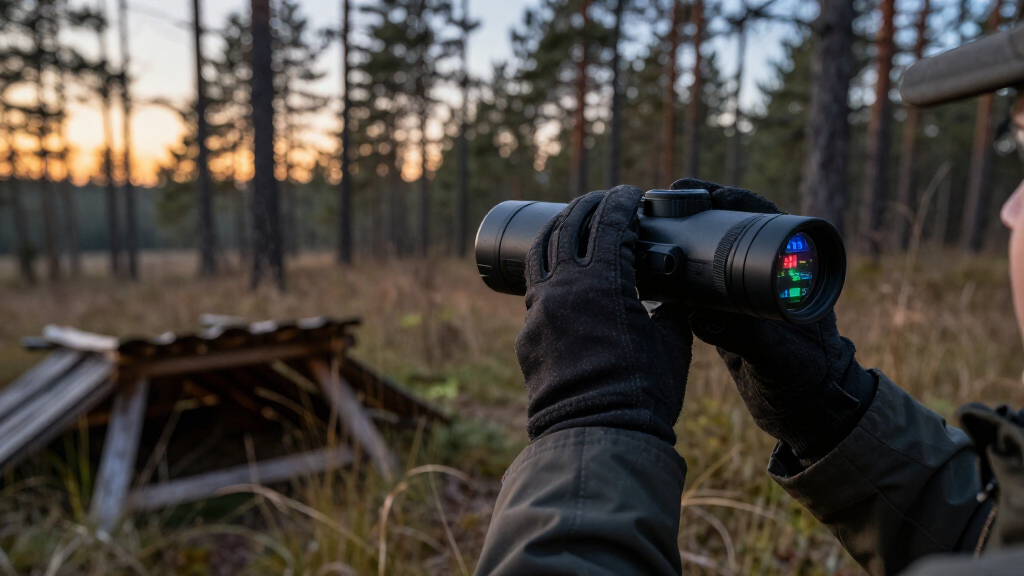
I compared these 13 scopes by the factors that most affect choosing a thermal optic: stated sensor resolution, lens size, rangefinding, control and recording features, and the likely balance of capability against complexity. I gave more weight to combinations that can address distinct buyer needs, such as higher sensor detail with rangefinding, than to feature lists that do not clarify how a scope fits a setup. I also treated resolution and lens size as context for comparison, not as a guarantee of detection distance or usable identification.
The order reflects those differences. The RIX Storm S6R 640 ranks first for combining a 640-class sensor with an integrated rangefinder; the AGM Rattler V3 follows as a rangefinding option in the Rattler lineup, while the Pulsar Thermion 2 Pro takes the premium role. The middle positions cover varied sensor and lens combinations, including the Rattler V2 models, and the remaining picks serve narrower priorities such as compactness, added recording functions, or multipurpose use. Product names and feature claims alone cannot establish real-world image quality, durability, or fit, so buyers should check current manufacturer specifications and local rules before purchase.
Factors to Consider When Choosing Thermal Scopes
Choosing a thermal scope starts with the conditions and distances you expect, then narrows to the features that help you use it well. I would avoid treating one specification as a shortcut to overall performance: sensor resolution, lens, controls, mounting, and local requirements all affect the decision.
Match Sensor Detail to Your Typical Distance
Sensor resolution affects how much image information the scope can display, but it does not tell you by itself how far away you can identify an animal. A 640-class sensor, as found in the RIX Storm S6R and Oneleaf Mars MT1000LRF, can offer more image detail than a 256-class sensor on paper. That extra detail may matter more when observing farther away or distinguishing shapes in a complex background. At shorter distances, a lower-resolution model may be adequate if its controls and image suit your use. Buyers often overfocus on the resolution number and overlook display quality, image processing, and viewing conditions. Compare the full optical system and the maker’s stated performance details before deciding that a sensor class meets your needs.
Choose Lens Size for Your Field of View
Lens size shapes the view you get, so it affects how easily you scan and track as well as how much detail is visible. A wider field of view can make it easier to search nearby terrain, while a narrower view can make distant targets appear larger in the display. These are competing priorities: a scope tuned for scanning may feel different from one intended for more deliberate observation. Compare lens and sensor combinations together rather than assuming a bigger lens is always better. Consider the terrain, typical target distance, and how quickly you need to locate a moving subject. If possible, check the manufacturer’s field-of-view figures for the exact model before buying.
Decide Whether You Need Laser Rangefinding
An integrated laser rangefinder can provide a distance reading without requiring a separate device, which may simplify a setup when distance information matters to your decisions. In this list, the RIX Storm S6R and AGM Rattler V3 specifically include rangefinding, and the Oneleaf and GOYOJO product names also call out rangefinding. Added hardware and controls may make an optic more complex, so buyers who rarely need a measured distance may prefer a simpler configuration. Check whether the rangefinder’s stated operating range and interface suit the conditions you expect. Do not assume that a range reading confirms a safe or lawful shot. The responsibility to identify a target and follow local hunting rules remains with the user.
Check Controls, Recording, and Setup Before You Buy
Thermal scopes can include menus, selectable palettes, recording, recoil-activated capture, and other functions, but extra features only help if they are easy to use in your conditions. A recording feature may be useful for reviewing observations, while a cluttered interface can slow down adjustments when you need them. Look up how the scope handles power, storage, firmware, and saved settings rather than relying on a headline feature. Confirm that the mount, eye position, and rifle configuration are compatible before purchase. New buyers may find a straightforward control layout more useful than a long list of functions. Ask the manufacturer or seller for the manual and verify the exact model revision, since similarly named versions may differ.
Treat Recoil, Weather, and Battery Needs as Core Fit Questions
A scope’s stated sensor and lens do not tell you whether it is built for your rifle or the conditions you face. Check the manufacturer’s recoil rating against your firearm and ammunition, and review the warranty terms for the intended use. Weather resistance, operating temperature, and battery runtime can matter more during a long outing than a feature used only occasionally. Look for clear figures in the specification sheet rather than assuming models from the same product family share the same limits. Consider whether spare batteries or an external power source are practical for your setup. These checks can rule out an otherwise appealing model before you invest in mounting and accessories.
Set a Feature Budget Before Comparing Models
When several scopes look similar, decide which capability would change your use before weighing the rest. Paying more for a higher-resolution sensor or integrated rangefinder makes sense when that feature solves a real limitation for you. It is less compelling if your distances are short, you do not need measured ranges, or the controls add complexity you would rather avoid. Lower-resolution models in the Rattler V2 family show why comparing exact configurations matters: the family name alone does not describe the sensor and lens combination. Make a short list of must-haves, then compare the exact model numbers against it. Leave room in the decision for mounting, power, and any accessories required to use the scope as intended.
Frequently Asked Questions
Is a 640-resolution thermal scope worth choosing over a 256-resolution model?
A 640-class sensor offers more image information on paper, which may help when you need to interpret shapes at greater distances. It does not guarantee that every target will be identifiable, since lens choice, display, image processing, and conditions also matter. A 256-class model may be a sensible fit for closer observation or a simpler setup. In this roundup, the RIX Storm S6R and Oneleaf Mars MT1000LRF are 640-class options, while several Rattler V2 configurations and the RIX Storm S2 use 256-class sensors. Compare the full specifications against your likely use rather than choosing by the resolution number alone.
Should I choose a thermal scope with an integrated rangefinder?
An integrated rangefinder can simplify your equipment when distance readings are useful to your decision-making. The RIX Storm S6R and AGM Rattler V3 combine thermal imaging with a laser rangefinder, while other listed models also advertise rangefinding features. The tradeoff is added controls and the need to check the rangefinder’s specifications and interface. If you already use a separate rangefinder or seldom need distance readings, that feature may not justify added complexity. A range reading does not replace positive target identification or compliance with local rules.
How do I choose between the AGM Rattler V2 models?
Start with the exact sensor and lens combination, since the V2 name covers several configurations in this roundup. The listed options include 25mm models with 320- or 256-class resolution, plus a 19mm 256-class version. Lens and sensor together shape the balance between field of view and displayed detail, so compare both against your typical terrain and distance. Do not assume that similarly named models have identical controls, battery details, or operating limits. Verify the full model number and current manufacturer specifications before ordering.
What should a first-time thermal-scope buyer prioritize?
I would begin with a clear use case, then prioritize a manageable interface, a suitable field of view, and compatibility with your rifle. A long feature list can be less useful than controls you can operate confidently and specifications that match your typical distances. Check mounting requirements, recoil limits, battery details, and warranty coverage before choosing a model. The RIX Storm S2 and simpler Rattler V2 configurations provide lower-resolution alternatives to the more feature-rich 640-class picks, though their exact suitability depends on the setup. Read the manual and confirm local rules for thermal hunting equipment before use.
Can I use a thermal scope as a replacement for night vision?
Thermal imaging and night vision produce images in different ways, so they serve different viewing needs and do not automatically substitute for one another. Thermal scopes display heat differences, while night vision relies on available light or illumination to form an image. The Bansainong model is described as a thermal scope with night vision, but buyers should verify exactly how those modes work and whether they can be used in the intended configuration. Check image quality, controls, and operating limits for each mode rather than assuming the combined label guarantees equal performance. Local rules may also treat thermal imaging and night vision differently.
Conclusion
For the strongest all-around feature combination in this lineup, I would start with the RIX Storm S6R 640, whose 640-class sensor and integrated rangefinder address two key needs in one scope. The AGM Rattler V2 25-320 is my value-minded pick for buyers who want a step beyond 256-class resolution without moving to a 640-class model, while the Pulsar Thermion 2 Pro is the premium option for shoppers focused on that product line. First-time buyers should compare the simpler RIX Storm S2 or a suitable Rattler V2 configuration, checking interface and rifle fit before committing. For rangefinding, consider the Rattler V3; for a multipurpose configuration or recording features, review the INFITAC IOP13 and GOYOJO GRS225 against their exact specifications. The right choice is the model whose sensor, lens, controls, and operating limits match your needs.
Fall Picks
fall essentials
As an affiliate, we earn on qualifying purchases.