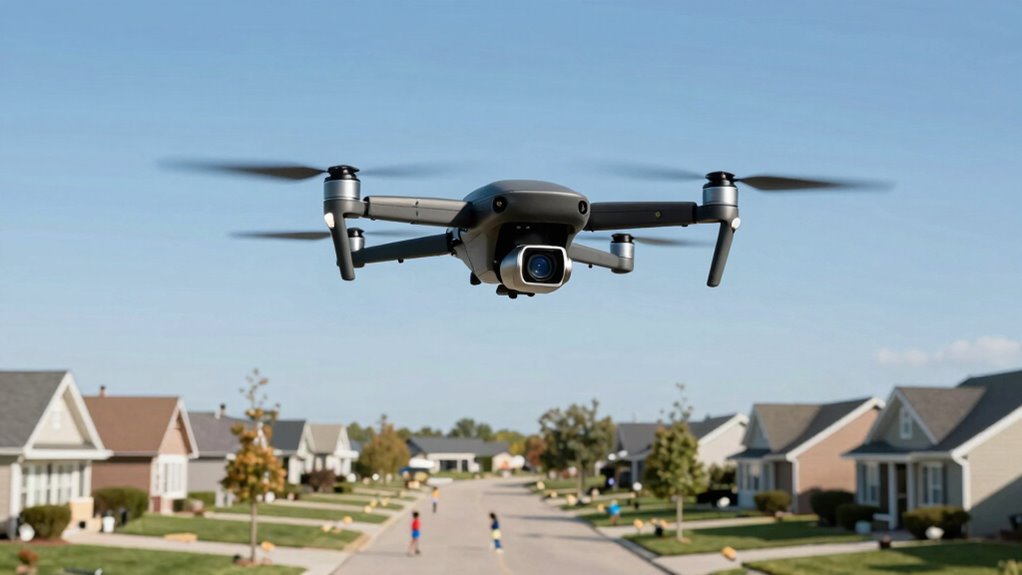

Domestic drone surveillance raises legal tension because it often infringes on your privacy without consent, challenging current laws that can’t keep up with the technology. As drones use high-resolution cameras and sensors, they can easily intrude on personal spaces, leading to misuse like stalking or corporate spying. Many regulations lack clear rules, making enforcement difficult and creating gray areas for abuse. Staying informed helps you understand how ongoing debates shape your privacy rights—if you continue, you’ll discover more.
Key Takeaways
- Drone surveillance can intrude on personal privacy without consent, leading to legal disputes over rights and boundaries.
- Rapid technological advancements outpace existing laws, creating regulatory gaps and enforcement challenges.
- Drone use for monitoring can violate trespass laws and property rights, raising legal conflicts.
- Lack of standardized regulations causes inconsistencies in privacy protections across jurisdictions.
- Potential misuse for stalking or corporate spying heightens legal concerns about abuse and accountability.
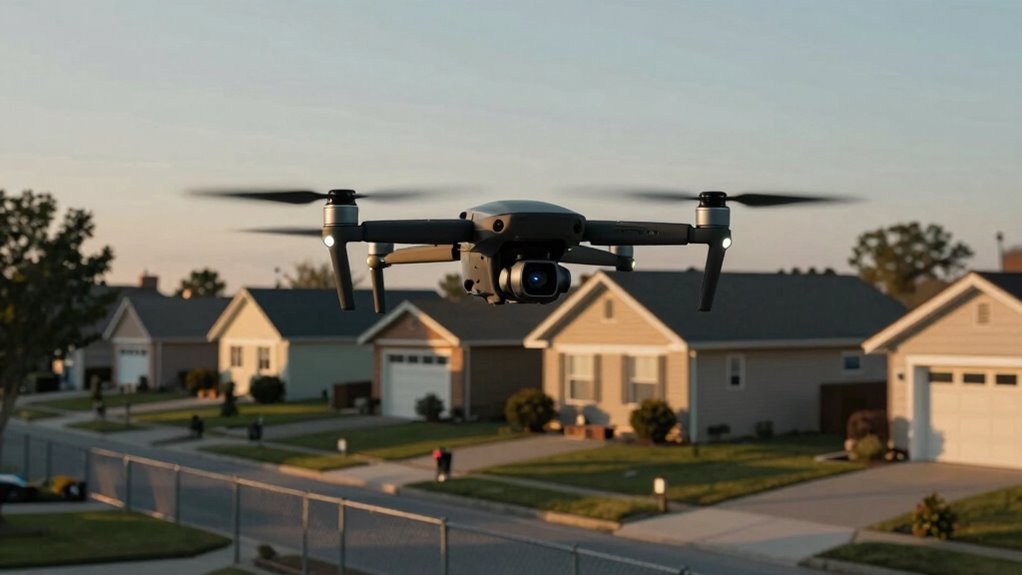
As drones become increasingly common in domestic airspace, they raise significant legal questions about privacy and surveillance. You might not realize it, but every time a drone hovers over your neighborhood, it can capture images and data that intrude on your personal space. This creates a complex dilemma: how do laws keep up with the rapid pace of technological advances? Privacy concerns grow as drones become more affordable and accessible, making it easier for anyone to record or monitor others without consent. The potential for abuse is real, whether for stalking, corporate spying, or unwarranted government surveillance. These issues highlight the need for clear, effective technological regulation that balances innovation with individual rights. Without strict rules, you risk being watched without your knowledge or approval, which erodes trust and personal freedoms.
The challenge lies in establishing regulations that prevent misuse without stifling technological progress. Governments and regulatory agencies are trying to craft laws that define where and when drones can fly, what they can record, and who is responsible for their use. But with rapid technological development, existing laws often lag behind, leaving gray areas that can be exploited. For you, this means that privacy protections aren’t always guaranteed, and you might not know when or if you’re being recorded. The concern isn’t just about accidental capture; it’s about deliberate surveillance that can infringe on your rights. The push for technological regulation aims to set boundaries—such as altitude limits, no-fly zones, and data handling requirements—to prevent abuse and protect your privacy. Emerging trends in digital publishing can help keep the public informed about these evolving legal challenges. Additionally, public awareness about the capabilities and limitations of drone technology is crucial to fostering informed discussions on privacy rights. Moreover, understanding the different technologies used in drones, such as high-resolution cameras and sensors, can help you better grasp how surveillance occurs and what measures might be needed to mitigate it. Developing standardized regulatory frameworks is essential to ensure clarity and enforcement across jurisdictions. Furthermore, advancements in privacy protection tools can provide individuals with more control over their personal data and mitigate potential invasions of privacy.
However, implementing these regulations isn’t simple. You need clear guidelines that are enforceable and adaptable to new technological advancements. The challenge is balancing the benefits of drone technology—like improved security, search and rescue, and infrastructure inspection—with the potential risks to privacy. As a citizen, you want your personal space to be respected, but you also want to embrace technological progress that can improve your safety and quality of life. This tension is at the heart of the legal debate: how do we regulate drones effectively without overreaching? Ultimately, it’s about creating a framework that allows innovation to flourish while safeguarding your privacy rights from invasive surveillance. The ongoing discussions and regulatory efforts reflect the importance of finding that balance before drones become an uncontrollable source of privacy violations.
drone privacy protection camera cover
As an affiliate, we earn on qualifying purchases.
As an affiliate, we earn on qualifying purchases.
Frequently Asked Questions
How Do Drones Invade Individual Privacy Rights?
Drones invade your privacy rights by capturing images and data without your consent, leading to privacy breaches. They can hover over private properties, recording activities and personal details, often without clear regulations. This raises serious questions about surveillance ethics, as you might feel constantly watched or monitored. Such invasions threaten your sense of security and personal freedom, making it essential to evaluate how drone use complies with privacy laws and ethical standards.
Are There Any International Laws Governing Domestic Drone Use?
Ironically, international laws barely keep up with your neighborhood drone patrols. You’d think treaties would cover your right to privacy, but they mainly respect sovereign rights, leaving domestic drone use in a legal gray zone. While some agreements aim to regulate aerial activities, no all-encompassing international treaty specifically governs how you should be monitored—or left alone—by drones. It’s like the sky’s the limit, literally, for domestic surveillance.
What Penalties Exist for Illegal Drone Surveillance?
If you engage in illegal drone surveillance, you could face serious penalties under drone privacy and surveillance regulations. Laws vary by jurisdiction but often include hefty fines, criminal charges, or even jail time. Authorities prioritize protecting individuals’ privacy rights, so violating these laws can lead to legal action. Always guarantee your drone use complies with local regulations to avoid penalties and respect privacy boundaries.
How Do Drone Laws Vary Between States?
You might think drone laws are uniform, but surprise—state regulation varies widely. Some states ban certain surveillance practices outright, while others have minimal rules, leaving you to navigate legal variations on your own. This patchwork of regulations means what’s legal in one state could land you in trouble in another. So, before you fly, you better check local laws, or you might inadvertently cross a legal line.
Can Civilians Legally Shoot Down Unauthorized Drones?
You can’t legally shoot down unauthorized drones because drone defense laws prioritize airspace rights and safety. Doing so could lead to criminal charges, as interfering with aircraft or private property is illegal. Instead, report unauthorized drones to authorities who are trained to handle airspace violations. Protecting your privacy involves understanding these regulations, and taking action outside the law can cause serious legal consequences. Always rely on legal channels for drone issues.
As an affiliate, we earn on qualifying purchases.
Conclusion
As you navigate the skies of domestic drone surveillance, remember it’s like walking a tightrope between security and privacy. Every step you take must be carefully balanced, or you risk falling into legal chaos. Just as a tightrope walker relies on precision and awareness, you need clear laws and respect for privacy to keep this technology grounded and safe. Only then can we soar without losing sight of our fundamental rights.
As an affiliate, we earn on qualifying purchases.
drone detection and jamming equipment
As an affiliate, we earn on qualifying purchases.
As an affiliate, we earn on qualifying purchases.