
Hidden camera detectors work by scanning your surroundings for wireless signals like Wi-Fi and Bluetooth, which cameras use to transmit footage. They also detect infrared emissions in low-light conditions to spot cameras that don’t send signals but emit infrared light. Moving the detector slowly helps identify reflective surfaces or outlets where cameras might hide. If you want to understand the different techniques and tips for better detection, keep exploring how these devices truly operate.
Key Takeaways
- Detect wireless signals like Wi-Fi and Bluetooth emitted by hidden cameras using radio frequency scanners.
- Identify infrared emissions or reflections from covert cameras, especially in low-light environments.
- Use dual-method detectors combining wireless and infrared detection for comprehensive coverage.
- Focus on reflective surfaces and electrical outlets during scans to locate hidden device placements.
- Regular updates and understanding detection limits improve accuracy and reduce false alarms.
In a world where privacy can be easily compromised, hidden camera detectors have become essential tools for safeguarding your personal space. These devices work by scanning your environment for signals and signals that reveal the presence of hidden cameras. Most detectors operate through two primary methods: wireless frequency detection and infrared detection. Understanding how these methods work helps you identify potential surveillance devices effectively.
Wireless frequency detection is the most common approach. Many hidden cameras transmit signals over specific radio frequencies, whether they’re Wi-Fi, Bluetooth, or other wireless protocols. When you turn on your detector, it scans the environment for these signals. If a hidden camera is active nearby, it will emit a wireless signal that your detector can pick up. You’ll often see a visual or auditory alert when the device detects a strong or unusual signal, indicating a possible camera. Keep in mind, though, that some cameras might use encryption or operate on frequencies outside the detector’s scanning range, so this method isn’t infallible but is highly effective against many common surveillance devices.
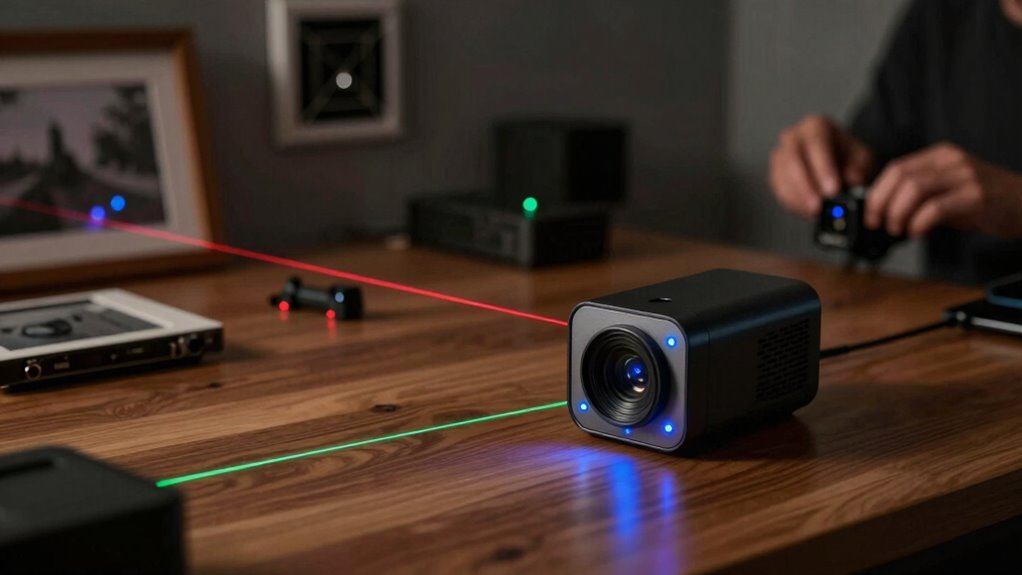
Wireless detection scans for signals from hidden cameras operating on Wi-Fi, Bluetooth, or other radio frequencies.
Infrared detection offers a different approach. Many cameras, especially those intended for security or covert operation, emit infrared light, which isn’t visible to the naked eye but can be detected by specialized sensors. When you activate an infrared detection feature on your detector, it scans for infrared emissions within the environment. If a hidden camera is active, especially in dark or low-light settings, its infrared light might be picked up by the sensor. You might see a faint glow or spot an unusual reflection, alerting you to the presence of a camera. Infrared detection is particularly useful for spotting cameras that don’t emit wireless signals but are still actively recording. Additionally, some detectors now incorporate encryption detection to help identify devices using encrypted signals, further enhancing your security check.
Being aware of detection limitations can help you better interpret signals and avoid false alarms. Some advanced hidden camera detectors combine both wireless frequency scanning and infrared detection, giving you a more thorough security check. This dual approach increases your chances of catching both wireless and infrared-emitting devices. To maximize effectiveness, you should move the detector slowly around the area, paying close attention to reflective surfaces, electrical outlets, or objects that might hide a camera. Regularly updating your detector’s firmware and understanding its capabilities ensures you can better interpret signals and avoid false alarms. Additionally, understanding the types of hidden cameras that exist can help you refine your detection techniques and stay vigilant.
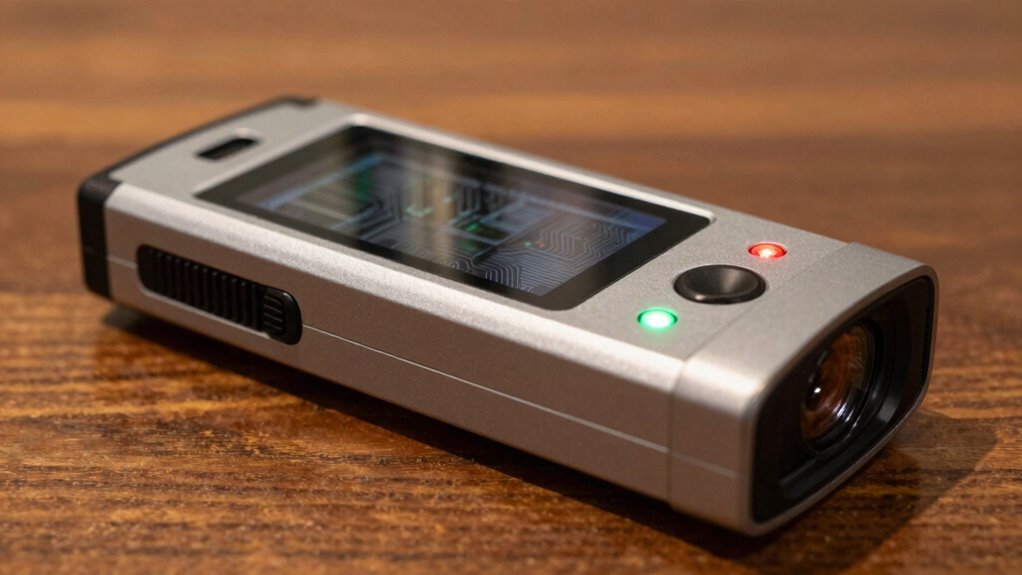
Qyzue Hidden Camera Detectors, Spy Camera Detector with RF Signal & Infrared Detection for Wireless Cameras, GPS Trackers, Privacy Protection, Portable Travel Safety Tool

Portable 4-mode hidden camera detector with RF, infrared, and magnetic detection for comprehensive privacy protection.
As an affiliate, we earn on qualifying purchases.
As an affiliate, we earn on qualifying purchases.
Frequently Asked Questions
Can Hidden Camera Detectors Find Wireless and Wired Cameras Equally Well?
Hidden camera detectors are generally better at wired camera detection because they can directly identify the physical components or wiring. Wireless interference can hinder their ability to detect wireless cameras, making it trickier. While some advanced detectors attempt to pick up radio signals from wireless cameras, their effectiveness varies. So, if you’re specifically concerned about wireless cameras, look for detectors that specialize in radio frequency detection for more reliable results.
Do Hidden Camera Detectors Work in Complete Darkness?
Yes, hidden camera detectors can work in complete darkness. They use infrared detection to identify the infrared light emitted by camera lenses or lens reflection, even when there’s no visible light. When you scan a room, the detector spots the faint infrared signals or reflections from hidden cameras. This makes them effective in darkness, allowing you to find covert devices regardless of lighting conditions.
How Often Should You Test a Room for Hidden Cameras?
You should test a room regularly, ideally once a month, to address privacy concerns. For example, after a vacation, a family found a hidden camera in their rental home by routine checks. Keep in mind device limitations—detectors might miss low-quality or well-hidden cameras. Regular testing helps guarantee your privacy stays protected, especially in sensitive areas like bedrooms or bathrooms. Consistent checks are your best defense against unauthorized surveillance.
Are There False Positives With Hidden Camera Detectors?
Yes, there can be false positives with hidden camera detectors. These detectors sometimes mistake reflections or electronic devices for cameras, raising privacy concerns and legal considerations. To avoid issues, you should understand your local laws about camera detection and use detectors carefully. Recognize that environmental factors or other electronic signals might lead to false alarms, so always double-check before acting, ensuring your privacy concerns are valid and legally sound.
Do Hidden Camera Detectors Detect All Types of Camera Lenses?
Hidden camera detectors don’t detect all types of camera lenses perfectly. They work best with standard lenses, but their detection limitations become apparent with specialized lens types like pinhole or infrared lenses. These unique lenses may evade detection because of their small size or different reflection properties. So, while detectors are useful tools, you should be aware of their limitations and consider additional methods for thorough security.
Conclusion
Now that you understand how hidden camera detectors work, you’re armed with a secret weapon against snooping eyes. Think of these devices as your personal shield, casting a vigilant net around your privacy. Like a lighthouse guiding ships away from rocky shores, they illuminate hidden cameras lurking in shadows. With this knowledge, you’re no longer in the dark—ready to spot those tiny spies before they catch you off guard. Stay alert, stay secure, and keep your privacy intact.