
TL;DR

Get privacy and security gear delivered free — and shop member deals
- Fast, free delivery on millions of items
- Access to Prime Big Deal Days deals on October 6–7
- Prime Video, Amazon Music and more included
A person used Claude Code with AI to review their MRI and get a second opinion. The AI’s analysis differed significantly from the doctor’s report, raising questions about AI’s role in medical diagnostics.
A user employed Claude Code to analyze their MRI scan and obtain a second opinion, revealing significant discrepancies with the original clinical diagnosis. This highlights both the potential and current limitations of AI in medical image review, raising questions about its future role in healthcare diagnostics.
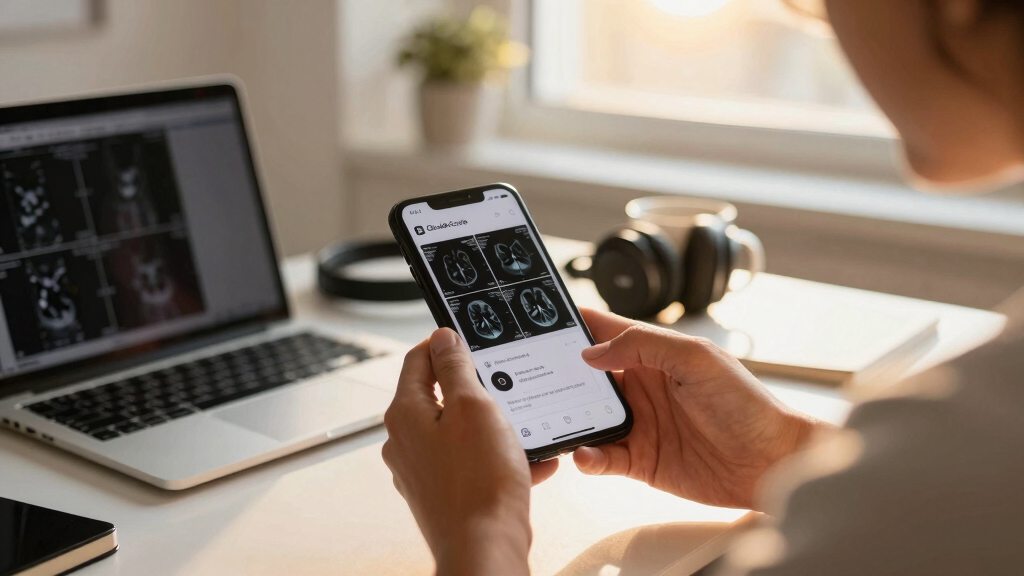
The individual experienced ongoing right shoulder pain for 2–3 weeks and sought an MRI after consulting an orthopedist. The initial report identified a Grade III partial-thickness tear in the subscapularis tendon, prompting extensive treatment recommendations. However, before proceeding, the person used Claude Code (version 4.8) with the ability to run code and analyze the MRI data independently.
The user uploaded a standard DICOM MRI package and instructed Claude to perform a detailed review based solely on their brief symptom description. For more on how Claude can assist in medical data analysis, see Clawdmeter. After about an hour, the AI generated a report stating the tendon was intact, directly contradicting the clinical diagnosis. This discrepancy raised questions about the accuracy of AI-based analysis versus human interpretation.
To further assess the conflicting reports, the user provided additional context, including a discussion with ChatGPT 5.5 Pro, and asked Claude to arbitrate between the two analyses. The AI concluded with a moderate-to-high confidence judgment favoring the second report, indicating no tear and only mild tendinosis. The user noted that the AI was willing to dispute the initial diagnosis, despite the inherent uncertainty involved.
Potential of AI to Challenge Medical Diagnoses
This case demonstrates that AI tools like Claude Code can provide alternative interpretations of medical images, which may be useful in verifying or questioning diagnoses. The discrepancy between AI and human assessments highlights the importance of further validation and cautious integration into clinical practice. AI could serve as a supplementary second opinion, but should not replace professional medical judgment at this stage.
MRI DICOM viewer software
As an affiliate, we earn on qualifying purchases.
As an affiliate, we earn on qualifying purchases.
Current State of AI in Medical Imaging Analysis
While AI has shown promise in medical imaging, most applications remain in experimental or adjunctive stages. AI models have been used to detect certain pathologies with high accuracy, but their reliability varies depending on data quality and complexity. This user’s experiment reflects ongoing efforts to explore AI’s potential for independent review, though discrepancies like this highlight the need for further validation and oversight.
Medical diagnosis traditionally relies heavily on expert interpretation, but AI is increasingly being tested as a second opinion resource. This case illustrates both the potential benefits and current challenges of such approaches.
“AI can offer valuable second opinions but must be integrated carefully into clinical workflows.”
— an anonymous researcher
Uncertainties in AI MRI Analysis Accuracy
It remains unclear how reliable AI analysis is across diverse cases and whether discrepancies like this are common. The specific reasons for the stark difference between the AI and clinical diagnosis are not fully understood, and further validation is needed before AI can be trusted for independent medical review.
Future of AI-Assisted MRI Diagnosis and Validation
Further research and testing are required to establish AI’s accuracy and safety in medical diagnostics. Clinicians and patients will need extensive validation studies before AI can be integrated into routine practice as a second opinion tool. Advances in model development and standards may improve trustworthiness in the future.
Key Questions
Can AI reliably replace a doctor in diagnosing MRI results?
Currently, AI cannot reliably replace doctors but can serve as a supplementary tool. Discrepancies like this highlight the need for further validation and cautious use.
How accurate are AI tools like Claude Code in analyzing medical images?
AI tools show promise but are still in experimental stages. Their accuracy varies depending on data quality and specific use cases, and they should not be solely relied upon for diagnosis.
Could AI help patients avoid unnecessary treatments?
Potentially, AI could help identify misdiagnoses or unnecessary interventions, but more validation is needed before it can be used confidently for this purpose.
What are the risks of using AI for medical diagnosis?
Risks include inaccurate assessments, over-reliance on AI, and possible delays in proper treatment if AI outputs are not properly validated or interpreted.
Source: Hacker News
Halloween Picks
halloween
As an affiliate, we earn on qualifying purchases.