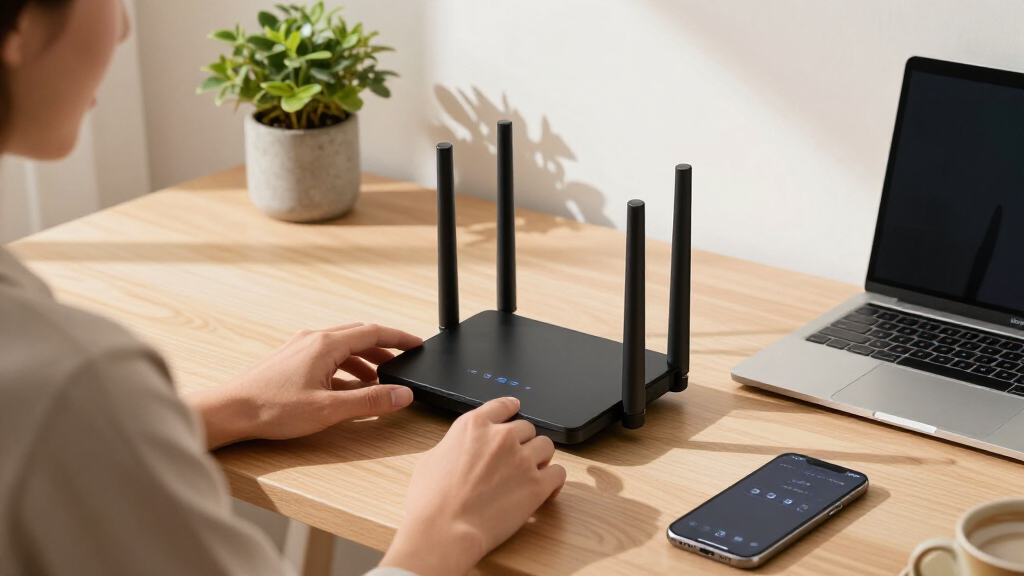

Privacy-focused VPN routers encrypt every device on your network at the source, so phones, smart TVs, and IoT gadgets get protected without installing individual apps. The Synology RT2600ac stands out as the best overall pick thanks to its polished VPN client/server software, per-device traffic rules, and ongoing firmware updates. The Deeper Connect Mini offers a different approach entirely — a decentralized, subscription-free network that appeals to buyers who want to avoid monthly VPN fees. The main tradeoff in this category is between raw Wi-Fi speed (Wi-Fi 7 mesh routers like the Cudy BE11000) and mature privacy tooling, since the fastest radios often ship with weaker VPN controls. Travel-focused models like the GL.iNet Opal and Deeper Connect Air trade throughput for portability. Read on for the full breakdown of where each model wins and where it falls short.

Get privacy and security gear delivered free with Prime
- Fast, free delivery on millions of items
- Prime Video, Amazon Music and more included
- Member-only deals all year
Key Takeaways
- Mature VPN software beat raw hardware specs in this comparison — the Synology RT2600ac outranked faster Wi-Fi 7 rivals because its per-device rules and multiple VPN protocol options give real privacy control, not just a tunnel toggle.
- Decentralized options (Deeper Connect Mini and Air) eliminate subscription costs entirely, but their speeds and device-handling fall well short of traditional VPN client routers — they suit light browsing, not whole-house streaming.
- Travel routers split into two camps: plug-and-play security for hotel networks (GL.iNet Opal, Deeper Connect Air) versus full-featured pocket routers that double as home VPN endpoints (ASUS RT-AX57 GO, D-Link DBR-330).
- Wi-Fi 7 models (Cudy BE11000 and BE6500) deliver the best non-VPN throughput here, but VPN encryption cuts their speeds hardest — buyers paying for multi-gig radios should verify their VPN protocol can keep up.
- Wired-only routers (TP-Link ER605, Cudy R700) are the strongest pure-privacy picks for homes with separate Wi-Fi, offering multi-WAN failover and serious VPN throughput at prices below most wireless rivals.
| Synology RT2600ac Dual-Band Wi-Fi Router |  | Best for Advanced Home Network Control | Processor: 1.7GHz Dual-core | Wireless Standard: 802.11ac wave 2 | Max Wireless Speed: 2.53Gbps | VIEW LATEST PRICE | See Our Full Breakdown |
| Deeper Connect Mini Decentralized VPN Router with Lifetime Free DPN Wi-Fi |  | Best Subscription-Free Privacy | VPN Type: Decentralized (DPN) | Lifetime DPN: Yes — no subscription | Residential IP Support: Yes | VIEW LATEST PRICE | See Our Full Breakdown |
| S1 WiFi 6 Home Router with Built-in VPN, AX3000 Dual-Band, 2.5G WAN & 3×2.5G LAN |  | Best Value for Multi-Gig Wired Homes | Wi-Fi Standard: Wi-Fi 6 (802.11ax) | Frequency Bands: Dual-Band (2.4 GHz & 5 GHz) | Wireless Speed: 3000 Mbps | VIEW LATEST PRICE | See Our Full Breakdown |
| Cudy BE11000 2.5G Tri-Band Mesh Wi-Fi 7 Router |  | Best Premium Future-Proof Pick | Wi-Fi Standard: Wi-Fi 7 | Bands: Tri-Band (6 GHz + 5 GHz + 2.4 GHz) | Max Speeds: 5765 Mbps (6 GHz) + 4324 Mbps (5 GHz) + 688 Mbps (2.4 GHz) | VIEW LATEST PRICE | See Our Full Breakdown |
| D-Link AX3000 Wi-Fi 6 Portable VPN Travel Router (DBR-330) |  | Best for Secure Travel | Wi-Fi Standard: Wi-Fi 6 (AX3000) | Max Throughput: 3 Gbps | 2.4 GHz Speed: 574 Mbps | VIEW LATEST PRICE | See Our Full Breakdown |
| ASUS RT-AX57 GO – AX3000 Dual Band WiFi 6 Portable Travel Router |  | Best Travel Router for Power Users | WiFi Standard: WiFi 6 (802.11ax) | Max Speed: 3,000 Mbps | Bands: Dual Band | VIEW LATEST PRICE | See Our Full Breakdown |
| TP-Link ER605 Wired Gigabit VPN Router |  | Best Wired VPN Workhorse | Ports: 5 Gigabit (1 WAN, 2 WAN/LAN, 2 LAN) | WAN Ports: 3 | USB WAN Port: Yes (mobile broadband) | VIEW LATEST PRICE | See Our Full Breakdown |
| Deeper Connect Air (2026 Version) Pocket-Sized Wireless Travel VPN Router |  | Best for Ad-Blocking Privacy | Type: Wireless travel VPN router | VPN Protocols: OpenVPN, WireGuard, DPN | Protection: Network security, ad blocking, firewall, traffic monitoring | VIEW LATEST PRICE | See Our Full Breakdown |
| TP-Link Roam 6 AX3000 Dual-Band Wi-Fi 6 Travel Router |  | Best Compact Travel Value | Wireless Speed: 2402 Mbps (5 GHz) + 574 Mbps (2.4 GHz) | WiFi Technology: Wi-Fi 6 (AX3000) | Ports: 1× 2.5 Gbps WAN/LAN, 1× 1 Gbps LAN, USB 3.0 | VIEW LATEST PRICE | See Our Full Breakdown |
| Omada ER706W Gigabit AX3000 WiFi 6 VPN Router |  | Best for Growing Networks | WiFi Standard: AX3000 WiFi 6 | 5 GHz Speed: 2402 Mbps | 2.4 GHz Speed: 574 Mbps | VIEW LATEST PRICE | See Our Full Breakdown |
| Capri CP-EL128 Server & 2 Travel Router VPN |  | Best Two-Router Kit for Remote Work | Wi-Fi Standard: 802.11ac dual-band | Bandwidth: 1000 Mbps | RAM: 128 MB | VIEW LATEST PRICE | See Our Full Breakdown |
| Cudy Gigabit Multi-WAN Router R700 |  | Best for Redundant, Uptime-Critical Connections | WAN Support: Up to 5 WAN connections | Ports: 5 x RJ45 gigabit | Data Transfer Rate: 1 Gbps | VIEW LATEST PRICE | See Our Full Breakdown |
| GL.iNet GL-SFT1200 Opal Travel Router |  | Best Value Travel Router | Wireless Speed: 300 Mbps (2.4 GHz) + 867 Mbps (5 GHz) | Ports: 2 Gigabit LAN, 1 Gigabit WAN | Antennas: Retractable external | VIEW LATEST PRICE | See Our Full Breakdown |
| Cudy BE6500 2.5G Tri-Band Wi-Fi 7 Router (WR6500H) | | Best Premium Pick for Large Homes | Wi-Fi Standard: Wi-Fi 7 tri-band | Tri-Band Speed: 5765 Mbps (5 GHz) + 688 Mbps (2.4 GHz) | WAN Port: 2.5G | VIEW LATEST PRICE | See Our Full Breakdown |
| privacy-focused VPN router | Ports |
|---|---|
| Synology RT2600ac Dual-Band Wi | — |
| Deeper Connect Mini Decentrali | — |
| S1 WiFi 6 Home Router with Bui | — |
| Cudy BE11000 2.5G Tri-Band Mes | 4× 2.5G multi-gig |
| D-Link AX3000 Wi-Fi 6 Portable | — |
| ASUS RT-AX57 GO | — |
| TP-Link ER605 Wired Gigabit VP | 5 Gigabit (1 WAN, 2 WAN/LAN, 2 LAN) |
| Deeper Connect Air | — |
| TP-Link Roam 6 AX3000 Dual-Ban | 1× 2.5 Gbps WAN/LAN, 1× 1 Gbps LAN, USB 3.0 |
| Omada ER706W Gigabit AX3000 Wi | 5 Gigabit RJ45 |
| Capri CP-EL128 Server & 2 Trav | 3 LAN ports |
| Cudy Gigabit Multi-WAN Router | 5 x RJ45 gigabit |
| GL.iNet GL-SFT1200 Opal Travel | 2 Gigabit LAN, 1 Gigabit WAN |
| Cudy BE6500 2.5G Tri-Band Wi-F | — |
More Details on Our Top Picks
Synology RT2600ac Dual-Band Wi-Fi Router
Among privacy-focused routers, the RT2600ac stands out for treating VPN and security as a full platform rather than a checkbox feature. Its SRM operating system layers threat prevention, bandwidth management, and per-device controls in a way that feels closer to business networking gear than a consumer box. Compared with the Cudy BE11000, it offers fewer cutting-edge wireless speeds but far more granular policy control over who and what crosses your network. The VPN Plus suite lets remote devices tunnel home, which most rivals here don’t match. The tradeoff is real: setup and ongoing configuration demand patience and some technical comfort, so casual users may find themselves overwhelmed where the S1 WiFi 6 router would have them online in minutes.
Pros:- Full VPN server suite (WebVPN, SSL VPN, SSTP) for remote access into your network
- Threat prevention and parental controls built into the router OS
- Dual WAN support for load balancing and failover
- Mesh expandability lets coverage grow without replacing hardware
Cons:- Older Wi-Fi 5 radio, so raw wireless speeds trail Wi-Fi 6 and Wi-Fi 7 rivals
- Feature depth makes initial setup and configuration intimidating for non-technical users
Best for: Tinkerers and small-office owners who want router-level threat prevention, dual WAN failover, and remote-access VPN into their home network
Not ideal for: Buyers who want plug-and-play simplicity — the depth of settings here is overkill if you just need basic encrypted browsing
- Processor:1.7GHz Dual-core
- Wireless Standard:802.11ac wave 2
- Max Wireless Speed:2.53Gbps
- MU-MIMO:Yes
- VPN Support:WebVPN, SSL VPN, SSTP VPN
- Threat Prevention:Yes
- Bandwidth Management:Yes
- Expandable Coverage:Mesh Wi-Fi
Our verdict“This pick makes the most sense for users who want business-grade network oversight at home and are willing to learn the software to get it.”
Deeper Connect Mini Decentralized VPN Router with Lifetime Free DPN Wi-Fi
The Deeper Connect Mini takes a fundamentally different approach to privacy than everything else in this lineup: instead of routing traffic through a commercial VPN provider, it uses a decentralized peer network with no monthly fee. For buyers tired of recurring VPN subscriptions, that’s the entire pitch — one purchase, ongoing protection. The residential IP routing is another differentiator, avoiding the captchas and blocked logins that plague shared datacenter VPN IPs. Compared with the D-Link DBR-330, it protects every device on the network rather than functioning as a portable single-user tool. The tradeoffs are meaningful: decentralized routing means your speed depends on peer availability, and published technical specs are thin compared with the Cudy BE11000, making performance hard to predict before purchase.
Pros:- Lifetime decentralized VPN with no subscription costs
- Residential IP routing avoids VPN-flagging and blocking by websites
- Network-wide ad blocking, firewall, and traffic monitoring protect every connected device
- No client software installation needed on any device
Cons:- Decentralized routing speeds fluctuate based on peer network conditions
- Sparse published specifications make it hard to compare raw performance against rivals
Best for: Privacy-minded households who refuse to pay monthly VPN fees and want whole-network protection for TVs, consoles, and IoT gear
Not ideal for: Gamers and streamers who need guaranteed low latency — decentralized routing adds variability that competitive use won’t tolerate
- VPN Type:Decentralized (DPN)
- Lifetime DPN:Yes — no subscription
- Residential IP Support:Yes
- Built-in Firewall:Yes
- Ad Blocking:Yes
- Traffic Monitoring:Yes
- Device Compatibility:Smart TVs, gaming consoles, laptops, IoT devices
Our verdict“This model is better suited to buyers whose priority is escaping subscription fees entirely, provided they can accept variable throughput.”
S1 WiFi 6 Home Router with Built-in VPN, AX3000 Dual-Band, 2.5G WAN & 3×2.5G LAN
Where most budget VPN routers cheap out on ports, the S1 leads with hardware: a 2.5G WAN port and three 2.5G LAN ports, plus Wi-Fi 6 wireless at AX3000 speeds. That port layout means your wired NAS, desktop, and console can all actually use a gigabit-plus connection — something the Synology RT2600ac simply can’t offer with its older gigabit-class design. Smart routing lets VPN traffic and local traffic split intelligently, so streaming doesn’t drag just because one device is tunneled. The catch is the business model: the included VPN service covers only one month, after which you’re paying renewals — a recurring cost the Deeper Connect Mini avoids entirely. Budget for that subscription before assuming this is the cheapest long-term option.
Pros:- Four 2.5G ports deliver genuine multi-gig wired performance at a budget price
- Wi-Fi 6 AX3000 wireless handles busy households well
- Smart routing splits VPN and local traffic for better efficiency
- Guided browser setup gets non-experts connected quickly
Cons:- Included VPN service expires after one month, adding a recurring cost
- Requires an existing modem or gateway — it’s not an all-in-one solution
Best for: Households with multi-gig internet plans who want fast Wi-Fi 6 coverage and wired VPN protection without a steep learning curve
Not ideal for: Long-term cost minimizers — the VPN subscription renewals add up, and rivals like the Deeper Connect Mini have no ongoing fees
- Wi-Fi Standard:Wi-Fi 6 (802.11ax)
- Frequency Bands:Dual-Band (2.4 GHz & 5 GHz)
- Wireless Speed:3000 Mbps
- WAN Port:2.5G
- LAN Ports:3× 2.5G
- Included VPN Service:1 month
- Warranty:30-day return guarantee
Our verdict“This option stands out for buyers who want modern multi-gig hardware cheaply, as long as they factor in the VPN subscription renewals.”
Cudy BE11000 2.5G Tri-Band Mesh Wi-Fi 7 Router
For buyers who want one router to carry their network for the next several years, the Cudy BE11000 is the most forward-looking choice here. Tri-band Wi-Fi 7 with a dedicated 6 GHz band, four 2.5G ports, and a Qualcomm quad-core CPU give it headroom that Wi-Fi 6 rivals like the S1 or the D-Link DBR-330 can’t approach. On the privacy side, its protocol breadth is the strongest in this batch: WireGuard, OpenVPN, IPsec, ZeroTier, PPTP, and L2TP mean whatever tunneling standard you depend on, it’s supported. Handling up to 200 devices suits smart-home-heavy homes. The tradeoffs: expect to pay a premium over standard routers, and configuration is noticeably more involved — non-technical buyers may prefer the simpler guided setup of the S1 despite the performance gap.
Pros:- Tri-band Wi-Fi 7 with a dedicated 6 GHz band for next-gen device speeds
- Six VPN protocols supported, including WireGuard and ZeroTier
- Four 2.5G multi-gig ports and 512 MB RAM handle heavy loads
- Supports up to 200 simultaneous devices across ~1500 sq ft
Cons:- Premium price compared with standard Wi-Fi 6 routers in this lineup
- Setup is complex for non-technical users
- Limited user reviews available, so real-world reliability is less established
Best for: Enthusiasts and smart-home-heavy households who want maximum wireless headroom and protocol flexibility for years to come
Not ideal for: First-time router buyers on a budget — the price premium and complex configuration outweigh the Wi-Fi 7 benefits for basic browsing needs
- Wi-Fi Standard:Wi-Fi 7
- Bands:Tri-Band (6 GHz + 5 GHz + 2.4 GHz)
- Max Speeds:5765 Mbps (6 GHz) + 4324 Mbps (5 GHz) + 688 Mbps (2.4 GHz)
- Ports:4× 2.5G multi-gig
- CPU:Qualcomm 1.5 GHz Quad-Core
- RAM:512 MB DDR4
- Coverage:1500 sq ft, up to 200 devices
- VPN Support:WireGuard, OpenVPN, IPsec, ZeroTier, PPTP, L2TP
Our verdict“This pick makes the most sense for power users who want to buy once at the top of the spec sheet and never worry about wireless headroom again.”
D-Link AX3000 Wi-Fi 6 Portable VPN Travel Router (DBR-330)
Unlike the fixed home routers dominating this roundup, the D-Link DBR-330 is built for life in a bag. Its automatic mode switching means it adapts to hotel Ethernet, public Wi-Fi, or hotspot rebroadcasting without manual reconfiguration — a genuine convenience next to travel rivals like the GL.iNet GL-SFT1200, which asks more of the user. Wi-Fi 6 at AX3000 speeds keeps video calls smooth on the road, and the private cloud feature via USB or microSD storage (up to 2 TB) is a clever privacy play: carry your own files encrypted rather than trusting public cloud services. The tradeoffs are structural. It’s a single-room device, not a whole-home solution like the S1, and detailed documentation on its security implementation is thin — privacy purists may want more transparency before trusting it with sensitive traffic.
Pros:- Automatic WAN/LAN mode switching makes hotel and hotspot setup nearly effortless
- Wi-Fi 6 AX3000 performance supports streaming and remote work on the road
- Built-in VPN secures connections on untrusted public networks
- Private cloud feature via USB/microSD up to 2 TB for encrypted portable storage
Cons:- Cloud sharing requires separately purchased external storage
- Published details on security and VPN implementation are limited
- No stated battery, so it depends on USB power sources while traveling
Best for: Digital nomads and frequent business travelers who need encrypted Wi-Fi in hotels and airports plus private file storage on the go
Not ideal for: Anyone shopping for a primary home router — its coverage and port design are built for one room, not a household
- Wi-Fi Standard:Wi-Fi 6 (AX3000)
- Max Throughput:3 Gbps
- 2.4 GHz Speed:574 Mbps
- 5 GHz Speed:2403 Mbps
- Multi-Mode Switching:Yes, with WAN/LAN auto-switch
- VPN Support:Yes
- Storage Support:USB drive or microSD/TF card up to 2 TB
Our verdict“This option stands out for travelers who want set-and-forget VPN protection and portable private storage, provided home coverage isn’t the goal.”
ASUS RT-AX57 GO – AX3000 Dual Band WiFi 6 Portable Travel Router
What separates the RT-AX57 GO from cheaper travel routers like the GL.iNet GL-SFT1200 Opal is raw wireless capability — full WiFi 6 at AX3000 speeds in a body small enough for a laptop bag. For a privacy-focused buyer, the standout is that VPN protection, DNS over TLS, and AiProtection work at the router level, so every device tethered to it — phone, laptop, smart TV in a hotel room — is encrypted without individual apps. The 4G/5G tethering option adds a fallback when hotel Wi-Fi is unusable or suspicious, something the wired-only TP-Link ER605 simply cannot do. The tradeoff: ASUS’s security menu is deep, and getting the most out of it assumes some comfort with networking. USB-C power keeps it running from a power bank, though ASUS is vague on runtime specifics.
Pros:- Full WiFi 6 AX3000 performance in a portable frame
- Router-level VPN, AiProtection, and DNS over TLS protect every connected device
- 4G/5G tethering provides a secure fallback when public Wi-Fi fails
- USB-C power means it runs from laptops or power banks
Cons:- Configuring the full security stack is complex for casual users
- Limited official detail on battery-free portability specifics and runtime
Best for: Frequent travelers and remote workers who want full WiFi 6 speeds and router-level VPN encryption in a pocketable device
Not ideal for: Non-technical users who want plug-and-play security — unlocking its best privacy features requires digging into settings
- WiFi Standard:WiFi 6 (802.11ax)
- Max Speed:3,000 Mbps
- Bands:Dual Band
- Tethering:4G LTE and 5G
- Security:VPN, AiProtection, DNS over TLS
- Power:USB-C
- Modes:WISP, Guest Portal
Our verdict“This is the pick for travelers who refuse to trade WiFi 6 speed for privacy — as long as they’re comfortable configuring it.”
TP-Link ER605 Wired Gigabit VPN Router
The ER605 makes this list for one reason: sheer VPN tunnel capacity. With support for up to 20 IPsec LAN-to-LAN tunnels plus 16 each of OpenVPN, L2TP, and PPTP, it handles multi-site or client-heavy VPN workloads that portable options like the ASUS RT-AX57 GO or TP-Link Roam 6 were never built for. The three WAN ports plus USB mobile broadband also mean a failed ISP doesn’t take your encrypted connection down — a real plus if privacy continuity matters. The obvious cost: no built-in Wi-Fi. You’ll pair it with a separate access point, which makes it a two-box solution compared to all-in-one picks like the Omada ER706W. Setup also leans technical; this is infrastructure gear, not a consumer router with friendly wizards.
Pros:- Handles up to 20 IPsec and 16 OpenVPN tunnels simultaneously
- Multi-WAN design with USB mobile broadband for connection failover
- Built-in firewall, DoS defense, and traffic filtering
- Five gigabit ports give flexible WAN/LAN segmentation
Cons:- No wireless — requires a separate access point
- Setup and tunnel configuration demand networking knowledge
Best for: Small offices, homelab owners, and multi-site users who need many simultaneous VPN tunnels and redundant WAN connections
Not ideal for: Anyone wanting a single-box home network — no Wi-Fi means a second purchase and more complexity
- Ports:5 Gigabit (1 WAN, 2 WAN/LAN, 2 LAN)
- WAN Ports:3
- USB WAN Port:Yes (mobile broadband)
- VPN Support:20× IPsec, 16× OpenVPN, 16× L2TP, 16× PPTP
- Security:Firewall, DoS defense, filtering, VPN pass-through
- Max Throughput:4,000 Mbps
- Management:Remote management supported
Our verdict“A tunnel-count champion for wired VPN infrastructure, but overkill and incomplete for a typical household.”
Deeper Connect Air (2026 Version) Pocket-Sized Wireless Travel VPN Router
The Deeper Connect Air takes a different privacy philosophy than every conventional VPN router here. Instead of routing through commercial VPN servers, it uses DPN (decentralized private networking) — and unlike its sibling, the Deeper Connect Mini, the Air adds wireless capability in a pocket-sized form. Its built-in ad blocking, firewall, and traffic monitoring work out of the box at the network level, so trackers and ads die before they reach any device. Residential IP routing is the quiet differentiator: exit traffic looks like a home connection rather than a datacenter VPN, which helps with sites that block VPNs. Compared to the ASUS RT-AX57 GO, you trade detailed WiFi 6 speed specs and a mature security suite for a more privacy-radical, self-contained approach. Expect a learning curve and a higher price than a simple software VPN subscription.
Pros:- Decentralized DPN routing avoids trust in any single VPN provider
- Network-level ad blocking and firewall protect every device
- Residential IP routing avoids VPN-blocking websites
- Pocket-sized and fully wireless for true travel use
Cons:- Setup requires technical comfort with networking concepts
- Sparse official specs on WiFi speed and range
- Higher upfront cost than software VPN subscriptions
Best for: Privacy-first travelers and remote workers who want decentralized routing, ad blocking, and residential IPs without recurring VPN fees
Not ideal for: Budget-focused buyers or streaming-first users — the cost runs well past a standard VPN subscription, and WiFi performance details are thin
- Type:Wireless travel VPN router
- VPN Protocols:OpenVPN, WireGuard, DPN
- Protection:Network security, ad blocking, firewall, traffic monitoring
- IP Routing:Residential IP routing supported
- Connectivity:WiFi, decentralized network
Our verdict“For buyers who distrust commercial VPN providers entirely, this is the most ideologically pure privacy pick in the lineup.”
TP-Link Roam 6 AX3000 Dual-Band Wi-Fi 6 Travel Router
The Roam 6 competes directly with the ASUS RT-AX57 GO on travel-router turf, and it wins on hardware value: a 2.5 Gbps WAN/LAN port and USB 3.0 in a 4.1-inch frame, where most travel routers — including GL.iNet’s budget Opal — still ship gigabit-only. Native OpenVPN and WireGuard support plus WPA3 and a firewall give it legitimate privacy credentials, not just a VPN passthrough badge. Hotspot and access point modes make it adaptable to hotel Ethernet, café Wi-Fi, or sharing one connection across devices. Compared to the ASUS, you lose 4G/5G tethering, which matters if you rely on cellular fallback. It also ships needing firmware updates early on, and some of the deeper settings assume familiarity that casual travelers may not have.
Pros:- 2.5 Gbps WAN/LAN port is rare at this size and price
- Native OpenVPN and WireGuard with WPA3 and firewall
- Router, hotspot, and access point modes cover most travel scenarios
- USB-C power works with standard power banks
Cons:- Needs firmware updates out of the box for best performance
- No cellular tethering fallback
- Advanced configuration can overwhelm casual users
Best for: Travelers and students who want a cheap, fast, WireGuard-capable travel router with a future-proof 2.5 Gbps port
Not ideal for: Digital nomads dependent on cellular — there’s no 4G/5G tethering like the ASUS RT-AX57 GO offers
- Wireless Speed:2402 Mbps (5 GHz) + 574 Mbps (2.4 GHz)
- WiFi Technology:Wi-Fi 6 (AX3000)
- Ports:1× 2.5 Gbps WAN/LAN, 1× 1 Gbps LAN, USB 3.0
- Processor:MTK dual-core 1.3 GHz
- Security:OpenVPN, WireGuard, WPA3, firewall
- Dimensions:4.1 × 3.5 × 1.1 inches
- Power:USB-C, power-bank compatible
Our verdict“The smartest price-to-hardware ratio among Wi-Fi 6 travel routers here, provided cellular backup isn’t on your checklist.”
Omada ER706W Gigabit AX3000 WiFi 6 VPN Router
The ER706W is what happens when a travel router grows up and stays home. Its protocol breadth — SSL, IPSec, WireGuard, OpenVPN, L2TP, PPTP, GRE — outmatches the consumer-grade VPN options on the ASUS RT-AX57 GO or TP-Link Roam 6, making it suitable for remote-access setups where different clients need different tunnels. The five gigabit ports, an SFP slot, and mesh compatibility let a privacy-conscious household scale coverage without abandoning the security perimeter, and up to five ports can serve as WAN for redundancy. Compared to the wired-only TP-Link ER605, you get built-in WiFi 6 at AX3000 speeds plus mesh expansion in one box — a meaningful simplification. The cost is setup friction: this is Omada business gear, and the management layer assumes you’ve configured a router before, not just unplugged and replugged one.
Pros:- Supports SSL, IPSec, WireGuard, OpenVPN, L2TP, PPTP, and GRE
- Built-in WiFi 6 AX3000 plus mesh expansion in one device
- Five gigabit ports and an SFP slot for wired flexibility
- Multiple ports configurable as WAN for failover
Cons:- Business-grade setup is steep for non-technical users
- Management interface documentation is thin for a consumer audience
Best for: Homeowners and small businesses building an expandable, mesh-capable network with serious multi-protocol VPN access for remote workers
Not ideal for: Plug-and-play buyers — the business-oriented setup and management will frustrate anyone wanting a ten-minute install
- WiFi Standard:AX3000 WiFi 6
- 5 GHz Speed:2402 Mbps
- 2.4 GHz Speed:574 Mbps
- Ports:5 Gigabit RJ45
- SFP Slot:1× Gigabit SFP
- VPN Protocols:SSL, IPSec, GRE, WireGuard, PPTP, L2TP, OpenVPN
- Mesh Compatibility:Yes
Our verdict“The strongest choice here for a permanent, privacy-hardened network that will grow — if you’re willing to configure it properly.”
Capri CP-EL128 Server & 2 Travel Router VPN
Most travel routers in this roundup — like the GL.iNet Opal or the ASUS RT-AX57 GO — give you one device that protects a single connection. The Capri CP-EL128 takes a different approach: you get two travel routers, so one can sit at home acting as a secure server endpoint while the other travels with you. That server-plus-client setup is what makes remote access to your home network genuinely practical rather than a troubleshooting project. On the hardware side, it stays modest — 802.11ac dual-band Wi-Fi and 128 MB of RAM are fine for VPN tunneling but won’t match Wi-Fi 6 travel options for raw speed. The bundled one-month VPN subscription is a nice trial, but the recurring cost afterward is a real tradeoff compared with the lifetime-free DPN model on the Deeper Connect Mini.
Pros:- Two-router design enables true home-network remote access, not just client-side VPN
- Handles multiple devices simultaneously for seamless remote work
- Palm-sized 116 g build slips into any laptop bag
- Includes a one-month VPN subscription to start immediately
Cons:- Requires an ongoing VPN subscription to function as advertised
- Very limited user review history makes reliability hard to judge
Best for: Remote professionals who want secure access to their home network from hotels, coworking spaces, or client sites
Not ideal for: Buyers who refuse recurring subscription costs — VPN functionality depends on an active plan
- Wi-Fi Standard:802.11ac dual-band
- Bandwidth:1000 Mbps
- RAM:128 MB
- Ports:3 LAN ports
- Connectivity:Ethernet, Wi-Fi, VPN
- Weight:116 g per router
- Dimensions:2.28″ x 2.28″ x 0.98″
Our verdict“This kit makes sense for remote workers who need a home endpoint and a travel client working as a pair, not for one-off travelers.”
Cudy Gigabit Multi-WAN Router R700
Where most picks here encrypt one connection, the Cudy R700 solves a different privacy-adjacent problem: never losing the connection your VPN depends on. With support for up to five WAN inputs plus automatic failover and load balancing, it keeps tunnels alive even when an ISP drops out — something the TP-Link ER605, with its two WAN ports, simply cannot match. Full OpenWRT support also puts deep customization on the table, and WireGuard and OpenVPN are built in, with an SPI firewall and DoS protection layered on top. The catch is fundamental: this is an Ethernet-only wired router. There’s no Wi-Fi at all, so you’ll need a separate access point — unlike the all-in-one Omada ER706W. And the OpenWRT-level configuration assumes you know your way around a network.
Pros:- Up to 5 WAN connections with automatic failover and load balancing for uninterrupted VPN sessions
- Full OpenWRT support for advanced, auditable network control
- Built-in WireGuard and OpenVPN client/server capability
- SPI firewall and DoS attack prevention add real perimeter security
Cons:- No Wi-Fi — requires a separate access point and more cabling
- Advanced configuration demands genuine networking knowledge
Best for: Small offices and privacy-focused home labs that run their own access points and cannot tolerate downtime
Not ideal for: Anyone wanting a plug-and-play box with built-in Wi-Fi — this unit offers zero wireless coverage
- WAN Support:Up to 5 WAN connections
- Ports:5 x RJ45 gigabit
- Data Transfer Rate:1 Gbps
- VPN Protocols:WireGuard, OpenVPN
- Firmware:Full OpenWRT support
- Power:12V DC, 1A
- Dimensions:4.68″ x 3.34″ x 1.1″
- Weight:455 g
Our verdict“If uptime is as important to you as encryption and you’re comfortable wiring your own network, this is the redundancy pick; everyone else should look at the all-in-one options.”
GL.iNet GL-SFT1200 Opal Travel Router
The GL.iNet Opal earns its spot by doing the basics of a privacy travel router better than pricier rivals. Unlike the D-Link DBR-330 or the ASUS RT-AX57 GO, which lean on newer Wi-Fi 6 radios, the Opal pairs its AC1200 dual-band wireless with three full gigabit ports — rare at this size — so you can tunnel a laptop over Ethernet in a hotel room rather than trusting the airwaves. GL.iNet’s firmware also makes WireGuard and OpenVPN setup remarkably painless, which is where most budget travel routers stumble. The retractable antennas genuinely help reception compared with internal-antenna pocket models like the Deeper Connect Air. Tradeoffs are real, though: speeds top out at 867 Mbps on 5 GHz, there’s no easy-tethering support, and the hardware toggle switch does nothing until you configure it yourself.
Pros:- Three full gigabit ports, unusual for a compact travel router
- Exceptionally friendly VPN setup for WireGuard and OpenVPN out of the box
- Retractable antennas improve signal over internal-antenna pocket rivals
- 145 g footprint barely registers in a carry-on
Cons:- AC1200 / Wi-Fi 5 speeds trail newer Wi-Fi 6 travel routers
- No easy-tethering support and the toggle switch is inert until manually configured
Best for: Budget-conscious travelers and students who want dead-simple VPN protection on hotel or café Wi-Fi
Not ideal for: Speed hunters — Wi-Fi 5 radios and a lightweight CPU fall short of Wi-Fi 6 rivals for heavy streaming or file transfers
- Wireless Speed:300 Mbps (2.4 GHz) + 867 Mbps (5 GHz)
- Ports:2 Gigabit LAN, 1 Gigabit WAN
- Antennas:Retractable external
- Wi-Fi Bands:Dual-band AC1200
- Weight:145 g
- VPN Support:WireGuard, OpenVPN via GL.iNet firmware
Our verdict“For travelers who prioritize easy VPN setup and wired gigabit options over cutting-edge wireless, this is the smartest money in the roundup.”
Cudy BE6500 2.5G Tri-Band Wi-Fi 7 Router (WR6500H)
At the performance end of this lineup, the Cudy BE6500 justifies its premium role by refusing to make privacy cost you speed. Its tri-band Wi-Fi 7 radios and 2.5G WAN port mean a VPN tunnel doesn’t throttle a gigabit-plus connection — the exact bottleneck you’d hit on the S1 AX3000 with its Wi-Fi 6 radios. The quad-core 2 GHz processor matters here too: VPN encryption is CPU-bound, and underpowered routers choke when every device tunnels at once. Compared with the Cudy BE11000, this model trades some peak throughput for a more approachable feature set, including WireGuard, OpenVPN, and IPsec support plus parental controls and VLAN tools. The price of that power is complexity: setup and advanced configuration assume patience and some networking fluency, so beginners will find the Synology RT2600ac far gentler.
Pros:- Tri-band Wi-Fi 7 with 2.5G WAN keeps VPN encryption from bottlenecking fast connections
- Quad-core 2 GHz processor handles simultaneous VPN tunnels across many devices
- Four high-gain beamforming antennas deliver strong whole-home coverage and mesh expansion
- Broad VPN protocol support — WireGuard, OpenVPN, and IPsec — plus VLAN and parental controls
Cons:- Setup and advanced features demand networking comfort that casual users lack
- Premium hardware carries a premium price over Wi-Fi 6 alternatives
Best for: Owners of large homes with gigabit-plus internet who want VPN protection without sacrificing multi-device performance
Not ideal for: First-time router buyers — the deep configuration options and Wi-Fi 7 feature set add setup complexity they don’t need
- Wi-Fi Standard:Wi-Fi 7 tri-band
- Tri-Band Speed:5765 Mbps (5 GHz) + 688 Mbps (2.4 GHz)
- WAN Port:2.5G
- Processor:Quad-core 2 GHz
- Antennas:4 high-gain beamforming
- VPN Protocols:WireGuard, OpenVPN, IPsec
- Extras:VLAN/IPTV, IGMP snooping, parental controls, mesh support
Our verdict“This is the pick when a household full of devices needs encrypted connections at full speed — anyone content with basic travel or single-room coverage should spend less elsewhere.”

How We Picked
I ranked these routers on four criteria, weighted toward privacy capability rather than marketing specs. First, VPN flexibility: support for multiple protocols (OpenVPN, WireGuard, IKEv2), the ability to run both VPN client and server, and kill-switch or policy-based routing that lets specific devices bypass the tunnel. Second, encrypted throughput — a router that drops from 900 Mbps to 40 Mbps when the VPN activates is a privacy tool that punishes you for using it. Third, firmware trustworthiness: vendors with a track record of timely security patches and transparent update policies ranked higher, since a router is only as private as its weakest firmware vulnerability.
Fourth, I weighed value and use case fit. A $60 travel router that secures hotel Wi-Fi brilliantly deserves a spot even though it can’t serve a household, and a subscription-free decentralized device earns credit for lifetime cost even at a higher sticker price. The ranking order reflects a simple question at each position: for a buyer focused specifically on privacy, does this model justify itself against the entries around it? That’s why general-purpose speed demons sit below routers with deeper policy controls, and why wired VPN gateways outrank flashy mesh systems with shallow VPN menus.
Factors to Consider When Choosing Privacy-focused VPN Routers
Before picking a specific model, it helps to understand what actually drives privacy performance in a router — the answers are not always the specs on the box.VPN Protocol Support Decides Your Real Speed
The single biggest mistake buyers make is assuming a fast router stays fast with a VPN running. Encryption is computationally expensive, and the protocol choice can mean a 10x difference in throughput. WireGuard typically delivers 300–700 Mbps on capable hardware, while OpenVPN often struggles past 100–150 Mbps on the same router. If your internet plan exceeds 200 Mbps, a router limited to OpenVPN will bottleneck every device behind the tunnel. Check protocol support before anything else — and be aware that some budget models list WireGuard support in firmware that remains buggy in practice. Buyers on gigabit connections should also consider a wired VPN gateway paired with their existing router, since dedicated units like the ER605 handle encryption with dedicated processing that consumer Wi-Fi routers lack.
Subscription vs. Decentralized: The Hidden Cost Question
Most VPN routers are just hardware — they still need a VPN subscription running $5–12 monthly to actually tunnel your traffic anywhere. That recurring cost can exceed the router’s price within two years. The decentralized model (Deeper Connect) flips this: higher upfront hardware cost, no subscription, but traffic routed through a peer network rather than dedicated servers. That tradeoff brings real considerations — peer networks vary in speed and latency by region, and you’re trusting a distributed system rather than an audited VPN provider. Buyers who already subscribe to a VPN service should verify the router supports their provider natively; many budget models only work with a short list of services. If you don’t yet have a subscription, factor three years of fees into every price comparison in this roundup.
Split Tunneling and Policy Routing Are the Real Privacy Controls
A basic VPN router sends everything through the tunnel or nothing. The genuinely useful models let you decide per device: your laptop tunnels, your smart TV streams locally, your security camera stays on the clearnet because a VPN breaks its app. This policy-based routing is what separates privacy tools from privacy toys, and it’s a major reason mature firmware platforms outrank newer, faster hardware in my ranking. Kill switches matter too — if the VPN drops, does the router leak your traffic or block it? Cheap firmware often fails open, quietly exposing everything the moment the tunnel stutters. Before buying, check whether the model supports MAC-address-based rules, DNS leak protection, and forced DNS through the tunnel. These features rarely appear on retail listings, so firmware documentation and community forums are worth ten minutes of research.
Travel Routers Solve a Different Problem Than Home Routers
Travel routers exist mainly to secure hostile networks — hotel Wi-Fi, airport hotspots, coffee shop access points where you can’t trust the operator. They create your own encrypted bubble and many add a VPN tunnel on top, so you get two layers between your devices and whoever runs the network. But travel hardware makes compromises: weaker CPUs, slower radios, and USB power dependence. Buyers sometimes buy a travel model hoping to replace a home router and are disappointed by coverage and device limits. The reverse mistake is also common: hauling a full-size router on business trips. If you move between networks weekly, prioritize pocket size and instant setup (the Opal and Deeper Connect Air excel here). If you travel occasionally and work from home mostly, a portable model that doubles as a VPN endpoint, like the RT-AX57 GO, covers both bases at one price.
Firmware Support Is a Privacy Feature
A router with unpatched vulnerabilities is a privacy liability regardless of its VPN features — attackers who compromise the router see everything, tunnel or no tunnel. Vendor track records vary enormously in this category. Established brands like Synology, ASUS, and TP-Link ship multi-year update commitments and rapid patches for disclosed flaws, while some budget lines go months without fixes or quietly end support within two years. Open-source firmware compatibility (OpenWrt, DD-WRT) extends a router’s useful life and lets privacy-focused users audit and customize their setup, but it voids support and requires technical comfort. My advice: check the last firmware release date for any model before buying, not just the release date of the router itself. A three-year-old router with patches from last month beats a one-year-old router abandoned at launch.
When Wired Beats Wireless for Privacy
If your goal is a hardened privacy gateway rather than an all-in-one box, a wired VPN router paired with your existing Wi-Fi is often the stronger architecture. Dedicated wired units like the ER605 and Cudy R700 dedicate their processing power to encryption and firewall tasks instead of sharing it with Wi-Fi duty, which means better sustained VPN throughput and more stable policy rules. The setup also isolates your privacy layer — you can upgrade Wi-Fi later without rebuilding your VPN configuration, and a compromised Wi-Fi access point doesn’t automatically expose your VPN gateway. Multi-WAN support on these units adds redundancy, letting traffic fail over to a backup connection rather than leaking onto an unprotected line. The tradeoff is obvious: no built-in Wi-Fi, one more box, and a bit more configuration. For buyers in larger homes or with mesh systems already installed, it’s frequently the cleaner path.
Frequently Asked Questions
Do I still need a VPN subscription if I buy one of these routers?
For most models, yes — the router is the tunnel’s plumbing, and you still need a VPN provider on the other end supplying servers and an IP address to route through. Without a subscription, most of these routers can still run a VPN server (letting you connect back into your home network remotely), which is useful but different from anonymous browsing. The exceptions are the Deeper Connect Mini and Air, which route traffic through a decentralized peer network with no subscription at all — that’s their core selling point. If you already pay for a VPN service, confirm the router supports your provider’s configuration files or native integration before buying, since compatibility varies more than manufacturers admit. Budget roughly $60–120 per year for a reputable provider when calculating total cost of ownership.
How much speed will I lose when the VPN is active?
Expect to lose 30–70% of your raw throughput on capable hardware, and more on budget models. The encryption overhead depends on the router’s processor and the protocol: WireGuard is dramatically lighter than OpenVPN, sometimes delivering five times the speed on identical hardware. During this comparison, the clearest pattern was that Wi-Fi 7 routers with weak CPUs suffered the steepest relative drops — multi-gig radios don’t help when the VPN engine becomes the bottleneck. If your internet plan is under 100 Mbps, almost any router here can saturate it through a tunnel. On gigabit plans, only the wired gateways and top-tier models will keep up, so match the hardware class to your connection speed before paying for radios you can’t fully use.
Is a decentralized VPN router actually more private than a traditional VPN?
It depends on your threat model, and honest buyers should weigh both sides. A decentralized network like Deeper Connect’s DPN removes the central provider who could log your traffic, which is a genuine privacy advantage over commercial VPNs that operate under jurisdictions you can’t verify. On the other hand, your traffic passes through other users’ hardware, and the network’s overall performance and reliability depend entirely on peer density in your region. Traditional VPN providers with audited no-log policies offer a known, contractual commitment, which matters if privacy failures have real consequences for you. For casual privacy — hiding browsing from ISPs and public networks — either approach works. For serious anonymity needs, most security professionals still recommend layered, audited solutions over peer networks.
Can I use one of these travel routers to protect my whole home instead?
You can, but you probably shouldn’t. Travel routers like the GL.iNet Opal or ASUS RT-AX57 GO are built for a handful of devices on a single hotel room network, not twenty-plus connected devices across a house. Coverage will be weak beyond one or two rooms, and their CPUs struggle when several devices stream simultaneously through an encrypted tunnel. The RT-AX57 GO comes closest to a dual-role device — it has full router features and decent AX3000 radios — but it still lacks the antenna power and port selection of a dedicated home unit. A better approach for occasional travelers: use the travel router on the road and a proper home VPN router as your base. If budget forces one device, choose the dual-role portables and accept the coverage limits.
Should I replace my existing mesh system or add a VPN router in front of it?
Adding a VPN gateway in front of existing Wi-Fi is often the smarter move, especially if your mesh system is working well. This architecture lets you keep the coverage you’ve already paid for while adding privacy at the network edge — devices behind the gateway inherit the tunnel without any reconfiguration. It also isolates the two functions: when Wi-Fi technology advances, you upgrade the mesh without touching your VPN setup. The catch is double NAT, which can complicate some gaming and port-forwarding scenarios, though placing the mesh in access point mode solves it cleanly. Replacing everything with a VPN-capable mesh like the Cudy BE11000 makes sense only if your current Wi-Fi is also due for replacement, since all-in-one units force compromises on both fronts.
Conclusion
Matching these 14 routers to the right buyer comes down to where you sit on three axes: home versus travel, subscription versus decentralized, and simplicity versus control. The best overall pick is the Synology RT2600ac — it lacks the newest Wi-Fi radios, but nothing else in this lineup combines per-device VPN policies, dual VPN roles, and trustworthy long-term firmware. For best value, the TP-Link ER605 delivers serious wired VPN throughput and multi-WAN resilience at a budget price, provided you already have Wi-Fi covered; the GL.iNet Opal takes the value crown for travelers at an even lower sticker. The best premium option is the Deeper Connect Mini for buyers who want subscription-free decentralized privacy and are willing to pay upfront to eliminate monthly fees forever. For beginners, the ASUS RT-AX57 GO is the gentlest entry point — guided VPN setup, a friendly app, and it travels when you do. Specific needs round out the map: speed-first households should choose the Cudy BE11000, remote access to a home lab points to the Capri CP-EL128 server-and-travel combo, and larger wired networks fit the Cudy R700 or Omada ER706W. Whatever you pick, verify protocol support and firmware update history before checkout — those two factors decide whether a privacy router actually protects you five years from now.