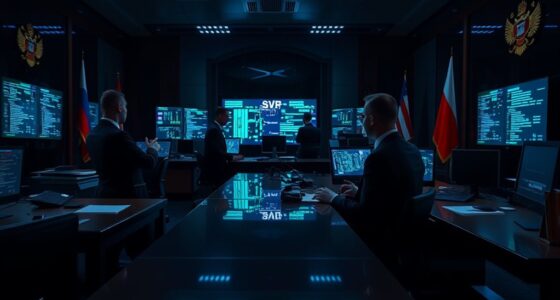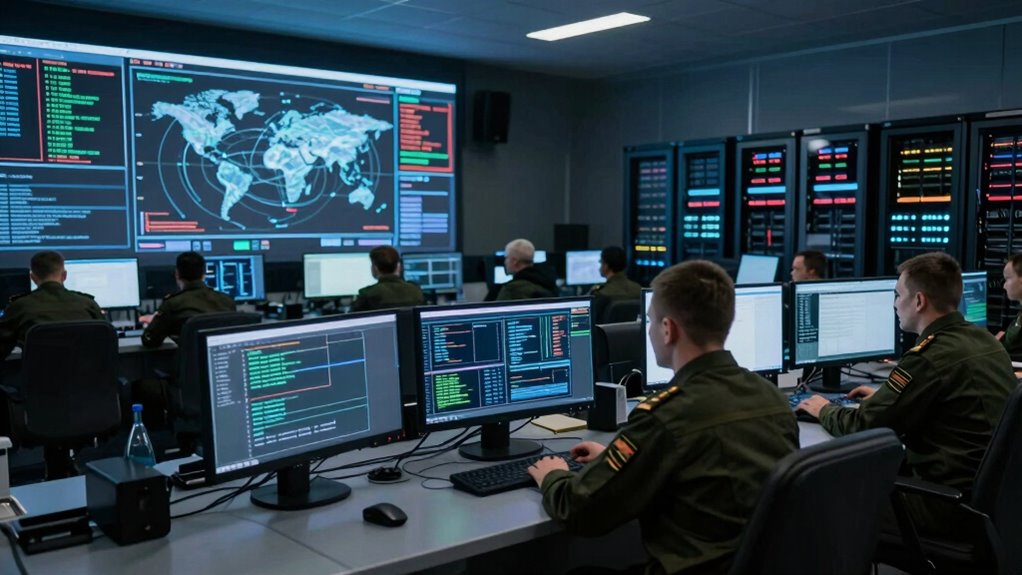

Russia’s GRU became a cyber powerhouse by transforming from traditional military intelligence to a digital threat, leveraging decades of covert operations and strategic cyber investments. It now conducts sophisticated cyber espionage, targets critical infrastructure, and uses advanced hacking tools like malware and zero-day exploits. The agency seamlessly integrates cyber efforts with conventional intelligence, making its operations covert and precise. To discover how this evolution shapes global security, keep exploring these strategies and their broader implications.

Get privacy and security gear delivered free — and shop member deals
- Fast, free delivery on millions of items
- Access to Prime Big Deal Days deals on October 6–7
- Prime Video, Amazon Music and more included
Key Takeaways
- Transitioned from traditional military intelligence to a sophisticated cyber entity leveraging decades of covert digital operations.
- Developed advanced hacking tools, malware, and spear-phishing techniques tailored for strategic cyber operations.
- Integrated cyber espionage with conventional intelligence to enhance operational secrecy and strategic impact.
- Focused on targeting governments, critical infrastructure, and military institutions to gather intelligence and influence outcomes.
- Embraced cyberspace as a primary battlefield, continuously expanding capabilities through technological innovation.
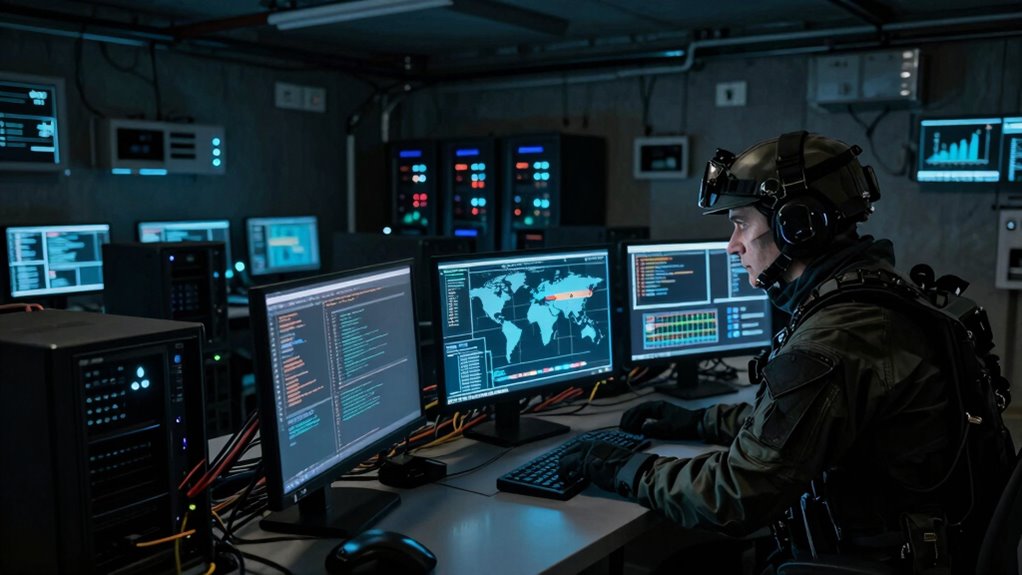
Russia’s military intelligence agency, the GRU, has transformed into a formidable cyber power, leveraging decades of covert operations and strategic investments in digital warfare. This evolution didn’t happen overnight. Instead, it’s the result of deliberate efforts to develop capabilities in cyber espionage and state-sponsored hacking. You might not see it at first glance, but the GRU’s cyber activities are carefully coordinated to gather intelligence, disrupt adversaries, and project influence across the globe.
Cyber espionage has become a core aspect of the GRU’s operations. They target governments, military institutions, and critical infrastructure to collect sensitive information that can give Russia a strategic advantage. Unlike traditional espionage, which relies on human spies, the GRU’s cyber agents operate covertly in the digital domain. They breach secure networks, extract classified data, and leave behind digital footprints that are often difficult to trace back to Moscow. These actions are part of a broader effort to understand and anticipate the moves of rival nations, especially those seen as threats to Russia’s interests. Developing cyber capabilities has been essential for maintaining their edge in modern conflicts.
Cyber espionage now central to the GRU’s strategy, targeting critical networks to gain a strategic advantage and evade detection.
State-sponsored hacking is another pillar of the GRU’s cyber arsenal. You might see these operations as aggressive and clandestine, but they’re carefully planned to serve national goals. The agency’s hackers develop sophisticated tools and malware tailored for specific targets, often working in tandem with traditional intelligence activities. They use spear-phishing campaigns, zero-day exploits, and malware to infiltrate high-value networks. The goal is not just to steal information but to sow discord, influence political processes, or degrade the operational capacity of enemy infrastructure.
What truly sets the GRU apart is its ability to blend cyber espionage with traditional military intelligence. Their cyber teams often operate under the guise of other intelligence units, making attribution difficult and allowing for rapid, covert operations. Over the years, they’ve refined their techniques, adopting innovative hacking tools and tactics to stay ahead of cybersecurity defenses. This continuous evolution fuels their reputation as a leading cyber power, capable of executing complex operations with strategic precision. The integration of cyberspace as a battlefield into their overall strategy exemplifies their shift towards digital dominance.
In essence, you see the GRU’s rise as a reflection of Russia’s broader shift toward cyberspace as a battlefield. Their mastery of cyber espionage and state-sponsored hacking has transformed them from a conventional military intelligence agency into a digital threat that’s both agile and relentless. As technology advances, so will their capabilities, making it clear that Russia’s cyber power isn’t just a tool of intelligence but a core element of their national strategy.
cybersecurity hacking tools
As an affiliate, we earn on qualifying purchases.
As an affiliate, we earn on qualifying purchases.
Frequently Asked Questions
What Are the Key Cyber Operations Conducted by the GRU?
You see, the GRU conducts key cyber operations like cyber espionage, targeting government agencies, military installations, and private companies worldwide to gather essential intelligence. They also engage in digital sabotage, disrupting critical infrastructure, spreading disinformation, and undermining political stability. These operations help Russia maintain strategic advantages, project power, and influence foreign governments, showcasing their expertise in covert cyber tactics.
How Does GRU Recruit and Train Cyber Operatives?
You’re swept into a world where the GRU recruits like elite warriors, hunting for talent through covert channels and underground networks. They train their operatives in cyber espionage and digital infiltration, pushing skills to superhuman levels. With relentless discipline, they perfect their craft via simulated cyber battles, ensuring each operative becomes a master of stealth and deception. This ruthless, strategic grooming creates a cyber force capable of unparalleled digital dominance.
What Countries Have Been Targeted by GRU Cyber Activities?
You should know that GRU targets many countries for cyber espionage and digital sabotage, including the United States, UK, Ukraine, and countries in Europe and Asia. They focus on stealing sensitive information, disrupting systems, and influencing political processes. Their operations often involve sophisticated cyber espionage campaigns and digital sabotage efforts, aiming to weaken rivals and bolster Russia’s strategic interests worldwide.
How Does GRU Collaborate With Other Russian Intelligence Agencies?
Did you know that the GRU collaborates closely with other Russian intelligence agencies, sharing intelligence and strengthening cyber defense? You see, they coordinate operations through joint task forces, ensuring seamless information exchange. This collaboration allows them to pool resources, enhance operational effectiveness, and stay ahead of threats. By working together, the agencies create a robust cyber defense, making it harder for adversaries to infiltrate or disrupt their activities.
What Legal Challenges Does the GRU Face Internationally?
You should know that the GRU faces significant legal ramifications internationally, mainly through diplomatic sanctions and restrictions. These measures target their cyber activities, making it harder for them to operate freely across borders. The sanctions also limit cooperation with other countries’ agencies, risking diplomatic fallout. Overall, these legal challenges aim to deter their cyber operations, but the GRU continues to adapt and find ways to circumvent restrictions.
Conclusion
You can see how Russia’s GRU transformed into a cyber powerhouse by leveraging advanced hacking techniques and state-sponsored operations. An eye-opening statistic shows that over 80% of cyber espionage campaigns in recent years are attributed to Russian actors, highlighting their dominance. This shift to cyber warfare underscores the increasing importance of digital espionage in modern geopolitics. Staying aware of these developments is essential, as the cyber landscape continues to evolve rapidly and shape international security.
Fall Picks
fall essentials
As an affiliate, we earn on qualifying purchases.