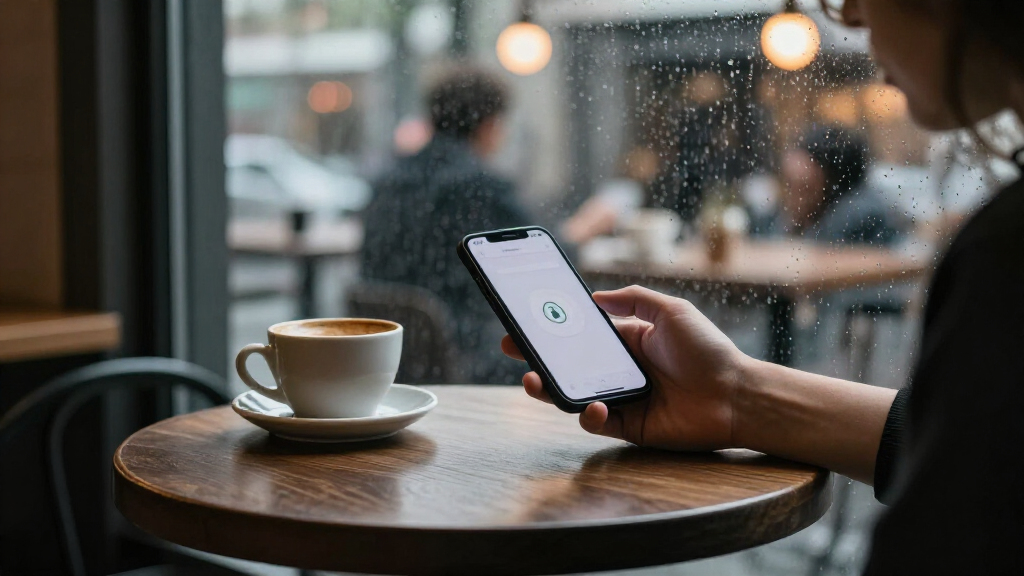

Signal and Threema both provide end-to-end encryption for personal messages and calls, but they make different tradeoffs around identity, adoption, and cost. Signal is free and familiar to many users, which makes it easier to move whole conversations away from less private services. It requires a phone number for registration, though usernames can help people connect without sharing that number in every interaction. Threema charges for its app and lets users create an account without tying it to a phone number or email address. That can reduce the personal information associated with an account, but friends may be less likely to already use it.

Get privacy and security gear delivered free with Prime
- Fast, free delivery on millions of items
- Prime Video, Amazon Music and more included
- Member-only deals all year

WhatsApp, Signal, iMessage, or Telegram – Unmasking the Privacy and Security of Today’s Popular Messaging Apps
- ✔ Format: Book; exact format not provided
- ✔ Platforms covered: WhatsApp, Signal, iMessage, Telegram
- ✔ Primary focus: Privacy and security

Private Chat – Secure & Private Messaging
- ✔ Category: Messaging application
- ✔ Encryption: End-to-end encryption claimed; implementation details not supplied
- ✔ Interface: Described as user-friendly

BlinkTxt Private Messaging
- ✔ Category: Private messaging product
- ✔ Encryption: Not provided
- ✔ Data handling: Not provided
The practical choice is between reach and identity separation. Signal makes private communication easier to adopt across an existing social circle; Threema gives more control over how an account connects to a person’s offline identity. Neither choice removes the need to think about device security, backups, contact discovery, or whom a recipient trusts. Choose Signal if your priority is getting more people onto encrypted chats without asking them to buy an app. Choose Threema if avoiding a phone-number-based account is worth a one-time purchase and some extra effort to bring contacts along.
At a Glance
| Criteria | Signal | Threema | Winner |
|---|---|---|---|
| End-to-end encryption | End-to-end encryption is the default for personal messages and calls. | End-to-end encryption is the default for personal messages and calls. | Tie |
| Account identity | Registration requires a phone number; usernames can reduce the need to share it with contacts. | Can be used without a phone number or email; accounts use a Threema ID. | B |
| Adoption and contact reach | Often easier to use with an existing circle because it is free and widely recognized. | Smaller user base can mean more effort persuading contacts to join. | A |
| Cost | Free to use. | Paid app; exact price depends on platform and region. | A |
| Backups and device changes | Encrypted backups and device transfer options are available, with setup choices to review. | Local or platform-specific transfer and backup options require care when changing devices. | Depends |
| Open source and transparency | Client and server components are published for public inspection. | Core apps are open source and undergo external security review. | Tie |
| Everyday usability | Familiar chat features and low-friction onboarding suit routine use. | Straightforward once contacts are connected, but paid onboarding adds friction. | A |
WhatsApp, Signal, iMessage, or Telegram – Unmasking the Privacy and Security of Today’s Popular Messaging Apps
This is the most useful starting point for readers who want to compare familiar services before deciding where sensitive conversations belong. The book covers WhatsApp, Signal, iMessage, and Telegram, with attention to encryption, data handling, and potential vulnerabilities. Compared with Private Chat, it offers breadth and context rather than a chat interface; it helps us ask better questions, but cannot secure a conversation itself.That makes it a different kind of pick from BlinkTxt, whose listing does not provide enough information to assess its safeguards. The book is described as accessible, though its technical depth may challenge casual readers. We should also check the publication’s currency before relying on any policy or security analysis: messaging apps change, and the supplied listing does not establish how recently its analysis was updated. It is best treated as a guide to comparison, not a substitute for current documentation or independent review.For buyers deciding between mainstream apps, its value is the side-by-side privacy framing: encryption methods are only part of the picture, and data practices can separate services that appear similar. It earns first place for informed selection, not for replacing Signal, WhatsApp, iMessage, Telegram, or another messenger.
Pros:
- Covers four widely used messaging platforms
- Explains encryption concepts in accessible language
- Addresses data handling as well as message protection
- Can help readers form questions for evaluating messaging apps
Cons:
- It is a book, not a messaging application
- Some technical sections may be demanding for casual readers
- The supplied details do not establish how current the analysis is
Best for: Readers comparing the privacy and security approaches of WhatsApp, Signal, iMessage, and Telegram before choosing a messenger.
Not ideal for: Anyone looking for an app to send encrypted messages, or readers who want a nontechnical, quick-start overview.
Bottom line: We rank this first as a decision aid because it compares multiple platforms, while recognizing it cannot provide an encrypted messaging channel.
“We rank this first as a decision aid because it compares multiple platforms, while recognizing it cannot provide an encrypted messaging channel.”
Private Chat – Secure & Private Messaging
Private Chat is the clearest messenger candidate in this roundup because its description specifically claims end-to-end encryption and presents the app as an easy way to hold confidential conversations. Unlike the book ranked above, it is intended for direct messaging; unlike BlinkTxt, it comes with at least a stated privacy feature and a usability claim. Those claims make it the most plausible choice here for someone seeking a dedicated app, but the listing gives no technical detail about how encryption is implemented.The main practical limitation is shared adoption: both people need to install the app before a conversation can move there. That is a meaningful hurdle compared with using a messenger already present among our contacts. The description also says there are no ads, which may reduce promotional clutter, but that alone does not show what account information or metadata the service collects. We should look for current privacy documentation and backup settings before using it for sensitive material.Private Chat suits buyers who prioritize a simple interface and are prepared to bring their contacts along. The book is a better fit for understanding how several established platforms differ; Private Chat is the more direct choice when we want an app, provided its encryption and data practices can be independently checked.
Pros:
- Description explicitly claims end-to-end encryption
- Designed for private conversations
- Emphasizes an easy-to-use interface
- Listing says the app has no ads
Cons:
- Both participants must install the app
- No encryption implementation or audit details are supplied
- Data collection, metadata, backups, and recovery practices are unspecified
Best for: People who want a simple dedicated messenger and can persuade their conversation partners to install it.
Not ideal for: People whose contacts will not switch apps, or buyers who require published technical details or independent verification before adopting a service.
Bottom line: We place Private Chat second as the strongest app candidate in this set, subject to verifying its encryption and data practices.
“We place Private Chat second as the strongest app candidate in this set, subject to verifying its encryption and data practices.”
BlinkTxt Private Messaging
BlinkTxt is the least assessable entry in this comparison. The supplied product information identifies it as a private messaging product, but says nothing about end-to-end encryption, account security, data collection, backups, or even the app’s supported platforms. That leaves us unable to judge its central promise against Private Chat, whose listing at least claims encryption, or against the book, which addresses how to compare privacy practices.This is not evidence that BlinkTxt lacks protection; it is a limit on what we can responsibly recommend. A privacy-focused buyer should seek current technical and policy documentation before installing it or moving confidential conversations. We would also confirm that intended contacts can use it, since adoption is a practical requirement for any separate messenger. Without these details, its potential simplicity cannot outweigh the uncertainty.BlinkTxt may appeal to someone who has already found trustworthy, current documentation elsewhere and wants to investigate another messaging option. For everyone else, the book offers a clearer path to informed comparison, and Private Chat supplies a more explicit—though still unverified—encryption claim. BlinkTxt ranks third because the available evidence is too thin to make a positive privacy judgment.
Pros:
- Identified as a private messaging product
- Could be investigated as an additional messaging option
- No unsupported technical claims are needed to evaluate it cautiously
Cons:
- Encryption details are not provided
- Data handling and account protections are undocumented here
- Platform support and contact adoption requirements are unknown
Best for: A buyer who has access to current security and privacy documentation beyond the supplied listing and is willing to evaluate it.
Not ideal for: Anyone choosing a messenger specifically because they need clearly documented encryption and data practices.
Bottom line: We rank BlinkTxt third because the available description does not establish whether it meets a privacy-focused buyer’s basic security needs.
“We rank BlinkTxt third because the available description does not establish whether it meets a privacy-focused buyer’s basic security needs.”
As an Amazon Associate we earn from qualifying purchases.
Key Differences
Both services protect message contents in transit between participants, so the central comparison is not whether one offers encryption and the other does not. Signal is the easier recommendation for most people because it combines default end-to-end encryption with no app charge and a larger audience. Privacy tools only protect conversations with people who use them, so broad adoption has direct practical value. Signal’s phone-number registration is a genuine identity tradeoff, although username and privacy settings provide ways to limit what other users see.
Threema’s clearest advantage is separation from phone numbers and email addresses: an account can be created around a Threema ID. That reduces one link between a messaging profile and a person’s everyday identity. It does not make someone anonymous in every sense, since contacts, device data, payment records, and communication patterns can still reveal information. The paid price is most defensible for people who value this account model enough to accept a smaller network and the work of inviting contacts.
For both apps, encrypted conversations still depend on secure devices and careful recovery choices. Backups and transfers affect how much message history survives a lost or replaced phone; they also introduce settings users should understand. Compare the current options on the platform you use before relying on a particular recovery method. For ordinary private conversations, Signal’s reach and free access usually outweigh Threema’s identity advantage. For a user with a clear reason to avoid phone-linked registration, Threema can be the more fitting choice.
Detailed Comparison
End-to-end encryption (major difference)
Both apps use end-to-end encryption by default for personal messages and calls, so neither requires users to enable a separate private-chat mode for ordinary conversations. This is a tie on the basic protection that most readers seek. The real-world result is similar: the service is designed so message contents are not readable by the provider in transit. Encryption does not protect a message after it appears on an unlocked device, nor does it control what a recipient copies or shares.
Account identity (Threema wins — major)
Threema wins, with a major gap for people who specifically want to avoid linking an account to a phone number or email address. It supports account creation using a Threema ID without requiring either identifier. Signal requires a phone number to register, although usernames and privacy controls can limit disclosure to other users. In practice, Threema offers a cleaner separation at account creation; it does not guarantee anonymity or conceal all metadata and device-level clues.
Adoption and contact reach (Signal wins — major)
Signal wins by a moderate to major margin for most social circles because it is free and widely known among privacy-conscious users. That lowers the effort required to start a private conversation with family, friends, or colleagues. Threema’s smaller audience can make it harder to move an entire group over, especially when contacts see a purchase as an unnecessary step. If your intended contacts already use Threema, this advantage shrinks; otherwise, reach is a practical privacy feature of its own.
Cost (Signal wins — moderate)
Signal wins on price: it is free to use, while Threema is a paid app whose price varies by platform and region. The difference is meaningful for adoption, particularly when asking a group to install a new messenger. Threema’s charge may be worth paying for users who value its phone-number-free account model. For someone seeking encrypted chat without a specific need for that feature, paying more offers little practical advantage over Signal.
Backups and device changes (moderate difference)
This criterion depends on the device and the user’s preferred recovery approach. Signal offers encrypted backup and transfer paths, while Threema also provides ways to preserve or move data; the details and availability can vary by platform and app version. Neither should be treated as effortless cloud recovery without checking current settings. The difference is minor for people who regularly transfer devices and follow the instructions, but potentially major for anyone who expects old message history to reappear automatically after a phone is lost.
Open source and transparency (minor difference)
Both publish their core apps for public inspection and have had external security review, making this a tie for users who value inspectable implementations. Open source supports scrutiny, but it does not prove that every deployment is secure or that users have configured devices safely. Readers who require evidence for a specific version or server component should check the projects’ current repositories and audit records rather than treating the label alone as a guarantee.
Everyday usability (Signal wins — moderate)
Signal wins by a moderate margin for most new users because it is free, familiar, and easier to recommend across a mixed group. Threema is also a conventional messaging app once contacts are connected, but its price and less common account model add steps before the first conversation. The practical difference is less about sending a message and more about whether the people you need to reach will join. In a group where Threema is already standard, everyday usability may be effectively tied.
Signal: Pros and Cons
Pros:
- Free, which makes it easier to invite friends, family, and groups.
- End-to-end encryption is on by default for personal messages and calls.
- Usernames and privacy controls can reduce exposure of a phone number to contacts.
- Broad recognition makes it a practical default for private everyday chats.
Cons:
- Phone number is required to register an account.
- Privacy settings and recovery choices still need attention.
- A recipient can copy, forward, or capture content on their own device.
Threema: Pros and Cons
Pros:
- Account can be created without a phone number or email address.
- Threema ID gives users a distinct way to connect with contacts.
- End-to-end encryption is on by default for personal messages and calls.
- Core apps are open source and subject to external scrutiny.
Cons:
- The app costs money, with price depending on platform and region.
- A smaller user base can make group adoption harder.
- Users need to understand platform-specific backup and transfer choices.
Who Should Choose What
Choose Signal if:
- You want a free encrypted messenger that is easy to recommend to a large circle.
- Your main goal is moving routine chats away from services without default end-to-end encryption.
- You can accept phone-number registration while limiting what other users see through available privacy controls.
Choose Threema if:
- You want to create a messaging account without tying registration to a phone number or email address.
- Your contacts already use Threema, or you are willing to pay and invite them.
- Identity separation matters more to you than having the broadest possible user base.
Skip both if: Neither is a good fit if the people you need to reach will not use either app, or if you need guaranteed anonymity and protection from an unlocked or compromised device.
Value for Money
Signal is the better value for most users because it costs nothing and already provides default end-to-end encryption for personal conversations. That makes it easier to bring an entire group into private chats, which is often more useful than a privacy feature that only one person in the group can use. Threema’s price is worth paying for people who place a specific value on creating an account without a phone number or email address, especially when their contacts are willing to join. If that identity separation does not solve a real concern for you, the extra cost and adoption friction are hard to justify.
Final Verdict
Choose Signal as the default recommendation for private everyday messaging. It delivers default end-to-end encryption, costs nothing, and is easier to get friends and groups to adopt. Choose Threema when avoiding phone-number-based registration is a leading requirement and you accept paying for the app and building a smaller contact network. The biggest deciding factor is whether account identity separation matters more to you than reach. For most people, Signal is the more useful choice; for users with a concrete reason to keep a phone number out of account creation, Threema earns its price.
Frequently Asked Questions
Is Signal or Threema more private?
Both encrypt personal messages and calls end to end by default. Threema has an advantage if your definition of privacy includes registering without a phone number or email address. Signal’s usernames and privacy controls can reduce exposure of a phone number to other users, but they do not remove the registration requirement.
Is Threema worth paying for instead of using Signal?
It can be, if you have a specific need for a phone-number-free account and the people you message will use Threema. If you mainly want encrypted chats that are easy to adopt across a large circle, Signal’s free access is the stronger value.
Can I use Signal without showing my phone number?
Signal requires a phone number for registration, but its username and privacy settings let users limit how that number is shared with other people. Check the current controls in the app, since settings and behavior can change over time.
Do either app make me anonymous?
No. A private messenger can protect message contents in transit, but it does not erase identifying details from your device, payment, contacts, behavior, or the content you share. Use a separate threat model if anonymity is a requirement.