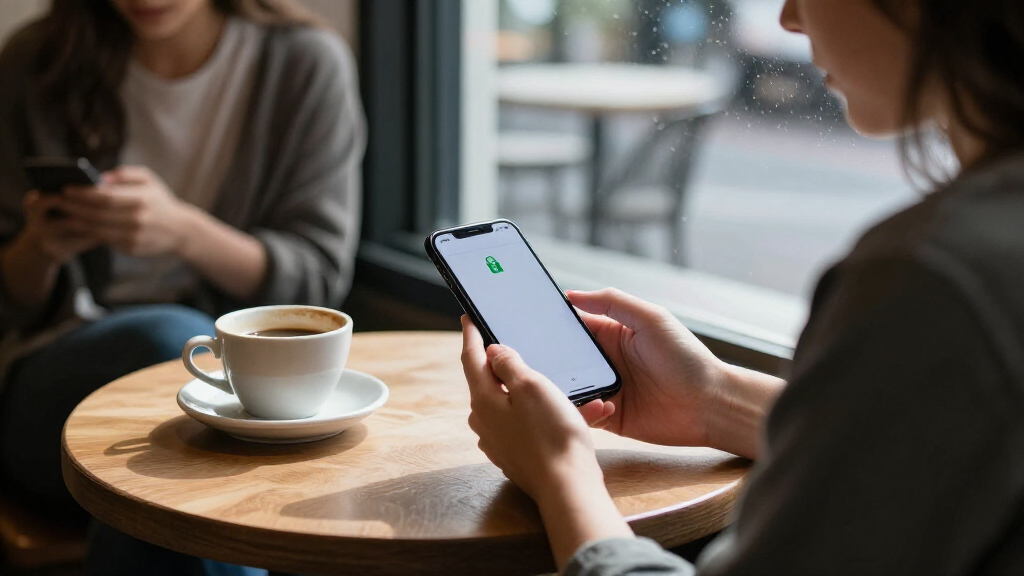

Choose and set up an encrypted messaging app so you and your contacts can exchange private messages with less exposure to service providers and other parties. This guide is for beginners who want practical privacy protections without needing technical expertise. You will compare app features, install one app, configure account and device settings, and check that encryption is active. Allow 30-60 minutes, plus time for your contacts to join.

Get privacy and security gear delivered free with Prime
- Fast, free delivery on millions of items
- Prime Video, Amazon Music and more included
- Member-only deals all year

Private Chat – Secure & Private Messaging
- ✔ Product type: Private messaging application
- ✔ Encryption claim: End-to-end encryption
- ✔ Interface: Described as user-friendly

BlinkTxt Private Messaging
- ✔ Product type: Private messaging product
- ✔ Encryption claim: Not provided
- ✔ Privacy details: Not provided beyond the product description

Chatter: The Chatting App
- ✔ Product type: Chatting app
- ✔ Privacy description: Described as fully private
- ✔ Encryption claim: Not specified
Difficulty: Beginner | Time: 30-60 minutes
What You’ll Need
Tools & Materials:
- A supported iPhone, Android phone, or computer
- A current operating system and internet connection
- Access to the official app store or the app’s official website
- A phone number, email address, or other sign-up method required by your selected app
- A secure place to save recovery codes or backup keys, if the app provides them
Knowledge:
- Basic ability to install apps and change device settings
- Understanding that encryption protects message content but does not hide all account or network information
Set aside time to invite the people you want to message. End-to-end encryption works between participating accounts in the chosen service; it does not automatically encrypt ordinary SMS or messages sent through a different app. Never share a verification code, recovery phrase, or private key with someone who contacts you unexpectedly.
Private Chat – Secure & Private Messaging
Private Chat takes the top spot because its description makes the clearest security claim in this group: it says messages are protected with end-to-end encryption. That gives privacy-conscious buyers a more concrete starting point than BlinkTxt’s unspecified private-messaging description or Chatter’s broad statement that it is fully private. The app is also described as user-friendly and free of ads or promotional content, which may make everyday private conversations feel less cluttered.Those strengths should not be mistaken for a complete security profile. The supplied details do not explain whether encryption is independently audited, how account recovery works, what metadata may be collected, or how backups are handled. Compared with Chatter, Private Chat at least identifies a particular protection, but neither listing provides enough information to verify implementation. Its clearest practical drawback is adoption: both participants need to install the app. That makes it more suitable for a deliberate one-to-one switch than for reaching contacts who will not add another messaging service.
Pros:
- The description explicitly claims end-to-end encryption for messages.
- Presented as having a user-friendly interface for private conversations.
- No ads or promotional content are described.
- Offers more specific privacy information than BlinkTxt and Chatter in the supplied details.
Cons:
- Both people must install the app to communicate.
- No supplied information explains audits, metadata practices, or backup protections.
- The encryption implementation and account-security details are unspecified.
Best for: People who can invite their conversation partners to a separate app and want the most specific encryption claim in this comparison.
Not ideal for: Anyone who needs broad contact compatibility, documented independent security audits, or clear details on metadata and backups before choosing.
Bottom line: We rank Private Chat first for its explicit end-to-end encryption claim, while treating missing verification and the install requirement as substantial caveats.
“We rank Private Chat first for its explicit end-to-end encryption claim, while treating missing verification and the install requirement as substantial caveats.”
BlinkTxt Private Messaging
BlinkTxt earns a place in this roundup as a private-messaging option, but the available description does not say how it protects conversations. There is no supplied claim about end-to-end encryption, data collection, advertising, or usability. That makes it difficult to recommend over Private Chat, whose listing at least names an encryption approach, or to distinguish it from Chatter, which uses the phrase “fully private” without technical detail.This is not evidence that BlinkTxt lacks privacy protections; it is a limit on what we can responsibly tell buyers. If the app is under consideration, its current security documentation should answer whether message contents are encrypted between participants, what information is retained, and how account recovery and backups work. Until those answers are available, we would not choose it solely on the strength of its name. It may still be worth comparing for someone who is willing to research the product directly, but readers seeking a well-supported recommendation should start with the more specific—though still incomplete—information provided for Private Chat.
Pros:
- Presented as a private-messaging product.
- Provides another option to investigate alongside apps with more detailed claims.
- The available description does not make unsupported technical specifics that we would need to interpret.
Cons:
- No encryption method or end-to-end encryption claim is supplied.
- No details are provided about ads, data collection, backups, or audits.
- The available information does not establish how it compares in usability or contact compatibility.
Best for: A privacy-minded buyer willing to inspect BlinkTxt’s current documentation before deciding, rather than relying on the brief listing description.
Not ideal for: People who need clear, verifiable information about encryption and data handling at the point of purchase.
Bottom line: BlinkTxt is a cautious research-only choice in this comparison because its privacy protections cannot be assessed from the supplied information.
“BlinkTxt is a cautious research-only choice in this comparison because its privacy protections cannot be assessed from the supplied information.”
Chatter: The Chatting App
Chatter is described as “fully private,” giving it a stated privacy emphasis that BlinkTxt’s short description does not provide. But the wording is broad: the supplied details do not say whether messages are end-to-end encrypted, whether the claim covers calls or stored content, or what information the service may collect. For a roundup specifically about encrypted messaging, that distinction matters. Private Chat is the stronger starting point because its listing names end-to-end encryption rather than relying only on a general privacy phrase.We would treat Chatter as an option to investigate, not as a verified secure choice. Its app category is clear, but its security model, interface details, advertising policy, and contact requirements are not. Compared with BlinkTxt, Chatter at least states a privacy claim; compared with Private Chat, it offers less actionable information about message protection. Buyers should seek clarification on encryption and data handling before discussing sensitive material. Without that evidence, “fully private” remains a description, not a specification.
Pros:
- Described as fully private.
- Identified as a chatting app.
- Its privacy-oriented positioning is more explicit than BlinkTxt’s supplied description.
Cons:
- No end-to-end encryption claim or technical explanation is provided.
- No information is supplied about data collection, ads, backups, or audits.
- Usability and contact requirements are unspecified.
Best for: Readers interested in a chatting app with an explicit privacy-oriented description who are prepared to confirm the technical details independently.
Not ideal for: Anyone who needs a clearly documented end-to-end encryption claim or detailed security and data-handling information before installing.
Bottom line: Chatter offers a privacy-focused label, but Private Chat ranks ahead because it provides a more specific encryption claim.
“Chatter offers a privacy-focused label, but Private Chat ranks ahead because it provides a more specific encryption claim.”
As an Amazon Associate we earn from qualifying purchases.
Before You Start
Decide what you need protection from before choosing an app. End-to-end encryption is designed to prevent the service provider and network observers from reading message contents in transit, but it cannot stop someone from reading messages on an unlocked device, taking screenshots, or forwarding content. The app may still collect account details, connection times, device information, or contact data.
Compare current information from the app’s official documentation and reputable independent security reviews. Check whether end-to-end encryption is on by default for individual and group chats, whether calls are encrypted, what account details are required, how backups work, and whether you can verify contacts’ security codes. App features can change; do not rely on an old comparison or a privacy label alone.
Step-by-Step Instructions
Step 1: Set your privacy requirements
Write down what you need the app to protect: message contents, calls, group chats, contact details, or messages stored on devices. Decide whether you need to communicate across iPhone, Android, and desktop, and whether you are willing to use a phone number or another identifier to register. Rank the requirements so you can compare apps against the same needs instead of choosing based on popularity alone.
Tip: Encryption does not make an app anonymous. If hiding your identity or phone number matters, check whether the service offers usernames or other account options and what information remains visible to contacts.
Check: You have a short list of required features and any account details you are unwilling to provide.
Step 2: Compare trustworthy app options
Compare a small number of established apps using their current security documentation and independent reviews. Look for end-to-end encryption enabled by default in the chats you plan to use, encrypted voice and video calls if needed, clear handling of group chats, and a way to verify contact identities. Check the app’s update history, supported devices, data collection information, and whether linked computers or tablets can access message history.
Read the backup policy before settling on an app. Some services offer cloud backups that are not end-to-end encrypted unless you turn on a separate encrypted-backup option. Others may not let you restore old messages. Choose a policy you can manage without weakening the protection you want.
Tip: A lock icon or a general claim of encryption is not enough. Confirm that encryption is end-to-end, applies to the relevant chat type, and is enabled by default or can be verified.
Check: You can explain why your selected app meets your requirements and what information it may still collect.
Step 3: Install the official app
Download the app from your device’s official app store or follow the download link on the service’s official website. Check the publisher name before installing, and avoid sponsored search results, unofficial download sites, modified app packages, and links sent by strangers. Install operating system and app updates before entering account details.
Tip: If you use a computer version, download it from the official service website and check that the web address is correct. Do not install a look-alike app just because its name or icon appears similar.
Check: The installed app’s publisher matches the service you chose, and your device shows no pending security updates.
Step 4: Create and protect your account
Open the app and follow its registration process. Use a strong, unique account password if the service supports one, and turn on a passkey or two-step verification when available. Enter verification codes only in the app’s sign-up screen that you opened yourself. Review optional requests for contacts, location, microphone, and photo access; grant each permission only when you need the related feature.
Save any recovery code or backup key using a password manager or another secure method recommended by the service. Keep it private and do not store it in an ordinary chat, an unprotected note, or a shared document. If losing account access would be serious, learn how account recovery works before relying on the app.
Tip: A verification code proves control of an account or phone number. Support staff and contacts should not need you to send them the code.
Check: You can open the app with your account, account protection is active where available, and recovery information is stored privately.
Step 5: Set privacy, lock, and backup options
Open the app’s privacy and security settings. Turn on an app lock or require device authentication if offered, and set message previews to hidden on the lock screen if other people might see your phone. Review disappearing-message settings, read receipts, typing indicators, profile visibility, and who can add you to groups. Choose settings based on how you use the app; disappearing messages do not prevent screenshots or copies made by recipients.
Inspect backups and linked-device settings. If you enable a backup, use the app’s end-to-end encrypted backup option and save its recovery key securely. Remove computers or tablets you no longer use. Check device notification settings too, because a message preview may appear there even when the app itself is locked.
Tip: Do not turn on a backup until you understand whether its encryption key is controlled by you or by the backup provider. A convenient backup that exposes message contents may defeat your privacy goal.
Check: The app lock and notification choices match your needs, backups have a known protection level, and only trusted devices are linked.
Step 6: Invite contacts and verify sensitive conversations
Invite contacts through the app’s built-in contact or invitation method. Tell them to install the official app and check their own security and backup settings. Start a one-to-one conversation and open its security details. For sensitive conversations, compare the contact’s safety number, security code, or QR code using a separate trusted channel, such as an in-person check or a call to a number you already know.
Repeat verification after a contact changes devices or reinstalls the app if the service reports a security-code change. Treat an unexpected change as a reason to confirm the contact’s identity before sending sensitive information.
Tip: A conversation can be encrypted while the person on the other end is still an impostor. Verification helps confirm which account or device you are speaking with.
Check: Your intended contacts have joined the same service, and you know how to verify identity for conversations where it matters.
Step 7: Test a message, call, and linked device
Send a harmless test message to a trusted contact and open the conversation’s security details. Confirm that the app identifies the chat as end-to-end encrypted. If you need calls, make a test voice or video call and check the app’s security information for calls. If you use a desktop or tablet, link it only through the app’s official pairing process, then review the linked-device list and remove any device you do not recognize.
Ask your contact to confirm that the message arrived in the intended app, not as SMS or an unencrypted fallback. Check what appears on the lock screen and whether message history is available on linked devices. Adjust settings if the test reveals more exposure than you want.
Tip: Some apps distinguish encrypted app messages from SMS or other fallback messages. Check the conversation indicator before sending anything sensitive.
Check: The test chat and any required calls show end-to-end encryption, the contact received them in the right app, and your linked-device list is familiar.
Common Mistakes to Avoid
- Assuming every message or conversation type is encrypted in the same way. — Check the security details for individual chats, groups, calls, and any SMS fallback. Use only the chat type the service identifies as end-to-end encrypted for sensitive messages.
- Turning on an ordinary cloud backup without checking its encryption. — Read the backup settings first. Choose an end-to-end encrypted backup when available, protect its recovery key, or leave backups off if you cannot protect them safely.
- Treating disappearing messages as protection against copying. — Use disappearing messages to limit how long content remains in the chat, not to prevent screenshots, forwarding, or another camera recording.
- Sharing verification codes or recovery keys with a person claiming to be support. — Enter codes only in the sign-up flow you opened. Keep recovery material private and contact support through the app’s official website if you need help.
Troubleshooting
Problem: A contact does not appear in the app or cannot receive an invitation.
Solution: Confirm that both of you installed the same official app and completed registration. Check that the contact information was entered correctly, then use the app’s built-in invitation link or share its official store listing. Review contact permissions only if the app needs them for discovery.
Problem: The conversation does not show an end-to-end encryption indicator.
Solution: Open the conversation’s security details and check whether the chat is an SMS, fallback, or unsupported message type. Start a new conversation inside the encrypted app, confirm the recipient’s account, and do not send sensitive content until the app identifies the chat as end-to-end encrypted.
Problem: A security code changes unexpectedly.
Solution: Pause sensitive messages and verify the contact through a separate trusted channel. The change may follow a device replacement or app reinstall, but confirm it directly rather than accepting the new code without checking.
Problem: You cannot restore messages or access the account on a new device.
Solution: Check whether you saved the app’s recovery key and whether backups were enabled before changing devices. Follow the service’s official recovery instructions; do not use third-party recovery tools or send account codes to helpers. For future transfers, test the app’s supported migration process before erasing the old device.
What Success Looks Like
Your chosen app is installed from an official source, your account has available protections enabled, and privacy, notification, backup, and linked-device settings match your needs. A test conversation—and any calls you rely on—shows end-to-end encryption, and your contact received the test in the intended app rather than through SMS fallback. You know how to verify a contact’s security code and where your recovery information is stored. Remember that encryption protects content in transit; device access, recipient behavior, account metadata, and backups still affect privacy.
Next Steps
Ask frequent contacts to install the app, set their own lock and backup options, and verify security codes for sensitive conversations. Review app updates, linked devices, and backup settings every few months and after changing phones. Remove devices you no longer use, update your operating system, and revise notification previews if your privacy needs change. If your risk involves targeted surveillance, workplace or legal requirements, or protection of a source, seek advice from a qualified security professional; an encrypted app alone may not meet that need.
Frequently Asked Questions
Does end-to-end encryption hide my phone number or identity?
Not by itself. Encryption protects message content between participants, but the service may still receive account identifiers and connection information. Check whether the app supports usernames or limits phone-number visibility, and review what profile details contacts can see.
Do both people need to use the same app?
Usually, yes. End-to-end encryption works within the service’s supported conversations. If a message is sent as SMS or another fallback, it may not have the same protection. Check the chat indicator before sending sensitive content.
Should I turn on disappearing messages?
Use them if reducing how long messages remain in a chat is useful, but do not treat them as a guarantee that messages cannot be kept. A recipient may screenshot, copy, forward, or photograph a message before it disappears.
Are encrypted cloud backups safe?
They can be, if the backup is end-to-end encrypted and the recovery key is protected. Read the app’s current backup description and find out who can restore the data. If the provider can access the backup contents, it may not offer the same privacy as encrypted chats.
How often should I verify a contact’s security code?
Verify it when you first need high confidence in the contact’s identity and again if the app reports a code change. Use a separate trusted channel. Routine low-risk messages may not require repeated checks, but do not ignore an unexpected change before a sensitive exchange.