Proton VPN and Mullvad both appeal to people who want more privacy than a typical VPN subscription promises, but they make different tradeoffs. Proton VPN combines audited apps and privacy features with a larger account ecosystem, multiple plans and a free tier. Mullvad keeps the sign-up process unusually sparse: customers use a randomly generated account number and can pay through several methods, including cash. The practical choice is between a more feature-rich service that can fit varied devices and use cases, and a simpler service built around minimizing the personal details attached to an account. Choose Proton VPN if you want its extra tools or broader product ecosystem; choose Mullvad if reducing account data and avoiding a long subscription commitment matter most. Neither VPN makes you anonymous by itself, and neither can protect traffic outside the VPN tunnel.

Get privacy and security gear delivered free with Prime
- Fast, free delivery on millions of items
- Prime Video, Amazon Music and more included
- Member-only deals all year
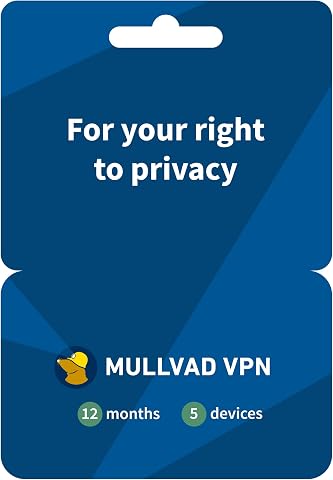
Mullvad VPN – 12-Month Subscription for 5 Devices (No-Log)
- ✔ Subscription length: 12 months
- ✔ Simultaneous devices: Up to 5
- ✔ Supported platforms: iOS, Android, Windows 10+, macOS, Linux (Debian, Ubuntu, Fedora)

HMA VPN Privacy Protection Service – 5 Devices, 1 Year
- ✔ Subscription length: 1 year
- ✔ Simultaneous connections: Up to 5 devices
- ✔ Encryption: 256-bit AES

IPVanish VPN
- ✔ Encryption: Strong encryption stated; specific standard not supplied
- ✔ Supported platforms: Multiple platforms; individual systems not specified
- ✔ Protocol: Not specified in supplied description
At a Glance
| Criteria | Proton VPN | Mullvad VPN | Winner |
|---|---|---|---|
| Account information | Account-based service; personal details depend on registration and payment method. | Randomly generated account number; no email address is required to create an account. | B |
| Privacy transparency | Publishes security audits and open-source apps; its company and service structure are more extensive. | Publishes independent audits and open-source clients; simple account model is easy to inspect conceptually. | Tie |
| Privacy features | Offers features such as Secure Core, NetShield ad and tracker blocking, and alternative routing in supported apps. | Focuses on core VPN protections, with features such as a kill switch and multihop; fewer bundled extras. | A |
| Ease of sign-up and payment | Conventional online account and payment options; free tier available. | Can pay online or, where available, with cash sent by post; payment choices vary by region. | B |
| Plans and flexibility | Free tier plus paid plans; paid features and duration vary by plan. | Flat recurring rate, with no long-term discount structure; no free tier. | Depends |
| Everyday usability | Broad feature set and ecosystem; settings and choices can take more attention. | Deliberately simple service and pricing; fewer add-on features to configure. | Depends |
Mullvad VPN – 12-Month Subscription for 5 Devices (No-Log)
Mullvad takes the clearest privacy-first position in this lineup. Its description says it collects no personal data and keeps no activity logs, and it supports WireGuard across desktop and mobile platforms. For buyers who want to reduce the personal information attached to a VPN account, that combination is more directly relevant than a broad server list or a general claim of strong encryption. The listing also says the service has undergone independent security audits, which gives privacy-conscious readers an additional point to investigate.Compared with HMA, Mullvad provides less detail about extra connection controls such as split tunneling and IP shuffle, while making a stronger case around data minimization. Its five-device allowance matches HMA’s stated limit, but may be restrictive if we want to cover a larger household or many personal devices at once. Setup uses an activation code instead of a conventional username and password. That may feel unfamiliar, though it is a straightforward process once we understand the account flow. This is our leading choice when the privacy policy details matter more than extensive location coverage or a familiar sign-in method.
Pros:
- Listing states no activity logs and no personal data collected
- Supports WireGuard across desktop and mobile operating systems
- Covers up to five devices simultaneously
- Simple activation-code setup and stated independent security audits
Cons:
- Five concurrent connections may not cover a larger household
- Activation-code setup differs from standard account credentials
- Listing provides fewer details about extra traffic-management controls than HMA
Best for: Privacy-conscious individuals who want a stated no-personal-data policy, WireGuard support, and apps for major desktop and mobile systems.
Not ideal for: Households that need more than five concurrent connections or buyers who prefer a conventional username-and-password setup.
Bottom line: We rank Mullvad first for its unusually clear data-minimization claims, while its five-device cap and activation-code flow call for a little planning.
“We rank Mullvad first for its unusually clear data-minimization claims, while its five-device cap and activation-code flow call for a little planning.”
HMA VPN Privacy Protection Service – 5 Devices, 1 Year
HMA is the more feature-rich choice for buyers who want privacy tools alongside broad location coverage. Its listing states 256-bit AES encryption and no activity logs, and names a smart kill switch, split tunneling, and IP shuffle. Those controls have practical value: a kill switch is intended to protect traffic if the VPN connection drops, while split tunneling lets us decide which apps use the VPN. The stated network spans 290 locations in 190 countries, making HMA the standout here for location choice.Against Mullvad, HMA gives us more explicit control features and a much larger stated geographic footprint, but it does not make the same no-personal-data claim. Its platform list includes routers, which may help cover devices that cannot run a standard VPN app. However, the subscription is still limited to five simultaneous connections, and the listing warns that performance may vary with server distance and load. That matters if we rely on a particular distant location for steady browsing or streaming. HMA suits buyers who value flexibility and coverage, provided they review the provider’s current privacy policy and choose locations with their connection needs in mind.
Pros:
- Listing states no activity logs and 256-bit AES encryption
- Includes a smart kill switch, split tunneling, and IP shuffle
- Lists 290 locations across 190 countries
- Platform support includes routers as well as common desktop and mobile systems
Cons:
- Limited to five simultaneous device connections
- Performance can vary with server distance and load
- Listing does not state that the service collects no personal data
Best for: Users who want a broad range of server locations, listed privacy controls, and the option to configure router coverage.
Not ideal for: Buyers who prioritize a stated no-personal-data account policy or need consistently predictable performance across distant servers.
Bottom line: We place HMA second for its strong range of named controls and locations, with performance variability and less specific data-minimization detail tempering the case.
“We place HMA second for its strong range of named controls and locations, with performance variability and less specific data-minimization detail tempering the case.”
IPVanish VPN
IPVanish is presented as a simple option for buyers who want a VPN for everyday browsing and streaming. Its description emphasizes high connection speeds, strong encryption, and user-friendly apps across multiple platforms. Those qualities can make a service easier to adopt, especially for someone who wants to secure routine connections without managing many settings. The listing also says a VPN connection can slightly reduce overall internet speed, a useful reminder that encryption and routing may affect performance.In this group, IPVanish has the least complete privacy profile in the information provided. Mullvad states that it collects no personal data and keeps no activity logs; HMA also states a no-activity-logs policy and lists specific controls. IPVanish’s description does not give a logging policy, protocol, device count, or named platform list. That makes it harder for us to recommend it ahead of the other two for a purchase explicitly centered on privacy protection. It may still appeal to people who value a straightforward interface and speed-oriented positioning, but privacy-focused buyers should confirm the current policy and plan details before relying on it.
Pros:
- Description emphasizes high connection speeds
- Strong encryption is listed as a core protection
- User-friendly apps are described across multiple platforms
- Positioned for browsing and streaming as well as privacy
Cons:
- Supplied details do not specify a logging policy
- Protocol, supported platforms, and simultaneous-device limit are not named
- Encryption may reduce connection speed
Best for: Buyers looking for a user-friendly VPN for general browsing and streaming who are prepared to verify privacy and plan details directly.
Not ideal for: Readers who want a clearly stated logging policy, named protocol support, or a specified simultaneous-device limit before choosing.
Bottom line: We rank IPVanish third because its speed and usability claims are appealing, but the available listing leaves essential privacy comparisons unresolved.
“We rank IPVanish third because its speed and usability claims are appealing, but the available listing leaves essential privacy comparisons unresolved.”
As an Amazon Associate we earn from qualifying purchases.
Key Differences
The clearest privacy distinction appears before a connection is made. Mullvad lets a customer create an account number without providing an email address, and cash payment can reduce the information shared with the provider or payment processor. Proton VPN uses a conventional account model, though the personal information involved depends on the registration and payment method. This makes Mullvad a stronger fit for people who want to limit account identifiers. It does not make a VPN user untraceable: websites, devices, payment trails, and network observers can still reveal information.
Proton VPN has the advantage when privacy means more than minimizing sign-up details. It offers a wider set of protections and tools, including Secure Core routing and NetShield, alongside a free tier and a broader product ecosystem. Those features can make the service more useful across different needs, but they also create more choices. Mullvad concentrates on the core VPN service, with a simple account model and flat pricing. If you want fewer decisions and no long subscription commitment, that simplicity is a practical benefit. If you value extra controls or want to try a free plan, Proton is the more versatile choice.
Both providers publish open-source apps and independent security audits, which helps outside reviewers inspect their software and practices. Audits are useful evidence, not a guarantee that every risk is eliminated or every future change has been checked. Your choice should turn on the privacy details you actually need: what information you share to open an account, which features you will use, and how much effort you want to spend managing them.
Detailed Comparison
Account information (Mullvad VPN wins — moderate)
Mullvad wins by a moderate margin for minimizing information at sign-up: its randomly generated account number does not require an email address. Proton VPN uses an account-based model, so the information linked to the account can vary with how you register and pay. For someone who wants to avoid tying an email address to a VPN account, Mullvad is the clearer fit. This difference reduces one possible identifier; it does not remove other ways a user may be identified.
Privacy transparency (moderate difference)
This is a tie at the level of publicly available signals: both providers publish open-source apps and independent security audits. Those practices let outsiders inspect software and review selected controls, but audit scope and timing matter, and they do not certify complete anonymity. Readers should check current audit reports and policies for the specific platforms they use rather than treating an audit as a blanket guarantee.
Privacy features (Proton VPN wins — moderate)
Proton VPN wins by a moderate margin for breadth. Secure Core routes traffic through privacy-focused servers before exit, while NetShield can block ads, trackers and known malicious domains. These tools may suit users who want more control within the VPN app. Mullvad offers core protections such as a kill switch and multihop, but fewer bundled extras. More features help only when they match a real need and are configured correctly.
Ease of sign-up and payment (Mullvad VPN wins — moderate)
Mullvad wins by a moderate margin for customers who want to share less during setup. Its account number and cash payment option, where available, let users avoid providing an email address and may reduce payment information shared electronically. Proton VPN is more conventional and convenient for many people, with an online account and standard payment methods, as well as a free tier. Payment options and availability can vary by country, so check before relying on a particular method.
Plans and flexibility (moderate difference)
The winner depends on what flexibility means to you. Proton VPN has a free tier and paid plans, giving newcomers a way to start without a subscription and offering a broader set of plan choices. Mullvad uses a flat recurring rate and avoids asking users to select a long-term discounted term. That can suit people who prefer a consistent monthly cost and short commitment. Compare current plan terms and renewal details before paying; the lower headline price is not always the better fit.
Everyday usability (minor difference)
Neither service wins for every user. Proton VPN gives users more features and a wider ecosystem, which can make it easier to find a tool for a particular use but can also add settings and choices. Mullvad keeps the service and subscription model simpler, which can make routine use easier for people who want a focused VPN. The gap is minor for basic encrypted browsing; it grows if you want Proton’s additional tools or prefer Mullvad’s stripped-down approach.
Proton VPN: Pros and Cons
Pros:
- Free tier offers a way to start without a paid subscription.
- Broader set of privacy tools, including Secure Core and NetShield.
- Open-source apps and published independent audits.
- Broader ecosystem for users who also want other Proton services.
Cons:
- Conventional account model may involve more account information than Mullvad’s number-based sign-up.
- More features and choices can add setup complexity.
- The strongest feature set requires a paid plan.
Mullvad VPN: Pros and Cons
Pros:
- Create an account number without supplying an email address.
- Cash payment is available in some circumstances and regions.
- Flat recurring price without long-term subscription discount choices.
- Open-source clients and published independent audits.
Cons:
- No free tier for trying the full VPN service.
- Fewer bundled privacy extras than Proton VPN.
- Cash payment availability and handling may not suit every location or user.
Who Should Choose What
Choose Proton VPN if:
- You want a free tier before deciding whether to pay.
- You will use Secure Core, NetShield or other included controls.
- You prefer a broader privacy product ecosystem and accept a conventional account.
Choose Mullvad VPN if:
- You want to create a VPN account without an email address.
- You value cash payment as an option and it is available where you live.
- You prefer flat pricing, short commitment and a focused VPN service.
Skip both if: You need guaranteed anonymity, protection from all tracking, or protection from malware and unsafe accounts. A VPN cannot provide those on its own; address device security, browser tracking and account practices too.
Value for Money
Paying for Proton VPN is worthwhile if its paid features solve a specific problem for you, such as using Secure Core or NetShield, or if you want its wider ecosystem. The free tier also gives it a value advantage for someone who wants to try a VPN before committing, subject to the tier’s current limits. Mullvad can be better value for a privacy-focused user who wants a capable core VPN, minimal account details and a flat recurring rate without paying for extras they will not use. Compare current prices, plan limits and payment availability in your country. A longer discount is not a saving if it locks you into a service that does not fit.
Final Verdict
Choose Mullvad if your leading priority is minimizing the information attached to a VPN account and you want straightforward, recurring pricing. Choose Proton VPN if you will use its wider privacy features, want a free tier, or value the broader ecosystem. For a basic privacy-conscious VPN connection, either can make sense; Mullvad has the sharper advantage in account minimization, while Proton VPN has the stronger feature set. The deciding factor is whether you value less information at sign-up more than extra tools and plan choice. Neither service alone makes you anonymous, so do not treat either subscription as a complete privacy solution.
Frequently Asked Questions
Which is more private, Proton VPN or Mullvad?
Mullvad has an advantage if privacy means sharing fewer details to open an account: it uses an account number and does not require an email address. Proton VPN offers a broader range of privacy features. Which matters more depends on whether your priority is account minimization or tools such as Secure Core and NetShield. Neither choice guarantees anonymity.
Can I use either VPN without giving an email address?
Mullvad account creation does not require an email address. Proton VPN uses a conventional account, and the information required can depend on the sign-up flow and current policies. Check each provider’s current requirements before registering.
Is Mullvad worth paying for if Proton VPN has a free tier?
It can be, if Mullvad’s number-based account, possible cash payment and flat recurring price better match your privacy preferences. Proton’s free tier is a useful way to start, though its limits and available features may differ from paid plans. Compare the current terms against the use you expect.
Does a VPN make me anonymous online?
No. A VPN encrypts traffic between your device and the VPN server and changes the IP address websites see, but it does not prevent tracking through cookies, logged-in accounts, device identifiers or unsafe behavior. Use it as one part of a broader privacy approach.