
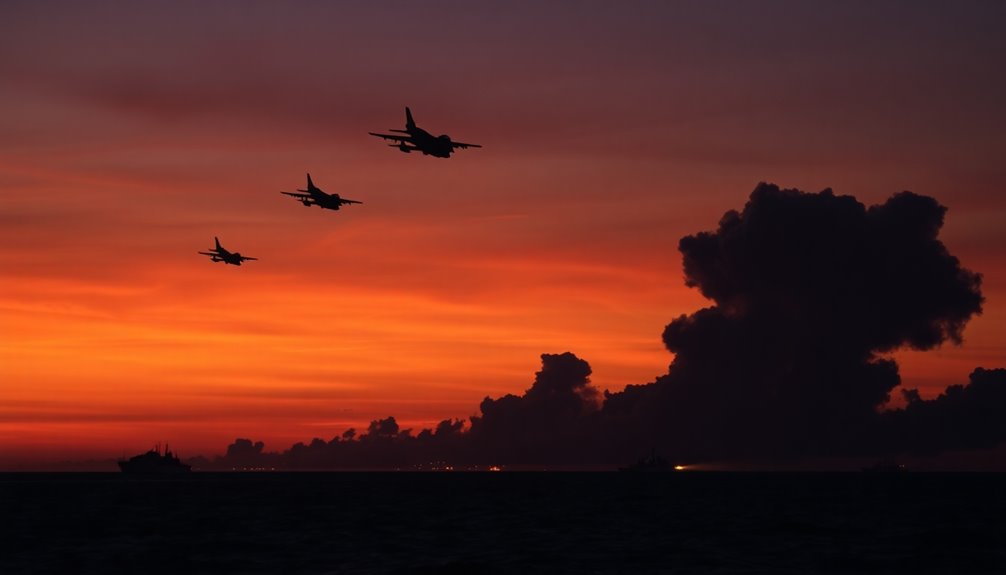
The US has launched retaliatory airstrikes targeting Houthi-held areas in Yemen, including Sanaa and Saada, in response to escalating threats against Red Sea shipping lanes. These strikes resulted in at least 53 deaths and over 100 injuries, highlighting the immediate human cost of this military engagement. The operation involved the USS Harry S. Truman carrier strike group, emphasizing the US’s commitment to protecting vital maritime corridors. Houthi missile attacks have increasingly raised concerns about the safety of international shipping in the region.
You should know that the strikes aim to deter Houthi attacks, which have increasingly threatened shipping in the region. In fact, the Houthis claimed to have launched 18 ballistic and cruise missiles, along with drones, at the USS Truman as a form of retaliation for the US airstrikes. They even reported a second attack on the carrier within 24 hours, showing their willingness to escalate the conflict. The Houthis framed their actions as a response to what they see as US aggression, vowing to maintain a naval blockade on Israeli vessels and warning of further escalation.
As the US continues its military strategy, officials have indicated that the airstrikes will persist until Houthi aggression ceases. President Trump has made it clear that he’s prepared to use “overwhelming lethal force” against the Houthis to ensure the safety of shipping lanes. This operation isn’t just an isolated event; it’s part of a broader strategy that involves international cooperation to counter Houthi threats.
However, the ramifications of this conflict extend beyond military targets. The Houthi’s missile and drone capabilities have disrupted global shipping, causing costly detours for vessels. These actions are often framed in the context of regional alliances and tensions, especially with Iran’s influence in the area. Despite Iran’s denial of direct involvement in Houthi military operations, their support complicates the situation.
You can’t overlook the humanitarian concerns either. The US airstrikes have resulted in civilian casualties, including women and children, exacerbating Yemen’s already dire humanitarian crisis. With ongoing conflicts, aid delivery is increasingly challenging, and infrastructure damage from strikes further complicates recovery efforts.
The US’s military actions, while aimed at securing shipping lanes, also risk deepening the humanitarian toll on a nation struggling to cope with war.
In short, this conflict reflects a complex web of military, regional, and humanitarian issues that require careful navigation to prevent further escalation and suffering.
marine navigation safety equipment
As an affiliate, we earn on qualifying purchases.
As an affiliate, we earn on qualifying purchases.
As an affiliate, we earn on qualifying purchases.
maritime security surveillance camera
As an affiliate, we earn on qualifying purchases.
As an affiliate, we earn on qualifying purchases.
ship anti-piracy defense systems
As an affiliate, we earn on qualifying purchases.
As an affiliate, we earn on qualifying purchases.