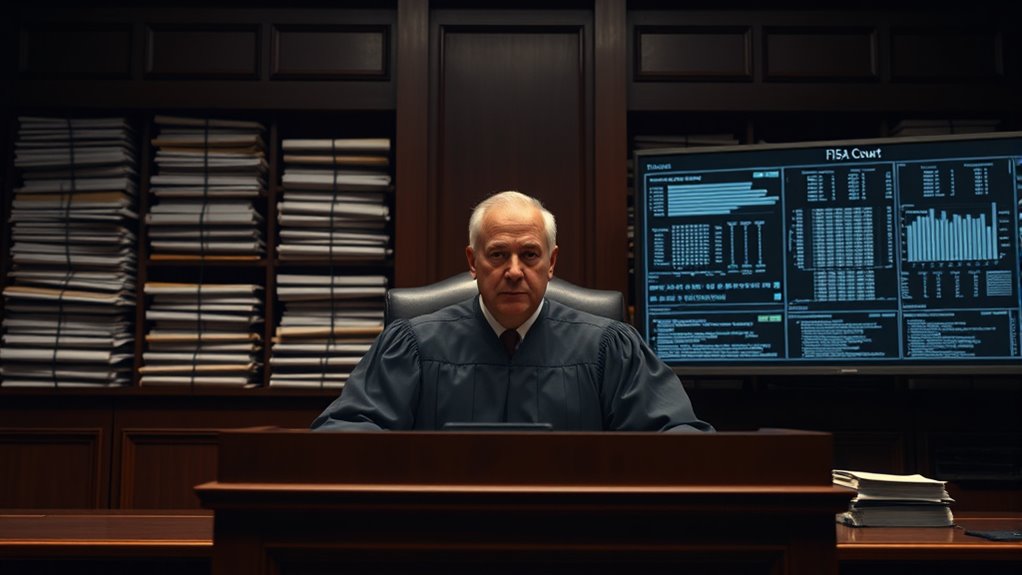

The FISA Court is a secret panel of judges that authorizes government surveillance warrants against foreign spies and agents in the U.S. to help protect national security. They review surveillance requests to guarantee they meet strict legal standards, balancing security with privacy rights. Judges are appointed by the Supreme Court Chief Justice and work behind closed doors to maintain confidentiality. If you’re curious how this secret oversight works, there’s more to discover about this covert legal process.
Key Takeaways
- The FISA Court reviews government requests for surveillance warrants against foreign agents in secret proceedings.
- Judges are appointed by the Supreme Court Chief Justice and operate confidentially to protect national security.
- Surveillance applications must demonstrate probable cause and detail the scope to justify intrusion on privacy rights.
- Court approval is required for surveillance, with ongoing oversight and limitations to prevent abuse.
- The court’s confidentiality fuels debate over transparency, but it ensures sensitive national security operations remain protected.

The FISA Court, or Foreign Intelligence Surveillance Court, is a specialized federal court that oversees requests for surveillance warrants against foreign spies and agents within the United States. As someone interested in national security and privacy, you should understand that this court plays a crucial role in balancing intelligence gathering with constitutional protections. When the government seeks to conduct surveillance, it must follow strict surveillance procedures designed to protect individual rights while allowing effective counterintelligence efforts. These procedures require the government to present evidence that justifies the need for surveillance and demonstrates that the targets are reasonably believed to be involved in foreign intelligence activities. The process is not open to the public, which often fuels debates about transparency and accountability.
Central to the FISA Court’s function is judicial oversight. Unlike ordinary criminal courts, where judges often see the evidence firsthand, FISA judges review applications based on affidavits submitted by government officials. They evaluate whether the surveillance request meets the legal standards, such as probable cause that the target is a foreign power or agent of a foreign power. This oversight acts as a legal safeguard, ensuring that surveillance is not authorized arbitrarily or excessively. You should know that FISA judges are appointed by the Chief Justice of the Supreme Court and serve on a secret panel, which emphasizes the confidential nature of their work. Their role is to scrutinize each application thoroughly, balancing the government’s need for intelligence against the privacy rights of individuals.
FISA judges review applications based on affidavits, balancing national security needs with individual privacy rights.
When the government submits an application, it must include detailed information about the target, the scope of surveillance, and how the surveillance aligns with national security interests. The court then reviews this information quickly, often within days, to decide whether to approve or deny the warrant. If approved, the surveillance can proceed, but the court retains ongoing oversight, especially for longer-term or more intrusive operations. This process aims to prevent abuses and ensure that surveillance is justified and proportionate. You might find it interesting that the court can also impose limitations, such as restricting the duration of surveillance or requiring periodic reviews.
In essence, the FISA Court operates behind closed doors, but its decisions and procedures are rooted in ensuring that surveillance efforts are conducted lawfully and with appropriate oversight. While critics argue about the lack of transparency, supporters believe that judicial oversight is essential for protecting national security without infringing unnecessarily on privacy rights. Understanding this delicate balance helps you appreciate the complex role the FISA Court plays in safeguarding both security and civil liberties within the United States.

aosu Security Cameras Outdoor Wireless, 4 Cam-Kit, No Subscription, Solar-Powered, Home Security Cameras System with 360° Pan & Tilt, Auto Tracking, 2K Color Night Vision, Easy Setup, 2.4 & 5GHz WiFi
- No Subscription Required: Encrypted local storage with 4 months recording
- Cross-Camera Tracking: Automatically relate videos for easy review
- Multi-Stream Viewing: Watch 4 areas simultaneously on one screen
As an affiliate, we earn on qualifying purchases.
As an affiliate, we earn on qualifying purchases.
Frequently Asked Questions
How Are FISA Court Judges Selected and Appointed?
You might wonder how FISA Court judges are chosen. They are appointed through a process designed to guarantee judicial independence, with the Chief Justice of the Supreme Court selecting a panel of federal judges. These judges serve seven-year terms, and their appointment process emphasizes impartiality and expertise. This system aims to maintain the court’s fairness while safeguarding national security interests, ensuring that surveillance warrants are issued by unbiased, qualified judges.
Can the Public Challenge FISA Court Decisions?
You might wonder if you can challenge FISA court decisions. The truth is, public transparency is limited, and legal challenges are rare due to the court’s secretive nature. While some exceptions exist, most decisions remain hidden from public scrutiny. This secrecy can leave you feeling powerless, unsure if justice is truly served. Still, understanding the system’s opacity highlights the importance of advocacy for greater oversight and accountability.
What Oversight Exists Beyond the FISA Court?
Beyond the FISA Court, you have limited options for oversight, but intelligence oversight committees in Congress play a critical role. They review and monitor surveillance activities to guarantee compliance with laws and protect civil liberties. Judicial independence remains essential, as courts can scrutinize government actions if abuses are suspected. However, the secretive nature of FISA court decisions limits transparency, making congressional oversight your primary safeguard for accountability.
How Often Are FISA Surveillance Warrants Granted?
FISA surveillance warrants are granted fairly frequently, often based on a thorough review of surveillance accuracy and warrant renewal policies. You might be surprised to learn that renewals happen regularly to guarantee ongoing legal authorization. The court carefully assesses each request, emphasizing the importance of accurate evidence to justify surveillance. This process helps balance national security needs with protecting individual privacy rights, making sure warrants are granted only when justified.
Are FISA Court Proceedings Ever Made Public?
You might be surprised, but FISA court proceedings are rarely made public. Less than 1% of cases are ever declassified, mainly for national security reasons. The court’s emphasis on secrecy aims to safeguard sensitive information, but it also limits public transparency. This court secrecy ensures national security, yet it raises concerns about oversight and accountability, leaving many wondering what’s happening behind closed doors.
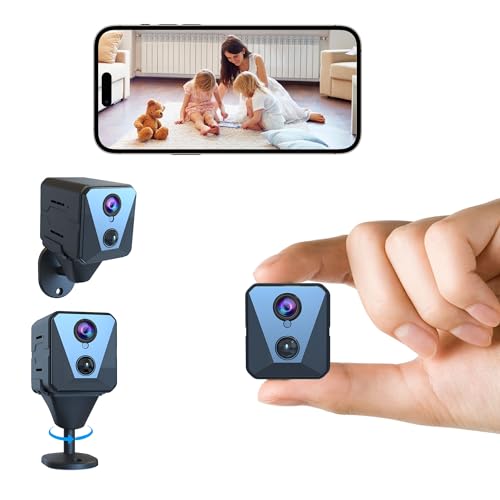
Funstorm 2025 Upgraded Security Camera, 4K HD Mini Nanny Cam for Home with Night Vision, WiFi Indoor Camera, 100 Days Long Battery Life, Motion Detection, Remote Viewing, Wireless Surveillance Cam
- 4K Ultra HD Video: Crystal-clear image quality
- Night Vision: Clear footage in low light
- Wide-Angle Coverage: 110° ultra-wide viewing angle
As an affiliate, we earn on qualifying purchases.
As an affiliate, we earn on qualifying purchases.
Conclusion
Ultimately, the FISA Court acts as a silent guardian behind the curtain, wielding its authority like a shield in the shadows. Its secret rulings symbolize the delicate balance between security and privacy, reminding you that sometimes, transparency must be sacrificed to protect the greater good. As you navigate this hidden world, remember that behind every warrant lies a quiet promise: to safeguard your freedom, even if it remains unseen.
Funstorm 2025 Upgraded Security Camera, 4K HD Mini Nanny Cam for Home with Night Vision, WiFi Indoor Camera, 100 Days Long Battery Life, Motion Detection, Remote Viewing, Wireless Surveillance Cam
- 4K Ultra HD Video: Crystal-clear image quality
- Night Vision: Clear footage in low light
- Wide-Angle Coverage: 110° ultra-wide viewing angle
As an affiliate, we earn on qualifying purchases.
As an affiliate, we earn on qualifying purchases.
Funstorm 2025 Upgraded Security Camera, 4K HD Mini Nanny Cam for Home with Night Vision, WiFi Indoor Camera, 100 Days Long Battery Life, Motion Detection, Remote Viewing, Wireless Surveillance Cam
- 4K Ultra HD Video: Crystal-clear image quality
- Night Vision: Clear footage in low light
- Wide-Angle Coverage: 110° ultra-wide viewing angle
As an affiliate, we earn on qualifying purchases.
As an affiliate, we earn on qualifying purchases.