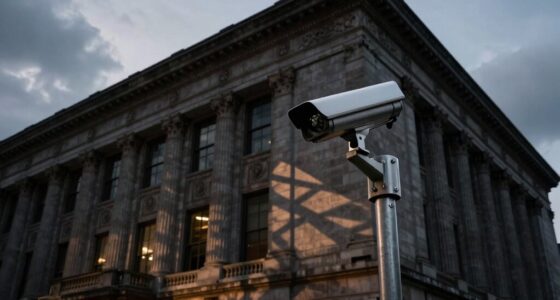

Smart city surveillance is becoming a U.S. policy issue because of growing concerns over privacy, data misuse, and security. You might feel uneasy as sensors and cameras track your movements and behaviors, raising fears of overreach. Policymakers now recognize the need for clear rules on data access and oversight to protect civil liberties. Balancing safety with personal rights is complex, and if you want to understand how this issue evolves, keep exploring the key challenges involved.

Get privacy and security gear delivered free with Prime
- Fast, free delivery on millions of items
- Prime Video, Amazon Music and more included
- Member-only deals all year
Key Takeaways
- Increasing deployment of surveillance technology raises concerns over privacy violations and data misuse in urban environments.
- Lack of transparency and accountability in data collection fuels public distrust and calls for stronger regulatory oversight.
- Balancing security needs with civil liberties is complex, prompting policy debates on surveillance scope and limits.
- Public awareness and community engagement are essential to ensure responsible and ethical use of surveillance systems.
- Policymakers must develop clear guidelines to protect personal freedoms while leveraging technology for safety and efficiency.
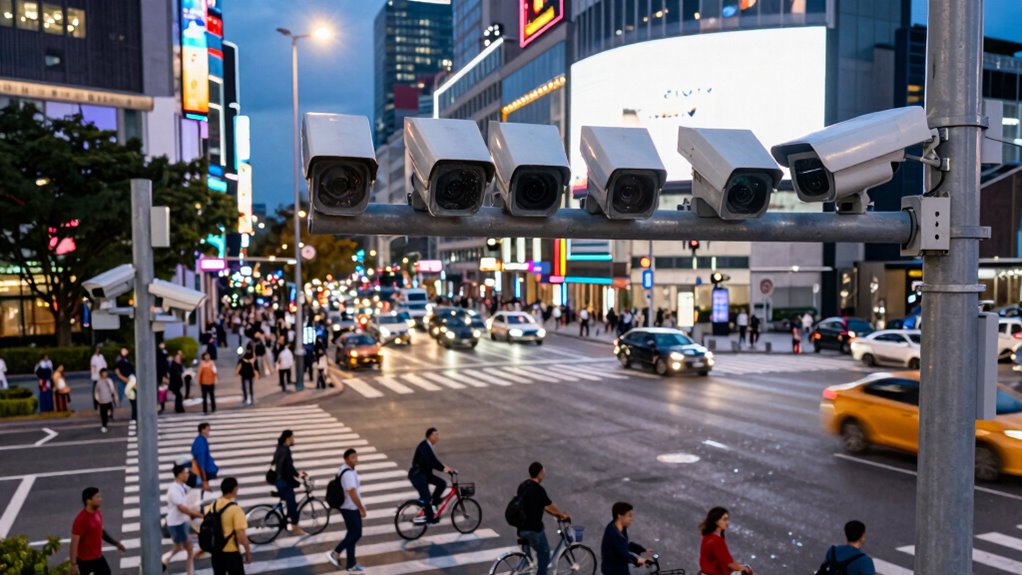
As cities increasingly adopt smart surveillance technologies to enhance security and efficiency, they also face pressing questions about privacy and civil liberties. You might wonder how these advancements impact your personal freedoms and what measures are in place to protect your rights. The growing use of cameras, sensors, and data analytics in urban environments raises significant privacy concerns. These systems can track your movements, monitor your behaviors, and collect vast amounts of data about your daily activities. Without clear boundaries, there’s a risk that this information could be misused or accessible to unauthorized parties, leading to a loss of privacy that many find unsettling.
Smart surveillance enhances security but raises privacy concerns, risking misuse of personal data without proper safeguards.
One of the main issues policymakers grapple with is ensuring technological transparency. You want to trust that the surveillance systems deployed in your city are used responsibly and ethically. This means knowing who has access to the data, how it’s stored, and under what circumstances it might be shared or analyzed. Transparency isn’t just about making information available; it’s about establishing accountability. Citizens need clear policies that outline the purpose of surveillance, the scope of data collection, and the safeguards in place to prevent abuse. Without this transparency, residents might feel uneasy or mistrustful of the technology, which could undermine the very safety and efficiency these systems aim to provide. Additionally, understanding the contrast ratio of surveillance visuals can influence how effectively the data is interpreted and utilized. Data security is also a crucial element in maintaining trust and protecting sensitive information from cyber threats. Recognizing the importance of public awareness can help foster community engagement and oversight in surveillance practices. Moreover, having standardized regulations can help create a consistent framework that guides responsible deployment and use of these technologies across different cities.
The debate over smart surveillance isn’t solely about privacy; it’s also about striking a balance between security and civil liberties. Cities want to prevent crime, respond quickly to emergencies, and manage traffic flow, but they also must respect residents’ rights to privacy. As a result, policymakers are increasingly considering regulations that enforce stricter oversight, require public input, and mandate regular audits of surveillance practices. These measures aim to prevent overreach and ensure that surveillance systems serve the public interest, rather than becoming tools for unwarranted monitoring or discrimination. When properly regulated, these technologies can be a powerful tool for urban safety without infringing on individual freedoms.
Ultimately, the issue of smart city surveillance becoming a U.S. policy matter reflects the broader challenge of integrating technology into our daily lives responsibly. You’re affected directly by these policies—your privacy can be protected, or compromised—depending on how carefully regulations are crafted. As cities continue to innovate, the conversation must include transparency, accountability, and respect for civil liberties. Only then can smart surveillance truly serve its purpose without infringing on the rights you hold dear.
smart city surveillance camera systems
As an affiliate, we earn on qualifying purchases.
As an affiliate, we earn on qualifying purchases.
Frequently Asked Questions
How Do Surveillance Systems Impact Individual Privacy Rights?
Surveillance systems impact your privacy rights by collecting data about your daily activities, raising privacy concerns. You might feel your personal information isn’t fully secure, especially if data security measures aren’t strong enough. These systems can monitor your movements and behaviors, potentially infringing on your rights to privacy. It’s important to be aware of how surveillance impacts your personal freedoms and advocate for robust data security and privacy protections.
What Are the Costs Associated With Implementing Smart City Surveillance?
Think of a city’s smart surveillance as building a modern citadel; the costs can be high. You’ll need a thorough cost analysis to understand expenses like infrastructure, maintenance, and tech upgrades. Budget allocation becomes vital, ensuring funds are balanced across security and privacy. While the investment enhances safety, it also strains resources, requiring careful planning to avoid overreach or financial strain—making the process both complex and essential.
Who Oversees the Ethical Use of Surveillance Data?
You are responsible for understanding who oversees the ethical use of surveillance data, ensuring data privacy and public accountability. Agencies like the Department of Homeland Security and local government bodies set guidelines, but oversight often varies. It’s essential that you advocate for transparent policies, regular audits, and clear accountability measures to protect citizens’ privacy rights. By doing so, you help foster trust and guarantee surveillance serves the public interest ethically.
How Do Surveillance Policies Vary Between Cities?
You’ll find that surveillance policies differ widely between cities due to public opinion and legislative challenges. Some cities implement strict regulations based on community concerns, while others adopt more lenient practices to support innovation. These variations reflect local values and political climates, making policy development complex. As public opinion shifts and laws evolve, cities must balance security needs with privacy rights, often facing hurdles in creating uniform, effective surveillance regulations.
What Technologies Are Most Commonly Used in Smart City Surveillance?
You’ll find that smart city surveillance primarily relies on urban infrastructure like cameras and sensors, which quietly monitor public spaces. Data analytics then processes this information to enhance safety and efficiency. Video cameras, license plate readers, and environmental sensors are most common, working together to provide real-time insights. These technologies help cities respond swiftly, but they also raise important questions about privacy and data security.
Conclusion
As you navigate the rapidly evolving landscape of smart city surveillance, remember that every decision you make shapes the future of privacy and security. Like a double-edged sword, technology can protect or threaten freedoms, demanding your vigilance. It’s not just a policy issue; it’s a reflection of who we are and what we value. So, stay informed, question deeply, and guarantee that progress doesn’t come at the expense of our fundamental rights.
Fall Picks
fall essentials
As an affiliate, we earn on qualifying purchases.