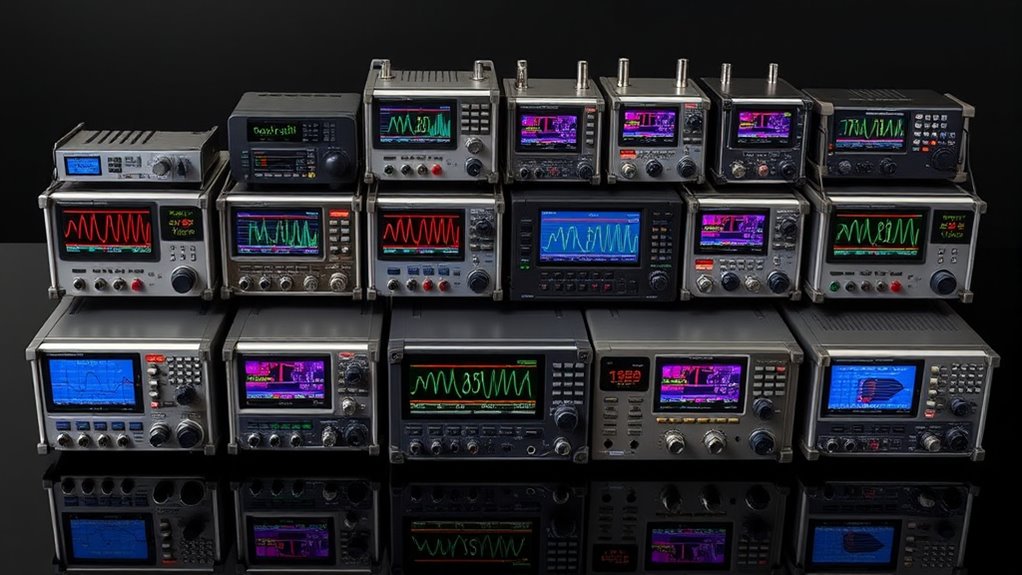
Professional antenna analyzers range from compact NanoVNA instruments for portable measurements to bench-style VNAs built for broader RF work. My best overall pick is the RigExpert AA-650 Zoom for its dedicated antenna-measurement focus and frequency coverage through 650 MHz; the LibreVNA stands out for wide 6 GHz coverage, while the Comet CAA-500MarkII suits operators who want a handheld analyzer rather than a general-purpose VNA. The key tradeoff is between direct, convenient antenna workflows and wider frequency coverage or lower-cost flexibility. Read on for the full comparison, including what each option gives up to serve a different kind of professional user.

Get privacy and security gear delivered free — and shop member deals
- Fast, free delivery on millions of items
- Access to Prime Big Deal Days deals on October 6–7
- Prime Video, Amazon Music and more included
Key Takeaways
- Dedicated analyzers and VNAs serve different workflows: the RigExpert and Comet models focus on antenna-oriented handheld use, while the NanoVNA and LibreVNA models offer VNA-style measurement flexibility.
- Frequency ceiling changes the shortlist: the NanoVNA-H and H4 models reach 1.5 GHz, the NanoVNA-F V2 options reach 3 GHz, and the LibreVNA and NanoVNA-F V3 options extend to 6 GHz.
- Wide coverage does not automatically mean easier fieldwork: a portable antenna analyzer may be a better fit for quick adjustments than a VNA setup that relies more on a connected workflow.
- Several listings are close variants: the AURSINC and SEESII NanoVNA-H4, F V2, and F V3 choices should be compared by exact configuration and included accessories, not just the family name.
- The RIGOL DNA804 is the bench-oriented outlier: its 4.5 GHz range suits broader lab measurement needs, while handheld Comet and RigExpert units prioritize dedicated field use.
| AURSINC NanoVNA-H Vector Network Analyzer, 9 kHz–1.5 GHz |  | Best Value for Portable Antenna Work | Frequency range: 9 kHz–1.5 GHz | Display: 2.8-inch TFT, 320 × 240 | Battery capacity: 650 mAh | VIEW ON AMAZON | See Our Full Breakdown |
| SEESII NanoVNA-F V2 Vector Network Analyzer, 50 kHz–3 GHz |  | Best for Field-Friendly Screen and Runtime | Frequency range: 50 kHz–3 GHz | Display: 4.3-inch IPS TFT touchscreen | Dynamic range: 40 dB at 600 MHz–1 GHz | VIEW ON AMAZON | See Our Full Breakdown |
| RigExpert AA-650 Zoom Antenna Analyzer for 0.1-650MHz with Color Display, Bluetooth and N-Type Connector |  | Best Dedicated Antenna-Workflow Pick | Frequency range: 0.1–650 MHz | Frequency entry resolution: 1 kHz | Supported system impedances: 25, 50, 75, 100, 150, 200, 300, 450, and 600 ohms | VIEW ON AMAZON | See Our Full Breakdown |
| LibreVNA 100 kHz–6 GHz USB Vector Network and Antenna Analyzer |  | Best for Two-Port Bench Measurements | Frequency range: 100 kHz–6 GHz | Test ports: 2 | Test port connector: SMA female | VIEW ON AMAZON | See Our Full Breakdown |
| SEESII NanoVNA-F V3 Vector Network Analyzer (1MHz-6GHz) |  | Best Portable Coverage to 6 GHz | Frequency range: 1 MHz–6 GHz | Display: 4.3-inch IPS TFT LCD touchscreen | Scan points: 101–801, customizable | VIEW ON AMAZON | See Our Full Breakdown |
| MINI1300 Antenna Analyzer with 4.3-Inch Touchscreen, 0.1–1300 MHz Frequency Sweep |  | Best for Broad HF-to-UHF Coverage | Frequency range: 0.1–1300 MHz | Display: 4.3-inch TFT LCD touchscreen | Measurement modes: Single-point, frequency sweep, TDR | VIEW ON AMAZON | See Our Full Breakdown |
| RIGOL DNA804 Vector Network Analyzer, 4.5 GHz |  | Best for Professional RF Network Analysis | Maximum frequency: 4.5 GHz | Dynamic range: 125 dB | Measurement capabilities: Full two-port S-parameters, time-domain analysis, distance-to-fault | VIEW ON AMAZON | See Our Full Breakdown |
| SeeSii NanoVNA-H4 Vector Network Analyzer, 9 kHz–1.5 GHz |  | Best Compact Touchscreen VNA | Frequency range: 9 kHz–1.5 GHz | Display: 4-inch LCD touchscreen | Measurement parameters: S11/S21, SWR, phase, delay, Smith chart | VIEW ON AMAZON | See Our Full Breakdown |
| AURSINC NanoVNA-H4 Vector Network Analyzer, 9 kHz–1.5 GHz |  | Best for Portable Cable Fault Checks | Measurement range: 9 kHz–1.5 GHz | Display: 4-inch LCD touchscreen | Measurements: S11, S21, SWR, antenna resonance, TDR cable faults | VIEW ON AMAZON | See Our Full Breakdown |
| Comet CAA-500MarkII Handheld Antenna Analyzer, 1.8–500 MHz |  | Best Dedicated Field Antenna Analyzer | Frequency range: 1.8–500 MHz | Measurements: SWR, impedance, reactance, resonance, phase angle | Display: Color TFT | VIEW ON AMAZON | See Our Full Breakdown |
| AURSINC NanoVNA-F V2 Vector Network Analyzer (50kHz-3GHz) |  | Best for Long Field Sessions | Frequency range: 50 kHz–3 GHz | Display: 4.3-inch IPS LCD, 800 × 480 | Battery: 5000 mAh lithium-ion | VIEW ON AMAZON | See Our Full Breakdown |
| Comet CAA-500 Mark II Standing Wave Analyzer, 1.8–500 MHz |  | Best for Direct, On-Site Antenna Tuning | Frequency range: 1.8–500 MHz | Measurements: SWR, resistance, and reactance | Display: Color TFT LCD and analog cross-needle meter | VIEW ON AMAZON | See Our Full Breakdown |
| Seesii NanoVNA SAA-2N Vector Network Analyzer with Testboard Kit |  | Best Accessory Kit for RF Bench Work | Frequency range: 50 kHz–3 GHz | Measurements: S11 and S21 | S21 transmission: Up to 70 dB from 50 kHz–1.5 GHz | VIEW ON AMAZON | See Our Full Breakdown |
| AURSINC NanoVNA-F V3 Vector Network Analyzer |  | Best for Wideband Professional RF Analysis | Frequency range: 1 MHz–6 GHz | Measurements: S11, S21, TDR, Smith chart, and SWR | Display: 4.3-inch touchscreen, 800 × 480 | VIEW ON AMAZON | See Our Full Breakdown |
| antenna analyzers professional | Frequency range | Display |
|---|---|---|
| AURSINC NanoVNA-H Vector Netwo | 9 kHz–1.5 GHz | 2.8-inch TFT, 320 × 240 |
| SEESII NanoVNA-F V2 Vector Net | 50 kHz–3 GHz | 4.3-inch IPS TFT touchscreen |
| RigExpert AA-650 Zoom Antenna | 0.1–650 MHz | — |
| LibreVNA 100 kHz–6 GHz USB Vec | 100 kHz–6 GHz | — |
| SEESII NanoVNA-F V3 Vector Net | 1 MHz–6 GHz | 4.3-inch IPS TFT LCD touchscreen |
| MINI1300 Antenna Analyzer with | 0.1–1300 MHz | 4.3-inch TFT LCD touchscreen |
| RIGOL DNA804 Vector Network An | — | — |
| SeeSii NanoVNA-H4 Vector Netwo | 9 kHz–1.5 GHz | 4-inch LCD touchscreen |
| AURSINC NanoVNA-H4 Vector Netw | — | 4-inch LCD touchscreen |
| Comet CAA-500MarkII Handheld A | 1.8–500 MHz | Color TFT |
| AURSINC NanoVNA-F V2 Vector Ne | 50 kHz–3 GHz | 4.3-inch IPS LCD, 800 × 480 |
| Comet CAA-500 Mark II Standing | 1.8–500 MHz | Color TFT LCD and analog cross-needle meter |
| Seesii NanoVNA SAA-2N Vector N | 50 kHz–3 GHz | 4-inch touchscreen LCD |
| AURSINC NanoVNA-F V3 Vector Ne | 1 MHz–6 GHz | 4.3-inch touchscreen, 800 × 480 |
More Details on Our Top Picks
AURSINC NanoVNA-H Vector Network Analyzer, 9 kHz–1.5 GHz
The AURSINC NanoVNA-H suits radio amateurs who want core antenna and network measurements in a small, battery-powered unit. Its 9 kHz–1.5 GHz span reaches well beyond HF into VHF and some UHF work, while SWR, phase, delay, S-parameters, and Smith charts give useful ways to diagnose an antenna or feed line. MicroSD storage and Android or Windows control add flexibility when a small 2.8-inch display feels cramped. Compared with the SEESII NanoVNA-F V2, it is less capable at the upper end and has a shorter stated battery life, but it remains a compact choice for jobs that do not need 3 GHz coverage. The compromises are practical: roughly two hours per charge, reduced dynamic range at higher frequencies, and manual port rewiring for S12 and S22.
Pros:- Covers 9 kHz–1.5 GHz for HF through substantial VHF and UHF work
- Combines SWR, phase, delay, S-parameter, and Smith chart views
- Stores data and screenshots on MicroSD and supports Android and Windows control
- Compact, 100 g design with a built-in rechargeable battery
Cons:- Battery life is stated at up to two hours, limiting long field sessions
- S12 and S22 measurements require manual transceiver-port rewiring
- Stated dynamic range is lower on higher-frequency bands
Best for: HF and VHF operators who want a lightweight analyzer for field checks, basic antenna tuning, and PC or phone-assisted measurements.
Not ideal for: Technicians who need extended battery operation, convenient four-parameter port measurements, or reliable high-dynamic-range work near the top of the frequency range.
- Frequency range:9 kHz–1.5 GHz
- Display:2.8-inch TFT, 320 × 240
- Battery capacity:650 mAh
- Battery life:Up to 2 hours
- Connectivity:USB Type-C
- Storage:MicroSD card
- Weight:100 g
- Firmware version:HW V3.7
- Warranty:1 year
Our verdict“Choose the NanoVNA-H for compact, broad-band antenna checks when portability matters more than long runtime or upper-band measurement headroom.”
SEESII NanoVNA-F V2 Vector Network Analyzer, 50 kHz–3 GHz
The SEESII NanoVNA-F V2 is the more comfortable choice when measurements need to be read and adjusted on the instrument itself. Its 4.3-inch touchscreen gives charts and multiple measurement views more room than the AURSINC NanoVNA-H’s 2.8-inch screen, and its 5000 mAh battery is better suited to extended field sessions. Coverage to 3 GHz spans HF, VHF, and UHF antenna work, with calibration accessories and cables included to help get a measurement setup underway. That broad reach has a qualification: frequency expansion relies on harmonics from the SI5351 clock chip, so the headline range alone does not describe measurement performance across every band. Its 40 dB dynamic range is specified only at 600 MHz–1 GHz. Choose it over the LibreVNA when portability and an integrated screen matter; choose the LibreVNA for two-port measurements and its wider stated dynamic range.
Pros:- 3 GHz stated range covers HF, VHF, and UHF applications
- 4.3-inch IPS touchscreen makes traces and measurement menus easier to read
- 5000 mAh battery supports longer portable use than the AURSINC NanoVNA-H
- Calibration accessories, cables, and protective box are included
Cons:- Frequency expansion uses harmonics from the SI5351 clock chip
- The stated 40 dB dynamic range applies only from 600 MHz to 1 GHz
- Phone charging is described as an emergency power function rather than a primary feature
Best for: Field operators and hobbyist RF technicians who want a large, readable instrument screen, included calibration gear, and longer battery-powered sessions.
Not ideal for: Lab users who need documented performance across the full 3 GHz range or direct two-port S-parameter measurements like those offered by the LibreVNA.
- Frequency range:50 kHz–3 GHz
- Display:4.3-inch IPS TFT touchscreen
- Dynamic range:40 dB at 600 MHz–1 GHz
- Battery capacity:5000 mAh, 3.7 V
- Charging:2 A fast charging
- Housing:Aluminum alloy
- Supported menus:English and Chinese
- Included accessories:Calibration accessories, cables, protective box
Our verdict“Pick the NanoVNA-F V2 if a readable onboard display and long battery runtime matter more than fully characterized performance across the entire stated range.”
RigExpert AA-650 Zoom Antenna Analyzer for 0.1-650MHz with Color Display, Bluetooth and N-Type Connector
The RigExpert AA-650 Zoom is the antenna-focused option here: rather than reaching into multi-gigahertz VNA territory, it offers a broad set of tools for checking antenna and cable behavior up to 650 MHz. Its cable tools, TDR, SWR charts, and impedance-related displays make it a practical fit for diagnosing feed lines as well as tuning antennas. It also supports multiple system impedances, from 25 to 600 ohms, a useful distinction from the more general-purpose AURSINC NanoVNA-H. Compared with the LibreVNA, it does not provide the same two-port S-parameter scope or 6 GHz reach; its appeal is a self-contained antenna workflow with an N-type connector and Bluetooth. The tradeoff is less high-frequency flexibility, plus AA batteries and a stated maximum of three hours of continuous measurement.
Pros:- Includes cable-focused tools such as velocity factor, cable length, cable loss, and TDR
- Measures multiple system impedances from 25 to 600 ohms
- Offers SWR charts and several impedance and phase display modes
- N-type connector, Bluetooth 4.2, and USB PC connectivity
Cons:- Frequency coverage stops at 650 MHz, well below the SEESII NanoVNA-F V2 and LibreVNA
- Continuous measurement is listed at a maximum of three hours on AA Ni-MH batteries
- Output uses a square wave through 200 MHz and harmonics above that frequency
Best for: Amateur-radio operators and antenna installers who prioritize feed-line diagnosis, impedance checks, and guided antenna measurements through 650 MHz.
Not ideal for: RF engineers who need measurements above 650 MHz, extensive two-port VNA analysis, or a long continuous session without battery changes or external power.
- Frequency range:0.1–650 MHz
- Frequency entry resolution:1 kHz
- Supported system impedances:25, 50, 75, 100, 150, 200, 300, 450, and 600 ohms
- Display modes:SWR, return loss, R, X, Z, L, C, magnitude, and phase angle
- Connector:N-type
- Connectivity:USB and Bluetooth 4.2
- Power:Three 1.2 V AA Ni-MH batteries; USB or DC adapter power also supported
- Maximum continuous measurement:Up to 3 hours
Our verdict“Choose the AA-650 Zoom for hands-on antenna and cable diagnostics through 650 MHz, not for broad-band laboratory VNA work.”
LibreVNA 100 kHz–6 GHz USB Vector Network and Antenna Analyzer
For buyers whose work goes beyond antenna matching, the LibreVNA is the strongest fit in this group for two-port VNA measurements. It captures S11, S21, S12, and S22 through two test ports and supports as many as 4,501 points, giving users more scope for component and transmission measurements than the single-port workflow of the AURSINC NanoVNA-H. Its 100 kHz–6 GHz span and frequency accuracy under 2 ppm also suit a bench setup that needs broad coverage and fine sweeps. This is not a self-contained field instrument: it is USB-powered and depends on 64-bit Windows, Linux, or macOS software. Performance is also described as weaker below 1 MHz and above 3 GHz, while its spectrum and signal-generation tools are secondary functions. The project is labeled work-in-progress, a meaningful caveat for professional workflows.
Pros:- Two ports measure all four S-parameters without manual port rewiring
- Covers 100 kHz–6 GHz and supports up to 4,501 measurement points
- Frequency accuracy is specified at less than 2 ppm
- Runs with 64-bit Windows, Linux, and macOS software
Cons:- USB-powered, so it is less convenient for work away from a computer and power source
- Performance is stated to decrease below 1 MHz and above 3 GHz
- Spectrum analysis and signal generation are less capable than dedicated instruments, and the project is described as work-in-progress
Best for: RF engineers and technically experienced antenna users who need two-port S-parameter measurements, fine sweep control, and desktop software across a wide band.
Not ideal for: Field operators seeking a standalone battery-powered analyzer, or professionals who need mature dedicated spectrum analysis and signal-generation tools.
- Frequency range:100 kHz–6 GHz
- Test ports:2
- Test port connector:SMA female
- Measurement parameters:S11, S21, S12, and S22
- Measurement points:2–4,501
- Frequency accuracy:<2 ppm
- Measurement bandwidth:10 Hz–50 kHz
- Dynamic range:>95 dB to 3 GHz; >50 dB to 6 GHz at 10 Hz IFBW
- Power and interface:USB Type-C; DC 5 V, 1.5 A
Our verdict“Choose the LibreVNA for desktop two-port analysis and dense sweeps, but skip it if you need a standalone field analyzer or a finished dedicated spectrum instrument.”
SEESII NanoVNA-F V3 Vector Network Analyzer (1MHz-6GHz)
The SEESII NanoVNA-F V3 brings 6 GHz coverage into a portable, battery-powered format, which separates it from the NanoVNA-F V2’s 3 GHz ceiling and the AA-650 Zoom’s 650 MHz limit. Its 4.3-inch touchscreen, up to 801 scan points, and 4500 mAh battery are geared toward field checks where users want a larger display and more sweep detail than a basic compact analyzer provides. The stated S11 and S21 dynamic ranges add useful context for antenna and transmission measurements, while the included calibration set and PC software support extend its workflow. The tradeoff is that the supplied product data gives no specific drawbacks or performance caveats beyond the listed range and figures; buyers should not read the 6 GHz maximum as proof of equal performance at every frequency. Its listed 1.37-pound weight also makes it less pocketable than the AURSINC NanoVNA-H.
Pros:- Extends portable coverage to 6 GHz, above the NanoVNA-F V2’s 3 GHz range
- 4.3-inch IPS touchscreen and up to 801 scan points support detailed on-device sweeps
- 4500 mAh battery and Type-C charging suit field use
- Rugged aluminum housing and included calibration set support a more complete portable setup
Cons:- At 1.37 pounds, it is substantially less pocketable than the AURSINC NanoVNA-H
- The supplied data does not state battery runtime or clarify performance across the full 1–6 GHz range
- Its stated dynamic range is lower for S11 than for S21, so users should match expectations to the measurement type
Best for: Field technicians and advanced radio hobbyists who need portable measurements reaching 6 GHz, a large touchscreen, and calibration accessories.
Not ideal for: Buyers who need independently documented limitations and performance details across the entire band, or who prefer a very light pocket-sized analyzer.
- Frequency range:1 MHz–6 GHz
- Display:4.3-inch IPS TFT LCD touchscreen
- Scan points:101–801, customizable
- Dynamic range:S21: 65 dB; S11: 50 dB
- Battery:4500 mAh
- Charging:USB Type-C
- Weight:1.37 lb
- Dimensions:10 × 6.26 × 2.01 in
- Model:NanoVNA-F V3
Our verdict“Pick the NanoVNA-F V3 when portable 6 GHz reach and a large screen outweigh compact size and the need for fuller performance documentation.”
MINI1300 Antenna Analyzer with 4.3-Inch Touchscreen, 0.1–1300 MHz Frequency Sweep
The MINI1300 stands out for covering 0.1–1300 MHz in one portable analyzer, making it a fit for operators who tune antennas across HF, VHF, and UHF without needing the higher microwave reach of the RIGOL DNA804. Its single-point, sweep, and TDR modes support both quick checks and broader antenna or feedline investigation, while the 4.3-inch touchscreen gives measurements more room than the smaller handheld interfaces in this lineup. The tradeoff is limited headroom in scan mode: SWR tops out at 20.0 there, even though single-point mode reaches 1999. More concerning for long-term ownership, the firmware cannot be updated. I’d choose it for broad band coverage and varied measurement modes, but not for a workflow that depends on future firmware improvements or scan readings above that ceiling.
Pros:- 0.1–1300 MHz coverage spans HF, VHF, and UHF work
- Single-point, frequency sweep, and TDR modes support different diagnostic tasks
- 4.3-inch touchscreen is relatively roomy for a portable analyzer
- Single-point mode measures SWR up to 1999
Cons:- Firmware cannot be updated
- Scan-mode SWR range stops at 20.0
- Single 50-ohm measurement channel
Best for: Amateur radio operators who need one portable analyzer for HF, VHF, and UHF antenna and feedline checks up to 1.3 GHz.
Not ideal for: Users who need updateable firmware or scan-mode SWR readings above 20.0; the RIGOL DNA804 is a stronger fit for advanced RF network work within its 4.5 GHz range.
- Frequency range:0.1–1300 MHz
- Display:4.3-inch TFT LCD touchscreen
- Measurement modes:Single-point, frequency sweep, TDR
- SWR range:1.0–1999 in single-point mode; 1.0–20.0 in scan mode
- Impedance:50 ohms
- Channels:1
- Firmware:Not updatable
Our verdict“Choose the MINI1300 if wide HF-to-UHF coverage and multiple measurement modes matter more than updateable firmware or higher scan-mode SWR readings.”
RIGOL DNA804 Vector Network Analyzer, 4.5 GHz
The RIGOL DNA804 is the most lab-oriented choice in this group: its full two-port S-parameters, 125 dB dynamic range, and time-domain and distance-to-fault tools go beyond the antenna-tuning focus of the Comet CAA-500MarkII. That makes it better suited to engineers who need to characterize RF networks and diagnose cables, not just check SWR and impedance in the field. Its 4.5 GHz ceiling is substantial, but it falls short of some higher-frequency analyzers elsewhere in the roundup, and it is not a substitute for a broad-spectrum lab instrument beyond that range. At 1.9 kg, it remains portable for a VNA, though less pocketable than the NanoVNA-H4 options. USB-C PD power and browser-based monitoring add flexibility, but buyers need a compatible power source and a workflow that benefits from its more advanced measurements.
Pros:- Full two-port S-parameter measurement supports detailed network characterization
- 125 dB dynamic range aids measurement of signals with a wide level difference
- Time-domain analysis and distance-to-fault functions support cable diagnosis
- Browser-based remote monitoring and HDMI output suit bench or shared-display setups
Cons:- Maximum frequency is 4.5 GHz
- Requires a USB-C PD power source
- At 1.9 kg, it is heavier than the NanoVNA-H4 handheld options
Best for: RF engineers and experienced antenna technicians who need two-port network measurements, cable fault analysis, and remote monitoring in a portable instrument.
Not ideal for: Operators seeking a simple, battery-focused handheld SWR checker or analysis above 4.5 GHz; the Comet CAA-500MarkII is more directly focused on antenna tuning across its lower-frequency range.
- Maximum frequency:4.5 GHz
- Dynamic range:125 dB
- Measurement capabilities:Full two-port S-parameters, time-domain analysis, distance-to-fault
- Weight:1.9 kg
- Power:USB-C PD
- Connectivity and output:Browser-based remote monitoring, HDMI
- Included items:Mainframe, power cord, calibration certificate, quick guide
Our verdict“Pick the DNA804 for portable, professional two-port RF analysis and cable diagnostics, provided its 4.5 GHz limit and USB-C PD power needs fit your setup.”
SeeSii NanoVNA-H4 Vector Network Analyzer, 9 kHz–1.5 GHz
The SeeSii NanoVNA-H4 packs useful antenna and network views into a 4-inch touchscreen, including S-parameters, SWR, phase, delay, and Smith charts. Its 9 kHz–1.5 GHz span suits many amateur-radio and general RF checks, while MicroSD storage and PC software with Touchstone export make it easier to carry readings into a later analysis workflow. Compared with the AURSINC NanoVNA-H4, the stated product data emphasizes its display and data-export workflow rather than TDR cable-fault measurement, so I’d favor it for viewing and saving measurement results. The main compromise is hands-on setup: TX/RX measurements require changing port wiring, which interrupts repeat measurements. The MicroSD card is also not included, and its frequency ceiling is far below the RIGOL DNA804’s 4.5 GHz reach.
Pros:- 4-inch touchscreen displays SWR, phase, delay, S-parameters, and Smith charts
- 9 kHz–1.5 GHz range covers many antenna and general RF tasks
- MicroSD storage and PC software support Touchstone export
- Includes SMA cables and OPEN/SHORT/LOAD calibration kits
Cons:- MicroSD card is not included
- TX/RX measurements require manual port-wiring changes
- Maximum frequency is lower than the RIGOL DNA804’s 4.5 GHz
Best for: Radio amateurs and RF learners who want a compact touchscreen VNA with PC export for antenna measurements through 1.5 GHz.
Not ideal for: Users who need fast, repeated two-port measurements without rewiring or RF analysis above 1.5 GHz; the RIGOL DNA804 offers a higher frequency ceiling and full two-port measurement.
- Frequency range:9 kHz–1.5 GHz
- Display:4-inch LCD touchscreen
- Measurement parameters:S11/S21, SWR, phase, delay, Smith chart
- Storage:MicroSD card support up to 32 GB; card not included
- Battery:1950 mAh
- Connectivity:USB Type-C; PC software support
- Included accessories:USB Type-C cable, two SMA male-to-male RG316 RF cables, OPEN/SHORT/LOAD calibration kits, touchscreen pen
Our verdict“Choose the SeeSii NanoVNA-H4 for portable touchscreen measurements and PC-export workflows up to 1.5 GHz, if manual port changes are acceptable.”
AURSINC NanoVNA-H4 Vector Network Analyzer, 9 kHz–1.5 GHz
The AURSINC NanoVNA-H4 earns its place through TDR cable-length and fault-location support, a practical advantage for technicians checking coax along with antenna resonance and SWR. Its 4-inch touchscreen, built-in battery, and PC or Android connectivity make it more self-contained than the bench-focused RIGOL DNA804, while the 9 kHz–1.5 GHz range covers a broad spread of amateur and general RF tasks. Compared with the SeeSii NanoVNA-H4, the AURSINC listing explicitly highlights TDR diagnostics and includes an SMA calibration kit and cables. The limit is measurement workflow: S12 and S22 require manually rewiring the transceiver ports, so it is less convenient for repeated full two-port work than the RIGOL. Its dynamic range also declines at higher frequencies, and storage requires a separately supplied MicroSD card.
Pros:- TDR helps estimate coax length and locate cable faults
- Built-in 1950 mAh battery and 4-inch touchscreen support portable operation
- Measures through 1.5 GHz and supports PC or Android connectivity
- Includes SMA calibration kit and two SMA cables
Cons:- S12 and S22 measurements require manual port rewiring
- MicroSD card is not included
- Specified dynamic range falls from better than 70 dB at 50–300 MHz to better than 40 dB at 900 MHz–1.5 GHz
Best for: Field technicians and radio amateurs who want a battery-powered handheld VNA for antenna checks and coax length or fault diagnosis up to 1.5 GHz.
Not ideal for: RF engineers who regularly need convenient full two-port testing or greater high-frequency dynamic range; the RIGOL DNA804 is better suited to that measurement workload.
- Measurement range:9 kHz–1.5 GHz
- Display:4-inch LCD touchscreen
- Measurements:S11, S21, SWR, antenna resonance, TDR cable faults
- Frequency dynamics:Better than 70 dB at 50–300 MHz; better than 60 dB at 300–900 MHz; better than 40 dB at 900 MHz–1.5 GHz
- Battery:1950 mAh
- Storage:MicroSD cards up to 32 GB; card not included
- Compatible devices:PC, Android
- Dimensions:5.2 × 2.91 × 0.7 inches
Our verdict“Pick the AURSINC NanoVNA-H4 if portable TDR cable checks matter more than quick, repeated two-port measurements or higher-frequency dynamic range.”
Comet CAA-500MarkII Handheld Antenna Analyzer, 1.8–500 MHz
The Comet CAA-500MarkII is the straightforward field-tuning pick: it focuses on SWR, impedance, reactance, resonance, and phase angle across 1.8–500 MHz, with real-time graphs that help show how a tuning change affects the antenna. Unlike the NanoVNA-H4 models, it is presented as a dedicated antenna analyzer rather than a general-purpose vector network analyzer with PC and file-export workflows. That narrower purpose may suit operators who want direct feedline and antenna readings without relying on a computer. The tradeoff is reach and measurement scope: its 500 MHz ceiling is far below the MINI1300’s 1.3 GHz range, and it does not list S-parameter or TDR modes. At 820 g, it is portable but heavier than the compact NanoVNA-H4 options; extended field sessions also call for planning around AA batteries or external DC power.
Pros:- Directly measures SWR, impedance, reactance, resonance, and phase angle
- Color display provides real-time graphs for tuning decisions
- Can run on AA batteries or external DC
- N-type 50-ohm connector suits compatible RF setups
Cons:- Frequency range ends at 500 MHz, below the MINI1300’s 1.3 GHz coverage
- TDR and S-parameter measurements are not listed
- At 820 g, it is heavier than the NanoVNA-H4 handheld options
Best for: Amateur radio operators who want a dedicated handheld analyzer for antenna and feedline tuning across HF, VHF, and lower UHF bands.
Not ideal for: Users who need cable TDR, S-parameter analysis, or coverage above 500 MHz; the MINI1300 offers a wider frequency range and TDR mode.
- Frequency range:1.8–500 MHz
- Measurements:SWR, impedance, reactance, resonance, phase angle
- Display:Color TFT
- Power:AA batteries or external DC
- Connector:N-type, 50 ohms
- Weight:820 g
- Model:CAA-500MKII
- Warranty:1 year
Our verdict“Choose the Comet CAA-500MarkII for direct, graph-based antenna tuning through 500 MHz, but skip it if you need broader VNA or cable-diagnostic functions.”
AURSINC NanoVNA-F V2 Vector Network Analyzer (50kHz-3GHz)
For antenna work spanning HF through UHF, this NanoVNA-F V2 pairs a 50 kHz–3 GHz range with a 5000 mAh battery rated for up to seven hours. Its aluminum case adds shielding and protection for portable use, while the included calibration kits and adapters give buyers a practical starting set for antenna and RF measurements. Compared with the Seesii NanoVNA SAA-2N, its listed battery capacity is larger; the Seesii kit, by contrast, calls out a testboard among its accessories. The 4.3-inch screen gives measurement traces room to breathe, but its resistive touch can feel less responsive than newer touchscreen designs. Dynamic range also falls to 60 dB at 3 GHz, so this is less compelling for demanding high-frequency measurements than the AURSINC NanoVNA-F V3, which reaches 6 GHz.
Pros:- 50 kHz–3 GHz coverage supports antenna work across HF, VHF, and UHF
- 5000 mAh battery is rated for up to seven hours of operation
- Aluminum alloy case provides a rugged enclosure and EMI shielding
- Calibration kits and adapters are included
Cons:- Resistive touchscreen may be less responsive than capacitive alternatives
- Dynamic range decreases to 60 dB at 3 GHz
- Windows 8 and earlier may require driver installation
Best for: Field operators and amateur-radio users who need a self-contained analyzer for extended antenna tuning across HF, VHF, and UHF.
Not ideal for: RF engineers prioritizing measurements above 3 GHz or the strongest high-frequency dynamic range; the NanoVNA-F V3 extends to 6 GHz.
- Frequency range:50 kHz–3 GHz
- Display:4.3-inch IPS LCD, 800 × 480
- Battery:5000 mAh lithium-ion
- RF interface:SMA
- Data interface:USB Type-C
- Dimensions:5.7 × 2.9 × 0.8 inches
- Weight:15 ounces
Our verdict“Choose this model for long portable sessions across common amateur-radio bands, but pick the NanoVNA-F V3 if your work extends above 3 GHz.”
Comet CAA-500 Mark II Standing Wave Analyzer, 1.8–500 MHz
The CAA-500 Mark II suits operators who want to tune an antenna from readable SWR and impedance readings rather than work through a vector network analyzer interface. Its color TFT and analog cross-needle meter show both measurements at once, while automatic or manual sweeps help track adjustments; manual sweeps can overlay five tuning passes in different colors. Compared with the AURSINC NanoVNA-F V2, the Comet has a narrower 1.8–500 MHz range and does not list Smith-chart or S-parameter measurements, but its dedicated antenna-analyzer presentation may be easier to follow during routine field tuning. Power can come from six AA batteries or an external 8–16 VDC supply. The connector details need attention: SO-239 is specified for 1.8–300 MHz, while the Type-N range is not specified, so confirm compatibility with your setup.
Pros:- Displays SWR and impedance simultaneously on the screen and analog meter
- Automatic and manual sweeps support antenna adjustment
- Manual sweep graphs can overlay five adjustments in different colors
- Runs on external DC power or six AA batteries
Cons:- Frequency range tops out at 500 MHz
- SO-239 connector range is specified only through 300 MHz, and the Type-N range is unclear
- NiMH batteries are not included, despite the built-in trickle charger
Best for: Amateur-radio operators who tune antennas in the field and prefer simultaneous SWR and impedance readings on a dedicated analyzer.
Not ideal for: RF technicians needing Smith charts, S-parameter testing, or coverage above 500 MHz; a vector network analyzer such as the AURSINC NanoVNA-F V3 is a better fit.
- Frequency range:1.8–500 MHz
- Measurements:SWR, resistance, and reactance
- Display:Color TFT LCD and analog cross-needle meter
- Power:8–16 VDC external supply or six AA batteries
- Battery life:Up to 10 hours
- Connectors:SO-239 for 1.8–300 MHz; Type-N range unspecified
- Dimensions:3.5 × 7.75 × 2.65 inches
- Weight:2.2 pounds
Our verdict“Pick the Comet for straightforward SWR and impedance tuning through 500 MHz, not for broader vector analysis or higher-frequency testing.”
Seesii NanoVNA SAA-2N Vector Network Analyzer with Testboard Kit
The SAA-2N is a versatile portable choice for buyers who want S11 and S21 testing plus a bundle aimed at more than antenna tuning. The kit includes RF cables, calibration accessories, a testboard, connectors, and a storage bag, giving it a broader out-of-box toolkit than the AURSINC NanoVNA-F V2, whose listed bundle emphasizes calibration kits and adapters. Its 50 kHz–3 GHz span covers HF, VHF, and UHF work, and the touchscreen can show VSWR, Smith charts, phase, and measurement curves. The tradeoff is that calibration is needed after startup or frequency changes, adding steps when switching tasks. Also, the listed S21 transmission performance extends only to 1.5 GHz; the AURSINC NanoVNA-F V3 may suit users seeking a higher-frequency instrument, though its package is not described with this model’s testboard kit.
Pros:- Measures S11 and S21 across a 50 kHz–3 GHz analyzer range
- Touchscreen presents VSWR, Smith charts, phase, and measurement curves
- Kit includes RF cables, calibration accessories, connectors, and a testboard
- Rechargeable battery and aluminum alloy case support portable use
Cons:- Requires calibration after startup or frequency changes
- S21 transmission specification is limited to 50 kHz–1.5 GHz
- Battery capacity is 3000 mAh, below the listed 5000 mAh of the AURSINC NanoVNA-F V2
Best for: Hobbyist RF builders and technicians who need a portable analyzer for antenna, cable, and filter checks and value an included testboard and accessories.
Not ideal for: Users who frequently change test frequencies and want minimal recalibration, or who need the listed S21 transmission performance above 1.5 GHz.
- Frequency range:50 kHz–3 GHz
- Measurements:S11 and S21
- S21 transmission:Up to 70 dB from 50 kHz–1.5 GHz
- S11 reflection:Down to -50 dB
- Display:4-inch touchscreen LCD
- Battery:3000 mAh rechargeable
- Case material:Aluminum alloy
- Included accessories:RF cables, N-type calibration kit, connectors, testboard, EVA storage bag, and touchscreen pen
Our verdict“Choose the SAA-2N if its included testboard and RF accessories suit your bench work, but look to a higher-range model for transmission measurements above 1.5 GHz.”
AURSINC NanoVNA-F V3 Vector Network Analyzer
Among these four, the NanoVNA-F V3 offers the broadest stated range, reaching 6 GHz while supporting S11 and S21, TDR, Smith charts, and SWR analysis. That makes it the strongest fit for professionals whose antenna work crosses beyond conventional HF, VHF, and UHF bands. Its scan speed of up to 200 points per second and support for as many as 801 points can make frequency sweeps more detailed than the 50 kHz–3 GHz NanoVNA-F V2 and Seesii SAA-2N. A metal case and 4500 mAh battery keep it suited to portable measurement work. The higher ceiling comes with a narrower audience: buyers who only tune antennas through 500 MHz may find the Comet CAA-500 Mark II’s direct SWR-and-impedance display simpler. Long-term reliability information is limited in the supplied product data.
Pros:- 1 MHz–6 GHz range exceeds the 3 GHz ceiling of the NanoVNA-F V2 and SAA-2N
- Supports S11, S21, TDR, Smith chart, and SWR analysis
- Scan speeds reach 200 points per second with up to 801 points
- Metal enclosure provides EMI shielding and the 4500 mAh battery supports portable work
Cons:- Its advanced frequency range may be unnecessary for antenna work limited to lower bands
- S21 and S11 dynamic ranges are specified at 65 dB and 50 dB, respectively
- Supplied data provides limited evidence for judging long-term reliability
Best for: RF engineers and advanced amateur-radio operators who need handheld S11/S21, TDR, and antenna analysis up to 6 GHz.
Not ideal for: Operators who only need routine antenna tuning below 500 MHz and prefer a dedicated SWR-and-impedance meter such as the Comet CAA-500 Mark II.
- Frequency range:1 MHz–6 GHz
- Measurements:S11, S21, TDR, Smith chart, and SWR
- Display:4.3-inch touchscreen, 800 × 480
- Scan speed:Up to 200 points per second
- Scan points:101–801
- S21 dynamic range:65 dB
- S11 dynamic range:50 dB
- Battery and charging:4500 mAh rechargeable battery; USB-C
- RF connector:SMA
Our verdict“Choose the NanoVNA-F V3 when your professional measurements need handheld coverage to 6 GHz; choose a simpler analyzer for routine lower-band tuning.”

How We Picked
I ranked these options by how well their stated design and frequency range match professional antenna work, then weighed usability, portability, measurement flexibility, and likely workflow demands. Dedicated handheld analyzers earn credit for direct field-oriented operation; VNA-style units stand out when wider measurement capability and connection to a computer or other setup matter. A higher frequency ceiling only helps when the buyer’s antennas and measurement tasks use it, so range alone did not determine placement.
I also compared closely related listings as families rather than treating repeated models as wholly different instruments. The AURSINC and SEESII versions of the NanoVNA-H4, F V2, and F V3 have overlapping stated ranges, so their place depends on configuration details and buyer priorities rather than brand wording alone. The lineup order favors clear professional use cases and capability, while accounting for the tradeoff between dedicated antenna operation, broad VNA coverage, and bench-focused equipment. Exact accessories, calibration items, and software support should be confirmed on the specific listing before purchase.
Factors to Consider When Choosing Antenna Analyzers Professional
Before choosing, match the analyzer to the measurement you actually need to make, the place you will make it, and the frequency range of your antennas. A wider spec sheet can be appealing, but it may add setup steps or capability you will not use. These factors help separate a convenient field tool from a flexible RF instrument.
Match Frequency Range to Your Antennas
Start with the highest frequency you need to measure, then check the lower end of the analyzer’s stated range as well. A unit that reaches 6 GHz may be a strong fit for VHF, UHF, and higher-frequency antenna work, but that ceiling is wasted if your work stays below 500 MHz. Conversely, a 500 MHz handheld can leave you needing a second instrument for higher-band projects. Leave room for future bands only if you have a realistic reason to add them. Do not assume that a stated maximum range means equally useful performance across every point in that range; review the maker’s specifications and documentation for measurement limits. The right range is the one that covers your working bands without making you pay in complexity for unused reach.
Choose a Workflow: Handheld Analyzer or VNA
Think about the steps between connecting an antenna and making a decision. A dedicated handheld analyzer is often appealing when you need to work at the antenna, make an adjustment, and check the result with minimal setup. A VNA offers a broader measurement approach, which can suit bench work, component checks, and antenna characterization when you are comfortable with its interface and setup. Buyers sometimes choose by frequency range alone and overlook whether the controls, display, and connection method fit their routine. If you regularly work away from a computer, check what the instrument can do on its own. If your work involves saved plots or a PC-based process, confirm software compatibility before buying.
Plan for Calibration and Measurement Setup
Measurement results depend on more than the analyzer itself: calibration quality, test leads, adapters, and where the measurement reference is set all affect what you see. A common mistake is to compare instruments without checking which calibration standards or test accessories are included. Small adapters can also complicate a setup, especially when connections are changed often or the measurement point is far from the instrument. Before choosing, identify the connector type you use most and list any additional parts needed to connect your antennas. For field work, think about how you will protect and store those parts as well as the analyzer. A well-planned setup can matter more to repeatable results than a small difference in headline range.
Prioritize Display, Controls, and Portability
Readable results and straightforward controls matter when you are working outdoors, wearing gloves, or adjusting an antenna while watching a measurement. A larger touchscreen can make plots easier to inspect, but it may not be as convenient to carry as a compact handheld unit. Small displays and menu-heavy operation can slow down repeated checks even when the instrument has a broad feature set. Consider whether you need a self-contained screen, Bluetooth, USB connectivity, or a computer to view and save results. Battery life, charging method, case protection, and connector durability also shape field usefulness, so look for clear details rather than inferring them from product photos. Choose around your working conditions, not just the display size.
Pay for Capability You Will Use
Professional buyers can benefit from paying more for capabilities that reduce work friction or support a required measurement range. That might mean a dedicated handheld interface for frequent field tuning, wider coverage for multiple antenna bands, or bench-oriented VNA functions for a lab. Extra range is a poor substitute for a workflow you can use reliably, and a less expensive VNA may still require accessories or software that change the overall setup. Check what is supplied, what must be purchased separately, and whether the vendor documents calibration and support clearly. If this is a primary work instrument, factor in downtime, service options, and compatibility with existing equipment. If it is for occasional checks, a simpler tool with the right range may be the more sensible fit.
Frequently Asked Questions
Should I choose a dedicated antenna analyzer or a NanoVNA-style instrument?
Choose a dedicated analyzer when your main task is checking and tuning antennas in the field and you value a focused, self-contained workflow. A NanoVNA-style instrument is a better match when you want VNA-style flexibility and are comfortable with its display, setup, and any required computer workflow. The RigExpert AA-650 Zoom and Comet CAA-500MarkII represent the handheld antenna-focused side of this lineup, while the NanoVNA models cover several frequency ranges at compact scale. Compare the exact functions available on the model rather than assuming every instrument labeled an analyzer works the same way. Your regular measurement process should decide the category.
Is a 6 GHz analyzer a better choice than a 1.5 GHz model?
Only if your work calls for measurements above the lower-range model’s ceiling or you expect that need soon. The LibreVNA and NanoVNA-F V3 listings reach 6 GHz, while the NanoVNA-H and H4 options are specified to 1.5 GHz. That difference can determine whether a single instrument covers your bands, but it does not by itself establish ease of use or performance across the full range. Consider the antennas you own, planned projects, and any measurement limits documented by the manufacturer. If your work stays below 1.5 GHz, a wider ceiling may add little practical value.
What should I check before buying one of the similar NanoVNA listings?
Confirm the exact model generation and frequency range first, since H, H4, F V2, and F V3 names refer to different stated coverage. Then check the specific listing for included cables, calibration parts, test boards, connector type, and supplied accessories. The AURSINC and SEESII listings overlap in several families, so brand alone is not enough to determine which package suits you. Look for the manufacturer’s instructions on calibration, firmware, and compatible software as well. A package that includes the parts you need can save setup effort, while a bare instrument may be preferable if you already have compatible accessories.
Can I use a professional antenna analyzer for more than antenna tuning?
Some instruments in this roundup are VNAs, which can support broader RF measurement tasks beyond checking an antenna, depending on their documented features and software. The LibreVNA and NanoVNA products are VNA-style options, while dedicated handheld models such as the Comet and RigExpert are more directly oriented toward antenna work. Do not assume that every model offers the same measurement modes, plotting options, or computer integration. Check the manual and supported software for the specific task you have in mind. If your work includes components or other RF devices, a VNA may be a more flexible choice than a focused handheld analyzer.
What matters most if I will use the analyzer outdoors?
Prioritize a usable standalone interface, manageable size, durable connectors, and a practical way to carry the unit and its accessories. A wide frequency range is useful only if the analyzer remains convenient at the antenna site. Check whether the product listing documents battery operation, charging, display visibility, and any case or protective features rather than assuming these from its handheld form. Also plan for adapters and calibration parts, which can be easy to misplace in field work. For frequent outdoor adjustments, a focused handheld instrument may suit your routine better than a VNA that depends on a more involved setup.
Conclusion
For most buyers seeking a professional antenna-focused handheld, I would start with the RigExpert AA-650 Zoom as the best overall fit in this lineup. The best value direction is a NanoVNA-H or H4 when 1.5 GHz coverage meets your needs and you are comfortable with a compact VNA workflow; compare the exact AURSINC and SEESII packages before choosing. For a best premium, broad-coverage option, consider the LibreVNA for 6 GHz VNA work, or the RIGOL DNA804 if your priority is a bench-oriented instrument. Beginners who want straightforward antenna-focused operation may prefer the Comet CAA-500MarkII, while new VNA users should start with the NanoVNA listing that best matches their bands and includes the accessories they need. For specific needs, choose a NanoVNA-F V2 or V3 when its higher frequency ceiling fits your projects, and favor the Comet or RigExpert when field convenience matters more than maximum range.
Fall Picks
fall essentials
As an affiliate, we earn on qualifying purchases.