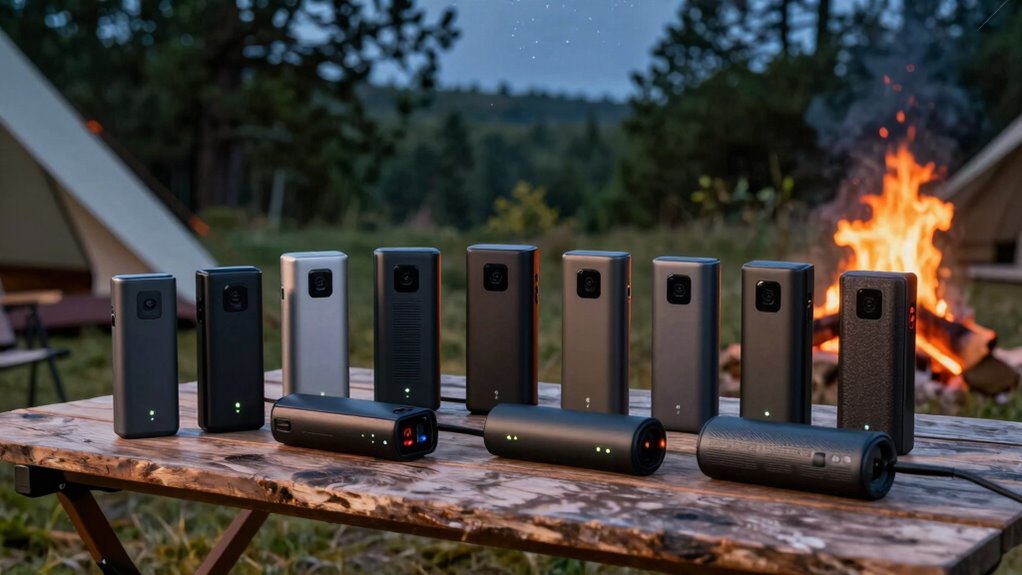
When choosing camping power banks for long deployments, the key factors are capacity, portability, and versatility. The Anker SOLIX C200 stands out as the best overall due to its balanced power and portability, ideal for extended trips. The DJI Power 2000 offers massive capacity for off-grid power needs, though it’s less portable. Meanwhile, the EF ECOFLOW Delta 3 provides a solid middle ground with high capacity and quick recharge times. The main tradeoffs often involve balancing size, weight, and cost against total capacity and output power. Keep reading for a detailed breakdown to find your perfect match.

Get privacy and security gear delivered free with Prime
- Fast, free delivery on millions of items
- Prime Video, Amazon Music and more included
- Member-only deals all year
Complete the kit




| camping power banks for long deployment | Battery Type | Power Output | Capacity |
|---|---|---|---|
| Anker SOLIX C200 DC Power Bank | LiFePO4 | 200W | — |
| EnginStar Portable Power Stati | — | 300W | 296Wh |
| DJI Power 2000 Portable Power | LFP | 3000W | — |
| EF ECOFLOW Delta 3 Portable Po | LiFePO4 | — | 1024Wh |
| Portable Solar Generator 300W | — | 300W | — |
| Daran Portable Power Station 3 | LiFePO4 | 350W (600W surge) | — |
| SOARAISE Solar Power Bank 4800 | — | — | 48000mAh |
| DaranEner Portable Power Stati | LiFePO4 | — | 192Wh |
| Jackery Explorer 300 Portable | — | — | 292Wh |
| Anker SOLIX C1000 Gen 2 Portab | LiFePO4 | 2000W (3000W peak) | 1024Wh |
| Anker SOLIX C1000 Portable Pow | LiFePO4 | — | — |
More Details on Our Top Picks
Anker SOLIX C200 DC Power Bank Station, 192Wh Portable Power Station, LiFePO4 Battery, 200W Solar Generator for Outdoor Camping, Traveling, and Emergencies
The Anker SOLIX C200 stands out for its blend of portability and versatility, making it ideal for long outdoor deployments where space and weight matter. Its 192Wh LiFePO4 battery offers enough capacity for multiple charges without bulk, and the 200W power output covers most essential devices. Unlike larger stations such as the DJI Power 2000, it doesn’t support powering heavy appliances, but its fast recharge via USB-C and solar compatibility make it a solid choice for extended use in remote settings. While the wall charger isn’t included, the ability to recharge via solar or car complements its travel-friendly design. Compared to the EcoFlow Delta 3, it’s more portable but offers less raw power, making it better suited for lighter device loads.
Pros:- Compact and easy to carry
- Multiple charging ports, including three USB-C
- Fast recharge times and solar recharging options
- Long-lasting LiFePO4 battery with 3,000 cycles
Cons:- Wall charger not included, adding extra cost
- Solar panels are sold separately
- Limited to USB-C ports for recharging, reducing convenience
Best for: Backcountry campers and travelers needing lightweight, reliable power for small to medium devices over long deployments
Not ideal for: Users requiring to run high-wattage appliances or multiple heavy devices simultaneously, as it’s limited to 200W output
- Battery Capacity:192Wh
- Power Output:200W
- USB-C Ports:3 (100W, 140W, 15W)
- Recharge Time:80% in 1.3 hours
- Recharging Methods:USB-C wall charger, solar, car
- Battery Type:LiFePO4
Our verdict“This power bank is perfect for those who prioritize portability without sacrificing reliable, long-term power for small to medium devices.”
EnginStar Portable Power Station 300W 296Wh Solar Generator with Pure Sine Wave AC Outlets
The EnginStar Portable Power Station offers a compelling balance of capacity and portability, making it ideal for users who need more power than smaller units but want to avoid heavy gear like the DJI Power 2000. Its 296Wh capacity and 300W AC output allow for powering multiple devices, including some sensitive electronics, thanks to its pure sine wave inverter. Compared with the EcoFlow Delta 3, it’s lighter at just 6.5 pounds, which is advantageous for frequent transport. However, it doesn’t include a solar panel, and its 300W limit means high-wattage appliances are out of reach. It’s best suited for camping, emergency backup, and moderate off-grid power needs, but regular recharging is necessary to keep it ready for deployment.
Pros:- Lightweight and highly portable
- Pure sine wave AC outlets ensure safe operation for sensitive electronics
- Multiple charging options including solar, AC, and car
- Reliable battery management system
Cons:- Solar panel is sold separately, increasing total cost
- Limited to 300W output, restricting high-power devices
- Requires regular recharging to maintain readiness
Best for: Hikers and backpackers who need a portable, safe power source capable of running multiple small devices for extended periods
Not ideal for: People needing to power heavy-duty appliances or run multiple devices at once exceeding 300W, due to its output limit
- Capacity:296Wh
- Power Output:300W
- AC Outlets:2 pure sine wave 110V
- Charge Cycles:Over 1000
- Weight:6.5 pounds
- Recharging Methods:Solar, AC, car
Our verdict“This model suits outdoor enthusiasts seeking a lightweight, safe power source for moderate loads and prolonged deployments.”
DJI Power 2000 Portable Power Station, 2048Wh LFP Battery, 3000W Output, Fast Recharge, Off-Grid Generator
The DJI Power 2000 is designed for serious off-grid applications, with an immense 2048Wh capacity and 3000W output, far surpassing smaller options like the EcoFlow Delta 3. Its fast recharge in just 55 minutes to 80% capacity makes it suitable for extended deployments where downtime needs minimizing. The smart app control and quiet operation add convenience, but it does have some drawbacks: it requires separate expansion batteries for truly extended backup, and solar or car charging modules are sold separately. This model is best for those who need to support multiple appliances over days, such as remote work sites or emergency backup, rather than casual camping.
Pros:- Enormous 2048Wh capacity for extended use
- Fast recharge time of 55 minutes to 80%
- High 3000W output supports multiple appliances
- Smart app control for monitoring
Cons:- Requires additional expansion batteries for full capacity
- Additional modules for solar and car charging sold separately
- Heavy and less portable for casual use
Best for: Emergency responders, remote work teams, or long-term off-grid users needing massive capacity and high power output
Not ideal for: Casual campers or short-term travelers who don’t require such extensive power capacity
- Battery Capacity:2048Wh
- Power Output:3000W
- Recharge Time:55 minutes to 80%
- Expansion Capacity:up to 22.5kWh
- Battery Type:LFP
- Warranty:5 years
Our verdict“This power station is ideal for those who need massive capacity and power stability for long deployments and off-grid living.”
EF ECOFLOW Delta 3 Portable Power Station, 1024Wh, 1800W
The EcoFlow Delta 3 balances capacity and power, offering 1024Wh and 1800W output suitable for running multiple appliances simultaneously. Its fast charge in just 56 minutes makes it appealing for long trips where quick turnaround matters. Compared to the DJI Power 2000, it’s lighter and more manageable for portable use, although it can’t match the capacity of the larger station for very long deployments. The LiFePO4 batteries promise a 10-year lifespan, which is a significant advantage for frequent use. However, its weight and price make it less ideal for those seeking ultra-lightweight gear, and expansion options are limited without additional modules. It’s best for campers who want high capacity with quick recharge and convenient portability.
Pros:- Fast recharge in under an hour
- Expandable capacity up to 5kWh
- Supports multiple appliances simultaneously
- Long lifespan with LiFePO4 batteries
Cons:- Heavier than smaller units, less portable
- Higher price point reflecting its capacity and features
- Requires compatible expansion modules for full capacity
Best for: Campers and outdoor enthusiasts who need a large, fast-charging station capable of powering multiple devices over several days
Not ideal for: Users who prioritize ultra-lightweight gear or need to power very high-wattage appliances, as it’s sizable and limited to 1800W output
- Capacity:1024Wh
- Max Power:1800W
- Charge Time:56 minutes
- Battery Type:LiFePO4
- Number of Outlets:13
- Expansion Capacity:up to 5kWh
Our verdict“This station fits those needing substantial power with quick recharge in a portable format for extended outdoor use.”
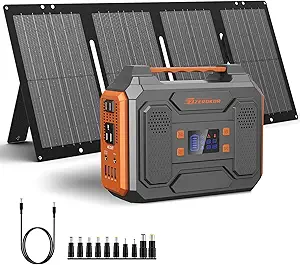
Portable Solar Generator 300W with 60W Solar Panel – 110V Pure Sine Wave, 280Wh Battery, USB QC3.0, DC, AC Outlets for Camping and Outdoor Use
The Portable Solar Generator offers a practical solution for off-grid power in a lightweight package, with a 280Wh battery and 60W solar panel. Its 300W output supports multiple small devices, making it ideal for quick charging and short-term deployments. Its high solar efficiency (20.5%) and included accessories, like the solar panel and multiple charging cables, make it accessible for casual campers or emergency kits. Compared to larger units like the Anker SOLIX C200, it’s less capable for sustained use but excels in portability and ease of setup. The main tradeoff is its limited capacity and power output, which restricts its use to low-power devices and shorter deployments. It’s best suited for those seeking a lightweight, solar-reliant backup rather than heavy-duty off-grid power.
Pros:- High solar conversion efficiency
- Includes solar panel and accessories
- Lightweight and easy to carry
- Built-in safety protections and SOS flashlight
Cons:- Limited to 300W output, not suitable for high-power devices
- Performance declines if not regularly charged
- Junction box not waterproof, needs dry storage
Best for: Backcountry hikers and weekend campers needing a portable, solar-reliant power source for small devices
Not ideal for: Those with high power demands or needing to run multiple appliances continuously, as it cannot handle over 300W or large loads
- Power Output:300W
- Battery Capacity:280Wh
- Solar Panel Power:60W
- AC Outlets:2 x 300W Max
- USB Ports:3 x 5V/3A, 1 x QC3.0
- Protection Features:Short circuit, over-current, over-voltage, overload, overheating
Our verdict“This generator is best for quick, eco-friendly power for small devices during outdoor adventures or emergencies requiring minimal capacity.”
Daran Portable Power Station 350W (600W Surge), 288Wh LiFePO4 Battery Backup with Multiple Outlets for Camping and Emergency
The Daran Portable Power Station stands out for its high-capacity 288Wh LiFePO4 battery, which offers over 3,000 charge cycles—far exceeding most rivals like the Jackery Explorer 300. Its multiple outlets, including AC, USB-C, and DC, make it highly adaptable for charging various devices simultaneously. While its 350W continuous output is sufficient for most camping needs, it won’t handle high-power appliances, unlike larger units such as the Anker SOLIX C1000. Its bulkier size might reduce portability, but this tradeoff favors longer-term deployments where power capacity and longevity are prioritized. Solar charging is supported but sold separately, which could be inconvenient for off-grid use.
Pros:- Long-lasting 288Wh LiFePO4 battery with over 3,000 cycles
- Multiple charging options including solar compatibility
- Powerful multi-port design for diverse devices
- Built-in safety features and durable construction
Cons:- Solar panel sold separately, adding upfront cost
- Limited to 350W continuous output, unsuitable for high-power appliances
- Bulkier size reduces portability for some users
Best for: Campers and emergency prep enthusiasts who need reliable, multi-device charging with a long cycle life.
Not ideal for: Users wanting lightweight, ultra-portable solutions or powering high-wattage appliances like electric grills.
- Power Output:350W (600W surge)
- Battery Capacity:288Wh
- Battery Type:LiFePO4
- Charge Cycles:Over 3,000
- Charging Methods:Wall socket, car, solar (sold separately)
- Ports:2×AC, 1×USB-C PD 60W, 2×USB-A 18W, 1×DC, 1×Cigar Socket
- Display:Digital power usage monitor
- LED Light Modes:Constant, strobe, emergency SOS
Our verdict“This power station suits those seeking a durable, versatile backup that balances capacity and portability for extended outdoor deployments.”
SOARAISE Solar Power Bank 48000mAh Wireless Portable Charger with Multiple Cables and Solar Panels
The SOARAISE Solar Power Bank excels in high capacity, boasting 48,000mAh to sustain longer outdoor adventures. Its four solar panels facilitate faster outdoor recharging compared to single-panel models, making it ideal for remote locations. It offers multiple ports including USB-A, USB-C, and wireless charging, with built-in cables to eliminate the need for extra accessories. Compared with smaller power banks like the Jackery Explorer 300, its solar input is its key advantage, but the size and weight can be cumbersome for everyday carry. Solar charging speed varies with sunlight, which can be unpredictable, and the price might be high relative to its capacity.
Pros:- Enormous 48,000mAh capacity for extended device use
- Four solar panels enable faster outdoor recharging
- Multiple wired and wireless charging options
- Built-in cables for convenience
Cons:- Large and heavy, less portable for everyday carry
- Solar charging speed depends heavily on sunlight conditions
- Price may be steep for some buyers
Best for: Backcountry hikers and campers who need extended power without grid access, especially where sunlight is abundant.
Not ideal for: Lightweight travelers or urban users who prefer small, portable chargers for occasional use.
- Capacity:48000mAh
- Solar Panels:4
- Ports:2 USB-A, 1 USB-C (input/output)
- Wireless Charging:Yes
- Fast Charging:Yes (PD QC 3.0)
- Weight:Heavy (not specified)
Our verdict“This power bank is perfect for long-term outdoor deployments where solar recharging and capacity are priorities, despite its size and weight.”
DaranEner Portable Power Station, 192Wh LiFePO4 Battery Backup Solar Generator with 2 300W AC Outlets, USB-C PD 60W Fast Charge, for Camping, Outdoor, Home, Emergency
The DaranEner 192Wh offers a balance of portability and power, with a 300W inverter capacity suitable for charging multiple devices like laptops, phones, and small appliances. Its LiFePO4 battery provides over 3,500 cycles, making it a durable choice for regular use. Compared with larger stations like the Anker SOLIX C1000, it sacrifices capacity for weight savings, making it easier to carry on longer hikes or backpacking trips. Its solar input is limited to 60W, which may slow recharging in off-grid scenarios. The built-in LED flashlight adds useful emergency functionality, but the limited power output restricts use for high-wattage appliances.
Pros:- Long-lasting LiFePO4 battery with over 3,500 cycles
- Lightweight and compact for easy portability
- Multiple charging options including solar, AC, and car
- Built-in LED flashlight with SOS mode
Cons:- Limited to 300W output, not suitable for high-power devices
- Solar input limited to 60W, slow recharging in remote areas
- Not designed for powering large appliances
Best for: Lightweight outdoor enthusiasts and emergency preppers needing enough power for essentials without bulk.
Not ideal for: Those planning to run high-wattage appliances or needing prolonged power supply for extended trips.
- Capacity:192Wh
- Inverter Power:300W (600W surge)
- Battery Type:LiFePO4
- Cycle Life:3500+
- AC Outlets:2
- USB-C PD Output:60W
Our verdict“This station fits outdoor users who need reliable, portable power for moderate devices and emergencies without excess bulk.”
Jackery Explorer 300 Portable Power Station, 292Wh, LiFePO4 Battery, Solar Generator for Outdoors, Camping, Travel, Hunting, Blackout
The Jackery Explorer 300 offers a compelling mix of portability and durability, with only 7.5 lbs and 292Wh capacity—just under the 288Wh of the Daran Station. Its LiFePO4 chemistry ensures over 4,000 charge cycles, making it highly durable for frequent outdoor use. Its compact design and multiple outlets, including USB-C and car port, make it versatile for off-grid adventures or emergency backup. While it doesn’t include a solar panel, it’s compatible with Jackery’s solar options and charges quickly, reaching 80% in under 3 hours with a 100W panel. Its capacity is enough for most small devices but falls short of powering larger appliances, especially over long durations.
Pros:- Lightweight at only 7.5 lbs for easy portability
- High durability with over 4,000 charge cycles
- Multiple charging ports, including USB-C
- Fast solar charging with compatible panels
Cons:- No included solar panel, extra purchase required
- Limited capacity for larger appliances or extended use
- Requires physical delivery address for purchase
Best for: Lightweight travelers and casual campers who need reliable power without excess weight or size.
Not ideal for: Power users needing to run high-wattage appliances or for extended full-day power needs.
- Capacity:292Wh
- Weight:7.5 lbs
- Battery Chemistry:LiFePO4
- Charge Cycles:Over 4,000
- Outlets:2 AC, 1 USB-C PD, 2 USB-A, 1 car port
- Solar Charging Time:80% in 2.8 hours with 100W panel
Our verdict“This model works well for lightweight users who prioritize portability and durability for short to medium outdoor trips.”
Anker SOLIX C1000 Gen 2 Portable Power Station, 1024Wh, 2000W
The Anker SOLIX C1000 Gen 2 is a powerhouse with a massive 1024Wh battery and 2000W continuous output, making it ideal for serious off-grid power needs or emergency backup. Its 49-minute recharge time is impressive, rivaling smaller units like the Jackery Explorer 300 in quickness, but with far greater capacity. Its compact size and lower weight—11% smaller and lighter than similar models—make it manageable for outdoor use. However, the solar input is limited to 600W, which could slow recharging when solar conditions are less than ideal. Its high initial cost might also be a barrier for some users, but its extensive surge capacity and long cycle life make it a compelling choice for power-intensive applications.
Pros:- Fast recharging in just 49 minutes
- High capacity with 1024Wh for extended use
- Powerful 2000W output supports most devices
- Lightweight and compact considering capacity
Cons:- High upfront cost
- Limited solar input capacity (600W) may slow recharge
- Requires app for advanced management
Best for: Preppers, RV owners, and serious outdoor users needing reliable, high-wattage backup power with quick recharge times.
Not ideal for: Budget-conscious buyers or casual campers who don’t need such high capacity or power output.
- Capacity:1024Wh
- Power Output:2000W (3000W peak)
- Recharge Time:49 minutes
- Battery Type:LiFePO4
- Recharging Method:AC, Solar (600W)
- Portability:Compact, lightweight
- Cycle Life:4000 cycles
Our verdict“This station is best suited for users who need large-scale power backup with rapid recharge, despite the premium price.”
Anker SOLIX C1000 Portable Power Station, 1800W (Peak 2400W), 1056Wh LiFePO4 Battery, Solar Generator for Home Backup and Outdoor Camping
The Anker SOLIX C1000 stands out for its impressive combination of high capacity, fast recharge, and versatile outputs, making it the top choice for extended outdoor deployments. Unlike the EF ECOFLOW Delta 3, which offers a similar capacity but takes longer to recharge, the C1000’s under-one-hour recharge with UltraFast technology minimizes downtime during long trips. Its 2400W surge capacity easily handles appliances that other models, like the DJI Power 2000, might struggle with, especially during initial startup. The LiFePO4 chemistry promises a lifespan of 3,000 cycles, offering durability for frequent use. However, reliance on an app for UltraFast setup and the lack of detailed solar panel compatibility can be hurdles for some users. This pick makes the most sense for those needing a reliable, high-capacity station that balances power, recharge speed, and portability.
Pros:- Fast recharge in under an hour with UltraFast technology
- High surge capacity of 2400W suitable for appliances and power tools
- Long-lasting LiFePO4 battery with 3,000 cycles
- Compact design that fits well in outdoor setups
Cons:- Requires smartphone app for UltraFast recharge setup which may be inconvenient
- Price not specified, potentially expensive for budget-conscious buyers
- Limited information on solar panel compatibility could limit solar recharging options
Best for: Long-term campers, RV travelers, and homeowners seeking dependable backup power with quick recharge capabilities.
Not ideal for: Casual users or those on a tight budget, as the premium features and fast recharge come with a higher price tag.
- Battery Capacity:1056Wh
- Peak Power:2400W
- Recharge Time:Under 1 hour
- Fast Solar Recharging:Up to 600W
- Battery Type:LiFePO4
- Cycle Life:3,000 cycles
- Size:15% smaller than comparable units
Our verdict“This power station is ideal for users who need rapid recharging, high surge capacity, and a durable battery for long deployments.”

How We Picked
Our evaluation focused on capacity, portability, durability, recharge options, and versatility. We prioritized products with high capacity-to-weight ratios, reliable build quality, and multiple charging outlets to suit varied outdoor needs. Cost was also a factor, but not at the expense of essential features like fast recharge or solar compatibility. We compared products based on real-world deployment scenarios, emphasizing ease of use and long-term reliability. The ranking reflects a combination of performance, value, and suitability for extended off-grid use.
| camping power banks for long deployment | Battery Type |
|---|---|
| Anker SOLIX C200 DC Power Bank | LiFePO4 |
| EnginStar Portable Power Stati | — |
| DJI Power 2000 Portable Power | LFP |
| EF ECOFLOW Delta 3 Portable Po | LiFePO4 |
| Portable Solar Generator 300W | — |
| Daran Portable Power Station 3 | LiFePO4 |
| SOARAISE Solar Power Bank 4800 | — |
| DaranEner Portable Power Stati | LiFePO4 |
| Jackery Explorer 300 Portable | — |
| Anker SOLIX C1000 Gen 2 Portab | LiFePO4 |
| Anker SOLIX C1000 Portable Pow | LiFePO4 |
Factors to Consider When Choosing Camping Power Banks For Long Deployments
Selecting the right camping power bank for long deployments requires understanding several key factors that influence performance and usability. Beyond capacity, consider how the device recharges, its weight, and whether it supports solar input. Knowing your typical power needs helps determine the necessary output wattage and outlets. A higher capacity isn’t always better if portability is a priority; balancing these elements ensures you get a device that fits your adventure style and duration. Avoid common pitfalls like overestimating your power needs or choosing models without sufficient recharge options.Capacity and Power Output
Capacity determines how long your devices can run, with larger batteries supporting longer deployments. For off-grid camping, a capacity of at least 300Wh is advisable, but for extended trips or multiple devices, look for models exceeding 1000Wh. Power output, measured in watts, affects what devices can be powered simultaneously—higher wattage supports larger appliances like mini-fridges or high-power tools. Consider your device list carefully to match the power station’s capabilities with your needs.
Recharge Methods and Solar Compatibility
Fast recharge options, such as AC wall charging or car adapters, reduce downtime between uses. Solar compatibility has become a crucial feature for long deployments, offering a sustainable way to replenish power without grid access. Ensure the power bank supports the solar panel wattage you plan to use—some models handle high wattage inputs, enabling quicker recharging. Be aware of recharge times and how they scale with capacity; a large capacity with slow recharge options may limit your deployment duration.
Portability and Weight
Balancing size and weight is vital, especially if you’ll be carrying the power station over long distances or in rugged terrain. Compact models tend to have lower capacities but are easier to transport, while larger units with high capacity can become cumbersome. Consider whether you’ll need a backpack-friendly size or if a stationary setup is acceptable. Durability and weather resistance also matter for outdoor environments, so look for rugged construction and water-resistant features.
Number and Types of Outlets
Multiple outlets, including USB-C, AC, and DC, expand your options for powering various devices. For long deployments, having a mix allows you to charge everything from smartphones to small appliances simultaneously. Check whether outlets support fast charging standards, which can save time during recharging or power-up. Also, consider if the power bank can support pass-through charging, enabling you to recharge the station while powering devices.
Price and Long-Term Value
While higher-capacity premium models cost more upfront, they often offer better durability, faster recharge, and more features. Cheaper options might suffice for short trips but could prove limiting for extended use. Think about the overall value, including build quality, warranty, and customer support. Investing in a slightly more expensive model could reduce replacement costs and enhance reliability during critical moments.
Frequently Asked Questions
How do I choose the right capacity for my long camping trips?
To determine the appropriate capacity, list all devices you plan to power and estimate their total watt-hours consumption. Add some buffer for unexpected needs or longer durations. For example, if you’re running multiple small devices over several days, a capacity of 500Wh to 1000Wh might be sufficient. For larger appliances or very long trips, consider models exceeding 1500Wh. Matching capacity to your actual power needs prevents overpaying for unused capacity or running out of power prematurely.
Can I rely solely on solar charging for extended trips?
Solar charging can be very effective if you have good sunlight and a compatible panel, but it often requires multiple panels and time to fully recharge large batteries. It’s wise to have a backup method like AC or car charging to ensure you don’t run out of power during cloudy days or bad weather. Carefully check the solar input wattage supported by your power bank and plan your outdoor setup accordingly to maximize solar efficiency.
Is a higher wattage output necessary for camping use?
Not necessarily. If your needs are limited to charging phones, tablets, and small gadgets, a lower wattage output suffices. However, if you plan to power larger devices like mini-fridges, CPAP machines, or power tools, higher wattage models become essential. Always match the power station’s maximum output with your device requirements to avoid overloads and ensure safety and reliability during extended use.
How important is durability and weather resistance?
Durability and weather resistance are vital for outdoor use, especially during long deployments where exposure to rain, dust, or rough handling is common. Look for models with rugged exteriors, IP ratings, or rubberized edges. Investing in a sturdy power bank reduces the risk of damage and ensures consistent performance over many trips. If you expect rough conditions, prioritize models with reinforced construction and water resistance.
Should I prioritize fast recharge or high capacity?
Both are important, but your choice depends on your deployment style. Fast recharge minimizes downtime between uses, which is critical if you need quick turnaround for multiple trips. High capacity ensures longer usage before needing a recharge, ideal for extended off-grid stays. For most long deployments, a balance of both—such as a high-capacity unit with quick recharge features—offers the best flexibility. Consider your typical recharge opportunities and power needs when deciding.
Conclusion
For the typical long-deployment camper, the Anker SOLIX C200 offers a well-rounded mix of capacity, portability, and solar compatibility, making it the best overall choice. If your priority is maximum power for off-grid living or powering larger appliances, the DJI Power 2000 provides unmatched capacity, though at a heavier weight and higher cost. Newcomers or those with modest needs should consider the Jackery Explorer 300 for its ease of use and reliable performance. For those seeking premium features and durability, the Anker SOLIX C1000 delivers high capacity with fast charging. Ultimately, your choice depends on balancing power, portability, and budget to match your specific outdoor adventure plans.