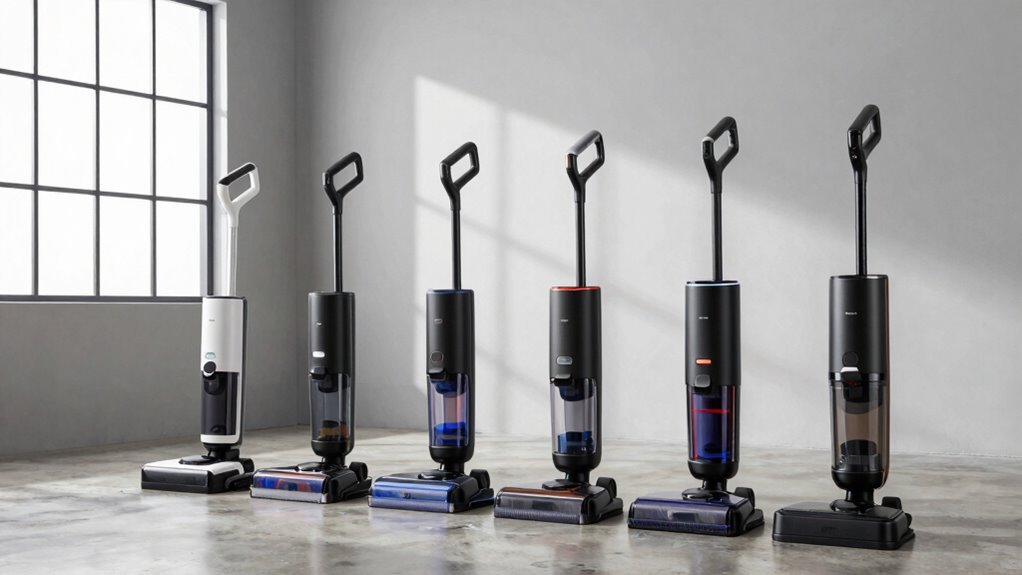
Choosing a cordless vacuum for a studio or lab means balancing quick pickup against practical constraints: narrow work areas, mixed flooring, fine debris, noise, and time between charges. My leading picks split those priorities. The Dyson V8 is the most balanced choice for switching between floors and benches; the Canyon 20 pairs a large dust cup with a long stated runtime for bigger cleanup rounds; and the Levoit LVAC-200 favors light, nimble spot cleaning around furniture.

Get privacy and security gear delivered free with Prime
- Fast, free delivery on millions of items
- Prime Video, Amazon Music and more included
- Member-only deals all year
Those strengths come with real compromises. The Dyson’s 0.14-gallon capacity means more frequent emptying, while the Canyon and X100 make ambitious runtime claims that depend on settings and conditions. The Dreame Z30 offers the longest stated runtime and high suction, but its listed weight is a concern for frequent handheld work. I ranked these models by how well their supplied features fit studio and lab routines—not by assuming any household vacuum is suitable for hazardous materials, wet spills, or controlled cleanroom work.
Complete the kit


Key Takeaways
- Dyson V8 is my best overall fit for rooms that alternate between carpet, hard flooring, and handheld detail work, but its small dust capacity favors short sessions.
- Canyon 20 has the largest stated dust cup at 1.8 liters, making it attractive for longer general cleanup rounds; its 70-minute runtime is a maximum, not a guaranteed working duration.
- X100 is the feature-rich stick option with a self-standing design and touch screen, but its advertised runtime applies to low suction under stated test conditions.
- Levoit LVAC-200 is the lighter-duty choice for tight studios where under-furniture access and dry spot cleanup matter more than capacity or turbo endurance.
- Dreame Z30 offers the longest stated runtime and 310 AW suction, but its listed 21.6-pound weight and 82 dB noise level make handling and shared-room use important concerns.
| Dyson V8 Cordless Vacuum |  | Best Overall | Weight: 5.6 pounds | Runtime: Up to 40 minutes; varies by use | Capacity: 0.14 gallons | VIEW ON AMAZON | See Our Full Breakdown |
| Dreame Z30 Cordless Vacuum Cleaner, 310 AW Suction, Up to 90-Minute Runtime |  | Best for Long Cleaning Sessions | Suction: 310 AW | Runtime: Up to 90 minutes with attachments | Dustbin capacity: 0.6 liters | VIEW ON AMAZON | See Our Full Breakdown |
| Canyon 20 Cordless Stick Vacuum Cleaner, 650W, 60 kPa, 70-Minute Runtime |  | Best for High-Capacity Cleanup | Motor: 650W brushless | Maximum suction: 60 kPa | Runtime: Up to 70 minutes | VIEW ON AMAZON | See Our Full Breakdown |
| X100 Cordless Stick Vacuum Cleaner, 650W, 55 kPa, Up to 70-Minute Runtime |  | Best Feature-Rich Large-Bin Stick | Motor: 650W brushless | Maximum suction: 55 kPa | Runtime: Up to 70 minutes on low suction under stated test conditions | VIEW ON AMAZON | See Our Full Breakdown |
| Levoit LVAC-200 Cordless Stick Vacuum Cleaner |  | Best for Compact Studios and Under-Furniture Cleaning | Runtime: 12 to 50 minutes, depending on mode and attachment | Dustbin capacity: 0.75 liters | Filtration: Five-stage; stated capture of 99.9% of particles as small as 0.3 microns | VIEW ON AMAZON | See Our Full Breakdown |
| cordless vacuums for studios and lab | Runtime | Filtration | Noise |
|---|---|---|---|
| Dyson V8 Cordless Vacuum | Up to 40 minutes; varies by use | Whole-machine filtration; cartridge filter | — |
| Dreame Z30 Cordless Vacuum Cle | Up to 90 minutes with attachments | HEPA | 82 dB |
| Canyon 20 Cordless Stick Vacuu | Up to 70 minutes | Eight-layer filtration; HEPA filter | — |
| X100 Cordless Stick Vacuum Cle | Up to 70 minutes on low suction under stated test conditions | Eight-layer filtration; HEPA filter | 58 dB listed; maximum 62 dB |
| Levoit LVAC-200 Cordless Stick | 12 to 50 minutes, depending on mode and attachment | Five-stage; stated capture of 99.9% of particles as small as 0.3 microns | 77.5 dB |
More Details on Our Top Picks
Dyson V8 Cordless Vacuum
The Dyson V8 takes my top spot because it handles the varied layout of a studio or small workroom without leaning on one impressive but narrow specification. Its Motorbar cleaner head is described for carpets and hard floors, and the body converts to a handheld vacuum for benches, upholstery, and awkward edges. That makes it more adaptable than the floor-focused simplicity of the Levoit, while its 5.6-pound listed weight is less concerning for detail work than the Dreame’s listed 21.6 pounds.
The main limitation is capacity. At 0.14 gallons, the bin is far smaller than the 1.8-liter cups on the Canyon 20 and X100. For a compact studio with frequent light pickups, that may be a fair exchange for a manageable design; for a busy room generating visible debris every day, expect more interruptions to empty it. The up-to-40-minute figure also varies with power mode, floor type, and attachments, so I would not plan an extended high-power session around the maximum.
Whole-machine filtration and a crevice tool add useful general-cleaning versatility, but this is still not a substitute for equipment specified for hazardous or regulated lab dust. I would choose it as the best balanced everyday option when both floor cleaning and portable detail work matter. Skip it if a large bin, long uninterrupted runtime, or specialist containment is your priority.
Pros:- Converts from a stick vacuum to a handheld for benches and furniture.
- Motorbar head is specified for carpets and hard floors.
- Whole-machine filtration and a crevice tool support general detail cleaning.
- At 5.6 pounds, its listed weight is more manageable for portable tasks than the Dreame Z30.
Cons:- The 0.14-gallon capacity is much smaller than the Canyon 20 and X100 dust cups.
- Up to 40 minutes varies with mode, surface, and attachment.
- The supplied details do not establish suitability for hazardous lab dust or wet spills.
Best for: Small studios and general-purpose workrooms that need one vacuum for mixed floors, furniture, and occasional handheld detail cleaning.
Not ideal for: Large areas with heavy daily debris, users who want a large-capacity bin, or labs that require certified hazardous-dust or cleanroom equipment.
- Weight:5.6 pounds
- Runtime:Up to 40 minutes; varies by use
- Capacity:0.14 gallons
- Cleaning modes:2
- Surfaces:All floors
- Filtration:Whole-machine filtration; cartridge filter
- Included tools:Motorbar head, wall dock, charging cord, crevice tool
Our verdict“I recommend the Dyson V8 as the most versatile everyday pick for mixed studio floors and detail work, provided its small bin fits your cleanup routine.”
Dreame Z30 Cordless Vacuum Cleaner, 310 AW Suction, Up to 90-Minute Runtime
If uninterrupted coverage is the leading concern, the Dreame Z30 has the strongest stated runtime in this group: up to 90 minutes with attachments. It also lists 310 AW suction, automatic suction adjustment, and illuminated brush options for different floor types. Compared with the Dyson V8’s up-to-40-minute claim, those figures make the Dreame more compelling for a larger studio or a workroom that needs one planned cleaning pass rather than repeated short pickups.
That advantage is qualified by two conspicuous numbers: a listed weight of 21.6 pounds and an 82 dB noise level. The weight is far above the Dyson’s 5.6 pounds and makes frequent overhead, stair, or bench-side handheld cleaning a less comfortable proposition. Noise also matters where people are recording, meeting, or concentrating. I would check the weight details and handling expectations carefully before choosing it for a room where the vacuum will be carried around all day.
The 0.6-liter bin is larger than the Dyson’s stated capacity, though well below the Canyon 20 and X100’s 1.8 liters. Pet grooming and anti-tangle tools may help with hair-heavy shared spaces, while HEPA filtration is a stated feature; neither detail certifies the machine for hazardous lab materials. I see this as the long-session choice, not the easiest model for quick handheld work or quiet shared environments.
Pros:- Longest stated runtime in this lineup, up to 90 minutes with attachments.
- Lists 310 AW suction and automatic suction adjustment.
- Includes illuminated floor brushes, a motorized mini-brush, and combination tool.
- HEPA filtration is specified.
Cons:- Listed weight of 21.6 pounds is substantially higher than the Dyson V8’s 5.6 pounds.
- Listed noise level is 82 dB, which may disrupt shared work areas.
- The 0.6-liter bin is smaller than the Canyon 20 and X100’s 1.8-liter cups.
Best for: Larger studios or general work areas where longer stated runtime, floor coverage, and a range of attachments matter more than light handheld handling.
Not ideal for: Quiet recording or concentration spaces, frequent stair or overhead cleaning, and labs needing certified containment or specialized filtration.
- Suction:310 AW
- Runtime:Up to 90 minutes with attachments
- Dustbin capacity:0.6 liters
- Weight:21.6 pounds listed
- Filtration:HEPA
- Noise:82 dB
- Included tools:Combination tool, illuminated multi-surface and soft-roller brushes, motorized mini-brush
Our verdict“I would choose the Dreame Z30 for longer general floor-cleaning rounds only when its listed weight and noise are acceptable in the workspace.”
Canyon 20 Cordless Stick Vacuum Cleaner, 650W, 60 kPa, 70-Minute Runtime
The Canyon 20’s clearest advantage is not its headline suction claim; it is the combination of a 1.8-liter dust cup and a flexible extension hose. That capacity is much larger than the Dyson V8’s 0.14 gallons and the Dreame Z30’s 0.6 liters, so it suits workrooms where repeated small debris pickups make frequent emptying irritating. The 3.3-foot hose and supplied tools also make it better equipped for furniture, cars, and awkward spaces than a basic floor-only stick vacuum.
Its published figures are bold: a 650W brushless motor, up to 60 kPa suction, and up to 70 minutes of runtime. I treat the runtime as a maximum dependent on mode, not a reliable measure of a full-power cleaning session. The stated noise level of 62 dB or less may look appealing alongside the Dreame’s 82 dB, but the supplied information does not explain how those measurements were taken, so I would not make a room-noise decision from the numbers alone.
HEPA filtration and eight-layer filtration are listed, along with an anti-tangle brush and a freestanding design. Those features support general dry cleanup, but they do not establish suitability for controlled or hazardous materials. Compared with the X100, the Canyon has a higher stated suction figure and similarly large capacity, while the X100 gives more specific detail about its low-suction runtime condition and touch-screen controls. My pick here is for buyers who value fewer emptying breaks and flexible reach over a more clearly described control setup.
Pros:- Large 1.8-liter dust cup exceeds the Dyson V8 and Dreame Z30 stated capacities.
- Flexible 3.3-foot extension hose and multiple tools add reach beyond floors.
- Lists an anti-tangle brush and eight-layer filtration with a HEPA filter.
- Freestanding design can make short pauses between cleaning areas easier.
Cons:- Up to 70 minutes is a maximum and may not reflect higher-suction use.
- The supplied information does not explain runtime test conditions in detail.
- Filtration claims do not establish suitability for hazardous or regulated lab dust.
Best for: Studios and general workrooms with frequent dry debris, mixed surfaces, and a need to clean furniture or vehicle interiors with an extension hose.
Not ideal for: Buyers who need a verified full-power runtime, certified hazardous-dust handling, or a product with clearly specified noise-testing conditions.
- Motor:650W brushless
- Maximum suction:60 kPa
- Runtime:Up to 70 minutes
- Dust cup capacity:1.8 liters
- Battery:8 × 2800 mAh; 29.6V
- Filtration:Eight-layer filtration; HEPA filter
- Extension hose:3.3 feet
Our verdict“I favor the Canyon 20 for general cleanup rounds where a large dust cup and flexible hose matter more than a fully specified working runtime.”
X100 Cordless Stick Vacuum Cleaner, 650W, 55 kPa, Up to 70-Minute Runtime
The X100 is the most straightforward alternative to the Canyon 20 for buyers who want a large 1.8-liter bin and extended cordless cleaning. Both list a 650W brushless motor, eight-layer filtration with a HEPA filter, and up to 70 minutes of runtime. The X100’s stated maximum suction is 55 kPa, below the Canyon’s 60 kPa, but its description is more explicit about the runtime condition: up to 70 minutes on low suction under stated test conditions. That makes the claim easier to interpret, not a guarantee of real-world duration.
A self-standing design and LED touch screen give the X100 a more control-focused feel than the Canyon’s listed feature set. Its V-shaped anti-tangle roller is meant to handle hair and floor debris, and three speeds let the operator adjust the cleaning level. The listed noise range is 58 dB, with a maximum of 62 dB; as with any manufacturer figure, I would treat that as a reference rather than a promise about a particular room.
The product description also calls out regular cleaning of the dust cup, filter, tube, and brush roller. That maintenance burden is worth weighing in a shared studio: a big bin reduces emptying interruptions, but it does not remove the need to keep the airflow path and roller clear. Compared with the Canyon, the X100 sacrifices some stated maximum suction for clearer runtime conditions and screen controls. I’d rank it for people who value large capacity and visible controls, not for buyers seeking specialist lab containment.
Pros:- 1.8-liter dust cup matches the Canyon 20 and exceeds the Dyson V8 and Dreame Z30 capacities.
- Self-standing design and LED touch screen support convenient pauses and mode changes.
- V-shaped anti-tangle roller and eight-layer filtration are specified.
- Runtime conditions are explicitly tied to low suction and stated test conditions.
Cons:- Up to 70 minutes applies to low suction under stated test conditions.
- Requires regular cleaning of the cup, filter, tube, and roller.
- Its 55 kPa maximum suction is lower than the Canyon 20’s stated 60 kPa.
Best for: General-purpose studios that want a self-standing stick vacuum, touch-screen controls, and a large dust cup for routine dry cleanup.
Not ideal for: Buyers expecting 70 minutes at high suction, anyone seeking low-maintenance operation, or labs with regulated dust-handling requirements.
- Motor:650W brushless
- Maximum suction:55 kPa
- Runtime:Up to 70 minutes on low suction under stated test conditions
- Dust cup capacity:1.8 liters
- Battery and voltage:8 × 2800 mAh; 29.6V
- Filtration:Eight-layer filtration; HEPA filter
- Noise:58 dB listed; maximum 62 dB
- Design:Self-standing cordless stick; LED touch screen
Our verdict“I recommend the X100 over the Canyon 20 when a self-standing design and touch controls matter more than the Canyon’s higher stated maximum suction.”
Levoit LVAC-200 Cordless Stick Vacuum Cleaner
The Levoit LVAC-200 is my compact-space choice because its 180-degree lay-flat design, three LED lights, and anti-tangle brush focus on everyday access rather than maximum suction claims or a huge dust cup. In a studio crowded with desks, shelving, and low furniture, being able to reach underneath can matter more than the Canyon 20’s larger 1.8-liter capacity. It also includes a pet tool and five-stage filtration, making it a practical general-purpose option for ordinary dry debris and hair.
Its limits are unusually clear. The 0.75-liter bin is smaller than the Canyon and X100 cups, and the stated runtime ranges from 12 to 50 minutes depending on mode and attachment. The 50-minute figure is tied to Eco mode with the crevice or pet tool; Turbo drops to 12 minutes. That makes the Levoit better for light, targeted cleaning than for keeping a large workspace on high power throughout a long session. Its 77.5 dB noise listing also means it is not automatically the quietest choice for recording or shared concentration.
This model is designed for dry messes only, so it should not be used for liquid spills. The filter replacement recommendation every three months also adds recurring maintenance that may make it less convenient than a model with fewer specified upkeep requirements. Compared with the Dyson V8, it emphasizes low-clearance access and lights, while the Dyson offers whole-machine filtration and a Motorbar head for all-floor use. I’d pick the Levoit for compact studios and skip it for high-volume or specialist lab cleanup.
Pros:- 180-degree lay-flat design and three LED lights help reach beneath furniture.
- Anti-tangle brush and included pet tool suit routine hair and dry-debris pickup.
- Five-stage filtration is specified to capture 99.9% of particles as small as 0.3 microns.
- Up to 50 minutes is stated for Eco mode with the crevice or pet tool.
Cons:- Not designed for liquids or wet spills.
- Turbo runtime is listed as 12 minutes, far below the Eco maximum.
- The 0.75-liter bin is smaller than the Canyon 20 and X100 cups.
- Filter replacement is recommended every three months.
Best for: Small studios with low furniture and mostly hard floors, rugs, or low-pile carpet where quick dry pickup and under-furniture access are priorities.
Not ideal for: Wet spills, large spaces with heavy debris, long Turbo sessions, or labs requiring certified filtration and containment.
- Runtime:12 to 50 minutes, depending on mode and attachment
- Dustbin capacity:0.75 liters
- Filtration:Five-stage; stated capture of 99.9% of particles as small as 0.3 microns
- Noise:77.5 dB
- Voltage and wattage:22.2V; 180W
- Surfaces:Hard floors, rugs, and low-pile carpets
- Special features:Anti-tangle brush, pet tool, 180-degree lay-flat design, three LED lights
- Intended use:Indoor dry messes only
Our verdict“I recommend the Levoit LVAC-200 for compact, furniture-filled studios that need convenient dry spot cleaning rather than long, high-power sessions.”

How We Picked
I judged these five vacuums against the actual demands of studios and labs: moving between open floors and crowded work areas, picking up ordinary dry debris, reaching around furniture, and managing interruptions for emptying or charging. A cordless format can make daily cleanup easier in rooms with benches, carts, and limited outlets, but it does not by itself make a vacuum suitable for every lab material or contamination-control protocol.
My ranking gives most weight to usable flexibility: floor compatibility, handheld or attachment access, dust capacity, filtration information, stated runtime, weight, and maintenance needs. I also treated advertised maximum runtimes as conditional claims rather than promises, especially when the product description ties them to low suction or attachments. A high suction figure does not automatically outweigh noise, bulk, or a small bin in a shared workspace.
These products do not come with enough information to establish suitability for hazardous dust, biological material, chemical residues, or certified cleanroom use. I have not treated consumer HEPA or multistage filtration claims as proof of such suitability. My recommendations are for general dry housekeeping only, with the buyer responsible for matching equipment to workplace safety procedures. Where product details conflict or leave a question open, I keep that uncertainty visible instead of filling gaps with assumptions.
| cordless vacuums for studios and lab | Filtration |
|---|---|
| Dyson V8 Cordless Vacuum | Whole-machine filtration; cartridge filter |
| Dreame Z30 Cordless Vacuum Cle | HEPA |
| Canyon 20 Cordless Stick Vacuu | Eight-layer filtration; HEPA filter |
| X100 Cordless Stick Vacuum Cle | Eight-layer filtration; HEPA filter |
| Levoit LVAC-200 Cordless Stick | Five-stage; stated capture of 99.9% of particles as small as 0.3 microns |
Factors to Consider When Choosing Cordless Vacuums For Studios And Labs
I would choose by the room’s cleaning pattern, not by the largest suction or runtime number on the box. For a studio or general workroom, the useful question is whether the vacuum can cover the needed surfaces, reach the likely debris, and fit the room’s safety rules.Match the vacuum to the material and workplace rules
These five options are presented for ordinary floor, furniture, and dry-debris cleanup. None of the supplied descriptions establishes certification for hazardous dust, chemical residue, biological material, or cleanroom use. HEPA or multistage filtration language alone is not proof that a machine is suitable for a regulated process, nor does it describe how dust is contained during emptying and maintenance. I would check workplace procedures and the material’s safety requirements before bringing a household-style cordless vacuum into a lab. For spills or wet material, the Levoit explicitly says dry messes only, and the other supplied descriptions do not establish wet pickup capability.
Treat runtime as a condition, not a promise
Runtime figures are hard to compare unless the mode, attachment, and test conditions match. The Dreame Z30 lists up to 90 minutes with attachments, while the Dyson V8 lists up to 40 minutes and the Canyon 20 lists up to 70. The X100 states that its up-to-70-minute maximum is on low suction under stated test conditions; the Levoit spans 12 to 50 minutes, with Turbo at the short end. If your room needs regular high-power passes, plan around the lower-use case rather than the headline maximum, and check whether charging time fits your schedule.
Capacity changes how often work stops
For frequent debris, bin size has a direct effect on interruptions. The Canyon 20 and X100 each list a 1.8-liter cup, compared with 0.6 liters for the Dreame, 0.75 liters for the Levoit, and 0.14 gallons for the Dyson. Units differ, so the listed figures are not a perfect apples-to-apples comparison, but the two 1.8-liter models plainly target higher capacity. A larger cup still needs regular emptying, and a full bin can affect the workflow; think about disposal procedures, too, especially in a lab setting.
Consider handling, reach, and shared-room noise
Floor coverage is only one part of studio cleanup. The Dyson converts to a handheld and lists a weight of 5.6 pounds, while the Levoit folds flat to reach under furniture. The Dreame includes a broad tool set but lists a much higher weight of 21.6 pounds, which may be a drawback for repeated portable work. The Canyon’s extension hose helps with furniture and tight spaces, and the X100’s self-standing design suits brief pauses. Noise listings range from 58 dB on the X100 to 82 dB on the Dreame, but measurement methods are not supplied consistently, so use them as clues rather than guarantees for recording or quiet work.
Plan for filter and brush maintenance
Hair, dust, and repeated use can call for cleaning the roller, bin, filter, and airflow path. The X100 description specifically calls for regular attention to its cup, filter, tube, and brush roller; the Levoit recommends filter replacement every three months. I would factor that upkeep into shared-room responsibilities instead of assuming a cordless design is maintenance-free. For a lab, also ask how the bin and filter can be serviced without releasing unwanted material; the supplied product details do not answer that question.
Frequently Asked Questions
Which of these cordless vacuums is the best all-around choice for a studio?
I rank the Dyson V8 first for general versatility because it handles carpets and hard floors, converts to handheld use, and includes a crevice tool. Its small 0.14-gallon capacity makes it less suitable for heavy daily debris than the Canyon 20 or X100, so I would choose one of those instead if reducing emptying stops is the main concern.
Can I use these vacuums for hazardous lab dust or cleanroom work?
The supplied descriptions do not establish that any of these models is certified for hazardous dust, chemical residue, biological material, or cleanroom use. A listed HEPA filter or a filtration percentage is not enough to confirm whole-system containment or safe emptying. I would follow the lab’s safety procedures and choose equipment approved for the specific material and environment.
Which model has the largest dust cup?
The Canyon 20 and X100 both list 1.8-liter dust cups, larger than the capacities stated for the Dyson V8, Dreame Z30, and Levoit LVAC-200. That can mean fewer emptying interruptions during ordinary cleanup, though actual use depends on how much debris is collected and how the bin is maintained.
Are the advertised runtime figures realistic for a full cleaning session?
They are maximum or conditional figures, not a promise that the vacuum will run for that long on every setting. The X100 ties its up-to-70-minute claim to low suction under stated test conditions; the Levoit lists as little as 12 minutes in Turbo, and the Dyson says runtime varies by mode, floor, and attachment. I would plan for shorter high-power use and check the exact operating conditions before relying on a maximum.
Which option makes sense for a small studio with furniture and hard-to-reach corners?
I would shortlist the Levoit LVAC-200 for low-clearance spaces because it lies flat and has three LED lights, or the Dyson V8 if handheld cleaning and a crevice tool are more important. The Levoit is limited to dry messes and has a smaller bin than the Canyon 20 and X100. The Dyson also has a small stated capacity, so either is better suited to light, regular pickups than a high-volume cleanup round.
Conclusion
For a balanced studio vacuum that can move from floors to detail work, I’d choose the Dyson V8, accepting its small bin and conditional runtime. If your routine produces more debris and you want fewer emptying breaks, the Canyon 20 is my high-capacity pick; choose the X100 instead when its self-standing design and touch screen matter more than the Canyon’s higher stated suction. For a longer floor-cleaning round, consider the Dreame Z30 only if its listed weight and noise fit your room. For a compact studio that needs under-furniture access and dry spot cleaning, the Levoit LVAC-200 is the focused choice. For regulated lab materials or wet cleanup, I would select equipment specifically approved for that job rather than relying on these general-purpose descriptions.
Fall Picks
fall essentials
As an affiliate, we earn on qualifying purchases.