

Choosing a grounding kit for a data center starts with identifying what needs a bonding path: a rack or cabinet, a telecommunications grounding point, or a cable runway. My leading general-purpose pick is the 20-Inch Copper Ground Bar Kit, with its C11000 copper bar and mixed hole sizes for varied terminations. For a 19-inch rack, the 19-Inch Copper Ground Busbar Kit is the more direct fit because it includes a grounding cable and pre-installed screws. When the job is specifically joining cable runway sections, the Chatsworth 14307-001 is the more suitable specialized choice.

Get privacy and security gear delivered free — and shop member deals
- Fast, free delivery on millions of items
- Access to Prime Big Deal Days deals on October 6–7
- Prime Video, Amazon Music and more included
The tradeoff is scope: a longer bar offers more connection positions, while a rack-length busbar is easier to match to a standard rack but less flexible outside that format. The two Chatsworth options also serve different jobs: one bonds runway sections; the other is a compact TMGB-pattern busbar for two-hole lugs. I compare these kits by their stated application, conductor and bar details, mounting pattern, and included hardware—not by treating every ground bar as interchangeable.
Key Takeaways
- The 20-inch C11000 copper bar has the broadest stated terminal layout, with 36 quarter-inch holes and 9 five-sixteenths-inch holes.
- The 19-inch YICHANG busbar is the clearest choice for a 19-inch rack and includes a four-foot, 10 AWG UL-listed grounding cable.
- The Chatsworth 14307-001 is for bonding cable runway lengths; its eight-inch #6 AWG strap is not a rack busbar substitute.
- The Chatsworth 40158-012 offers a TMGB-pattern busbar for two-hole ground lugs, but its listing does not identify the busbar material or provide a warranty.
- Check the rack, runway, lug pattern, conductor sizing, and site grounding requirements before choosing; the included hardware does not establish compatibility with every installation.
| 20-Inch Copper Ground Bar Kit with Standoff Insulators |  | Best Overall for Flexible Wall-Mounted Grounding | Bar material: C11000 copper | Dimensions: 20 × 4 × 1/4 inches | Hole configuration: 36 × 1/4-inch holes; 9 × 5/16-inch holes | VIEW ON AMAZON | See Our Full Breakdown |
| 19-Inch Copper Ground Busbar Kit with 4-Foot Grounding Cable |  | Best Value for 19-Inch Rack Grounding | Busbar material: C110 copper | Dimensions: 19 × 1.2 × 0.2 inches | Grounding cable: 4 feet, 10 AWG tinned copper, UL-listed | VIEW ON AMAZON | See Our Full Breakdown |
| Chatsworth 14307-001 Adjustable Cable Runway Grounding Strap Kit |  | Best for Bonding Cable Runway Sections | Model: 14307-001 | Conductor: #6 AWG stranded, insulated copper | Conductor length: 8 inches (200 mm) | VIEW ON AMAZON | See Our Full Breakdown |
| Chatsworth 40158-012 Busbar Assembly with Lug Kit, TMGB Pattern, 4 × 12 × 0.25 in | 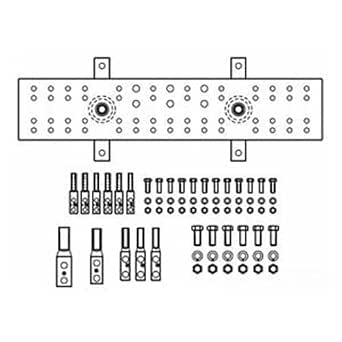 | Best for a Defined TMGB-Pattern Connection | Brand: Chatsworth | Model: 40158-012 | Pattern: TMGB | VIEW ON AMAZON | See Our Full Breakdown |
| grounding kits data center | Model | Dimensions | Weight |
|---|---|---|---|
| 20-Inch Copper Ground Bar Kit | GCBMTU01 | 20 × 4 × 1/4 inches | 5 pounds |
| 19-Inch Copper Ground Busbar K | HB-GB19 | 19 × 1.2 × 0.2 inches | 1.9 pounds |
| Chatsworth 14307-001 Adjustabl | 14307-001 | — | — |
| Chatsworth 40158-012 Busbar As | 40158-012 | 4 in H × 12 in W × 0.25 in D | — |
More Details on Our Top Picks
20-Inch Copper Ground Bar Kit with Standoff Insulators
This is my best overall pick for buyers who need a substantial wall-mounted bar with room for multiple terminations. Its 20 × 4-inch C11000 copper plate has 36 quarter-inch holes and 9 five-sixteenths-inch holes, a broader stated terminal mix than the 19-inch rack busbar’s row of pre-installed #10-24 screws. That range can make the bar a better match when an installation includes different lug or terminal sizes, subject to checking actual hardware compatibility.
The package lists two standoff insulators rated at 2500V, stainless steel brackets, and mounting hardware. That makes it a more complete wall-mount proposition than the Chatsworth TMGB assembly, whose listing gives a defined busbar pattern but less detail about its material and mounting arrangement. The 5-pound weight and wall-mount design may also make placement less convenient than the lighter rack-oriented YICHANG bar.
There is a documentation wrinkle: the description and included-components list do not align perfectly about some hardware. I would confirm the exact contents before planning around specific bolts or accessories. This bar also does not come with the stated grounding cable included in the YICHANG kit. Choose it for hole variety and a wall-mounted layout, not as a universal rack kit or runway bonding strap.
Pros:- C11000 copper construction is explicitly specified.
- 36 quarter-inch and 9 five-sixteenths-inch holes support a varied terminal layout.
- Includes two standoff insulators and stainless steel mounting brackets.
- Listed for grounding and power distribution installations.
Cons:- Wall mounting may not match a rack, cabinet, or runway installation.
- The description and included-components details conflict about some items.
- No grounding cable is listed as included.
Best for: Data center teams seeking a wall-mounted copper bar with multiple hole sizes and included standoffs for a varied termination layout.
Not ideal for: Buyers who need a 19-inch rack-mounted bar, a supplied grounding cable, or a dedicated cable-runway bonding strap.
- Bar material:C11000 copper
- Dimensions:20 × 4 × 1/4 inches
- Hole configuration:36 × 1/4-inch holes; 9 × 5/16-inch holes
- Hole spacing:5/8 inch and 1 inch
- Insulators:Two 2-inch standoff insulators, rated 2500V
- Weight:5 pounds
- Included hardware:Two stainless steel brackets; M6 and M8 washer-and-bolt sets listed
- Model:GCBMTU01
Our verdict“I rank this first for its combination of specified copper construction, mixed hole sizes, and wall-mount hardware, provided that format suits the installation.”
19-Inch Copper Ground Busbar Kit with 4-Foot Grounding Cable
For a conventional 19-inch rack or cabinet, this kit has the most direct application description in the lineup. The 19-inch C110 copper busbar is sized for that rack format, and the package includes a four-foot, 10 AWG tinned copper cable listed as UL-listed. Compared with the 20-inch wall-mounted bar, this is a more focused rack-oriented setup; compared with the Chatsworth 14307-001, it serves rack bonding rather than joining runway sections.
Its practical advantage is the pre-installed row of 38 stainless steel #10-24 screws, along with two M6 mounting screws. That can reduce the number of fasteners a buyer must source separately, though it does not answer whether every lug in a planned installation matches the screw type. The included cable also makes it a more self-contained option than the Chatsworth 40158-012, which is listed as a busbar assembly with lug hardware but no cable.
The narrower 19-inch format is also its main constraint. It is not described as a wall-mounted bar or runway strap, and the supplied information does not provide detailed compatibility guidance for other rack widths or grounding schemes. I would choose it when the rack fit and cable length align with the design, then verify conductor sizing and attachment points with the site specification.
Pros:- Designed for 19-inch rack installations.
- Includes a four-foot, 10 AWG tinned copper grounding cable listed as UL-listed.
- 38 stainless steel #10-24 screws come pre-installed.
- Two M6 mounting screws are included.
Cons:- The stated 19-inch format limits its fit outside compatible racks.
- The listing does not specify a broader set of lug or installation compatibility details.
- No customer review details are included in the supplied product information.
Best for: Buyers grounding a 19-inch rack, cabinet, or enclosure who want a busbar, mounting screws, and a specified cable in one kit.
Not ideal for: Installations needing a wall-mounted multi-hole bar, a runway-to-runway bond, or a TMGB-pattern assembly.
- Busbar material:C110 copper
- Dimensions:19 × 1.2 × 0.2 inches
- Grounding cable:4 feet, 10 AWG tinned copper, UL-listed
- Pre-installed fasteners:38 stainless steel #10-24 screws
- Mounting screws:Two M6 screws
- Weight:1.9 pounds
- Model:HB-GB19
- Manufacturer:YICHANG TORCHEARTH TECHNOLOGY CO., LTD
Our verdict“I recommend this for a 19-inch rack when its included cable and screw layout match the grounding plan.”
Chatsworth 14307-001 Adjustable Cable Runway Grounding Strap Kit
This kit earns its place by doing a different job from the two busbars: it provides a grounded pathway between cable runway lengths. Its insulated, stranded #6 AWG copper conductor terminates in two-hole compression lugs, while the included stainless steel hardware is sized around a stated five-sixteenths-inch bolt pattern with one-inch centers. Those specifics make it a purpose-built connection component, not a substitute for a rack grounding bar.
Against the YICHANG kit, the difference is function rather than general quality: the YICHANG package supplies a long busbar and four-foot grounding cable for a rack, whereas this Chatsworth kit is a short strap for joining runway sections. Compared with the 20-inch copper bar, it has far fewer possible connection points but a more explicit runway-bonding purpose. UL-listed components are also stated, which gives the buyer a specification to check against project requirements without implying that the entire installed system is automatically approved.
The main drawback is pattern dependence. The eight-inch conductor and specified lug-hole spacing may not fit every runway connection, so measure the mounting points and verify the intended bonding method before ordering. It will be a poor choice if the actual need is a busbar for equipment lugs, but a clearer fit than a general-purpose bar when the task is runway continuity.
Pros:- Designed to provide a grounded pathway between runway sections.
- Uses a stranded, insulated #6 AWG copper conductor.
- Includes two-hole compression lugs and stainless steel mounting hardware.
- UL-listed components are specified.
Cons:- The mounting pattern is specific and must match the runway connection.
- Its short strap cannot replace a rack or wall-mounted busbar.
- The listing does not describe a supplied cable length for broader routing beyond the stated conductor dimensions.
Best for: Data center installers bonding compatible cable runway lengths with a short copper conductor and two-hole lugs.
Not ideal for: Buyers who need a rack busbar, a wall-mounted grounding bar, or a flexible array of terminal positions.
- Model:14307-001
- Conductor:#6 AWG stranded, insulated copper
- Conductor length:8 inches (200 mm)
- Overall length:10.8 inches (273 mm)
- Bolt-hole spacing:1 inch (25 mm) centers
- Bolt holes:5/16 inch
- Hardware:Four stainless steel cap screws, washers, lock washers, and nuts
- Certification:UL-listed components
Our verdict“I choose this only for a compatible cable-runway bond, where its defined conductor and lug pattern matter more than busbar capacity.”
Chatsworth 40158-012 Busbar Assembly with Lug Kit, TMGB Pattern, 4 × 12 × 0.25 in
The Chatsworth 40158-012 is the most specialized busbar in this comparison. It combines a TMGB-pattern telecommunications main grounding busbar with stainless steel hardware for fastening two-hole ground lugs. Its 4 × 12 × 0.25-inch dimensions are considerably more compact than the 20-inch copper wall bar, and its stated lug purpose is more specific than the YICHANG rack busbar’s general screw layout.
That defined pattern can be useful when a project specification calls for a TMGB arrangement and compatible two-hole lugs. It is not the same function as the 14307-001 runway strap: one is a busbar assembly, while the other bridges runway sections. The listing also says it is sold as one kit, which identifies the package unit but does not add detail about the conductor or mounting method.
My hesitation is the information gap. The busbar material is not specified, and the listing states no warranty. By comparison, the 20-inch bar explicitly names C11000 copper, and the YICHANG kit identifies C110 copper plus a supplied cable. Buyers who need material documentation or a cable bundled with the assembly should favor those alternatives. I would select this one when the TMGB pattern is the deciding requirement and confirm material, compatibility, and project acceptance with the supplier.
Pros:- TMGB pattern is explicitly identified.
- Designed for fastening two-hole ground lugs.
- Includes stainless steel fastening hardware.
- Compact 4 × 12-inch busbar assembly.
Cons:- Busbar material is not specified in the listing.
- No warranty is stated.
- No grounding cable is listed as included.
Best for: Telecommunications grounding projects that specify a compact TMGB-pattern busbar and compatible two-hole ground lugs.
Not ideal for: Buyers who require a stated copper alloy, an included grounding cable, a runway bonding strap, or a listed warranty.
- Brand:Chatsworth
- Model:40158-012
- Pattern:TMGB
- Dimensions:4 in H × 12 in W × 0.25 in D
- Lug compatibility:Designed for two-hole ground lugs
- Included components:Busbar assembly and stainless steel hardware
- Unit count:1
- Warranty:No warranty stated
Our verdict“I recommend this assembly when the TMGB pattern is required, but its material and warranty gaps make it less transparent than the copper-specified bars.”

How We Picked
I ranked these four options by how clearly each product’s stated design maps to a data center grounding task. A versatile grounding bar ranks ahead of a specialized component when it supports a wider range of termination layouts, while the runway strap and TMGB-pattern assembly retain distinct roles for buyers whose installation calls for those exact connections.
I also compared the details that affect installation planning: copper or conductor specifications, dimensions, hole sizes and spacing, mounting format, supplied cable or strap, and fasteners. Specifics such as C11000 copper, a stated cable gauge, and a defined lug pattern give buyers more to check against their system design. Where a listing leaves a material or compatibility detail unstated, I treat that as a limitation rather than filling in the gap.
This is a comparison of the supplied product information, not a substitute for engineering review or local electrical and telecommunications requirements. Grounding components must match the intended bonding point and installation specifications. A kit’s UL-listed cable or components, where stated, does not by itself certify the complete installation or establish that the kit is suitable for every data center grounding system.
Factors to Consider When Choosing Grounding Kits Data Center
I would start by naming the connection you need to make, then compare the kit’s form and hardware against that job. These four products cover different grounding tasks, so choosing by title alone can lead to buying a busbar where a strap is needed—or the reverse.Match the kit to the bonding point
For a rack, cabinet, or enclosure, the 19-inch YICHANG busbar is the most directly specified fit. For a wall-mounted grounding point with multiple terminal positions, the 20-inch bar offers a larger and more varied hole layout. If the connection is between cable runway sections, the 14307-001 is the purpose-built option. The 40158-012 is for a TMGB-pattern busbar setup. These roles are not interchangeable simply because each product relates to grounding.
Before choosing, identify where the component will mount, what it must bond, and how the grounding conductor reaches it. Check the equipment or project documentation for the required grounding architecture rather than assuming that a larger bar can replace a specialized part.
Compare terminal patterns and fasteners
Hole count matters only when the holes match the intended lugs or terminals. The 20-inch bar lists two hole sizes, while the rack busbar has 38 pre-installed #10-24 screws and two M6 mounting screws. The TMGB assembly is described for two-hole lugs, and the runway kit specifies five-sixteenths-inch bolt holes on one-inch centers. Check lug-hole diameter, spacing, screw type, and the available clearance before purchasing.
Also distinguish the fasteners that attach a lug from those that mount a bar. Product listings can mention both, but they do not always make every use clear. The 20-inch bar’s description and component list conflict about some items, so confirm the supplied hardware if your installation plan depends on a particular bolt set.
Read conductor and material details as specifications
The YICHANG kit states a four-foot, 10 AWG tinned copper cable, while the Chatsworth runway kit specifies a stranded, insulated #6 AWG copper conductor. These are different assemblies for different purposes, not a simple ranking of one gauge over another. The correct conductor depends on the design and applicable requirements for the connection.
Material transparency also separates the bars. The 20-inch option identifies C11000 copper and the YICHANG busbar lists C110 copper; the 40158-012 listing does not state its busbar material. If alloy or material documentation is required by your project, ask the supplier before selecting a product whose listing omits it.
Check mounting space and routing
A 19-inch busbar is a natural match for a compatible rack, but its format is limiting elsewhere. The 20-inch bar is explicitly wall-mounted and weighs five pounds, so the wall and bracket placement must suit that arrangement. The runway strap has a short conductor and fixed hole geometry; confirm its length and connection points against the actual runway layout.
Plan the cable path, access for attaching lugs, and clearance around adjacent equipment. A component that fits on paper can still be awkward if other rack hardware blocks the connection points or the conductor cannot reach its intended bonding location.
Treat listing gaps as questions to resolve
Supplied details are not a substitute for the site grounding specification. Verify conductor requirements, lug compatibility, material, installation method, and any required certifications with the project engineer or qualified installer. A product listing that says a cable or components are UL-listed is not a certification of the completed grounding system.
For these specific kits, resolve the 20-inch bar’s component-list discrepancy, check that the runway strap matches the mounting pattern, and ask about the TMGB assembly’s unspecified material and warranty. Those checks can narrow the choice as much as bar length or hole count.
Frequently Asked Questions
Which of these kits is the best fit for a standard 19-inch rack?
The 19-Inch Copper Ground Busbar Kit is the clearest match because its busbar is specified for 19-inch rack installations and it includes a four-foot grounding cable and M6 mounting screws. Confirm that the screw and lug arrangement matches the rack design; the product’s stated rack format does not establish fit for every grounding scheme.
Can I use the Chatsworth runway strap instead of a rack grounding bar?
Not as a direct substitute based on the supplied descriptions. The 14307-001 strap is designed to create a grounded pathway between cable runway lengths. A rack busbar provides terminal positions for rack or cabinet connections, so choose the component that matches the bonding point and verify the design requirements.
What makes the 20-inch copper bar different from the 19-inch busbar?
The 20-inch bar is a wall-mounted C11000 copper plate with multiple hole sizes and two standoff insulators. The YICHANG option is a 19-inch rack-oriented busbar with 38 pre-installed screws and a four-foot cable. I would choose between them based on mounting format, terminal compatibility, and whether an included cable matters more than a varied hole layout.
Is the Chatsworth 40158-012 the same as the runway grounding strap?
No. The 40158-012 is a compact TMGB-pattern busbar assembly designed for two-hole ground lugs, while the 14307-001 is a short conductor kit for bonding cable runway sections. They solve different connection tasks. The TMGB listing also does not identify the busbar material, so request that detail if it matters to the project.
What should I verify before ordering a data center grounding kit?
Match the part to the intended bonding point, then verify mounting dimensions, lug-hole size and spacing, fastener type, conductor details, routing length, and material documentation against the installation specification. Check the exact package contents when a listing is unclear, and confirm any required approval or certification with the qualified installer or project engineer. A kit’s listed components alone do not establish compliance of the complete installation.
Conclusion
For a flexible wall-mounted grounding point, I would choose the 20-Inch Copper Ground Bar Kit, while confirming its exact included hardware. For a compatible 19-inch rack that benefits from a supplied cable, the YICHANG 19-Inch Busbar Kit is the more focused pick. Installers joining cable runway lengths should select the Chatsworth 14307-001 only after checking its lug pattern; projects calling for a TMGB-pattern assembly should consider the Chatsworth 40158-012 and resolve its material and warranty gaps. In every case, I would make the final choice against the site grounding design, not product dimensions alone.
Halloween Picks
halloween
As an affiliate, we earn on qualifying purchases.