A rackmount PDU with switchable outlets lets you control power at the outlet level, but the right choice depends on whether you need remote management, automatic transfer switching, or simple local control. I rank the CyberPower PDU81001 best overall for its outlet-level metering and switching, while the CyberPower PDU44001 stands out for an ATS setup and the Tecmojo 9-Outlet for hands-on switching plus USB charging. The main tradeoffs are management depth, outlet count, rack space, and whether you need power redundancy or just a way to restart individual devices. Read on for how these eight models differ and which fits your rack.

Get privacy and security gear delivered free with Prime
- Fast, free delivery on millions of items
- Prime Video, Amazon Music and more included
- Member-only deals all year
Key Takeaways
- The PDU81001 leads for managed outlet control: its outlet-level metering helps identify individual loads as well as switch them, giving it an edge over simpler switched strips.
- The PDU44001 serves a different job: its ATS feature is the standout for equipment that needs an alternate power source, but it is more specialized than a basic switched PDU.
- Local switches and remote management are not interchangeable: the Tecmojo, BTU, and StarTech options suit hands-on control, while the CyberPower managed models and TRENDnet address network-based control needs.
- Outlet count does not tell the whole story: the BTU offers 10 outlets and the Tecmojo 9, but rack fit, plug clearance, and how outlets are arranged can matter more than the headline number.
- Compact and simple choices have a place: the 6-outlet TRENDnet TPI-06 may suit a smaller setup, while CyberPower‘s PDU41001 and StarTech’s 8-outlet unit offer more straightforward alternatives to feature-heavy models.
| CyberPower PDU81001 Switched Metered-by-Outlet PDU |  | Best for Outlet-Level Monitoring | Form factor: 1U rackmount | Input voltage: 100–120V | Outlets: 8 switchable NEMA 5-15R | VIEW ON AMAZON | See Our Full Breakdown |
| CyberPower PDU44001 Switched ATS PDU |  | Best for Redundant Power Sources | Form factor: 1U rackmount | Input voltage: 100–120V | Amperage: 15A, derated to 12A | VIEW ON AMAZON | See Our Full Breakdown |
| Tecmojo 9-Outlet 1U Rack-Mount PDU with Individual Switches, USB and Type-C Ports |  | Best for Mixed Rack and Charging Needs | Form factor: 1U horizontal | Rack compatibility: Standard 19-inch racks | Outlets: 9 with individual on/off switches | VIEW ON AMAZON | See Our Full Breakdown |
| CyberPower PDU41003 Switched Power Distribution Unit |  | Best for Higher-Capacity Racks | Form factor: 2U rackmount | Voltage: 100–120V | Maximum current: 30A, derated to 24A | VIEW ON AMAZON | See Our Full Breakdown |
| StarTech 8-Outlet 1U Switched Rack-Mount PDU, 15A, 125V |  | Best for Simple, Local Outlet Switching | Form factor: 1U, compatible with 19-inch racks | Voltage: 125V maximum input/output | Maximum current: 15A | VIEW ON AMAZON | See Our Full Breakdown |
| CyberPower PDU41001 8-Outlet Switched PDU |  | Best for Remote Monitoring | Outlets: 8 NEMA 5-15R, individually or collectively switchable | Input plug: NEMA 5-15P | Input cord: 12 ft | VIEW ON AMAZON | See Our Full Breakdown |
| BTU 10-Outlet 1U Rack Mount PDU Power Strip with Individual Switches and Surge Protection |  | Best for Outlet Count and Basic Protection | Outlets: 10 AC outlets with individual switches | Voltage: 110 V | Maximum current: 15 A | VIEW ON AMAZON | See Our Full Breakdown |
| TRENDnet TPI-06 6-Outlet Managed Rackmount PDU | 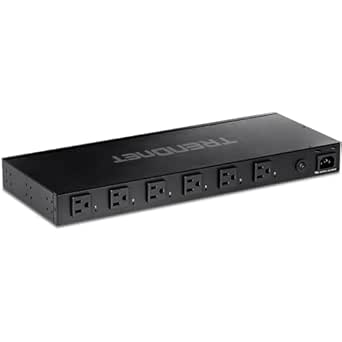 | Best for Scheduled Outlet-Level Energy Tracking | Managed outlets: 6 × NEMA 5-15R | Bypass outlet: 1 × NEMA 5-15R | Network port: 1 × Gigabit | VIEW ON AMAZON | See Our Full Breakdown |
| rackmount pdu with switchable outlet | Outlets | Warranty | Form factor | Maximum current |
|---|---|---|---|---|
| CyberPower PDU81001 Switched M | 8 switchable NEMA 5-15R | 3-year limited | 1U rackmount | — |
| CyberPower PDU44001 Switched A | 10 NEMA 5-15R | 3-year limited | 1U rackmount | — |
| Tecmojo 9-Outlet 1U Rack-Mount | 9 with individual on/off switches | — | 1U horizontal | — |
| CyberPower PDU41003 Switched P | 16 NEMA 5-20R | 3-year limited | 2U rackmount | 30A, derated to 24A |
| StarTech 8-Outlet 1U Switched | 8 NEMA 5-15R | 2 years | 1U, compatible with 19-inch racks | 15A |
| CyberPower PDU41001 8-Outlet S | 8 NEMA 5-15R, individually or collectively switchable | 3 years | — | 15 A, derated to 12 A |
| BTU 10-Outlet 1U Rack Mount PD | 10 AC outlets with individual switches | 1 year | — | 15 A |
| TRENDnet TPI-06 6-Outlet Manag | — | — | — | 15 A |
More Details on Our Top Picks
CyberPower PDU81001 Switched Metered-by-Outlet PDU
The CyberPower PDU81001 is my pick when knowing what each device draws matters as much as being able to power-cycle it. Its per-outlet power monitoring helps isolate a heavy load, while remote or local switching and network event alerts give operators more control than the switch-based StarTech 8-Outlet PDU. The interactive display also surfaces power and network information at the rack. That added visibility comes with a tighter electrical envelope: this model is for 100–120V, and its 15A input is derated to 12A, so it is not a higher-capacity alternative to the CyberPower PDU41003. Choose it for a compact 1U setup where individual load data and remote management justify the capacity limit.
Pros:- Monitors power use at each outlet, as well as at circuit and PDU level
- Supports local and remote control of individual outlets
- Can send power event notifications by email, SMS, or SNMP
- Interactive display presents power and network information
Cons:- Current is derated to 12A
- Limited to 100–120V input
- Outlet-level monitoring and network features may be unnecessary for a simple rack
Best for: IT staff managing a 100–120V rack who need outlet-by-outlet load data, remote switching, and event alerts.
Not ideal for: Operators needing more than 12A of usable current or a PDU compatible with a different input voltage.
- Form factor:1U rackmount
- Input voltage:100–120V
- Outlets:8 switchable NEMA 5-15R
- Input connector:NEMA 5-15P
- Output wattage:1800W
- Power cord:12 ft
- Network connection:RJ-45 Ethernet
- Dimensions and weight:4 × 17 × 2 in; 5.7 lb
- Warranty:3-year limited
Our verdict“Choose the PDU81001 if per-outlet power visibility and remote management matter more than higher current capacity.”
CyberPower PDU44001 Switched ATS PDU
The CyberPower PDU44001 has a job the other picks do not: its automatic transfer switch can move a single-cord device between two power sources when the primary feed fails or becomes unstable. That makes it a more relevant choice for protecting service continuity than the PDU81001, which offers richer outlet-level metering but no transfer between feeds. It also allows individual outlet control and remote or local monitoring, with notifications for power events. The tradeoff is a more specialized setup: it needs two compatible 100–120V sources, and its 15A rating is derated to 12A. It is also unsuitable for simulated sine wave sources. For a basic rack needing only switched outlets, a simpler model such as the StarTech PDU avoids the ATS complexity.
Pros:- Automatically transfers between two power sources when the primary feed fails or becomes unstable
- Provides individual outlet control with local and remote monitoring
- Displays power and device information on an LCD
- Supports email, SMS, or SNMP event notifications
Cons:- 15A input rating is derated to 12A
- Not compatible with simulated sine wave power sources
- The ATS feature requires two compatible power feeds and adds complexity that basic switched-PDU users may not need
Best for: Network and server administrators with two compatible power feeds who need backup-source switching for single-cord equipment.
Not ideal for: Buyers with only one power source, simulated sine wave supplies, or loads that require more than 12A.
- Form factor:1U rackmount
- Input voltage:100–120V
- Amperage:15A, derated to 12A
- Maximum power:1440W
- Outlets:10 NEMA 5-15R
- Input connectors:2 × NEMA 5-15P
- Power cords:10 ft
- Dimensions and weight:8.45 × 17.05 × 1.75 in; 10 lb
- Warranty:3-year limited
Our verdict“Pick the PDU44001 when automatic source transfer for single-cord devices is a higher priority than simpler outlet switching.”
Tecmojo 9-Outlet 1U Rack-Mount PDU with Individual Switches, USB and Type-C Ports
The Tecmojo 9-Outlet PDU suits racks that combine network or AV equipment with devices needing convenient USB charging. Its individual outlet switches allow direct control without the remote management and monitoring focus of the CyberPower PDU81001, while two wide-spaced outlets are useful when bulky adapters would crowd neighboring sockets. Two USB and two Type-C ports add charging options without occupying the nine AC outlets. The tradeoff is a more basic management profile: the supplied details do not specify network control, per-outlet power monitoring, or event notifications. Its 6-foot cord may also limit placement compared with the 12-foot CyberPower models. I would choose it for straightforward, hands-on switching and mixed plug types, not for a remotely managed or closely monitored server rack.
Pros:- Individual switches provide direct control over each outlet
- Two wide-spaced outlets accommodate larger plugs
- Includes two USB ports and two Type-C ports for charging
- Built-in overload protection
Cons:- No network management, outlet-level metering, or event notifications are specified
- The 6-foot cord is shorter than the 12-foot cords on the CyberPower PDU81001 and PDU41003
- Input voltage and amperage are not specified in the supplied product data
Best for: Small network, AV, or lab rack owners who want direct outlet switches, space for larger plugs, and USB or Type-C charging.
Not ideal for: Data-center operators who need network-based outlet control, per-outlet power readings, or documented input and load capacity.
- Form factor:1U horizontal
- Rack compatibility:Standard 19-inch racks
- Outlets:9 with individual on/off switches
- Wide-spaced outlets:2
- Charging ports:2 USB and 2 Type-C
- Power cord:6 ft
- Protection:Overload protection
Our verdict“Choose Tecmojo for a hands-on 1U rack that benefits from wide-spaced outlets and built-in USB and Type-C charging.”
CyberPower PDU41003 Switched Power Distribution Unit
Among these five options, the CyberPower PDU41003 is the strongest fit for a rack that needs many switched outlets and more current capacity than the 1U, 12A-derated PDU81001 or PDU44001. It provides 16 NEMA 5-20R outlets, individually or collectively switchable, plus local and network-based monitoring and event alerts. The 2U footprint gives it room for those outlets, but uses twice the rack height of the 1U models, including the nine-outlet Tecmojo. Its 30A maximum current is derated to 24A, and the NEMA L5-30P twist-lock input means a standard NEMA 5-15P connection will not do. I would put it high on the list for a compatible higher-capacity rack, but skip it if rack space or input compatibility is tight.
Pros:- Provides 16 individually or collectively switchable NEMA 5-20R outlets
- Supports local and remote monitoring and control
- Offers event notifications by email, SMS, or SNMP
- Includes rackmount design and cord-management hardware
Cons:- 30A maximum current is derated to 24A
- Requires a compatible NEMA L5-30P twist-lock connection
- Uses 2U of rack space, compared with the 1U alternatives
Best for: Rack operators with a compatible NEMA L5-30P supply who need 16 switched outlets and up to 24A after derating.
Not ideal for: Owners of compact racks or standard 15A receptacles who cannot accommodate its 2U size or twist-lock input.
- Form factor:2U rackmount
- Voltage:100–120V
- Maximum current:30A, derated to 24A
- Outlets:16 NEMA 5-20R
- Input plug:NEMA L5-30P twist-lock
- Power cord:12 ft
- Dimensions and weight:4.41 × 17.05 in; 7.3 lb
- Warranty:3-year limited
Our verdict“Pick the PDU41003 for a compatible higher-capacity rack that needs 16 managed outlets and can spare 2U.”
StarTech 8-Outlet 1U Switched Rack-Mount PDU, 15A, 125V
The StarTech 8-Outlet Switched PDU keeps the job simple: each NEMA 5-15R outlet has an illuminated switch, and a cover helps reduce accidental power cycling. That makes it easier to manage locally than the CyberPower PDU81001 when remote control and per-outlet metering are not needed. Its steel 1U housing and 8-foot cord suit a standard 19-inch rack, while the resettable 15A breaker offers a straightforward protection feature. The tradeoff is limited capacity and management depth: it is rated for 15A, has eight outlets, and the supplied details do not describe network monitoring or outlet-level power readings. Rear-facing outlets can also complicate access depending on rack layout. Choose it for direct physical switching, not remote administration or dense, higher-current deployments.
Pros:- Individual illuminated switches control each outlet
- Safety covers help prevent accidental power cycling
- Resettable 15A circuit breaker
- Steel 1U housing fits standard 19-inch racks
Cons:- 15A maximum capacity is lower than the CyberPower PDU41003’s derated 24A capacity
- No remote outlet control or network monitoring is specified
- Rear-facing outlets may be awkward to reach in some rack layouts
Best for: Small-rack owners who want individual, clearly visible physical switches and a resettable breaker without network management.
Not ideal for: Administrators needing remote outlet control, per-outlet power monitoring, more than 15A, or easy access to rear-facing outlets.
- Form factor:1U, compatible with 19-inch racks
- Voltage:125V maximum input/output
- Maximum current:15A
- Outlets:8 NEMA 5-15R
- Power cord:8 ft, NEMA 5-15P
- Circuit breaker:15A resettable
- Housing:Alloy steel
- Weight:4.4 lb
- Warranty:2 years
Our verdict“Choose StarTech for a standard 15A rack that needs straightforward, protected local switching rather than remote management.”
CyberPower PDU41001 8-Outlet Switched PDU
The CyberPower PDU41001 pairs eight outlets that can be switched individually or together with LCD control and network monitoring. That combination suits administrators who want to reboot a single device remotely while still having a local control option at the rack. Compared with the BTU 10-Outlet 1U Rack Mount PDU, it offers fewer outlets but adds remote monitoring and automatic power-event notifications; the BTU instead emphasizes outlet count and built-in surge protection. The tradeoff is its 12 A derated capacity, despite a 15 A input rating, plus its 100–120 V operating range. The included 12-foot cord gives more placement flexibility than the BTU’s 6-foot cord, but buyers planning a higher-load rack should check the usable current before choosing it.
Pros:- Eight outlets can be switched individually or together
- Local LCD controls pair with remote network monitoring
- Automatic power-event notifications help flag interruptions
- 12-foot cord and rackmount hardware are included
Cons:- Current is derated to 12 A
- Limited to 100–120 V power
Best for: Small server-room and network-rack administrators who need remote outlet control, event notifications, and a local LCD in a 100–120 V setup.
Not ideal for: Operators with high-density loads near the full 15 A rating or equipment that requires power outside the 100–120 V range.
- Outlets:8 NEMA 5-15R, individually or collectively switchable
- Input plug:NEMA 5-15P
- Input cord:12 ft
- Voltage:100–120 V
- Maximum current:15 A, derated to 12 A
- Mounting:1U rackmount
- Enclosure:Metal
- Warranty:3 years
Our verdict“Choose the PDU41001 if remote switching and event notifications matter more than maximizing outlet count or available current.”
BTU 10-Outlet 1U Rack Mount PDU Power Strip with Individual Switches and Surge Protection
The BTU GS001 is the straightforward pick when a rack needs 10 individually switched outlets and built-in electrical safeguards without network management. Its metal housing, ETL listing, surge protection, overload breaker, and LED indicators make it better equipped for basic rack protection than the CyberPower PDU41001, which instead adds remote monitoring and event notifications. The BTU’s individual switches let a technician isolate or power-cycle connected equipment at the rack, but there is no stated remote control or per-outlet monitoring. Its 6-foot cord may also limit placement compared with CyberPower’s 12-foot lead. The 110 V, 15 A design fits ordinary North American loads, not racks that need higher amperage. Vertical or horizontal mounting adds flexibility, though this remains a simpler local-control choice.
Pros:- Ten outlets provide more connections than the eight-outlet CyberPower PDU41001
- Individual switches allow local control of each connected device
- ETL-listed surge protection, overload breaker, and LED indicators
- Supports vertical or horizontal installation in 19-inch racks
Cons:- No network-based switching or remote monitoring is specified
- Limited to 110 V and 15 A
- Six-foot cord can restrict rack placement
Best for: Small offices and IT technicians who need many individually switched outlets, local control, and surge protection in a 19-inch rack.
Not ideal for: Remote administrators, racks with high-amperage demands, or installations where a 6-foot power cord cannot reach the supply.
- Outlets:10 AC outlets with individual switches
- Voltage:110 V
- Maximum current:15 A
- Power plug:Type B, North American
- Cord length:6 ft
- Mounting:1U; vertical or horizontal installation in 19-inch racks
- Protection:ETL-listed surge protection and overload circuit breaker
- Enclosure:Metal
- Warranty:1 year
Our verdict“Pick the BTU GS001 for a local-control rack that benefits from 10 switched outlets and built-in surge protection rather than remote management.”
TRENDnet TPI-06 6-Outlet Managed Rackmount PDU
The TRENDnet TPI-06 earns its place for buyers who need more than remote on/off control: its six managed outlets support scheduling and per-outlet energy monitoring, while a separate bypass outlet remains available outside that managed group. Compared with the CyberPower PDU41001, it provides explicit outlet-level energy tracking and scheduling, but has fewer managed outlets and a narrower 15 A ceiling. Its gigabit network port, fanless design, and overload and surge protection make it a tidy fit for a quiet indoor rack. The key drawback is that TRENDnet Hive cloud management requires an additional fee, so the management features may add ongoing cost. Buyers who only need local individual switches may get a simpler setup from the BTU 10-outlet model.
Pros:- Six managed outlets support individual control and scheduling
- Per-outlet energy monitoring helps identify consumption by device
- Separate bypass outlet provides one outlet outside the managed group
- Fanless design avoids adding operating noise
Cons:- TRENDnet Hive cloud management requires an additional fee
- Six managed outlets are fewer than the BTU GS001’s 10 individually switched outlets
- Maximum current is limited to 15 A
Best for: Network administrators who want scheduled outlet control and per-outlet energy monitoring for a small indoor rack.
Not ideal for: Buyers who need more than six managed outlets, want to avoid paid cloud management, or operate loads beyond 15 A.
- Managed outlets:6 × NEMA 5-15R
- Bypass outlet:1 × NEMA 5-15R
- Network port:1 × Gigabit
- Maximum current:15 A
- Maximum voltage:120 V AC
- Wattage:480 W
- Surge protection:2160 J
- Mounting:1U, 19-inch rack
- Certification:UL 62368-1
Our verdict“Choose the TPI-06 when scheduling and outlet-level energy data matter more than outlet count or avoiding a paid cloud-management service.”

How We Picked
I ranked these rackmount PDUs with switchable outlets by how well their control method matches real rack needs: local outlet switches for hands-on resets, network-managed switching for remote recovery, and ATS capability for power-source continuity. I also weighed outlet count, rack-space fit, metering or monitoring, and whether added features solve a meaningful problem rather than simply adding complexity.
The PDU81001 ranks first because its switched outlets and per-outlet metering provide a strong mix of control and visibility. The PDU44001 ranks highly for buyers who specifically need ATS functionality, but that specialized feature is less useful for a single-source rack. Simpler models such as the StarTech, PDU41001, Tecmojo, and BTU can be a better match when local switching and outlet capacity matter more than network management. The TRENDnet’s smaller outlet count gives it a narrower role, while the PDU41003 is included as another managed CyberPower option for buyers comparing remote control capabilities. I treated each product’s stated features as the basis for comparison and did not assume that every model offers the same management or protection functions.
Factors to Consider When Choosing Rackmount Pdu With Switchable Outlets
Before choosing a PDU, decide what you need each switch to do. A front-panel switch can make a local power cycle easy, while remote switching is more useful when equipment is unattended or difficult to reach. The factors below help match the unit to your rack and avoid paying for features that do not solve your actual power-management problem.
Choose Local Switching or Remote Outlet Control
A physical switch works well when someone can reach the rack and the goal is to control equipment by hand. Remote switching can save a service visit when a router, server, or other device stops responding at an unattended site. Check how control is accessed and whether individual outlets can be managed independently; a general network interface does not automatically mean every outlet is switchable. Also ask who will have access to the controls, since accidental power-offs can interrupt services. If remote recovery is the main reason for buying, prioritize the management method before comparing outlet counts.
Match the PDU to the Rack’s Power Capacity
Count the connected devices and estimate their combined load before selecting a PDU. The plug type, voltage, amperage, and branch-circuit limits must match the rack’s power source, not just the PDU’s outlet layout. Avoid treating a high outlet count as permission to connect more equipment than the circuit can support. Leave headroom for startup loads and future devices, and check the documentation for the unit’s rated capacity. A smaller PDU on a suitable circuit can be a safer fit than a larger-looking strip on an undersized supply.
Check Rack Fit, Outlet Direction, and Plug Clearance
A 1U rating only describes the rack height; it does not tell you whether the unit’s depth or outlet orientation will work in your cabinet. Large power adapters can block neighboring sockets, while rear-facing outlets may be awkward in a shallow rack or against a wall. Measure available mounting depth and leave space for cables to bend without pressing against doors or airflow paths. Think through where the PDU will sit relative to equipment power supplies before ordering. This check can matter more than choosing between eight, nine, or ten outlets.
Pay for Metering Only When You Will Use the Data
Metering can help locate an overloaded circuit, compare device draw, or track changes after equipment is added. Per-outlet readings are more useful when you need to identify which device is consuming power, while aggregate readings may be enough for a small rack. Monitoring adds little value if nobody will check the information or act on it. Confirm whether the figures are available locally, over a network, or through another management method, and check what is actually measured. For straightforward outlet cycling, a simpler switched PDU may be easier to maintain.
Decide Whether Redundant Power Is a Real Requirement
An ATS PDU is intended for setups with two suitable power sources, so it cannot create redundancy when only one source is available. Before choosing that feature, confirm that your equipment, cabling, and facility power plan support the intended primary and alternate feeds. Consider whether the connected devices can tolerate a transfer and whether a separate UPS is part of the design. Buyers who only need to restart a device may gain little from ATS functionality. Matching the PDU to the site’s power architecture prevents paying for a capability the installation cannot use.
Separate Surge Protection from Switching and Power Backup
Switchable outlets control whether power reaches connected equipment; that function alone does not mean the PDU provides surge protection, battery backup, or voltage regulation. Read the specifications for each protection feature rather than inferring it from the product name or appearance. A surge-protected strip is not a substitute for a UPS when equipment must keep running through an outage. Likewise, a PDU with remote control does not necessarily condition power. Choose each layer of protection according to the risk your equipment faces and the role of the rest of your rack power system.
Frequently Asked Questions
Can I remotely reboot equipment with any PDU that has switchable outlets?
No. Some units use physical switches that require someone at the rack, while managed models can offer network-based outlet control. Check that the exact model supports independent remote switching rather than only monitoring or master power control. Also verify the management connection and access method fit your network and security policies. If you need unattended recovery, this distinction matters more than the word “switched” in a product title.
Should I choose an ATS PDU if I already have a UPS?
Not automatically. An ATS PDU is useful when the rack has two compatible power sources and equipment needs to draw from an alternate source if the primary feed is unavailable. A UPS may provide battery runtime, but it does not by itself mean the rack has two independent feeds for an ATS to select between. Map the power path from each source to the equipment before buying. If you have one source and mainly need outlet-level control, a standard switched PDU may be a better fit.
Is a higher outlet count always better for a 1U rack PDU?
No. More outlets help only if plugs fit without blocking one another and the PDU stays within the circuit’s load limit. Large adapters, angled plugs, and cable routing can make some sockets hard to use even when the stated count looks generous. Measure rack depth and check outlet orientation against the equipment layout. A lower-count model with usable spacing can be a better practical choice than a crowded strip.
Do I need per-outlet metering if I only want to power-cycle devices?
Usually not. Metering is most useful when you need to identify which devices draw power, compare loads, or track changes as the rack grows. If the only task is switching individual outlets, a simpler model may cover that need with less management overhead. Consider whether someone will review the readings and use them to make decisions. The PDU81001’s metering is a meaningful differentiator for visibility, but it is not a requirement for every switched-outlet setup.
What should I verify before replacing an existing rack PDU?
Check the input plug, voltage, amperage, circuit capacity, mounting space, and the number and type of outlets your equipment needs. Confirm whether the current unit’s control is local or network-based and whether your replacement must preserve that workflow. If you rely on surge protection, metering, or a secondary power source, verify those features directly in the replacement specifications. Also plan for cable reach and plug clearance, since a physically compatible 1U unit can still be awkward to install. These checks help avoid a replacement that fits the rack but not the power system.
Conclusion
For most buyers who want outlet-level control with useful load visibility, I recommend the CyberPower PDU81001 as the best overall pick. The CyberPower PDU41001 is a better value-oriented choice for a more straightforward switched-PDU setup, while the PDU44001 is my premium, specialized option for racks with a genuine need for ATS capability. Beginners who want simple, hands-on outlet switching can start with the StarTech 8-Outlet or compare it with the Tecmojo if USB and Type-C charging ports are useful. For specific needs, choose the BTU when its 10-outlet layout and stated surge protection match your installation, or the TRENDnet TPI-06 when a compact six-outlet managed unit suits a smaller rack. I would choose the PDU41003 when its managed-control feature set matches the installation; otherwise, the simpler options may be easier to justify.