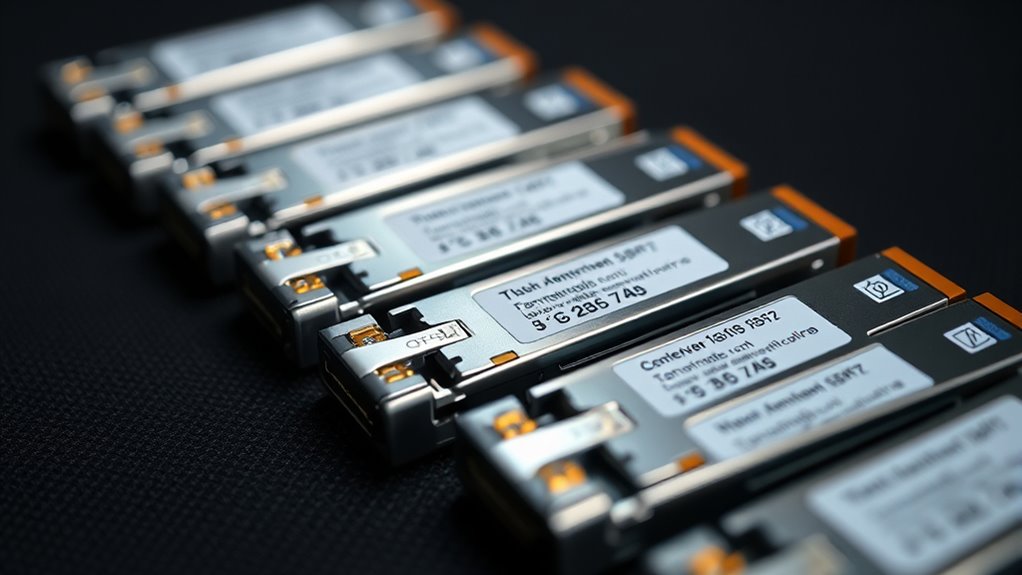
Shopping for SFP28 transceivers 25G comes down to three decisions: multimode short reach (SR, up to 100–150m) or single-mode long reach (LR, up to 10km), which switch vendor you need compatibility with, and whether to buy singles or multi-packs. My best overall pick is the 10Gtek 25G SFP28 SR Transceiver for Cisco-compatible switches, because Cisco-coded modules are the most widely validated third-party optics and the SR format covers the majority of data center and lab uplinks. For Ubiquiti builders, the OPSTRAN 25GBASE-SR 4-Pack delivers the best per-port value, while the 10Gtek 25G SFP28 LR for Cisco SFP-25G-LR-S is the safest choice when your links stretch beyond a single rack. The main tradeoff in this category is OEM-validated compatibility versus price — vendor-coded clones save money but occasionally need switch-side third-party optic support enabled. Keep reading for the full breakdown of all 14 modules.

Get privacy and security gear delivered free — and shop member deals
- Fast, free delivery on millions of items
- Access to Prime Big Deal Days deals on October 6–7
- Prime Video, Amazon Music and more included
Key Takeaways
- SR multimode modules dominate this lineup (10 of 14) because most 25G links run under 100m — pick LR only when connecting buildings or crossing a campus.
- Vendor-coded compatibility matters more than raw specs here: a module coded for Mellanox will not report correctly in a Cisco or Arista switch, so match the code to your hardware before anything else.
- 4-packs (OPSTRAN, generic multi-mode, single-mode sets) cut per-port cost noticeably and make the most sense for full-switch builds; 2-packs and singles suit incremental expansion.
- DDM/DOM monitoring support was a quiet differentiator — modules without digital diagnostics make troubleshooting flaky fiber far harder.
- The Isleleap SR module’s 150m rating (versus the typical 100m) gives it a niche edge for slightly longer multimode runs without stepping up to single-mode.




| sfp28 transceivers 25g | Wavelength | Data Rate | Fiber Type | Compatibility |
|---|---|---|---|---|
| 10Gtek 25G SFP28 SFP+ SR Multi | 850nm | 25Gb/s | OM3/OM4 multimode | Mellanox MMA2P00-AS |
| 10Gtek 25G SFP28 SR Transceive | 850nm | 25Gb/s | OM3/OM4 multimode | Intel E25GSFP28SR |
| 4-Pack 25G SFP28 Multi-Mode Fi | 850nm | 25Gbps | Multimode | — |
| OPSTRAN 25GBASE-SR SFP28 Optic | 850nm | 25 Gbps | — | Ubiquiti UACC-OM-SFP28-SR |
| Elfcam 2-Pack 25G SFP28 SR Tra | 850nm | — | Multimode (MMF) | Cisco, Huawei, Dell, Ruijie, Ubiquiti, D-Link, Netgear |
| 25G SFP28 SR Optical Transceiv | 850nm | — | Multimode Fiber (MMF) | Arista Networks SFP-25G-SR |
| 10Gtek 25G SFP28 SR Transceive | 850nm | 25Gb/s | OM3/OM4 Multi-mode Fiber | Cisco SFP-25G-SR-S |
| 10Gtek 25G SFP28 25GBase-LR Tr | 1310 nm | 25 Gb/s | OS2 Single-mode | Cisco, Meraki, Fortinet, Ubiquiti UniFi |
| 10GTEK 25G SFP28 SR Transceive | 850nm | 25 Gb/s | — | Dell Force10 GP-25GSFP-1S, Dell EMC SFP28-25G-SR |
| 25GBASE-LR SFP28 Optical Trans | 1310 nm | — | — | Ubiquiti UACC-OM-SFP28-LR |
| 4-Pack 25G SFP28 Single-Mode F | 1310nm | 25Gbps | — | — |
| Isleleap 25G SFP28 SFP+ SR Tra | 850nm | — | Multimode (MMF) | Cisco, Arista, Juniper, Nokia |
| 10Gtek 25G SFP28 / SFP+ Transc | 1310nm | 25 Gb/s | OS2 single-mode | — |
| HPC Optics Compatible Chelsio | 850nm | 25Gbps | Multimode | — |
More Details on Our Top Picks
10Gtek 25G SFP28 SFP+ SR Multimode Transceiver for Mellanox MMA2P00-AS
Anyone running Mellanox/NVIDIA ConnectX gear knows how picky those NICs and switches can be about third-party optics, and that is exactly where this 10Gtek module earns its spot. It is coded specifically for the MMA2P00-AS reference, which removes the guesswork that comes with generic modules like the GwliUni 4-pack, whose compatibility list explicitly excludes several vendor lines. DDM support means you can read real-time optical power and temperature from the host, a genuine advantage when you are troubleshooting intermittent links at 25Gb/s. The tradeoff is simple: reach is capped at 70m on OM3 and 100m on OM4, so this is strictly a short-run, in-rack or intra-row part. Compared with the Intel-coded 10Gtek module below, the value here is vendor confidence rather than any performance difference — both are 850nm SR optics with identical distance ratings.
Pros:- Pre-coded for Mellanox MMA2P00-AS, avoiding third-party optics rejection
- DDM monitoring exposes link health data to the host
- Full 25Gb/s over standard OM3/OM4 multimode runs
- Compact and lightweight for dense patching
Cons:- Multi-mode only, so it cannot serve single-mode or long-distance runs
- 100m reach ceiling makes it unusable for inter-row or building-to-building links
Best for: Operators with Mellanox MMA2P00-AS hardware who need plug-and-verify optics without EEPROM compatibility errors
Not ideal for: Anyone with HP, Juniper, or mixed-vendor racks — the Mellanox-specific coding adds nothing and may not be recognized
- Data Rate:25Gb/s
- Interface:Dual LC connectors
- Fiber Type:OM3/OM4 multimode
- Max Reach:70m (OM3) / 100m (OM4)
- Wavelength:850nm
- Compatibility:Mellanox MMA2P00-AS
- Features:DDM diagnostics
- Manufacturer:10Gtek
Our verdict“If your spine is Mellanox, this is the low-friction SR pick; everyone else should shop by their own vendor’s compatibility list.”
10Gtek 25G SFP28 SR Transceiver for Intel E25GSFP28SR
This is the same optical engine as the Mellanox-coded 10Gtek module — 850nm, dual LC, 70m on OM3, 100m on OM4, DDM included — but the EEPROM is written for Intel’s E25GSFP28SR part number. That distinction matters more than most buyers expect: Intel XL710 and E810 network adapters are known to check optics coding, and a mismatched module can silently drop to 10G or refuse to link. If your fleet is Intel-heavy, this coding removes a whole class of late-night debugging that a broad-compatibility option like the Elfcam 2-pack cannot guarantee on every platform. The flip side is obvious — outside Intel equipment the module’s listed compatibility is a dead end, and you are paying a small premium for a single-vendor guarantee rather than a flexible spare. Reach is also OM3-dependent, so budget for OM4 patch cables if you want the full 100 meters.
Pros:- Vendor-coded for Intel E25GSFP28SR, preventing speed negotiation failures on Intel NICs
- DDM support for link diagnostics
- Standard SR reach of 100m on OM4
- Backed by 10Gtek’s established compatibility track record
Cons:- Compatibility list is effectively Intel-only
- Only 70m of reach if your plant cabling is OM3
Best for: Server admins running Intel E810/XL710 adapters who want guaranteed-coded SR optics for 25GbE top-of-rack links
Not ideal for: Mixed-vendor or Cisco/Huawei environments — the Intel-only coding limits reuse as a fleet spare
- Data Rate:25Gb/s
- Interface:Dual LC connectors
- Fiber Type:OM3/OM4 multimode
- Reach:70m (OM3) / 100m (OM4)
- Wavelength:850nm
- Compatibility:Intel E25GSFP28SR
- Model:AZS85-S28-M1 (Intel-1pc)
- Manufacturer:10Gtek
Our verdict“A safe, single-purpose module for Intel server fleets that trades flexibility for guaranteed link behavior.”
4-Pack 25G SFP28 Multi-Mode Fiber Transceiver Module (SR, 850nm, 100m, Duplex LC)
When you are cabling a whole rack at 25Gb/s, single modules stop making sense, and this GwliUni 4-pack is the volume play of this lineup. Unlike the vendor-coded 10Gtek modules, these are built around broad cross-brand compatibility — Cisco, Netgear, MikroTik, Ubiquiti, and D-Link are all covered — which makes them ideal as shared spares across a heterogeneous closet. The heat-resistant zinc alloy shell and 100% aging test are the features that matter at density: 25G SR optics run warm, and a pack that has been burn-in screened is less likely to throw marginal-link alarms a year in. The honest tradeoff is the exclusion list — HP, Juniper, Aruba, and Cisco 3000/6000 series are off the table, so check your switch model before committing. Compared with the OPSTRAN Ubiquiti 4-pack, this one spreads wider but gives up the explicit 100G breakout-migration path.
Pros:- Four modules at once makes per-port cost the lowest in this batch
- Broad compatibility across Cisco, Netgear, MikroTik, Ubiquiti, and D-Link
- Zinc alloy shell handles the heat of densely populated 25G switches
- 100% aging-tested for long-term link stability
Cons:- Explicit incompatibility with HP, Juniper, Aruba, and Cisco 3000/6000 series
- No single-vendor coding guarantee, so edge-case switches may still balk
Best for: Homelab and small-datacenter builders populating multiple 25G ports across Cisco, MikroTik, or Netgear gear on a budget
Not ideal for: Juniper, HP, or Aruba shops — the modules are explicitly not recommended for those platforms
- Quantity:4 modules
- Form Factor:SFP28
- Data Rate:25Gbps
- Wavelength:850nm
- Max Distance:100m
- Connector:Duplex LC
- Fiber Type:Multimode
- Operating Temperature:0–70°C
- Manufacturer:GwliUni
Our verdict“The most economical way to light up a mixed-brand 25G rack, provided your switches are not on the exclusion list.”
OPSTRAN 25GBASE-SR SFP28 Optical Transceiver Module for Ubiquiti, 850 nm, 100 m, Duplex LC MMF, 4-Pack
This OPSTRAN 4-pack is the most future-aware option here. Beyond basic 25GBASE-SR duty on Ubiquiti gear — it is coded against the UACC-OM-SFP28-SR reference — each module explicitly supports 4×25G breakout, meaning the same optics can later feed a 100G port split into four 25G lanes. If your roadmap goes from UniFi 25G switching toward 100G aggregation, that detail saves you from rebuying optics, something neither the GwliUni 4-pack nor the single 10Gtek modules address. Add DOM/DDM, hot-pluggability, a 1W power ceiling, and full IEEE 802.3by/cc compliance, and you have a tidy, standards-clean package. The limitation is reach and scope: 100m of multimode is all you get, and while it works best in Ubiquiti environments, buyers on other platforms get fewer guarantees than the Elfcam’s long compatibility list provides.
Pros:- Explicit 4×25G breakout support protects your optics investment during a 100G migration
- DOM/DDM monitoring plus hot-pluggable design for live maintenance
- Coded for Ubiquiti UACC-OM-SFP28-SR compatibility
- Low 1W power draw and IEEE 802.3by/cc compliance
Cons:- Hard 100m multimode ceiling rules out inter-building links
- Ubiquiti-focused coding gives other vendors less assurance than multi-brand alternatives
Best for: Ubiquiti-based network builders planning an eventual 100G breakout upgrade from 25G links
Not ideal for: Long-distance or single-mode runs — and buyers outside the Ubiquiti ecosystem get stronger compatibility guarantees elsewhere
- Compatibility:Ubiquiti UACC-OM-SFP28-SR
- Data Rate:25 Gbps
- Wavelength:850nm
- Max Reach:100m
- Connector:Duplex LC multimode
- Monitoring:DOM/DDM
- Max Power:1W
- Compliance:SFP28 MSA, RoHS, IEEE 802.3by, IEEE 802.3cc
- Quantity:4 modules
Our verdict“The pick for Ubiquiti shops that want today’s 25G links to survive tomorrow’s 100G upgrade.”
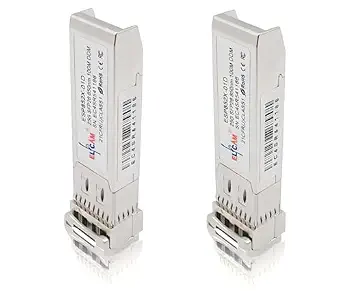
Elfcam 2-Pack 25G SFP28 SR Transceiver Module (850nm, 100m, DOM, LC/UPC)
Elfcam’s 2-pack sits at the intersection of enterprise compatibility and long-term backing. Where the 10Gtek modules lock to one vendor and the GwliUni pack excludes several, this one lists Cisco, Huawei, Dell, Ruijie, Ubiquiti, D-Link, and Netgear in a single SKU — a genuinely useful profile if your switches are a mix of inherited hardware. The 5-year warranty with 24/7 support is the standout differentiator in a category where most third-party optics ship with minimal backing, and every module is individually tested against SFP28 MSA plus CPRI/eCPRI standards, which opens the door to 5G fronthaul and telecom use that typical datacenter SR optics do not target. The two-module count is the sweet spot for a link plus a spare. Drawbacks mirror the rest of the SR field: multimode only, 100m ceiling on OM4, and its long brand list still cannot promise every firmware revision will accept it.
Pros:- Broadest listed compatibility in this batch across seven major switch brands
- 5-year warranty with 24/7 support exceeds typical third-party optics coverage
- CPRI/eCPRI compliance suits telecom fronthaul, not just datacenter use
- Individually tested with built-in DDM/DOM for real-time monitoring
Cons:- Multi-mode only with a 100m OM4 ceiling
- Broad compatibility claims still depend on switch firmware accepting third-party optics
Best for: Enterprise and telecom buyers running mixed Cisco/Dell/Huawei fleets who want MSA-verified optics with long-term support
Not ideal for: Single-mode or long-haul deployments — the 100m multimode limit disqualifies it entirely
- Speed:25G
- Wavelength:850nm
- Max Distance:100m (OM4) / 70m (OM3)
- Connector:LC/UPC Duplex
- Fiber Type:Multimode (MMF)
- Compatibility:Cisco, Huawei, Dell, Ruijie, Ubiquiti, D-Link, Netgear
- Standards:SFP28 MSA, RoHS, CPRI, eCPRI
- Warranty:5 years
- Quantity:2 modules
Our verdict“The safest all-around two-pack for mixed-vendor enterprise racks, provided your runs stay inside 100 meters.”
25G SFP28 SR Optical Transceiver Module for Arista Networks
This module stands out as the Arista-native pick in a lineup crowded with Cisco- and Dell-focused alternatives. Its dual-rate 10G/25G adaptive operation is a genuine differentiator — compared with the 10Gtek Cisco-compatible SR module, it gives you a graceful fallback if part of your Arista fabric still runs at 10G. The inclusion of DOM support means you can read real-time optical levels from the switch CLI, which matters when you’re troubleshooting dirty connectors in a dense leaf-spine setup. The 5-year maintenance warranty is longer backing than most third-party optics in this roundup offer. The tradeoff is structural: like every SR module here, it’s multimode-only and capped at 100m, so building-to-building links are off the table.
Pros:- Dual-rate 10G/25G adaptive operation eases mixed-speed Arista fabrics
- DOM provides real-time optical status for troubleshooting
- Full SFP28+ MSA and SFF-8472 compliance
- 5-year maintenance warranty exceeds typical third-party coverage
Cons:- Multimode fiber only — no single-mode support
- 100m reach ceiling limits it to in-rack or intra-row links
Best for: Arista network operators building 25G spines within a rack or row using OM4 multimode fiber
Not ideal for: Anyone running single-mode fiber or links beyond 100 meters — the SR optics physically can’t cover that distance
- Compatibility:Arista Networks SFP-25G-SR
- Form Factor:SFP28
- Wavelength:850nm
- Max Distance:100m (OM4), 70m (OM3)
- Connector:Duplex LC
- Fiber Type:Multimode Fiber (MMF)
- Standards:SFP28+ MSA, SFF-8472
Our verdict“The right choice if you run Arista switches and want mixed 10G/25G flexibility inside the data hall.”
10Gtek 25G SFP28 SR Transceiver Module (Cisco Compatible)
This is the workhorse pick for Cisco environments where you need SR optics at scale without OEM pricing. Matched to the Cisco SFP-25G-SR-S specification, it behaves like the factory part on Nexus and Catalyst gear — unlike the Arista-focused Fiber Mall module, which targets a completely different switch ecosystem. DDM diagnostics let you monitor transmitter and receiver health, which at 25G speeds catches marginal links before they flap. Performance is standard SR fare: 70m on OM3, 100m on OM4, same reach envelope as the Dell-targeted 10GTEK unit. The honest tradeoff is that it does nothing beyond short multimode runs — if your campus spans buildings, the 10Gtek 25GBase-LR module on this list is the better tool despite its higher cost per module.
Pros:- Tight compatibility with Cisco SFP-25G-SR-S avoiding CRC errors on Nexus platforms
- Full 25Gb/s line-rate throughput
- DDM enables real-time network health monitoring
- Undercuts OEM optics substantially at equal spec
Cons:- Multimode fiber only
- 100m maximum reach caps it to single-rack or single-row layouts
Best for: Cisco shop owners upgrading server top-of-rack uplinks to 25G over short multimode runs
Not ideal for: Operators needing cross-building links — the 100m multimode ceiling rules out any campus-scale deployment
- Data Rate:25Gb/s
- Interface:Dual LC connectors
- Wavelength:850nm
- Fiber Type:OM3/OM4 Multi-mode Fiber
- Reach (OM4):Up to 100 meters
- Compatibility:Cisco SFP-25G-SR-S
- Features:DDM (Digital Diagnostic Monitoring)
Our verdict“A sensible budget swap for Cisco SFP-25G-SR-S optics when your links stay under 100 meters.”
10Gtek 25G SFP28 25GBase-LR Transceiver for Cisco SFP-25G-LR-S
This is the distance specialist of the batch. Where the SR modules above die at 100 meters, this LR unit pushes 25Gbps a full 10km over OS2 single-mode fiber at 1310nm — enough to connect buildings, floors, or even nearby sites. Its cross-vendor compatibility is unusually broad: Cisco, Meraki, Fortinet, and Ubiquiti UniFi are all on the supported list, making it a handy shelf spare for mixed fleets. Compared with the Ubiquiti-focused 25GBASE-LR module, it trades single-ecosystem polish for flexibility across four brands. DDM rounds out the package with real-time performance telemetry. The drawbacks: single-mode fiber costs more per meter than OM4, and if your gear isn’t on the compatibility list, you’ll want to verify before committing.
Pros:- 10km reach over OS2 single-mode fiber covers campus-scale links
- Works across Cisco, Meraki, Fortinet, and Ubiquiti UniFi hardware
- DDM provides real-time link performance tracking
- SFP28 MSA compliance keeps it platform-safe
Cons:- Single-mode fiber only — existing OM3/OM4 plants can’t use it
- Non-listed devices may need verification before purchase
Best for: Network teams running 25G links between buildings or across a campus on single-mode fiber with mixed-vendor gear
Not ideal for: In-rack deployments — paying for 10km of reach when you need 3 meters is wasted capability and wasted fiber cost
- Data Rate:25 Gb/s
- Interface:Dual LC connectors
- Reach:Up to 10 km
- Fiber Type:OS2 Single-mode
- Wavelength:1310 nm
- Compatibility:Cisco, Meraki, Fortinet, Ubiquiti UniFi
- Standard:SFP28 MSA
Our verdict“The pick when your 25G link has to leave the room — just make sure your switch brand is on its list.”
10GTEK 25G SFP28 SR Transceiver (Duplex LC MMF) for Dell Force10 and Dell EMC
Dell shops get their own purpose-matched option here, coded against the Force10 GP-25GSFP-1S and Dell EMC SFP28-25G-SR references. That vendor-specific coding is the whole point: generic MSA modules sometimes throw unsupported-optic warnings on Dell OS10 or FTOS, and this one is built to avoid that friction. Otherwise the spec sheet mirrors the Cisco-compatible 10Gtek SR module — 850nm, duplex LC, 70m on OM3, 100m on OM4, and DDM telemetry for proactive link monitoring. There’s nothing exotic here, and that’s the appeal: predictable, standards-compliant short-reach optics. The same limits apply as all SR units — multimode only, 100m ceiling — so cross-facility runs still call for the 10Gtek LR module instead.
Pros:- Vendor coding prevents unsupported-optic warnings on Dell platforms
- Supports both OM3 and OM4 cable plants
- DDM enables real-time performance tracking
- Straightforward integration with existing Dell stacks
Cons:- Multimode fiber only — unusable in single-mode deployments
- 100m reach falls short for inter-building runs
Best for: Dell PowerSwitch, Force10, or Dell EMC operators who want clean-coded SR optics without unsupported-module alerts
Not ideal for: Cisco or Arista environments — the Dell-specific coding is wasted, and other modules in this roundup fit those platforms better
- Data Rate:25 Gb/s
- Interface:Dual LC connectors
- Reach (OM3):Up to 70 meters
- Reach (OM4):Up to 100 meters
- Wavelength:850nm
- DDM:Yes
- Compatibility:Dell Force10 GP-25GSFP-1S, Dell EMC SFP28-25G-SR
Our verdict“A low-drama choice for Dell-based 25G fabrics, as long as every link stays inside the 100-meter multimode envelope.”
25GBASE-LR SFP28 Optical Transceiver Module (Ubiquiti Compatible)
Ubiquiti’s own LR optics carry a premium, and this module exists to undercut that while matching the UACC-OM-SFP28-LR reference design. It delivers the same 25Gbps over 10km of single-mode fiber at 1310nm that the 10Gtek LR module offers, but with a tighter focus on UniFi and UniFi OS hardware — no cross-vendor guessing required. DDM support means UniFi’s dashboard can surface real link telemetry, which smaller teams without a dedicated NOC will appreciate. The tradeoffs mirror its class: single-mode fiber carries a cost premium over the OM4 plants used by the SR picks, and it only makes sense where your gear explicitly supports the SFP28 form factor at 25G. If your UniFi switch tops out at 10G SFP+, this module is the wrong buy.
Pros:- 10km reach over single-mode fiber handles site-to-site links
- Direct Ubiquiti UACC-OM-SFP28-LR compatibility avoids platform guesswork
- DDM enables real-time health checks visible in UniFi tooling
- Full 25 Gbps throughput for demanding uplinks
Cons:- Higher cost than short-reach SR modules
- Useless on gear lacking SFP28 25G port support
Best for: UniFi and Ubiquiti operators building 25G fiber uplinks between sites or IDF locations
Not ideal for: Mixed-vendor or 10G-limited networks — it needs SFP28-capable 25G ports to be useful at all
- Form Factor:SFP28
- Speed:25 Gbps
- Wavelength:1310 nm
- Reach:10 km (SMF)
- Connector Type:Duplex LC
- DDM Support:Yes
- Compatibility:Ubiquiti UACC-OM-SFP28-LR
Our verdict“The straightforward pick for Ubiquiti shops stretching 25G across single-mode fiber — verify your ports support it first.”
4-Pack 25G SFP28 Single-Mode Fiber Transceivers, 1310nm, 10km, Duplex LC
Buying optics four at a time is where budget planning gets easier, and this GwliUni 4-pack makes the most sense for anyone wiring several long links at 25G. Each module handles 10km over single-mode fiber at 1310nm, which covers building-to-building runs without forcing a premium per-unit spend. Compared with the 10Gtek 2-pack LR modules, you get twice the modules here and broader nominal support, but you give up the DDM diagnostics that 10Gtek includes — a real loss if you troubleshoot optical levels remotely. The tradeoff that matters most is vendor compatibility: HP, Juniper, Aruba, and certain Cisco 3000/6000 series routers are explicitly unsupported, so this pick rewards shops running white-box or generic hardware rather than locked-down enterprise gear. For homogeneous labs and ISPs, that limitation barely registers.
Pros:- Four modules in one purchase keeps per-link cost down
- 10km reach on single-mode fiber covers campus and metro runs
- Hot-swappable plug-and-play installation avoids downtime
- Low power draw reduces heat in dense patch panels
Cons:- No DDM/DOM monitoring, so no real-time optical diagnostics
- Compatibility excludes HP, Juniper, Aruba, and Cisco 3000/6000 platforms
Best for: Small ISPs and homelab builders provisioning multiple 10km single-mode 25G links on open or generic switching hardware
Not ideal for: Operators running HP, Juniper, or Aruba gear, or Cisco 3000/6000 series routers — these are explicitly unsupported
- Quantity:4
- Data rate:25Gbps
- Form factor:SFP28
- Fiber mode:Single-mode
- Wavelength:1310nm
- Maximum distance:10km
- Connector:Duplex LC
- Operating temperature:0°C to 70°C
Our verdict“If you need several long single-mode 25G links and control your own hardware, this 4-pack is the cheapest way to fill the panel — anyone on locked enterprise switches should buy brand-matched modules instead.”
Isleleap 25G SFP28 SFP+ SR Transceiver (SFP-25G-SR-S Compatible), 850nm, DDM, 150m
What sets this Isleleap SR module apart from the single-vendor options in this roundup is its stated compatibility across Cisco, Arista, Juniper, and Nokia — unusual breadth for a third-party optic. At 850nm over multimode fiber it tops out at 150 meters, edging past the 100m ceiling of the HPC Optics SM25G-SR, which matters in larger data center rows where spine-to-leaf distances creep up. The inclusion of DDM puts it ahead of the GwliUni 4-pack, letting you read transmit and receive light levels before a link degrades into packet loss. The catch is fundamental physics: multimode only. If any part of your plant is single-mode OS2, this module simply will not reach, and you will want an LR-class part instead.
Pros:- Cross-brand compatibility covers four major vendors in one SKU
- DDM provides real-time optical parameter monitoring
- 150m reach exceeds the typical 100m SR limit
- 2-year warranty backs the modules
Cons:- Multimode fiber only — useless on single-mode runs
- 150m ceiling still rules out campus-scale links
Best for: Data center and HPC operators running mixed Cisco, Arista, Juniper, and Nokia fleets over multimode fiber
Not ideal for: Anyone with single-mode infrastructure or runs beyond 150m — this module cannot serve long-distance links
- Form factor:SFP28 / SFP+
- Speed:25Gbps
- Wavelength:850nm
- Max distance:150m
- Connector:Duplex LC
- Fiber type:Multimode (MMF)
- Compatibility:Cisco, Arista, Juniper, Nokia
- Monitoring:DDM
Our verdict“This is the pick when your racks mix switch brands and you want one optic SKU that drops into all of them — provided everything stays inside 150m on multimode.”
10Gtek 25G SFP28 / SFP+ Transceiver, 25GBase-LR Duplex LC SMF Optical Module for Cisco SFP-25G-LR-S, 1310nm DDM up to 10km (Pack of 2)
For Cisco shops, the 10Gtek LR 2-pack is a focused answer to one question: how do you replace SFP-25G-LR-S optics without paying OEM pricing on every port? These modules deliver 10km over OS2 single-mode with built-in DDM, so you can monitor light levels exactly as you would with factory parts. That diagnostic layer is what separates them from the cheaper GwliUni 4-pack, which reaches the same distance but stays blind to optical health. Compared with the Isleleap SR module, this is the long-haul counterpart — Isleleap covers 150m inside the data center while 10Gtek handles building-to-building fiber. The narrow focus is the tradeoff: this is a Cisco-compatible LR part, not a generalist. If your estate includes other brands, the single-SKU compatibility claim becomes a gamble rather than a guarantee.
Pros:- Direct compatibility with Cisco SFP-25G-LR-S slots
- DDM monitoring matches OEM-style diagnostics
- 10km reach covers metro and inter-building links
- Two modules per pack suit redundant link designs
Cons:- Compatibility targets one Cisco module family, unlike the Isleleap’s four-brand coverage
- Cannot be used on multimode infrastructure
Best for: Cisco-heavy networks replacing or expanding SFP-25G-LR-S ports on 10km single-mode links
Not ideal for: Mixed-vendor environments or multimode fiber plants — this module is Cisco LR-oriented and single-mode only
- Data rate:25 Gb/s
- Form factor:SFP28 / SFP+
- Fiber type:OS2 single-mode
- Wavelength:1310nm
- Reach:Up to 10km
- Connector:Dual LC
- Monitoring:DDM
- Quantity:2
Our verdict“Cisco operators running LR links get OEM-equivalent reach and diagnostics at a two-module pack price — everyone else should pick a broader or shorter-reach option.”
HPC Optics Compatible Chelsio SM25G-SR SFP28 Transceiver
The HPC Optics SM25G-SR stands out on two fronts: it is built for Chelsio converged adapters, a niche most optics in this roundup ignore, and it carries a five-year warranty — the longest coverage here, dwarfing the Isleleap’s two years. For storage-and-network convergence where links run for a decade, that backing changes the ownership math. On performance it is a standard 25GBASE-SR part: 850nm VCSEL, duplex LC, and DDM, reaching 100m on OM4 but only 70m on OM3. That OM3 penalty is the detail to check, since legacy OM3 installs will silently fall short of spec compared with the Isleleap’s 150m rating. Against the 10Gtek LR modules, this is strictly an in-rack, multimode play — pair them rather than choose between them when a network spans both fiber types.
Pros:- Five-year warranty is the longest in this roundup
- Purpose-built for Chelsio SM25G-SR environments
- DDM monitoring included for link health tracking
- Full 100m reach on OM4 fiber
Cons:- Drops to 70m on OM3, limiting legacy installations
- Multimode duplex LC only — no single-mode capability
Best for: Chelsio adapter owners and converged storage/network deployments on OM4 multimode fiber who want long-term coverage
Not ideal for: Sites still running OM3 cable plants needing the full 100m, or any single-mode link — reach and fiber type rule it out
- Data rate:25Gbps
- Ethernet standard:25GBASE-SR
- Wavelength:850nm
- Fiber type:Multimode
- Reach:100m (OM4) / 70m (OM3)
- Connector:Duplex LC
- Monitoring:DDM
- Warranty:5 years
Our verdict“If you run Chelsio hardware or simply value a five-year safety net on short multimode links, this is the dependable in-rack choice — just verify your cable is OM4 before counting on 100 meters.”

How We Picked
Since every 25G SFP28 module in this roundup carries the same IEEE 25GBASE-SR or 25GBASE-LR standard, the real differences are vendor compatibility coding, reach, monitoring support, and pack value. I prioritized modules with explicit vendor-coded EEPROM — Cisco, Mellanox, Arista, Dell, Ubiquiti, Chelsio — because an uncoded or mismatched module is the single most common failure point with third-party optics. Reach separated the SR (850nm multimode, 100–150m) and LR (1310nm single-mode, 10km) modules into distinct use cases rather than competing head-to-head.
From there, I weighed DDM/DOM diagnostics, since real-time optical power reporting changes how you troubleshoot, and per-module cost within multi-packs. Ranking favors modules that combine verified coding, diagnostics, and consistent fit — which is why the Cisco-compatible 10Gtek SR module leads, and niche picks like the Chelsio-coded HPC Optics module sit lower despite solid hardware, simply because the audience is narrower.
| sfp28 transceivers 25g | Fiber Type | Connector |
|---|---|---|
| 10Gtek 25G SFP28 SFP+ SR Multi | OM3/OM4 multimode | — |
| 10Gtek 25G SFP28 SR Transceive | OM3/OM4 multimode | — |
| 4-Pack 25G SFP28 Multi-Mode Fi | Multimode | Duplex LC |
| OPSTRAN 25GBASE-SR SFP28 Optic | — | Duplex LC multimode |
| Elfcam 2-Pack 25G SFP28 SR Tra | Multimode (MMF) | LC/UPC Duplex |
| 25G SFP28 SR Optical Transceiv | Multimode Fiber (MMF) | Duplex LC |
| 10Gtek 25G SFP28 SR Transceive | OM3/OM4 Multi-mode Fiber | — |
| 10Gtek 25G SFP28 25GBase-LR Tr | OS2 Single-mode | — |
| 10GTEK 25G SFP28 SR Transceive | — | — |
| 25GBASE-LR SFP28 Optical Trans | — | — |
| 4-Pack 25G SFP28 Single-Mode F | — | Duplex LC |
| Isleleap 25G SFP28 SFP+ SR Tra | Multimode (MMF) | Duplex LC |
| 10Gtek 25G SFP28 / SFP+ Transc | OS2 single-mode | Dual LC |
| HPC Optics Compatible Chelsio | Multimode | Duplex LC |
Factors to Consider When Choosing Sfp28 Transceivers 25g
Before clicking buy on the cheapest 25G module you find, a few hardware and cabling decisions will determine whether the transceiver even links up. Here is what actually matters when choosing SFP28 optics.SR vs LR: Match the Module to Your Fiber, Not Your Budget
The most expensive mistake in this category is buying the wrong fiber type. SR modules run over multimode fiber (OM3/OM4) and cover roughly 100m — enough for intra-rack and adjacent-rack cabling. LR modules need single-mode fiber and reach 10km, but they cost more per module and the single-mode cable itself is often pricier. Mixing them up is not a performance issue; the link simply will not come up. If you already have OM4 runs installed, SR is your only sensible option. If you are cabling between rooms or buildings, budget for LR plus single-mode patch cables from the start.
Vendor Coding and Switch Compatibility
Every module here carries an EEPROM that identifies it to your switch as a Cisco, Mellanox, Arista, Dell, or Ubiquiti part. Switches from most enterprise vendors check this coding, and a mismatched code can leave the port in an error-disabled state. Some vendors (Cisco in particular) require enabling third-party optic support commands before cloned modules are accepted. My advice: check your switch model’s documentation for a validated optics list, then buy the module coded for that vendor. A cheaper module coded for the wrong platform is not a bargain — it is a return shipment waiting to happen.
DDM/DOM Support and Why Diagnostics Matter
Digital Diagnostic Monitoring (also called DOM) lets your switch report the module’s transmit power, receive power, and temperature in real time. Without it, a dirty connector or a bent fiber looks identical to a dead module, and you end up swapping parts blindly. With it, you can see marginal receive power before the link drops. For a two-port home lab this is a convenience; for a 48-port deployment it is the difference between a five-minute fix and an afternoon of guesswork. I treat DDM as a near-mandatory feature on anything beyond single links.
Pack Size and Per-Port Economics
Transceiver pricing is heavily volume-driven, and the 4-packs in this lineup illustrate that clearly: the per-module cost drops meaningfully versus singles. The mistake buyers make is over-buying — optical modules do not age well sitting in a drawer, and vendor firmware updates occasionally change compatibility behavior. My rule of thumb: buy a 4-pack when populating most of a switch, and singles or 2-packs when adding one or two uplinks. Also confirm the pack’s coding matches your vendor across all units; some generic packs ship with a single vendor code for every module.
Connector, Wavelength, and Reach Headroom
Every module here uses duplex LC connectors, but wavelength and rated reach still vary in ways that matter. The standard SR module is rated 100m over OM4 (less over OM3 — around 70m), so if your run sits near that limit, the Isleleap 150m-rated SR module buys margin without switching to single-mode. On the LR side, all 10km modules use 1310nm lasers, which behave consistently across single-mode fiber grades. Always leave 10–20% reach headroom rather than running at the absolute rated limit, because splice losses and aging patch cords eat into your budget faster than the datasheet suggests.
Common Mistakes to Avoid
Three errors account for most failed third-party optic deployments. First, buying modules before verifying the switch accepts non-OEM optics at all — some locked-down platforms reject everything but branded parts. Second, forgetting that SFP28 ports are backward-compatible with SFP+ modules at 10G, so if you only need 10G on a port, a cheaper SFP+ module works fine. Third, ordering multimode modules and single-mode patch cords (or vice versa) in the same purchase. Plan the fiber, then the module, then the switch configuration — in that order — and most compatibility headaches disappear.
Frequently Asked Questions
Will a third-party SFP28 transceiver actually work in a Cisco or Arista switch?
In most cases, yes, provided the module is coded for your specific vendor and you enable third-party optic support where required. Cisco switches often need the service unsupported-transceiver command before they will bring up a cloned module, and Arista platforms generally accept coded third-party optics more freely. The 10Gtek Cisco-compatible SR and LR modules in this lineup are popular precisely because their coding has been broadly validated across Catalyst and Nexus platforms. The risk is not permanent damage — it is a port that refuses to link until you either enable support or swap in an OEM part. If your switch is under a support contract, also confirm that third-party optics will not complicate RMA claims.
Can I use a 25G SFP28 module in a 10G SFP+ port?
The physical connector is identical, but a 25G module will generally not negotiate down to 10G — SFP+ ports expect 10G signaling, and most 25G SR/LR modules lack a 10G fallback mode. The compatibility works the other direction: SFP28 switch ports accept 10G SFP+ modules at 10G speed without issue. If you are upgrading a link gradually, put the SFP28 module in an SFP28-capable port on both ends. Mixing a 25G module on one side and a 10G module on the other will leave the link down.
Do I need OM4 fiber for 100m reach with an SR module?
Fiber grade directly caps your reach with multimode optics. Over OM3, a standard 25GBASE-SR module is typically rated around 70m; the full 100m rating assumes OM4. If your runs exceed 70m on existing OM3, you either need to accept reduced link margin, choose the Isleleap module with its 150m OM4 rating if you can upgrade the cable, or step up to single-mode LR modules entirely. Measure your actual cable run length before ordering — patch panel routing often adds 10–20m over the straight-line distance. Underestimating run length is one of the most common reasons an otherwise healthy SR link runs with marginal signal.
Is it worth paying more for DDM/DOM support?
If you operate more than a couple of links, yes. DDM lets you query optical transmit and receive power from the switch CLI, which turns intermittent link problems into measurable data. You can spot a degrading fiber run weeks before it fails, verify a new install actually has healthy margins, and isolate whether a fault is in the fiber or the module. Modules without diagnostics force you into physical swap-testing, which is slow and requires spare hardware on hand. The price gap between DDM and non-DDM modules has narrowed to the point where I would not buy non-DDM optics for any serious deployment.
Why do identical-looking 25G modules vary so much in price?
The hardware inside a basic SR module is commodity, so pricing mostly reflects vendor coding volume, brand support, testing, and pack economics. Modules coded for high-volume platforms like Cisco carry a small premium because that coding sees the most validation and firmware tracking. Multi-packs reduce per-unit cost because handling and testing are amortized across four modules. What you rarely need to pay extra for is the OEM-branded module itself, unless your support contract explicitly demands it. Buy on coding accuracy, diagnostics, and seller reputation rather than price alone — the cheapest uncoded module is frequently the one that ends up not linking.
Conclusion
The right pick here depends entirely on your switch vendor and fiber plant. Best overall goes to the 10Gtek 25G SFP28 SR Transceiver (Cisco Compatible) — it combines the most widely validated coding, DDM diagnostics, and solid build at a sensible price, which is why it leads this lineup. Best value is the OPSTRAN 25GBASE-SR 4-Pack for Ubiquiti, whose per-port cost undercuts nearly everything once you are filling a switch. Best for beginners is the Elfcam 2-Pack: a low-commitment way to test whether third-party optics behave on your hardware before buying in volume. Best premium choice is the 10Gtek 25G SFP28 LR for Cisco SFP-25G-LR-S, pairing 10km single-mode reach with dependable coding for campus-scale links.
For specific needs: Mellanox/NVIDIA shops should start with the 10Gtek MMA2P00-AS-coded SR module, Arista and Dell Force10/EMC users have purpose-coded picks mid-list, the Isleleap 150m SR module solves long multimode runs, and the HPC Optics Chelsio module serves a niche but underserved audience. Whatever you choose, verify your vendor coding first, confirm your fiber grade second, and only then compare prices — that order prevents nearly every failure mode in this category.
Fall Picks
fall essentials
As an affiliate, we earn on qualifying purchases.