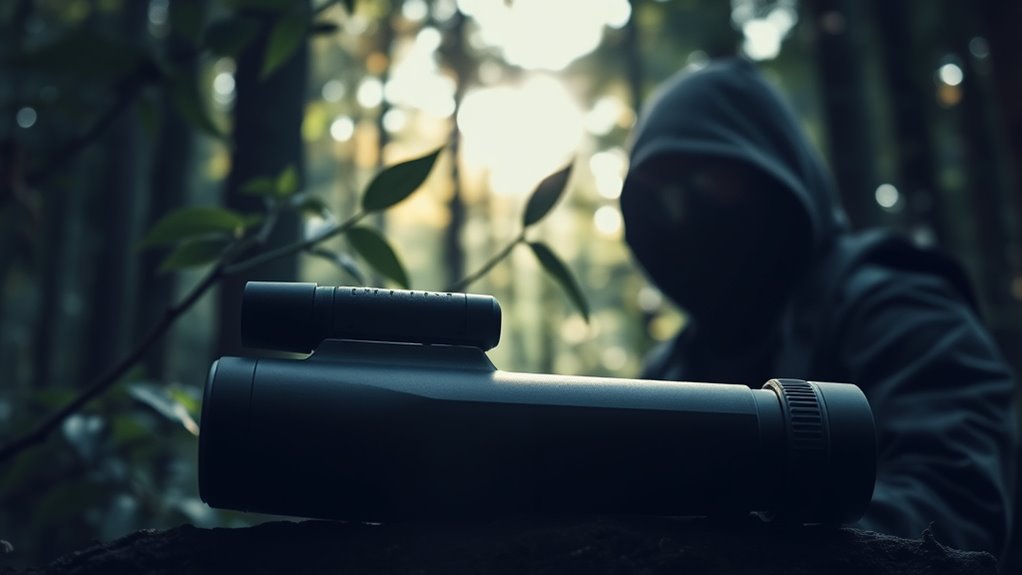
For readers searching for spy scope monoculars, my best overall pick is the Vortex Solo 10×36: its moderate magnification is easier to hold steady than the extreme claims on several compact models. The 8×42 Waterproof Monocular is a strong choice for a brighter, more weather-ready view, while the ANTSIR 8×21 favors pocketable carry. The main tradeoff is reach versus steadiness: higher magnification can make distant subjects appear larger, but it also magnifies hand movement and can narrow the usable view. I also separate practical observation optics from novelty pirate-style scopes, which suit costume or display use better than sustained viewing. Read on for the full breakdown and guidance by buyer type.

Get privacy and security gear delivered free with Prime
- Fast, free delivery on millions of items
- Prime Video, Amazon Music and more included
- Member-only deals all year
Key Takeaways
- Moderate magnification is the practical starting point: the Vortex Solo 10×36 and 8×42 Waterproof Monocular are more plausible for steady handheld observation than 80x or 300x claims on small-bodied scopes.
- Objective lens size shapes the carry-versus-view tradeoff: the ANTSIR 8×21 and Vortex Solo 10×25 are compact, while the 8×42 model gives more room for light gathering at the cost of bulk.
- Phone adapters add framing convenience, not optical performance: the 80×100, PhysioPhyx 80×100, and 25x Mini options include adapters, but a stable mount and realistic magnification matter more for usable images.
- Waterproof construction suits field use: the 8×42 and Olimt 8×25 are the clearer weather-oriented choices in this lineup; check the maker’s sealing details before relying on any optic in heavy rain.
- Pirate-style brass scopes serve a different purpose: the SSZS and Laupha 25×30 models are novelty or themed picks, not close substitutes for compact modern monoculars intended for repeated observation.
| 80×100 High-Power Monocular Telescope with Smartphone Adapter and Tripod |  | Best for Phone-Assisted Viewing | Magnification: 80x | Objective lens diameter: 21 mm | Prism: BAK-4 | VIEW ON AMAZON | See Our Full Breakdown |
| Belmeri 10–300×40 Monocular Telescope with BAK-4 Prism and FMC Lens |  | Best for Zoom Range | Magnification: 10–300x | Objective lens diameter: 40 mm | Prism: BAK-4 | VIEW ON AMAZON | See Our Full Breakdown |
| PhysioPhyx 80×100 Monocular Telescope with Tripod and Smartphone Adapter |  | Best for Grip and Fine Focus | Magnification: 80x | Objective lens diameter: 10 cm | Focus type: Manual dual-focus system | VIEW ON AMAZON | See Our Full Breakdown |
| ANTSIR 8×21 Compact Monocular Telescope |  | Best Compact Pick | Magnification: 8× | Objective lens diameter: 21 mm | Dimensions: 9 × 3 cm | VIEW ON AMAZON | See Our Full Breakdown |
| Belmeri 10–300×40 Monocular Telescope with BAK-4 Prism and FMC Lens |  | Best Lightweight Zoom Pick | Magnification: 10–300x | Objective lens diameter: 40 mm | Prism: BAK-4 | VIEW ON AMAZON | See Our Full Breakdown |
| 8×42 Waterproof Monocular Telescope |  | Best for Steady, Wide-Area Scanning | Magnification: 8x | Objective lens: 42 mm | Prism: BAK-4 | VIEW ON AMAZON | See Our Full Breakdown |
| SSZS Pirate Brass Monocular Telescope, 25×30 |  | Best for Pirate-Themed Display | Magnification: 25x | Objective lens: 30 mm | Field of view: 270 ft at 1,000 yards | VIEW ON AMAZON | See Our Full Breakdown |
| Vortex Solo 10×36 Monocular |  | Best for Rugged Everyday Carry | Magnification: 10x | Objective lens: 36 mm | Lens coating: Fully multi-coated | VIEW ON AMAZON | See Our Full Breakdown |
| Pankoo 16×52 High-Power Monocular Telescope |  | Best for Long-Range Detail | Magnification: 16x | Objective lens: 52 mm | Prism: BAK-4 | VIEW ON AMAZON | See Our Full Breakdown |
| Laupha Retro Pirate Telescope with Compass |  | Best for Themed Gifting | Magnification: 25x | Objective lens: 30 mm | Field of view: 82 m | VIEW ON AMAZON | See Our Full Breakdown |
| Laupha Retro Pirate Monocular Telescope, 25×30 |  | Best Vintage Spyglass Style | Magnification: 25x | Objective lens diameter: 30 mm | Prism: BAK-4 | VIEW ON AMAZON | See Our Full Breakdown |
| 25x Mini Monocular Telescope with HD Optics and Phone Adapter |  | Best for Phone-Aided Viewing | Magnification: 25x | Optics: Multilayer-coated | Included accessory: Clip-on smartphone adapter | VIEW ON AMAZON | See Our Full Breakdown |
| Olimt 8×25 Compact Waterproof Monocular |  | Best for Close-Up Detail | Magnification: 8x | Objective lens diameter: 25 mm | Weight: 5.8 oz | VIEW ON AMAZON | See Our Full Breakdown |
| Vortex Solo 10×25 Monocular |  | Best Overall for Practical Carry | Magnification: 10x | Objective lens diameter: 25 mm | Field of view: 107.14 ft | VIEW ON AMAZON | See Our Full Breakdown |
| HDAJY Mini Monocular Telescope, 30×25 HD |  | Best Ultra-Light High-Power Pick | Magnification: 30× | Objective lens diameter: 25 mm per title; 4 mm in product information | Length: 3.7 in | VIEW ON AMAZON | See Our Full Breakdown |
| spy scope monocular | Magnification | Field of view | Objective lens diameter | Weight |
|---|---|---|---|---|
| 80×100 High-Power Monocular Te | 80x | — | 21 mm | — |
| Belmeri 10–300×40 Monocular Te | 10–300x | 0.05 degrees | 40 mm | — |
| PhysioPhyx 80×100 Monocular Te | 80x | — | 10 cm | 1.4 lb |
| ANTSIR 8×21 Compact Monocular | 8× | 131 m at 1,000 m | 21 mm | Approximately 63 g |
| Belmeri 10–300×40 Monocular Te | 10–300x | 2 degrees | 40 mm | 0.2 kg |
| 8×42 Waterproof Monocular Tele | 8x | 360 ft at 1,000 yards | — | — |
| SSZS Pirate Brass Monocular Te | 25x | 270 ft at 1,000 yards | — | — |
| Vortex Solo 10×36 Monocular | 10x | — | — | — |
| Pankoo 16×52 High-Power Monocu | 16x | — | — | — |
| Laupha Retro Pirate Telescope | 25x | 82 m | — | 7.5 oz |
| Laupha Retro Pirate Monocular | 25x | 131 meters | 30 mm | 150 g |
| 25x Mini Monocular Telescope w | 25x | — | — | — |
| Olimt 8×25 Compact Waterproof | 8x | 358 ft at 1,000 yd | 25 mm | 5.8 oz |
| Vortex Solo 10×25 Monocular | 10x | 107.14 ft | 25 mm | 5.6 oz |
| HDAJY Mini Monocular Telescope | 30× | 6° | 25 mm per title; 4 mm in product information | 1.94 oz |
More Details on Our Top Picks
80×100 High-Power Monocular Telescope with Smartphone Adapter and Tripod
The included tripod and smartphone adapter make this a practical pick for buyers who want to steady a distant view and capture it with a phone. Its stated 80x magnification is geared toward faraway subjects, while the BAK-4 prism and fully multi-coated optics support light transmission through the compact 21 mm objective. Compared with the PhysioPhyx 80×100 Monocular, it offers the same headline magnification and phone accessories but does not list a dual-focus system or a rubberized body. The small objective lens may limit brightness, especially in dim conditions, and high magnification makes steady support important. I would choose it for daylight observation and phone setup convenience, while buyers prioritizing lower magnification or a pocket-friendly field of view may prefer the ANTSIR 8×21.
Pros:- Includes both a smartphone adapter and tripod
- 80x stated magnification suits distant outdoor subjects
- BAK-4 prism and fully multi-coated optics
- Adjustable eyecup accommodates viewing with or without glasses
Cons:- 21 mm objective may limit light gathering
- High magnification can be difficult to keep steady without the tripod
- Weight and dimensions are not provided
Best for: Outdoor observers who want a bundled tripod and smartphone adapter for recording distant daytime subjects
Not ideal for: Buyers who often watch in low light or want a simple, steady handheld view at modest magnification
- Magnification:80x
- Objective lens diameter:21 mm
- Prism:BAK-4
- Lens coating:Fully multi-coated
- Smartphone compatibility:Compatible; adapter included
- Included accessories:Smartphone adapter and tripod
Our verdict“Choose this if bundled phone recording and supported high magnification matter more than low-light performance or easy handheld viewing.”
Belmeri 10–300×40 Monocular Telescope with BAK-4 Prism and FMC Lens
The listed 10–300x zoom range gives this Belmeri a broader adjustment span than the fixed 8x ANTSIR 8×21, appealing to buyers who want one scope for varied distances. Its 40 mm objective lens is larger than the 21 mm lenses on the ANTSIR and the 80×100 phone-bundle model, which may help gather light, though the provided data does not establish image quality at the highest magnification. The compact 6.8-inch tube and pocket-sized dimensions suit travel, but this is a manual-focus instrument and no tripod or phone adapter is included. That makes it less ready for stable high-zoom viewing than the PhysioPhyx 80×100, which bundles both accessories. I would favor the Belmeri for an adaptable carry option when portability matters more than bundled support.
Pros:- Listed 10–300x adjustable magnification range
- 40 mm objective lens
- BAK-4 prism and fully coated optics
- Compact 6.8-inch optical tube
Cons:- Smartphone adapter and tripod are not included
- Manual focusing requires user adjustment
- Very narrow listed field of view may limit scene context
Best for: Traveling birdwatchers or hikers who want an adjustable zoom monocular and are comfortable focusing by hand
Not ideal for: Buyers who need a tripod and phone adapter included or expect effortless high-magnification viewing
- Magnification:10–300x
- Objective lens diameter:40 mm
- Prism:BAK-4
- Lens coating:Fully coated (FMC)
- Focus type:Manual
- Field of view:0.05 degrees
- Optical-tube length:6.8 inches
- Dimensions:5 × 1.8 × 1.8 inches
- Included accessories:Smartphone adapter and tripod not included
Our verdict“Pick this Belmeri for its broad stated zoom range and compact tube if you can supply support accessories separately.”
PhysioPhyx 80×100 Monocular Telescope with Tripod and Smartphone Adapter
Dual-focus wheels and a rubberized, non-slip body give this PhysioPhyx a more control-oriented setup than the similarly high-magnification 80×100 model from the first listing. It also includes a tripod and smartphone adapter, useful when the stated 80x zoom makes handheld viewing unsteady or when a phone is part of the plan. The 10 cm objective is substantially larger on paper than the 21 mm objective in that other 80x model, but the size and 1.4 lb weight make this a less compact carry. Compared with the ANTSIR 8×21, it is intended for much more distant subjects and asks more of the user in focusing and support. I would shortlist it for controlled outdoor observation, while casual walkers may prefer a lighter, simpler scope.
Pros:- Includes tripod and smartphone adapter
- Dual-focus wheels allow fine manual adjustment
- Rubberized body provides a non-slip grip and minor-bump protection
- Listed 10 cm objective lens and BAK4/FMC optics
Cons:- At 1.4 lb, it is heavier than compact options such as the ANTSIR 8×21
- Manual focusing is required
- Stated 80x magnification can be difficult to hold steady handheld
Best for: Wildlife watchers who want dual-focus control, a grippy body, and included support accessories for distant viewing
Not ideal for: Hikers seeking a light pocket monocular or buyers who want a simple handheld scope without manual focusing
- Magnification:80x
- Objective lens diameter:10 cm
- Focus type:Manual dual-focus system
- Prism and lens:BAK4 prism and FMC lens
- Dimensions:5.45 × 4.69 × 4.86 inches
- Weight:1.4 lb
- Compatible devices:Smartphones
- Included accessories:Tripod and smartphone adapter
Our verdict“Choose the PhysioPhyx if you want high stated magnification with included support and a more controlled grip, and can carry its extra weight.”
ANTSIR 8×21 Compact Monocular Telescope
At approximately 63 g and 9 × 3 cm, the ANTSIR is the straightforward choice here for buyers who value a monocular they can carry without planning around it. Its fixed 8x magnification and 131 m field of view at 1,000 m favor quick, broad outdoor observation over the extreme reach claimed by the two 80x models or the zooming Belmeri. One-hand focus, rubber armor, and splash resistance suit casual walks, though splash resistance is not a claim of full waterproofing. The included pouch and strap also make it more travel-ready than the Belmeri, which lists no bundled accessories. The tradeoff is limited reach and a fixed eyecup; I would skip it if distant detail or adjustable magnification is the main goal.
Pros:- Approximately 63 g and compact 9 × 3 cm dimensions
- Wide listed field of view of 131 m at 1,000 m
- One-hand focus with rubber-armored body
- Includes pouch, wrist strap, and cleaning cloth
Cons:- Fixed 8x magnification offers less reach than the Belmeri and 80x models
- Splash resistant only, with no full waterproof claim
- Fixed eyecup may not suit every viewing preference
Best for: Walkers and travelers who want a very light monocular for nearby wildlife and general outdoor scanning
Not ideal for: Buyers seeking high magnification, zoom flexibility, or a waterproof scope for wet conditions
- Magnification:8×
- Objective lens diameter:21 mm
- Dimensions:9 × 3 cm
- Weight:Approximately 63 g
- Eye relief:13 mm
- Field of view:131 m at 1,000 m
- Optics:FMC-coated glass lenses; roof prism
- Water resistance:Splash resistant
- Included accessories:Nylon carrying pouch, wrist strap, cleaning cloth, and user manual
Our verdict“Choose the ANTSIR for lightweight, quick outdoor viewing when portability matters more than zoom or long-range detail.”
Belmeri 10–300×40 Monocular Telescope with BAK-4 Prism and FMC Lens
Its listed 0.2 kg weight and pocket-sized dimensions make this Belmeri a carry-friendly zoom option, while the 40 mm objective and BAK-4 prism set it apart from the smaller 21 mm objective on the 80×100 phone-bundle model. Like the other Belmeri listing, it claims 10–300x adjustment and uses manual focus, so buyers should expect to make both zoom and focus changes themselves. It has no mount, tripod, or smartphone adapter, which leaves it less equipped for stable viewing or phone capture than the PhysioPhyx 80×100. The supplied exit pupil figure is 0.13 mm, a specification worth checking against the intended use. This version suits buyers who prioritize a light carry and adjustable reach over a ready-to-use accessory bundle.
Pros:- Listed weight of 0.2 kg
- Compact 5 × 1.8 × 1.8 inch dimensions
- 40 mm objective with BAK-4 prism and fully coated optics
- Adjustable stated 10–300x magnification
Cons:- No mount, tripod, or smartphone adapter included
- Manual focus and zoom adjustment require active handling
- Listed 0.13 mm exit pupil is very small
Best for: Hikers and casual observers seeking a light, compact monocular with adjustable magnification and willing to focus manually
Not ideal for: Phone photographers or high-zoom users who want a tripod, mount, and adapter included
- Magnification:10–300x
- Objective lens diameter:40 mm
- Prism:BAK-4
- Lens coating:Fully coated
- Focus type:Manual
- Field of view:2 degrees
- Weight:0.2 kg
- Exit pupil diameter:0.13 mm
- Mount and accessories:No mount; smartphone adapter and tripod not included
Our verdict“Choose this Belmeri for a light, compact zoom scope if manual adjustments and separately sourced support accessories fit your plans.”
8×42 Waterproof Monocular Telescope
I’d choose this 8×42 monocular for scanning trails, shorelines, or nearby terrain where a steady view matters more than maximum reach. Its 360-foot field of view at 1,000 yards is wider than the SSZS Pirate 25×30’s 270 feet, making it easier to follow moving subjects. The 42 mm objective, BAK-4 prism, and fully multi-coated optics support a bright, broad view, while the compact body and hand strap suit one-handed use. Its waterproof, fogproof, dustproof, and shockproof construction gives it a more practical outdoor role than the brass pirate-style models. The tradeoff is modest magnification: distant details remain harder to inspect than through the Pankoo 16×52. The tripod connector helps with stationary viewing, but a tripod is not included, and the low-light claims lack supporting detail.
Pros:- Wide 360-foot field of view supports scanning and tracking movement.
- BAK-4 prism and fully multi-coated optics.
- Waterproof, fogproof, dustproof, and shockproof construction.
- Compact body includes a hand strap and carry case.
Cons:- 8x magnification offers less distant detail than the Pankoo 16×52.
- Tripod connector is included, but the tripod is not.
- Low-light performance is claimed without supporting details.
Best for: Hikers and casual wildlife watchers who value a wide, easier-to-steady view and weather protection.
Not ideal for: Buyers focused on distant subjects who want more reach than 8x magnification provides, or who need a tripod in the box.
- Magnification:8x
- Objective lens:42 mm
- Prism:BAK-4
- Optics:Fully multi-coated
- Field of view:360 ft at 1,000 yards
- Dimensions:5.7 x 1.9 x 1.5 in
- Protection:Waterproof, fogproof, dustproof, shockproof
- Included accessories:Hand strap, carry case
- Tripod connector:Yes
Our verdict“Pick this for steady, wide-area outdoor viewing; choose the Pankoo 16×52 if distant detail matters more.”
SSZS Pirate Brass Monocular Telescope, 25×30
The SSZS makes the most sense when the pirate-style look is part of the appeal. Its collapsible 13-inch tube, gold-plated aluminum-alloy body, and leather-covered grip give it a distinctive character that the practical black Vortex Solo 10×36 does not try to match. On paper, 25x magnification offers more reach than the Vortex, but its 1.2 mm exit pupil is narrow, which can make eye placement and viewing comfort less forgiving. The 270-foot field of view is also narrower than the 8×42 Waterproof Monocular’s 360 feet, so finding and following a moving subject may take more effort. Manual focus adds another adjustment for outdoor use. I’d treat its waterproof design as a useful feature, but its compact objective and narrow exit pupil make this a style-led choice rather than the lineup’s easiest tool for extended observation.
Pros:- Distinctive gold-plated alloy body with leather-covered grip.
- Collapsible 13-inch optical tube for storage and carrying.
- 25x stated magnification for inspecting distant subjects.
- Includes a poncho and lens cloth.
Cons:- The 1.2 mm exit pupil makes eye placement less forgiving.
- Manual focus requires adjustment while viewing.
- Its narrower field of view makes tracking harder than with the 8×42 Waterproof Monocular.
Best for: Collectors, costumed event attendees, and casual users who want a collapsible pirate-style monocular for occasional viewing.
Not ideal for: Birdwatchers or hikers who need comfortable, sustained viewing, a forgiving eye position, or quick subject tracking.
- Magnification:25x
- Objective lens:30 mm
- Field of view:270 ft at 1,000 yards
- Optical-tube length:13 in
- Exit pupil:1.2 mm
- Focus:Manual
- Coating:Multi-coated
- Features:Waterproof, collapsible
- Included:Monocular, poncho, lens cloth, user manual
Our verdict“Choose the SSZS for its collapsible pirate styling and occasional use, rather than comfortable long-session observation.”
Vortex Solo 10×36 Monocular
For a monocular meant to go on regular walks, the Vortex Solo puts weather resistance and grip ahead of novelty features. Its rubber armor, waterproof and fogproof construction, and utility clip make it easier to carry and handle outdoors than the decorative Laupha Retro Pirate Telescope with Compass. Fully multi-coated optics and an adjustable eyecup support straightforward viewing, including for people who wear glasses. The 10x magnification reaches farther than the 8×42 Waterproof Monocular, though the higher power can make handheld views less steady. Its 36 mm objective is also smaller than that model’s 42 mm lens. The stated transferable lifetime VIP warranty is a notable support feature, with exclusions for loss, theft, deliberate damage, and cosmetic damage that does not affect performance. This pick prioritizes practical carry and protection over the wider view of the 8×42.
Pros:- Waterproof and fogproof construction for outdoor carry.
- Rubber armor provides a non-slip grip.
- Adjustable eyecup accommodates viewing with or without glasses.
- Utility clip supports convenient carry.
Cons:- 10x magnification can make handheld viewing less steady.
- 36 mm objective is smaller than the 8×42 Waterproof Monocular’s lens.
- Warranty excludes loss, theft, deliberate damage, and certain cosmetic damage.
Best for: Outdoor users who want a compact, weather-resistant monocular with an adjustable eyecup and clip for carry.
Not ideal for: People who prioritize a wide, easy-to-steady image or want warranty coverage for loss and theft.
- Magnification:10x
- Objective lens:36 mm
- Lens coating:Fully multi-coated
- Weather resistance:Waterproof and fogproof
- Eyecup:Adjustable
- Body:Rubber armor
- Included accessory:Multi-position utility clip
- Warranty:Transferable lifetime VIP warranty with stated exclusions
Our verdict“Choose the Vortex Solo for rugged everyday carry and weather protection, provided you can manage its less steady 10x view.”
Pankoo 16×52 High-Power Monocular Telescope
The Pankoo is the reach-focused choice in this group, pairing 16x magnification with a 52 mm objective lens for inspecting distant subjects. That gives it more stated magnification than the 8×42 Waterproof Monocular, which is better suited to scanning a broad area and holding a steadier handheld view. BAK-4 prisms and fully multi-coated optics are intended to support contrast, while the nitrogen-filled body is described as waterproof and fogproof for outdoor use. The listing also mentions low-light-level night vision, but supplies no supporting performance detail, so I would not make that claim the reason to choose it. The product data lacks hands-on performance information, which leaves image stability and practical low-light results unclear. Buyers should weigh its greater reach against the easier scanning offered by the 8×42.
Pros:- 16x magnification provides more stated reach than the 8×42 Waterproof Monocular.
- 52 mm objective lens paired with BAK-4 prism.
- Fully multi-coated optics.
- Nitrogen-filled body is described as waterproof and fogproof.
Cons:- Higher magnification can make handheld viewing more demanding.
- No hands-on performance details are provided.
- The low-light night-vision claim lacks supporting specifics.
Best for: Outdoor observers who want higher stated magnification for distant subjects and are comfortable evaluating performance with limited supporting detail.
Not ideal for: Beginners seeking a forgiving handheld view, or buyers who need verified low-light performance and detailed use information.
- Magnification:16x
- Objective lens:52 mm
- Prism:BAK-4
- Lens coating:Fully multi-coated (SMC)
- Weather resistance:Waterproof and fogproof
- Body filling:Nitrogen-filled
- Additional feature:Low-light-level night vision (performance details not provided)
Our verdict“Pick the Pankoo when distant reach is your priority, and the 8×42 when a wider, steadier scan matters more.”
Laupha Retro Pirate Telescope with Compass
The Laupha pairs a vintage brass finish with a glow-in-the-dark compass, making it a better fit for themed gifting or occasional novelty use than the outdoor-focused Vortex Solo 10×36. Its collapsible design and 7.5-ounce weight make it easy to pack, while the case and lens cloth help protect the tube between uses. The stated 25x magnification suggests more reach than the Vortex’s 10x, but the 30 mm objective lens is small, and manual focus adds effort when locating a subject. The supplied data does not describe weather protection or a field of view, so I would not choose it over the waterproof SSZS Pirate 25×30 for regular outdoor viewing. Its one-year warranty is also more limited than the Vortex’s stated transferable lifetime VIP warranty.
Pros:- Collapsible design and 7.5-ounce weight support portability.
- Includes a compass with a glow-in-the-dark face.
- Vintage brass finish and metal construction suit themed use.
- Comes with a leatherette case, lens cloth, and user manual.
Cons:- Manual focus requires hands-on adjustment.
- 30 mm objective lens is small for a high-magnification design.
- Weather protection and field of view are not specified.
Best for: Gift buyers and pirate-themed event attendees who want a portable brass-style telescope with a compass.
Not ideal for: Frequent outdoor observers who need weather protection, quick focus, or clearer evidence of viewing performance.
- Magnification:25x
- Objective lens:30 mm
- Field of view:82 m
- Optical-tube length:8.7 in
- Weight:7.5 oz
- Coating:Blue coating
- Focus:Manual
- Included accessories:Compass, leatherette case, lens cloth, user manual
- Warranty:1 year
Our verdict“Choose the Laupha for a portable themed gift with a compass, rather than regular weather-exposed viewing.”
Laupha Retro Pirate Monocular Telescope, 25×30
The Laupha Retro Pirate makes the most sense for buyers who want a spy scope that looks the part: its collapsible metal body and leather-covered grip give it a traditional handheld spyglass feel. It offers 25x magnification, matching the 25x Mini Monocular, but its small 30 mm objective lens and 1.2 mm exit pupil leave less room for light than a lower-power optic such as the Vortex Solo 10×25. That tradeoff can make viewing less comfortable, especially in dim conditions, and high magnification makes steady handheld viewing harder. The BAK-4 prism and blue-coated lenses are useful optical details, while the case and cloth help protect the instrument. Manual focus and the narrow exit pupil make it a style-led choice for bright daytime viewing, rather than the easiest pick for prolonged observation.
Pros:- Collapsible metal construction suits the classic spyglass look
- BAK-4 prism and blue-coated lenses
- Leather-covered grip and included case support handling and storage
- Light 150 g build is easy to carry
Cons:- Small 1.2 mm exit pupil and 30 mm objective lens limit comfortable viewing in dim conditions
- 25x magnification can be difficult to hold steady by hand
- Manual focus takes more adjustment than a simpler low-power viewing option
Best for: Buyers seeking a portable, vintage-looking spyglass for bright daytime viewing and casual observation
Not ideal for: People who need comfortable viewing in low light or an easy-to-steady scope for sustained observation
- Magnification:25x
- Objective lens diameter:30 mm
- Prism:BAK-4
- Lens coating:Blue coated
- Field of view:131 meters
- Optical-tube length:8.7 inches
- Weight:150 g
- Exit pupil diameter:1.2 mm
- Focus and warranty:Manual focus; 1 year
Our verdict“Choose the Laupha for vintage spyglass styling and bright-day portability, and choose the Vortex Solo 10×25 for steadier, more practical viewing.”
25x Mini Monocular Telescope with HD Optics and Phone Adapter
The 25x Mini Monocular earns its place for buyers who want to pair a compact scope with a phone: the included clip-on smartphone adapter offers a way to capture distant views, an accessory the Vortex Solo 10×25 listing does not specify. Its waterproof housing and anti-slip rubber armor also suit outdoor outings better than the Laupha Retro Pirate’s vintage-style body. The 25x magnification promises a tighter view than the Vortex’s 10x, but higher power is harder to keep stable by hand, and the listing gives no objective-lens size or field-of-view figure to help judge brightness and framing. Multilayer-coated optics and adjustable focus round out the practical feature set. Choose it for phone-assisted experiments and outdoor carry; skip it if you prioritize documented optical specifications or easy handheld viewing.
Pros:- Included clip-on smartphone adapter supports phone-assisted viewing
- Waterproof housing is suited to outdoor use
- Rubber armor adds grip
- Adjustable focus and multilayer-coated optics
Cons:- 25x magnification can be difficult to hold steady without support
- No objective-lens diameter or field-of-view specification is provided
- Phone adapter use may require careful alignment to get a usable image
Best for: Hikers and casual wildlife observers who want a compact monocular with a supplied phone adapter
Not ideal for: Buyers who need a documented field of view, objective-lens size, or dependable high-magnification handheld stability
- Magnification:25x
- Optics:Multilayer-coated
- Included accessory:Clip-on smartphone adapter
- Construction:Waterproof housing with anti-slip rubber armor
- Focus:Adjustable
- Intended activities:Hiking and bird watching
Our verdict“Pick this model if the included phone adapter matters more than a fully documented optical specification sheet.”
Olimt 8×25 Compact Waterproof Monocular
The Olimt 8×25 is the lineup’s sensible choice when a “spy scope” needs to work at arm’s length as well as across a field. Its 0.98 ft close focus helps with nearby details, while the 358 ft field of view at 1,000 yards makes it easier to keep moving subjects in view than with the 25x Laupha Retro Pirate. ED glass and BAK-4 prisms are aimed at clear, color-rich viewing, and IPX7 waterproofing suits wet outdoor use. The tradeoff is clear: 8x magnification won’t bring distant subjects as close as the HDAJY 30×25 or other high-power picks. At 5.8 oz, it is portable but heavier than the HDAJY’s listed 1.94 oz. This is a practical compact optic, not a dramatic long-range spyglass.
Pros:- Very close 0.98 ft focusing distance suits nearby details
- Wide 358 ft field of view at 1,000 yards
- ED glass and BAK-4 prisms
- IPX7 waterproof construction
Cons:- 8x magnification offers less reach than 25x and 30x models
- At 5.8 oz, it weighs more than the listed HDAJY Mini
- Monocular viewing uses one eye rather than both
Best for: Travelers and nature observers who want a waterproof pocket monocular that can also focus on nearby objects
Not ideal for: Buyers whose main goal is strong magnification for distant subjects
- Magnification:8x
- Objective lens diameter:25 mm
- Weight:5.8 oz
- Dimensions:3.81 × 1.22 in
- Field of view:358 ft at 1,000 yd
- Close focus distance:0.98 ft (0.3 m)
- Eye relief:16 mm
- Prisms:BAK-4
- Water resistance:IPX7 waterproof
Our verdict“Choose the Olimt for close focusing, a broad view, and wet-weather carry; choose a 25x or 30x model for greater apparent reach.”
Vortex Solo 10×25 Monocular
For a spy scope that needs to be useful beyond its name, the Vortex Solo 10×25 is the most balanced everyday option here. Its 10x power gives more reach than the Olimt 8×25 while remaining easier to hold steady than the Laupha Retro Pirate’s 25x design. The fully multi-coated lenses, rubber armor, and waterproof, fogproof, shockproof construction suit regular outdoor carry, and the adjustable eyecup accommodates glasses. Its 2.5 mm exit pupil is also larger than the Laupha’s 1.2 mm, though this compact 25 mm optic still has limits in dim light. The tradeoff is a more restrained view than the 25x and 30x models, plus a listed field-of-view figure without units. It favors dependable handling over vintage spyglass character or maximum zoom.
Pros:- 10x magnification is more manageable handheld than 25x and 30x alternatives
- Fully multi-coated lenses
- Waterproof, fogproof, and shockproof construction with rubber armor
- Adjustable eyecup works with or without glasses
Cons:- 25 mm objective lens and 2.5 mm exit pupil are limiting in dim conditions
- Lower magnification gives less reach than the high-power options
- Field-of-view figure is listed without units
Best for: Outdoor users and travelers who want a compact, weather-protected monocular with manageable magnification
Not ideal for: Buyers seeking a vintage spyglass appearance or the strongest listed magnification for distant targets
- Magnification:10x
- Objective lens diameter:25 mm
- Field of view:107.14 ft
- Exit pupil diameter:2.5 mm
- Weight:5.6 oz
- Dimensions:2.25 × 2.64 × 1.97 in
- Optical-tube length:4.4 in
- Lens coating and construction:Fully multi-coated; waterproof, fogproof, shockproof; rubber armored
- Eyecup and warranty:Adjustable eyecup; unlimited, unconditional lifetime warranty
Our verdict“Choose the Vortex Solo 10×25 for durable everyday outdoor viewing, rather than maximum zoom or retro styling.”
HDAJY Mini Monocular Telescope, 30×25 HD
At a listed 1.94 oz and 3.7 inches long, the HDAJY Mini is the easiest of these five to slip into a pocket. Its 30x label exceeds the Laupha Retro Pirate’s 25x, offering more stated magnification in a similarly small-format spy scope. That reach brings a handling compromise: high power is harder to keep steady, and the listed 6° field of view may feel narrow beside the Olimt 8×25’s broad view. The metal barrel, rubber exterior, manual focus, and claimed waterproof and moisture-proof design support portable outdoor use. There is a specification conflict, though: the title says 25 mm objective diameter while product information lists 4 mm. Smartphone compatibility is mentioned without adapter details. I would treat it as a lightweight casual option, not a verified phone-imaging setup.
Pros:- Very light at a listed 1.94 oz
- Short 3.7 in body is pocket-friendly
- Metal barrel with rubber exterior
- Weather resistance is listed for outdoor use
Cons:- Objective lens diameter conflicts between the 25 mm title and 4 mm product information
- 30x magnification can be hard to steady by hand
- Smartphone compatibility is listed without phone-adapter details
Best for: Concertgoers and hikers who prioritize very low carry weight and want high stated magnification for occasional viewing
Not ideal for: Buyers who need consistent optical specifications, easy steady viewing, or a supplied smartphone attachment
- Magnification:30×
- Objective lens diameter:25 mm per title; 4 mm in product information
- Length:3.7 in
- Diameter:0.95 in
- Weight:1.94 oz
- Focus type:Manual
- Field of view:6°
- Coating and materials:Fully coated; metal barrel with rubber exterior
- Weather resistance:Waterproof and moisture-proof
Our verdict“Choose the HDAJY if minimum carry weight matters most, but favor the Vortex Solo 10×25 for clearer, better-documented everyday use.”

How We Picked
I ranked these spy scope monoculars by how well their stated design fits practical distant viewing: magnification that can be used by hand, lens size, optical elements, weather protection, and handling. I gave more weight to believable everyday usability than to the largest advertised magnification, since extreme claims on compact optics do not by themselves tell a buyer how clear, steady, or wide the view will be. Carry size and included accessories also mattered, but a phone adapter or tripod only adds value when the core optic is suited to the job.
The ranking favors versatile modern optics first, then compact or specialized options, with costume-style scopes lower because their form and stated features point to novelty use. Models with similar or repeated names are judged separately only where the listing details distinguish them; the repeated Belmeri listing is not treated as a second unique design. Manufacturer specifications can vary by listing, so I recommend confirming eye relief, field of view, waterproof rating, and included accessories before buying.
Factors to Consider When Choosing Spy Scope Monoculars
Choosing a monocular for distant viewing means matching the optic to how and where you will use it. These broader checks can help prevent a large-looking specification from driving a poor fit.
Choose magnification you can hold steady
Magnification enlarges both the subject and every small movement in your hands. For walking, wildlife watching, or quick checks, moderate magnification is often easier to use than a compact scope advertised at 25x, 80x, or more. Higher power can make sense from a fixed position with support, but it may also reduce the field of view and make locating a subject slower. Do not compare magnification numbers alone; look for field-of-view and focus information as well. If those details are missing, treat exceptionally high claims cautiously. A tripod can steady the image, but it cannot compensate for poor optics.
Balance objective lens size with portability
The objective lens is the larger lens at the front, and its diameter affects how much light can enter the optic. Larger objectives can help in dimmer conditions, though they usually add size and weight. A small 21mm or 25mm monocular is easier to stash in a pocket, but may be less comfortable at dawn or dusk than a larger design. Think about how long you will carry it and when you expect to use it, rather than choosing the biggest lens by default. For bright daytime use, compactness may matter more than low-light performance. For extended viewing, a larger body can also be easier to grip.
Read optical claims as a whole
Terms such as BAK-4 prism and fully multi-coated lenses describe parts of an optical system, but they do not guarantee a sharp image on their own. Glass quality, coatings, alignment, focus travel, and the user’s eye position all affect the view. Check whether the listing supplies a field of view, eye relief, and close-focus distance, especially if you wear glasses. A phone adapter is useful for recording or sharing a view, but phone cameras vary in size and alignment, so compatibility can be fiddly. Treat accessory bundles as convenience features, not proof of better image quality. When specifications conflict across a listing, verify the exact model before ordering.
Match weather protection to the outing
Waterproofing can protect an optic from rain and splashes, while fog-resistant construction can help when temperatures shift. These labels are meaningful only when the maker provides a clear rating or construction details. A claim of waterproofing does not mean a monocular is safe to submerge, and exposed caps or moving focus parts can still need care. For boating, hiking, or regular outdoor carry, sealed construction is worth prioritizing over decorative finishes. In dry, fair-weather use, a lighter non-waterproof model may be adequate. Store any optic dry and avoid wiping grit across the lens surface.
Decide whether support and accessories fit your use
A tripod helps most when magnification is high, viewing sessions are long, or you need to frame a phone image. It adds setup time and bulk, so it may be a poor match for spontaneous pocket carry. Phone adapters also require careful alignment and can make a narrow image harder to center. If you mainly observe by eye, prioritize grip, focus control, and eye comfort over included accessories. If documenting what you see matters, check the mount’s adjustability and phone fit. A stable surface or monopod can sometimes provide enough support without a full tripod.
Separate practical optics from novelty scopes
Brass pirate-style scopes can be attractive for costumes, themed events, or display, but their styling and compact objective may not suit repeated field observation. A modern rubber-armored monocular is typically easier to grip and better suited to outdoor handling. Before choosing a novelty model for actual viewing, check whether it has a usable focus mechanism, comfortable eye relief, and clear optical specifications. The same caution applies to mini scopes marketed chiefly around high magnification. Decide whether the primary goal is appearance, occasional play, or reliable observation. That distinction can prevent a decorative purchase from disappointing as a field optic.
Frequently Asked Questions
Are 80x or 300x monoculars a good choice for handheld viewing?
Those figures should be treated cautiously, especially on a compact monocular. Very high magnification makes hand movement more visible and can leave a narrow, dim, difficult-to-find image. A tripod may steady the view, but it does not establish that the optics can deliver useful detail at the advertised power. Check for independent details such as field of view, objective size, and focus range. For casual handheld observation, a more moderate specification is usually easier to manage.
Can I use a monocular with my phone to take useful pictures?
A phone adapter can align the camera with the eyepiece, but results depend on the monocular, adapter fit, phone camera placement, and steadiness. Expect some setup and possible vignetting, where dark edges appear around the image. High magnification makes alignment and shake more challenging, so a stable support helps. Check that the adapter adjusts to your phone and does not block its camera controls. For occasional records it can be convenient, but it is not a replacement for a dedicated camera lens.
What magnification should I choose for watching wildlife or distant scenery?
Choose based on how far away your subjects are and whether you can support the optic. Moderate magnification is generally easier for finding moving wildlife and keeping a steady view, while stronger magnification can help with distant stationary details from a fixed position. A wider field of view makes it easier to locate and follow a subject. Compare that information alongside lens size and weight. If a listing gives only a large magnification number, it does not provide enough detail to predict real-world usability.
Does waterproofing matter if I only plan to use a monocular occasionally?
It matters most if you expect rain, spray, damp storage, or quick temperature changes. For occasional fair-weather use, a non-waterproof model may be sufficient, provided you keep it protected and dry. Look for a specific waterproof or fog-resistance rating rather than relying on a vague outdoor-use claim. Waterproofing does not mean the optic can be submerged unless the maker explicitly states that. Weather sealing can be a practical safeguard for field carry, but it should not outweigh handling and optical fit.
Should I choose a compact monocular or a larger 8×42 model?
A compact model is easier to carry every day and suits brief daytime checks, while an 8×42 design is larger but offers a bigger objective lens. That extra size may help in dimmer conditions and can make the body more comfortable to hold during longer sessions. Neither format is automatically better: your expected lighting, carry habits, and viewing duration should guide the choice. If you travel light, the smaller optic may get used more often. If you spend extended time outdoors, the larger format may feel like a better compromise.
Conclusion
For the broadest mix of handheld usability and field practicality, I would start with the Vortex Solo 10×36 as best overall. The ANTSIR 8×21 is my compact value-style choice for simple daytime carry, while the Vortex Solo 10×25 is another small option from a known optics line; buyers seeking a premium pick should compare the exact model specifications and warranty before deciding. Beginners are better served by the 8×42 Waterproof Monocular or a moderate-power Vortex than by the extreme-magnification listings, since they are easier to steady and evaluate. For wet outings, consider the Olimt 8×25 or 8×42 waterproof option after checking their stated sealing details; for costume use, choose one of the brass pirate scopes. Match your choice to carry comfort, realistic magnification, and intended setting, then confirm the listing’s specifications before purchase.