TL;DR

Get privacy and security gear delivered free — and shop member deals
- Fast, free delivery on millions of items
- Access to Prime Big Deal Days deals on October 6–7
- Prime Video, Amazon Music and more included
DEDA is a software toolkit for extracting and decoding tracking dots found on many commercial color laser prints, and for masking or removing those dots in some workflows. Its GitHub documentation describes the commands and scan requirements, but does not announce a new release or establish how well the methods work across printer models.
The DEDA toolkit provides software to extract and decode printer tracking dots from scanned documents and to mask or remove those marks in certain workflows, according to its GitHub documentation. The project addresses a privacy issue: the small yellow dots printed by many commercial color laser printers can encode information about the printer or printout, potentially linking a paper document to its source device.
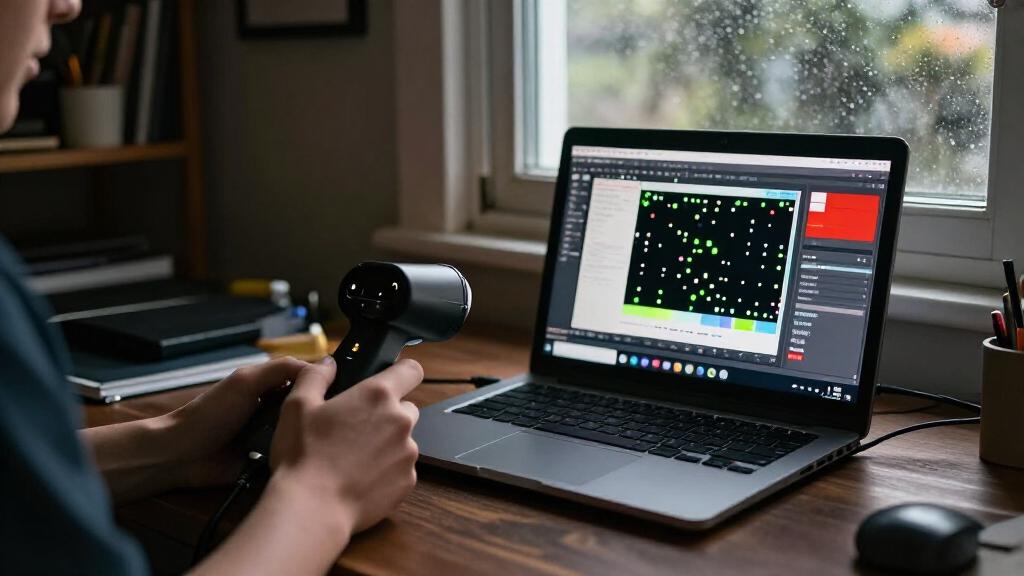
DEDA, short for Tracking Dots Extraction, Decoding and Anonymisation, is distributed as Python software. The project says it can read tracking data from a scanned image and sometimes decode it. It also includes commands to compare scans, extract unfamiliar dot patterns for analysis, create dot matrices, clean a scanned document, and prepare a document for printing with an anonymisation mask.
The documentation recommends lossless image files such as PNG, a scan resolution of 300 dpi, and neutral contrast when parsing a print. It cautions that scan software can remove paper texture or dots through thresholding, which may prevent recognition. It also says monochrome pages and inkjet prints might not contain tracking dots.
For print anonymisation, the documented process uses a calibration page to create a mask for an individual printer, then applies that mask to a PDF. The project advises checking a masked print under a microscope to see whether it covers the printer’s dots. Its instructions describe this as a way to anonymise a document for printing; they do not guarantee that all identifying features will be removed.
How Printer Dots Affect Privacy
Tracking dots can make a printed page carry information beyond its visible text and images. If those marks encode a printer identifier or details about the printout, they may help connect a document to a device. DEDA makes it possible for users to inspect that layer and, in some cases, attempt to obscure it before printing.
The project is relevant to people handling sensitive documents, including researchers and privacy-conscious users. Its functions also illustrate that anonymisation depends on the printer, the scan, and the document preparation process. A mask that fails to cover the marks, or a scan that loses dot detail, can undermine the intended result.
printer tracking dots removal tools
As an affiliate, we earn on qualifying purchases.
As an affiliate, we earn on qualifying purchases.
What DEDA’s Workflow Requires
The project describes tracking dots as small, systematic marks, also called yellow dots, integrated into almost every commercial color laser printer. That characterization is from the project documentation; the supplied material does not provide an independent survey of printers or a measured rate of prevalence.
Users can install DEDA from PyPI or from a local source directory. The documented command-line tools cover several separate tasks, while a graphical interface is also available. For printing workflows, the calibration page must be printed without margins and scanned at 300 dpi to build a printer-specific mask. The documentation notes that the optional Wand package is needed to mask white areas on images in some PDFs.
The project asks users of the software to cite a 2018 paper by Timo Richter, Stephan Escher, Dagmar Schönfeld and Thorsten Strufe, “Forensic Analysis and Anonymisation of Printed Documents,” published in the Proceedings of the 6th ACM Workshop on Information Hiding and Multimedia Security. The paper is identified as related research; the supplied source does not provide its findings or evaluation details.
““This process is integrated in almost every commercial colour laser printer.””
— DEDA project documentation
Limits of Detection and Masking
The supplied GitHub material does not state when the documentation was last updated, identify a current software release, or report testing results across printer models. It also does not quantify how often dots can be decoded or how reliably the masking workflow prevents recovery of encoded information.
Whether dots appear and can be read may depend on the printer, the page, and scan settings. The project itself says recognition can fail if scanning removes dot or paper detail and that some print types might not carry the marks. It remains unclear from the supplied material whether masking addresses other identifying features in a document or printout.
Inspect Prints After Masking
The project’s documented next step for users preparing an anonymised print is to print the masked PDF with zero page margins and inspect the result under a microscope. Users analyzing an existing print can scan it with lossless compression at 300 dpi and neutral contrast, then try the parsing or extraction tools.
No upcoming release, project milestone, or further development announcement is included in the supplied source. The practical outcome will depend on testing the relevant printer and print settings; the documentation leaves broader effectiveness and coverage questions open.
Key Questions
What does DEDA do?
DEDA is software for extracting and sometimes decoding printer tracking dots from scans. It also provides tools to compare prints, examine dot patterns, and mask or clean tracking marks in specified workflows.
What information can tracking dots contain?
The project says the dots can encode information about the printer or the printout, including a device serial number. The supplied material does not specify which data every printer encodes.
What scan settings does DEDA recommend?
The documentation recommends a lossless file such as PNG, 300 dpi, and neutral contrast. It warns that scan software may remove dots or paper structure through thresholding.
Does DEDA guarantee an anonymous print?
No such guarantee appears in the supplied documentation. It instructs users to inspect a masked page under a microscope to check that the mask covers the printer’s tracking dots.
Do all printers and pages have tracking dots?
The project says the process is integrated in almost every commercial color laser printer, but the supplied source does not provide a prevalence study. It also says monochrome pages and inkjet prints might not contain tracking dots.
Source: hn
Halloween Picks
halloween
As an affiliate, we earn on qualifying purchases.