TL;DR

Get privacy and security gear delivered free — and shop member deals
- Fast, free delivery on millions of items
- Access to Prime Big Deal Days deals on October 6–7
- Prime Video, Amazon Music and more included
Relativity Space will develop and launch NASA’s next Mars orbiter, Aeolus, in 2028. This partnership aims to enhance Martian atmospheric data collection and reduce mission costs.
Relativity Space will design, build, and launch NASA’s next Mars orbiter, called Aeolus, in 2028, as part of a public-private partnership to improve understanding of the Martian atmosphere and environment.
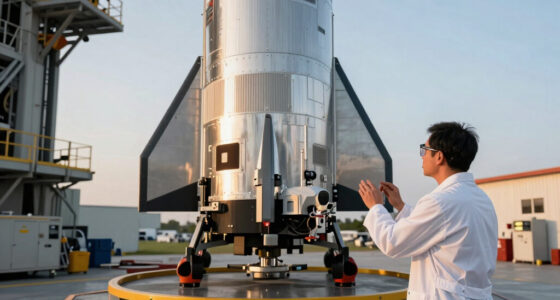
NASA announced on June 17, 2026, that California-based Relativity Space will develop and launch the Aeolus spacecraft, which will carry a suite of instruments to measure Martian dust, clouds, winds, and temperatures daily. The mission aims to provide critical atmospheric data to support future robotic and crewed missions to Mars, with a launch planned for 2028. The spacecraft will be assembled at NASA’s Ames Research Center in California, where it will undergo testing before launch. Relativity Space will handle spacecraft design, construction, and operations, using its upcoming Terran R rocket for launch.
The Aeolus mission includes four instruments: the Doppler Wind and Temperature Sounder (DWTS‑Ozone), the Thermal Limb Sounder (TLS), the Surface Radiometric Sensor Package (SuRSeP), and the Wide‑Field Context Camera (WFCC). These tools will work together to create a comprehensive picture of the Martian atmosphere, surface energy absorption, and cloud activity. NASA intends to support the mission for at least one Martian year (approximately 687 Earth days), with potential extensions based on mission performance.
This partnership builds on NASA’s existing Mars orbiters, such as the Mars Reconnaissance Orbiter and Mars Odyssey, which have been operational for nearly two decades. It also follows the recent loss of the MAVEN orbiter, which experienced an anomaly leading to communication loss after more than ten years of operation. Relativity’s involvement marks a significant step in expanding commercial participation in planetary science missions.
Why the 2028 Mars Orbiter Partnership Matters
This collaboration represents a shift toward increased private sector involvement in NASA’s planetary exploration efforts, potentially reducing costs and accelerating mission timelines. The data collected by Aeolus will improve scientific understanding of Mars’ atmosphere, aiding future exploration and human missions. It also demonstrates how NASA is leveraging commercial innovation to complement its own capabilities, which could influence future mission architectures and partnerships.
Mars atmospheric science instruments
As an affiliate, we earn on qualifying purchases.
As an affiliate, we earn on qualifying purchases.
Background on NASA’s Mars Science Missions
NASA has historically relied on government-funded orbiters like MAVEN, Mars Reconnaissance Orbiter, and Mars Odyssey to study Mars. MAVEN operated for over a decade before an anomaly ended its mission, highlighting the need for continuous atmospheric monitoring. Recent efforts have included collaborations with private companies, such as SpaceX and others, to support Mars exploration. The upcoming Aeolus mission continues this trend, emphasizing the role of commercial partners in planetary science.
Uncertainties Surrounding the Aeolus Mission Timeline
While the partnership and launch date are confirmed, specifics about the spacecraft’s final design, mission duration, and operational details remain under development. The success of Relativity Space’s launch vehicle, the Terran R rocket, which is still in testing, also introduces some uncertainty regarding the mission’s launch readiness in 2028.
Next Steps for the Aeolus Mars Orbiter Project
Relativity Space will proceed with spacecraft design and testing at NASA’s Ames Research Center. The company is also advancing the development of the Terran R rocket, which is expected to debut later this year. The next major milestone will be the completion of spacecraft assembly and testing, followed by launch preparations leading up to the 2028 mission deployment.
Key Questions
What is the purpose of NASA’s Aeolus Mars orbiter?
Its primary goal is to collect detailed atmospheric data on Mars, including dust, clouds, winds, and temperatures, to support future exploration missions.
Why is a private company building this spacecraft?
NASA is increasingly partnering with private industry to reduce costs, accelerate development, and leverage commercial innovation for planetary science.
What challenges does the project face?
The success of the mission depends on the development and testing of Relativity Space’s new launch vehicle, the Terran R rocket, which is still in the testing phase.
How does this mission compare to previous Mars orbiters?
Unlike earlier NASA missions that were solely government-funded, Aeolus will be the first to carry a comprehensive atmospheric science suite built through a public-private partnership, aiming for more frequent and detailed data collection.
When will the spacecraft be launched?
The targeted launch date is 2028, with the specific schedule to be finalized after spacecraft testing and vehicle readiness.
Source: Space.com
Halloween Picks
halloween
As an affiliate, we earn on qualifying purchases.