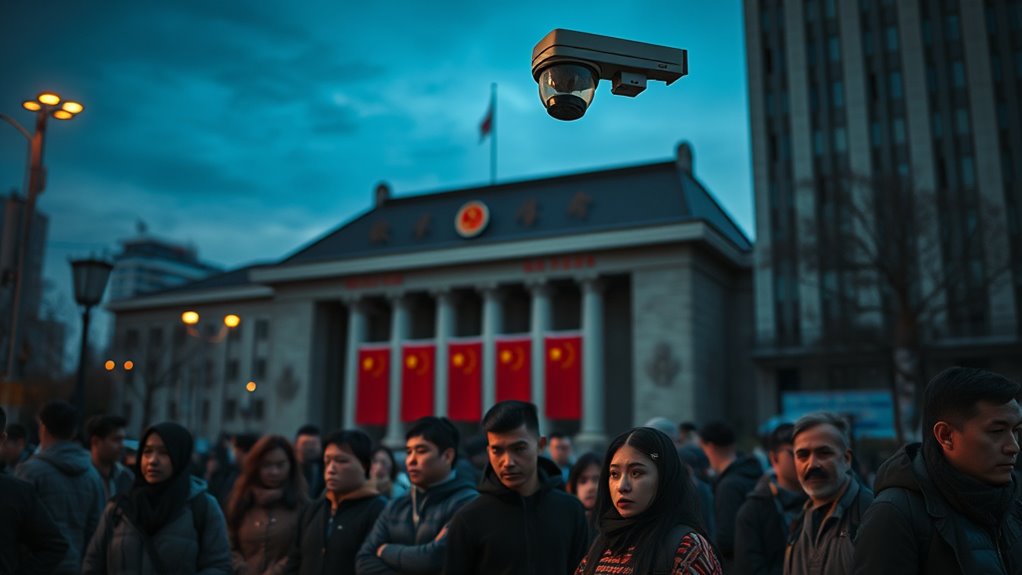
The China Initiative aims to protect national security by targeting espionage and intellectual property theft, but it criticisms suggest it can resemble racial profiling, especially toward Chinese researchers. This approach risks creating a chilling environment for academic collaboration, fostering mistrust, and straining diplomatic ties. It also raises concerns about fairness and the potential for discrimination. To understand whether this program strikes the right balance or crosses ethical lines, explore further for more insights.
Key Takeaways
- The China Initiative aims to enhance national security by countering espionage but faces criticism for racial profiling of Chinese Americans.
- Critics argue it undermines individual rights and fosters bias, leading to a chilling effect on academic collaboration.
- The program’s broad investigations may divert resources from actual threats, risking injustice and inefficiency.
- It has strained diplomatic relations with China and fueled mistrust within Chinese American communities.
- The initiative raises concerns about balancing security measures with fairness and avoiding discriminatory practices.

Is the China Initiative truly safeguarding national security, or is it inadvertently fueling racial profiling? As you explore this program, you might notice how its focus on countering espionage and intellectual property theft has sparked controversy. Critics argue that while the initiative aims to protect critical technologies, it also fosters academic bias. Universities and research institutions, especially those with ties to China, find themselves under increased scrutiny. This can lead to a chilling effect, where scholars hesitate to collaborate or share ideas out of fear of being unfairly targeted. Such an environment stifles innovation and discourages open academic discourse, which are essential for progress. Instead of fostering a secure and collaborative research landscape, the initiative risks creating an atmosphere of suspicion that may harm legitimate scientific exchange.
Beyond academia, you should reflect on the diplomatic impact of this approach. The heightened focus on Chinese nationals and organizations has strained diplomatic relations between the United States and China. It fosters mistrust and can lead to retaliatory measures, affecting diplomatic negotiations and international cooperation. If the initiative is perceived as targeting individuals based solely on ethnicity or nationality, it could further alienate Chinese communities within the U.S., fueling resentment and division. This can undermine efforts to build bridges and foster mutual understanding, which are fundamental for effective diplomacy. Additionally, the perception of racial profiling damages the reputation of U.S. institutions, making it harder to collaborate globally on scientific and security issues. It risks portraying the U.S. as discriminatory, which could have long-term diplomatic repercussions that extend far beyond espionage concerns. Recognizing the importance of scientific collaboration is vital for maintaining global innovation networks.
Focusing on Chinese nationals strains U.S.-China relations and fuels diplomatic mistrust and resentment.
You might also see how these issues impact the broader security landscape. While the initiative aims to prevent espionage, it may inadvertently divert resources from more effective, targeted intelligence efforts. Instead of focusing on actual threats, authorities might be caught up in broad investigations that entangle innocent researchers and students. This misallocation can weaken overall national security by spreading resources thin and fostering distrust within communities integral to scientific and technological advancement. Racial profiling, whether intentional or not, erodes the principles of fairness and justice that underpin national security strategies. As you evaluate the initiative, it’s important to consider whether its approach strikes the right balance—protecting essential interests without compromising individual rights and international relations.
Frequently Asked Questions
How Has the China Initiative Affected Academic Research Collaborations?
The China Initiative has made you more cautious about academic research collaborations, especially with Chinese institutions. You might find it harder to maintain open academic freedom and build international partnerships without fear of scrutiny. This increased scrutiny can discourage collaboration, limit your access to global expertise, and create a climate of mistrust. As a result, you may feel constrained in pursuing innovative projects that rely on diverse international inputs.
What Legal Challenges Have Been Raised Against the Program?
You face significant legal challenges against the China Initiative, with critics arguing that it amounts to racial profiling, unfairly targeting Chinese researchers. Lawsuits and complaints allege violations of constitutional rights, citing discrimination and privacy breaches. These challenges question the program’s fairness and legality, claiming it undermines trust and fosters bias. As a result, many see it as a controversial and contentious effort, stirring debates about national security versus civil liberties.
Are There Statistics on Racial Demographics Targeted by the Initiative?
You won’t find extensive statistics on racial demographics targeted by the China Initiative, as data on racial profiling and demographic targeting remains limited and often undisclosed. Critics argue that the program risks racial profiling, focusing on specific ethnic groups. Without transparent data, it’s difficult to assess how much demographic targeting influences enforcement, raising concerns about potential racial biases and the fairness of the initiative’s implementation.
How Do Officials Justify the Program’s Impact on Civil Liberties?
Officials justify the program’s impact on civil liberties by arguing it’s necessary for national security, emphasizing that it targets specific threats rather than individuals based on ethnicity. They believe the government’s justification rests on protecting the country from espionage and intellectual property theft. While they claim safeguards are in place, critics argue that the program risks infringing on civil liberties and fostering racial profiling, which can undermine trust and fairness.
What Are Alternative Strategies for National Security Regarding China?
Imagine you’re in the year 1885, steering a rapidly industrializing world. To counteract economic espionage and reduce diplomatic tensions with China, you could prioritize robust international cooperation, strengthen cybersecurity measures, and promote transparency in trade and research. Engaging in diplomatic dialogue and establishing clear legal frameworks helps balance security concerns while respecting civil liberties, offering a more effective approach than broad surveillance, which risks racial profiling and civil rights violations.
Conclusion
As you reflect on the China Initiative, it’s hard not to notice the thin line between national security and racial profiling. Coincidentally, while some see it as protection, others see it as prejudice. The question remains: are you safeguarding the nation or unfairly targeting a community? In this delicate balance, the truth often feels just out of reach, like a shadow that shifts with each new perspective. Ultimately, it’s up to you to decide where the line truly lies.