Encrypted backup drives range from compact USB keys to desktop hard drives, and my best overall pick is the Apricorn Aegis Fortress L3 for its hardware encryption in a portable drive format. The Apricorn 2TB Aegis Padlock DT is a better fit for buyers who want more capacity at a desk, while the Kingston IronKey Locker+ 50 G2 suits people who need a small encrypted drive for selected files. The main tradeoff is between portable convenience, storage capacity, and the controls used to protect access. Some listed drives advertise encryption directly; the WD My Passport models do not specify hardware encryption in their product names, so buyers should check the exact model’s security features before relying on them for sensitive backups. Read on for the full comparison, selection criteria, and advice for matching a drive to your backup routine.

Get privacy and security gear delivered free with Prime
- Fast, free delivery on millions of items
- Prime Video, Amazon Music and more included
- Member-only deals all year
Key Takeaways
- The lineup splits into different jobs: portable encrypted hard drives suit larger backups, while the Kingston IronKey and Aegis Secure Key models are small flash drives for selected files.
- Capacity changes the form factor: the 4TB Aegis Desktop Padlock and 2TB Aegis Padlock DT are desk-oriented choices; compact USB keys trade backup space for easy carry.
- Certification is a specific distinction: the Aegis Fortress and Aegis Desktop Padlock list FIPS 140-2 validation, while the other products do not make that claim in their names.
- USB-C and USB-A compatibility matter: the Secure Key 3 NXC lists USB 3.2 Type-C, while several other picks list USB 3.0; buyers should match the connector to their computers and backup devices.
- Do not assume every listed drive offers the same encryption: the WD My Passport listings emphasize capacity and portability, so confirm the exact model’s encryption and recovery features before storing sensitive data.
| Apricorn 1TB Aegis Padlock Fortress FIPS 140-2 Level 2 Validated 256-Bit Encrypted USB 3.0 Hard Drive |  | Best for Physical Tamper Resistance | Capacity: 1 TB | Encryption: 256-bit AES-XTS hardware encryption | Security validation: FIPS 140-2 Level 2 | VIEW LATEST PRICE | See Our Full Breakdown |
| Apricorn Aegis Padlock 1TB USB 3.0 Hardware-Encrypted External Hard Drive |  | Best for Software-Free Cross-Platform Use | Capacity: 1 TB (1024 GB) | Encryption: 256-bit AES-XTS hardware encryption | Interface: USB 3.0, backward compatible with USB 2.0 and 1.1 | VIEW LATEST PRICE | See Our Full Breakdown |
| Apricorn 2TB Aegis Padlock DT 256-Bit Encrypted USB 3.0 Hard Drive |  | Best Desktop Backup Drive | Capacity: 2 TB | Encryption: 256-bit AES-XTS hardware encryption | Access: Integrated keypad PIN | VIEW LATEST PRICE | See Our Full Breakdown |
| WD My Passport 2TB Portable External Hard Drive, Black |  | Best for Software-Assisted Backups | Capacity: 2 TB | Drive type: Mechanical hard disk | Form factor: 2.5-inch | VIEW LATEST PRICE | See Our Full Breakdown |
| Kingston IronKey Locker+ 50 G2 32GB Encrypted USB Drive | 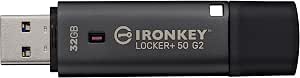 | Best Compact Secure File Carrier | Capacity: 32 GB | Encryption: 256-bit XTS-AES hardware encryption | Certification: FIPS 197 | VIEW LATEST PRICE | See Our Full Breakdown |
| Apricorn 128GB Aegis Secure Key 3 NXC USB 3.2 Type-C Flash Drive |  | Best for USB-C Devices | Capacity: 128 GB | Encryption: 256-bit AES-XTS hardware encryption | Security validation: FIPS 140-2 Level 3 | VIEW LATEST PRICE | See Our Full Breakdown |
| Apricorn Aegis Secure Key 3 NX 32GB Encrypted USB 3.0 Flash Drive |  | Best for PIN-Controlled Small Backups | Capacity: 32 GB | Encryption: 256-bit AES-XTS | Security validation: FIPS 140-2 Level 3 | VIEW LATEST PRICE | See Our Full Breakdown |
| WD My Passport 5TB Portable External Hard Drive |  | Best for High-Capacity Everyday Backups | Capacity: 5 TB | Form factor: 2.5-inch portable hard drive | Security: Hardware encryption and password protection | VIEW LATEST PRICE | See Our Full Breakdown |
| Apricorn 4TB Aegis Desktop Padlock FIPS 140-2 Validated 256-Bit Encrypted Hard Drive |  | Best for Tamper-Resistant Desktop Storage | Capacity: 4 TB | Encryption: 256-bit AES-XTS hardware encryption | Security validation: FIPS 140-2 Level 2 | VIEW LATEST PRICE | See Our Full Breakdown |
| Apricorn Aegis Fortress L3 1TB Hardware-Encrypted Portable Drive |  | Best for Portable High-Assurance Backups | Capacity: 1 TB | Encryption: AES-XTS 256-bit hardware encryption | FIPS validation: FIPS 140-2 Level 3 | VIEW LATEST PRICE | See Our Full Breakdown |
| encrypted backup drife | Capacity | Interface | Encryption | Form factor |
|---|---|---|---|---|
| Apricorn 1TB Aegis Padlock For | 1 TB | USB 3.0 | 256-bit AES-XTS hardware encryption | 2.5-inch |
| Apricorn Aegis Padlock 1TB USB | 1 TB (1024 GB) | USB 3.0, backward compatible with USB 2.0 and 1.1 | 256-bit AES-XTS hardware encryption | 2.5-inch |
| Apricorn 2TB Aegis Padlock DT | 2 TB | USB 3.0 | 256-bit AES-XTS hardware encryption | 3.5-inch |
| WD My Passport 2TB Portable Ex | 2 TB | USB 2.0/3.0 | — | 2.5-inch |
| Kingston IronKey Locker+ 50 G2 | 32 GB | USB 3.2 Gen 1 | 256-bit XTS-AES hardware encryption | — |
| Apricorn 128GB Aegis Secure Ke | 128 GB | USB 3.2 Type-C | 256-bit AES-XTS hardware encryption | — |
| Apricorn Aegis Secure Key 3 NX | 32 GB | USB 3.0 | 256-bit AES-XTS | — |
| WD My Passport 5TB Portable Ex | 5 TB | USB 3.0 / USB 3.2 Gen 2 | — | 2.5-inch portable hard drive |
| Apricorn 4TB Aegis Desktop Pad | 4 TB | USB 3.0 / USB 3.1 | 256-bit AES-XTS hardware encryption | 3.5-inch |
| Apricorn Aegis Fortress L3 1TB | 1 TB | USB 3.0 | AES-XTS 256-bit hardware encryption | 2.5-inch |
More Details on Our Top Picks
Apricorn 1TB Aegis Padlock Fortress FIPS 140-2 Level 2 Validated 256-Bit Encrypted USB 3.0 Hard Drive
FIPS 140-2 Level 2 validation and a keypad give this 1TB drive a security-focused role among the roundup’s portable options. PIN access happens on the drive itself, so I can use it across Windows, Mac, and Linux without installing management software. Its water and dust resistance and epoxy-protected circuitry add protection against physical interference that the WD My Passport 2TB does not emphasize. That protection comes with a capacity tradeoff: the WD holds twice as much and includes backup software, while this Apricorn prioritizes validated security. The 5400 rpm mechanical drive is also less suited to rough travel and frequent large-file transfers than a flash drive such as the Kingston IronKey Locker+ 50 G2. Its bulkier keypad and failed-PIN data erase risk call for careful handling.
Pros:- FIPS 140-2 Level 2 validated hardware encryption
- Keypad PIN access works without installed software across Windows, Mac, and Linux
- Water and dust resistance plus epoxy-protected circuitry
- USB 3.0 interface with stated transfer rates up to 120 MB/s
Cons:- Mechanical 5400 rpm drive is more vulnerable to impact and slower than flash storage
- Keypad adds bulk compared with a standard portable drive
- Repeated failed PIN attempts can permanently erase data
Best for: Travelers and professionals carrying sensitive files who need a keypad drive with validated encryption and added resistance to dust and water.
Not ideal for: People who need fast, shock-tolerant storage or who cannot accept the possibility of permanent data loss after repeated incorrect PIN attempts.
- Capacity:1 TB
- Encryption:256-bit AES-XTS hardware encryption
- Security validation:FIPS 140-2 Level 2
- Access:Physical keypad PIN
- Interface:USB 3.0
- Form factor:2.5-inch
- Drive speed:5400 rpm
- Compatibility:Windows, Mac, Linux, Xbox Series X/S, PlayStation 5
Our verdict“Choose this Apricorn for a portable, validated-security HDD with added physical protection; skip it if speed, compactness, or recoverability matters more.”
Apricorn Aegis Padlock 1TB USB 3.0 Hardware-Encrypted External Hard Drive
The standard Aegis Padlock makes sense for buyers who want hardware encryption and keypad entry without the Fortress model’s stated FIPS 140-2 Level 2 validation or added water and dust resistance. Its 256-bit AES-XTS encryption works in real time, and no software or administrator rights are needed, which makes sharing the drive between Windows, Mac, and Linux machines straightforward. Compared with the WD My Passport 2TB, it gives PIN access and encryption at the hardware level but offers half the capacity and lacks WD’s included backup tools. It also shares the limits of other mechanical drives here: the 5400 rpm disk is less resistant to drops and less convenient for repeated high-volume transfers than the Kingston flash drive. Keypad access and brute-force protections add security, but require remembering the PIN and handling recovery carefully.
Pros:- 256-bit AES-XTS hardware encryption operates in real time
- Keypad PIN access requires no software or administrator rights
- Works with Windows, Mac, and Linux
- USB 3.0 is backward compatible with USB 2.0 and 1.1
Cons:- 5400 rpm mechanical storage is less shock-resistant than flash storage
- Keypad PIN entry adds a step each time the drive is unlocked
- Offers less stated environmental protection than the Aegis Fortress
Best for: People moving sensitive work files between computers with different operating systems who need hardware encryption without software installation.
Not ideal for: Buyers seeking more than 1TB, a flash drive’s compact durability, or extra environmental protection like the Aegis Fortress model offers.
- Capacity:1 TB (1024 GB)
- Encryption:256-bit AES-XTS hardware encryption
- Interface:USB 3.0, backward compatible with USB 2.0 and 1.1
- Access:Keypad PIN
- Form factor:2.5-inch
- Drive speed:5400 rpm
- Data transfer rate:Up to 120 MB/s
- Compatibility:Windows, Mac, Linux
Our verdict“Pick this model for software-free encrypted transfers across operating systems, while the Fortress is a better fit when added physical protection is a priority.”
Apricorn 2TB Aegis Padlock DT 256-Bit Encrypted USB 3.0 Hard Drive
For a fixed workstation, the Aegis Padlock DT’s 2TB capacity and 7200 rpm desktop disk make it the lineup’s more substantial encrypted HDD choice. Its keypad and 256-bit AES-XTS hardware encryption protect access without requiring software or administrator rights, while auto-lock, brute-force defense, and epoxy-protected electronics add layers of control. Against the WD My Passport 2TB, the DT puts keypad authentication and tamper evidence ahead of portability and included backup software. That distinction matters for an office archive or a computer that stays in one place; the included AC adapter and 3.5-inch body make daily travel inconvenient. The larger capacity also beats the 1TB Apricorn Padlock models for local backups, but the PIN must be managed carefully because recovery may be impossible without a preconfigured Recovery PIN.
Pros:- 2TB capacity suits larger workstation backups
- 256-bit AES-XTS hardware encryption with keypad authentication
- Auto-lock, brute-force defense, and tamper-evident epoxy protection
- 7200 rpm drive and USB 3.0 interface
Cons:- 3.5-inch enclosure and AC adapter limit portability
- Lost PIN can prevent recovery if no Recovery PIN was configured
- Mechanical disk is more vulnerable to impact than flash storage
Best for: Home offices and small teams that want a high-capacity encrypted backup drive kept beside a workstation.
Not ideal for: Commuters and laptop users who need bus-powered portability, or anyone who may be unable to safeguard a PIN and recovery option.
- Capacity:2 TB
- Encryption:256-bit AES-XTS hardware encryption
- Access:Integrated keypad PIN
- Interface:USB 3.0
- Form factor:3.5-inch
- Drive speed:7200 rpm
- Pre-formatted:NTFS
- Included accessories:USB 3.0 cable, AC adapter, Quick Start Manual
Our verdict“Choose the Padlock DT for a stationary 2TB encrypted backup setup; choose the WD My Passport when portability and bundled backup tools matter more.”
WD My Passport 2TB Portable External Hard Drive, Black
The WD My Passport 2TB is the straightforward pick for someone who wants encrypted storage alongside backup utilities and ransomware defense. Its password protection and hardware encryption provide a layer of security, while the included device management software gives it a more guided backup setup than the keypad-based Apricorn drives. That convenience comes with a dependency: the software must be downloaded and installed, whereas the Apricorn Aegis Padlock is designed to work without software or administrator rights. The WD also lacks the Apricorn models’ physical keypad access and stated tamper defenses, so it is less compelling when the drive itself will hold especially sensitive files outside a controlled environment. Its portable 2TB mechanical disk fits routine computer backups, but remains less drop-tolerant than the Kingston IronKey flash drive, which has far less capacity.
Pros:- 2TB capacity in a portable 2.5-inch mechanical drive
- Password protection and hardware encryption
- Includes device management and backup software with ransomware defense
- Three-year limited warranty
Cons:- Backup and management software requires download and installation
- No physical keypad for PIN entry
- Mechanical drive is more vulnerable to impact than USB flash storage
Best for: Laptop owners who want a portable 2TB backup drive with bundled management tools and password-based hardware encryption.
Not ideal for: Users who need keypad authentication, software-free setup, or a drive designed with the Apricorn models’ tamper-focused protections.
- Capacity:2 TB
- Drive type:Mechanical hard disk
- Form factor:2.5-inch
- Interface:USB 2.0/3.0
- Security:Password protection and hardware encryption
- Included software:Device management and backup software
- Warranty:3-year limited warranty
Our verdict“Choose the WD for convenient software-assisted backups and 2TB capacity, but favor an Apricorn Padlock when keypad-based access is central to your security needs.”
Kingston IronKey Locker+ 50 G2 32GB Encrypted USB Drive
The Kingston IronKey Locker+ 50 G2 is a small encrypted file carrier, not a replacement for the multi-terabyte backups in this roundup. Its 32GB capacity can hold selected documents or a compact working set, while 256-bit XTS-AES hardware encryption and FIPS 197 certification protect stored files. Separate administrator and user passwords can suit managed handoffs better than the single keypad workflow on the Apricorn Aegis Padlock drives. The USB flash format is also easier to carry than either the portable Apricorn HDDs or the desktop Padlock DT, and its stated transfer speeds support quick file moves. The tradeoff is plain: 32GB is far short of the WD My Passport 2TB or any full-system backup, and its Type-A connector may require an adapter on newer laptops. Treat it as a secure supplement, not a whole-computer archive.
Pros:- 256-bit XTS-AES hardware encryption with FIPS 197 certification
- Separate administrator and user passwords with passphrase options
- Compact 22.68 g USB flash drive
- Stated read speeds up to 145 MB/s and write speeds up to 115 MB/s
Cons:- 32GB capacity is not practical for most full-device backups
- USB Type-A connector may need an adapter for newer laptops
- No included backup software is listed in the product data
Best for: Professionals who need a pocketable encrypted drive for selected documents and want separate administrator and user password options.
Not ideal for: Anyone backing up photo libraries, large media collections, or full computers; 32GB is much smaller than the HDD options.
- Capacity:32 GB
- Encryption:256-bit XTS-AES hardware encryption
- Certification:FIPS 197
- Passwords:Administrator and user; complex or passphrase modes
- Interface:USB 3.2 Gen 1
- Connector:USB Type-A
- Transfer speeds:Read up to 145 MB/s; write up to 115 MB/s
- Dimensions and weight:0.73 × 0.37 × 0.37 in; 22.68 g
Our verdict“Choose the Kingston for a compact cache of encrypted files, and choose a WD or Apricorn hard drive when you need room for a real backup set.”
Apricorn 128GB Aegis Secure Key 3 NXC USB 3.2 Type-C Flash Drive
The Aegis Secure Key 3 NXC is the most convenient fit here for buyers who want hardware-encrypted files on modern USB-C devices. Its FIPS 140-2 Level 3 validation and software-free authentication give it a stronger security focus than the WD My Passport 5TB, whose appeal is larger automated backups. The Type-C connector and USB OTG support also make the NXC easier to connect to compatible phones and tablets than the older USB-A Aegis Secure Key 3 NX. That convenience comes with a capacity tradeoff: 128GB suits selected files and small backup sets, not a full computer archive. The listed 625 MB/s write speed is fast for transfers, but buyers with legacy USB-A ports will need an adapter. Choose it for portable, controlled transfers rather than bulk storage.
Pros:- FIPS 140-2 Level 3 validated 256-bit AES-XTS hardware encryption
- Software-free authentication avoids installing apps or drivers
- USB-C connector supports compatible USB OTG phones and tablets
- Listed write speed of up to 625 MB/s supports quick transfers
Cons:- 128GB capacity is too small for many full-system backups
- USB-A devices require an adapter
- The security hardware can make it a costlier choice than an unencrypted flash drive
Best for: USB-C laptop and phone owners who need to carry a modest set of sensitive files between compatible devices
Not ideal for: People backing up entire computers or large media libraries, since 128GB is limited compared with the 4TB and 5TB drives
- Capacity:128 GB
- Encryption:256-bit AES-XTS hardware encryption
- Security validation:FIPS 140-2 Level 3
- Interface:USB 3.2 Type-C
- Read speed:171 MB/s
- Write speed:625 MB/s
- Dimensions:3.25 × 0.75 × 0.25 inches
- Warranty:3 years
Our verdict“Choose the NXC for secure, quick USB-C transfers across compatible devices, but use a larger drive for full backups.”
Apricorn Aegis Secure Key 3 NX 32GB Encrypted USB 3.0 Flash Drive
The Aegis Secure Key 3 NX makes sense when a small backup needs more access controls than a typical flash drive. Alongside FIPS 140-2 Level 3 validated AES-XTS encryption, it offers administrator and user modes, read-only options, and recovery PINs. Those controls give it a more managed setup than the simpler USB-C Aegis Secure Key 3 NXC, while its USB-A connector fits older computers without an adapter. The limit is clear: 32GB is for selected documents or recovery files, not a broad backup routine. Its listed 60 write-speed figure has no unit, so transfer performance is hard to compare with the NXC’s stated speeds. Pick this for compact, controlled storage; skip it if you need space or predictable throughput.
Pros:- FIPS 140-2 Level 3 validated 256-bit AES-XTS encryption
- Administrator and user modes offer separate access roles
- Two read-only modes can limit changes to stored files
- Data recovery PINs provide an additional recovery option
Cons:- 32GB capacity is restrictive for larger backup sets
- The listed write speed of 60 has no unit
- USB Type-A is less convenient than the NXC’s USB-C connector on newer devices
Best for: People who need a small USB-A drive for sensitive documents and want separate administrator and user access modes
Not ideal for: Buyers storing large backups or prioritizing measured transfer speed, given the 32GB capacity and unspecified write-speed unit
- Capacity:32 GB
- Encryption:256-bit AES-XTS
- Security validation:FIPS 140-2 Level 3
- Interface:USB 3.0
- Connector:USB Type-A
- Read speed:77 MB/s
- Read-only modes:Two
- Warranty:3 years
Our verdict“Choose the NX for tightly controlled, small USB-A backups; choose a larger encrypted drive for routine computer archives.”
WD My Passport 5TB Portable External Hard Drive
For buyers who need room for a large backup library, the WD My Passport 5TB offers far more capacity than the 1TB Apricorn Aegis Fortress L3 or the small Aegis Secure Key flash drives. It pairs hardware encryption and password protection with included Acronis True Image software for automated backup tasks, which makes it a practical choice for a traveling laptop archive. Its 2.5-inch hard drive keeps the package portable, but mechanical storage is slower and more vulnerable to knocks than an SSD. The WD also depends more on software for its full backup and security feature set, while the Apricorn Fortress L3 uses an onboard keypad and works without extra drivers. Mac users must reformat the WD, so check the drive’s setup against your operating system before moving files.
Pros:- 5TB capacity accommodates large photo, video, and computer backup collections
- Built-in hardware encryption and password protection secure stored files
- Included Acronis True Image software supports automated backups
- Portable 2.5-inch form factor weighs 7.4 ounces
Cons:- Mechanical hard drive is slower and more vulnerable to impact than an SSD
- Mac use requires reformatting
- Full backup and security features require software installation
Best for: Laptop owners who need a portable, high-capacity archive and want included software for scheduled backups
Not ideal for: People who need rugged solid-state storage, plug-and-play Mac use without reformatting, or keypad-based authentication
- Capacity:5 TB
- Form factor:2.5-inch portable hard drive
- Security:Hardware encryption and password protection
- Interface:USB 3.0 / USB 3.2 Gen 2
- Weight:7.4 ounces
- Dimensions:4.22 × 2.95 × 0.75 inches
- Compatibility:PC, Mac (requires reformat), Linux
- Warranty:3-year limited warranty
Our verdict“Choose the My Passport when backup capacity and automation matter more than SSD durability or keypad-only access.”
Apricorn 4TB Aegis Desktop Padlock FIPS 140-2 Validated 256-Bit Encrypted Hard Drive
The Aegis Desktop Padlock is aimed at buyers who want a substantial fixed-location backup with physical protections around the drive itself. It combines FIPS 140-2 Level 2 validated AES-XTS encryption with onboard PIN entry, an aluminum enclosure, and hardened epoxy intended to resist tampering. Compared with the portable WD My Passport 5TB, it gives up 1TB and portability in exchange for a desktop 3.5-inch drive and a keypad that avoids software-based password entry. Its 4TB capacity is still ample for many workstation archives, but the mechanical drive is not as impact-tolerant as solid-state storage. The listed 160 MB/s write speed also favors steady backup jobs over fast transfers. Note the brute-force defense tradeoff: too many incorrect PIN attempts can permanently erase access to the data.
Pros:- FIPS 140-2 Level 2 validated 256-bit AES-XTS hardware encryption
- Onboard PIN authentication works without software password management
- Aluminum enclosure and hardened epoxy add physical tamper resistance
- 4TB capacity suits substantial desktop backup collections
Cons:- 3.5-inch mechanical drive is less portable and impact-resistant than an SSD
- Listed write speed of 160 MB/s trails faster storage for large transfers
- Repeated incorrect PIN entries can trigger permanent data loss
Best for: Home-office and workstation users who want a PIN-protected, tamper-resistant drive for a large stationary backup
Not ideal for: Frequent travelers or anyone who needs SSD durability, and users who cannot risk data loss from repeated incorrect PIN attempts
- Capacity:4 TB
- Encryption:256-bit AES-XTS hardware encryption
- Security validation:FIPS 140-2 Level 2
- Form factor:3.5-inch
- Interface:USB 3.0 / USB 3.1
- Rotational speed:7200 rpm
- Enclosure:Aluminum with hardened epoxy protection
- Operating system compatibility:Windows, Mac, Linux, Android, Chrome
Our verdict“Choose the Desktop Padlock for a stationary, keypad-secured archive where physical tamper resistance matters.”
Apricorn Aegis Fortress L3 1TB Hardware-Encrypted Portable Drive
The Aegis Fortress L3 balances portable capacity with hands-on security controls. Its FIPS 140-2 Level 3 validation, keypad PIN entry, forced enrollment, and two read-only modes give it a more security-focused setup than the WD My Passport 5TB, which instead prioritizes greater capacity and automated backup software. The Fortress L3 connects without extra software or drivers, so it can suit systems where installing backup utilities is impractical. At 1TB, however, it holds much less than the WD or the 4TB Desktop Padlock, and its 5400 rpm mechanical drive is not as fast or impact-resistant as an SSD. A crypto-erase response to repeated incorrect PINs adds protection against guessing but makes PIN handling consequential. Its powered USB requirement also limits some setups.
Pros:- FIPS 140-2 Level 3 validated AES-XTS 256-bit hardware encryption
- Keypad PIN entry and forced enrollment keep security setup off the host computer
- Two read-only modes help protect stored files from modification
- Aircraft-grade aluminum enclosure and security fasteners add physical protection
Cons:- 1TB capacity is far below the WD My Passport 5TB and Desktop Padlock 4TB
- Mechanical 5400 rpm drive is less impact-resistant than an SSD
- Repeated incorrect PIN entries trigger crypto-erase, and the drive requires a powered USB port
Best for: Professionals carrying sensitive work files who need keypad access controls and a portable 1TB backup drive
Not ideal for: People needing multi-terabyte archives, SSD-level impact resistance, or a drive for USB ports that cannot supply power
- Capacity:1 TB
- Encryption:AES-XTS 256-bit hardware encryption
- FIPS validation:FIPS 140-2 Level 3
- Interface:USB 3.0
- Form factor:2.5-inch
- Read speed:180 MB/s
- Rotational speed:5400 rpm
- Enclosure:Aircraft-grade 6061 aluminum alloy
Our verdict“Choose the Fortress L3 for portable, keypad-controlled 1TB backups when security controls outweigh capacity and SSD durability.”
How We Picked
I ranked these drives by how clearly their listed features support encrypted backup use: stated hardware encryption, access controls, capacity, connection type, and whether the form factor suits portable or desk-based storage. A named encryption feature or validation claim carries more weight for this roundup than general external-drive capacity, since the title is specifically about encrypted backups. I also considered how easily each type can fit a real backup routine, including the difference between a large archive drive and a small key for selected files.
The order reflects the strength of the stated security features alongside practical fit. The Aegis Fortress L3 leads as a portable hardware-encrypted drive; the Padlock DT and Fortress models offer different capacity and validation priorities. Flash drives rank well for portability but are less suited to full computer backups, while the WD models cannot rank as security-focused picks based on the supplied product names alone. Buyers should verify the exact model’s encryption, authentication, and recovery details before making a security-critical choice.
Factors to Consider When Choosing Encrypted Backup Drives
Choosing an encrypted backup drive starts with the kind of data you need to keep and how often you will update it. The right capacity, connection, and access method can make backups easier to maintain; a mismatch can leave a secure drive unused or too small for the job.
Match capacity to the backup you will actually keep
Estimate the size of the data you want to protect, then leave room for new files and more than one backup version if your workflow supports them. A compact flash drive may handle documents or a small project archive, but it is a poor stand-in for a full computer backup. Larger desktop drives make sense for broad archives that stay in one place, while portable hard drives are easier to rotate between locations. Avoid buying only for your current file total: photos, video, and system images can grow quickly. Also check whether the backup software you plan to use can manage the drive’s file system and available space.
Check how encryption and access are handled
Product wording can refer to different security arrangements, so look for explicit details about hardware encryption, authentication, and what happens after repeated incorrect attempts. A keypad can let a drive be unlocked without installing software on the computer, while a password-based setup may depend on a compatible app or operating system. Certification claims apply to a defined product and validation scope; they do not automatically make every use of the drive secure. Confirm how you set or change credentials and how recovery works before putting your only copy of important files on the device. If a listing does not clearly state encryption features, treat that as something to verify rather than assume.
Plan for the lost-password scenario
Encryption protects data from someone who gets the drive, but it can also keep the owner out if credentials are lost. Before the first backup, read the manufacturer’s recovery guidance and determine whether a reset erases stored data. Keep credentials in a secure password manager or another protected recovery method, and avoid storing the only recovery details beside the drive. For important archives, a second independent backup helps limit the damage from a forgotten password or a failed device. A more restrictive security setup may be worthwhile for sensitive files, but only if you can reliably manage access.
Choose a connector that fits your backup equipment
A drive that connects easily is more likely to be used on schedule. Check whether the computers and backup devices you use have USB-A, USB-C, or both, and whether an adapter would be needed. A listed USB 3.2 Type-C connection may suit newer equipment, while USB 3.0 models can fit systems with USB-A ports. Connector type alone does not establish real transfer speed, since the drive itself and the host computer also affect performance. If you expect to back up large datasets often, confirm the exact interface and consider how long a full backup will take.
Decide whether the drive travels or stays at home
Portable drives and USB keys are convenient for carrying data, but a drive kept beside the computer can share the same risks from theft, fire, or accidental damage. A desktop drive usually fits a stationary backup setup better, while a compact key is easier to carry for selective files. For an off-site copy, plan how the device will be stored and transported, including protection from physical damage. Avoid making a single portable drive your only backup simply because it is easy to take along. A rotation between separate locations can improve resilience, provided each copy is updated and its access credentials remain available.
Pay for security features that match your risk and routine
A validation claim, keypad, or specialized access control can matter when your security requirements call for it, but extra controls also add steps to daily use. For personal backups, a straightforward setup that you will maintain may be more useful than features you do not understand or need. For work data or regulated information, check organizational policy and the exact certification requirements before choosing a model. Consider how many people need access, whether the drive will be shared, and how credentials will be handed over securely. The best fit is a drive whose protection matches the data and whose backup process you can keep up consistently.
Frequently Asked Questions
Can I use one encrypted drive for both a full computer backup and files I carry around?
It is possible, but those jobs have different needs: full backups call for substantial capacity and a dependable routine, while carried files favor a compact device. A portable encrypted hard drive can bridge the two if its capacity and connection suit your computer. A small flash drive is better for selected documents than a complete system backup. Separate drives can also limit the risk of losing a portable copy and your larger archive at the same time. Decide which job matters most before choosing a single device to do both.
Are the WD My Passport drives in this roundup encrypted?
The supplied product names identify the WD My Passport models as portable external hard drives, but do not state an encryption feature. That is not enough information to confirm their encryption behavior or the controls available on a specific model. Check the exact model number and manufacturer documentation for hardware encryption, password protection, and recovery details. If encryption is a requirement, choose only after those features are verified. Do not treat capacity or the word “backup” as evidence of encryption.
Should I choose a FIPS-validated drive if I am backing up personal files?
A FIPS validation claim may be relevant when an employer, contract, or policy requires a validated product. For personal files, the more immediate questions are whether the drive’s encryption and access method fit your needs and whether you can preserve recovery credentials. Validation applies to a defined configuration and scope, so check the exact model documentation rather than relying on a product family name. The Aegis Fortress and Aegis Desktop Padlock listings make that claim, which distinguishes them from models without it in their names. Extra validation may not justify a less convenient setup when no requirement calls for it.
What happens if I forget the password or keypad code?
The outcome depends on the model and its recovery process; some resets may erase the data instead of restoring access. Read the manual before saving your only copy of any important file. Store credentials and recovery information separately from the drive in a protected place. Test the unlock and recovery steps with nonessential data first when possible. For valuable backups, keep another independent copy so a forgotten code does not become permanent data loss.
Is a small encrypted USB drive enough for my backup plan?
It can be enough for a focused set of documents or a small working archive, particularly when portability is a priority. The Kingston IronKey Locker+ 50 G2 and Aegis Secure Key models are flash-drive options, so their role differs from multi-terabyte hard drives intended for broader storage. Check your current data size and expected growth rather than judging by the files you carry today. A flash drive is also easy to misplace, so avoid making it the sole copy of important files. For a full computer backup, pair it with a higher-capacity drive suited to that workload.
Conclusion
For most buyers seeking a portable encrypted backup drive, I would start with the Apricorn Aegis Fortress L3 as my best overall pick because its listing explicitly identifies hardware encryption. The Apricorn 2TB Aegis Padlock DT is my value-oriented choice for a desk-based setup with more room for backups, while the Aegis Fortress or Aegis Desktop Padlock suit buyers who need the stated FIPS 140-2 validation claim. Beginners who want to carry a smaller set of files can look at the Kingston IronKey Locker+ 50 G2, though its 32GB capacity is not a replacement for a full computer backup. For Type-C equipment, the Aegis Secure Key 3 NXC is the lineup’s connector-specific option; for a large stationary archive, consider the 4TB desktop model. Treat the WD My Passport drives as candidates only after confirming the exact model’s encryption features. Choose by backup size, access method, and the security requirements you can maintain consistently.