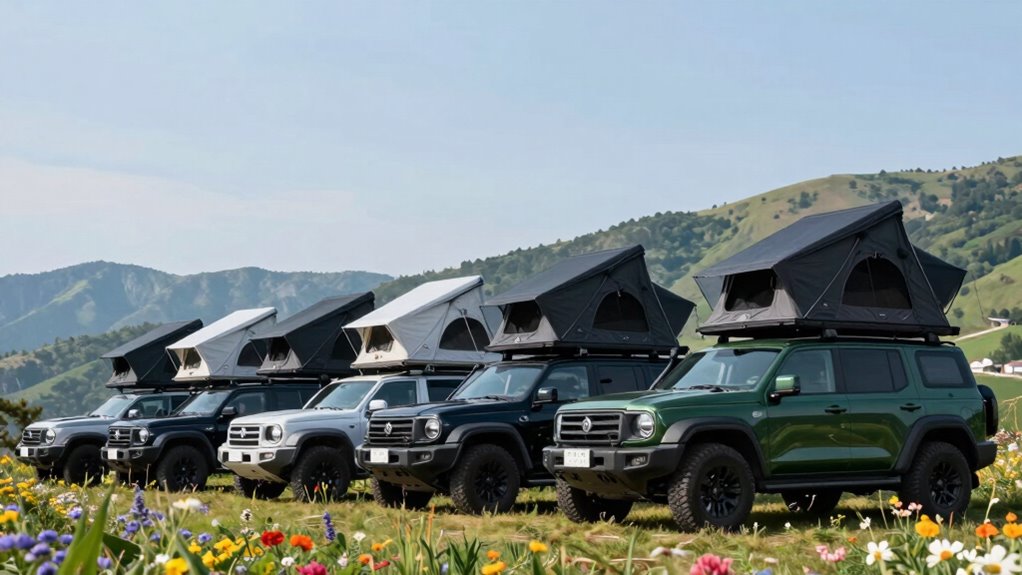
A hard-shell rooftop tent can set up faster than many soft-shell designs, but the right choice depends on your vehicle, sleeping space, and camping conditions. My best overall pick is the HEYFUN Adventurer Pro for its clear two-to-three-person positioning, while the 216W solar-panel model stands out for campers who want power built into the tent setup. The winter-insulated aluminum model is a stronger fit for cold-weather trips, though added seasonal protection may matter less to fair-weather campers. Across these options, the main tradeoffs are capacity, weather readiness, roof-load compatibility, and how much specialized equipment you want to carry. Read on for the full comparison and guidance on matching a tent to your vehicle and travel style.

Get privacy and security gear delivered free with Prime
- Fast, free delivery on millions of items
- Prime Video, Amazon Music and more included
- Member-only deals all year
Key Takeaways
- The lineup divides by use case: the HEYFUN Adventurer Pro and Pioneer Pro are positioned for two to three people, while the solar and insulated models emphasize specific trip needs.
- Cold-weather protection is a deliberate choice: two listings call out winter insulation, which may suit shoulder-season trips but is less compelling if you camp only in mild conditions.
- Solar integration changes the setup: the 216W panel model is the standout for built-in power potential, but buyers should check what equipment is included and how the panel fits their power plan.
- Vehicle fit comes before tent preference: several aluminum-shell listings name SUVs, trucks, Jeeps, or vans, but buyers still need to verify roof-rack limits, crossbar spacing, and dynamic load capacity.
- Product titles do not settle build differences: multiple options share aluminum hard-shell language, so compare dimensions, weight, opening mechanism, included hardware, warranty, and replacement-part support before choosing.
| Aluminum Hardshell Rooftop Tent for SUVs, Trucks, Jeeps, and Vans |  | Best for Four-Season Simplicity | Occupancy: 3 people | Shell material: Aluminum alloy | Fabric: Polyester | VIEW ON AMAZON | See Our Full Breakdown |
| HEYFUN Adventurer Pro Hard-Shell Rooftop Tent, 2–3 Person |  | Best for Fast, Feature-Rich Setup | Occupancy: Up to 3 people | Shell: Aircraft-grade aluminum | Fabric: 320 g polyester | VIEW ON AMAZON | See Our Full Breakdown |
| Naturnest Sirius 1 Hardshell Rooftop Tent for 2–3 People |  | Best Compact Choice for Two Adults | Capacity: 2–3 people | Shell and frame: Impact-resistant ABS polymer shell; aluminum alloy frame | Fabric: 420D ripstop nylon | VIEW ON AMAZON | See Our Full Breakdown |
| Hard Shell Rooftop Tent with 216W Solar Panel |  | Best for On-Roof Charging | Shell material: Aluminum alloy | Fabric: 320 g polyester | Solar panel: 12V, 216W | VIEW ON AMAZON | See Our Full Breakdown |
| Aluminum Hard Shell Rooftop Tent with Winter Insulation |  | Best for Cold-Weather Comfort | Shell and frame: Aluminum alloy | Fabric: 320G polyester with fully taped seams | Sun protection: UPF 50+ | VIEW ON AMAZON | See Our Full Breakdown |
| WildFinder Aluminum Hard Shell Rooftop Tent for Jeep, SUV, Truck, and Van |  | Best for Accessory-Rich Four-Season Camping | Occupancy: Up to 3 people | Shell material: Aluminum alloy | Fabric: Waterproof polyester | VIEW ON AMAZON | See Our Full Breakdown |
| Pioneer Pro Hard-Shell Rooftop Tent, 2–3 Person |  | Best for Fast Setup | Occupancy: 2–3 people | Closed dimensions: 83.86 × 51.57 × 7.00 in | Open dimensions: 83.86 × 51.57 × 39.57 in | VIEW ON AMAZON | See Our Full Breakdown |
| 4-Season Hard Shell Rooftop Tent with Winter Insulation |  | Best for Cold-Weather Couples | Occupancy: 2 people | Shell material: Aircraft-grade aluminum | Tent fabric: 320 g polyester | VIEW ON AMAZON | See Our Full Breakdown |
| rooftop tent hard shell | Fabric | Occupancy | Shell material | Water resistance |
|---|---|---|---|---|
| Aluminum Hardshell Rooftop Ten | Polyester | 3 people | Aluminum alloy | Waterproof |
| HEYFUN Adventurer Pro Hard-She | 320 g polyester | Up to 3 people | — | Waterproof; 0–5,000 mm |
| Naturnest Sirius 1 Hardshell R | 420D ripstop nylon | — | — | — |
| Hard Shell Rooftop Tent with 2 | 320 g polyester | — | Aluminum alloy | — |
| Aluminum Hard Shell Rooftop Te | 320G polyester with fully taped seams | — | — | — |
| WildFinder Aluminum Hard Shell | Waterproof polyester | Up to 3 people | Aluminum alloy | — |
| Pioneer Pro Hard-Shell Rooftop | — | 2–3 people | Honeycomb aluminum | 0–5,000 mm |
| 4-Season Hard Shell Rooftop Te | — | 2 people | Aircraft-grade aluminum | Up to 5,000 mm |
More Details on Our Top Picks
Aluminum Hardshell Rooftop Tent for SUVs, Trucks, Jeeps, and Vans
This tent pairs an aluminum shell with waterproof polyester fabric and a pop-up design, making it a straightforward choice for buyers who want weather-ready shelter without a long feature list. Its foam mattress and anti-condensation layer address two practical overnight comforts, while mesh windows help with airflow. Compared with the Naturnest Sirius 1, it lists four-season use but gives fewer concrete material ratings and setup details, so buyers get less information for comparing weather protection. The capacity is listed at three people, though that does not establish how comfortably three adults will sleep. The tradeoff is a more basic package: it lacks the listed lighting and storage extras found on the HEYFUN Adventurer Pro, and its hand-wash care may be inconvenient after muddy trips.
Pros:- Aluminum alloy shell with waterproof polyester fabric
- Stainless steel gas struts support pop-up setup
- Foam mattress and anti-condensation layer are included
- Mesh windows provide ventilation
Cons:- Requires a compatible vehicle roof rack
- Hand-wash care may be inconvenient
- No setup time or specific waterproof rating is provided
Best for: SUV, truck, Jeep, or van owners seeking a simple pop-up hard-shell tent for year-round trips, with a mattress and condensation layer included
Not ideal for: Campers who want detailed waterproof ratings, built-in lighting, or low-maintenance cleaning, since those details are not provided and hand washing is specified
- Occupancy:3 people
- Shell material:Aluminum alloy
- Fabric:Polyester
- Water resistance:Waterproof
- Installation:Vehicle-mounted rooftop
- Color:Grey
- Care:Hand wash
Our verdict“Choose this tent for a relatively simple four-season pop-up setup with core sleeping comforts, provided your vehicle has a compatible roof rack.”
HEYFUN Adventurer Pro Hard-Shell Rooftop Tent, 2–3 Person
The Adventurer Pro stands out for pairing hydraulic struts with a feature-heavy interior: its listed opening time is about five seconds, and it includes an LED strip, sleeping mat, condensation mat, and 13 storage pouches. That makes it a stronger fit for campers who want gear organized and ready at the vehicle than the simpler Aluminum Hardshell Rooftop Tent, which does not list comparable lighting or storage. Its 320 g polyester fabric is rated waterproof up to 5,000 mm, giving buyers more specific weather information than the general waterproof claim on that model. The tradeoffs are substantial roof requirements and setup work: crossbars must be rated for at least 165 pounds, and assembly is required. At 83.86 inches long when closed, it also calls for checking vehicle fit and roof clearance before buying.
Pros:- Hydraulic struts open and close the tent in about five seconds
- Includes sleeping and condensation mats, an LED strip, and 13 storage pouches
- Waterproof rating is specified at 0–5,000 mm
- Three doors and three windows support access and ventilation
Cons:- Requires crossbars rated for at least 165 pounds
- Assembly is required
- Closed length of 83.86 inches may limit fit on some vehicles
Best for: Frequent car campers who value quick opening, built-in lighting, and organized storage, and whose vehicle crossbars meet the stated load requirement
Not ideal for: Drivers with crossbars rated below 165 pounds or buyers seeking a tent that needs no assembly
- Occupancy:Up to 3 people
- Shell:Aircraft-grade aluminum
- Fabric:320 g polyester
- Closed dimensions:83.86 × 51.57 × 7.00 in
- Open dimensions:83.86 × 51.57 × 62.99 in
- Maximum load:660 lbs
- Water resistance:Waterproof; 0–5,000 mm
- Required crossbar capacity:At least 165 lbs
Our verdict“Pick the Adventurer Pro if quick deployment and built-in organization matter more to you than minimizing setup work and roof-load requirements.”
Naturnest Sirius 1 Hardshell Rooftop Tent for 2–3 People
The Sirius 1 has the clearest fit for couples who want a compact, quick-opening shell and defined fabric protection. Its 420D ripstop nylon is rated to 5,000 mm waterproofing with UV 50+ protection, and the listed 82.6-by-63-inch sleeping area gives buyers a useful footprint to compare before purchase. A roughly 30-second setup is slower than the HEYFUN Adventurer Pro’s stated five seconds, but the Naturnest adds a rain canopy, shoe bags, storage pockets, and an adjustable LED light. Its 47.2-inch headroom and 1.2-inch mattress thickness set realistic limits: this is a sleeping platform, not a roomy cabin with a plush bed. The listed capacity allows a child alongside two adults, though the dimensions make it better suited to two adults who value weather protection and included accessories.
Pros:- 420D ripstop nylon has a stated 5,000 mm waterproof rating and UV 50+ protection
- Opens in about 30 seconds
- Includes rain canopy, adjustable LED light, shoe bags, and storage pockets
- Anti-condensation mat and foam mattress are included
Cons:- 47.2 inches of headroom limits sitting space
- 1.2-inch mattress may feel thin to some campers
- Two adults and a child may find the listed sleeping area tight
Best for: Couples who want a defined sleeping footprint, UV protection, a rain canopy, and useful included accessories for road trips
Not ideal for: Families wanting generous sleeping room or campers who prioritize fast opening and greater headroom
- Capacity:2–3 people
- Shell and frame:Impact-resistant ABS polymer shell; aluminum alloy frame
- Fabric:420D ripstop nylon
- UV protection:UV 50+
- Sleeping area:82.6 × 63 inches
- Headroom:47.2 inches
- Setup time:About 30 seconds
- Mattress thickness:1.2 inches
Our verdict“Choose the Sirius 1 for two-person trips where defined weather protection and included accessories matter more than interior room or the fastest setup.”
Hard Shell Rooftop Tent with 216W Solar Panel
This model earns a distinct place for its 216W solar panel, which gives campers a way to charge mobile power banks from the roof setup. The aluminum alloy shell and sealed-seam 320 g polyester fabric form a familiar hard-shell package, while pressure rods open the tent in about 10 seconds. That is quicker on paper than the Naturnest Sirius 1’s roughly 30-second setup, though slower than the HEYFUN Adventurer Pro’s stated five seconds. The solar feature is the deciding difference; buyers who already bring separate power equipment may prefer one of those tents’ included sleeping, storage, or weather-protection details instead. The listed capacity suits two adults and a child or pet. Its 7-inch closed height still affects clearance, and the provided dimensions do not clarify a separate sleeping-area measurement.
Pros:- Includes a 12V, 216W solar panel for charging power banks
- Pressure rods open the tent in about 10 seconds
- Aluminum alloy construction with waterproof fabric and sealed seams
- Three windows have awnings
Cons:- Seven-inch closed height can affect vehicle clearance
- No separate sleeping-area dimensions are provided
- Solar charging compatibility and real-world output details are not specified
Best for: Road trippers who want roof-mounted solar charging for mobile power banks and camp with two adults plus a child or pet
Not ideal for: Drivers with limited vehicle clearance or campers who need a stated sleeping-area size and more detail about the solar system’s output in use
- Shell material:Aluminum alloy
- Fabric:320 g polyester
- Solar panel:12V, 216W
- Setup:Pressure rods; opens in about 10 seconds
- Closed height:7 inches
- Dimensions:85 × 52 × 59 inches
- Capacity:2 adults and 1 child or pet
- Windows:3, with awnings
Our verdict“Choose this tent if integrated solar charging is a priority and your vehicle can accommodate its closed profile.”
Aluminum Hard Shell Rooftop Tent with Winter Insulation
A removable thermal liner gives this tent its clearest role: it lets cold-weather campers add insulation and remove it when conditions turn warmer. The elevated rear design is intended to create extra interior space, and the sky-view, rear, and triangular mesh windows offer more varied airflow and views than the simpler window details listed for the Aluminum Hardshell Rooftop Tent. That added cold-weather focus comes with an information gap: no sleeping capacity or dimensions are supplied, making it harder to judge whether the interior fits a particular household or vehicle. The included roof rack and surrounding LED strip add convenience, but the rack’s weight capacity is unspecified. Compared with the Naturnest Sirius 1, this model highlights insulation and interior design over published waterproof ratings and a defined sleeping footprint.
Pros:- Removable thermal liner supports use in colder conditions
- Elevated rear design is intended to add interior room
- Sky-view, rear, and triangular mesh windows provide varied ventilation
- Surrounding LED light strip and roof rack are included
Cons:- Sleeping capacity and tent dimensions are not provided
- Roof-rack weight capacity is unspecified
- No numeric waterproof rating is listed
Best for: Cold-weather campers who want a removable liner, varied ventilation, and a roof rack included with the tent
Not ideal for: Buyers who need confirmed sleeping capacity, interior dimensions, or a stated roof-rack weight limit before choosing a rooftop tent
- Shell and frame:Aluminum alloy
- Fabric:320G polyester with fully taped seams
- Sun protection:UPF 50+
- Insulation:Removable thermal liner
- Windows:Sky-view window, rear window, and two triangular mesh windows
- Lighting:Surrounding LED light strip
- Roof rack:Included; weight capacity not specified
Our verdict“Consider this tent for cold-weather trips if its unlisted capacity and rack limit can be confirmed for your needs.”
WildFinder Aluminum Hard Shell Rooftop Tent for Jeep, SUV, Truck, and Van
The WildFinder suits campers who want a three-person hard shell with a broad set of included sleeping and storage gear. Its aluminum shell and stated rain, wind, and snow protection make it a more weather-focused choice than the Pioneer Pro Hard-Shell Rooftop Tent, while the Pioneer lists four windows and a five-second opening mechanism. WildFinder includes a 5 cm mattress, LED strip, ladder, and organizers, so there is less accessory shopping before a trip. Three windows give it ventilation, though the Pioneer has one more window and four doors. The main planning detail is the luggage crossbar is not included; buyers should also check their roof setup and mounting needs before ordering. Its four-season claims are useful guidance, but the listed protection ratings do not replace checking local conditions and vehicle limits.
Pros:- Aluminum shell with stated rain, wind, and heavy-snow protection
- Includes a 5 cm mattress, telescoping ladder, and LED strip
- Multiple organizers and shoe storage help keep rooftop gear accessible
- Three windows support ventilation
Cons:- Luggage crossbar is not included
- Three windows, fewer than the four listed for the Pioneer Pro
- The product data does not specify closed dimensions or maximum load
Best for: Jeep, SUV, truck, or van owners seeking a three-person tent with included mattress, lighting, and storage for trips across changing seasons
Not ideal for: Campers who need a supplied luggage crossbar or want more ventilation openings and a quick-opening mechanism like the Pioneer Pro
- Occupancy:Up to 3 people
- Shell material:Aluminum alloy
- Fabric:Waterproof polyester
- Rain protection:5,000 mm
- Windows:3
- Mattress:5 cm thick
- Included accessories:7.5 ft telescoping ladder, LED strip, organizers, shoe organizers, and mattresses
- Luggage crossbar:Not included
Our verdict“Choose WildFinder if you want a three-person, four-season hard shell with mattress and storage accessories included, and can supply your own crossbar.”
Pioneer Pro Hard-Shell Rooftop Tent, 2–3 Person
The Pioneer Pro is the pick for campers who value quick opening and closing: its hydraulic gas struts are described as operating in about five seconds. That makes it a more setup-focused option than the WildFinder, which emphasizes included mattresses and storage accessories. Its four windows and four doors offer more openings than WildFinder’s three windows, giving occupants more ways to ventilate and enter. The aluminum shell, year-round positioning, and water-resistance range of up to 5,000 mm support a weather-ready use case, though the listing does not describe a removable thermal liner like the 4-Season Hard Shell Rooftop Tent with Winter Insulation. Fit comes down to both space and mounting: the tent weighs into a vehicle setup that needs crossbars rated for at least 165 pounds, and its stated 660-pound maximum load sets a firm ceiling for occupants and gear.
Pros:- Hydraulic struts enable opening and closing in about five seconds
- Four windows and four doors provide ventilation and multiple entry points
- Aluminum shell and year-round design with water resistance up to 5,000 mm
- Includes an LED strip and shoe storage bag
Cons:- Requires crossbars rated for at least 165 pounds
- 660-pound maximum load limits the combined occupant and gear load
- No thermal liner is listed, unlike the 4-Season Hard Shell Rooftop Tent with Winter Insulation
Best for: Campers who frequently move between sites and want a three-person hard shell with fast hydraulic opening and several access points
Not ideal for: Drivers without crossbars rated for at least 165 pounds, or buyers seeking a stated thermal liner for cold-weather camping
- Occupancy:2–3 people
- Closed dimensions:83.86 × 51.57 × 7.00 in
- Open dimensions:83.86 × 51.57 × 39.57 in
- Maximum load:660 lbs
- Shell material:Honeycomb aluminum
- Tent fabric:320 g polyester
- Water resistance:0–5,000 mm
- Crossbar capacity required:At least 165 lbs
Our verdict“Pick the Pioneer Pro if fast setup and multiple openings matter most and your vehicle has suitably rated crossbars.”
4-Season Hard Shell Rooftop Tent with Winter Insulation
For two-person trips in colder conditions, this tent’s removable thermal liner gives it a clear purpose in the lineup. The WildFinder accommodates one more person and includes a 5 cm mattress, but its listing does not mention a thermal liner. The Pioneer Pro offers quicker stated setup and more doors; this model instead pairs four hydraulic supports with a liner intended for cold-weather camping. Four mesh-lined windows help air move through the tent, while the condensation pad and six pockets address comfort and gear organization. Capacity is the key tradeoff: it is specifically designed for two occupants, so it is a poor fit for families or groups needing a third sleeping spot. Buyers also need a compatible vehicle roof, and should confirm the roof and rack limits for their own installation.
Pros:- Removable thermal liner supports cold-weather use
- Four hydraulic supports speed setup
- Includes a mattress, condensation pad, telescoping ladder, and LED strip
- Four mesh-lined windows offer ventilation options
Cons:- Designed for only two occupants
- Requires a compatible vehicle roof and mounting setup
- The listing does not provide closed dimensions or a maximum load
Best for: Couples camping in cold weather who want a removable thermal liner, condensation pad, and included sleeping and storage accessories
Not ideal for: Families or groups needing space for three, and drivers whose vehicle roof cannot support a rooftop tent installation
- Occupancy:2 people
- Shell material:Aircraft-grade aluminum
- Tent fabric:320 g polyester
- Water resistance:Up to 5,000 mm
- Windows:4, with mesh and windproof layers
- Doors:2
- Support rods:4 hydraulic supports
- Included accessories:Telescoping ladder, mattress, condensation pad, LED strip, storage bags, and shoe organizers
Our verdict“Choose this model for two-person cold-weather trips where the thermal liner and condensation pad matter more than extra capacity or multiple doors.”

How We Picked
I compared the eight options around the decisions that matter for a hard-shell rooftop tent: stated sleeping capacity, shell and seasonal features, vehicle fit, setup practicality, and the gear each model asks a buyer to add. I gave weight to clear, decision-useful specifications and to features that serve a distinct camping need, such as winter insulation or an integrated solar panel. A product title alone does not confirm durability, weather performance, or compatibility, so those claims need checking against the seller’s detailed specifications.
The ranking favors models with a clear role and useful information for matching a tent to a trip. The HEYFUN Adventurer Pro leads as the general-purpose pick because its two-to-three-person positioning is explicit; the solar and insulated models follow as more specialized choices. The other aluminum-shell options remain relevant for buyers comparing vehicle fit or seeking a simpler configuration, but broad compatibility wording gives less basis for ranking them above models with a clearer stated use. Before purchase, I would verify actual weight, packed dimensions, load limits, included accessories, warranty, and return terms.
| rooftop tent hard shell | Shell material |
|---|---|
| Aluminum Hardshell Rooftop Ten | Aluminum alloy |
| HEYFUN Adventurer Pro Hard-She | — |
| Naturnest Sirius 1 Hardshell R | — |
| Hard Shell Rooftop Tent with 2 | Aluminum alloy |
| Aluminum Hard Shell Rooftop Te | — |
| WildFinder Aluminum Hard Shell | Aluminum alloy |
| Pioneer Pro Hard-Shell Rooftop | Honeycomb aluminum |
| 4-Season Hard Shell Rooftop Te | Aircraft-grade aluminum |
Factors to Consider When Choosing Rooftop Tent Hard Shell
Choosing a hard-shell tent starts with the vehicle and the trips you plan to take, not the feature list. These checks can prevent a tent that looks suitable on paper from becoming an awkward or incompatible roof load.
Check Roof Load Limits With the Tent Packed
Find your vehicle’s dynamic roof-load limit, which applies while driving, and compare it with the tent’s actual weight plus the rack and mounting hardware. Do not rely on a general statement that a tent fits SUVs or trucks; roof limits vary by model and year. The static limit while parked is a separate figure, and it does not replace the driving limit. A heavier shell can reduce the room left for crossbars, awnings, or other roof gear. Ask the seller for a confirmed tent weight and mounting requirements if those details are missing. When the margin is tight, a lighter option may be a better match than adding accessories to a heavy setup.
Match Sleeping Capacity to Real Use
A stated two-to-three-person capacity does not describe how comfortably three adults will sleep with bags and bedding. Check the mattress dimensions and think about whether children, pets, or bulky cold-weather layers will share the space. Interior width often matters more than the headline capacity for couples who want room to move. A compact tent can make sense for solo trips and easier packing, while frequent family use may justify a larger footprint. Larger tents can also add weight and wind exposure on the roof. Decide whose comfort matters on the longest trip you expect to take, not just the occasional overnight stop.
Choose Seasonal Protection for Your Campsite Conditions
Winter insulation can help manage cold conditions, but it does not by itself make a tent suitable for every winter environment. Look for details about fabric, condensation control, ventilation, rain protection, and the temperature range the maker supports. In cold weather, ventilation still matters because breathing and damp gear can create moisture inside the tent. If most trips are in warm or mild weather, added insulation may bring weight and cost without much benefit. Campers in exposed or snowy areas should also check the shell’s opening design and how it handles wind and accumulated snow. Treat broad labels such as “four-season” as a prompt to inspect specifications, not as a substitute for them.
Plan the Whole Power Setup Before Choosing Solar
An integrated solar panel can simplify where the panel sits, but its wattage alone does not tell you how much useful power you will have at camp. Check whether a charge controller, wiring, battery, and connectors are included or must be purchased separately. Consider shade, parking direction, and how often your campsite is sunny; a roof-mounted panel may produce less when trees cover the vehicle. Match the system to the devices you plan to run, such as lights, phones, or a fridge. If you already use a portable power station, confirm compatibility before buying. Solar is most useful when it fits a complete power plan rather than serving as a standalone headline feature.
Compare Setup, Access, and Daily Camp Routine
Hard shells can open quickly, but opening style and ladder placement affect how convenient a tent feels at a real campsite. Ask how the shell opens, whether bedding can stay inside when closed, and how much clearance is needed above the vehicle. Check ladder length and access for your vehicle height, especially if you camp where the ground is uneven. A tent that opens toward a tailgate may interact differently with a roof box or awning than one that opens to the side. Consider where wet shoes, lights, and small items will go once you are inside. These routine details can matter more over a week of travel than a feature you use only occasionally.
Compare Ownership Support Alongside Shell Materials
Aluminum shell construction describes one part of the tent, not the quality of every hinge, latch, seal, or mounting point. Before buying, look for a written warranty, replacement-part availability, clear installation instructions, and a reachable support channel. Ask whether the tent ships with the mounting hardware and whether special tools or extra crossbars are needed. Check the packed height and dimensions for garage clearance and storage between trips. A product with less specialized equipment may be easier to maintain than a feature-rich setup, depending on the support offered. Keep screenshots or copies of specifications and compatibility guidance so there is a record of what the seller confirmed.
Frequently Asked Questions
Will a hard-shell rooftop tent fit my vehicle if the listing says it works with SUVs or trucks?
That wording is not enough to confirm fit. Check your vehicle’s dynamic roof-load limit, rack type, crossbar spacing, and the tent’s mounting requirements against the manufacturer’s specifications. Include the rack and hardware in the driving-load calculation, and confirm whether the roof limit changes with a particular rack system. Also check the tent’s dimensions and opening direction against roof accessories and tailgate clearance. If any measurement or load figure is unclear, get written confirmation from the seller or vehicle maker before ordering.
Is a two-to-three-person rooftop tent comfortable for three adults?
Capacity labels are a rough guide, not a promise of personal space. Compare the mattress width and length with the people who will sleep there, then account for bedding, clothing, and bags. Three adults may fit more readily for a short trip than for several nights, especially in cold weather when layers take up room. Look for interior dimensions and ask whether the listed capacity assumes children or compact sleeping arrangements. If comfort is a priority, choose based on measured sleeping space rather than the maximum person count.
Does a tent advertised as four-season mean I can use it safely in winter?
The label alone cannot answer that. Check the maker’s guidance for supported conditions, insulation details, ventilation, rain and snow handling, and any limits on wind exposure. A tent also needs to match the vehicle, campsite, and local conditions; insulation does not replace safe site selection or suitable sleeping gear. Condensation can be a concern in cold weather, so ventilation details matter alongside warmth. If winter trips are a regular plan, ask the manufacturer specific questions about the conditions you expect to encounter.
Is an integrated solar panel enough to power a fridge or other camp equipment?
Not by itself in every setup. The panel’s output depends on sun exposure, angle, shade, and the connected charging equipment, while a fridge’s draw depends on its size and operating conditions. Check whether a controller, wiring, battery, or power station comes with the tent, and confirm connector compatibility. Estimate your daily power use and compare it with realistic charging conditions at your campsites. The 216W panel listing makes solar a central feature, but buyers still need to verify the complete system before relying on it for appliances.
What should I confirm before ordering a hard-shell rooftop tent online?
Confirm the tent’s weight, closed dimensions, mounting hardware, crossbar requirements, sleeping-area measurements, and opening clearance. Check the vehicle’s driving roof-load limit and make sure the combined tent, rack, and hardware weight stays within it. Read the warranty and return terms, and ask how replacement parts such as seals, latches, or hinges are handled. For specialized features like winter insulation or solar, ask exactly what is included and what conditions the manufacturer supports. Save the seller’s written answers so you can refer to them during installation.
Conclusion
For a general-purpose starting point, I would choose the HEYFUN Adventurer Pro, whose stated two-to-three-person capacity gives it the clearest broad-use role in this lineup. For buyers focused on value, I would compare the simpler aluminum-shell listings by verified weight, included hardware, warranty, and fit rather than assuming the most feature-heavy tent is the better deal. The 216W solar-panel tent is the specialized pick for campers building a roof-based power setup, while an insulated model makes more sense for repeated cold-weather trips. Beginners should favor the option with the clearest fit guidance, installation support, and ownership terms; that can matter more than an extra feature. Before settling on any model, verify vehicle load limits and dimensions so the tent suits both the roof and the way you camp.