Compact drones range from palm-sized camera flyers to foldable models with GPS, so the right choice depends on how you plan to fly. I’d put the DJI Mini 4K Fly More Combo first for its balance of camera capability, travel-friendly size, and included batteries. The DJI Neo 2 Fly More Combo suits hands-off, quick-launch flying, while the HOVERAir X1 is a distinctive option for self-flying shots. The tradeoff is between simpler, lighter models and drones with more control, camera flexibility, and accessories. Read on for the full comparison and recommendations by buyer type.

Get privacy and security gear delivered free with Prime
- Fast, free delivery on millions of items
- Prime Video, Amazon Music and more included
- Member-only deals all year
Key Takeaways
- The DJI Mini 4K Fly More Combo is the most balanced pick: it pairs a 4K camera with a foldable travel form and extra batteries, while the standalone Mini 4K is a simpler kit.
- The Neo models prioritize ease and portability: the Neo 2 bundles emphasize quick, accessible flying, while the RC-N3 version adds a conventional remote for more direct control.
- Self-flying and piloted cameras serve different needs: HOVERAir X1 favors hands-free capture; Mini-series drones better suit buyers who want a traditional flight experience.
- Budget-style 1080P and 2K models trade camera detail for accessible controls or bundled screens: options like the G5 and EcuFlyAi may appeal to casual flyers, but their feature claims should be checked against the exact listing.
- Battery bundles change how practical a drone feels away from home: the Mini 4K two-battery combo and N11 Pro three-battery package address longer outings, though extra batteries add carrying and charging needs.
| Veeniix V995 Red Mini Drone for Kids and Beginners |  | Best for Young Beginners | Weight: 22.3 g | Color: Red | Material: Plastic | VIEW ON AMAZON | See Our Full Breakdown |
| DJI Mini 4K Fly More Combo Drone with 4K Camera |  | Best Overall Camera Drone | Weight: Under 249 g | Camera resolution: 4K UHD | Gimbal: 3-axis | VIEW ON AMAZON | See Our Full Breakdown |
| Foldable RC Quadcopter Drone with 1080P Camera |  | Best Value for Learning to Fly | Camera resolution: 1080P | Camera lens: 80° adjustable | Maximum flight time: Up to 25 minutes | VIEW ON AMAZON | See Our Full Breakdown |
| HOVERAir X1 Self-Flying Camera Drone |  | Best Hands-Free Compact Camera | Maximum tracking speed: 15 mph | Video resolution: Up to 2.7K at 30 fps; 1080p HDR | Stabilization: Triple stabilization system | VIEW ON AMAZON | See Our Full Breakdown |
| N11 Pro 4K GPS Drone with Camera, Three Batteries, and Brushless Motors |  | Best for Long GPS-Assisted Flights | Weight: 180 g | Dimensions: 3.74 × 3.74 × 1.18 in | Camera: 4K UHD | VIEW ON AMAZON | See Our Full Breakdown |
| DJI Neo 2 Fly More Combo Drone with 4K Camera |  | Best for Guarded, Extended Flights | Weight: 151 g | Video resolution: 4K | Still image resolution: 12 MP | VIEW ON AMAZON | See Our Full Breakdown |
| DJI Neo 2 Fly More Combo with RC-N3 Remote Controller |  | Best Compact Kit with a Remote | Weight: 151 g | Certification: C0 | Video resolution: 4K | VIEW ON AMAZON | See Our Full Breakdown |
| G5 Foldable Drone with 1080P HD Camera and Screen Remote Controller |  | Best for Screen-Based Beginner Flying | Camera resolution: 1080P HD | Lens adjustment: 90° electric adjustable | Motor type: Brushless | VIEW ON AMAZON | See Our Full Breakdown |
| DJI Neo Mini Drone with 4K UHD Camera |  | Best Lightweight Compact Pick | Weight: 135 g | Camera: 4K UHD | Stabilization: DJI stabilization technology | VIEW ON AMAZON | See Our Full Breakdown |
| DJI Neo 2 Lightweight 4K Drone with Camera |  | Best Minimal Neo 2 Package | Weight: 151 g | Video resolution: 4K | Obstacle sensing: Omnidirectional | VIEW ON AMAZON | See Our Full Breakdown |
| DJI Mini 4K Camera Drone Combo with 2 Batteries |  | Best Overall | Camera resolution: 4K UHD | Gimbal: 3-axis | Weight: Under 249 g | VIEW ON AMAZON | See Our Full Breakdown |
| EcuFlyAi 2K Dual-Camera Drone with 4.5-Inch Screen Controller |  | Best for Phone-Free FPV | Weight: 142 g including battery | Camera: 2K dual camera | Still resolution: 2 MP | VIEW ON AMAZON | See Our Full Breakdown |
| 2K HD FPV Foldable Drone with Camera |  | Best for Beginner Camera Practice | Camera resolution: 2K | Still image resolution: 12 MP | Camera angle: Remotely adjustable up to 90° | VIEW ON AMAZON | See Our Full Breakdown |
| DJI Mini 4K Drone with 4K UHD Camera | 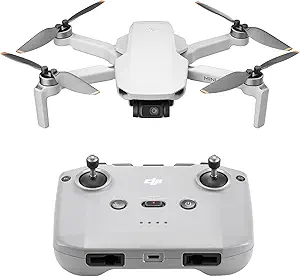 | Best Compact 4K Starter | Weight: Under 249 g | Camera: 4K UHD | Gimbal: 3-axis | VIEW ON AMAZON | See Our Full Breakdown |
| Foldable Mini Drone with 1080P Camera, Two Batteries, and Beginner-Friendly Flight Controls |  | Best for Indoor Beginner Practice | Camera: 1080P HD | Flight time: Up to 24 minutes total with two batteries | Flight features: One-key takeoff and landing, altitude hold, headless mode, 3D flips | VIEW ON AMAZON | See Our Full Breakdown |
| compact drone | Weight | Flight features |
|---|---|---|
| Veeniix V995 Red Mini Drone fo | 22.3 g | — |
| DJI Mini 4K Fly More Combo Dro | Under 249 g | — |
| Foldable RC Quadcopter Drone w | — | Altitude hold, optical flow, headless mode, 360° flips, waypoint flight, gravity control, circle flight, three speed settings |
| HOVERAir X1 Self-Flying Camera | — | — |
| N11 Pro 4K GPS Drone with Came | 180 g | — |
| DJI Neo 2 Fly More Combo Drone | 151 g | — |
| DJI Neo 2 Fly More Combo with | 151 g | Palm takeoff and landing, gesture controls, ActiveTrack, SelfieShot |
| G5 Foldable Drone with 1080P H | — | Optical flow positioning, headless mode, three-speed adjustment, 3D/360° flips |
| DJI Neo Mini Drone with 4K UHD | 135 g | Palm takeoff and landing, subject tracking, eight QuickShots modes |
| DJI Neo 2 Lightweight 4K Drone | 151 g | Palm takeoff and landing, gesture control, ActiveTrack, SelfieShot |
| DJI Mini 4K Camera Drone Combo | Under 249 g | — |
| EcuFlyAi 2K Dual-Camera Drone | 142 g including battery | Optical flow positioning, altitude hold, one-key takeoff and landing, headless mode, 360° flips, auto follow, speed adjustment |
| 2K HD FPV Foldable Drone with | Under 250 g | Altitude hold, optical flow positioning, headless mode, gravity sensing, 360-degree flips |
| DJI Mini 4K Drone with 4K UHD | Under 249 g | — |
| Foldable Mini Drone with 1080P | — | One-key takeoff and landing, altitude hold, headless mode, 3D flips |
More Details on Our Top Picks
Veeniix V995 Red Mini Drone for Kids and Beginners
The Veeniix V995 is the most play-focused option here: toss-to-launch, flips, and circle flight give young beginners things to try without the camera and GPS demands of the DJI Mini 4K Fly More Combo. Its 22.3 g weight and protective guards suit indoor practice and casual family use, while altitude hold and one-key takeoff reduce the number of controls a first-time pilot must manage. Three batteries provide up to 21 minutes of stated flight time across sessions, though that is less than the foldable 1080P quadcopter’s stated 25 minutes. This is a toy-scale choice, not a compact aerial camera: the product data lists MP4 capture but no video resolution or stabilization. Charging time is also unspecified, so buyers should plan around charging the batteries before play.
Pros:- Three included batteries provide up to 21 minutes of stated flight time
- Altitude hold and one-key takeoff and landing simplify early practice
- Toss-to-launch, flips, rotation, and circle flight add play options
- Protective guards and headless mode suit beginner use
Cons:- No video resolution or stabilization is specified
- Charging time is not provided, making session planning less clear
- Shorter stated flight time than the foldable 1080P quadcopter
Best for: Families seeking a lightweight, guarded starter drone for children to practice basic flying and stunts
Not ideal for: Travel photographers and adults who want stabilized, high-resolution footage or GPS return features
- Weight:22.3 g
- Color:Red
- Material:Plastic
- Maximum flight time:Up to 21 minutes
- Included batteries:3
- Control type:Remote control
- Wireless communication:Radio frequency
- Age range:Kids
Our verdict“Choose the V995 for guarded, stunt-oriented practice with kids, and skip it if camera quality is part of the reason you want a compact drone.”
DJI Mini 4K Fly More Combo Drone with 4K Camera
For buyers who want a compact drone that can produce polished travel footage, the DJI Mini 4K Fly More Combo makes the strongest all-around case in this group. Its 4K camera and 3-axis gimbal address a key weakness of lighter beginner models: footage is stabilized mechanically, not just framed through an app. At under 249 g, it is also more travel-oriented than the 180 g N11 Pro, while GPS Return to Home and beginner controls add a layer of confidence. Three batteries extend the stated flight time to up to 93 minutes across flights, far beyond the HOVERAir X1’s approximately 11 minutes per battery. The tradeoff is a more involved setup than a palm-launch camera drone, and flight time and transmission range vary with conditions. Android users must download the DJI Fly app from DJI’s website.
Pros:- 4K UHD camera with 3-axis gimbal stabilization
- Under 249 g design supports compact travel packing
- Three batteries provide up to 93 minutes of stated total flight time
- GPS Return to Home and one-tap controls support beginner pilots
Cons:- DJI Fly must be downloaded from DJI’s website on Android
- Actual flight time and transmission range depend on conditions
- Requires more piloting and setup than the self-flying HOVERAir X1
Best for: Travelers and new camera-drone pilots who want stabilized 4K footage, GPS return, and multiple batteries
Not ideal for: Buyers who prioritize hands-free subject tracking, minimal setup, or a self-flying camera they can launch from their palm
- Weight:Under 249 g
- Camera resolution:4K UHD
- Gimbal:3-axis
- Maximum flight time:31 minutes per battery; up to 93 minutes with three batteries
- Maximum video transmission range:10 km (32,800 ft)
- Wind resistance:38 kph (Level 5)
- Maximum takeoff altitude:4,000 m
- Safety features:GPS Return to Home, stable hovering, one-tap takeoff and landing
- Included accessories:3 batteries, two-way charging hub, shoulder bag
Our verdict“Pick the DJI Mini 4K combo if stabilized 4K travel footage and long sessions matter more than hands-free tracking.”
Foldable RC Quadcopter Drone with 1080P Camera
This foldable quadcopter suits buyers who want a compact starter with more flight practice features than the Veeniix V995, plus a camera for basic live viewing. Its 1080P camera with an adjustable lens and app feed make it easier to frame casual clips, while altitude hold and optical flow help it hover during early learning. Two batteries offer up to 25 minutes of stated flight time, slightly longer than the V995’s 21 minutes across three batteries. The extra modes—waypoints, gravity control, flips, and circle flight—add variety, but they also make this a more app-dependent choice. The recommended practice range is only 30 meters, and the product data does not specify gimbal stabilization, so it is better for nearby play and learning than for travel footage like the DJI Mini 4K’s.
Pros:- Foldable design and four propeller guards support portable practice
- Adjustable 80° lens and app-based live viewing aid basic framing
- Two batteries provide up to 25 minutes of stated flight time
- Altitude hold, optical flow, and emergency stop support beginner learning
Cons:- Recommended practice range is limited to 30 meters
- Some flight functions require the app
- No gimbal stabilization is specified
Best for: First-time pilots who want a foldable practice drone with a basic camera, hover aids, and app-based controls
Not ideal for: Travel creators who need stabilized footage, long-range flying, or camera performance comparable to the DJI Mini 4K
- Camera resolution:1080P
- Camera lens:80° adjustable
- Maximum flight time:Up to 25 minutes
- Batteries:2
- Control modes:Remote control and app
- Flight features:Altitude hold, optical flow, headless mode, 360° flips, waypoint flight, gravity control, circle flight, three speed settings
- Safety features:Emergency stop, four propeller guards, child lock, low-power alarm
- Included accessories:2 USB charging cables and spare fan blades
Our verdict“Choose this foldable quadcopter for nearby beginner practice and basic camera viewing, rather than polished aerial video.”
HOVERAir X1 Self-Flying Camera Drone
The HOVERAir X1 is the standout for people who want a camera to follow them, rather than a conventional drone to pilot. Preset paths such as Follow, Orbit, and Bird’s Eye let it capture moving subjects with little manual steering, a different goal from the DJI Mini 4K’s emphasis on piloted, gimbal-stabilized 4K footage. The X1 records up to 2.7K video, includes 32GB of internal storage, and uses an enclosed design with safety guards that makes close-range operation more approachable. That convenience comes with a clear endurance limit: approximately 11 minutes per battery, compared with 31 minutes per battery for the DJI. It is also intended for users aged 14 and up, and app previews may look lower resolution than the recorded video.
Pros:- Subject tracking works at speeds up to 15 mph
- Preset Hover, Follow, Zoom Out, Orbit, and Bird’s Eye paths simplify capture
- Records up to 2.7K video or 1080p HDR with triple stabilization
- Enclosed safety guards and 32GB internal storage support close-range use
Cons:- Approximately 11 minutes of flight time per battery
- App video previews may appear low resolution
- Minimum user age is 14 years
Best for: Solo creators and active users who want a guarded drone to follow them on short outings
Not ideal for: Pilots planning long sessions or buyers who need 4K footage and extended flight time like the DJI Mini 4K
- Maximum tracking speed:15 mph
- Video resolution:Up to 2.7K at 30 fps; 1080p HDR
- Stabilization:Triple stabilization system
- Flight paths:Hover, Follow, Zoom Out, Orbit, Bird’s Eye, Manual Control
- Battery flight time:Approximately 11 minutes
- Internal storage:32GB
- App compatibility:Android 10.0 and above; iOS 12.1 and above
- Safety and age:Fully enclosed design with safety guards; minimum user age 14 years
Our verdict“Pick the HOVERAir X1 for short, hands-free follow shots, and choose the DJI Mini 4K for longer piloted camera flights.”
N11 Pro 4K GPS Drone with Camera, Three Batteries, and Brushless Motors
The N11 Pro combines a compact 180 g body with GPS-assisted modes and a three-battery flight-time claim of up to 90 minutes, making it appealing to buyers who value extended outings and automated positioning. Its GPS return, Follow Me, Tap Fly, and Point of Interest modes offer more route assistance than the foldable 1080P quadcopter, while brushless motors and optical flow round out its flight aids. The camera label needs a closer read: the listed still resolution is 4096 × 3072, but video is 2048 × 1080, so it does not match the DJI Mini 4K’s 4K UHD video despite the product name. The 100° lens is adjustable, though no gimbal is specified. A charger is not included, and its stated 3,328-foot control range may exceed what many compact-drone beginners need.
Pros:- Three batteries provide up to 90 minutes of stated flight time
- GPS and optical flow positioning support assisted hovering and return
- Brushless motors and Follow Me, Tap Fly, and Point of Interest modes add flight options
- 180 g body measures 3.74 × 3.74 × 1.18 inches
Cons:- Listed video resolution is 2048 × 1080, not 4K
- Charger is not included
- No gimbal stabilization is specified
Best for: Compact-drone buyers who want GPS return modes, multiple batteries, and extended stated flight time
Not ideal for: Video creators who require confirmed 4K video, a gimbal, or a complete charging kit out of the box
- Weight:180 g
- Dimensions:3.74 × 3.74 × 1.18 in
- Camera:4K UHD
- Video resolution:2048 × 1080
- Photo resolution:4096 × 3072 (8.3 MP effective still resolution)
- Lens:100° wide angle, adjustable up to 90°
- Flight time:Up to 90 minutes with three batteries
- Control range:3,328 feet
- Positioning and motors:GPS and optical flow; brushless motors
Our verdict“Choose the N11 Pro for GPS-assisted flying and long stated battery coverage, but pick the DJI Mini 4K if 4K video is the priority.”
DJI Neo 2 Fly More Combo Drone with 4K Camera
The Neo 2 Fly More Combo pairs a 151 g frame with full-coverage propeller guards, palm controls, and omnidirectional obstacle sensing, making it a practical pick for casual filming in tighter spaces. Its three batteries and charging hub give it a stronger outing setup than the standard DJI Neo, which includes one battery and guards. It also records 4K video and 12 MP stills, while ActiveTrack can follow a subject without constant steering. The tradeoff is that this package lacks the RC-N3 remote included with the other Neo 2 Fly More Combo, so buyers who want conventional stick control should choose that version. Android users also need to download DJI Fly from DJI’s website.
Pros:- Three batteries and a charging hub support longer outings
- Full-coverage propeller guards add protection in close quarters
- Palm takeoff, gesture control, and ActiveTrack simplify casual filming
- Omnidirectional obstacle sensing helps when flying around obstacles
Cons:- No dedicated remote controller is listed in this package
- Android users must download DJI Fly from DJI’s website
- At 151 g, it is heavier than the 135 g DJI Neo
Best for: Travelers and casual creators who want guarded palm-launched flights, subject tracking, and spare batteries in one kit
Not ideal for: Pilots who want a dedicated remote controller included or prefer installing Android apps only through Google Play
- Weight:151 g
- Video resolution:4K
- Still image resolution:12 MP
- Obstacle sensing:Omnidirectional
- Connectivity:Bluetooth, Wi-Fi
- Video format:MP4
- Dimensions:6.74 × 5.8 × 1.59 in
- Included items:Three batteries, charging hub, propeller guards
Our verdict“Choose this combo for guarded, tracked flights with spare batteries, but pick the RC-N3 bundle if a dedicated controller matters.”
DJI Neo 2 Fly More Combo with RC-N3 Remote Controller
This Neo 2 bundle keeps the 151 g aircraft, full-coverage guards, and palm and gesture controls, then adds an RC-N3 remote controller and digital transceiver. That makes it the more flexible choice for buyers who want both hands-off selfie features and conventional remote piloting. Like the other Neo 2 Fly More Combo, it includes three batteries and a charging hub; unlike the DJI Neo Mini, it also lists omnidirectional obstacle sensing. The added controller does mean more gear to pack, so the lighter, controller-free Neo Mini suits buyers who value a simpler carry. Its Android app installation also requires downloading DJI Fly from DJI’s website.
Pros:- RC-N3 controller adds a conventional piloting option
- Three batteries and a charging hub support longer sessions
- Full-coverage propeller guards suit close-range filming
- Omnidirectional obstacle sensing and ActiveTrack support guided flights
Cons:- Remote and transceiver add bulk compared with controller-free options
- DJI Fly must be downloaded from DJI’s website on Android
- At 151 g, it weighs more than the 135 g DJI Neo Mini
Best for: Compact-drone buyers who want palm and tracking features but also expect a dedicated remote for manual flight
Not ideal for: Minimalist travelers who want the fewest accessories to carry or Android users who require Google Play app installation
- Weight:151 g
- Certification:C0
- Video resolution:4K
- Obstacle sensing:Omnidirectional
- Flight features:Palm takeoff and landing, gesture controls, ActiveTrack, SelfieShot
- Remote controller:RC-N3
- Included items:DJI Neo 2, RC-N3 remote controller, digital transceiver, three batteries, charging hub, propeller guards
Our verdict“Pick this bundle if you want a compact guarded drone with both automated shooting and an included remote.”
G5 Foldable Drone with 1080P HD Camera and Screen Remote Controller
The G5 takes a different approach to compact flying: its foldable design packs away, while a 2.8-inch screen on the remote lets beginners view the live feed without relying on a phone display. Optical flow positioning and three speed settings give new pilots basic help with steadier indoor or calm-weather control. Its 1080P camera and electrically adjustable 90° lens offer framing flexibility, though image detail falls short of the 4K DJI Neo Mini. Wi-Fi FPV can also bring range or latency limits, so this is better suited to nearby recreational flights than dependable subject tracking or polished travel footage. A Micro SD card is not included, adding a separate requirement for recording.
Pros:- Built-in 2.8-inch remote screen avoids depending on a phone display
- Foldable form is convenient to pack
- 90° electric lens adjustment changes the shooting angle
- Optical flow positioning and three speed settings offer basic beginner aids
Cons:- 1080P resolution provides less detail than the DJI Neo Mini’s 4K camera
- Wi-Fi FPV may have range and latency limits
- Micro SD card for recording is not included
Best for: First-time flyers who want a foldable drone and a remote with its own screen for nearby recreational flights
Not ideal for: Travel creators seeking stabilized 4K footage, longer-range video, or automated subject tracking
- Camera resolution:1080P HD
- Lens adjustment:90° electric adjustable
- Motor type:Brushless
- Remote controller display:2.8-inch LCD screen
- Battery:Built-in rechargeable, Type-C
- Flight features:Optical flow positioning, headless mode, three-speed adjustment, 3D/360° flips
- Design:Foldable and portable
- Storage:Micro SD card not included
Our verdict“Choose the G5 for screen-based practice and simple local flying, but look to the DJI Neo Mini for sharper footage and tracking.”
DJI Neo Mini Drone with 4K UHD Camera
At 135 g, the DJI Neo Mini is the lightest of the DJI options here, and its palm takeoff, full-coverage guards, and controller-free operation keep quick flights simple. It records stabilized 4K UHD video and adds subject tracking plus eight QuickShots modes, giving casual creators more automated framing than the G5’s 1080P camera. The tradeoff is a lean standard package: it lists one battery and propeller guards, while both Neo 2 Fly More Combos include three batteries and a charging hub. A dedicated RC is also not included, though the drone can be controlled by app, voice, or an RC. Android setup requires DJI Fly from DJI’s official website.
Pros:- Light 135 g weight makes it the easiest DJI option here to carry
- Stabilized 4K UHD video and eight QuickShots modes simplify creative clips
- Palm takeoff and landing support quick, controller-free use
- Full-coverage propeller guards add protection
Cons:- Standard package includes one battery and no dedicated RC
- Lacks the Neo 2’s listed omnidirectional obstacle sensing
- Android users must download DJI Fly from DJI’s website
Best for: Light-pack travelers and casual creators who prioritize low weight, palm launching, and automated 4K clips
Not ideal for: Buyers planning longer outings who want multiple batteries and a dedicated remote included from the start
- Weight:135 g
- Camera:4K UHD
- Stabilization:DJI stabilization technology
- Flight features:Palm takeoff and landing, subject tracking, eight QuickShots modes
- Wind resistance:Level 4
- Control options:Controller-free, voice control, mobile app, or RC
- Included items:Battery, propeller guards
Our verdict“Choose the Neo Mini for the lightest carry and easy automated 4K clips, but select a Neo 2 combo for spare batteries.”
DJI Neo 2 Lightweight 4K Drone with Camera
This standard Neo 2 keeps the 151 g weight, 4K imaging, full-coverage guards, and palm, gesture, and ActiveTrack features, with omnidirectional sensing for extra awareness around obstacles. Its appeal is a compact single-battery setup: it includes one battery and propeller guards, without the multi-battery kit or remote found in the RC-N3 Fly More Combo. That makes it easier to keep the carry simple, but less suited to back-to-back flights away from a charging point. Apple Watch monitoring and voice control add another hands-free option. The lighter 135 g DJI Neo Mini remains the better fit if minimizing weight matters more than the Neo 2’s listed obstacle sensing and SelfieShot features.
Pros:- 151 g body combines portable size with 4K imaging
- Full-coverage guards suit close-range shooting
- Palm controls, gesture control, ActiveTrack, and SelfieShot offer hands-free options
- Omnidirectional obstacle sensing supports awareness around obstacles
Cons:- Only one battery is included
- No dedicated remote controller is listed
- Android users must download DJI Fly from DJI’s website
Best for: Owners who want Neo 2’s guarded tracking and obstacle sensing in a single-battery travel setup
Not ideal for: Pilots who need a remote and spare batteries in the box, or travelers who prioritize the lowest weight
- Weight:151 g
- Video resolution:4K
- Obstacle sensing:Omnidirectional
- Flight features:Palm takeoff and landing, gesture control, ActiveTrack, SelfieShot
- Smartwatch features:Apple Watch monitoring and voice control
- Included items:DJI Neo 2, one battery, propeller guards
Our verdict“Choose this package for Neo 2 features with minimal included gear, and pick the Fly More Combo for longer outings or remote control.”
DJI Mini 4K Camera Drone Combo with 2 Batteries
For a compact drone that can handle planned video shoots, this combo pairs a sub-249 g frame with 4K video and 3-axis stabilization. The gimbal helps keep footage smooth as the drone moves, while GPS Return to Home and beginner-friendly controls lower the learning curve. Compared with the single-battery DJI Mini 4K Drone with 4K UHD Camera, this package includes two batteries for up to 62 minutes of total flight time, so it suits longer outings with fewer interruptions. Its 10 km transmission specification and Level 5 wind resistance also give it a more capable profile than the small Wi-Fi FPV models in this group. The tradeoff is that flight time is split across batteries, and the DJI Fly app requires a download from DJI’s website rather than Google Play.
Pros:- 3-axis gimbal stabilizes 4K video
- Under-249 g weight makes it easy to pack
- Two batteries provide up to 62 minutes of combined flight time
- GPS Return to Home and QuickShots support newer pilots
Cons:- DJI Fly must be downloaded from DJI’s website rather than Google Play
- The 62-minute figure is combined flight time across two batteries, not one continuous flight
Best for: Travel and outdoor video makers who want stabilized 4K footage, a lightweight aircraft, and extra flight time in one kit
Not ideal for: Buyers who want a phone-free controller or the simplest possible app setup
- Camera resolution:4K UHD
- Gimbal:3-axis
- Weight:Under 249 g
- Maximum video transmission:10 km
- Maximum flight time:62 minutes with two batteries
- Wind resistance:Level 5, up to 38 kph
- Maximum takeoff altitude:4,000 m
- Included accessories:DJI RC-N1C remote controller, shoulder bag, propeller holder, spare propellers
Our verdict“Choose this combo for compact, stabilized 4K filming and longer outings; skip it if you want a phone-free setup.”
EcuFlyAi 2K Dual-Camera Drone with 4.5-Inch Screen Controller
The EcuFlyAi’s clearest compact-drone advantage is its 4.5-inch screen controller: you can view FPV video without mounting or connecting a phone. At 142 g including the battery, its foldable body is also easy to carry, and optical flow positioning, altitude hold, and one-key takeoff and landing give beginners several aids. Compared with the 2K HD FPV Foldable Drone with Camera, it trades smartphone viewing for a built-in screen and has a remotely adjustable camera angle. That convenience comes with limits: the still-image resolution is listed as just 2 MP, well below the other model’s stated 12 MP, and the product information conflicts on battery capacity. I would choose it for casual FPV practice when avoiding a phone matters more than image detail or clear battery specifications.
Pros:- 4.5-inch screen controller displays FPV video without a phone
- 142 g weight and foldable design suit portable use
- Optical flow, altitude hold, and one-key takeoff and landing aid beginners
- Includes two batteries and a carrying case
Cons:- Still-image resolution is listed as 2 MP
- Battery capacity is inconsistent across the product information
- Plastic construction and listed features are aimed at casual flying rather than detailed aerial imaging
Best for: Beginners who want a lightweight foldable drone with a built-in FPV screen and no phone connection
Not ideal for: Buyers prioritizing detailed still photos or dependable battery specifications
- Weight:142 g including battery
- Camera:2K dual camera
- Still resolution:2 MP
- Camera angle:Adjustable from 0–90° via remote control
- Controller:4.5-inch HD screen; phone not required
- Motor:Brushless
- Flight features:Optical flow positioning, altitude hold, one-key takeoff and landing, headless mode, 360° flips, auto follow, speed adjustment
- Batteries:Two rechargeable 7.4 V batteries; capacity is listed as both 1200 mAh and 9800 mAh
- Included accessories:Carrying case, two spare propellers, screwdriver, USB cable, two user manuals
Our verdict“Pick it for phone-free FPV practice in a very light package, but look elsewhere for higher-detail stills or clear battery data.”
2K HD FPV Foldable Drone with Camera
This foldable model gives new pilots a useful combination of 2K video, a remotely adjustable camera angle, and smartphone FPV. Optical flow positioning and altitude hold can make basic hovering easier to learn, while two batteries provide up to 20 minutes of combined flight time. Its 12 MP still-image listing gives it a stronger stated photo resolution than the EcuFlyAi 2K Dual-Camera Drone, whose stills are listed at 2 MP; the EcuFlyAi, however, has a screen controller for pilots who do not want to use a phone. This drone’s 984-foot maximum range and Wi-Fi FPV point to nearby, casual flights rather than long-distance filming. The short total flight time also means outings will need to be planned around battery changes.
Pros:- 2K camera angle adjusts remotely up to 90°
- 12 MP still-image resolution is specified
- Optical flow and altitude hold assist beginner flying
- Folds to 5 x 3 x 2 inches and includes two batteries and a travel bag
Cons:- Up to 20 minutes of flight time is shared across two batteries
- Wi-Fi FPV and a 984-foot maximum range limit its reach compared with DJI Mini models
- Plastic construction and listed features suit casual practice more than demanding video work
Best for: New pilots who want to practice framing photos and video with a phone-based FPV view
Not ideal for: Travel filmmakers seeking long flights, long-range transmission, or stabilized 4K footage
- Camera resolution:2K
- Still image resolution:12 MP
- Camera angle:Remotely adjustable up to 90°
- Connectivity:Wi-Fi
- Maximum range:984 feet
- Flight time:20 minutes total
- Weight:Under 250 g
- Folded dimensions:5 x 3 x 2 inches
- Flight features:Altitude hold, optical flow positioning, headless mode, gravity sensing, 360-degree flips
Our verdict“Choose it for compact, beginner-friendly 2K camera practice, but not for extended or long-range filming.”
DJI Mini 4K Drone with 4K UHD Camera
The single-battery Mini 4K keeps the core strengths of the two-battery combo: a sub-249 g design, 4K camera with 3-axis gimbal, GPS Return to Home, and automated QuickShots. That makes it the more focused choice for someone who wants stabilized aerial footage without carrying extra batteries and accessories. Compared with the DJI Mini 4K Camera Drone Combo with 2 Batteries, it is listed with one battery and up to 31 minutes of flight time per battery, rather than 62 minutes total across two. The lighter kit is simpler to pack, but there is less margin for repeated takes or a longer day out. Like the combo, it has a 10 km transmission specification, and the DJI Fly app must be downloaded from DJI’s website, a setup step some phone users may find inconvenient.
Pros:- 4K UHD video with 3-axis gimbal stabilization
- Under-249 g weight and a compact form for travel
- GPS Return to Home and beginner-friendly controls
- QuickShots automate several video moves
Cons:- Only one battery is included
- DJI Fly must be downloaded from DJI’s website rather than Google Play
- Actual flight time varies with conditions and battery configuration
Best for: First-time aerial video buyers who want a lightweight DJI with stabilized 4K and one battery
Not ideal for: Pilots planning long outings who would rather have spare batteries included
- Weight:Under 249 g
- Camera:4K UHD
- Gimbal:3-axis
- Maximum flight time:31 minutes per battery
- Maximum transmission range:10 km (32,800 ft)
- Wind resistance:38 kph (Level 5)
- Maximum takeoff altitude:4,000 m
- Included items:DJI Mini 4K, 1 battery, RC-N1C controller
Our verdict“Choose this Mini 4K for a compact, stabilized 4K starter kit; opt for the two-battery combo if you need more time aloft.”
Foldable Mini Drone with 1080P Camera, Two Batteries, and Beginner-Friendly Flight Controls
This compact quadcopter focuses on easy handling over camera detail: one-key takeoff and landing, altitude hold, headless mode, and propeller guards give a new pilot a forgiving set of basics. Its foldable body and included case are convenient for carrying, while two modular batteries are listed for up to 24 minutes of combined flight time. Compared with the 2K HD FPV Foldable Drone with Camera, it steps down to 1080P but claims four more minutes of total flight time and adds gesture-controlled selfies. The phone FPV view, gravity control, and trajectory flight broaden the ways to steer, though they may add app setup for someone who only wants simple remote control. The product information does not independently verify camera quality or flight performance, so I would treat it as a practice and play option rather than a dependable filming tool.
Pros:- Beginner aids include one-key takeoff and landing and altitude hold
- Four propeller guards help protect the propellers during practice
- Two batteries provide up to 24 minutes of combined flight time
- Foldable design includes a carrying case and phone FPV
Cons:- 1080P camera is lower resolution than the 2K foldable options in this batch
- Up to 24 minutes is combined flight time across two batteries
- Camera quality and flight performance are not independently verified
Best for: Families and first-time pilots seeking a portable drone for short practice flights and casual phone FPV
Not ideal for: Buyers who need verified image quality, stabilized footage, or longer individual flights
- Camera:1080P HD
- Flight time:Up to 24 minutes total with two batteries
- Flight features:One-key takeoff and landing, altitude hold, headless mode, 3D flips
- Controls:Remote control and smart app with gravity control and trajectory flight
- Speed settings:3
- Propeller protection:4 guards
- Design:Foldable mini quadcopter
- Included accessories:Two modular batteries and carrying case
Our verdict“Pick it for casual beginner practice and phone FPV, but choose a higher-resolution model for aerial footage you plan to keep.”

How We Picked
I compared the 15 listed drones through the needs implied by compact flying: easy transport, manageable setup, useful camera output, approachable controls, and enough battery capacity for a satisfying outing. I also weighed whether each package includes a screen controller, a conventional remote, multiple batteries, GPS, or hands-free flight features, since those can change the experience as much as the aircraft itself. Camera resolution alone did not determine placement; control options, portability, and the likely learning curve matter to buyers choosing a small drone.
The ranking puts the DJI Mini 4K Fly More Combo first as a broadly capable travel package, then separates specialized choices such as self-flying capture and the Neo line from value-oriented basic camera drones. Within similar models, bundle contents and control style explain their relative order. Product titles do not establish every real-world specification, so buyers should verify current dimensions, flight limits, camera details, and included accessories on the exact listing before choosing.
Factors to Consider When Choosing Compact Drones
Compact does not mean every drone packs the same way or serves the same purpose. I’d decide first how the drone will travel and what kind of footage or flying you want, then judge the camera and bundle around that use.
Choose a size you will actually carry
Foldable arms can reduce the space a drone takes in a bag, but they do not tell you its total packed size or weight. Check the aircraft dimensions with arms folded and compare them with the space available in your day bag or camera case. Also account for the controller, spare batteries, charging gear, and any guards; the full kit often determines whether a drone feels portable. A very small aircraft can be convenient for spontaneous flights, while a slightly larger foldable model may be easier to handle outdoors. If you travel by air, check current rules for both the aircraft and its batteries before packing. Pick for the whole carry setup, rather than the word “mini” on the box.
Match the control style to your flying goals
Some compact drones aim for hands-free shots or simple button-led operation, while others put more control in a dedicated remote. Hands-free features can make it easier to capture yourself during a walk or activity, but they may limit framing choices compared with piloting the aircraft. A screen controller can reduce dependence on a phone, though it adds another item to carry and may have its own setup requirements. A phone-based remote can keep the kit smaller if you already have a compatible device. New flyers should look for clear launch and landing steps, stable hovering features, and a way to practice in open space. Choose the control method around the shot you want, not just the number of buttons.
Treat camera claims as a starting point
Resolution labels such as 1080P, 2K, and 4K describe output dimensions, but they do not reveal stabilization quality, sensor performance, or how well footage holds up in low light. Check whether the camera tilts, how video is stabilized, and where photos and clips are stored. If you intend to share footage on a phone, a straightforward transfer process may matter more than a higher resolution label. For casual views and family clips, simpler cameras can be adequate; travel landscapes and footage you plan to crop benefit from more detail and steadier motion. Read the listing carefully for the recording resolution and distinguish it from a live preview resolution. Avoid choosing on the biggest camera number alone.
Plan for batteries and charging
Advertised flight time is not the same as usable time for filming, since wind, repeated maneuvers, and a cautious return reserve can shorten a session. A bundle with extra batteries helps you keep flying between charges, but adds weight and requires room for safe storage. Check whether the package includes a multi-battery charging hub or whether batteries must be charged one at a time. Consider how long you will be away from an outlet and whether you can recharge from a power bank. For a short park visit, one battery may be enough; a day trip makes spare capacity more useful. Compare the complete charging kit, not only the number of batteries.
Look beyond GPS when judging outdoor use
GPS can help a drone hold position and support return functions, but it does not remove the need to keep the aircraft within sight or to fly responsibly. Check which return features are included and what triggers them, such as low battery or signal loss. Brushless motors, where specified, can be a useful build distinction, but they do not by themselves guarantee wind performance or durability. Small aircraft can be more affected by gusts than their size suggests, so think about where and when you expect to fly. If you mostly want indoor practice or close-range casual use, GPS may be less valuable than simple controls and propeller protection. Match the feature set to your likely surroundings.
Verify the full kit and local flight rules
Product names can make similar drones sound more alike than their packages really are. Confirm the exact remote, battery count, replacement propellers, charging accessories, and storage case included with the version you are buying. Check the manufacturer’s support information for spare parts and battery availability, since damage or a worn battery can end a drone’s usefulness. Before flying, review the rules where you live, including registration, weight thresholds, privacy, and restricted airspace. Rules can depend on the aircraft’s takeoff weight and how it is used, so do not assume a compact model is exempt. A quick check before purchase can prevent a kit from being unsuitable for your intended trips.
Frequently Asked Questions
Is the DJI Mini 4K Fly More Combo a better travel choice than the DJI Neo 2?
It depends on whether you want traditional piloting or quick, accessible capture. The Mini 4K Fly More Combo is the stronger fit for buyers prioritizing a foldable camera drone and a multi-battery travel kit. The Neo 2 bundles lean toward simpler, compact flying, and the RC-N3 version adds a conventional remote for those who want more direct control. Compare the exact package contents and flight features, since the Neo 2 kits listed here differ. If you want planned aerial footage, start with the Mini; if ease of launching matters most, look closely at the Neo.
Should I choose a drone with a screen controller or use my phone?
A built-in screen can make setup feel more self-contained and avoids relying on your phone battery or app compatibility. It also adds bulk, and the screen may not match the display quality or flexibility of a current phone. A phone-based controller is often easier to pack if you already carry your phone, but check supported devices and connection requirements. Screen-equipped choices in this roundup include the G5 and EcuFlyAi models, whose listings should be checked for the controller’s exact capabilities. Choose based on your typical setup, rather than assuming a screen automatically improves footage or flight control.
Are 1080P or 2K compact drones enough for travel footage?
They can be enough for casual clips viewed on a phone, especially when ease of use matters more than cropping or editing flexibility. For landscapes, larger displays, or footage you expect to reframe, a 4K model gives you more image detail to work with. Resolution does not tell the whole story: stabilization, camera angle, and file transfer also affect the result. Compare those details in the exact product listing, since titles may not specify how the camera performs in motion. Choose the simpler resolution if you mainly want quick memories; prioritize camera controls and stability if the footage is the main reason for buying.
How many batteries do I need for a day out?
There is no fixed number, because usable flight time depends on conditions and how often you record. A spare battery can make a short outing less restrictive, while a multi-battery bundle is more convenient for a long day away from charging. The Mini 4K two-battery combo and N11 Pro three-battery package are relevant examples in this lineup, but check whether the batteries and charger match the exact version. Factor in charging time and the effort of carrying each battery. If you expect only a few short flights, buying the lightest kit may suit you better than carrying a large bundle.
Can a beginner start with a compact drone that has GPS?
Yes, GPS can support hovering and return functions, which may make outdoor practice less demanding. It does not replace learning the controls, checking the surroundings, or following local flight rules. A beginner should also look for clear instructions, stable handling features, and accessible replacement parts. The N11 Pro listing calls out GPS, while the Mini and Neo options offer different combinations of camera capability and control style. For a first drone, choose the package you can set up and carry comfortably, then practice in a spacious, permitted area before attempting complex shots.
Conclusion
I’d choose the DJI Mini 4K Fly More Combo as the best overall option for a buyer who wants a travel-ready camera drone with extra batteries. For best value among the listed styles, the DJI Mini 4K with two batteries is a practical bundle to compare against the single-battery model, while the standard Mini 4K is a simpler starting kit. The DJI Neo 2 Fly More Combo is the better beginner-oriented pick for accessible, compact flying; choose the RC-N3 version if direct remote control matters more. For hands-free capture, consider the HOVERAir X1, and for a screen-controller setup, compare the G5 and EcuFlyAi listings closely. Buyers seeking a more capable premium travel package should start with the Mini 4K Fly More Combo, then confirm the exact camera, controller, and battery contents before deciding.
Halloween Picks
halloween
As an affiliate, we earn on qualifying purchases.