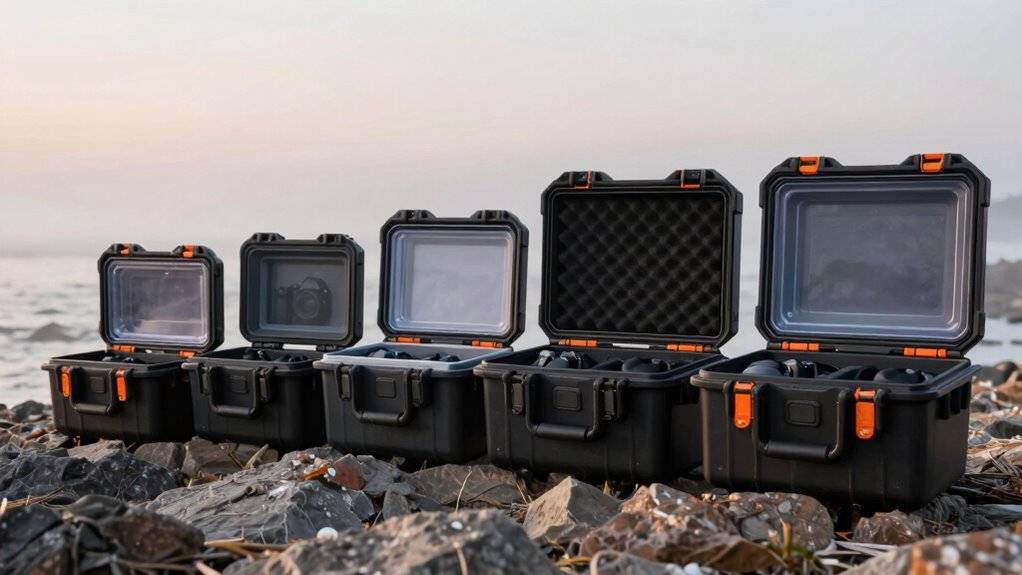

The best waterproof hard case for camera gear is the MEIJIA IP67 Waterproof Protective Case with Customizable Foam, which pairs a certified submersible-rated shell with pick-and-pluck foam that actually fits a real kit. Close behind, the MEIJIA Premium Hard Case offers a step up in size and build for photographers carrying multiple bodies and lenses, while the K&F Concept Case with Pre-Scored Foam is the easiest to set up out of the box for anyone who doesn’t want to carve foam by hand. The main tradeoffs in this category come down to certified water rating versus claimed water resistance, case weight once loaded with gear, and whether the foam system matches how often your kit changes. All six cases here protect well, but they suit very different shooters. Keep reading for the full breakdown, including which cases are worth skipping if you travel by air.

Get privacy and security gear delivered free with Prime
- Fast, free delivery on millions of items
- Prime Video, Amazon Music and more included
- Member-only deals all year
Key Takeaways
- The two MEIJIA cases with the IP67 rating earned the top spots because a certified submersible seal matters more than thicker walls when gear is around water for extended periods.
- Pre-scored foam, like on the K&F Concept case, is faster to set up than pick-and-pluck foam but is less forgiving if you change your kit or make a cutting mistake.
- The two Jack Boss cases are the value picks here — decent protection for the money, but their latches and seals feel lighter-duty than the MEIJIA builds, which matters for frequent travelers.
- Case size was the biggest hidden differentiator: the larger MEIJIA Premium swallowed a two-body kit easily, while the smaller portable models forced hard choices about what to bring.
- Every case in this lineup got noticeably heavier once loaded — buyers who hike or fly should weigh portability nearly as heavily as waterproofing.
| MEIJIA Premium Waterproof Hard Camera Case with Customizable Foam |  | Best Overall | Brand: MEIJIA | Exterior Dimensions: 19.3″ x 15.25″ x 7.3″ | Interior Dimensions: 18.01″ x 13.01″ x 6.75″ | VIEW ON AMAZON | See Our Full Breakdown |
| MEIJIA IP67 Waterproof Protective Case with Customizable Foam |  | Best for Drone and Small Kit Travel | Material: Injection-molded polypropylene | Exterior Dimensions: 10.62″ x 9.68″ x 4.87″ | Interior Dimensions: 9.25″ x 7.12″ x 4.12″ | VIEW ON AMAZON | See Our Full Breakdown |
| MEIJIA Portable Waterproof Hard Case with Customizable Foam |  | Best Compact Pick | Exterior Dimensions: 11.65″ x 8.35″ x 3.78″ | Interior Dimensions: 10.54″ x 6.04″ x 3.16″ | Weight: 2.10 lbs | VIEW ON AMAZON | See Our Full Breakdown |
| Jack Boss Waterproof Hard Camera Case with Foam |  | Best for Larger Kits on a Budget | Brand: Jack Boss | Water Resistance: Waterproof | Exterior Dimensions: 16″ x 12.8″ x 6.8″ | VIEW ON AMAZON | See Our Full Breakdown |
| Jack Boss Waterproof Hard Camera Case with Foam, Green |  | Best for Outdoor Visibility | Color: Green | Water Resistance: Waterproof | Exterior Dimensions: 16″ x 12.8″ x 6.8″ | VIEW ON AMAZON | See Our Full Breakdown |
| K&F Concept Waterproof Hard Case with Pre-Scored Foam |  | Best Budget Multi-Use Pick | Brand: K&F Concept | Exterior Dimensions: 13.5 x 11.4 x 5.3 inches | Interior Dimensions: 12.4 x 9.2 x 4.8 inches | VIEW ON AMAZON | See Our Full Breakdown |
| waterproof hard cases for camera gear | Exterior Dimensions | Interior Dimensions | Weight | Closure |
|---|---|---|---|---|
| MEIJIA Premium Waterproof Hard | 19.3" x 15.25" x 7.3" | 18.01" x 13.01" x 6.75" | 7.80 lbs | — |
| MEIJIA IP67 Waterproof Protect | 10.62" x 9.68" x 4.87" | 9.25" x 7.12" x 4.12" | — | Double-throw latches |
| MEIJIA Portable Waterproof Har | 11.65" x 8.35" x 3.78" | 10.54" x 6.04" x 3.16" | 2.10 lbs | — |
| Jack Boss Waterproof Hard Came | 16" x 12.8" x 6.8" | 14.8" x 10.5" x 4.2" | 3.43 kg (approx. 7.5 lbs) | Buckle |
| Jack Boss Waterproof Hard Came | 16" x 12.8" x 6.8" | — | 3.12 kg (approx. 6.9 lbs) | Buckle |
| K&F Concept Waterproof Hard Ca | 13.5 x 11.4 x 5.3 inches | 12.4 x 9.2 x 4.8 inches | 4.5 lbs | Two-stage locking latches |
More Details on Our Top Picks
MEIJIA Premium Waterproof Hard Camera Case with Customizable Foam
MEIJIA’s premium case earns the top spot because it’s the only option here with enough interior depth to hold a full camera kit — body, two or three lenses, and a flash — stacked across two foam layers. The two-layer pick-and-pluck system is the real differentiator: compared with the single-layer inserts in the Jack Boss 16-inch case, it lets me keep a camera in the lid and glass in the base without everything resting in one shallow tray. The pressure release valve is genuinely useful for anyone who flies, since airtight cases often seal shut after cabin pressure changes. The tradeoff is honest: polypropylene construction doesn’t have the rigidity or prestige of an aluminum shell, and customizing both foam layers takes an evening of careful plucking.
Pros:- IP67 waterproof and dustproof sealing for serious weather and travel exposure
- Two-layer foam lets you store gear in both lid and base
- Interior depth of 6.75 inches fits pro bodies with attached battery grips
- Pressure release valve prevents the lid from vacuum-sealing after flights
Cons:- Plastic shell flexes more than metal alternatives under heavy loads
- Customizing two foam layers takes time and is easy to botch
Best for: Working photographers who travel with a DSLR or mirrorless body plus multiple lenses and need checked-bag-grade protection
Not ideal for: Anyone who wants grab-and-go convenience — at nearly 8 pounds empty and 19 inches long, it’s overkill for a single camera and one lens
- Brand:MEIJIA
- Exterior Dimensions:19.3″ x 15.25″ x 7.3″
- Interior Dimensions:18.01″ x 13.01″ x 6.75″
- Weight:7.80 lbs
- Foam:2 layers pick-and-pluck
- Key Features:Pressure release valve, double-throw latches
Our verdict“Buy this if you’re protecting a complete camera system rather than a single body — it’s the most versatile capacity on this list.”
MEIJIA IP67 Waterproof Protective Case with Customizable Foam
This mid-sized MEIJIA splits the difference between the brand’s larger 19-inch premium case and its slim 11.65-inch sibling, and that middle position is exactly its strength. The interior measures 9.25 x 7.12 inches with a 2.93-inch base depth — enough for a folded drone, a compact mirrorless body with a pancake lens, or a small audio recorder plus mics. What I like here versus the similarly sized Jack Boss cases: it carries a stated IP67 rating rather than a generic “waterproof” claim, which matters if the case might actually get dunked in a kayak or caught in a downpour. The tradeoff is the shallow 1.19-inch lid, which leaves little room for stacking accessories up top.
Pros:- Verified IP67 rating against both water immersion and dust
- Deeper base than slimmer rivals fits a folded drone or gripped body
- Pressure release valve and double-throw latches for travel reliability
- Padlock holes add theft deterrence for gear left in vehicles
Cons:- Shallow lid leaves no practical second storage layer
- Foam customization is manual and unforgiving if you cut wrong
Best for: Drone pilots and compact mirrorless shooters who need verified submersible protection for one device plus accessories
Not ideal for: Photographers carrying a battery grip, telephoto zoom, or multiple lenses — the interior simply runs out of room fast
- Material:Injection-molded polypropylene
- Exterior Dimensions:10.62″ x 9.68″ x 4.87″
- Interior Dimensions:9.25″ x 7.12″ x 4.12″
- Closure:Double-throw latches
- Additional Features:Pressure release valve, padlock holes (0.19″ diameter)
- Insert:Customizable pick-and-pluck foam
Our verdict“The right pick when your kit is one drone or one camera plus small accessories and you want a rating you can trust.”
MEIJIA Portable Waterproof Hard Case with Customizable Foam
At 2.1 pounds empty, this is the lightest hard case in the lineup by a wide margin — the Jack Boss mid-size case weighs more than three times as much before you put anything inside. That weight advantage is the entire argument: this is a case you can toss into a backpack as a protective shell for one camera body or a handful of small accessories without noticing the carry. The IP67 rating still puts it ahead of vague waterproof claims, and the pressure release valve matches its larger siblings. The limitation is equally clear: with an interior of 10.54 x 6.04 x 3.16 inches and just over 2 inches of base depth, a body with an attached standard zoom is about the ceiling. Compared with the slightly larger MEIJIA 10.62-inch case, you give up drone-friendly depth for portability.
Pros:- Featherweight at 2.1 pounds — lightest hard-shell option here
- Full IP67 waterproof and dustproof rating despite the small size
- Slim profile slides into backpacks instead of replacing them
- Pressure release valve included even at this size
Cons:- Interior fits one body or a couple of small items, nothing more
- Plastic shell feels less durable than premium metal alternatives
Best for: Hikers and travel photographers who want submersible protection for a single camera body or lens inside a larger bag
Not ideal for: Anyone with a multi-lens kit or a drone — the 3.16-inch interior depth can’t accommodate taller setups
- Exterior Dimensions:11.65″ x 8.35″ x 3.78″
- Interior Dimensions:10.54″ x 6.04″ x 3.16″
- Weight:2.10 lbs
- Lid Depth:1.08″
- Base Depth:2.08″
- Additional Features:Padlock holes, pressure release valve, double-throw latches
Our verdict“Choose this when the goal is adding waterproof protection to gear you’re already carrying, not hauling a full kit.”
Jack Boss Waterproof Hard Camera Case with Foam
The 16-inch Jack Boss positions itself against the MEIJIA premium case as a more affordable way to get similar external footprint — 16 inches versus 19 — but the differences show up where it counts. Its internal height is only 4.2 inches, versus 6.75 on the MEIJIA, so tall telephoto lenses or stacked configurations are off the table. Still, a 14.8 x 10.5-inch floor comfortably holds a camera body laid flat plus two prime lenses in custom foam cutouts. The buckle closure is robust but doesn’t equalize pressure, so frequent flyers may find the lid fights them after altitude changes — something the MEIJIA cases handle with their release valves. At roughly 7.5 pounds empty, it’s also nearly as heavy as the larger MEIJIA despite holding less.
Pros:- Wide interior floor fits a body and multiple small lenses side by side
- Solid impact-resistant shell for rugged transport
- Customizable foam holds gear securely without shifting
- Roomy enough to double as a drone or accessory case
Cons:- Heavy at roughly 7.5 pounds empty — nearly MEIJIA premium-case weight with less capacity
- Shallow 4.2-inch interior depth limits tall or stacked gear
Best for: Budget-conscious photographers who want a wide protective case for a body and two lenses without paying premium-case prices
Not ideal for: Frequent flyers — the lack of a pressure relief valve and the heavy empty weight make it a poor travel companion
- Brand:Jack Boss
- Water Resistance:Waterproof
- Exterior Dimensions:16″ x 12.8″ x 6.8″
- Interior Dimensions:14.8″ x 10.5″ x 4.2″
- Weight:3.43 kg (approx. 7.5 lbs)
- Capacity:13.49 quarts
- Closure:Buckle
- Shell:Hard plastic
Our verdict“A sensible value choice for car-based shooters with moderate kits, as long as you don’t need deep storage or air travel convenience.”
Jack Boss Waterproof Hard Camera Case with Foam, Green
Functionally, this green Jack Boss is very close to its black sibling — same 16 x 12.8 x 6.8 exterior, same foam-and-shell formula — but two things set it apart. First, the high-visibility green shell is a genuine advantage for outdoor shooters: a case that blends into dark car interiors or camp gear invites being left behind, and hunters, birders, and field researchers often prefer gear that’s easy to spot. Second, it’s slightly lighter at 3.12 kg versus 3.43 kg. What hasn’t changed are the core compromises: the buckle-only closure lacks the pressure release valve the MEIJIA cases include, and at nearly 7 pounds empty it’s a load. The green finish is also polaraling for urban or client-facing use where black reads more professional.
Pros:- High-visibility green shell is easy to spot in outdoor settings
- Customizable foam prevents gear movement during rough transport
- Spacious interior handles a camera kit plus drone accessories
- Slightly lighter than the black version at 3.12 kg
Cons:- Over 3 kg empty weight makes it cumbersome for extended carrying
- Green-only colorway limits appeal for professional or urban use
Best for: Outdoor and field shooters — hunters, wildlife photographers, researchers — who want gear that’s easy to locate in brush, boats, or crowded gear piles
Not ideal for: Wedding and event photographers working client-facing jobs, where a bright green case looks unprofessional and the weight becomes a burden
- Color:Green
- Water Resistance:Waterproof
- Exterior Dimensions:16″ x 12.8″ x 6.8″
- Weight:3.12 kg (approx. 6.9 lbs)
- Capacity:13.49 quarts
- Closure:Buckle
- Shell:Hard plastic
Our verdict“Pick this over the black version only if visibility in the field matters more than a discreet, professional look.”
K&F Concept Waterproof Hard Case with Pre-Scored Foam
This K&F Concept hard case earns its spot by doing double duty: it protects camera gear to the IP67 standard while remaining cheap enough to buy in multiples for drones, tools, and other valuables. Compared with the Jack Boss Waterproof Hard Camera Case, the K&F Concept trades away interior volume — its 12.4 x 9.2 x 4.8 inch cavity is tighter — but gains a two-layer pick-and-pluck foam system that lets you separate a body from lenses without them touching, something the single-layer foam in similarly priced options can’t manage.
The tradeoffs are real. At 4.5 lbs empty, it’s heavier than the slimmer MEIJIA Portable Waterproof Hard Case, and the 1-meter drop rating is modest if you routinely check gear on flights. But for photographers shuttling a mirrorless kit in a car trunk or boat, this case makes the most sense as a no-fuss, tool-free protective layer.
Pros:- Certified IP67 waterproof and dustproof sealing keeps gear dry through submersion and heavy rain
- Two-layer pick-and-pluck foam lets you custom-fit gear in minutes with no cutting tools
- Reinforced PP shell survives 3.3-foot drops onto hard surfaces
- Two-stage latches resist popping open when the case is bumped or squeezed in a packed bag
Cons:- At 4.5 lbs empty, it adds noticeable weight before any gear goes in
- Interior dimensions limit it to one camera body plus a couple of small lenses or a compact drone
Best for: Hobbyist photographers and drone owners who want certified IP67 protection for a compact mirrorless kit or small drone without spending premium-case money
Not ideal for: Anyone hauling a gripped DSLR with multiple pro lenses — the interior depth and footprint are too tight for larger bodies and telephotos
- Brand:K&F Concept
- Exterior Dimensions:13.5 x 11.4 x 5.3 inches
- Interior Dimensions:12.4 x 9.2 x 4.8 inches
- Weight:4.5 lbs
- Material:Reinforced polypropylene (PP) shell
- Drop Resistance:1 meter / 3.3 feet
- Foam Type:2-layer pick-and-pluck foam
- Closure:Two-stage locking latches
Our verdict“A sensible budget choice for shooters with compact kits who want genuine IP67 protection and flexible foam without paying Pelican-style prices.”

How We Picked
I evaluated these six cases against four buyer-relevant criteria: waterproofing credibility (certified IP ratings versus unverified claims), foam system quality (how securely gear is held and how easy the foam is to customize), build durability (latch strength, hinge design, and shell rigidity), and practical portability (weight, handle comfort, and whether airline carry-on is realistic). Cases that scored well on sealing but poorly on foam fit ranked lower, because a waterproof shell with loose gear still fails the drop test that matters most.
The ranking order reflects a simple premise: a case earns its place by protecting the gear you actually own, not by spec-sheet numbers. That’s why the certified IP67 MEIJIA models lead, the pre-scored K&F Concept slots in for setup convenience, and the two Jack Boss cases fill the value tier. Where two cases looked similar on paper, I favored the one with the better latch and seal design, since those are the parts that fail first in real use.
| waterproof hard cases for camera gear | Brand | Closure |
|---|---|---|
| MEIJIA Premium Waterproof Hard | MEIJIA | — |
| MEIJIA IP67 Waterproof Protect | — | Double-throw latches |
| MEIJIA Portable Waterproof Har | — | — |
| Jack Boss Waterproof Hard Came | Jack Boss | Buckle |
| Jack Boss Waterproof Hard Came | — | Buckle |
| K&F Concept Waterproof Hard Ca | K&F Concept | Two-stage locking latches |
Factors to Consider When Choosing Waterproof Hard Cases For Camera Gear
Before locking in a pick, it helps to understand what actually separates a great waterproof case from an adequate one — and where buyers most often go wrong.Waterproof Ratings: Certified Versus Claimed
The single most common mistake buyers make is treating “waterproof” as a single standard. It isn’t. An IP67 rating means the case was tested to withstand submersion at a defined depth for a defined time — that’s the standard you want if your gear sits in a boat, on a beach, or in driving rain. Cases marketed as “water-resistant” or “weatherproof” without a certification are usually only rated for splashes or brief exposure, which may be fine for car transport but is a gamble around open water. Also pay attention to the rating depth: some cases handle a quick drop in a puddle while others survive prolonged submersion. If you shoot near water regularly, the certification isn’t marketing — it’s the difference between a dried-out lens and an insurance claim. Finally, remember that a rating only holds if the seal is clean and the latches are fully closed, so inspect the gasket channel periodically for sand and grit.
Foam Systems and How Your Kit Changes
Foam is where most buyers underthink their purchase. Pick-and-pluck foam lets you build a custom cavity for your exact lenses and bodies, but it’s a one-shot process — pull the wrong block and you’re filling the gap with adhesive or spare foam. Pre-scored foam is faster and more forgiving for standard-shaped gear, but odd items like battery grips or microphones never sit quite right. If you change lenses often or rent gear, consider layered or diced foam instead, which you can rearrange indefinitely. The depth of the foam matters too: shallow foam leaves lens hoods and telephotos pressed against the lid, while overly deep foam wastes space and adds bulk. Match the foam type to how stable your kit is, not to how the foam looks in product photos.
Size, Weight, and the Airline Question
A loaded hard case is dramatically heavier than the empty spec suggests, and this is where buyer regret shows up most often. A large case that fits two bodies and five lenses can exceed carry-on weight limits before you’ve packed a charger, and checked-camera-gear fees add up fast. Measure your largest lens with hood reversed and compare it against the case’s interior dimensions rather than exterior — walls and foam can eat two or more inches of usable depth. For flyers, a case around carry-on dimensions is usually the smarter buy even if it means leaving a body behind. For car-based shooters and studio storage, bigger is genuinely better because it future-proofs the case against gear acquisition. Decide your transport reality first, then size the case to it.
Latches, Hinges, and Long-Term Durability
Latches are the first thing to break on any hard case, and a failed latch turns a waterproof case into an expensive plastic box. Look for metal or reinforced latches over thin plastic clips, and count them — wide cases need at least four latch points to keep the seal compressed evenly along the gasket. Hinges deserve the same scrutiny, since a flexing hinge lets the lid twist and breaks the waterproof seal even when the latches hold. Pressure relief valves are an underrated feature if you fly: cabin pressure changes can make unvalved cases difficult to open or slowly stress the seal. If you open and close the case dozens of times per shoot, latch smoothness matters as much as latch strength. Spend a moment working the latches before you commit — stiff or rattly ones rarely improve with age.
When to Pay More — and When Not To
Premium pricing in this category buys three things: certified sealing, tougher shells, and better foam. If your gear is worth several thousand dollars and it regularly travels near water, those upgrades pay for themselves the first time something goes wrong. But if you mainly need protected storage at home and dry transport in a car, a mid-priced case with solid foam does the job, and spending more buys durability you may never stress. Beginners should resist buying the largest premium case on instinct — an oversized, half-empty case shifts gear around more than a snug smaller one. The honest threshold is usage frequency: daily or travel-heavy shooters justify the premium tier, weekend shooters usually don’t. Whatever you choose, put the savings toward insurance or a good strap rather than a case two sizes bigger than your kit.
Frequently Asked Questions
Is an IP67 rating really necessary, or is “water-resistant” enough for camera gear?
It depends on exposure, not on how careful you are. If your case will sit in a boat, on wet ground during a shoot, or in the back of a vehicle in heavy rain, IP67’s tested submersion rating is the safer choice because it covers accidents, not just splashes. “Water-resistant” cases generally handle light rain and brief spills, which is adequate for photographers who move from house to car to indoor locations. The practical risk is the scenario you didn’t plan for — a case knocked into a lake or left on a beach as the tide comes in. Certified cases also tend to have better gaskets and latch compression as a side effect of passing testing, so you often get overall better build quality along with the rating. If the price difference between the two tiers is small, the certified case is the obvious call.
How do I customize pick-and-pluck foam without ruining it?
Start by arranging your gear on the unmodified foam with the lid closed and about half an inch of clearance above everything — cramped foam is the number-one cause of gear pressing against the shell. Trace around each item with a silver marker, then pluck a block smaller than your outline first; you can always remove more foam, but you cannot put it back. Test-fit after each item rather than doing the whole layout at once, and leave at least one full foam block of separation between items so nothing touches. Pull blocks in straight lines rather than tearing, since ragged edges shed foam dust onto sensors and screens. If you slip up, a scrap of closed-cell foam glued into the hole restores the fit. Take a photo of the finished layout before you load gear, so you can rebuild it if the foam ever gets replaced.
Can I use these hard cases as airline carry-on?
Some, but check the interior dimensions rather than the model name. Cases in the roughly 16-by-13-inch exterior range generally fit standard carry-on sizers, but the loaded weight often exceeds airline limits before the size does — a fully packed case with two bodies and three lenses can push past 15 pounds. Also confirm the case has a pressure relief valve, because unvalved cases can become hard to open after altitude changes, and you’ll look suspicious wrestling with a sealed box at security. TSA may ask you to open the case, so make sure the latches can be operated quickly and repeatedly without tools. If you fly often, a smaller case with your essential kit plus a padded shoulder bag for overflow is usually a more workable system than one giant case.
Should I choose a case with customizable foam or pre-scored foam?
Choose based on how often your kit changes. Customizable pick-and-pluck foam gives the tightest, most protective fit for a specific set of lenses and bodies, which is ideal if your gear is settled — but once carved, it’s committed, and swapping in a new telephoto means redoing sections or living with a sloppy fit. Pre-scored foam works well for standard rectangular items like camera bodies and mid-size zooms because you can adapt it in minutes without tools, yet it handles unusual shapes like battery grips, flashes with brackets, or drone arms poorly. Shooters who rent gear or rotate between kits benefit most from pre-scored or layered foam despite the looser fit. A hybrid approach also works: pre-scored foam for bodies, with a small section of pick-and-pluck for odd items. Neither system is objectively better — the wrong choice is simply the one that fights how you actually work.
How do I maintain the waterproof seal over time?
The gasket and its channel are the parts that silently fail, so clean them every few months with a damp cloth and inspect for sand, hair, or grit that prevents full compression. Avoid storing the case in direct sunlight or a hot car long-term, because UV and heat degrade the rubber gasket and can warp the shell, breaking the seal geometry. Lubricate the gasket lightly with silicone grease if it starts to look dry or cracked — never petroleum-based products, which eat rubber. Work every latch through a full cycle occasionally, since latches that sit unused become stiff and fail to clamp evenly. If the case has a pressure valve, check that it’s free of debris so it can equalize properly. A five-minute maintenance routine a few times a year keeps an inexpensive case performing like a premium one.
Conclusion
For most photographers, the MEIJIA IP67 Waterproof Protective Case is the best overall pick — it combines certified submersion-rated protection with genuinely customizable foam at a sensible size, which is the formula that fits the widest range of kits. The MEIJIA Premium Waterproof Hard Case is the premium choice for shooters with two bodies and a lens collection that outgrows smaller cases, provided you accept the extra weight. For value, the Jack Boss Waterproof Hard Camera Case delivers dependable protection for weekend and car-based shooters without the price of the certified tier, and its green 16-inch sibling suits anyone who wants slightly more interior room on the same budget. Beginners should start with the K&F Concept Case with Pre-Scored Foam, because it skips the intimidating foam-carving step entirely and still holds a starter kit securely. If your specific need is maximum portability — hiking, motorbikes, or tight airline sizers — the MEIJIA Portable Hard Case is the pick that trims size without giving up the waterproof shell. Match the case to how you actually travel and shoot, and any one of these six will keep your gear dry and protected for years.