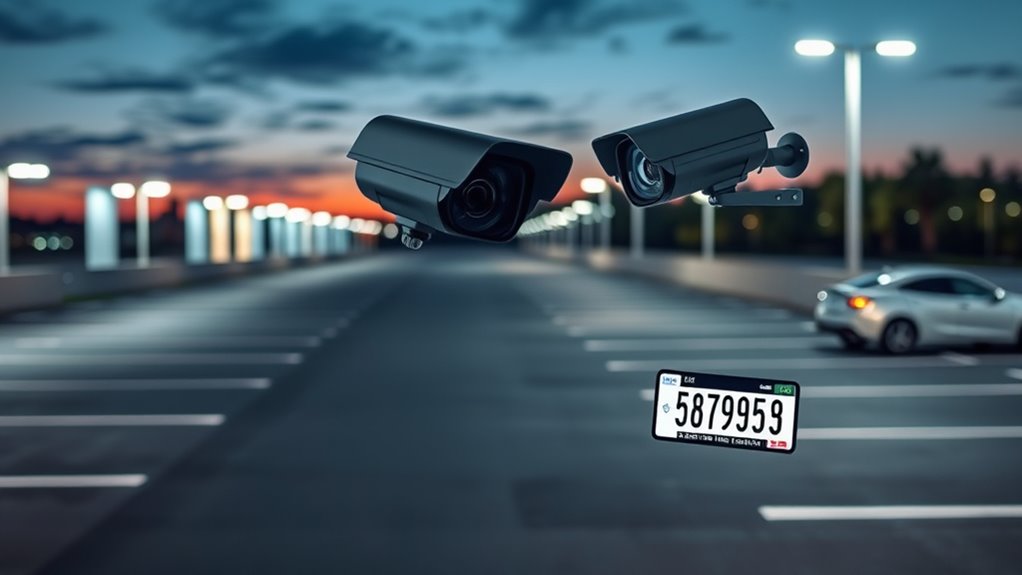

For long-range license plate capture, my best overall pick is the AXIS Q1700-LE, a purpose-built option for buyers who prioritize plate capture at an outdoor entrance. The EmpireTech 5–60mm model stands out for its unusually broad motorized zoom range, while the Anpviz 8–32mm offers a more focused lens range in a 4MP camera. The main tradeoffs are working distance, vehicle speed, lighting, and how much time you want to spend positioning and tuning the camera. A longer lens can frame distant plates, but it cannot compensate for a poor angle or inadequate shutter settings. Continue reading for the full breakdown and help matching a camera to your site.

Get privacy and security gear delivered free — and shop member deals
- Fast, free delivery on millions of items
- Access to Prime Big Deal Days deals on October 6–7
- Prime Video, Amazon Music and more included
Key Takeaways
- AXIS Q1700-LE is the purpose-built lead pick: its dedicated license plate role gives it the clearest fit for buyers who want a specialist outdoor camera.
- Lens range separates the flexible options: EmpireTech’s 5–60mm lens covers more framing scenarios than the 8–32mm Anpviz and ONWOTE models, but requires careful setup.
- Several 4MP cameras share a similar starting point: Anpviz, Amcrest, ONWOTE, and GW Security offer LPR-oriented 4MP options, so lens, software fit, and installation matter more than resolution alone.
- GeoVision prioritizes a defined capture target: its 5M target designation signals a more specific operating fit, which buyers should verify against their actual lane distance.
- Long-range capture is a system decision: camera placement, plate angle, vehicle speed, lighting, and recording or recognition software can limit results even with a long zoom lens.
| Anpviz 4MP License Plate Recognition PoE Bullet Camera with 2.7–13.5mm Motorized Lens |  | Best for Flexible Framing | Resolution: 4MP (2688×1520) at 30 fps | Lens: 2.7–13.5mm 5× motorized varifocal | Night vision: Up to 132 ft (40 m) | VIEW ON AMAZON | See Our Full Breakdown |
| EmpireTech Smart 2MP Starlight IR Bullet IP Camera with Built-in Mic, PoE/ePoE, AI, 5-60mm Motorized Lens (IPC-B52IR-Z12E S2, White) |  | Best for Long-Zoom Low-Light Monitoring | Resolution: 2MP (1920×1080) at 25/30 fps | Sensor: 1/2.8-inch CMOS Starlight | Lens: 5–60mm motorized varifocal, 12× optical zoom | VIEW ON AMAZON | See Our Full Breakdown |
| Anpviz License Plate Recognition PoE IP Camera, 4MP LPR/ANPR Bullet Camera with 8-32mm Motorized Zoom Lens |  | Best for Dedicated Long-Range LPR | Resolution: 4MP (2688×1520) at 30 fps or (2560×1440) at 60 fps | Lens: 8–32mm 4× motorized varifocal | Sensor: 1/1.8-inch CMOS | VIEW ON AMAZON | See Our Full Breakdown |
| Amcrest IP4M-1072EW-AI License Plate Recognition PoE Camera, 4MP |  | Best for Vehicle Context | Resolution: 4MP at 30 fps | Sensor: 1/1.8-inch 4MP CMOS | Lens: 8–32mm optical zoom | VIEW ON AMAZON | See Our Full Breakdown |
| AXIS Q1700-LE 2 MP Outdoor License Plate Network Camera |  | Best for Fast Traffic and Open Systems | Resolution: 2MP HDTV 1080p | Daylight plate capture range: Up to 100 m (328 ft) | Darkness plate capture range: Up to 50 m (164 ft) | VIEW ON AMAZON | See Our Full Breakdown |
| GeoVision GV-LPC2011 2MP 5M Target License Plate Camera |  | Best for Short-Range Entry Points | Resolution: 2MP | Target range: 5 meters | Power: 12VDC or PoE | VIEW ON AMAZON | See Our Full Breakdown |
| ONWOTE 4MP License Plate Recognition PoE IP Camera with 8–32mm Motorized Lens |  | Best for Adjustable Mid- to Long-Range Coverage | Resolution: 4MP (2592 × 1520) | Maximum frame rate: 30 fps | Lens: 8–32mm motorized varifocal, F1.6 | VIEW ON AMAZON | See Our Full Breakdown |
| GW Security Professional License Plate Recognition PoE Camera, 4MP Outdoor LPR Bullet with 4X Motorized Zoom |  | Best for Fast-Moving Traffic | Resolution and frame rate: 4MP (2688 × 1520) at 60 fps | LPR capture speed: Up to 120 km/h | Lens: 8–32mm motorized, 4X optical zoom | VIEW ON AMAZON | See Our Full Breakdown |
| long range license plate camera | Resolution | Lens | Storage |
|---|---|---|---|
| Anpviz 4MP License Plate Recog | 4MP (2688×1520) at 30 fps | 2.7–13.5mm 5× motorized varifocal | MicroSD support up to 512GB; card not included |
| EmpireTech Smart 2MP Starlight | 2MP (1920×1080) at 25/30 fps | 5–60mm motorized varifocal, 12× optical zoom | MicroSD up to 256GB |
| Anpviz License Plate Recogniti | 4MP (2688×1520) at 30 fps or (2560×1440) at 60 fps | 8–32mm 4× motorized varifocal | MicroSD up to 1TB |
| Amcrest IP4M-1072EW-AI License | 4MP at 30 fps | 8–32mm optical zoom | MicroSD up to 256GB |
| AXIS Q1700-LE 2 MP Outdoor Lic | 2MP HDTV 1080p | — | 128GB SD flash memory |
| GeoVision GV-LPC2011 2MP 5M Ta | 2MP | — | — |
| ONWOTE 4MP License Plate Recog | 4MP (2592 × 1520) | 8–32mm motorized varifocal, F1.6 | — |
| GW Security Professional Licen | — | 8–32mm motorized, 4X optical zoom | — |
More Details on Our Top Picks
Anpviz 4MP License Plate Recognition PoE Bullet Camera with 2.7–13.5mm Motorized Lens
The 2.7–13.5mm motorized lens makes this Anpviz a flexible choice when a driveway or gate needs a tighter plate view than a fixed wide angle can provide. Its 4MP image, 120dB true WDR, and infrared reach up to 132 feet support day and night vehicle monitoring. Compared with the longer-range Anpviz 8–32mm LPR camera, this model has a less telephoto lens and is better suited to nearer approaches where framing flexibility matters more than maximum stated distance. Its IP67 and IK10 ratings suit exposed or vulnerable mounting locations. The main limitation is system fit: it works only with specified Anpviz NVRs, so buyers with another recording setup should look at options such as the AXIS Q1700-LE, which supports third-party platforms. Local microSD recording is available, but the card is sold separately.
Pros:- Motorized varifocal lens supports flexible framing
- 4MP video at up to 30 fps
- 132-foot infrared range and 120dB true WDR
- IP67 weatherproof and IK10 vandal-resistant housing
Cons:- Compatible only with specified Anpviz NVR models
- MicroSD card is not included
- Shorter focal length is less suited to distant plate views than the Anpviz 8–32mm model
Best for: Home and small-site owners who need adjustable framing for a nearby gate or driveway and already use a compatible Anpviz NVR
Not ideal for: Buyers seeking long-distance plate capture or compatibility with third-party NVRs
- Resolution:4MP (2688×1520) at 30 fps
- Lens:2.7–13.5mm 5× motorized varifocal
- Night vision:Up to 132 ft (40 m)
- Minimum illumination:0.0003 Lux color / 0.0001 Lux B/W
- Wide dynamic range:120dB true WDR
- Compression:H.265+
- Storage:MicroSD support up to 512GB; card not included
- Protection:IP67 weatherproof and IK10 vandal-resistant
- Compatibility:Specified Anpviz NVR models only
Our verdict“Choose this Anpviz for adjustable, rugged plate monitoring at nearer entry points when your recorder is compatible.”
EmpireTech Smart 2MP Starlight IR Bullet IP Camera with Built-in Mic, PoE/ePoE, AI, 5-60mm Motorized Lens (IPC-B52IR-Z12E S2, White)
For a buyer who needs to frame a distant vehicle, the EmpireTech’s 5–60mm motorized lens gives it a longer zoom range than the 2.7–13.5mm lens on the Anpviz 4MP camera. Its 2MP resolution is lower, so this pick prioritizes lens reach and a starlight sensor over fine image detail. The listed license plate use range is 50–170 feet, while the IR specification reaches 150 meters; those are different measures, and the IR figure alone does not promise readable plates at that distance. PoE/ePoE and a built-in microphone add installation and audio flexibility, but this remains a wired Ethernet camera that needs a cable run. IP67-rated metal housing is suited to outdoor placement, though the product data also includes a conflicting “not water resistant” note, so buyers should verify the rating before exposing it to weather.
Pros:- 5–60mm motorized lens offers a broad zoom range
- Starlight sensor is designed for low-light imaging
- PoE and ePoE power options
- Built-in microphone and microSD support up to 256GB
Cons:- 2MP resolution provides less image detail than the 4MP Anpviz and Amcrest models
- Wired Ethernet requires a cable run
- Product data conflicts on water resistance despite the IP67 rating
Best for: Installers monitoring a long approach in low light who can run Ethernet and prefer zoom flexibility over 4MP detail
Not ideal for: Buyers who need higher-resolution plate images, wireless installation, or unambiguous weather-resistance specifications
- Resolution:2MP (1920×1080) at 25/30 fps
- Sensor:1/2.8-inch CMOS Starlight
- Lens:5–60mm motorized varifocal, 12× optical zoom
- Listed plate range:50–170 ft
- Infrared range:Up to 150 m (492 ft)
- Power:12 VDC, PoE, or ePoE
- Storage:MicroSD up to 256GB
- Connectivity:Wired Ethernet
- Housing:IP67-rated metal housing; product data also says not water resistant
Our verdict“Pick the EmpireTech when long zoom and low-light performance matter more than 4MP detail and you can confirm the weather rating.”
Anpviz License Plate Recognition PoE IP Camera, 4MP LPR/ANPR Bullet Camera with 8-32mm Motorized Zoom Lens
This is the most specialized Anpviz in the group: its 8–32mm motorized lens, dedicated LPR/ANPR functions, and stated 23–98-foot recommended recognition distance target plate capture rather than general scene coverage. The product claims night vision up to 330 feet, but that illumination range is not the same as the recommended plate-recognition distance. Compared with the EmpireTech 5–60mm camera, this model offers 4MP resolution and built-in plate tools such as allowlists, blocklists, and parking detection; the EmpireTech has the broader zoom span and lists a farther plate range. Its 140dB WDR and 1/1.8-inch sensor help handle difficult lighting, while IP67 and IK10 protection suit exposed sites. The tradeoff is a closed recorder ecosystem: it supports specified Anpviz NVRs only, unlike the more open-platform AXIS Q1700-LE.
Pros:- Dedicated LPR/ANPR functions include allowlists, blocklists, and parking detection
- 4MP imaging with a 1/1.8-inch sensor
- 140dB true WDR and 330-foot stated IR range
- IP67 weatherproof and IK10 vandal-resistant construction
Cons:- Compatible only with specified Anpviz NVR models
- Recommended plate-recognition distance is 23–98 ft, below the 330-foot IR figure
- Specialized recognition features require careful positioning and setup
Best for: Parking operators and site managers who need dedicated plate recognition, event tools, and compatible Anpviz recording hardware
Not ideal for: Buyers with third-party NVRs or plate capture requirements beyond the stated 23–98-foot recommended distance
- Resolution:4MP (2688×1520) at 30 fps or (2560×1440) at 60 fps
- Lens:8–32mm 4× motorized varifocal
- Sensor:1/1.8-inch CMOS
- Recommended ANPR distance:23–98 ft
- Night vision:Up to 330 ft (100 m)
- Wide dynamic range:140dB true WDR
- Storage:MicroSD up to 1TB
- Protection:IP67 weatherproof and IK10 vandal-resistant
- Compatibility:Specified Anpviz NVR models only
Our verdict“Choose this model for dedicated plate analytics at a compatible site where its stated recognition distance fits the approach.”
Amcrest IP4M-1072EW-AI License Plate Recognition PoE Camera, 4MP
The Amcrest pairs 4MP video with recognition of plates, vehicle types, and colors, making it a better fit for sites where identifying the broader vehicle matters alongside reading the plate. Its 8–32mm optical zoom and stated 26.25–98.43-foot plate range put it in a similar distance class to the Anpviz 8–32mm LPR camera, though that Anpviz lists dedicated allowlist, blocklist, and parking-detection tools. Amcrest adds red and blue deterrent LEDs and night vision up to 98 feet, but the supplied data does not give the same long IR reach as Anpviz’s 330-foot claim. Buyers should also account for workflow: plate queries may need a browser plugin, and recognition depends on suitable installation and lighting. Its large, heavy body can make mounting less convenient than a compact setup.
Pros:- Recognizes plates, vehicle types, and colors
- 4MP video with 8–32mm optical zoom
- PoE connection and microSD support up to 256GB
- IP67 housing and red/blue deterrent LEDs
Cons:- Plate-query browser support is limited and may require a plugin
- Recognition depends on installation and lighting conditions
- Large body weighs 5.07 pounds
Best for: Small parking facilities and gated properties that want plate reads plus vehicle type and color information
Not ideal for: Sites needing long dark-range capture, plugin-free browser queries, or compact camera hardware
- Resolution:4MP at 30 fps
- Sensor:1/1.8-inch 4MP CMOS
- Lens:8–32mm optical zoom
- Field of view:15°–40°
- Plate capture distance:26.25–98.43 ft
- Night vision:Up to 98 ft
- Storage:MicroSD up to 256GB
- Connectivity:PoE
- Dimensions and weight:15.55 × 4.76 × 5.03 in; 5.07 lbs
Our verdict“Choose the Amcrest when vehicle details and deterrent lights are useful additions to plate capture at a moderate range.”
AXIS Q1700-LE 2 MP Outdoor License Plate Network Camera
For a road or entrance where vehicles pass quickly, the AXIS Q1700-LE stands apart with support for speeds up to 130 km/h and a stated daylight capture distance up to 100 meters. Its open platform also gives integrators more flexibility with third-party analytics and video management systems than the Anpviz cameras, which require specified Anpviz NVRs. The tradeoff is resolution: at 2MP, it gives less image detail than the 4MP Amcrest IP4M-1072EW-AI or the dedicated 4MP Anpviz models. Darkness capture is listed to 50 meters, half the daylight figure, and the product notes a shorter dark-range capability without the optional IR illuminator. It is designed to cover one traffic lane per camera, so multi-lane monitoring calls for additional units.
Pros:- Supports vehicle speeds up to 130 km/h
- Daylight plate capture distance up to 100 m
- Open platform supports third-party analytics and video management
- IP66, NEMA 4X, and IK10 protection ratings
Cons:- 2MP resolution is lower than the 4MP options in this roundup
- Darkness capture range is listed at 50 m and may require optional IR for longer reach
- Designed to cover one traffic lane per camera
Best for: Traffic and security integrators covering a single lane with fast vehicles and a third-party analytics or video-management stack
Not ideal for: Buyers needing 4MP detail, multi-lane coverage from one camera, or the full stated dark-range capture without an optional IR illuminator
- Resolution:2MP HDTV 1080p
- Daylight plate capture range:Up to 100 m (328 ft)
- Darkness plate capture range:Up to 50 m (164 ft)
- Maximum vehicle speed:130 km/h (81 mph)
- Optical zoom:3×
- Viewing angle:16°
- Power:AC/DC, 24 V
- Storage:128GB SD flash memory
- Protection:IP66, NEMA 4X, and IK10
Our verdict“Pick the AXIS when fast single-lane traffic and third-party system flexibility outweigh the need for 4MP resolution.”
GeoVision GV-LPC2011 2MP 5M Target License Plate Camera
The GeoVision GV-LPC2011 is the most focused choice here for a close, controlled capture point, such as a gate where vehicles slow down. Its stated 5-meter target range is far shorter than the ONWOTE BA40-LPR832’s recommended 23–98-foot range, so I would not rank it for monitoring a distant roadway. The camera’s dedicated plate-recognition function and choice of 12VDC or PoE power can simplify fitting it into an existing setup. At 2MP, it also has less resolution detail than the 4MP ONWOTE and GW Security cameras. The low 16-ounce weight may help with mounting, but the absence of a manufacturer warranty is a significant ownership tradeoff. It makes most sense when the capture point is near and the installation is otherwise straightforward.
Pros:- Dedicated license plate recognition functionality
- Supports both 12VDC and PoE power
- Lightweight at 16 ounces
Cons:- Stated target range is limited to 5 meters
- 2MP resolution is lower than the 4MP alternatives in this batch
- No manufacturer warranty is included
Best for: Installers covering a nearby gate or controlled driveway who want a dedicated LPR camera with 12VDC or PoE power options.
Not ideal for: Buyers monitoring fast or distant traffic, or those who need a stated warranty and longer documented capture range.
- Resolution:2MP
- Target range:5 meters
- Power:12VDC or PoE
- Item weight:16 ounces
- Model number:610-LPC2011-5M
- Country of origin:Taiwan
- Warranty:No manufacturer warranty
Our verdict“Choose the GeoVision for a close, controlled plate capture point where flexible power matters more than reach or warranty coverage.”
ONWOTE 4MP License Plate Recognition PoE IP Camera with 8–32mm Motorized Lens
The ONWOTE BA40-LPR832 suits buyers who need to tune framing for a longer approach: its motorized 8–32mm varifocal lens and stated 23–98-foot LPR distance offer more placement flexibility than the GeoVision GV-LPC2011’s 5-meter target range. Its 4MP capture at up to 30 fps, low-light imaging, and 120dB WDR help address detail and difficult lighting, while microSD support provides local recording. The key constraint is system fit: this wired PoE camera works only with select ONWOTE TD Series NVRs. Compared with the GW Security 4MP camera, it has a lower maximum frame rate and no stated high-speed capture figure, so I’d favor GW for fast-moving traffic. ONWOTE is a more adaptable fit when lens adjustment and a compatible recorder are already part of the plan.
Pros:- Motorized 8–32mm lens allows remote framing adjustments
- Recommended LPR distance spans 23–98 feet
- 4MP video at up to 30 fps with 120dB WDR
- Supports microSD storage up to 256GB
Cons:- Compatible only with select ONWOTE TD Series NVRs
- Requires wired Ethernet and PoE infrastructure
- Maximum frame rate is below the GW Security model’s 60 fps
Best for: Property owners or installers with a compatible ONWOTE TD Series NVR who need adjustable framing across a longer driveway or access lane.
Not ideal for: Buyers with another recorder brand, those who need wireless installation, or sites prioritizing documented high-speed plate capture.
- Resolution:4MP (2592 × 1520)
- Maximum frame rate:30 fps
- Lens:8–32mm motorized varifocal, F1.6
- Recommended LPR distance:23–98 ft
- Wide dynamic range:120dB
- Local storage:microSD up to 256GB
- Connectivity:Wired Ethernet, PoE
- Compatible NVRs:ONWOTE PNT-808, PNA-8016-T, PNT-1232
Our verdict“Pick the ONWOTE when you have a compatible NVR and want motorized lens adjustment for a longer, variable capture lane.”
GW Security Professional License Plate Recognition PoE Camera, 4MP Outdoor LPR Bullet with 4X Motorized Zoom
For a road or access lane where vehicles do not stop, the GW Security 4MP LPR bullet has the clearest performance case in this group: it specifies plate capture at speeds up to 120 km/h and records at 60 fps. That makes it a stronger fit for fast traffic than the ONWOTE BA40-LPR832, which tops out at 30 fps and gives a recommended distance instead of a capture-speed figure. Its 8–32mm motorized zoom, 80-meter IR range, plate-image storage, and vehicle attribute analytics also support a more feature-rich outdoor deployment. Those capabilities bring limits: LPR regions are restricted to specific countries, and the camera needs PoE infrastructure. The GeoVision GV-LPC2011 is simpler for a nearby gate, but its 5-meter target range makes it a poor substitute for this model’s stated high-speed use case.
Pros:- Specified plate capture at vehicle speeds up to 120 km/h
- 4MP recording at 60 fps with 8–32mm motorized optical zoom
- IR night vision reaches up to 80 meters
- Includes AI vehicle attributes and a two-year warranty
Cons:- LPR regions are limited to specific countries
- Requires Ethernet and PoE infrastructure
- Its advanced analytics and setup may exceed the needs of a simple gate installation
Best for: Operators monitoring outdoor lanes with moving traffic who need a stated high-speed capture capability, night vision, and vehicle analytics.
Not ideal for: Buyers whose LPR region is unsupported, who lack PoE infrastructure, or who need a simpler camera for a close, slow-moving gate.
- Resolution and frame rate:4MP (2688 × 1520) at 60 fps
- LPR capture speed:Up to 120 km/h
- Lens:8–32mm motorized, 4X optical zoom
- IR night vision:Up to 80 m (262.5 ft)
- Plate image storage:Up to 20,000 images
- Connectivity and protocol:Ethernet (PoE), ONVIF
- SD card support:Up to 1TB
- Warranty:2 years
- Compliance:TAA and NDAA compliant
Our verdict“Choose the GW Security camera for supported regions where fast traffic, night coverage, and vehicle analytics justify a PoE installation.”

How We Picked
I ranked these cameras by how directly their stated design and lens range address long-distance plate capture, then considered practical fit: outdoor use, adjustment flexibility, and the demands a buyer may face during installation. A specialist model such as the AXIS Q1700-LE leads because its product identity is explicitly centered on license plate capture. The EmpireTech 5–60mm ranks highly for reach and framing flexibility, while the Anpviz and ONWOTE 8–32mm models provide a narrower zoom range that may be easier to match to a fixed lane.
I also treated resolution as one factor rather than a shortcut for range: a 4MP sensor does not by itself prove reliable plate capture at a given distance or speed. The broader lineup includes different levels of specialization, from the GeoVision 5M target model to general LPR bullet cameras from Amcrest and GW Security. Since real performance depends on installation conditions and compatible recording or recognition systems, buyers should verify operating distance, supported software, and scene requirements with the manufacturer before choosing.
Factors to Consider When Choosing Long Range License Plate Cameras
Choosing a camera for distant plates starts with the lane and capture conditions, not the biggest resolution number. I would map where vehicles pass, how fast they travel, and what the camera can see at night before comparing zoom ranges. These broader checks help prevent a mismatch between a camera’s lens and the site it is meant to cover.
Match Lens Reach to the Actual Lane
Estimate the camera-to-plate distance and the width of the area you need to frame before choosing a lens. A 5–60mm zoom, such as the EmpireTech, gives more framing latitude than an 8–32mm model, but a broad range does not automatically mean it is easier to configure. At a fixed entry lane, a narrower range may be enough and can simplify aiming. Avoid choosing from lens numbers alone: ask the seller for capture guidance at your distance and mounting height. Leave room to adjust framing after installation, since a slight change in camera position can alter plate size considerably.
Plan for Vehicle Speed and Shutter Control
A plate that fills the frame can still blur if the vehicle moves quickly and the exposure is too long. Before buying, check whether the camera and its configuration options support the shutter behavior needed for your traffic speed and lighting. Faster shutter settings reduce motion blur, though they also make the image darker and may call for more illumination. This is one reason a camera described as long-range may perform differently on a slow residential driveway than on a busy road. If the site includes both slow and fast traffic, decide which capture zone matters most rather than expecting one framing and exposure setup to suit every lane.
Check the Mounting Angle Before Installing
Sharpness and distance are only part of plate readability; a steep vertical angle or strong side angle can make characters difficult to interpret. Plan a view that keeps the plate relatively square to the camera while still covering the intended vehicle path. A long zoom lens can help frame a distant target, but it cannot correct a plate that is heavily skewed or blocked. Walk the site and note poles, walls, gates, and turning points that affect the view. If vehicles approach from several directions, a second camera or a more defined capture lane may be more effective than pushing one camera to cover everything.
Treat Night Lighting as a Separate Requirement
Night capture presents a different scene from daytime monitoring because headlights and reflective plates can overwhelm an image. Check the camera’s IR or low-light approach, then confirm how it handles the plate under headlights at the distance you need. A visible-light illuminator may help at some sites, while other locations may require careful placement to avoid glare or nuisance light. Do not assume that a camera’s night vision range equals its reliable plate-reading range. Ask for sample footage or manufacturer guidance under comparable conditions, including the same vehicle speed and headlight direction.
Verify Software and Recording Compatibility
An LPR camera may capture video without providing every recognition, search, or alert function a buyer expects. Confirm whether plate recognition is performed by the camera, a recorder, or separate software, and check that the components support one another. This matters especially when comparing specialist models such as the AXIS Q1700-LE or GeoVision with more general PoE bullet cameras. Also check network power requirements, recording capacity, and how plate events are stored or exported. A low-friction video stream is not the same as a searchable plate database, so define the job before picking the system.
Pay More for a Better Fit, Not a Bigger Number
A premium specialist camera makes sense when the site needs dependable plate capture in a defined lane and the added system features match the workflow. For a small driveway, a more affordable 4MP LPR camera may be a sensible starting point if its lens and software fit the layout. Spend effort on commissioning, mounting, and lighting as well as the camera itself; those choices can have more effect than moving from one resolution tier to another. Ask what installation and configuration support is available, since long-range framing can take adjustment. Buyers should also plan for maintenance access and firmware compatibility over the life of the system.
Frequently Asked Questions
Will a long-range license plate camera read plates at any distance listed for its lens?
No. Lens focal length describes framing flexibility, not a guaranteed plate-reading distance. The usable distance depends on sensor detail, plate size in the image, vehicle speed, focus, lighting, and angle. Ask for a recommended distance range for the exact camera configuration and scene, then compare it with your site measurements. Treat sample footage from similar conditions as more useful than a lens specification by itself.
Is a 4MP camera automatically better for distant plate capture than a 2MP model?
Not automatically. More pixels can provide useful detail when the plate occupies enough of the frame, but motion blur, glare, and a poor viewing angle can erase that advantage. Dedicated LPR design and suitable exposure settings may matter more than pixel count for a specific lane. The lineup includes both 4MP cameras and 2MP specialist options, so compare capture guidance and system fit rather than ranking by resolution alone. Confirm how the camera performs at your required distance and speed.
Can one camera cover an entrance and still capture plates clearly?
It may, if the entrance has a single predictable vehicle path and the camera can be aimed close to square with plates. A wide view that shows the whole entrance usually makes plates smaller, which can undermine recognition. A dedicated plate view often works better alongside a separate overview camera. Before buying, decide whether your main goal is situational video, plate records, or both, then check whether one device can meet those needs in the same scene.
Do these PoE cameras include license plate recognition software?
The product descriptions identify these models as LPR or license plate cameras, but that alone does not establish which recognition and search features are included. Some systems rely on a compatible recorder or separate software for recognition, event storage, and searching. Verify the exact model’s software requirements and supported integrations before installation. Also confirm whether plate data can be exported in the format your access control or security workflow needs.
Should I choose the EmpireTech 5–60mm camera over an 8–32mm model?
Choose the EmpireTech when the camera’s position or target distance may vary and you value a broad motorized zoom range. An 8–32mm camera may be a more direct fit for a fixed lane whose distance and framing are already known. The wider range does not remove the need to set focus, exposure, and angle for the scene. Compare the manufacturer’s distance guidance and confirm that your installer or recorder supports the camera’s controls before deciding.
Conclusion
For a dedicated outdoor plate-capture role, I recommend the AXIS Q1700-LE as best overall. Buyers who need flexible framing across changing distances should look at the EmpireTech 5–60mm, while the Anpviz 8–32mm is a strong value candidate for a fixed lane when its software and distance guidance fit. Beginners should favor a simpler, well-supported setup and confirm recorder compatibility before mounting; a specialist camera is best when its workflow is clear. For a defined target distance, consider the GeoVision GV-LPC2011; for a 4MP LPR bullet, compare Anpviz, ONWOTE, Amcrest, and GW Security by lens, support, and system compatibility. Match your choice to the lane and capture conditions, then verify the configuration with the manufacturer.
Fall Picks
fall essentials
As an affiliate, we earn on qualifying purchases.